Susan Smith
 Facebook ad: “Natural Relief In Weeks”
Running for 2 days since November 20, 2026. Crush last saw it on November 22, 2026.
Run by Susan Smith on Facebook. Crush is not the advertiser and does not verify its claims. See this ad in Meta's Ad Library(opens in a new tab)
Make your own version of this ad
Crush makes it, launches it in your own Meta ad account, scales the winners and pauses the losers.
About this ad
- Meta Ad Library ID
- 1180048244352216
- Platforms
- Facebook, Instagram, Audience Network, WhatsApp and Threads
- Relaunches
- 0
- Niche
- Hair Care
Ad text
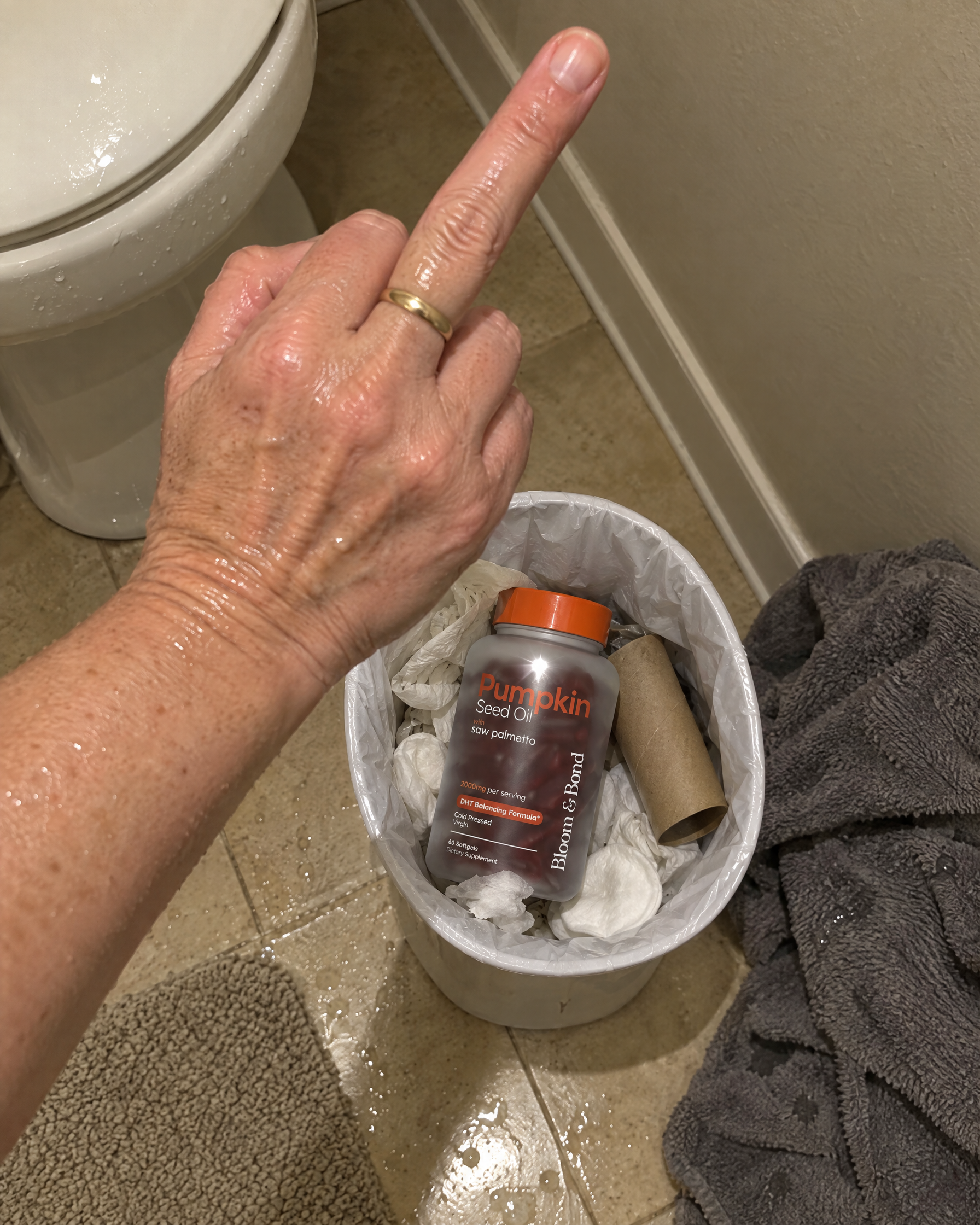
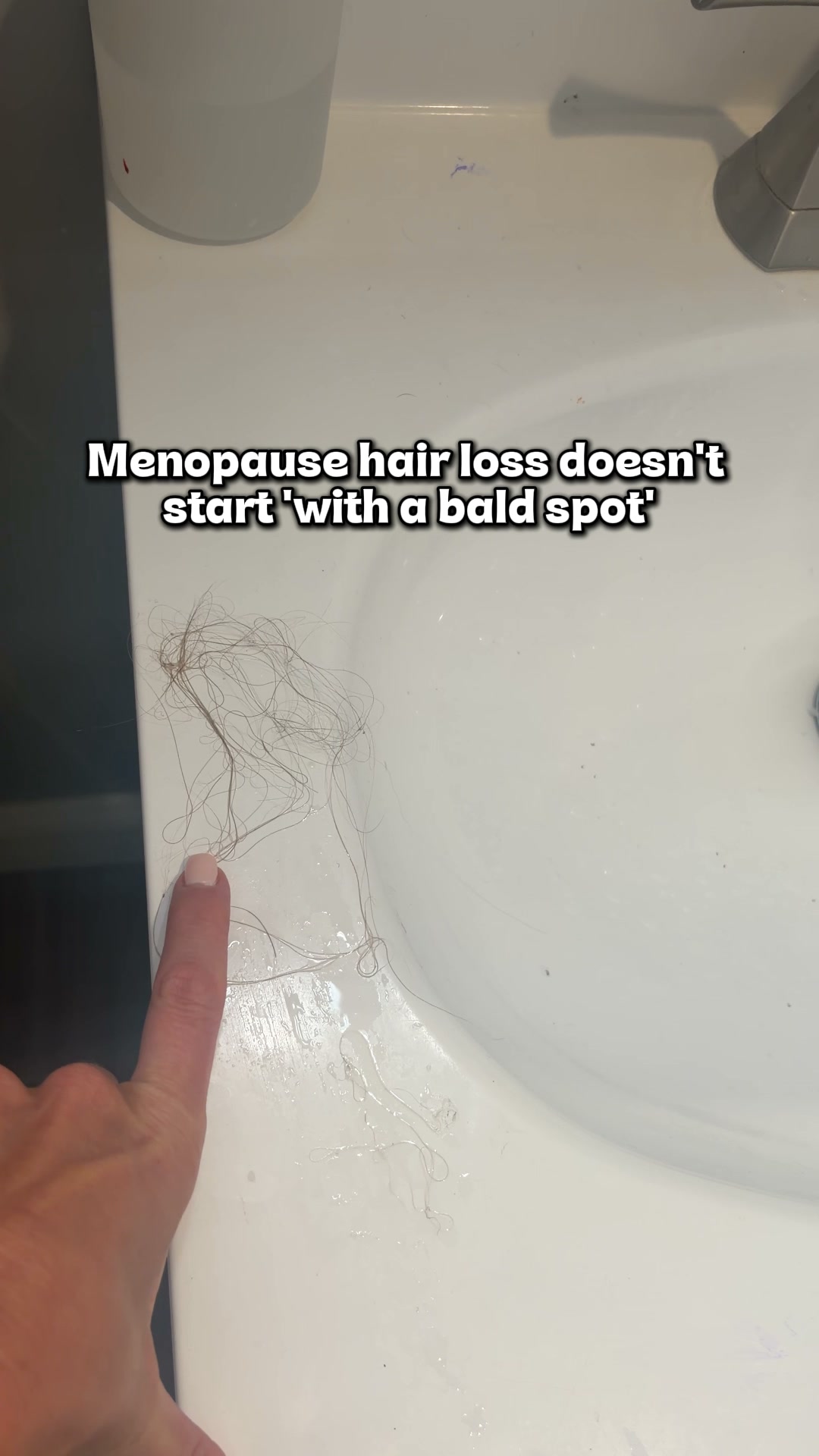
I write 37 prescriptions for Oxybutynin a week. I hand the bag across the counter, smile, and say “take it with water, it might make your mouth dry.” 37 times a week. I won’t take one myself. You need to understand what that means — a nurse practitioner who writes a prescription 37 times a week and won’t swallow the pill herself. My name is Debra Malinowski. I’m 59 years old. I’ve been a board-certified Women’s Health Nurse Practitioner for 29 years — the last 20 at a urogynecology practice in Akron, Ohio. I sit in a windowless exam room 5 days a week across from women who can’t look me in the eye when they tell me what’s happening to them. They cross their legs when they laugh. They live in black pants, just in case. They skip their granddaughter’s softball games because the porta-potties are a long walk from the bleachers. They haven’t slept through the night in 3 years because they get up to use the bathroom 4 times between midnight and 6 AM. And they’re losing their hair. That second part — the hair — they almost never bring up first. They come in for the leaking. They come in because they sneezed during the sermon, felt the warmth spread, and spent the rest of the service wishing the pew would swallow them. They come in because their husband spotted the pads in the bathroom trash and asked if something was wrong, and they told him it was nothing. But 10 minutes into the visit, when I’ve made them feel safe enough to keep talking, they touch the top of their head. That gesture. I’ve seen it 3,800 times. Fingers to the crown, barely pressing, like they’re checking if it’s still there. “And my hair... I don’t know if this is related, but my hair is just... it’s everywhere. The shower drain. My pillow. I pulled my ponytail out last Tuesday and there was a clump the size of a quarter in the elastic.” I nod. I write it down. I say the thing I was trained to say. “That’s very common during and after menopause. We can talk about some options.” And then I do what the system requires me to do. I prescribe Oxybutynin for the bladder — an anticholinergic that dries the nerve signal so the muscle stops squeezing when it shouldn’t. I tell her the side effects: dry mouth, constipation, brain fog. I tell her to drink water. I tell her we’ll recheck in 3 months. For the hair, I say “it’s hormonal” and suggest she talk to her dermatologist. Maybe Rogaine. Maybe biotin. Maybe “just give it time.” I’ve said this 3,800 times. And for 3,800 women, I’ve watched the same thing happen. 3 months later she’s back. The leaking is “a little better” but her mouth is so dry she can’t eat crackers. She’s constipated. She forgot where she parked at the Giant Eagle last week and sat in the lot for 25 minutes trying to remember what row she was in. The hair is worse. She bought a volumizing shampoo that cost $46 and it didn’t do anything. She can see her scalp through the part now. 6 months later the Oxybutynin dose goes up. The leaking comes back worse every time she misses a pill. She’s dependent on a drug that dries her mouth, fogs her brain, and locks her bowels — and the leaking still isn’t gone. It’s managed. That’s the word on her chart. Managed. The hair is thin enough that her daughter noticed at Easter and didn’t say anything, which hurt more than if she had. 1 year later she’s on Myrbetriq — $400 a month, because the Oxybutynin side effects were unbearable. The Myrbetriq works a little better and costs 10 times more. The leaking is still there. The nighttime trips are still 3 to 4. The hair is still falling out. 2 years later I see her name on my schedule and I already know what she looks like before she walks in. Thinner on top. Tired. Carrying a purse with 3 pads in it. Still wearing black. She asks me if there’s something stronger. If there’s a surgery. If there’s anything. I say what I’m trained to say: “We can discuss a sling procedure. The success rate is about 80% for stress incontinence. There are risks. Let me refer you.” I’ve made that referral 152 times in 20 years. Let me tell you about one of them. Sharon Petrak. 63 years old. Retired 3rd grade teacher from Barberton. Came to me on a referral from her GP in April of 2024. Chief complaint: urinary urgency and stress incontinence. Secondary complaint — she almost didn’t mention it — hair thinning, progressive, 20 months. Sharon was the kind of woman who made lists. She brought a folder to her first visit. In the folder was a typed sheet — single spaced — of every time she leaked in the previous 2 weeks. 52 episodes. She’d timed them. She’d noted what she was doing when it happened. Laughing — 10 times. Sneezing — 8. Standing up from a chair — 12. Lifting a bag of groceries — 7. “No reason I could identify” — 15. 15 times in 2 weeks her body just... let go. No warning. No trigger she could find. She told me she hadn’t gone to a movie theater in 9 months because she couldn’t sit through a full film without getting up twice, and by the time she got back to her seat she’d missed the part that explained the rest of the plot. She told me she’d stopped watching her grandson on Sunday afternoons because the last time she had him, he climbed into her lap and she leaked through her pants onto the recliner. She cleaned it before her daughter got back. She never told anyone. She told me her hair used to be so thick her hairdresser joked it took twice as long to blow-dry as anyone else’s. Now her hairdresser was using a root cover-up spray on the crown and they both pretended it was normal. I prescribed Oxybutynin. 5 mg, twice a day. I told her to do Kegels. I told her to avoid caffeine. I told her to come back in 10 weeks. 10 weeks later the leaking was down from 52 episodes to 35. On paper, that’s improvement. I wrote “responding to treatment” in her chart. But Sharon didn’t look like she was responding to treatment. She looked like she’d aged 5 years since I last saw her. Her mouth was so dry her lips cracked. She told me she’d started carrying a water bottle everywhere and drinking from it constantly, which made her need the bathroom more, which made the leaking worse, which made her take the pill, which made her mouth drier. A wheel. Spinning the wrong way. I asked about the brain fog. She got quiet. “I lost a word yesterday,” she said. “Not a big word. The word ‘spatula.’ I was making pancakes for my husband and I held it up and I couldn’t think of what it was called. I stood there for 30 seconds. I’m a teacher, Debra. I taught children how to read for 33 years. I know what a spatula is.” She looked at me and said something I will never forget: “I traded my memory for dry pants. And my pants aren’t even dry.” I upped the dose. That’s what the treatment algorithm says to do. 6 months in, the leaking was at 30 episodes per 2 weeks. Better on paper. Her chart said “improving.” Her hair was noticeably thinner. She’d started wearing a headband to cover the part. Month 9 I switched her to Myrbetriq because the Oxybutynin side effects were unmanageable. $394 a month. Her insurance covered $210. She was paying $184 out of pocket every 30 days to leak 26 times every 2 weeks instead of 52. “Managed.” That’s the word in her chart. Month 13 — May 2025 — Sharon came in and sat down and said she’d made a decision. “I’m done. I’m going to stop the medication. I’m going to wear the pads. I’m going to stop pretending any of this is working. I lost my hair and my memory and $2,300 and I still can’t sneeze without crossing my legs.” I didn’t argue with her. I couldn’t. Because I knew she was right. And 3 weeks later — June 2nd, 2025 — I found out why I couldn’t argue. I was 58 years old. I’d been in perimenopause for 2 years. The hot flashes I could handle. The mood swings I could handle. But on that Wednesday morning, I sneezed in the break room at work and felt the warmth. Not a lot. Just enough to know. I stood there next to the Keurig with my hand on the counter and thought: this is what Sharon felt. This is what 3,800 women sat in my exam room and described. This is the moment. I went to my own doctor. She ran the tests. Pelvic floor weakness — moderate. Overactive bladder — mild. “Very common at your age, Debra. I’d like to start you on—” “Oxybutynin,” I said. “Yes. Or Myrbetriq if you’d prefer.” I sat in her office and felt the same cold settle in my stomach that I imagine every one of my patients feels. Because I knew what she was offering me. I’d prescribed it 37 times a week for 20 years. I’d watched it dry mouths, fog brains, constipate bowels, thin hair, and hold the leaking at bay just enough to call it “managed” while the thing causing it kept burning underneath. I said no. She looked at me the way doctors look at nurses who say no. “Debra, you know the data.” “I know the data,” I said. “And I know what the data doesn’t show.” She wrote the prescription anyway. It appeared in my pharmacy’s system the next morning. I never picked it up. My hair was thinning too. I’d been ignoring it for a year. The part was wider. The ponytail was thinner. I told myself it was stress. It was menopause. It was normal. But it wasn’t normal. And it wasn’t separate from the bladder. And that’s what nobody was telling any of us. Here’s what I now understand — not from a pamphlet, not from a drug rep’s slide deck, but from 5 months of reading the actual research at 11 PM on my laptop with a cup of tea going cold next to me — about what’s really happening inside the body of every woman over 50 who’s leaking urine and losing hair at the same time. They’re not 2 separate problems. They’re the same problem. Every doctor, every drug, every treatment algorithm treats them as if they have nothing to do with each other. Bladder? See the urologist. Hair? See the dermatologist. Two waiting rooms, two copays, two prescriptions that don’t talk to each other. But inside the cell — inside the tissue — it’s 1 fire. And it has a name. DHT. Dihydrotestosterone. You’ve probably never heard a doctor say this word to you. If you have, it was in passing, maybe in a pamphlet about male pattern baldness. That’s because the medical system still thinks of DHT as a “men’s problem.” It’s not. Not even close. Here’s what DHT does. Inside every hair follicle on your head, there’s a receptor. Like a lock. DHT is the key that fits it. When DHT binds to that receptor, it does something devastating — it shrinks the follicle. Not all at once. Slowly. Cycle by cycle. Every time the hair goes through its growth phase, the follicle is a little smaller, the hair is a little thinner, until one day the follicle produces a hair so fine you can’t see it. Then it stops producing anything at all. That’s not aging. That’s not “just menopause.” That’s DHT choking the follicle from the inside. Now here’s the part that stopped me cold. The same DHT — the exact same molecule — binds to receptors in the smooth muscle of the bladder wall and the pelvic floor. When it binds there, it does the same thing it does to the hair follicle: it weakens the tissue. It degrades the muscle tone that keeps the sphincter closed. It makes the detrusor muscle — the muscle that squeezes the bladder — overreactive and twitchy. That sudden urge you get in the grocery store when you’re nowhere near a bathroom? That’s DHT making the bladder muscle squeeze when it shouldn’t. The leaking when you sneeze, laugh, cough, or pick up a grandchild? That’s DHT weakening the pelvic floor muscles that are supposed to clamp shut and hold. The 3 AM trips to the bathroom? That’s DHT signaling the bladder to empty when it’s only half full. Same molecule. Same mechanism. Different tissue. Same fire. And here’s what Oxybutynin does about it: nothing. Oxybutynin blocks the nerve signal that tells the bladder muscle to squeeze. That’s it. It works on the nerve. It never touches DHT. It never goes near the receptor. It never addresses why the muscle is squeezing too hard in the first place. It’s like putting earplugs in because the smoke alarm is going off. The alarm stops bothering you. The fire keeps burning. Myrbetriq relaxes the bladder muscle from the outside. Same idea, different mechanism. Still doesn’t touch DHT. Still doesn’t enter the cell. Still doesn’t address the fire. The Kegels I told 3,800 women to do? Those strengthen the pelvic floor muscle from the outside, through exercise. They help — genuinely — but they can’t outwork a hormone that’s degrading the muscle from the inside faster than the exercises can rebuild it. Think of it this way: you’re bailing water out of a boat with a bucket. The Kegels are the bucket. But DHT is the hole in the hull. You can bail faster. You can get a bigger bucket. But until someone patches the hole, the boat keeps filling. The hair is the same. Rogaine (minoxidil) increases blood flow to the scalp. More blood, more nutrients, slightly thicker hair — for as long as you use it. Stop using it and the hair falls out again, because the DHT never stopped shrinking the follicle. The fire was never put out. Biotin gives the follicle building material. Like giving lumber to a construction crew working on a house that’s on fire. Good lumber. Still on fire. Every single treatment I prescribed for 20 years — every pill for the bladder, every suggestion for the hair — worked on the symptom. On the smoke. On the alarm. Not one of them went after DHT. Not one of them put out the fire. And the whole time, DHT was inside the cell — inside the follicle, inside the bladder wall, inside the pelvic floor — quietly shrinking, weakening, degrading the tissue that no drug and no Kegel and no $46 shampoo could reach. Sharon’s chart said “managed.” Sharon was on fire. Now. Where does DHT come from? Testosterone. Your body makes testosterone — yes, women make it too, less than men, but you make it. An enzyme called 5-alpha reductase converts testosterone into DHT. That conversion happens in the tissue itself — in the follicle, in the bladder wall, in the pelvic floor. After menopause, estrogen drops. When estrogen drops, the balance shifts. The relative level of DHT goes up — not because you’re making more testosterone, but because the estrogen that used to keep it in check is gone. The fire wasn’t always burning. It started when the balance broke. And every year after menopause, the fire burns a little hotter. The follicles shrink a little more. The pelvic floor weakens a little more. The bladder squeezes a little harder. The nighttime trips increase by 1. The pad goes from “just in case” to “every day” to “I carry 3 in my purse.” That’s not aging. That’s DHT, unchecked, doing exactly what it does. So when I sat in my own doctor’s office and she offered me Oxybutynin — a pill that blocks the nerve signal to a muscle that’s being degraded by a hormone the pill can’t reach — I said no. Because I knew the fire was DHT. And I knew the pill didn’t go near it. So I started looking for the thing that would actually block DHT at the receptor — inside the cell, inside the follicle, inside the bladder wall — not just mute the alarm or mop up the smoke. I have access to medical databases most people don’t. PubMed. Cochrane. The full-text studies behind the abstracts. I spent 5 months reading everything I could find on natural 5-alpha reductase inhibitors — compounds that block the enzyme that converts testosterone into DHT. 1 compound kept appearing over and over. Not biotin. Not saw palmetto alone. Not the generic “hair, skin, and nails” blend you see at every CVS. Pumpkin seed oil. Specifically, the fatty acid profile in cold-pressed pumpkin seed oil — a combination of delta-7 sterols and specific phytosterols that block 5-alpha reductase at the enzyme level. Let me explain what that means in plain language. Remember the enzyme — 5-alpha reductase — the one that converts testosterone into DHT? Pumpkin seed oil contains compounds that fit into that enzyme like a wrench in a gear. They don’t just slow it down. They block it. The enzyme can’t convert the testosterone. The DHT doesn’t get made. The fire doesn’t get fuel. No DHT at the follicle means the follicle stops shrinking. The growth cycle can reset. The hair comes back. No DHT at the bladder wall means the smooth muscle stops being degraded. The tone comes back. The sphincter holds. The detrusor stops squeezing when it shouldn’t. No DHT at the pelvic floor means the muscle fiber stops weakening. The support comes back. The leaking stops. One compound. One mechanism. Both problems. I sat at my kitchen table at midnight reading a 2014 randomized controlled trial — double-blind, placebo-controlled, 76 men with hair loss — and the group taking pumpkin seed oil had a 40% increase in hair count after 24 weeks compared to the placebo group. 40%. I read a 2021 study on women with overactive bladder — pumpkin seed oil supplementation reduced nighttime urinary frequency and improved bladder tone within 12 weeks. I read a 2019 review of the phytosterol profile and its inhibition of 5-alpha reductase — the same enzyme that Finasteride blocks, but without the side effects, because the oil works at the tissue level rather than systemically. I put my tea down and stared at the screen. Then I did what any clinician would do — I went looking for the flaw. I spent 10 days trying to poke holes in what I’d found. And I found it. The catch isn’t pumpkin seed oil. The catch is how it’s made. The active compounds — the delta-7 sterols, the specific phytosterols that block the enzyme — are fragile. They exist in the oil in its raw, unprocessed state. Cold-pressed. Never heated above 120°F. The moment you heat pumpkin seed oil — and I mean any significant heat — the sterols denature. The phytosterol profile collapses. The 5-alpha reductase inhibition drops to nearly nothing. This is established chemistry. Heat kills the active compound the way boiling a vaccine destroys the antigen. Same principle. Now here’s the problem: 90% of the pumpkin seed oil supplements on the market — the ones at CVS, Walgreens, Amazon, Walmart — are processed with heat. They’re extracted using hexane solvents at high temperatures, refined, deodorized, and bleached. By the time the oil goes into the capsule, the compound that does the actual work is gone. You’re swallowing dead oil in a gelatin shell. The capsule is intact. The oil is inside. The active compound that blocks DHT is destroyed. You take it for 3 months and nothing happens and you go online and write “doesn’t work” and move on. I checked. I pulled the supplement facts panels and manufacturing data on every pumpkin seed oil product I could find. Brand after brand after brand — heat-processed, solvent-extracted, stripped of the sterols that make it work. And the color tells you everything. Real cold-pressed pumpkin seed oil is deep red. Not pale. Not yellow. Deep red. So dark that when you squeeze it onto a white plate, it looks like a drop of red wine. That color tells you the DHT-blocking compounds made it into the capsule intact. The stuff on the shelf at your pharmacy? Pale yellow. Almost clear. That’s the color of dead oil. The sterols are gone. The enzyme-blocking compounds are gone. What’s left is a cooking oil in a capsule. I almost gave up. Then I found Bloom & Bond. Bloom & Bond Pumpkin Seed Oil Softgels are cold-pressed — genuinely cold-pressed, from raw seeds that are never roasted. The seeds are the Styrian variety, the one used in the clinical studies. Not the jack-o-lantern pumpkin. Not the ornamental squash. The Styrian — a specific cultivar bred over centuries in Austria for its hull-less seed and its oil concentration. The oil is deep red. I opened a capsule and squeezed it onto a white plate. Dark red, almost like wine. I’d seen the photos online and I didn’t believe it until I saw it myself. That color is the compound. That’s the delta-7 sterols. That’s the phytosterol profile. That’s the 5-alpha reductase inhibitor, intact, in the capsule, alive. And it’s paired with saw palmetto, which is the part that made me trust it. 2,000mg of pumpkin seed oil and 200mg of saw palmetto in two softgels. The pumpkin seed oil slows the enzyme that makes new DHT. The saw palmetto shields the follicle from the DHT that’s already sitting there. One takes the fuel away from the fire, the other protects what’s still standing. Every pale-yellow capsule I’d ever seen on a pharmacy shelf was the equivalent of an empty syringe. The delivery system was there. The active ingredient was cooked out of it. I ordered my first bottle that night. Let me tell you exactly what happened. I took 2 softgels every morning with breakfast. No other changes. I didn’t start the Oxybutynin. I didn’t increase my Kegels. I didn’t cut caffeine. I didn’t change my diet. I kept living the way I’d always lived — on my feet 9 hours a day at the clinic, a glass of wine on Saturdays, walking the dog around the block on weekends when the weather was decent. Week 2, I noticed the nighttime trips. I’d been getting up 3 times a night — 12:30, 3, and around 5:15. By week 2 it was twice. By week 4 it was once. I set my alarm for 6:15 and woke up before it went off — from a full night’s sleep. I hadn’t done that in over a year. Week 3, I sneezed in the break room again. Same break room. Same Keurig. I braced myself. Nothing. Dry. Completely dry. I stood there for 10 seconds waiting for it and it didn’t come. Week 7, my hairdresser — Michelle, I’ve been going to her for 16 years — stopped mid-blowout and said “Debra, what are you using? You have new growth all along the part.” She pulled the hair back and showed me in the mirror. Short, dark hairs standing up along the line where my scalp had been showing through for 2 years. I didn’t tell her it was pumpkin seed oil. I said “new vitamins” because I wasn’t ready to explain the whole thing at the salon. Week 9, I went back to my doctor. She asked if I’d started the Oxybutynin. “No,” I said. “The leaking?” “Gone.” “The nighttime frequency?” “Once. Maybe. Some nights not at all.” She looked at my chart, then at me, then back at the chart. “What are you doing?” “Taking a supplement.” “Which one?” “Pumpkin seed oil.” She gave me the look. The same look I’ve given patients for 20 years. The supplement look. “Debra—” “Cold-pressed,” I said. “Raw seeds. With saw palmetto. The sterols are intact. It blocks 5-alpha reductase. The DHT conversion drops. The bladder wall stops degrading. The follicle stops shrinking.” She wrote “patient reports taking pumpkin seed oil supplement” in my chart. I could tell she didn’t believe it. I don’t need her to believe it. My underwear believes it. My pillow — the one without the clump of hair on it every morning — believes it. I started giving it to people I love. My sister Joanne. 61. Retired from the county clerk’s office. Hadn’t been to a movie in over a year because she couldn’t sit through the previews without needing the bathroom. Wore a pad every single day. Her hair was so thin on top she’d started wearing a hat indoors — in her own kitchen, in case a neighbor stopped by. I gave her a bottle. Told her to take 2 every morning. 4 weeks later she called me on a Sunday afternoon. “Debra, I went to the movies with Ron yesterday. I sat through the whole thing. The WHOLE thing. I didn’t get up once. I didn’t even think about it until the credits.” She paused. “And I found a hair on my bathroom counter. A short one. Dark. I thought it was Ron’s until I looked in the mirror and saw the new growth. It’s coming back.” My coworker Tammy — another NP in the practice. She’d been on Myrbetriq for 16 months. $394 a month. Still leaking 2 to 3 times a day. Still getting up twice a night. She saw the bottle on my desk and asked what it was. I told her everything. She started taking it alongside her Myrbetriq — I told her not to stop the Myrbetriq, that’s between her and her doctor. 3 weeks later she was sleeping through the night. 6 weeks later she told me the leaking had stopped — completely — for the first time in 4 years. She went to her doctor and asked about tapering the Myrbetriq. Her doctor reduced the dose. The leaking didn’t come back. She’s now off it entirely and saving $394 a month. My patient Sharon — the one with the folder and the typed list — I called her. I know I’m not supposed to call patients about supplements. I know how that looks. I don’t care. I’d watched this woman lose her hair, her memory, her confidence, and $2,300 in copays over 13 months. I wasn’t going to let her give up without telling her what I’d found. She started taking Bloom & Bond in July. Her next visit was in October. Her leak count — which she still tracks, because she’s Sharon and she makes lists — was down from 26 episodes per 2 weeks to 3. Three. And 2 of those were during a bad cold when she was coughing hard. Her hair — I could see it. The headband was gone. New growth along the temples and the crown. Not thick yet. Not what it used to be. But there. Growing. Alive. She sat in my exam room and cried. I cried with her. Then I wrote in her chart: “Significant improvement in urgency and stress incontinence. Patient reports supplementing with cold-pressed pumpkin seed oil. Hair regrowth noted.” I’ve now recommended Bloom & Bond to 21 women I personally know. I have their numbers. Not their anecdotes — their actual pad counts, their nighttime trip logs, their before-and-after photos from their hairdressers. Average: nighttime trips down from 3.5 to 0.9 in 6 weeks. Daytime leaking episodes down by 71% in 8 weeks. And 16 out of 21 reported visible new hair growth within 10 weeks. None of them started a new medication. None of them had surgery. Some of them were already on Oxybutynin or Myrbetriq. Some of them had stopped their medication out of frustration. All of them saw the change. But here’s what I need you to understand about why I’m writing this: I’m a nurse practitioner. I’ve held this license for 29 years. What I’m telling you right now could cost me professionally if the wrong person at my practice reads it. I’m not using my last name for that reason. I’m not naming my clinic. But I cannot keep sitting across from women in that exam room — watching them cross their legs when they laugh, watching them carry 3 pads in their purse, watching their ponytails get thinner and their confidence get smaller, watching them choose between their memory and their bladder — without saying something. Sharon lost 13 months. She lost her hair. She lost her confidence. She lost the word “spatula” at her own stove. She didn’t have to lose any of it. The fire was DHT. The extinguisher was in a cold-pressed softgel. Nobody told her. I’m telling you. Bloom & Bond Pumpkin Seed Oil Softgels are available through their direct link. Not at CVS — the ones at CVS are heat-processed dead oil. Not on Amazon — I’ve already checked 4 brands on Amazon and every one of them is solvent-extracted, pale-yellow, sterol-dead oil in a capsule that does nothing. Only through the site below. https://trybloomandbond.com/pages/dht-root-cause-adv It comes with a 90-day money-back guarantee. If the nighttime trips don’t drop, if the leaking doesn’t slow, if you don’t see new growth along your part in 90 days, you send the bottles back and get a full refund. No argument. Right now they’re running Buy 2 Get 1 Free and Buy 3 Get 2 Free, with free shipping. Up to 65% off. But cold pressing can’t be rushed, so they can only make so much at a time. Joanne’s second order took weeks to arrive because the batch had sold out. If the offer is still up when you click, take it. I can tell you it will work because I’ve watched it work 21 times. I have the pad counts. I have the photos. I have my own pillow as proof. And I can tell you that if Sharon had been taking this from the beginning — if someone had told her what I’m telling you right now — she never would have lost her hair. She never would have lost the word “spatula.” She never would have spent 13 months on a drug that blocked the alarm while the fire kept burning. https://trybloomandbond.com/pages/dht-root-cause-adv — Debra M., MSN, WHNP-BC Women’s Health Nurse Practitioner, 29 years Akron, OH metro P.S. I need to be direct about something. I’m not anti-medication. I’m a nurse practitioner. I believe in pharmaceuticals. I prescribe antibiotics, blood pressure medications, insulin, antidepressants — and I believe in every one of them. What I don’t believe in is a bladder pill that blocks the nerve signal while ignoring the hormone that’s actually weakening the muscle, and calls the slow decline it can’t stop “managed.” That’s not medicine. That’s maintenance. Bloom & Bond isn’t a replacement for medical care. It’s the thing that does what Oxybutynin can’t — it goes after the fire. https://trybloomandbond.com/pages/dht-root-cause-adv P.P.S. If you’re already on Oxybutynin, Myrbetriq, or any bladder medication — please don’t stop reading. Sharon was on Oxybutynin. Her chart said “managed.” She was still leaking 26 times in 2 weeks. The number was never the threat. The DHT was. You can take Bloom & Bond alongside your medication. It doesn’t interfere — I’ve checked every interaction database I have access to. What it does is handle the one thing your bladder pill was never built to handle. Do not stop any medication on your own. My coworker Tammy was on Myrbetriq and she added Bloom & Bond alongside it. She worked with her doctor to taper. Never stop without your doctor. Start Bloom & Bond alongside whatever you take. Count your nighttime trips. Count your pads. Write the numbers on the calendar. Bring the calendar to your next appointment. Let your doctor see the numbers and make the change when she’s ready. P.P.P.S. The hair. I know you came here because of the leaking or the kidneys. But the hair is the same fire. If your ponytail is thinner than it was 2 years ago, if your part is wider, if your hairdresser is using root cover-up spray and you both pretend it’s normal — that’s DHT shrinking the follicle from the inside. The same oil that stops the leaking stops the shrinking. My sister Joanne’s hair started coming back in week 4. Mine came back in week 7. 16 out of 21 women I recommended it to saw new growth within 10 weeks. Your hairdresser will see it before you do. Take a photo of your part now. Take another one in 8 weeks. Put them side by side. That’s the proof. https://trybloomandbond.com/pages/dht-root-cause-adv P.P.P.P.S. If your husband is the stubborn type — the one who gets up 4 times a night to use the bathroom and says “it’s just getting older” — the DHT fire burns in men too. It’s the same enzyme. It’s the same conversion. It’s what’s making his prostate swell, what’s waking him up every 2 hours, and what’s thinning the hair he won’t admit he’s losing. I didn’t write this ad for men, but the oil doesn’t care about gender. It blocks the enzyme either way. Order a bottle. Put it next to his coffee mug. He’ll take it because you asked. And in 4 weeks, when he sleeps until 5:30 without getting up, he’ll take it because it works. P.P.P.P.P.S. Squeeze the oil out of one of those pale CVS capsules onto a white plate. It’s light, thin, watery. Almost clear. That’s cooked oil. Now open a Bloom & Bond capsule and squeeze it out. It’s deep red. Like a drop of red wine. That’s the active compound. That’s the sterols. That’s the fire extinguisher. If your capsule is pale, you’re swallowing nothing. I check the color of every supplement I put in my body. I’m a nurse practitioner for 29 years — I don’t trust labels. I trust chemistry. And the chemistry says: if it’s pale, the sterols are dead. https://trybloomandbond.com/pages/dht-root-cause-adv P.P.P.P.P.P.S. 37 prescriptions a week. I wrote the first one this morning at 8:40 AM. A woman named Rosemary. She’s 60. She sat across from me and touched the top of her head — that gesture, fingers to the crown — and said “I don’t know if this is related, but my hair is just...” I wrote the Oxybutynin because it’s what the algorithm requires. I smiled. I told her to drink water. And I thought about this post. And I thought about Sharon. And I thought: maybe Rosemary will see it. Maybe someone who loves Rosemary will see it. Maybe it’s not too late for her the way it almost was for Sharon. That’s why I’m writing this at 11 PM on my night off. Get the bottle. Please. https://trybloomandbond.com/pages/dht-root-cause-adv
Where the ad sends people
trybloomandbond.com
Natural Relief In Weeks
45,000+ Happy Customers
Learn more: thebloomandbond.com(opens in a new tab)