
Stopped· since Nov 28, 2025
- 68
- days it ran
- 0
- relaunches
Ad copy
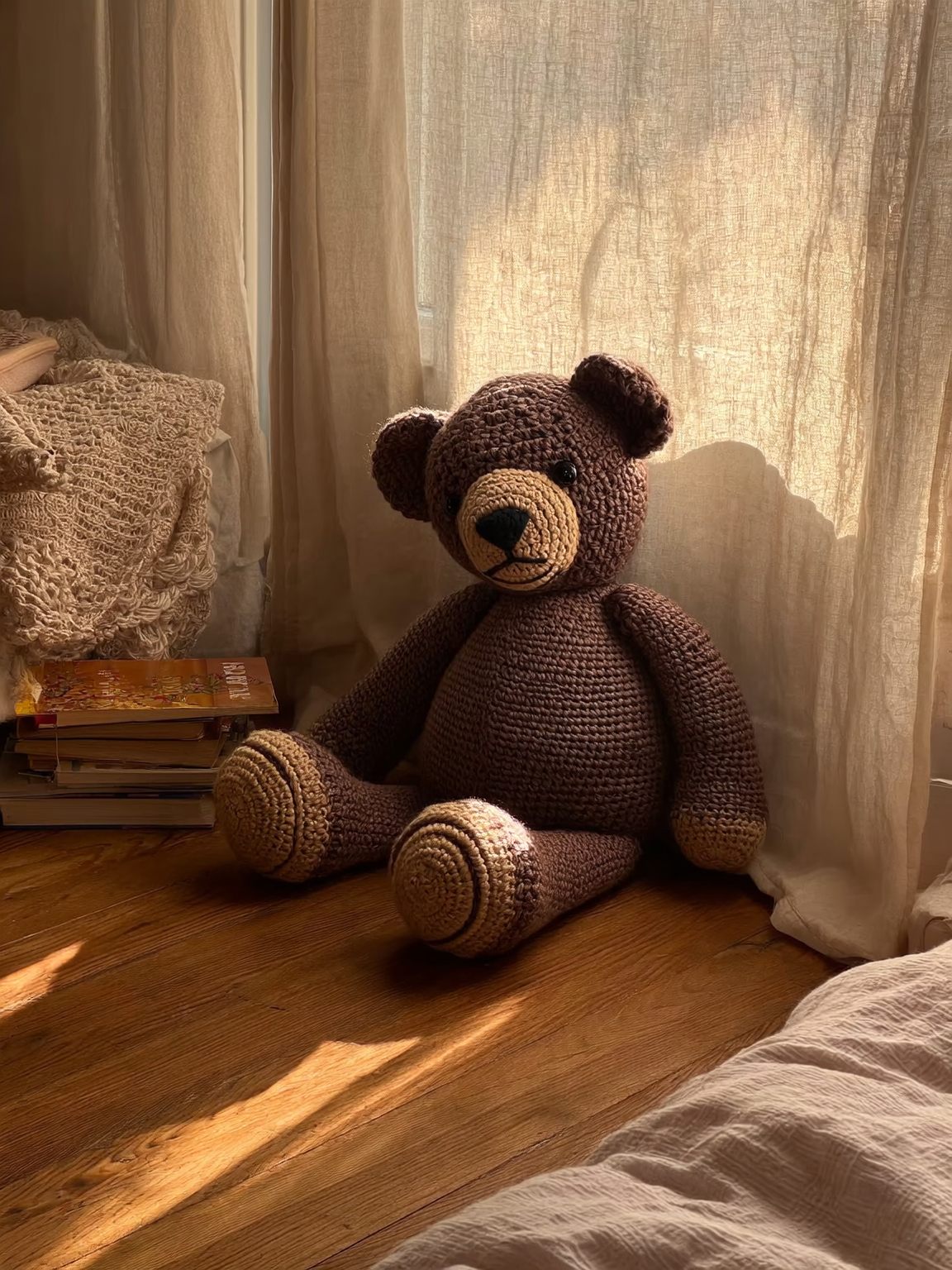
My daughter asked if the teddy bear I made her could "stay in my room, not on display." When I finally got her to tell me why, what she said about how it looked made me understand the difference between finishing a project and making something gift-worthy. She was five. Old enough to be honest. Too young to know it would break my heart. "It's nice, Mommy. But it looks... homemade." She said it so carefully. Like she didn't want to hurt my feelings. I'd spent three weeks on that bear. Soft brown yarn. Safety eyes I ordered specially. Pink embroidered nose. It was supposed to be her birthday present. Something special. Something she'd keep forever. Instead, it sat on her shelf behind her other stuffed animals. The ones that actually looked like bears. I started noticing after that conversation. How she played with the store-bought bunny from her grandma every night. How the bear I made only came out when I was in her room. She was trying to spare my feelings. And that hurt more than anything she could have said. I'd seen the photos. On Pinterest. On Instagram. In crochet groups. Perfect amigurumi animals. Professional-looking. Gift-worthy. "First attempt!" the captions would say. "Still learning!" they'd add with a modest emoji. And mine looked… homemade. In the wrong way. I told myself it was a skill issue. That I needed more practice. More time. More experience. So I kept trying. I made a rabbit for my niece's Easter basket. The ears were uneven. The face looked startled. I made an elephant for my best friend's baby shower. The trunk wouldn't stay up. The legs were different lengths. I made a unicorn for my sister's daughter. The horn flopped over. The mane was lumpy. Each time, I'd compare my finished project to the pattern photo and feel that familiar sinking feeling. Close. But not right. I started buying backup gifts. Just in case. And then, inevitably, giving the backup gift instead. The handmade versions would go into a bag in my closet. Evidence of failure I couldn't throw away but couldn't look at either. By Christmas that year, I'd spent $180 on yarn for handmade gifts I never gave. Christmas Eve, I was up at 11 PM wrapping the store-bought presents. The bag of failed projects sat in my closet, right where I'd put it. Six amigurumi animals. Forty-plus hours of work. Completely un-giftable. My husband found me sitting on the bedroom floor, crying. "What's wrong?" "I can't make anything good enough to give people," I said. "Everyone else can make beautiful things and I just… can't." He looked at the store-bought gifts. Then at the closet where he knew the homemade ones were hidden. "What if it's not about skill?" he said. "What if it's the patterns?" I'd never considered that. I thought patterns were just instructions. You either followed them correctly or you didn't. But that night, I couldn’t sleep. At 1:47 AM, I was on my laptop, looking at the patterns I'd used. Most were free. Downloaded from blogs. Found in Facebook groups. A few I'd paid $3–5 for on Etsy. I started comparing them to each other. And that's when I saw it. The patterns I'd used would say things like "attach head to body" with no explanation of HOW. Just… attach it. They'd say "stuff firmly" without explaining WHEN or HOW MUCH or what happens if you stuff too much or too little. They'd have instructions for shaping but no photos showing what it should look like at each stage. I pulled up photos of the "perfect" projects I'd seen online. The ones that made me feel inadequate. And I started clicking through to see what patterns they'd used. Different ones. Not the free blog patterns. Not the $3 Etsy patterns. Premium patterns. $8–12 each. From established designers. I clicked on one. Read the description. "Includes step-by-step photos at every stage." "Detailed finishing techniques for professional results." "Beginner-friendly with advanced finishing tips." I felt something click. The gap between my results and "perfect" results wasn't years of experience. It was the instructions I was following. That was two weeks before I discovered Crochet Notes at my local yarn shop. I'd stopped in to buy more stuffing—still hoping I could salvage one of the projects from my closet. The bag owner, Margaret, was restocking a display near the register. "How's your crocheting going?" she asked. I must have made a face, because she laughed. "That good, huh?" "I just… I can't make things that look like the photos," I said. "Everyone else seems to figure it out, but mine always look off." She nodded knowingly. "Are you using free patterns? The ones from Pinterest and Facebook groups?" "Mostly, yeah. Why?" "Come here." She pulled a pattern guide from the display. Crochet Notes. "This changed everything for one of my customers. She was about to quit amigurumi entirely. Same problem—her projects looked homemade in the wrong way. Then she tried this." I picked it up. It wasn't just a single pattern. It was a comprehensive guide with multiple projects, each one teaching specific finishing techniques. "What makes it different?" I asked. "It doesn't skip anything," Margaret said. "Most free patterns assume you already know the professional finishing techniques. Invisible joins. Strategic stuffing. Proper eye placement with actual measurements. This teaches all of it, step by step, with photos showing exactly what it should look like at every stage." She showed me the preview pages. Photos after every few rounds. Detailed sections on assembly order. Specific instructions for stuffing firmness at different stages. Tips on making seams disappear completely. "The creator designed it specifically for people who can follow a pattern but don't understand why their finished projects don't look gift-worthy," Margaret continued. "All those little techniques that make the difference between 'completed' and 'impressive.'" I bought it that afternoon. Started the first project—a simple bear—on Saturday morning. By Saturday evening, I had something that looked like the photo. Actually looked like it. The seams were invisible. The stuffing was even. The proportions were right. The face looked… professional. I showed my daughter. "Mommy, that's so pretty! Can I have it?" "Would you put it on your bed?" I asked. "Where people can see it?" "Yes! It looks like the ones at the store!" She meant it as a compliment. And this time, it was. The difference wasn't that I'd suddenly gotten better at crochet. The difference was that I was finally following instructions that taught me the finishing techniques that make something look gift-worthy. Invisible joins instead of visible seams. Strategic stuffing instead of just "stuff it full." Proper eye placement with measurements instead of "somewhere around here." Assembly order that creates proper proportions instead of just "attach the parts." These weren't advanced techniques that take years to learn. They were specific instructions that most patterns simply don't include. I made three more projects from the Crochet Notes guide that month. One for my niece. One for my sister's daughter. One for my best friend's new baby. I gave them as "late Christmas gifts." Every single person asked where I bought them. When I said I made them, they didn't believe me at first. "No, I mean where did you get the pattern?" My sister took hers to a craft fair and someone offered to buy it for $35. I think about those six projects in the bag. All that time. All that money. All that heartbreak. Thinking I wasn't good enough. That other people had some natural talent I lacked. When the real problem was that I was trying to get professional results from patterns that skipped the professional techniques. My daughter's bear—the first one, the "homemade" looking one—still sits on her shelf. But now it's next to four others that she proudly shows to friends. "My mom made all of these," she tells them. And I don't feel that sting of shame anymore. Because I know the difference now. Between finishing a project and making something truly gift-worthy. Between following instructions and following complete instructions. If you have a bag of un-giftable projects hidden somewhere in your house, I need you to hear this: It's not your skill level. It's not your talent. It's not that you need another year of practice. It's that you've been trying to create professional-looking results from patterns that don't include professional finishing techniques. And the moment you find patterns that include those techniques—with photos, with detailed explanations, with all the steps most designers take for granted—everything changes. That's why I keep recommending Crochet Notes to everyone in my local crochet group. Not because these are advanced skills that take years to learn. But because these are the specific techniques that most patterns skip—and that make all the difference between "homemade" and "handmade with pride." That bear my daughter wanted to keep in her room? I remade it last month using the guide. She put it on her bed. Front and center. And when her friend asked where I bought it, my daughter said something that made every failed attempt worth it: "My mom made it. She makes really beautiful things." Not "homemade" things. Beautiful things. And that's what you deserve to hear too.
Free Today (Shipping Fee Applies)
Hurry up! Just 9 Free Downloads Left! Check Back in October if Out of Downloads
SHOP NOWLike this ad? Make it yours.
Crush rebuilds this exact creative around your product — your brand, your colors, your offer — in about a minute.