
Active· since Jun 9, 2026
- 101
- days running
- 0
- relaunches
Ad copy
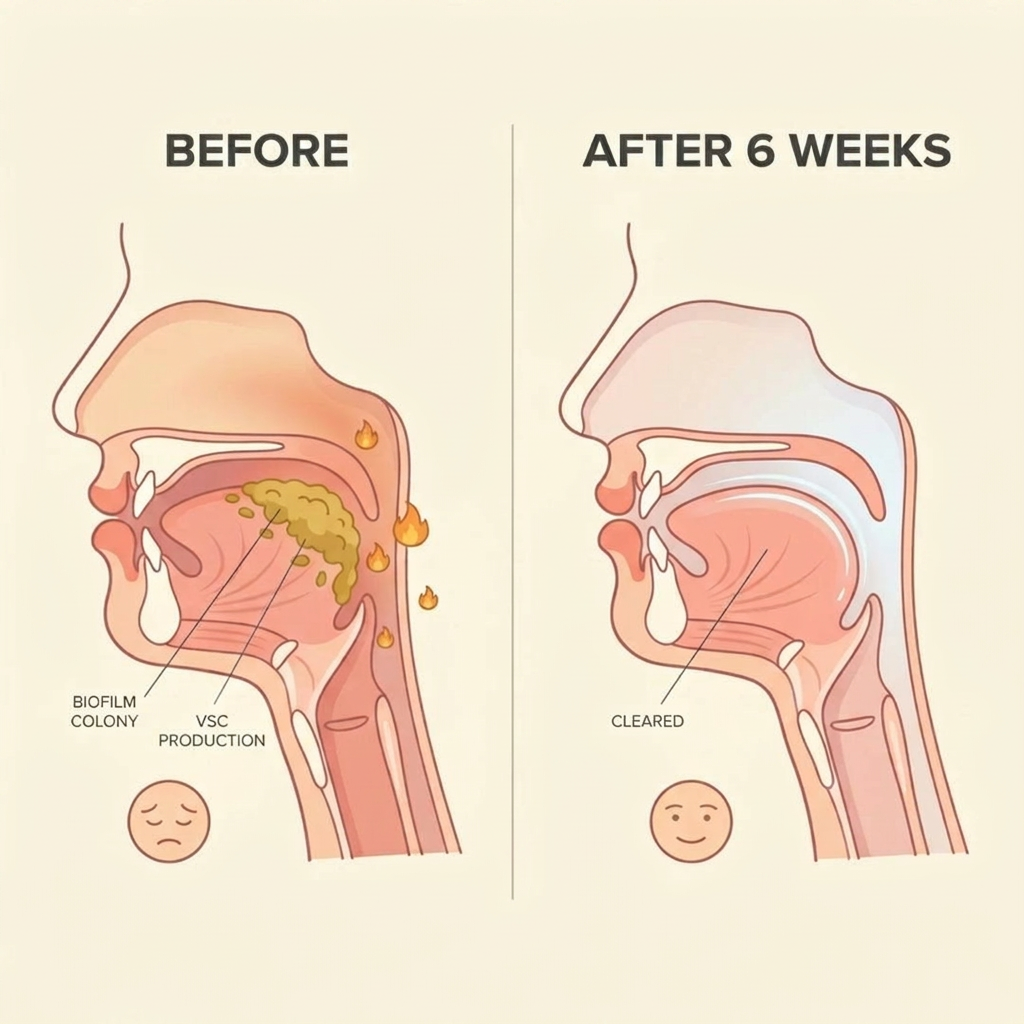
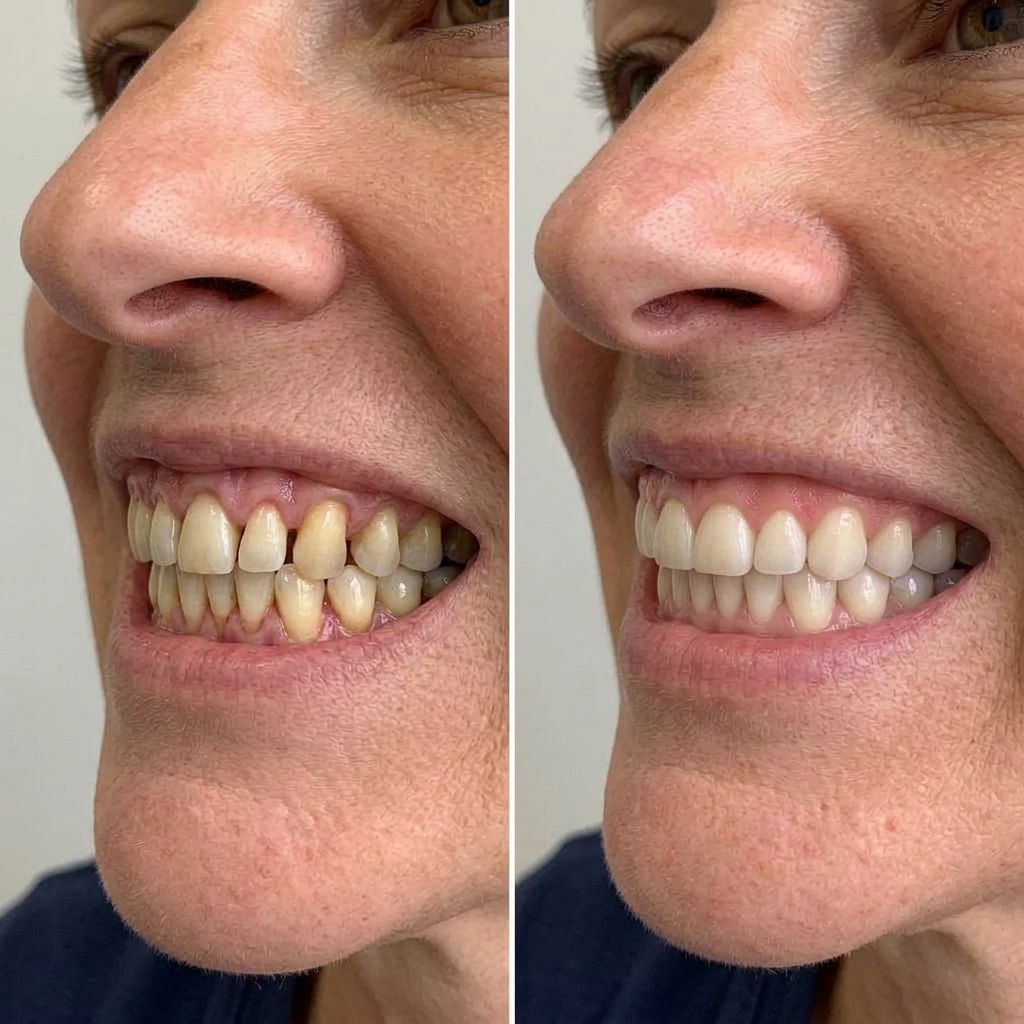
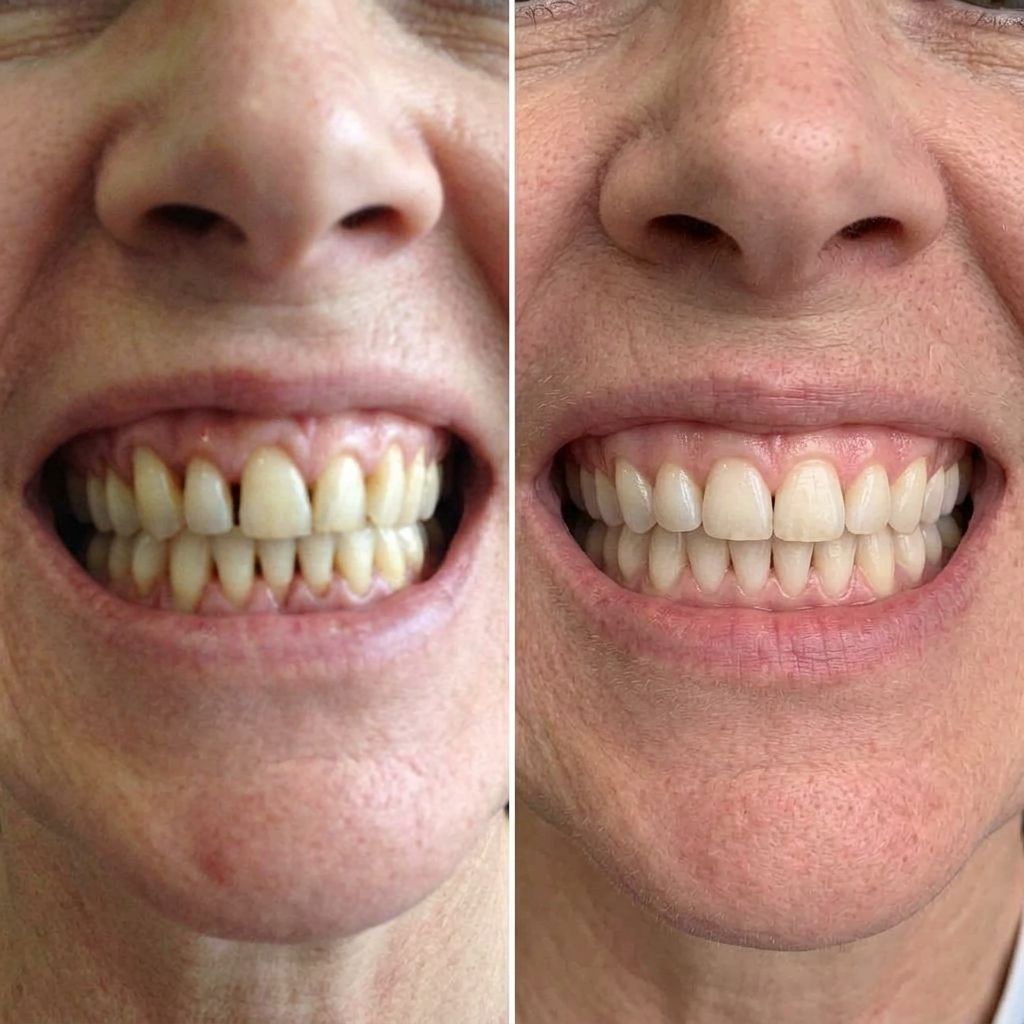
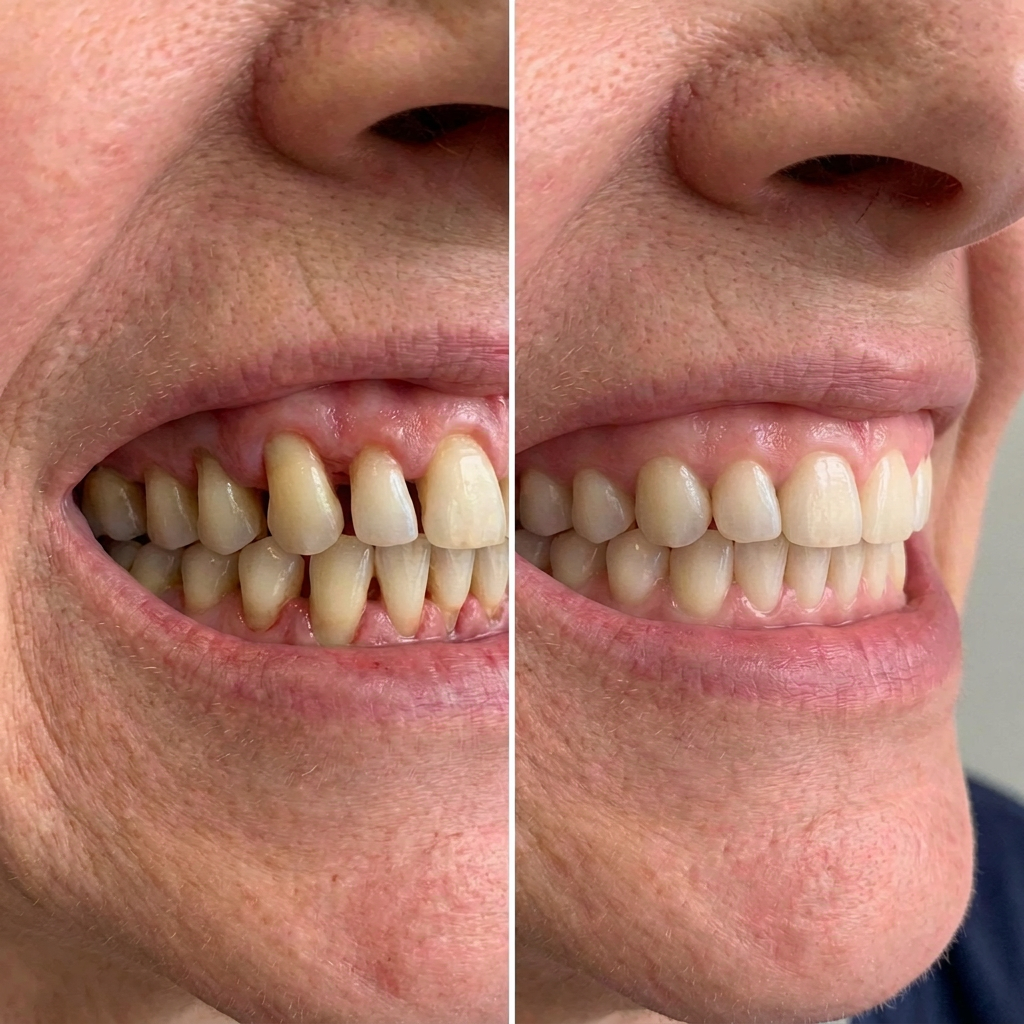
My mum lost all her teeth after 8 years on the deep cleaning protocol. I have the same pocket depths she had. The same family history. My periodontist wants to start me on the same aggressive treatment plan. I refused. And what I found instead — from a retired dental hygienist standing in the supplement aisle at a local health store — brought my pockets from 6-7mm to 4mm without a single scraping. But to understand why I was desperate enough to try my fourth supplement after the first three failed, you have to know what I watched that protocol do to my mum. For 8 YEARS — and I mean nearly a decade straight — my mum was trapped on the deep cleaning treadmill. It started with scaling and root planing every four months. Her periodontist called it ""the gold standard."" Said it was ""safe and effective."" Said she'd need it for life, but that was fine because it would protect her teeth. Within six months, the sensitivity started. Not a little discomfort. I'm talking roots so raw she couldn't drink cold water. Ice cream was impossible. Even breathing through her mouth on a chilly morning made her wince and grab her jaw. Her energy? Gone. This was a woman who hosted every holiday dinner. Had the most beautiful table settings on our street. Neighbours would ask for her recipes. By year three, she couldn't eat solid food for days after each cleaning. By year four, she couldn't chew anything harder than soup without pain. The exhaustion got so bad she'd come home from a cleaning appointment and sleep the rest of the day. She'd sit in the kitchen with a cup of tea, staring at the food she'd cooked for everyone else. At the dinner she used to host. Just staring. And you know what the periodontists said when we told them about the side effects? ""That's normal. Her roots will toughen up."" ""We can try a desensitising paste if it bothers her."" ""The benefits outweigh the discomfort."" So they added Chlorhexidine. Prescription strength. Twice daily between cleanings. The sensitivity improved slightly. Great, right? Wrong. Now her teeth were staining brown. Within three weeks. Dark deposits along her gumline that made her look like she'd stopped brushing. The woman who took more pride in her appearance than anyone I knew — walking around with teeth that looked filthy. The taste buds went next. Food tasted like cardboard. She stopped cooking because she couldn't taste what she was making. Stopped seasoning. Stopped caring. And the dry mouth. She'd wake up at 2 AM with her tongue stuck to the roof of her mouth. Kept water everywhere. Nightstand. Kitchen. Purse. Car. The breath got worse, not better. That deep, stale infection smell that the Chlorhexidine was supposed to eliminate? It never went away. She'd turn her head when her grandchildren leaned in for a kiss. Cover her mouth when she laughed. Stop laughing. My dad said it was like watching the woman he married slowly disappear. They had her on that protocol for EIGHT YEARS. Eight years of side effects. Eight years of brown teeth and dead taste buds and desert mouth. Eight years of cleaning appointments where they'd scrape her roots raw and adjust the rinse protocol but never once — not ONE TIME — did anyone say, ""Maybe we should look at why these cleanings aren't holding instead of just scheduling more of them."" And then her teeth fell out anyway. Sixty-two years old. Eight years of the protocol. Didn't save her teeth. Just made her suffer longer. The afternoon her front tooth came loose during dinner — she was eating mashed potatoes, not even anything hard — she put her napkin over her mouth and left the table. My dad found her in the bathroom crying. Tooth in her hand. Blood on her chin. Extractions. Dentures. She was never the same. Stopped going to restaurants. Stopped eating with the family. Stopped smiling entirely. She'd sit at holiday dinners with her dentures in a case in her purse because they hurt. Eating soft food from a plate on her lap in the other room while everyone else was at the table. My dad grabbed my hand one evening and said something I'll never forget: ""The cleanings didn't save her teeth, Margaret. They just made her suffer first."" So fast forward to last year. I'm 63 years old. I brush twice daily with a $230 Oral-B iO. Floss every night. Waterpik twice daily. Watch what I eat. Don't smoke. Perfect compliance. For eleven years, Dr Warren had been my periodontist. He knew my mother's history. Knew I'd watched her lose her teeth at 62. Knew I couldn't even hear the word ""extraction"" without my hands going cold. He'd been watching my numbers creep. 4mm in 2019. 5mm in 2021. 5-6mm by 2023. Every visit, same conversation. ""Margaret, we're keeping an eye on it. Cleanings every four months. Chlorhexidine between visits. You're doing the right things. We have time."" I believed him. I needed to believe him. Then Dr Warren retired. His replacement was Dr Mitchell. My first appointment was supposed to be a formality. Transfer records. Meet the new periodontist. Nothing more. I sat in the exam chair. Same office. Same anatomy poster. Different doctor. Dr Mitchell walked in. Late thirties. Wire-rimmed glasses. Didn't smile. She opened my chart on her laptop. Scrolled. Stopped scrolling. Scrolled again. Then she turned the screen towards me. ""Your pocket depth trend over four years. Steady climb. No escalation. No antibiotics. No surgical referral. Can you explain this?"" ""Dr Warren was monitoring it. We were doing cleanings every four months with Chlorhexidine between—"" ""Cleanings every four months."" She said it like it tasted bad. ""Your pockets are at 6 and 7mm. You've been in moderate-to-severe periodontal disease for at least two years. Whoever told you maintenance cleanings were sufficient at these numbers was being reckless with your teeth."" The room tilted. ""He wasn't reckless. He knew my history. My mother lost all her teeth at sixty-two and her cleaning protocol caused—"" ""I've read your family history. That's precisely why you should have been on an aggressive protocol years ago. Not in spite of your mother's tooth loss. Because of it."" She pulled up a treatment plan. ""We're starting Arestin antibiotics — $75 per tooth — packed into the pockets after every cleaning. Cleanings every three months instead of four. And if this doesn't stabilise in six months, we discuss LANAP surgery."" My chest tightened. Aggressive protocol. Eight years of watching my mother shuffle into the periodontist's office every four months with brown teeth and dead taste buds and pockets that never improved. Eight years of that exhaustion. Eight years of watching the woman who hosted every holiday dinner become someone who ate soft food alone in the other room. And then her teeth fell out anyway. ""No,"" I said. She blinked. ""I'm not starting the aggressive protocol. My mother was on the deep cleaning treadmill for eight years. I watched what it did to her. And I watched her lose her teeth anyway."" Dr Mitchell gave me that look periodontists give difficult patients. ""Mrs Collins, if I let you walk out of this office without escalating treatment, I'm repeating the exact negligence your previous periodontist committed. I won't do that."" Negligence. The word hit my chest like a fist. Dr Warren. The man who held my hand when my mother got her dentures. Who called to check on me after. Who spent forty-five minutes with me when I panicked about my first 5mm reading. Negligent? ""Your refusal will be documented as non-compliance against recommended treatment."" The printer spat out the treatment plan. She placed it on the counter. I didn't pick it up. ""Give me three months,"" I said. She wasn't happy. Wrote something in my chart. Probably flagged me as difficult. I didn't care. I drove home with the treatment plan on the passenger seat. Couldn't touch it. That night, my husband Robert found me at the kitchen table at midnight. Laptop open. ""What are you doing?"" ""Trying to figure out who's right."" ""About what?"" ""Dr Warren said we had time. Dr Mitchell says he nearly cost me my teeth. Same chart. Same numbers. One says patience. The other says malpractice."" He sat down. Quiet for a long time. ""What if they're both wrong?"" I stared at him. ""What if Dr Warren was too slow and Dr Mitchell's too aggressive? What if neither of them is giving you what you actually need?"" I didn't sleep. At 2 AM I was on my laptop. I started researching everything. What causes chronic periodontal disease. Why some patients respond to cleanings and others don't. What actually controls pocket depth at a cellular level. Every mainstream dental site said the same thing: Brush better. Floss more. Rinse with Chlorhexidine. Schedule deep cleanings. Get surgery if that doesn't work. I'd done the first four. I refused to do the fifth. So I kept digging. Looking for people who'd actually solved this. Not managed it. Solved it. That's when the oral microbiome research started appearing. Clinical research. Published in peer-reviewed journals. Studies going back over a decade showing something your periodontist has almost certainly never mentioned to you. Your mouth is home to over 700 species of bacteria. When the balance between beneficial and harmful strains is healthy, beneficial bacteria form a protective shield along your gum line — they crowd out the harmful strains, suppress inflammation, and produce compounds that actively maintain the seal between your gum tissue and your teeth. But after 45, that balance collapses. Not because of poor hygiene. Because of a protein your saliva stops producing in sufficient quantities as you age. That protein is Lactoferrin. Lactoferrin is your mouth's primary antimicrobial defence protein. In your 20s and 30s, your salivary glands produce it in abundance. It binds to iron that harmful bacteria need to survive — starving them before they can colonise your gum pockets — and actively supports the growth of beneficial bacteria that protect your gum tissue. After 45, lactoferrin production drops sharply. In women going through perimenopause and menopause, it collapses almost entirely — which is why hormonal oral decline is so sudden, so severe, and so completely invisible to most dental professionals who were never taught to connect those two facts. Without adequate lactoferrin, the oral microbiome flips. Harmful bacteria — Porphyromonas gingivalis, Treponema denticola, Tannerella forsythia — move in. They produce enzymes that dissolve the collagen fibres anchoring your gum tissue to your teeth. They trigger chronic low-grade inflammation that slowly destroys the periodontal ligament holding everything together. Deep cleanings scrape bacteria above and just below the gum line temporarily. But they don't restore lactoferrin. They don't rebalance the oral microbiome. They don't rebuild the protective bacterial shield your gum tissue depends on to stay healthy. So the harmful bacteria come back. Every time. Faster and stronger. That's why pockets keep deepening despite quarterly cleanings. That's why Chlorhexidine — which kills beneficial bacteria alongside harmful ones and disrupts the oral microbiome long-term — makes the underlying collapse worse over time, not better. That's why mum's teeth fell out despite eight years of ""the gold standard."" The biological defence system her mouth depended on was never restored. Nobody even tried. I ordered a generic oral probiotic supplement off Amazon that night. Top seller. Five stars. Thousands of reviews. Started taking it the next morning. Six weeks later: Still bleeding. Pockets unchanged. Nothing. I ordered a ""premium oral health probiotic"" from a health food store next. 4.5 stars. Well reviewed. Seven weeks: Same. A ""clinical-strength"" oral flora formula from a specialty vitamin site. Five weeks. Nothing changed. Three supplements. Seventeen weeks. Over $180. And my pockets hadn't moved. I stared at that third bottle sitting on my kitchen counter. Three supplements lined up like tombstones. Proof that nothing I tried worked. My appointment with Dr Mitchell was in nine days. I could already picture it. Her pulling up my chart. Seeing the same numbers. The treatment plan coming out again. The word ""non-compliance"" written in my record like a verdict. Robert came into the kitchen. Saw me staring at the bottles. ""They're not working, are they?"" I couldn't answer. He sat down across from me. Quiet for a long time. Then: ""What's the point of the supplement if it doesn't actually do anything?"" I didn't have an answer. Seven days before my appointment, I was at a health food store. Supplement aisle. Standing there staring at the same oral probiotic products that hadn't worked. I didn't have money to waste on another bottle. Didn't have the emotional energy to be disappointed again. I was there because I couldn't accept that my only option was the protocol that destroyed my mum. A woman beside me was explaining something to a younger woman. Her words cut through everything. ""—the probiotic strains are wrong. That's why most of these don't work."" I froze. Turned around. ""Excuse me. What did you say about probiotic strains?"" She looked at me. Late sixties. Calm, steady eyes. Fit. Sharp. Had to be pushing 70 but moved like someone twenty years younger. Beautiful smile — the kind that makes you notice healthy gums. ""Sorry, habit. I was telling my niece why her mother's oral supplements aren't helping her gums."" She picked up one of the bottles from the shelf. The same brand I'd already tried. ""You see this?"" she said, turning it in her hand. ""Most of these are manufactured with generic probiotic strains that have never been studied in periodontal tissue. The label just says 'oral probiotic.' You have no idea what strains you're actually getting."" She set the bottle down. ""But the clinical studies showing genuine microbiome restoration used three very specific strains — L. reuteri, L. salivarius, and S. salivarius K12. And they combined those strains with lactoferrin — the antimicrobial protein your saliva stopped producing. Without restoring lactoferrin first, the right probiotic strains can't recolonise properly. The harmful bacteria already dominating your pockets just crowd them out again."" I felt sick. ""I've tried three different brands,"" I said. ""Four months. Over a hundred and eighty dollars. Nothing worked."" She nodded like she'd heard this a hundred times. ""Of course they didn't. Because the clinical studies showing genuine pocket improvement combined therapeutic-dose lactoferrin with L. reuteri, L. salivarius, and S. salivarius K12 — the three strains with the strongest published evidence for recolonising gum-protective biofilm in periodontal pockets. Most of these supplements contain random strains at random doses with no lactoferrin at all. The biological defence system your mouth lost was never restored. The harmful bacteria stayed in control."" She let that sink in. ""So the strains are wrong AND there's no lactoferrin?"" ""Exactly. You're getting strains with no periodontal evidence at doses too low to matter, with none of the immune protein that controls which bacteria actually survive in your pockets. It's like trying to reseed a lawn without removing the weeds first. The weeds just take over again immediately."" I stood there holding one of the bottles I'd already bought. Seventeen weeks wasted. Not because oral probiotics don't work — because the products were missing the critical components before they even reached me. ""So what actually works?"" I asked. She pulled out her phone. ""One product does it right. Biomevia™. Lactoferrin at therapeutic dose — not a token amount, the actual concentration needed to restore your mouth's primary antimicrobial defence. Combined with L. reuteri, L. salivarius, and S. salivarius K12 — the specific strains with clinical evidence for periodontal recolonisation. Plus nano-hydroxyapatite to rebuild the exposed root surfaces and seal the sensitivity. That's the actual formulation from the published research."" She scrolled to something on her phone. Showed me. ""And it's a dissolving lozenge — not a capsule that bypasses your throat and drops straight to your stomach. It dissolves directly against your gum line, delivering every active compound to the exact tissue that's been damaged. Where no capsule, no rinse, no scaler can deliver it."" I looked at her phone. The ingredient specifications were right there. Not marketing claims. Formulation details. ""How would I know it's actually working?"" I asked. ""I can't afford to waste more money. I've already spent—"" I couldn't finish the sentence. She put her phone away and looked at me directly. ""You'll see it within two weeks."" I blinked. ""Two weeks?"" ""Your gums when you brush. The bleeding will start fading. Lighter. Then lighter. By week two or three, gone completely. That's your microbiome rebalancing. The beneficial bacteria recolonising. The chronic inflammation calming as the harmful strains lose their hold. You don't have to guess. You don't have to wait six months wondering like you did with those."" She gestured at the shelf. ""Your gums will tell you it's working before your periodontist does."" ""And then?"" ""Then over four to six weeks, your pocket depths drop. Measurably. Consistently. Your periodontist can track it. The numbers will show her."" I ordered it on my phone standing right there in the aisle. Thinking: this is my last attempt. If this doesn't work, I'm accepting the aggressive protocol. I'm scheduling the Arestin and the every-three-month cleanings. I'm becoming my mum. The bottle arrived five days later. I took the first lozenge after brushing. Sat on the edge of the bed. Robert was already asleep. The next morning. That's when I checked. My gums when I brushed. Less bleeding than in months. Not gone yet. But lighter. Something was happening. Something none of the other three supplements ever did. Week one: Bleeding consistently lighter. The angry red border fading. I checked obsessively. Morning. Evening. The improvement stayed consistent. Not jumping around like it used to. Steady. Robert noticed I wasn't wincing when I brushed anymore. Noticed I'd stopped checking my toothbrush with that look of dread. ""Something's different,"" he said. ""Something's working."" Week two: Zero bleeding. Three mornings in a row. I pressed my finger against my gumline. Nothing. No blood. No seeping. Tissue firm. Not spongy. Tight against the teeth. No bleeding for the first time in over three years. The Chlorhexidine staining was fading. My taste buds were coming back. My mouth wasn't a desert. Week three: The breath — gone. Not rinse-masked. Not Listerine-covered. Actually gone. Robert mentioned it before I did. ""Your mouth smells... different. Clean. Like actually clean."" Robert grabbed my hand while we were watching TV. Held it for a minute. Then said: ""You're smiling again."" I was. Without thinking about it. Without pressing my lips together. Without covering my mouth. Week four: I bit into an apple. The way you're supposed to bite into an apple. Without cutting it. Without thinking about which side to chew on. Without checking for wobble first. I checked three days in a row. Zero bleeding. Zero. Zero. Zero. Consistent. Stable. No bleeding. No wobble. Tissue pink and firm. My follow-up appointment with Dr Mitchell was the next morning. The hygienist probed my pockets. Measured. Paused. Measured again. A third time on the sites that had been 7mm. ""Three of your 6mm sites are reading 4mm. The 7mm is at 4.5. Bleeding on probing: zero,"" she said. She wrote it down and called the periodontist. Dr Mitchell walked in. Opened my chart. Looked at the screen. Looked at me. Back at the screen. ""4mm. Zero bleeding."" ""Yes."" ""You started the Arestin protocol?"" ""No."" Her jaw tightened. ""Mrs Collins—"" ""I found Biomevia™. A dissolving lozenge with therapeutic-dose lactoferrin, L. reuteri, L. salivarius, and S. salivarius K12 — the probiotic strains with the strongest clinical evidence for periodontal recolonisation — plus nano-hydroxyapatite for root surface rebuilding. My pockets dropped an average of 1.5mm in four weeks. That's on your screen right now."" She stared at me. Then typed something. Pulled up the lactoferrin research. Read the oral microbiome studies. The probiotic strain evidence. The clinical data on periodontal pocket recolonisation. Long silence. Then she said the words I'd been waiting to hear: ""Continue what you're doing. We'll check your numbers every eight weeks. If this holds, no aggressive protocol."" No Arestin at $75 per tooth. No cleanings every three months. No LANAP surgery. I walked to my car. Got in. Sat there. Then I called Robert. ""4mm. Zero bleeding. No aggressive protocol."" I heard him exhale. A long, shaking breath. ""Margaret. You did it."" ""Nobody did it for me. Not Dr Warren. Not Dr Mitchell. I had to find this myself."" That was eight months ago. My pocket depths this morning? Stable at 4mm. Bleeding: zero. Tissue pink and firm. Normal range. Stable. Consistent. No treadmill. I have a smile I haven't felt confident about in years. The brown staining is gone. My taste buds are back. My mouth isn't a desert anymore. I eat whatever I want. Bite into apples. Chew on both sides. Last weekend, Robert and I took our grandchildren to the zoo. Six hours on our feet. I ate a corn dog. Bit right into it. Didn't think about my teeth once. My granddaughter Sophie pointed at the flamingos and shouted, ""Grandma, you're SMILING!"" Robert laughed. ""That's called healthy gums, sweetheart."" I laughed too. Because he was right. Last week Sophie wanted to get ice cream after school. I said yes. Not ""maybe."" Not ""if Grandma's teeth can handle it."" Yes. I called my sister last week. Told her my numbers. Long silence. ""Mum would be proud,"" she finally said. ""You found another way."" If you're reading this, you probably see yourself in my story. Your pockets have been creeping deeper — 5mm, 6mm, maybe 7mm — even though you're doing everything right. Your periodontist's mentioned the aggressive protocol — or you're already on the treadmill and wondering if this is just your life now. Maybe you watched your mum or dad or someone you loved decline on cleanings and rinses that maintained numbers but didn't save their teeth. You've tried oral supplements before. They didn't work. You figured maybe supplements just don't work for gum disease. But now you know the truth: those supplements used the wrong strains at the wrong doses with no lactoferrin. The biological defence system your mouth lost after 45 was never restored. The harmful bacteria stayed in control. The pockets kept deepening. Not because the approach was wrong — because every product you tried was missing the critical components that make it actually work. Biomevia™ is different. Therapeutic-dose lactoferrin — not a token amount. The actual concentration needed to restore your mouth's primary antimicrobial defence protein and create the conditions for beneficial bacteria to recolonise and hold ground against the harmful strains already dominating your pockets. Three clinically-validated probiotic strains — L. reuteri, L. salivarius, and S. salivarius K12. Not generic oral flora. The specific strains with published clinical evidence for periodontal pocket recolonisation and gum-protective biofilm restoration. Nano-hydroxyapatite — rebuilding exposed root surfaces and sealing the dentinal tubules responsible for your sensitivity. The same mineral your tooth structure is made of, integrating directly into damaged areas. Dissolving lozenge delivery — not a capsule that bypasses your throat and drops straight to your stomach. A lozenge that dissolves directly against your gum line, delivering every active compound to the exact site of damage in bioavailable form at therapeutic concentration. Microbiome-preserving — restores beneficial bacteria rather than carpet-bombing everything the way Chlorhexidine does. Your oral ecosystem recovers. The beneficial strains that protect your gum tissue come back. The harmful strains lose their hold. Measurable proof in two phases — within two weeks, your bleeding reduces then stops as your microbiome rebalances. Over four to six weeks, your pocket depths drop measurably and consistently. Your periodontist can track it on the chart. Over 9,847 people have tried it. 91% report bleeding stopped within three weeks. 87% measured pocket depth reduction at their next dental check-up. Refund rate: 0.03%. Try Biomevia™ for up to 30 days. Check your gums every morning. If you don't see bleeding stop, gum colour improve, or sensitivity fade — full refund. No questions asked. You risk nothing. You're at a crossroads. One path: Keep doing what you're doing. Watch the numbers climb. Start the aggressive protocol your periodontist's been pushing. Hope you're one of the lucky ones who doesn't get the brown teeth, the dead taste buds, the desert mouth, the pockets that bounce right back while the biological defence system your mouth depends on stays collapsed. Spend the next decade managing side effects. Hope it works better than it did for your mum. Another path: Try what I tried. Restore the lactoferrin your saliva stopped producing. Recolonise the protective bacterial shield with the right strains at the right doses. Rebuild the root surfaces bacteria have damaged. Bring results to your periodontist in 8 weeks. I chose the second path. It gave me my smile back. The dental system isn't going to give you a third option. They don't make money when you get better with a lozenge at home. They make money when you stay on the treadmill for life. You have to find it yourself. Because every day you wait is another day of tissue loss. Another day of pocket deepening. Another day closer to becoming the statistic I refuse to be. You don't have years to waste. And neither do your gums. — Margaret Collins, 63 P.S. — My bleeding stopped within two weeks of the first lozenge. Zero bleeding by week three. Pockets down to 4mm by week eight. Avoided the aggressive protocol entirely. Dr Mitchell monitors me every eight weeks now. No Arestin. No escalated cleanings. No ""non-compliance."" No lectures. Just numbers on a screen that prove I made the right call. Your timeline might be different. But you won't know until you try. P.P.S. — My sister started taking Biomevia™ two months ago. Her husband Robert too. His pockets dropped from 5mm to 3.5mm. He texts my Robert every week with updates. Last week he said, ""I'm not going to end up like your mother-in-law."" Neither am I. Neither should you.
Like this ad? Make it yours.
Crush rebuilds this exact creative around your product — your brand, your colors, your offer — in about a minute.