
Inactive· since May 26, 2026
- 50
- days it ran
- 0
- relaunches
Ad copy
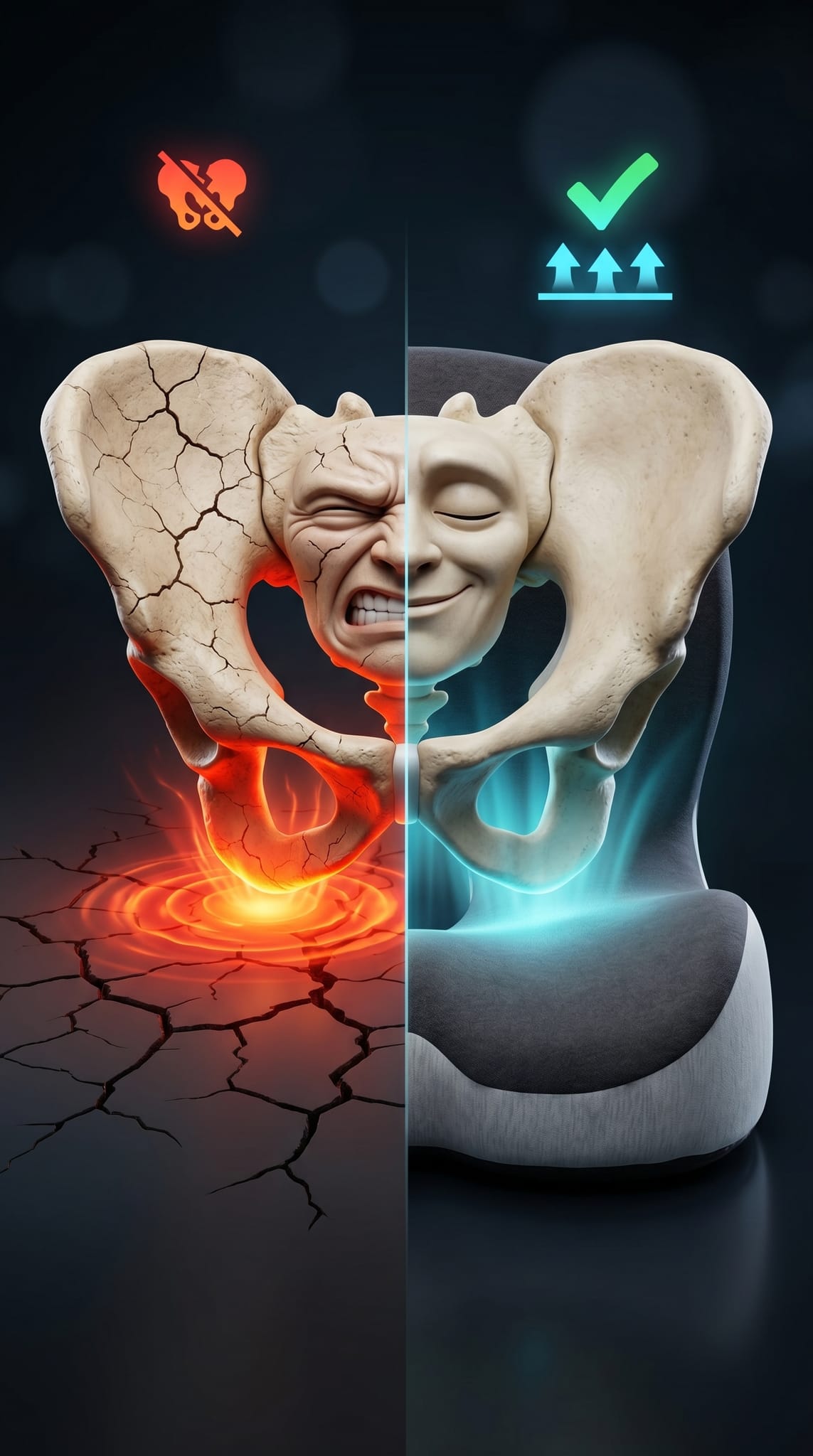
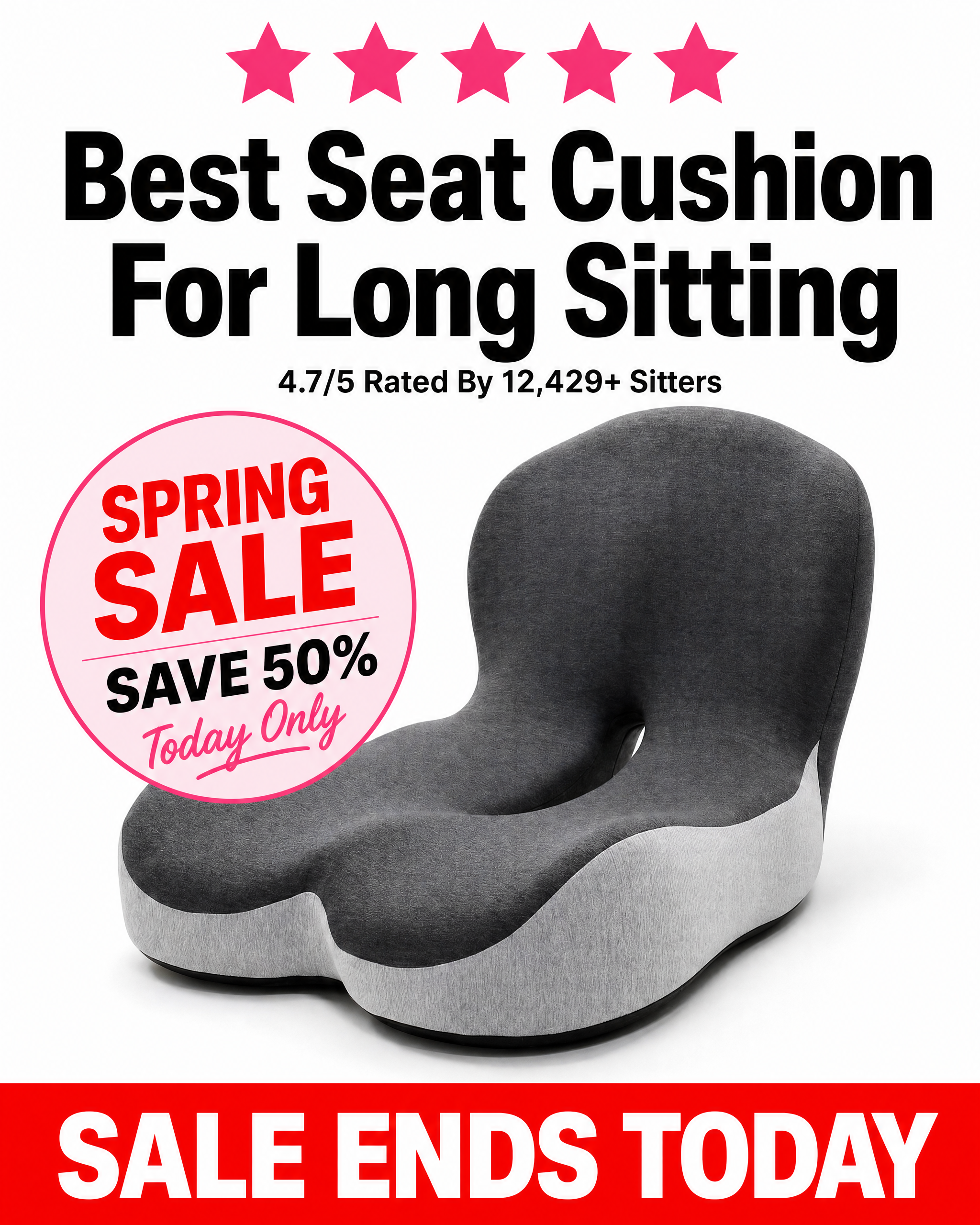
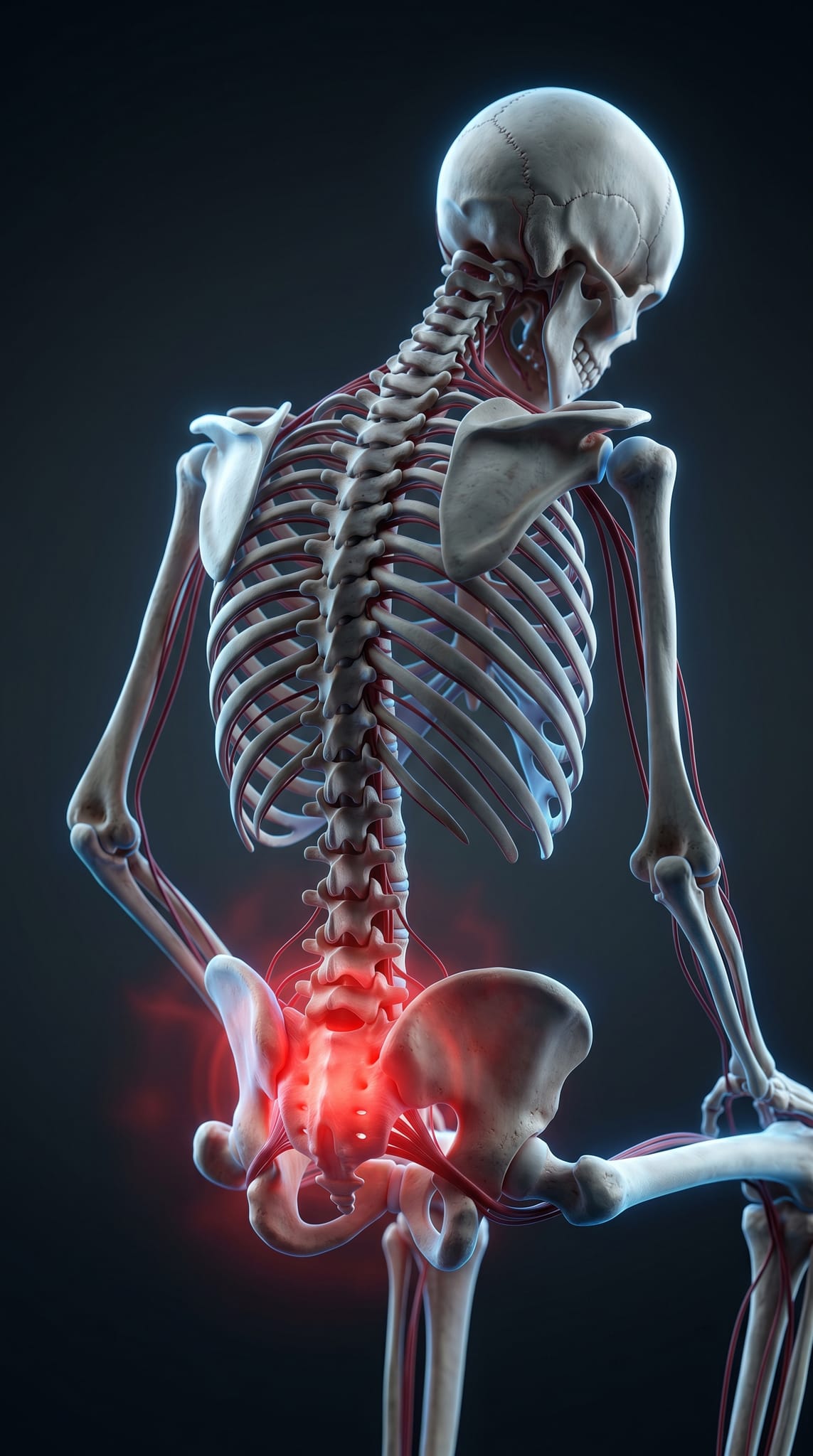
After 22 years as a chiropractor, I have to confess something. For most of my career, I was treating the wrong bone. When a patient walked into my office holding their lower back, I'd look at their lumbar spine. When they told me their leg was tingling and going numb, I'd look at their sciatic nerve. When they said the pain was at the very bottom — right where they sit — I'd give them stretches and tell them to stand up more often. And for years, that worked well enough. About 60% of my patients got real relief. The other 40% would come back six weeks later. Same pain. Sometimes worse. Apologizing, like they'd done something wrong. They hadn't. I had. I was treating the symptom — the lumbar disc, the inflamed sciatic nerve, the tight muscle in the buttock. I wasn't treating the cause. The cause is a bone most people have never thought about, sitting at the very bottom of their spine, that every chair on Earth presses on for eight, ten, twelve hours a day. It's called the coccyx. Your tailbone. And once I understood what was happening to it, I stopped losing the other 40%. Here's what almost nobody — including most doctors — explains. Your tailbone was never designed to bear weight. In our natural posture (squatting, lying, walking), it floats. It's a docking point for ligaments, not a load-bearing structure. But the moment you sit down on a flat surface, physics takes over. Your full upper-body weight — 50 to 70 pounds of torso, arms, and head — funnels down through your spine and lands on three points: your two sit bones and the tip of your tailbone. On a properly contoured chair, your sit bones take the load and your tailbone stays clear. On a flat chair — and that's nearly every chair you sit on — your tailbone takes the rest. It compresses. It bruises against the foam. Over months and years, the bone develops a chronic, low-grade inflammatory response. That, by itself, causes the dull, deep ache right at the bottom of your spine. The pain that gets worse the longer you sit. The pain that makes you shift, fidget, lean on one hip — anything to get the pressure off. But here's where it gets worse. Your spine is not a stack of independent bones. It's a chain. When the bottom link is in trouble, the links above it compensate. And when they compensate long enough, they get hurt too. So when your tailbone takes pressure it was never designed for, four things happen — in order, almost always together. One. The two joints where your pelvis meets your sacrum jam up. They're supposed to glide. Instead, they lock. That's the deep, one-sided ache you feel in your low back when you stand up after a long meeting. Two. Your lumbar spine starts compensating for the locked joints. The discs between L4-L5 and L5-S1 take extra rotational stress. That's the band of pain across your low back. The stiffness when you first wake up. The tightness that makes you want to crack it. Three. A small muscle that runs across your buttock — directly over your sciatic nerve — tightens to stabilize your now-unstable pelvis. The muscle swells. The sciatic nerve, which runs underneath it, gets compressed. Four. That compressed nerve sends signals down your leg. Tingling. Numbness. Electric-shock pain that runs from your hip to your calf or even your foot. That's sciatica. And here's the part that surprised even me: it's not a nerve problem. It's a pressure problem that started two feet higher. This is why my patients with "sciatica" almost never had a nerve injury when I imaged them. They had a mechanical problem that started at the bottom and rolled up the chain. It's why stretching your hamstrings doesn't fix it. Why ice doesn't fix it. Why even a really good chiropractic adjustment only helps for three or four days — until you sit back down on the chair that caused it in the first place. About four years ago, a patient walked into my office and dropped a receipt on my desk. Her name was Eleanor. 64. Retired schoolteacher. The most determined person I've ever treated. The receipt was for an $1,180 Herman Miller Aeron chair she'd bought to fix her back. Nine months later. Her pain was worse. "Doctor Brooks," she said, "I've spent more on chairs in the last three years than I spent on my first car. What is wrong with me?" Nothing was wrong with her. Premium ergonomic chairs — Aerons, Steelcases, the $1,500 brands — are engineered for one thing: spinal support. They contour your lumbar curve. They hold your shoulders open. They cradle your upper back. What they do not do — what they physically cannot do — is take pressure off your coccyx. Because to do that, the chair would need a hole in the middle of the seat. And no manufacturer sells a chair with a hole in the middle, because nobody would buy a chair with a hole in the middle. That's not a design flaw. It's a category mistake. A chair cannot fix a coccyx problem. Only a cushion designed to suspend the coccyx can. Two years ago, I started noticing something strange in my practice. Patients I was seeing for the first time would arrive carrying a small black-and-grey memory-foam cushion under their arm. They'd put it on the chair in my exam room before they sat down. I asked one of them what it was. She said: "My daughter sent it to me. It has a hole in it for my tailbone. I haven't sat on a chair without it in four months." By month six, I'd seen the same cushion show up about a dozen times. By month nine, it was sitting in my own office chair. It's called the CELINVA Orthopedic Cushion. It's the only product I've ever recommended in 22 years of practice without being asked to. Here's what it does and why it works, in plain English. It has a U-shaped cutout at the back. When you sit on it, the cutout sits directly under your tailbone. Your coccyx is suspended in open air — zero contact, zero pressure. That alone fixes the source of the chain reaction. The two contoured surfaces in front of the cutout cradle your sit bones, so they take 100% of your upper-body weight — exactly the way they were designed to. The joints unlock. The lumbar stops compensating. The muscle in your buttock relaxes. The sciatic nerve isn't squeezed anymore. The foam is high-density medical-grade — the same kind used in surgical recovery seating. It doesn't flatten in three months like the $25 Amazon cushions do. Mine is 18 months old and looks identical to the day it arrived. And it works on every chair. Office chair, car seat, dining chair, wheelchair, airplane seat. One cushion follows you through your whole day. Here's what changed in my practice. The 40% of patients who used to come back six weeks later, in the same pain — that number is now about 8%. The ones who do improve, improve fast. Deep tailbone pain is usually gone within the first week of consistent use. Lumbar tightness takes three to four weeks because the joints need time to unlock. Sciatica was the one that genuinely surprised me. I had assumed nerve damage from chronic compression would take months to resolve, if it resolved at all. In practice, most patients report 70 to 80% reduction in sciatic pain within two to three weeks. Because the nerve wasn't damaged. It was being squeezed. Remove the squeeze, the symptoms fade. Eleanor — the schoolteacher with the Herman Miller — sold the Aeron on Facebook Marketplace three months after starting on a CELINVA. She told me she felt silly. I told her she shouldn't. She'd done what everyone is told to do. The problem is that everyone is told the wrong thing. I now keep a stack of these cushions in my office and sell them at cost to my patients. I don't make money on them. I just got tired of watching people spend $4,000 a year on chiropractic care and $1,200 on chairs and $1,600 on physical therapy — when the actual fix costs less than a tank of gas. Let me do the math for you. Ergonomic chair: $800 to $1,200. Weekly chiropractic care: $75 to $150 a session. $3,000 to $5,000 a year. Physical therapy: $200 a session, 8 sessions minimum. $1,600 and up. Standing desk: $400 to $800. Two or three cheap cushions from Amazon that went flat in months: $60 to $120. Total: $5,800 to over $8,000. And the pain is still there. The CELINVA cushion right now, on the Mother's Day sale, is $54.95. Half off the regular $109.90. That's roughly 1% of what most of my patients have already spent. It comes with a 60-day money-back guarantee, OEKO-TEX certification (non-toxic, hypoallergenic), and free shipping. The company says only 0.5% of customers have ever used the guarantee. That tracks with what I've seen in my own practice. If you have tailbone pain, back pain, or sciatica that gets worse the more you sit, here's what I would tell you if you were sitting across from me in my office: The pain is not in the part that hurts. It almost never is. Your chair is not going to fix it, no matter how much you paid. Chairs are the wrong tool. You don't need surgery. You don't need a new mattress. You don't need to "just live with it." You need to take pressure off one specific bone. A $55 cushion with a properly placed U-shaped cutout and high-density foam will, in most cases, do more for you than a year of chiropractic care. I say that as a chiropractor. It doesn't make me popular with my colleagues. I'm not in this for popularity. And if you try it and it doesn't help — every penny back. That removes the only real reason not to try. Read the full breakdown (with anatomical diagrams of exactly what I'm describing) at the link below. The 50% off Mother's Day pricing ends Sunday. → celinva.com — The Hidden Bone Behind Tailbone Pain, Back Pain, And Sciatica (And The 60-Second Fix Most Doctors Won't Tell You About) — Dr. Daniel Brooks, DC Board-Certified Chiropractor, 22 years
After 22 years as a chiropractor, I found the real cause of tailbone, back, and sciatic pain
The one bone every chair ignores — and the $55 fix that ended my own back pain.
LEARN MORELike this ad? Make it yours.
Crush rebuilds this exact creative around your product — your brand, your colors, your offer — in about a minute.