
Stopped· since Jan 14, 2026
- 9
- days it ran
- 0
- relaunches
Ad copy
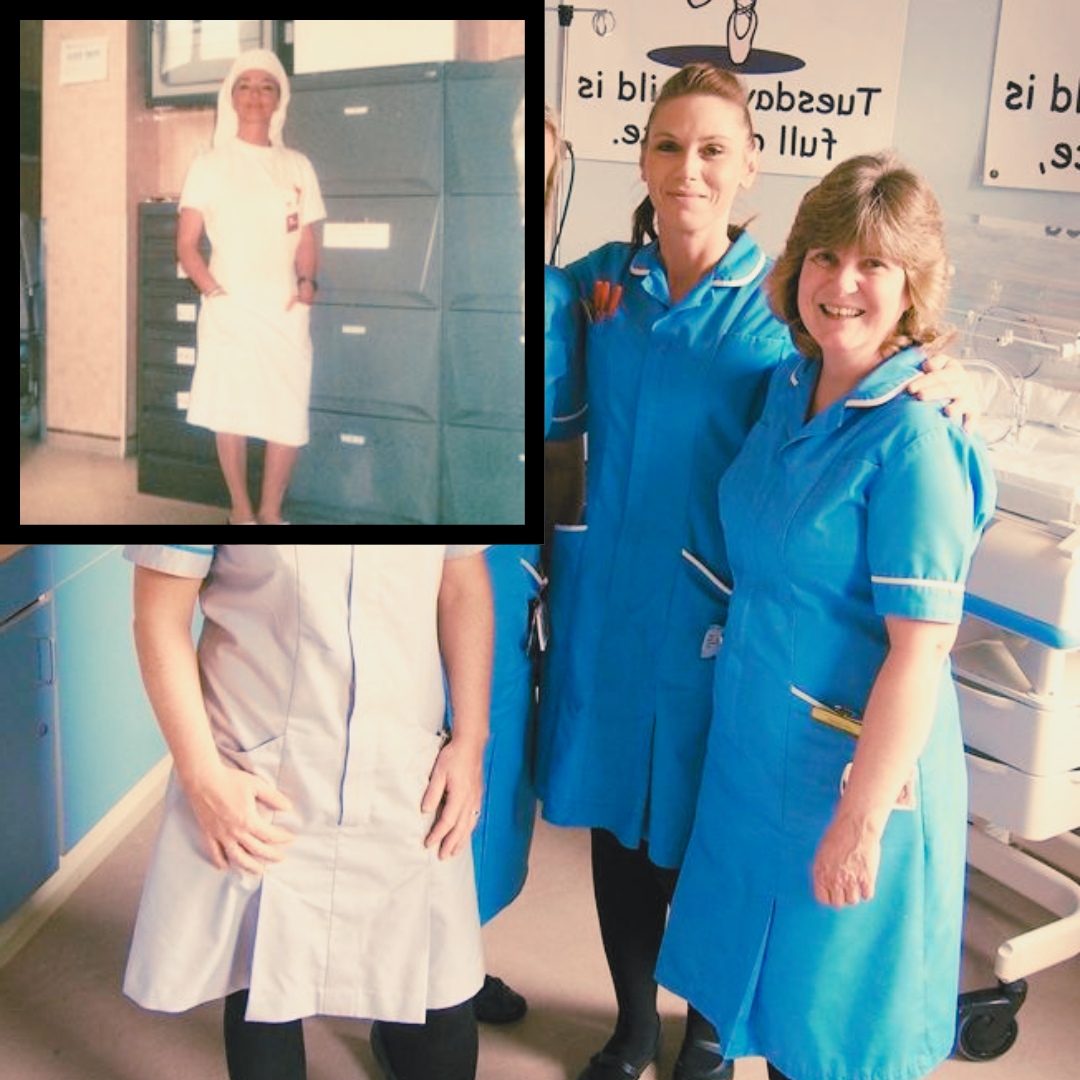
My mother's career as an ER nurse stopped cold at 52. She didn’t choose to retire. But perimenopause stole her ability to do her job. My mom was 44 when perimenopause started in 2002. A woman from a small town in Ohio who'd worked night shift in the ER her whole adult life. The kind of nurse who stayed calm during traumas, who could handle gunshot wounds and heart attacks without flinching, who never panicked no matter how bad it got. Six months later she had a panic attack so severe during a trauma that another nurse had to take over her patient. She became the patient. The nurse who never lost her cool. Until she couldn't stop losing it. She battled it for 8 years. Night shift ER work while her body was falling apart. She never talked about what those years felt like. Not once. Even now, she won't say much about that time. But there's one thing from perimenopause she can't escape. High cortisol. If you don't know what high cortisol during perimenopause does, it's when your stress hormone stays dangerously elevated because your declining estrogen and progesterone can no longer regulate it. Your body stays in constant fight-or-flight. Millions of women go through it. Doctors told her it was "just stress" and to "manage it better." They had no idea what it would do to her. Now 24 years later, her body is still recovering from what it did. About 10 years ago, when I hit 42, I started waking up at 3am with my heart racing. At first I thought it was just getting older. Then came the anxiety that wouldn't shut off. The constant fatigue even after sleeping 8 hours. Brain fog so thick I'd forget why I walked into a room. And cortisol readings that kept climbing higher and higher no matter what I did. The doctor called it perimenopause-induced cortisol dysregulation. High cortisol. Caused by hormonal changes. They acknowledged it was hormone related. Put it in my file. Gave me a pamphlet about stress management. And then they told me to try meditation and ashwagandha. First ashwagandha. Within two weeks, my anxiety dropped a little. My cortisol came down from 31 μg/dL to about 27. But I was still waking at 3am in a panic. Still exhausted all day. Still gaining weight around my middle no matter how clean I ate. And my numbers? Still dangerously high. The ashwagandha was masking symptoms and doing almost nothing for the root cause. So they suggested therapy for the stress. That one helped me process my emotions, gave me coping tools, taught me breathing exercises. My therapist was wonderful. But my body didn't get the memo. The memory problems got worse. Forgetting appointments I'd just made. Forgetting entire conversations with my kids. Brain fog so bad I couldn't finish sentences. And every morning, my saliva cortisol test would still show 210 on the scale. We tried everything the wellness industry suggested. Cut out all caffeine. Yoga four times a week. Meditation every single morning. Magnesium glycinate before bed. Evening walks. Following every "lower cortisol naturally" protocol to the letter. Nothing worked. Eventually, I stopped taking the ashwagandha altogether. It wasn't fixing why my cortisol was high—it was just temporarily suppressing the symptoms. My numbers went right back up to 29, but at least I wasn't fooling myself anymore that I was addressing the real problem. I stopped meeting friends for lunch. Stopped going to book club because I couldn't focus long enough to read. Stopped driving anywhere unfamiliar because I was terrified of having a panic attack while driving. I'd just sit at home after work, too anxious to make plans, constantly worried about when the next wave of symptoms would hit. After my youngest graduated college two years ago, my husband became my main support system. And every time he looked at me, I could see the worry. I looked exhausted. Defeated. Scared of where this was heading—early dementia, chronic fatigue syndrome, complete burnout like my mother went through. I was in this Facebook group for women dealing with perimenopause and high cortisol. I'd joined it hoping to find something—anything—that might help me avoid what happened to my mom. Someone posted asking what actually worked for bringing cortisol down without just masking it with adaptogens that stop working. I scrolled through the comments. Most people said the same things. More magnesium. More ashwagandha. "Nothing really works long-term." But then I kept seeing the same thing mentioned. Moringa powder. One woman wrote six paragraphs about how her cortisol dropped from 28 to 15 in four months just by taking it twice daily. She said when her hormone specialist saw her results, he asked what new medication she'd started and refused to believe it was just a plant powder. I read other posts in the group. Women talking about how regular moringa didn't work, but when they switched to a specific type, everything changed. I ordered it that same day. I showed up at my mom's house a few days later with the bag of powder. "Mom, I want you to try something new." She just looked at the green powder and back at me. "Another one?" Not angry. Just tired. Just... done trying things that don't work. "Yeah, Mom. Another one. But this one's different." She gave me that sad little smile. The one that says she's heard this before. "That's what you said about the magnesium. And the B-complex. And the ashwagandha. And the meditation apps." I made her a smoothie with a teaspoon of the powder that first morning. She drank it. Nothing happened immediately. Maybe slightly more energy that afternoon, but nothing dramatic. After a week, her cortisol dropped from 26 μg/dL to 23. Better, but not life-changing. Still waking at 3am. Still exhausted all day. So I ordered a different brand. This one was cheaper, came in capsules instead of powder, had good Amazon reviews. After two weeks on that one, her numbers stayed about the same. Maybe 22 on good days. Still way too high. Still waking up anxious. Still unable to focus. I was getting frustrated. Everyone in that Facebook group kept saying moringa worked. But it clearly wasn't working for my mom. Or maybe moringa just didn't work at all and these people were making it up. Then I went back into the group and started reading the comments more carefully. That's when I noticed something. People weren't just saying "moringa." They were getting extremely specific about which moringa. One woman said she tried five different brands before finding one that actually worked. Another woman mentioned that most moringa powder sold online is "mature leaf powder"—the older, tougher leaves that don't have any of the nutrient density or bioavailability. Like buying tea dust instead of whole tea leaves. I started digging into the research. Turns out, most moringa supplements are: Made from mature leaves (much lower nutrient content) Grown at low elevations (weaker mineral concentration) Heat-processed (destroys vitamin C and heat-sensitive enzymes) Mixed with fillers or flow agents Not tested for heavy metals or pesticides The moringa powders that actually worked for cortisol had to be: Young leaf harvest (picked at peak nutrient density) Grown above 1,000 meters elevation (higher antioxidant and mineral levels due to stress conditions) Shade-dried or freeze-dried (preserves heat-sensitive nutrients like vitamin C) 100% pure powder with no additives Third-party tested for purity and heavy metals The people in the Facebook group who got real, lasting results kept mentioning the same brand over and over. In multiple threads. In response to different questions. Women who'd tried everything else. Rosabella Moringa. I ordered it. It was significantly more expensive than the ones I'd tried. But at that point, I didn't care about the cost. This was my mother. The woman who went through 8 years of hell during perimenopause and I watched her disappear. If there was even a chance this could help her, money didn't matter. When it arrived, I could tell the difference immediately just by looking at it. The powder was vibrant green—almost emerald—not the dull, brownish-green of the cheap stuff. The smell was fresh and grassy, almost sweet. When I mixed it in water, it dissolved smoothly instead of clumping into gritty chunks that floated on top. I made my mom a smoothie that first morning. Added a full teaspoon, blended it with almond milk, a banana, and a little honey the way she likes it. The next morning I called her. "How'd you sleep? How are you feeling today?" "I don't know. I woke up at 4am instead of 3, so that's something. Fell back asleep for an hour. I can't remember the last time that happened. Maybe it's nothing." I didn't give up. I went back that evening and made her another smoothie. And the next morning. And the next evening. I started making them in batches and bringing them over so she'd have them in her fridge. On the eighth morning, my phone rang at 8:15am. Mom never calls that early. When she calls in the morning, something's wrong. "I got my cortisol test results back from yesterday," she said. Her voice was shaking. "19. Nineteen. I made them test it twice because I thought the lab made a mistake. It hasn't been under 23 in over four years." I didn't say anything for a second. Just stood there in my kitchen with the phone pressed to my ear, tears starting. My mom seeing a cortisol number below 20 felt impossible after all these years. "That's incredible, Mom." "Yeah," she said, and I could hear her crying now too. "And I slept until 6am this morning. Just... slept. No panic. No racing thoughts. I forgot what that felt like." Now she makes it herself, twice a day, every single day. Morning smoothie with breakfast and an afternoon drink around 3pm. She keeps the bag on her kitchen counter right next to the coffee maker so she never forgets. It's been just over six months now. Last week I came over and she was out in her garden planting bulbs for spring. On her knees in the dirt, actually gardening. She hasn't had the energy or focus to garden in over five years. "Got my cortisol checked on Tuesday," she said, barely looking up from digging. "13." She said it so casually. Like it was nothing. I made her show me the lab printout. Cortisol: 13 μg/dL. Not 26. Not 23. Not 19. Thirteen. Now she's back to her book club—went last week and actually remembered the entire plot of what she read. Back to meeting her sister for lunch every Thursday. The 3am panic attacks that used to wake her up in a cold sweat? Gone completely. The brain fog that made her feel like she was losing her mind? Cleared up within the first month. The weight around her middle that wouldn't budge no matter what she did? She's down 18 pounds without changing anything else about her diet. And her endocrinologist? The one who'd been managing her hormones for six years? Couldn't believe the results. Asked her four separate times what she was taking because "adaptogens don't produce these kinds of objective changes in cortisol levels." When she told him it was moringa, he actually wrote down the brand name. We've ordered twelve bags since then. I keep two at her house, two at mine, one in my office, one in my car, and backups in both our closets. This is not something we are ever going to risk running out of again. Now here's the part that matters for me personally. I started taking it three months ago. Because perimenopause runs in families. My mom started showing symptoms at 44. I'm 42 now. And before I found Rosabella, my cortisol was climbing to 29. Three months of taking it twice daily—every single morning and evening, no exceptions—my cortisol is down to 17. I sleep through the night now. Seven hours straight, sometimes eight. The anxiety that used to sit in my chest 24/7 like a weight I couldn't shake? Gone. The brain fog that made me feel like I was thinking through mud? Cleared completely within six weeks. I can think clearly again. I can remember conversations. I can focus long enough to read a book. I feel like myself again. Like the person I was before perimenopause started stealing my mind piece by piece. My daughter just turned 19. When she asks me about perimenopause someday—and she will, because she's already asking questions about what happened to her grandmother—I'm not going to tell her the horror story my mom lived through for 8 years. I'm going to tell her exactly what actually works. I'm going to tell her about the difference between cheap moringa and the kind that actually replenishes what cortisol depletes. I'm going to make sure she never has to go through what my mom did. Or what I almost did. Sorry this is so long, but I needed to share our story. I'm posting this in Facebook groups, in perimenopause forums, anywhere women are suffering the way my mom suffered. Because if it helps even a few women dealing with high cortisol during perimenopause or menopause—whether it's genetic like it is in my family, hormone-related, from chronic stress, or you don't even know why your numbers are dangerously high—it'll be worth it. My mom dealt with cortisol levels above 25 for eight years during perimenopause and then continued dealing with elevated levels for another 16 years after menopause ended. She thought that was just how her body was going to be for the rest of her life. Damaged. Broken. Unfixable. But not all moringa is created equal. Most of what you find online won't work because it's made from mature leaves, heat-processed incorrectly, grown at low elevations, or mixed with fillers that block absorption. Rosabella Moringa's organic, high-altitude, young-leaf powder is the only one that worked for us after trying multiple brands that did absolutely nothing. Eight days after she started drinking it consistently, her cortisol started dropping for the first time in years—real, measurable drops, not just "feeling a little better." Six months later, her cortisol is 13 and she's planting bulbs in her garden again. Laughing again. Living again. Now I'm taking it too. Every single day. Because I watched what happened to my mother, and I refuse to let that be my story. I refuse to lose 8 years of my life to something that has a solution. My mom's cortisol went from 26 to 13 in six months. Mine went from 29 to 17 in three months. I'm still going down. Still improving. Still getting better. This isn't just about numbers on a lab test. It's about getting your life back. Your mind back. Yourself back. Amazing product. Life-changing results. Thank you, Rosabella Moringa. Jennifer K. Check it out below: https://shop.tryrosabella.com/npl P.S. - A few things I wish I'd known before ordering: When I first ordered Rosabella Moringa for my mom, I didn't know they had a 90-day money-back guarantee. If it doesn't work for you—if your cortisol doesn't come down, if you don't feel the difference—you get your money back. No questions asked. I wish I'd known that before I wasted money on those other brands that did absolutely nothing. Most people buy it at regular price, but right now they're running a promotion where you can get it at a significant discount. That's actually how I was able to stock up on twelve bags—the discount made it possible to buy in bulk so we'd never run out. The only problem is that Rosabella is a small, family-run company. They're getting really popular now (probably because people like me keep posting about it in perimenopause groups and hormone forums), and they can't always keep up with demand. Their last batch sold out in less than 48 hours. I want to apologize in advance because when you click the link below, you might see that they're sold out. I've seen women in the cortisol support groups say they waited three months before Rosabella was back in stock, and by that time their symptoms had gotten even worse. But I'd still suggest clicking to check if they have any inventory left. If you're dealing with high cortisol, 3am panic attacks, brain fog that makes you feel like you're losing your mind, or weight around your middle that won't budge no matter what you do—and especially if you're in perimenopause or menopause and adaptogens like ashwagandha are only giving you temporary relief that doesn't last—I would grab some before they sell out again. My mom went from 26 to 13 in six months. I went from 29 to 17 in three months. If there's even a chance this could work for you, or for someone you love who's suffering the way my mom suffered, it's worth trying. The 90-day guarantee means you have nothing to lose. And based on what it gave back to my mother—her sleep, her mind, her life—you have everything to gain. Check if Rosabella Moringa is in stock here: https://shop.tryrosabella.com/npl
Unlock Your Body’s Full Potential
“I’ve been feeling lighter, more energized, and more focused since starting Rosabella Moringa. I love how it’s helping me feel more balanced overall.”
LEARN MORELike this ad? Make it yours.
Crush rebuilds this exact creative around your product — your brand, your colors, your offer — in about a minute.