Raising Sharp Kids
Raising Sharp Kids Facebook ad: “She's been doing dance for two years because her friend…”
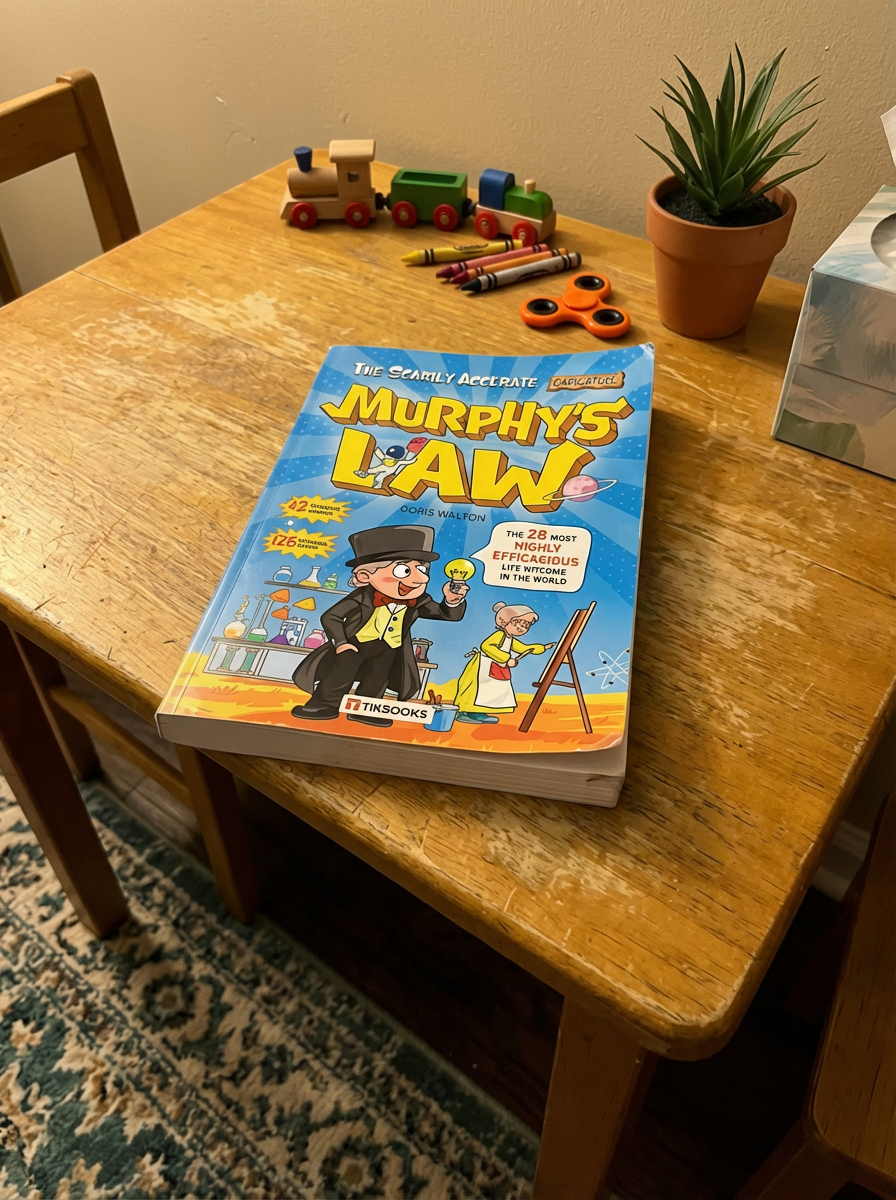
Ran for 73 days, from February 25 to May 9, 2026, the last day Crush saw it.
Run by Raising Sharp Kids on Facebook. Crush is not the advertiser and does not verify its claims. See this ad in Meta's Ad Library(opens in a new tab)
Want an ad like this for your product?
Crush makes new ad images for your product from this ad: your logo, your product photo, your offer.
Trials from $19.95 USD, then $79.95 USD a month. Cancel anytime.
About this ad
- Meta Ad Library ID
- 1212650737682397
- Platforms
- Facebook, Instagram, Audience Network, Messenger and Threads
- Relaunches
- 1
Ad text
My daughter's friend slept over last weekend and I watched her ask my daughter's permission before choosing a slice of pizza. Not politely. Fearfully. "Is it okay if I take this one? Or did you want it? I can take a different one. Whatever you want." She's 9 years old. Asking permission to eat pizza. I looked at her mom — my neighbor Jen — picking her up an hour later. I mentioned it casually. Jen's face changed. "She does that with everything. Asks permission to exist. She won't pick a movie. Won't say what she wants for dinner. Won't tell a friend she doesn't want to play a game she hates. She just goes along with whatever anyone else wants and comes home miserable." She paused. "Her teacher told me she won't even answer a question in class unless she checks the faces of the kids around her first. If they look like they agree, she'll say it. If she can't tell, she says nothing." I drove home that night thinking about Jen's daughter. But I wasn't really thinking about Jen's daughter. I was thinking about mine. Because two hours earlier, before the pizza, I'd heard them talking in her room. Jen's daughter: "What do you want to do?" My daughter: "I don't care. Whatever you want." "We could watch a movie?" "Sure. You pick." "Or we could draw?" "Sure. Whatever you want to do." "What do YOU want to do?" "I literally don't care. Anything is fine." Five rounds of "whatever you want" and neither child could make a single decision without the other one going first. I stood in the hallway and a thought hit me so hard I sat down. My daughter isn't flexible. She's empty. She doesn't say "whatever you want" because she's easy-going. She says it because she has no idea what she actually wants. Or worse — she knows, but she's so afraid of choosing wrong that she'd rather have someone else decide and be privately disappointed than risk making a choice someone might not like. She's 10 and she's already learned that having no opinion is safer than having the wrong one. I went back through the past year. Every "I don't care" at dinner. Every "you pick" with her friends. Every "whatever you think" when I asked what she wanted to do on the weekend. I thought she was being agreeable. She was being invisible. The next morning I tested it. "Lily, what do you want to be when you grow up?" "I don't know." "What's your favorite subject in school?" "Umm... I don't know. Whatever." "What's one thing you wish you could do that you're not doing right now?" Long pause. She looked at me like I'd asked her to solve a math problem she'd never seen. "I don't know, Mom. Why are you asking me all this?" Because you're 10 years old and you don't know a single thing about yourself. I didn't say that. But I thought it. And it terrified me. Because I know exactly where this goes. I know because I was this girl. The people-pleaser. The "I don't care" girl. The one who agreed with everything, went along with everyone, and couldn't tell you what I actually wanted until I was 30 and in therapy trying to figure out why I was so unhappy with a life I'd technically "chosen." I didn't choose anything. I just went along with whatever was in front of me. And now I was watching my daughter do the same thing. Two weeks later I was at a birthday party and watched a girl — Hannah, maybe 11 — walk up to a cluster of kids choosing an activity. Someone said "Let's do the trampoline." Everyone started heading that direction. Except Hannah. She said: "I want to do the obstacle course. You guys go ahead." No drama. No attitude. No checking faces. She just said what she wanted and walked toward it. Three kids stopped and followed her. I found Hannah's mom. "How does your daughter do that? Mine would never." Hannah's mom smiled. "Hannah was the biggest people-pleaser you've ever seen. She used to cry in the car after playdates because she spent the whole time doing what everyone else wanted." "So what changed?" "My sister gave her a comic book. Murphy's Law. Hannah picked it up because it looks like a comic. She read about the Herd Effect — why people follow crowds even when they don't want to — and came to me and said, 'Mom, I've been herding my whole life. I never do what I want because I'm always following everyone else. But nobody in the group is actually choosing either. We're all just copying each other.' She's 11." "A comic book?" "Hundreds of psychological principles in comic form. Why people follow. Why people can't say no. Why it feels impossible to have your own opinion when everyone has a different one. And WHY it feels scary to want something different from the group. Once Hannah understood the WHY, the behavior changed on its own. She didn't need me to tell her to 'be herself' anymore. She could see what was making her NOT be herself. And the Reciprocity Effect — Hannah had a friend who did one small nice thing and then used it as leverage to make Hannah do whatever she wanted. Hannah thought she OWED her. After reading that chapter she said 'Mom, that's not friendship. That's a transaction. Real friends don't keep score.' She set a boundary with that girl the next week. First time in her life." I ordered the book from my phone at that party. Left it on the kitchen counter when it arrived. My daughter picked it up that evening. Ninety minutes later she found me. "Mom. The Herd Effect. People follow groups because their brain tells them the group must be right. Even when nobody in the group is actually thinking. Everyone is just copying everyone." She got quiet. "I do that every day. When my friends pick something, I just go along with it. I thought I was being nice. But I'm not being nice. I just don't know what I actually want because I'm always too busy figuring out what everyone else wants." Day four. "Mom. The Reciprocity Effect. When someone does something nice for you, your brain feels like you have to do something back. But some people use that on purpose. They do one small nice thing and then act like you owe them forever." She paused. "That's what Grace does to me. She shared her snack with me ONE TIME in September and she's been using it ever since. Every time she wants me to do something she says 'remember when I shared with you?' That's not generous. She's keeping score." "What are you going to do?" "Stop playing that game. If she's nice to me, cool. But I don't owe her anything because of a granola bar from four months ago." She said that. She's 10. Week two. "Mom. Today at lunch everyone wanted to sit outside. I didn't want to. It's cold. Normally I would just follow." "What happened?" "I said I was sitting inside. Priya and Leah came with me. They didn't want to sit outside either. They were just waiting for someone to say it." Week three. "Mom, someone asked me what my favorite movie is today and I actually told them." "Why is that a big deal?" "Because normally I wait to hear what they say first and then agree. But today I just said it. And nobody was mad. Nobody thought I was weird." She looked surprised. Like she'd found a door that was there all along. Week four, her teacher emailed me. "I've noticed a significant change in your daughter. She's raising her hand with her own answers. In group projects she's contributing ideas instead of just agreeing with the leader. Last week she respectfully disagreed with a popular student. I've never seen her do that. Whatever you're doing, keep it going." The book. All from the book. But the moment I keep coming back to happened when Jen's daughter came over again. They were deciding what to do. Jen's daughter started the routine: "What do you want to do? Whatever you want is fine." My daughter said: "I want to draw. But you don't have to. What do YOU actually want to do?" Jen's daughter looked stunned. "I... I want to draw too, actually." "Then let's draw." No five rounds. No invisible negotiation. Just two kids saying what they wanted. Then my daughter slid the book across the table. "Ella. Read this page." Ella read the Herd Effect chapter. Then the Reciprocity Effect. Then Buridan's Donkey. She looked up. "Wait. Is this why I always let Mia pick everything? Because I'm scared if I pick something she'll be mad?" "Yes. But Mia isn't actually deciding either. She's just louder. She's not more sure than you. She's just not afraid to say it." Ella's eyes got wide. "Nobody is actually choosing. Everyone is just waiting for someone to go first." My daughter nodded. "The whole thing is fake. Once you see that, it's so much easier to just say what you want." Jen called me that night. "Ella came home and told me she's been 'herding' her whole life. She told me she actually wants to do gymnastics — not dance. She's been doing dance for two years because Mia does dance. Two years doing an activity she didn't even want because she was afraid of having a different opinion." She ordered the book before we hung up. Here's what I wish someone told me twenty years ago. A people-pleaser doesn't look like a problem child. They look like the easiest child you'll ever raise. They agree with everything. Never cause conflict. Every teacher loves them. And underneath all of that — they're disappearing. Bit by bit, "whatever you want" by "whatever you want" — building a life that belongs to everyone else. I know because it took me until my thirties. My daughter won't wait that long. Because a comic book showed her WHY she was invisible — and once she could see the machinery, she could step out of it. That book — Murphy's Law by Doris Walton — sits on her nightstand now. Dog-eared. Highlighted. If your child says "I don't care" but you can tell they do — If they agree with everyone but come home miserable — If they can't make a choice without checking someone else's face first — It's not shyness. It's not being easy-going. It's a child who learned that having no opinion is safer than having the wrong one. And they need to understand WHY before they build an entire life on that belief. Before "whatever you want" becomes "whatever you need me to be." Before the people-pleasing stops being about lunch tables and starts being about relationships and careers and decades. Everything I've read says before 13 is when these patterns set like concrete. Murphy's Law by Doris Walton is still available. Leave it on the table. You won't have to say a word.
Where the ad sends people
curiousmindsbook.com
She's been doing dance for two years because her friend does dance. She actually wants to do gymnastics.
My daughter said "I don't care" so much I thought she was easy-going. She wasn't. She was disappearing.
Learn more: curiousmindsbook.com(opens in a new tab)