Redera
Redera Facebook ad: “Read this if your dog had surgery recently”
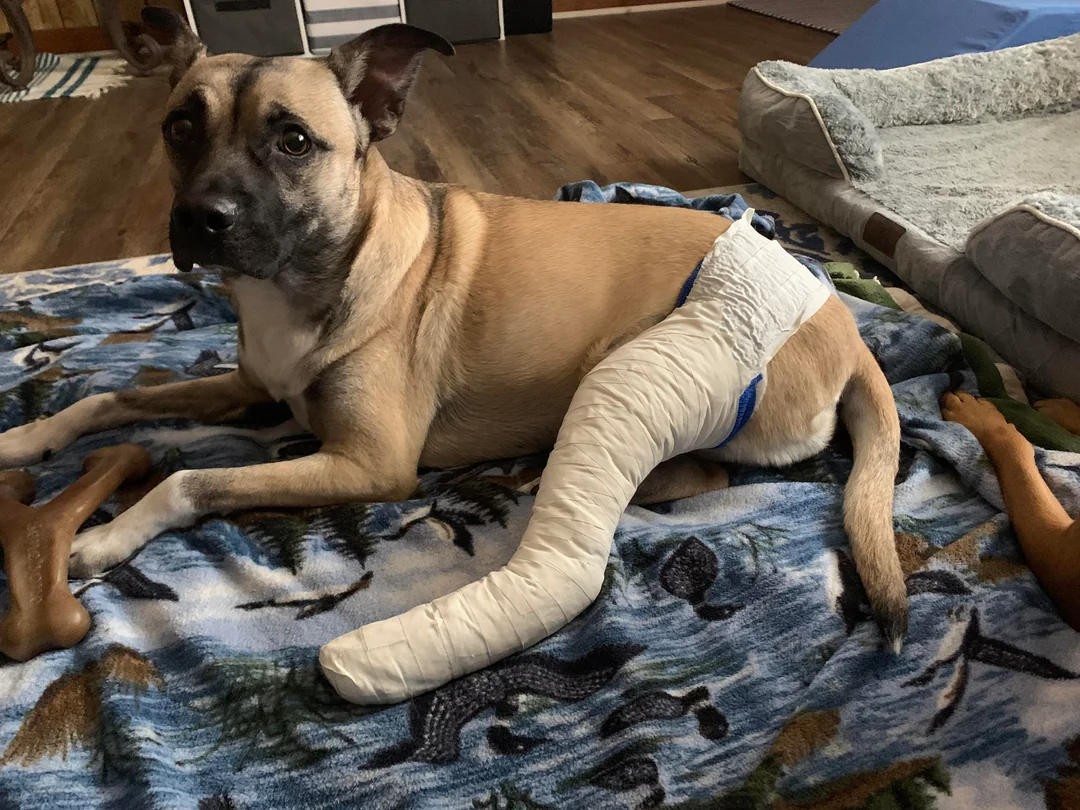
Ran for 33 days, from January 20 to February 22, 2026, the last day Crush saw it.
Run by Redera on Facebook. Crush is not the advertiser and does not verify its claims. See this ad in Meta's Ad Library(opens in a new tab)
Want an ad like this for your product?
Crush makes new ad images for your product from this ad: your logo, your product photo, your offer.
Trials from $19.95 USD, then $79.95 USD a month. Cancel anytime.
About this ad
- Meta Ad Library ID
- 1217936246423785
- Platforms
- Facebook, Instagram, Audience Network, Messenger and Threads
- Relaunches
- 0
- Niche
- Pets
Ad text
When Dr. Richardson told me Bailey's TPLO recovery would take 12 to 16 weeks, I didn't just accept it. I asked him directly: "What determines whether we're looking at 12 weeks or 16? What makes the difference?" I'm 68 years old. I've had Bailey since he was eight weeks old—he's seven now. When a professional gives me a range like that, I want to know what controls the outcome. I'm not someone who leaves important things to chance. Dr. Richardson leaned back in his chair. He said most owners don't think to ask that question, but it's actually the most important one. "The surgery fixes the structural problem," he explained. "I cut the bone, rotated it, plated it back together. That part is done. But recovery time—how fast the bone fuses, how quickly inflammation resolves, whether complications develop—that's determined almost entirely by the cellular healing conditions you create at home." He told me something I hadn't considered: Your dog's cells are either producing enough energy to heal efficiently, or they're not. And after surgery, when inflammation is high and circulation is compromised at the surgical site, most dogs' cells aren't getting enough energy to heal at optimal speed. "I've been doing orthopedic surgery for 22 years," Dr. Richardson said. "I've performed over 2,000 TPLO procedures. And about six years ago, I started tracking something specific: recovery timelines based on post-operative cellular energy support." He pulled up a chart on his computer. "Dogs whose owners implement photobiomodulation therapy—supporting cellular ATP production at the surgical site—average 10 to 12 week recoveries. Dogs whose owners don't average 14 to 16 weeks. That's a consistent pattern over hundreds of cases." I asked him to explain why cellular energy matters that much. He opened a diagram of the TPLO surgery on his screen. "Right now, Bailey's tibia has been cut and plated back together with six screws. Over the next 12 to 16 weeks, four critical processes need to happen for him to recover." First: Bone fusion. "The cut bone needs to heal back together—that's called ossification. Bone cells have to multiply and bridge the gap we created surgically. That process requires enormous cellular energy—ATP. Every new bone cell formed requires ATP. Every calcium ion transported requires ATP. Every protein synthesized requires ATP." "Here's what most owners don't realize: bone healing is extremely energy-intensive. When Bailey's body tries to heal that bone, it needs the cells at the surgical site to produce 3 to 4 times their normal ATP output. But post-surgical inflammation and reduced circulation mean those cells are actually producing LESS ATP than normal." "You have cells that need maximum energy output operating at minimum capacity. The difference between 12-week bone fusion and 16-week bone fusion often comes down to whether those cells had adequate ATP production during the healing period." Second: Soft tissue healing. "We also cut through muscle, fascia, and joint capsule to access the bone. All of that needs to heal. The quality of that healing determines whether Bailey ends up with minimal scar tissue and full flexibility, or excessive scar tissue and permanent restriction." "Soft tissue healing depends on collagen formation. Your body produces collagen fibers that knit torn tissue back together. But collagen synthesis is ATP-dependent—every step requires cellular energy. At optimal ATP levels, you get organized, flexible collagen. When ATP production is inadequate—which is typical post-surgery—collagen synthesis becomes disorganized. Disorganized collagen equals excessive scar tissue. Excessive scar tissue equals restricted range of motion and chronic stiffness." Third: Inflammation control. "Some inflammation is necessary for healing. But excessive inflammation causes problems—pain, swelling, tissue damage, delayed recovery. Your body controls inflammation through ATP-dependent processes. Immune cells that clear inflammatory debris need ATP. Anti-inflammatory signaling requires ATP. When cellular energy is adequate, inflammation stays controlled. When it's not, inflammation persists." Fourth: Muscle preservation. "Bailey can't use his leg normally for 12 weeks. That causes muscle atrophy—the quadriceps and hamstrings waste away from disuse. The less muscle he loses during recovery, the faster he'll regain full function afterward. Muscle cells need ATP to maintain their structure even when not actively contracting. Low ATP equals accelerated atrophy. Adequate ATP equals preserved muscle mass." Dr. Richardson closed the diagram. "So when you ask what determines 12 weeks versus 16 weeks—it's whether these four processes happen with adequate cellular energy or inadequate cellular energy. And adequate energy means supporting mitochondrial ATP production at the surgical site." I asked the obvious question: "Why doesn't everyone do this? Why isn't this standard post-operative care?" He sighed. "Because it's not taught in veterinary school. Orthopedic residencies teach surgical technique, medications, physical therapy protocols. Photobiomodulation isn't part of the curriculum. Most vets send patients home with pain meds and restriction instructions. The idea that you can directly influence cellular energy production with light therapy—it sounds too simple to work." "But I've tracked it in my own patients for six years now. The pattern is undeniable. Dogs whose owners implement photobiomodulation recover faster. It's consistent enough that when I review a case at the 4-week mark, I can usually tell whether the owner is using light therapy just by looking at healing progress." He showed me what he uses for his own dog—a Golden Retriever named Duke who had TPLO surgery three years ago. "This is a Redera dual-wavelength pad," he said, showing me a photo on his phone. "Two specific wavelengths engineered to maximize mitochondrial response. 660 nanometers—red light that penetrates surface tissue and triggers ATP production in cells near the incision. 850 nanometers—near-infrared that penetrates 2 to 3 inches deep into the bone and muscle." "It's not a heating pad," he emphasized. "It's not warmth that matters—it's specific light wavelengths that mitochondria absorb and convert into increased ATP production. That's photobiomodulation. You're directly supporting the cellular energy production that drives all four healing processes." "When Bailey lies on this for 15 to 20 minutes twice daily, those wavelengths penetrate into his knee. His mitochondria absorb the light energy. ATP production increases 150 to 200 percent in the treated tissue. With adequate ATP, bone cells can multiply rapidly. Collagen synthesis proceeds in organized patterns. Inflammatory control mechanisms work efficiently. Muscle cells maintain their structure." I asked about Duke's recovery. Dr. Richardson pulled up his medical file. "Duke was weight-bearing on the surgical leg by week two. Most dogs aren't weight-bearing until week three or four. By week four, his physical therapist noted that his joint mobility was 'excellent for this stage—no excessive scar tissue formation.' At week six, he was walking normally without a limp. Most dogs still have noticeable limps at six weeks. He was cleared for full activity at ten weeks." "Six weeks ahead of the typical timeline. And I attribute that directly to photobiomodulation. He spent those critical healing weeks with his cells producing optimal ATP levels." I'm a practical person. I'd just invested $4,200 in Bailey's surgery. The idea that I could influence whether recovery takes 12 weeks or 16 weeks by supporting something as fundamental as cellular energy production—that made complete sense to me. Four weeks is significant. Four additional weeks of Bailey being restricted. Four more weeks of carrying him up and down the porch steps because he can't manage them himself. Four more weeks of watching him lie there unable to do the things he loves—playing with his toys, walking around the property, greeting visitors at the door. Or four fewer weeks of all that if I create optimal cellular healing conditions. Dr. Richardson sent me the link to the Redera pad before I left his office. I ordered it in the parking lot. It arrived within two days—faster than I expected. Bailey came home from surgery on a Thursday. The pad was already set up in his recovery area. I'd placed it in his bed where he'd be spending most of his time for the next several weeks. The construction was immediately apparent—this wasn't a standard dog bed. Medical-grade LEDs arranged in a precise pattern. Dual wavelength system. Professional quality materials. I started sessions that evening—15 minutes after his morning rest, 15 minutes after dinner. Bailey settled onto it naturally. No resistance. Just laid down while the light did its work. We're at week five now. Let me tell you what's happened. Week Two Follow-Up: Dr. Richardson examined Bailey and noted that he was already bearing weight on the surgical leg during standing. "That's ahead of schedule," he said. "Most dogs at two weeks are still completely non-weight-bearing. This is what I see with dogs on photobiomodulation—earlier weight-bearing because the bone is healing with optimal ATP production." Week Three: Bailey's swelling had decreased significantly. Dr. Richardson compared it to his notes from other recent TPLO cases at the same stage. "His inflammation is notably lower than typical. The cellular inflammatory control mechanisms are working efficiently—that's what happens when cells have adequate energy to run those processes." Week Four: First physical therapy session. The therapist, Jennifer, did her initial assessment—range of motion testing, gait analysis, palpation of the surgical site. She made notes in her file, then said: "His joint mobility is excellent for four weeks post-op. I'm not feeling the excessive tightness I usually encounter at this stage. The tissue quality is very good—minimal scar tissue formation." She asked what we were doing at home. I told her about the light therapy pad and Dr. Richardson's explanation of ATP-driven healing. She nodded immediately. "That explains it. I've worked with maybe three or four TPLO patients whose owners used photobiomodulation. They consistently have better tissue quality at this stage. It makes my job significantly easier when the dog arrives with well-controlled inflammation and organized collagen formation." Week Five: Yesterday's check-up with Dr. Richardson. He reviewed Bailey's progress notes from the past five weeks. Examined the surgical site. Watched Bailey walk across the exam room—Bailey was using the leg during walking now, not full weight-bearing but definitely using it. Dr. Richardson pulled up Bailey's X-rays on the computer. "Bone healing looks excellent. The osteotomy gap is filling in ahead of schedule. See this area here?" He pointed to the screen. "That's new bone formation. This is what we want to see at five weeks. Some dogs don't show this much progress until week seven or eight." He sat back. "If he continues at this rate, we're looking at 10 to 11 weeks for full clearance instead of 16. You're supporting optimal cellular energy production and it shows in every metric—weight-bearing timeline, inflammation control, bone fusion rate, soft tissue quality." I don't know with absolute certainty that the light therapy is solely responsible for Bailey's accelerated recovery. But Dr. Richardson has been clear about what he's observed over 22 years and more than 2,000 surgeries: dogs recovering with photobiomodulation support consistently heal 4 to 6 weeks faster than those who don't. The difference between 12 weeks and 16 weeks isn't random. It's not luck. It's whether your dog's cells have adequate ATP production for those four critical healing processes. The Redera pad cost $299. That's less than three physical therapy sessions. It's a small fraction of what I paid for surgery. And if it contributes to Bailey recovering in 11 weeks instead of 16—if it means he's back to his normal life five weeks sooner—it's the best $299 I've spent in this entire process. If your dog is facing TPLO recovery or has recently had surgery, the pad Dr. Richardson recommended is from Redera. It's available for $299 currently. Twelve weeks is manageable. Sixteen weeks is long. If there's something practical and straightforward you can do to influence which end of that range you're looking at—something that addresses the actual cellular processes that determine healing speed—it seems like an obvious decision. I didn't leave Bailey's recovery to chance or hope. I asked the right questions and implemented what the research and clinical experience show works. Five weeks in, that decision is proving itself in every follow-up appointment. → https://rederalabs.com/products/redera-red-light-mat?variant=57176264802691
Where the ad sends people
rederalabs.com
Read this if your dog had surgery recently☝️
REDERA
Learn more: rederalabs.com(opens in a new tab)