
Inactive· since Jul 18, 2026
- 46
- days it ran
- 0
- relaunches
- 25,986
- EU reach
Ad copy
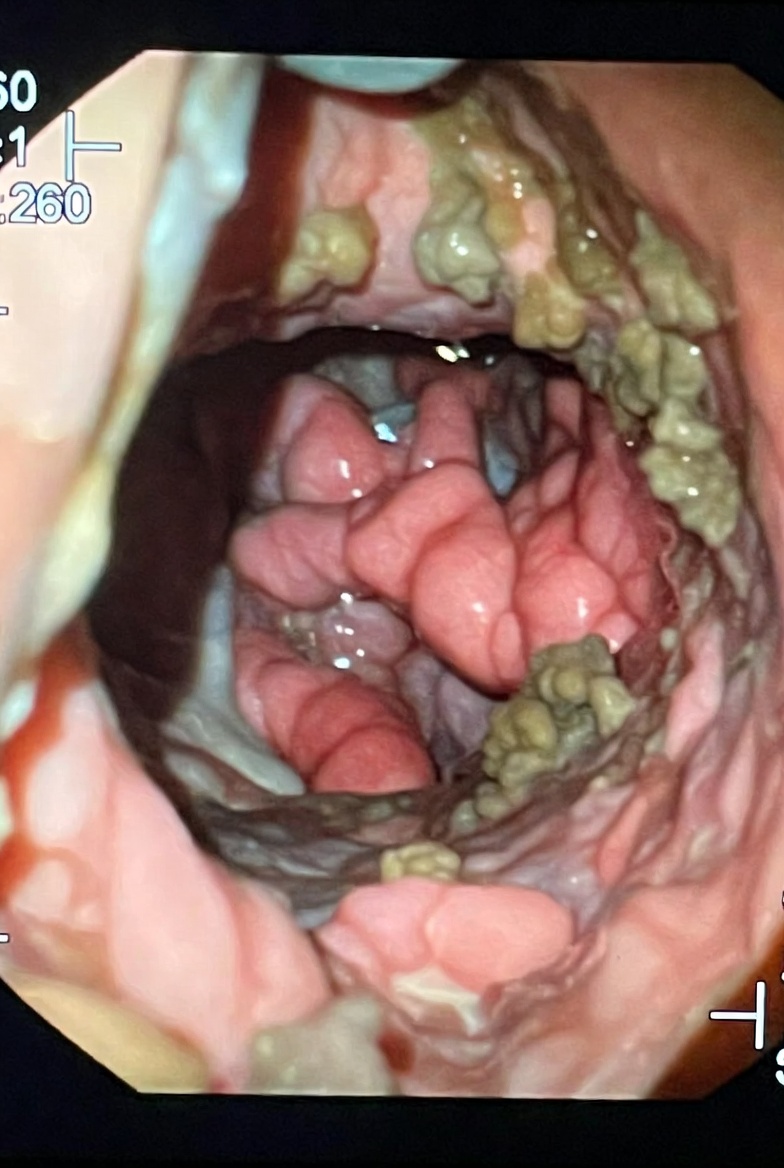
After 30 years as a nephrologist I've earned $18,204,657.44. And I regret taking every penny of it. I am a nephrologist. I have spent 38 years reading those printouts. And I told patients to come back in three months more times than I can count. I would never do that to my own kidneys. I have 2 board certifications and I trained at one of the largest kidney units in the country. I have signed off on more "stable, recheck in three months" chart notes than any doctor should ever have to admit to. And I will tell you tonight what I have never said out loud in a clinic: monitoring is not a plan. It is the damage window with a calendar on it. I have watched patients whose numbers "weren't bad enough to act on" lose filtering capacity in the twelve weeks between blood draws. eGFR 58. Then 54. Then 49. Then 44. Every visit I said the same sentence in my own voice: "It's holding, let's keep watching." And the next draw would come back lower. Not because they did anything wrong. Because nobody was doing anything at all. By year 10 you tell yourself it's the natural course. By year 20 you tell yourself it's their diabetes, their pressure, their age. By year 30 you stop telling yourself anything, because you know. The slide was happening in the gaps. And the gaps were my idea. I am not saying this from a safe distance. For three years before Bob died, I had been treating my own eGFR the same way I treated my patients' — watching, charting, waiting for it to cross the threshold where I would have to do something. I told myself the same sentence I told them. The number isn't bad enough yet. Here is the part I need you to sit with. The nephrons that are gone are gone. A kidney does not grow new ones. Every three-month window where the number "wasn't bad enough yet" was a window where filtering units were being scarred shut for good — silently, painlessly, while a patient sat at home believing that being monitored meant being protected. Something was happening underneath the monitoring that the monitoring was never going to catch. I want to tell you about Bob Sayer. Bob and I started training the same year, 1984. We were each other's best men. His wife Ruth and my Diane took the kids to the same swim lessons. Bob was a physician himself — he did everything right. Quarterly labs, every one of them. His eGFR drifted from the high 50s into the 40s over a few years, and each time his doctor — a man I know well — told him what I told my own patients: "It's stable, Bob. We're watching it. Come back in three months." Nobody ever raised dialysis with Bob. He never got that far. Fourteen months ago Bob had a cardiac arrest in his driveway on a Thursday morning, loading golf clubs into the trunk. Ruth found him. He was 66. That is not a freak event. That is the thing no one told Bob. When your kidneys are quietly failing, the disease comes for your heart first — most people with declining kidney function die of a cardiovascular event long before dialysis is ever on the table. Bob's labs said "stable." His heart did not get the memo. The monitoring was watching the wrong clock. I sat in the row just behind his family at his service and watched Ruth try to speak. She got five words out — "The doctors kept saying stable" — and then her daughter had to help her sit down. I left before the reception. I sat in my car in the funeral home lot for the better part of an hour, thinking about every patient I had sent home with a three-month calendar and a good feeling. I drove home and Diane was on the porch. She didn't say anything. She just held onto me on the steps. That night I sat at the kitchen table and started writing what I am publishing now. That morning — the morning after Bob's service — I pulled out my own printout for the first time in months. My eGFR had drifted to 49. And I heard my own voice in my head, the sentence I had said a thousand times. The number isn't bad enough yet. I put the printout down and understood for the first time what it felt like to be one of my patients. Here is the truth about monitoring. Watching a number fall is not the same as slowing the fall. Your eGFR going from 55 to 49 over a year is not information you are supposed to file and revisit next quarter. It is a fire alarm that everyone agreed to write down instead of answer, because "your number isn't low enough for us to act yet" is the entire logic of a care model built to treat kidney failure, not to prevent it. I am not telling you your doctor is a bad person. Keep every appointment. Never stop a medication on your own. Your doctor is not the villain — the reactive model is. The system is designed to intervene at stage 4 and stage 5, when the options are a machine three days a week or a transplant list. It was never designed to hand a stage-3 patient something to actually do in the three months in between. So it hands them a calendar. And calls it care. The fatigue is part of this, and it is not your age. The bone-deep tiredness that sleep doesn't fix. The fog. Needing to sit down after tasks that never used to touch you. That is not "getting older." As filtration falls, waste your kidneys used to clear stays in your blood. That is what you are feeling. I watched it get written off as age in a thousand charts, including in men younger than me, and I am ashamed of every one. So what is actually happening in those gaps? Picture the kidney as a filter made of roughly a million tiny units called nephrons. They do the cleaning. Here is what nobody explains in a seven-minute appointment: the biggest threat to those units in a slow decline is not one dramatic event. It is a grinding, day-after-day process — oxidative stress and inflammation, driven by years of high blood pressure, high blood sugar, and metabolic strain. That process scars nephrons shut. Not all at once. A few at a time. Between blood draws. The units that get scarred shut are the ones you never get back. That is why the number only moves one direction under "watch and wait." Nothing in the plan was ever touching the process doing the damage. But — and this is the whole reason I am writing tonight — the nephrons that are still alive, the ones not yet scarred over, are working under enormous strain. Overloaded. Inflamed. Filtering at a fraction of what they could. Take the oxidative and inflammatory pressure off those surviving units, and they can filter closer to the way they were built to. You will not grow back a single nephron. But the ones you have left, I can get filtering the way they did at 45. That is not regrowth. That is relief. Now — the part I resisted for years, because I trained to distrust it. Here is the first thing I need you to understand before I tell you what I actually use — and why almost everything you might have tried before had no chance of working. The cheap "kidney detox" teas off a marketplace, the random blends, the cranberry, the protein-cutting — I watched patients try all of it and get nowhere, and it made them feel foolish. It wasn't foolish. It was the wrong criteria. Most of those products are stale, weak, or built from throwaway plant material with almost none of the active compound left in them. Right idea. Useless form. Here is the second thing — the compound that actually matters. There is a class of deep-red plant pigments found in some of the most intensely colored flowers in the world — used for centuries in traditional medicine long before a lab had words for what they were doing to blood pressure and oxidative stress — that are among the most concentrated natural tools we have for lowering the exact oxidative and inflammatory pressure that scars nephrons. They have been studied for supporting healthy blood pressure and blood vessel function too, which matters enormously here, because that is the same pressure grinding on your surviving units and on the heart that took Bob. The catch is dose and quality. The pigment degrades fast. In a cheap teabag it is mostly gone. You need whole flowers, grown right, picked right, dried right — pharmaceutical seriousness applied to a plant. And here is what Diane and I actually drink every morning. It is called PiPi Tea. I know — I just told you teas don't work. This is not that. What makes PiPi Tea different is not the category; it is the fact that it is whole-flower, high-altitude grown, and hand-picked, which means the active pigment is actually present at a level that does anything, rather than degraded to dust by the time it reaches a teabag. It is organic, whole-flower hibiscus — the reason the active pigment survives is the sourcing, not the form. It is the only source I found that treated the flower like it mattered. I am not affiliated with them. We order ours off the website like anyone else. What the change looks like in practice is this. In the first week or two, most people notice the fatigue starting to lift before anything shows on paper — the fog clears in the morning a little faster. That is the felt signal. Then, on the labs, the first thing that happens is not a jump. It is a stop. The slide stops. For someone who has watched the number fall every quarter for years, that alone is enormous. Then it recovers. My own eGFR had drifted to 49, with a creatinine of 1.6 — the exact "not bad enough yet" zone I spent a career telling people to sit and watch. Bob's death was the first morning I looked at my own printout and heard my own voice saying the number wasn't bad enough yet. I stopped watching and started doing something. Over the following months my eGFR came up to 62 and my creatinine settled at 1.2. Not because I grew new kidney. Because the surviving nephrons finally got the pressure taken off them and went back to work. I eat like a man who trusts his kidneys again. My last panel, at 62, is better than it was in my late fifties. That is not luck. That is what happens when you stop treating a falling number as something to observe. Now here is exactly how to do this without doing anything reckless. Keep every appointment. Never stop a medication on your own — if you take one for pressure or sugar, that stays. This is something you add to a plan that was passive, not a swap for anything. Pull your current lab numbers — your baseline. Start. Get another panel at 6 weeks. Another at 12. When the slide stops and the numbers turn, bring that trend to your doctor. Your doctor may wave it off. Don't take it personally — I was that doctor for 38 years, trapped in a model that only knows how to watch. But a doctor cannot argue with your own eGFR climbing across three panels on paper. Numbers are the only language this profession fully respects. Bring them the numbers. Diane — if you're reading this, and I know you are — thank you. For 39 years. For not letting me keep sitting on this. I love you. I am publishing this because Bob is gone, and Ruth is alone in that house, and there are millions of people right now holding a printout that says their number "isn't bad enough yet," believing that being watched is the same as being helped. It is not. Monitoring is not a plan. It is the damage window with a calendar on it. If someone you love has been told to "just keep an eye on it" — your husband, your sister, your father — send this to them. Do not let Bob's three months become theirs. The link is below. https://shop.pipitea.com/hbt/kd/sp-nm They currently have a 90-day money-back guarantee — long enough to run the full baseline, 6-week, and 12-week panels I just described. If your numbers do not move, you get every dollar back. Because it is whole-flower and high-altitude grown, they produce in limited runs. If it is in stock, don't sit on it. Sitting on it is the exact habit I am asking you to break. Stop watching the slide. Start doing something about it — while you still have nephrons to protect. https://shop.pipitea.com/hbt/kd/sp-nm — Dr. Warren Halsey P.S. Pull a baseline panel before you start. Another at 6 weeks. Another at 12. Watch for the slide to stop first — that's the tell — then for eGFR to climb and creatinine to come down. When your husband or father walks into that office with three panels showing the number turning, the doctor cannot argue with it. Numbers are the only language this profession respects. Bring the trend. Keep the appointments. Never stop a medication on your own. https://shop.pipitea.com/hbt/kd/sp-nm P.P.S. Diane and I will be married 39 years this fall. She waited a long time for me to finally write this down. If you see her in the comments thanking people for sharing it, that's really her.
Natural Relief in Weeks
LEARN MORELike this ad? Make it yours.
Crush rebuilds this exact creative around your product — your brand, your colors, your offer — in about a minute.