Michelle Allen
Michelle Allen Facebook ad: “Delete Joint Pain in 30 Days”
Ran for 4 days, from March 14 to March 18, 2026, the last day Crush saw it.
Run by Michelle Allen on Facebook. Crush is not the advertiser and does not verify its claims. See this ad in Meta's Ad Library(opens in a new tab)
Want an ad like this for your product?
Crush makes new ad images for your product from this ad: your logo, your product photo, your offer.
Trials from $19.95 USD, then $79.95 USD a month. Cancel anytime.
About this ad
- Meta Ad Library ID
- 1219232273627429
- Platforms
- Facebook, Instagram, Audience Network, Messenger and Threads
- Relaunches
- 0
Ad text
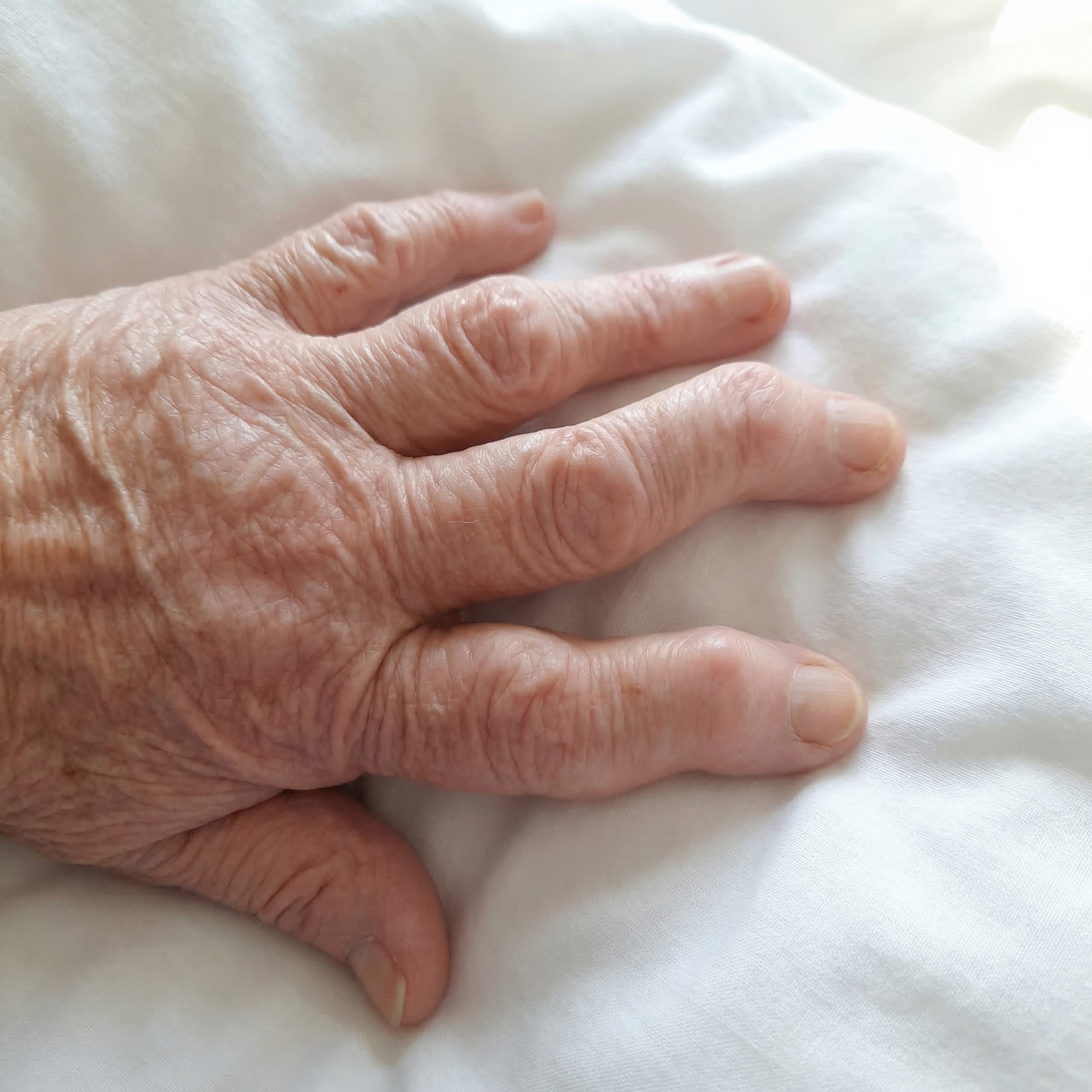
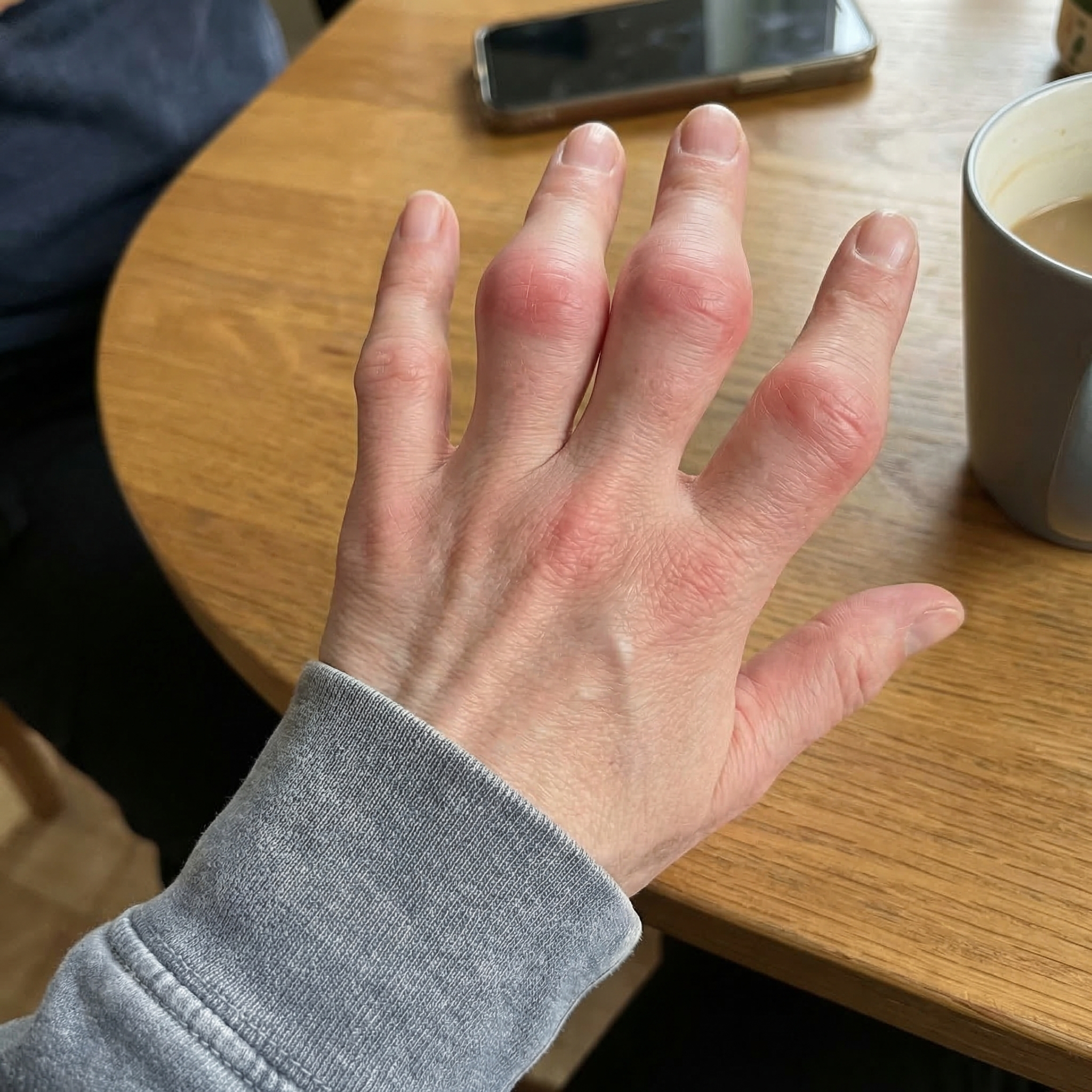
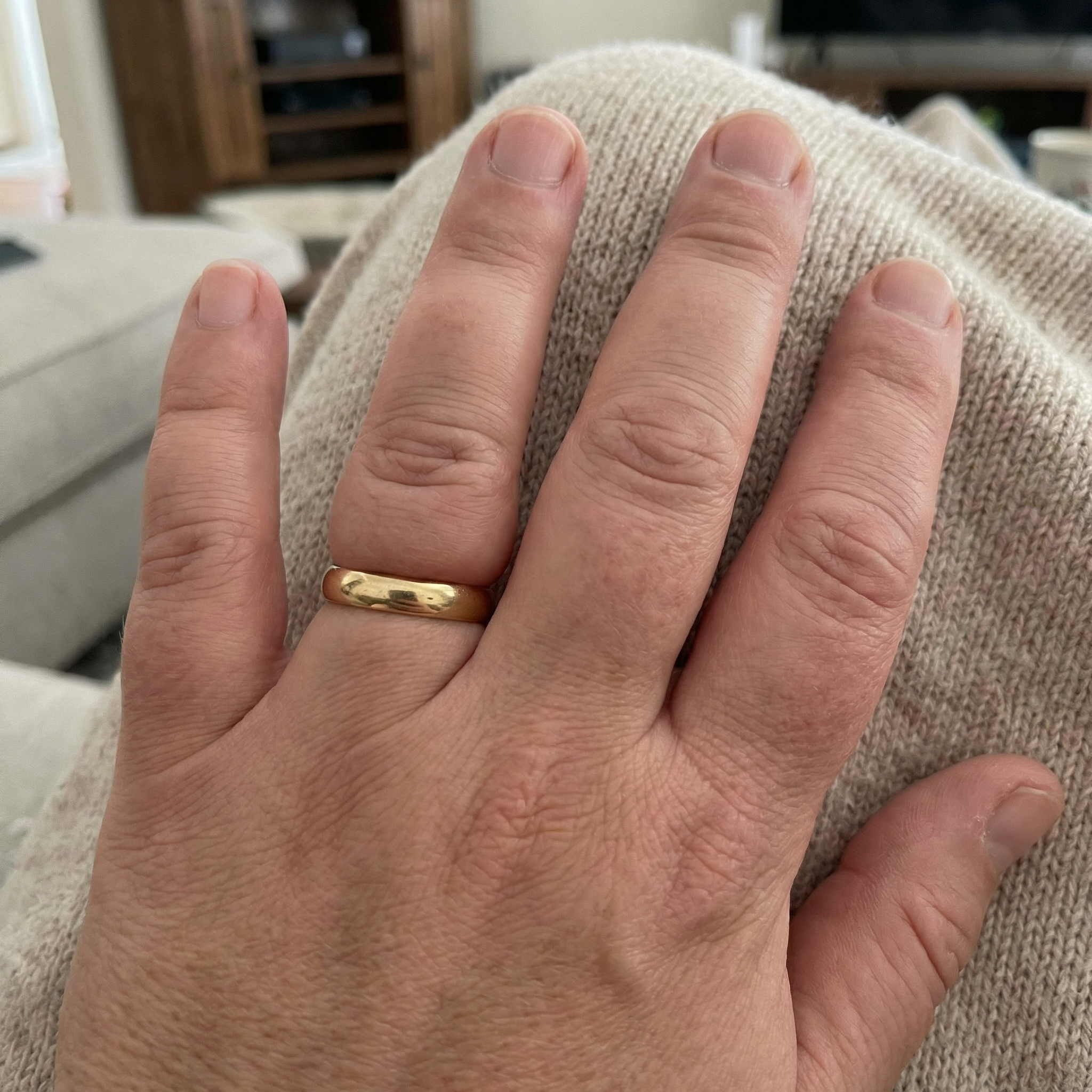
My rheumatologist told me the ibuprofen I'd been taking for six years was making my arthritis worse. I thought she was out of her mind. This was my fourth rheumatologist. The first three had been the ones telling me to take it. Let me back up. I'm 58. Retired school teacher. Thirty-one years on my feet in a classroom. Two years ago, my hands got so bad I couldn't write on a whiteboard anymore. That's not why I retired — I'd planned to go at 60 — but my hands made the decision for me two years early. Rheumatoid arthritis. Diagnosed at 51. But the morning stiffness had been creeping in long before the diagnosis. It started in my late 40s. Just my fingers at first. A little tight when I woke up. Nothing dramatic. I'd run them under warm water, flex them a few times, and get on with my day. By 52, the warm water wasn't enough. I was soaking my hands in a bowl every morning for ten minutes just to get them moving. My husband bought me an electric toothbrush because I couldn't grip a regular one anymore. I switched to slip-on shoes because laces were a two-handed negotiation I didn't have the patience for at 6am. By 55, the stiffness wasn't just my hands. It was my knees. My shoulders. My wrists. Some mornings I'd lie in bed for twenty minutes before I could convince my body to stand up. Not because I was tired. Because I was scared of how much that first step would hurt. The worst morning — the one I still think about — was a Tuesday in March. My granddaughter Lily had slept over. She was four. She woke up at 6am the way four-year-olds do — bouncing into our bedroom, climbing onto the bed, grabbing my face with her little hands. "Nana! Nana! Can we make pancakes?" And I couldn't get up. My knees were locked. My hands were frozen into fists. My lower back felt like someone had poured concrete into my spine overnight. I tried to swing my legs off the bed and my right knee seized so hard I gasped. Lily's face changed instantly. That bright, excited face just crumpled. "Nana, what's wrong? Are you hurt?" My husband took her downstairs. Made the pancakes. I could hear her laughing in the kitchen while I sat on the edge of the bed, crying, waiting for my body to let me stand up. When I finally made it downstairs — thirty-five minutes later — Lily had already finished eating. The pancakes were cold. She was watching cartoons. She looked up and said, "It's okay, Nana. Papa made them." She was being sweet. She was being kind. But what I heard was: You weren't needed. Someone else did your job. Because you couldn't. That night, after my husband drove her home, I sat at the kitchen table and stared at my hands. These swollen, stiff, useless hands that used to braid her hair and button her coat and flip pancakes on a Saturday morning. I'd given thirty-one years to other people's children. And now I couldn't make breakfast for my own granddaughter. — By this point I'd tried everything the medical system had to offer. Rheumatologist number one put me on methotrexate. Eight months of nausea, fatigue, and monthly blood tests. My liver enzymes started climbing. She pulled me off it and said we'd "try something else." Number two put me on hydroxychloroquine. It helped for about four months. Then the stiffness crept back in like it had never left. He added sulfasalazine on top. The combination gave me stomach cramps so severe I thought I had food poisoning three times before I realized it was the medication. Number three suggested a biologic. Humira injections. $2,400 a month after insurance. I did it for five months. The improvement was real — maybe 30% less stiffness. But I developed recurring sinus infections that wouldn't clear. My immune system was being suppressed to stop it from attacking my joints, and everything else was getting in. Through all of this — through every medication, every doctor, every protocol — there was one constant. Ibuprofen. Every single doctor told me the same thing. "Take ibuprofen for the breakthrough pain. 400 to 600 milligrams, two to three times a day as needed." As needed turned into every day. Every day turned into six years. I kept a bottle in my purse. One on my nightstand. One in the kitchen. One in my car. I couldn't function without it. It was the only thing that took enough of the edge off for me to get through a day. The prescription medications managed the disease. The ibuprofen managed the mornings. Or so I thought. — I found rheumatologist number four because my daughter insisted. She'd found Dr. Rajan through a friend whose mother had lupus. "She's different," my daughter said. "She actually listens." I almost didn't go. I was exhausted from doctors. Exhausted from explaining my history. Exhausted from hope. But Lily's face that Tuesday morning kept flashing in my mind. The crumpled expression. The cold pancakes. "It's okay, Nana." So I went. Dr. Rajan spent the first twenty minutes just listening. Didn't type on her computer. Didn't interrupt. Just listened. When I finished, she asked a question none of the other three had ever asked. "How long have you been taking ibuprofen daily?" "About six years." She closed her eyes for a second. Not dramatic. Just a small, quiet reaction. Like she'd heard this answer before and it still bothered her. "I need to show you something," she said. She pulled up an image on her computer screen. A diagram of the intestinal wall. "This is a healthy gut lining. See how the cells are packed tightly together? Like bricks in a wall. That wall is one of the most important barriers in your body. It decides what gets into your bloodstream and what stays out." She pointed to the tight junctions between the cells. "Now, NSAIDs — ibuprofen, naproxen, aspirin — they work by blocking an enzyme called COX-2, which is responsible for producing the inflammatory chemicals that cause your pain and swelling." "Right," I said. "That's why they help." "That's why they help for a few hours," she corrected. "But COX enzymes don't just make inflammatory chemicals. They also produce the protective mucus that lines your gut wall. When you block COX long term — daily, for years — that mucus layer thins. And when the mucus thins, the gut wall itself starts to break down." She pulled up a second image. Same gut wall. But the tight junctions between the cells were open. Gaps everywhere. "This is what happens after chronic NSAID use. The junctions open. The wall becomes permeable. And now things that are supposed to stay inside your gut — bacterial fragments, undigested proteins, inflammatory molecules — they leak into your bloodstream." She looked at me. "Your immune system detects those fragments in your blood and mounts an inflammatory response. Not in your gut. Everywhere. Your joints, your connective tissue, your organs. The inflammation you've been treating with ibuprofen is now being fed by the damage ibuprofen caused to your gut." I sat there staring at her. "You're telling me the thing I've been taking to manage my inflammation has been making my inflammation worse?" "For six years," she said quietly. "Every doctor you saw prescribed it because it addresses the symptom. But nobody looked at what it was doing to the barrier that regulates your entire inflammatory response." She drew a circle on her notepad. "Inflammation causes pain. You take ibuprofen for the pain. Ibuprofen damages your gut lining. The damaged gut lining leaks inflammatory compounds into your bloodstream. More inflammation. More pain. More ibuprofen. More gut damage." She tapped the circle. "You've been trapped in this for six years. And it's been accelerating." I felt sick. Physically sick. "So everything I've been doing — " "Has been making the underlying problem worse while temporarily relieving the surface symptom. Yes." I asked her what I was supposed to do. Stop taking the ibuprofen and just live with the pain? She shook her head. "You need to repair the gut lining. Seal those junctions back up. Stop the leak. When the barrier is intact again, inflammatory molecules stop crossing into your bloodstream. The systemic inflammation calms down. Your immune system stops being in constant attack mode. And your joints get a chance to actually calm down — not for a few hours after a pill, but consistently." "How?" I asked. "There's one compound I've been recommending to my RA patients for the last three years. It's the only thing I've found that addresses both sides of this — it repairs the gut barrier itself, and it provides immunoglobulins that help regulate the immune response at the source." "What is it?" "Bovine colostrum." I stared at her. "Like... from a cow?" She almost smiled. "I get that reaction every time. Colostrum is the first nutrition a mother produces for a newborn. Before milk. It exists specifically to seal the newborn's gut lining — which is wide open at birth — and to provide the antibodies that calibrate the immune system." She explained that bovine colostrum contains concentrated immunoglobulins — IgG antibodies — that bind to inflammatory triggers in the gut before they can cross into the bloodstream. And it contains growth factors and bioactive peptides that help regenerate the tight junctions between gut wall cells. "It does two things," she said. "It seals the wall. And it calms the immune response that's been in overdrive because of what's been leaking through that wall for years." I told her I'd been burned by supplements before. Turmeric that did nothing. Fish oil that upset my stomach. Glucosamine that I took for eight months without a single change. She nodded. "Those all work on the inflammation at the joint. None of them address why you're inflamed in the first place. The inflammation isn't starting in your knees. It's starting in your gut. And until you fix the barrier, everything you take for the joints is a temporary patch on a permanent leak." She wrote down a name on her notepad and handed it to me. (re)set. She said it was the only colostrum she recommends because it's pure bovine colostrum — not blended with fillers, not mixed into a multivitamin, not diluted with other ingredients. Just colostrum at a concentration that actually delivers enough immunoglobulins to make a difference. I took the notepad. Stared at it. "I've spent over four thousand dollars on medications in the last two years," I said. "Not counting the ibuprofen." "This costs less than one month of your biologic copay," she said. "And it addresses the thing none of those medications ever touched." — I ordered it that night. Figured I'd already wasted money on everything else. And honestly, I didn't expect much. The first week I noticed nothing different. Same stiff mornings. Same slow start. I almost texted my daughter to say it was another dead end. But Dr. Rajan had told me to give it at least three weeks. "The gut lining doesn't rebuild overnight. You damaged it over six years. Give it time." So I kept taking it. Week two, something small shifted. Not the stiffness — that was still there. But the bloating I'd had for years — the constant puffiness in my stomach that I'd blamed on age — was calmer. My digestion felt different. Smoother. I didn't think much of it. Week three, I woke up and lay in bed for a moment doing what I always do — bracing for the first movement. Flexing my fingers slowly under the blanket. Testing my knees before I swung my legs off. My fingers opened easier. Not perfectly. But easier. I made it out of bed in ten minutes instead of twenty-five. I stood in the kitchen and made coffee without running my hands under warm water first. I didn't say anything to my husband. Didn't want to jinx it. Week four, the morning routine that used to take thirty-five minutes took fifteen. My hands were still stiff but the burning — that deep, angry burning in my finger joints that had been my constant companion — was quieter. Not gone. Quieter. Week six, my husband noticed before I said anything. "You're moving differently," he said one morning, watching me unload the dishwasher. "You didn't stop once." I hadn't even realized. Week eight, I woke up and my rings fit. They'd been sitting in my jewelry box for over a year because my fingers were too swollen. I slid my wedding ring on and stood there staring at my hand like I was seeing it for the first time. I called my daughter and cried. Month three, I went back to Dr. Rajan. She ran bloodwork. My CRP — the inflammation marker that had been elevated for years — had dropped by nearly half. She looked at the results and said, "This is exactly what I hoped would happen. Your systemic inflammation is calming down because the source is being repaired." Month four, Lily slept over again. She woke up at 6am. Bounced into the bedroom. Grabbed my face with her little hands. "Nana! Nana! Can we make pancakes?" I swung my legs off the bed. Stood up. Took her hand. "Let's go, baby." We made pancakes together. I flipped every single one. She stood on her step stool and poured the batter while I held the pan. When my husband came downstairs, Lily looked at him and said, "Papa, Nana made these ones. Not you." I had to turn away so she wouldn't see me crying. — I'm writing this eight months in. My mornings are different. Not perfect. I still have stiff days. I still have flare days. RA doesn't disappear. But the baseline has shifted. The constant, grinding, burning inflammation that was my entire existence for six years is calmer. Quieter. Manageable in a way it hasn't been since my early 50s. And I haven't taken ibuprofen in five months. Five months. After six years of daily use. Not because I'm being brave. Because I don't need it. The fire that the ibuprofen was masking — and feeding — is dying down at the source. When I think about the money I spent — $4,000+ on medications, hundreds on OTC painkillers, the biologics, the blood tests, the specialist copays — and then I think about what (re)set costs per month, I want to scream. Not because it's expensive. Because it's not. It costs less than what I was spending on ibuprofen alone. I want to scream because nobody told me sooner. Four rheumatologists. Six years. Thousands of dollars. And not one of them looked at my gut until the fourth one. If you're reading this with stiff hands, swollen joints, and a bottle of ibuprofen on your nightstand — I'm not going to tell you to stop taking it. That's between you and your doctor. But I am going to tell you what I wish someone had told me six years ago: The ibuprofen might be helping your mornings and destroying your gut barrier at the same time. And that destroyed gut barrier might be the reason your inflammation keeps getting worse no matter what you do. There's a way to repair it. It's not another anti-inflammatory. It's not another painkiller. It's the thing that fixes why you're inflamed in the first place. Dr. Rajan changed my life. (re)set gave me my mornings back. And Lily got her pancake Nana back. That's worth more than every prescription I've ever filled. 👉 https://resupplements.co/products/colostrum-powder (re)set offers a 90-day money-back guarantee. Try it for three months. If your mornings don't change, if your stiffness doesn't shift, if your rings still don't fit — send it back. Full refund. You've already spent more than this on things that didn't work. This is the one thing that might actually fix why they didn't.
Where the ad sends people
resupplements.co
Delete Joint Pain in 30 Days
Colostrum Powder provides 2300 mg of Bovine Colostrum standardized to 25% Immunoglobulin G (IgG) per serving. This supplement is intended for adults seeking to support normal immune system function and help maintain digestive wellness. Colostrum contains naturally occurring bioactive compounds and i...
Learn more: resupplements.co(opens in a new tab)