Jonas Reed
Jonas Reed Facebook ad: “Why Grand Gestures Backfire”

Ran for 37 days, from February 15 to March 24, 2026, the last day Crush saw it.
Run by Jonas Reed on Facebook. Crush is not the advertiser and does not verify its claims. See this ad in Meta's Ad Library(opens in a new tab)
Want an ad like this for your product?
Crush makes new ad images for your product from this ad: your logo, your product photo, your offer.
Trials from $19.95 USD, then $79.95 USD a month. Cancel anytime.
About this ad
- Meta Ad Library ID
- 1222174489581650
- Platforms
- Facebook, Instagram, Audience Network, Messenger and Threads
- Relaunches
- 0
- EU reach
- 12,563
Ad text
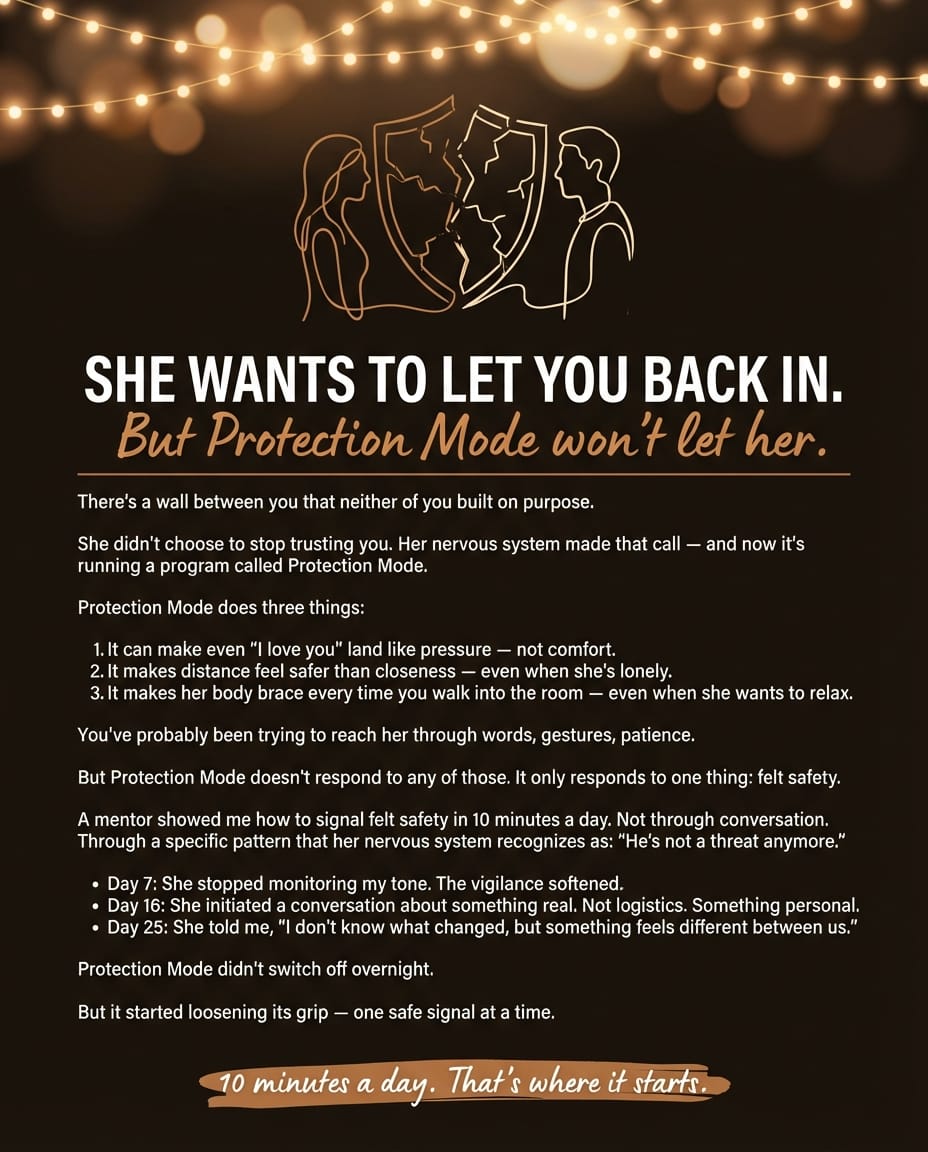
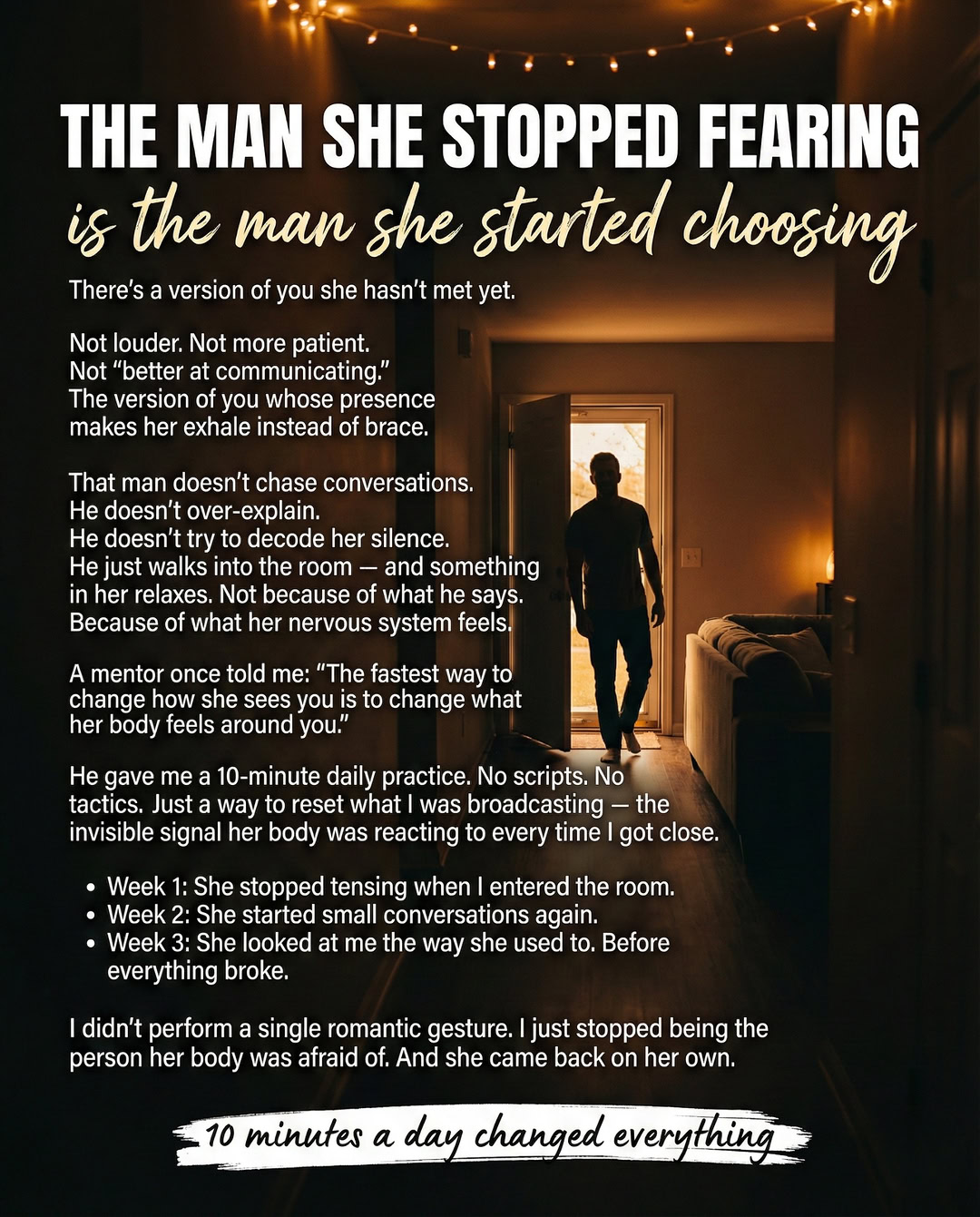
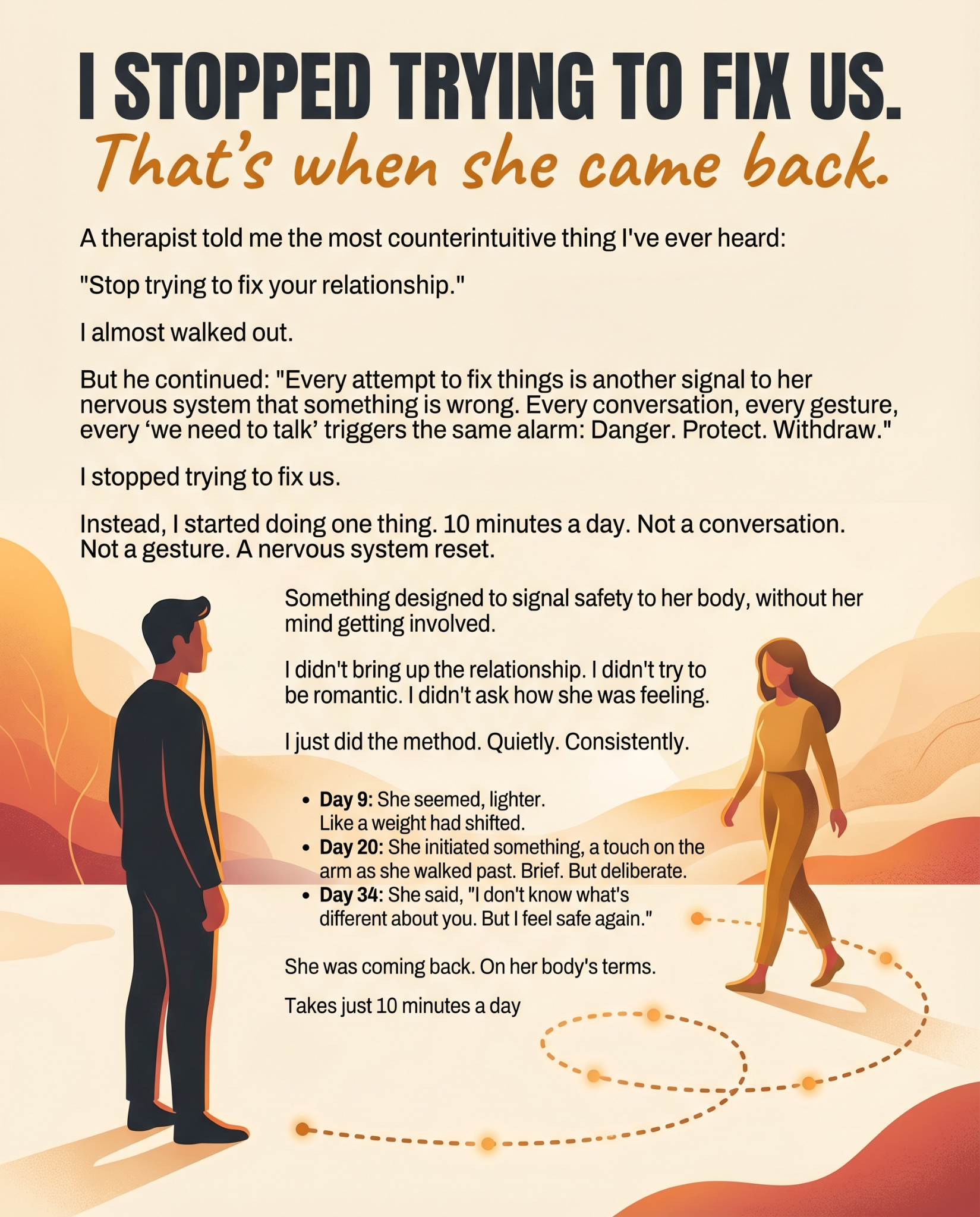
A midlife divorce doesn't just break a heart. It rewires a man's entire nervous system. But here's the thing most people won't tell you: Most relationships don't end in an explosion. They end in a whisper. A slow erosion so quiet that by the time a man notices the distance, his partner has already been grieving the relationship for months. Sometimes years. She stopped bringing up the things that bothered her. Not because she's at peace. But because she stopped believing it would matter. That silence is not calm. It's resignation. And the moment a man finally hears the words... "I love you, but I'm not in love with you"... his entire world tilts sideways. He wants to act. He wants to fix. He wants to fight for what they built. But the playbook he reaches for (explaining, apologizing, convincing, pursuing) often pushes her further into silence. This is the paradox that destroys good men in struggling relationships. And until you understand the biology behind it, no amount of effort will land. I want to share what I've learned from working with men navigating this exact situation. And from the hundreds of conversations happening inside our private community every single week. --- There's a pattern I see repeated so often it could be a script. A man. Good father, hard worker, loyal. He wakes up one morning to a house that looks the same but feels completely different. The warmth is gone. The ease is gone. Conversations that used to flow now feel like negotiations. Simple questions get one-word answers. Affection becomes transactional. Or disappears entirely. And then one of these phrases lands: "I need space." "I don't know what I want anymore." "I can't get over the resentment." Or the one that cuts the deepest: "I love you, but I'm not in love with you." One of our community members, let's call him Jay, had been married for 16 years. Good life on paper. Two years earlier, his wife had an affair. It was devastating. He reacted the way most men would. He tried to "fix" everything. Explained to anyone who would listen why she was wrong. Then a therapist said something that knocked him sideways: "Maybe. But what if you're wrong?" It shattered his certainty. And it was the first real crack in his armor that allowed growth to get in. They tried to recommit. Things were okay for a while. Then she moved out. Not another affair. Just… emptiness. The dreaded "I love you, but I'm not in love with you." Jay had a choice. Keep fighting the old way, or try something fundamentally different. --- Here's what most relationship advice gets backwards: It treats the problem as emotional. Something to be resolved through conversation, grand gestures, or promises of change. But what's actually happening is biological. When someone has been hurt repeatedly (not always by one catastrophic event, but often by hundreds of small moments of dismissal, defensiveness, or emotional absence) the nervous system doesn't just "get over it." It adapts. It goes into protection mode. The amygdala, the brain's threat detection center, becomes hyper-vigilant. It starts scanning every interaction for signs of danger. Every tone of voice. Every micro-expression. Every pause that lasts a beat too long. This isn't a conscious choice. It's survival wiring. And here's the part that trips men up: When that alarm system is activated, logic doesn't reach her. Apologies bounce off. Explanations feel like pressure. Even genuine change gets filtered through a lens of suspicion. "Is this real, or is he just trying to get me back?" There's a line from neuroscience research on relational trauma that I return to often: The recently burned hand flinches near the heat of a stove. That involuntary flinch persists until new experience shows that the pain is unlikely to recur. She's flinching. Not because she doesn't care. But because her body is protecting her from more pain. Every time a man pushes for connection... sends the long text, forces the difficult conversation, stands in the doorway asking "Can we please just talk about this?"... he may be accidentally confirming the fear. He's signaling that the environment is still unpredictable. Still emotionally charged. Still unsafe. The harder he squeezes, the faster she pulls away. This isn't rejection. It's protection. --- One member of our community, let's call him Derek, described his situation with painful honesty. When his son was born, his wife experienced postpartum depression. Derek didn't know what to do. He froze. Later, when she was in crisis (panic attacks about dying, coming to bed in tears) he didn't wake up. Didn't show up. The realization hit him like a freight train: "I'm not her rock. I'm not her protector." Years later, the trust deficit had compounded. The distance between them wasn't about one event. It was the accumulation of moments where she needed safety and found silence instead. Death by a thousand cuts. And Derek, like many men I speak with, responded to the distance the only way he knew how. With more intensity. More effort. More attempts to prove he had changed. But proving and demonstrating are two very different things. Proving is loud. It says, "Look at me. See how different I am now." Demonstrating is quiet. It says, "I'm going to be different whether you notice or not." That distinction changes everything. --- There's a term for the pattern that keeps many men trapped in this cycle: anxious attachment. When emotional distance is felt, the system panics. The relationship becomes the primary fixation. Monitoring every text. Analyzing every facial expression. Interpreting every silence. "Is she pulling away today?" "What did that tone mean?" "Why hasn't she responded?" It's exhausting. And it creates an invisible pressure that the other person absolutely feels. One of the men in our community, let's call him Todd, had this realization after 25 years of marriage: "I've been in a vicious cycle of looking for validation from her for most of our marriage." Twenty-five years of outsourcing his sense of worth to someone else's mood. This is co-dependency. When a man's happiness, stability, and identity become fused with the relationship, her need for space feels like a threat to his survival. And here's what makes it worse: she can feel the anxiety. The neediness leaks out. In the timing of the texts. In the tone of the voice. In the way his eyes search her face for reassurance. People have built-in anxiety detectors. And anxiety is the opposite of safety. If a man is panicked, how can she possibly relax? He's asking her to calm his storm while she's still drowning in her own. That's the mismatch. --- So if chasing doesn't work. If explaining doesn't work. If even genuine effort can backfire when it comes from a place of fear… What does work? The answer is counterintuitive. And it's the hardest thing most men will ever do. You stop trying to fix the relationship. You start grounding yourself. Another community member, let's call him Brandon, had been working on his marriage for over six years. He tried everything. Read every book. Went to counseling. But it wasn't until he truly understood what "emotionally grounded" meant, and started living it daily, that the dynamic shifted. His wife went from "I want a separation" to "I'm not ready to end this. I think I just need to do some healing." What changed? He stopped making the relationship his entire identity. He started jiu-jitsu. He started cooking for himself. He reconnected with friends. He found purpose outside the marriage. Not as a performance, but as a genuine reclaiming of who he was before the relationship consumed everything. And critically, he changed how he showed up in every small interaction. When his wife shared something vulnerable about feeling invisible (at work, in their marriage) he didn't try to fix it. He didn't get defensive. He didn't push for more connection. He listened. He reflected back what she said. He told her that must have been miserable. He apologized sincerely. And then, when it felt like a natural stopping point, he left for work. No lingering. No pushing for more. No desperate need to extend the moment. She thanked him for listening. And the distance shrank. Not because he chased it, but because he created space for it to close on its own. That's the shift. --- Here's what I've seen work, distilled into three principles that the men in our community come back to again and again: Principle 1: Control nothing. Let go of the outcome. Let go of the timeline. Let go of the obsessive need to know what she's thinking. As one of the guys in our group put it: "There is no amount of worrying or thinking about her leaving me that is going to prevent it from happening." Fear-driven attempts to control the situation repel connection. They signal instability. When a man truly releases the outcome, not as a tactic but from genuine acceptance, he releases the pressure valve on the entire dynamic. The relationship can finally breathe. Principle 2: Rebuild your own foundation. Many men in long-term relationships gradually lose themselves. Their hobbies disappear. Their friendships thin out. Their identity becomes "husband" or "father" with no independent core underneath. The work is to rebuild that core. Not as a strategy to win her back, but because a man without a life outside his relationship is a man who suffocates the people closest to him. Engage physically. Start a project. Reconnect with old friends or make new ones. Find something that makes you feel alive that has nothing to do with the relationship. When a man starts investing in himself, something shifts. His happiness is no longer dependent on her mood. His stability comes from within. The co-dependency starts to dissolve. And that independence, that grounded sense of self, is magnetic. Principle 3: Lead with your nervous system, not your words. This is the daily practice. The real work. Not grand gestures, but the thousands of small, steady cues that teach her nervous system whether the environment is safe or dangerous. Slow down. Talk slower. Move slower. Breathe deeper. Panic is fast. Safety is slow. Soften the tone. Speak one notch quieter than feels natural. Even in conflict. It signals strength under control, not weakness. Validate instead of defending. When she's upset, the job isn't to argue or explain. It's to make her feel heard. "I can see how that would feel that way." That's it. Respect the space. Don't linger. Don't push for more than she's offering. Be warm, be present, and then step back. These small shifts, practiced daily for months, are what rewire the dynamic at the deepest level. Not weeks. Months. This is why most attempts at repair fail. A man tries for three weeks, doesn't see results, gets frustrated, and defaults back to the old patterns. And every time a slip happens (the chasing, the defensiveness, the anxious text) the clock resets. Patience isn't just a virtue. It's the entire strategy. --- Jay. The man I mentioned earlier, married 16 years. He chose the harder path. The night his wife moved out, she was bracing for a fight. Waiting for him to explain why she was wrong. Waiting for the anger. Instead, he was calm. He told her he was sad. He told her he didn't agree with her decision. And he told her he respected that it was hers to make. Her response: "Why are you being so nice about this?" She didn't go a single day without messaging him after that. Not because of a trick or a technique. But because he became safe. Truly, consistently safe. He didn't chase. He didn't perform change. He changed. And she noticed. Not because he pointed it out, but because she could feel it. She told family and friends how different he seemed. Jay told our community: "I don't know if my wife will move back home. I don't know if we'll fix our marriage. But I do know that I will be a better person no matter what. Stronger and healthier. Physically, emotionally, and mentally." That's the turning point for every man who walks this path. When the work stops being about managing her perception and starts being about fundamentally becoming the man you respect when you look in the mirror. --- Every man navigating this eventually arrives at a fork in the road. One direction is familiar: more explaining, more apologizing, more convincing, more chasing. The same approach that hasn't been working. Just louder. The other direction requires everything that feels unnatural: stillness, patience, self-focus, and the willingness to lead without controlling. The principles above aren't theory. They're practiced daily by hundreds of men inside our community. Men who are navigating separation, emotional distance, the "gray zone" of uncertainty... and finding that steadiness itself is the most powerful force they've ever wielded. But principles alone aren't enough when anxiety is high and every interaction feels loaded. That's why the NETR Method exists. NETR stands for Neuro-Emotional Trust Reset. It's a structured, science-backed framework built around a 10-minute daily practice. It takes the principles of nervous system safety, emotional grounding, and trust repair and turns them into something a man can actually follow, day by day, even when things are tense and communication is minimal. Inside the NETR Method, you'll find: → The Emotional Safety Switch: a daily 10-minute practice designed to help regulate your nervous system before you interact. → The Trust Trinity: three signals that build trust without relying on words. → The Patience Paradox: how to navigate her need for space in a way that draws connection instead of distance. → Nervous System Leadership: the daily framework for becoming the steady presence that changes the atmosphere of every room you walk into. This isn't about manipulation. It's not about "getting her back." It's about becoming the kind of man who naturally creates safety, who leads with calm instead of panic, and who is grounded regardless of the outcome. And because this work is hard to do in isolation... because the anxiety hits at 2 AM and the urge to send that text feels impossible to resist alone... the NETR Method also includes access to a private community of men walking this same path. Men who get it. Men who are in the trenches doing this work every single day. They hold each other accountable. They share what's working and what isn't. They remind each other to hold the frame when everything inside is screaming to chase. No judgment. No posturing. No one's story gets shared outside the group. Just men doing the hardest work of their lives, together. Because knowing what to do and actually doing it when your nervous system is on fire are two very different things. Having a space full of men who understand that difference makes it possible. If any of this resonated, if you recognized your own situation somewhere in these words, the NETR Method may be the structure you've been looking for. Click the link below to learn more and see if it's the right fit for where you are right now. https://thegroundedleaders.com/reset You don't have to walk this path alone. But you do have to choose your next step. This is the path of a man who leads himself first. Stay steady.
Where the ad sends people
thegroundedleaders.com
Why Grand Gestures Backfire
See if the NETR Method is the right structure for where you are right now.
Learn more: thegroundedleaders.com(opens in a new tab)