
Inactive· since May 29, 2026
- 62
- days it ran
- 4
- relaunches
- 12,086
- EU reach
Ad copy
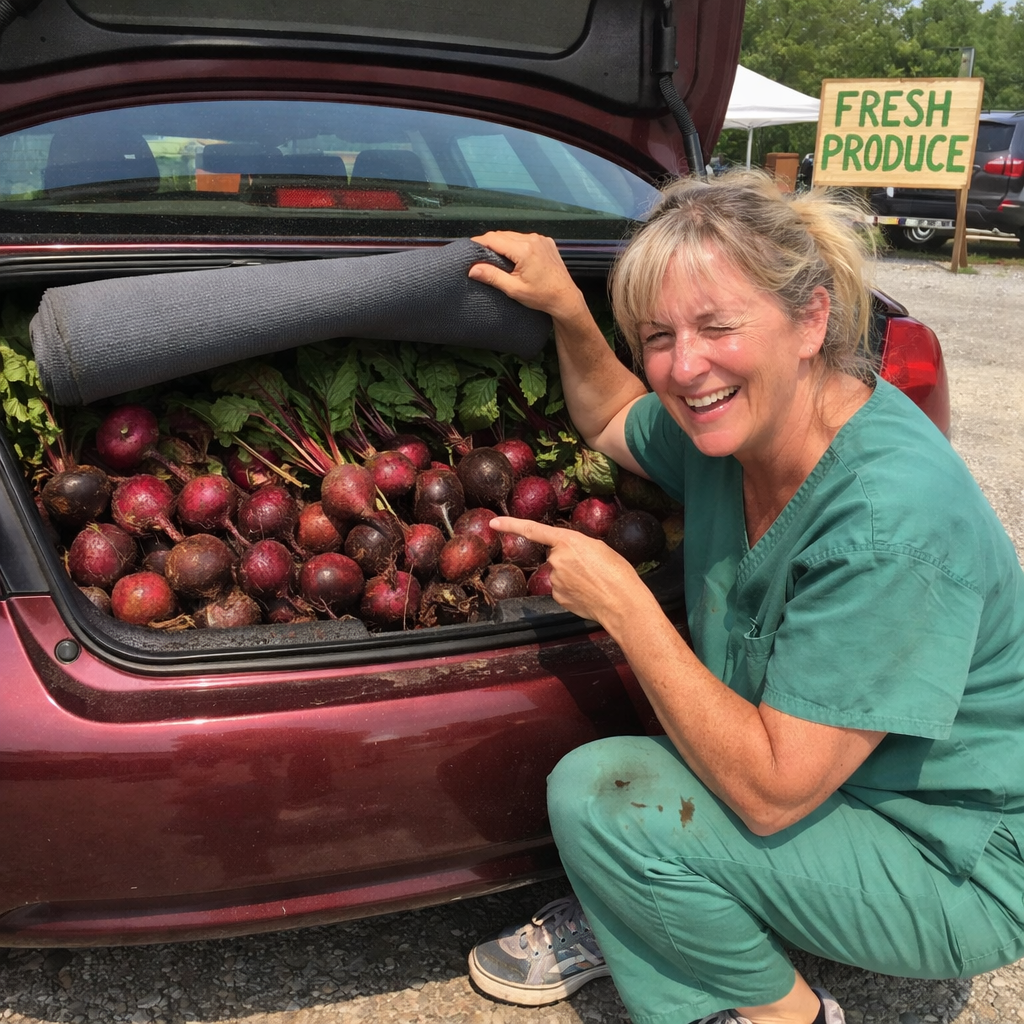
A Woman at the Farmers Market Asked Me If I Was Okay. I Wasn't. Here's What She Told Me. I'm going to tell you about a Saturday morning in April. I was at the farmers market in our town. I go every Saturday. I've been going every Saturday for about six years. It's one of the things I do for myself. I'm 54. I have two grown kids. I have a husband I love. I work part-time at a job I mostly enjoy. I do everything I'm supposed to do. I eat well. I walk five days a week. I do yoga on Tuesday nights. I sleep eight hours. I take a multivitamin. I take vitamin D in the winter. I drink water like it's my job. I had my annual physical in February and my bloodwork came back clean. My blood pressure was good. My cholesterol was in range. My thyroid was fine. My A1C was fine. Everything was fine. But I hadn't felt like myself in about a year and a half. I want to be careful about how I describe what I was feeling, because I know it's the kind of thing that sounds vague when you say it out loud. I wasn't sick. I wasn't depressed in the clinical sense — I'd asked my doctor about that, and she'd walked me through the questionnaire, and we'd both agreed it wasn't that. I wasn't anxious in any way I could pin down. I was just... off. The afternoons hit harder than they used to. I'd start the day feeling fine and by 3 PM I'd want to sit down and not get back up. I wasn't sleeping badly. But I wasn't waking up rested either. I'd get out of bed and there'd be a kind of fog in the first hour. The fog would lift. But it would lift later than it used to. My yoga teacher told me in November that I looked tired. I told her I was sleeping fine. She said: "I didn't say you were sleeping badly. I said you looked tired." I didn't know what to say to that. The thing I kept coming back to was that I was doing everything right and I was still feeling off. That's the part that was hardest. If I hadn't been doing the things, I'd have had something to fix. I was doing the things. And it wasn't enough. That Saturday in April I was at my usual booth at the market. It's a small farm a few towns over. They sell eggs and greens and whatever's in season. The woman who runs the booth is about my age. I've been buying from her for years but I don't really know her. She knows my name. I know her name. That's about it. I was paying for my eggs and a bunch of asparagus. She handed me my change. She held onto my hand for a second when she did it. She looked at me and she said: "Are you okay?" It came out of nowhere. I almost laughed. Then I almost cried. I said: "Yeah. I'm fine. Why?" She said: "I don't know. You look how I looked two years ago. I was wondering." The line behind me was empty. It was a slow morning at the market. She wiped her hands on the front of her apron and she came around the side of the table. She said: "Do you have a minute?" I said: "I guess I do." We walked over to a wooden bench at the edge of the parking lot. She sat down. I sat down next to her. The sun was coming up over the trees behind the parking lot. I remember that very clearly. She said: "Tell me to mind my own business and I will. I just — I had this feeling. You looked like I looked." I told her, in a way I hadn't told anyone yet, what I'd been feeling. The afternoons. The fog. The yoga teacher comment. The bloodwork that came back fine. The way I'd been doing everything right and still feeling off. She listened. She didn't interrupt. She didn't try to fix anything. When I was done she just sat there for a second. Then she said: "I had the same thing. For about a year. Maybe a year and a half. I went to two different doctors. Everyone said I was fine. Nothing was wrong with me on paper." She said: "It's a particular kind of frustrating. Being told you're fine when you don't feel fine." I said: "Yeah." She said: "Yeah." We sat there for a minute. Then she said: "Can I tell you what helped me? I'm not saying it's what'll help you. I just — I want to tell you what helped me." I said: "Please." She told me she'd gone through about eight months of trying things. She tried adjusting her diet — going stricter on sugar, going stricter on processed foods. She tried adding workouts. She tried doing less, in case it was overtraining. She tried magnesium. She tried iron, even though her iron was fine on the bloodwork. She tried B12. She tried adaptogens. She tried a couple of different probiotic protocols. She said: "Some of it helped a little. Most of it didn't. It was a lot of bottles." Then she said her husband, who's a quiet guy, said something to her at the kitchen table one night. He said: "You're doing all the right things. Maybe the thing that's missing isn't another supplement. Maybe it's a different kind of support." She said she didn't really know what he meant. But she started looking at things differently. Instead of looking for what was wrong with her, she started looking at what her body might need help doing. Not treating something. Supporting something. She said she started reading about the body's natural antioxidant balance. She said she started reading about how the body, as it ages, gets a little less efficient at the housekeeping work it used to do without anyone noticing. She said: "It's not a disease. It's not a deficiency you can measure on a standard panel. It's just — the body needs a little more help with what it used to do for free." I said: "Okay." She said: "I read about beetroot for a while. Not the kind you eat. Concentrated, in a capsule. There are compounds in it called betalains — they support the body's natural antioxidant balance. They're the same things that give beets their deep red color." She said: "I read for a few weeks before I tried anything. I wasn't in a hurry. I'd been doing this for a year and a half. A few more weeks of research wasn't going to kill me." She said the more she read, the more she wanted to try it. And she said the thing that made her pick the brand she picked was the processing. The active compounds in beetroot are sensitive to heat. Faster, cheaper processing degrades them. Slower processing preserves them. She said: "There was one brand I kept coming back to. Rosabella. Small company. Cold-pressed at low temperatures. 1,300 milligrams a serving. They get their beets from a small farming community in Lancaster County." She said she called her doctor's office before she started. She said: "I wasn't replacing anything. I wasn't even taking any medication. I just wanted to ask if there was any reason not to add it." The doctor said it was a sensible thing to add. She started it on a Monday morning. I asked her what happened. She was quiet for a second. Then she said: "I'm going to be careful about how I answer that. Because I know how it sounds when people tell stories about supplements." She said: "Nothing dramatic happened. I didn't feel a thing the first morning. I didn't feel a thing the first week." She said: "Somewhere around the third week, I noticed I'd been doing the dishes in the evening for a few nights in a row. I hadn't been doing the dishes in the evening. I'd been waiting until morning because by the time dinner was over I was done." She said: "I noticed because I didn't notice. That's the only way I can describe it. I just realized one night, standing at the sink, that I'd been standing at the sink three nights in a row and it hadn't felt like a thing." She said: "Around week five, my husband told me I'd been waking up easier in the mornings. He said I'd been getting out of bed when the alarm went off instead of pressing snooze three times. I hadn't even noticed that either." She said: "Around week eight, my yoga teacher told me I looked rested." She smiled when she said that part. I smiled too. She said: "I'm not saying it was the beetroot. I changed a few other things at the same time. I'd started going to bed twenty minutes earlier. I'd cut out an afternoon coffee that I'd been having for years. I'd started taking the walks a little slower because I'd realized I was rushing them." She said: "I can't separate one thing from another. I just know that something shifted, and the shift held." She said: "I've been on it for two years now. I take it every morning. I take it the way I take my multivitamin. It's just part of the morning." She said: "I'm not going to tell you it'll do for you what it did for me. I don't know what's going on with you. I'm not a doctor." She said: "I just thought I should tell you, since you looked the way I looked." I sat on that bench for a few minutes after she went back to her booth. I had my bag of eggs. I had my bunch of asparagus. I had a piece of paper with the name of a supplement she'd written down for me on the back of the receipt. A car came into the parking lot. A guy got out with a cooler. He waved at her and she waved back. I sat there. I thought about my afternoons. I thought about the fog. I thought about the yoga teacher saying I looked tired. I thought about my husband, who'd been quietly watching me for a year and a half, who'd never pushed, who'd asked me a few times if I was okay and accepted "yeah, just tired" as an answer because he respected me enough to take me at my word. I thought about how I'd been telling myself this was just what 54 felt like. How I'd been ready to accept this as the new floor. I thought about how I wasn't ready to accept that. I got off the bench. I went over to her booth. I said: "Thank you for telling me. Really." She said: "Take care of yourself. Call your doctor's office before you order it. That part matters." I said: "I will." She said: "And come back next Saturday. Tell me how you're doing in a few months." I said: "I will." I drove home with my eggs and my asparagus and the piece of paper. I sat on the back porch for a long time before I went inside. That afternoon, I called my doctor's office. I told the nurse what I wanted to add. I told her what I'd been feeling. I told her my bloodwork was fine and I wasn't on any medication and I just wanted to ask if there was any reason not to add a beetroot supplement to my routine. She said she'd talk to the doctor and call me back. She called me back the next morning. The doctor said it was a sensible thing to add. She said there were no interactions with anything I was taking, since I wasn't on any prescriptions. She said to come back in a few months and let her know how I was doing. She said: "And keep doing the yoga. That's the thing keeping you steady." I ordered the bottle that afternoon. The bottle showed up about a week later. I noticed the color when I opened it. Deep, dark red. Almost purple. The woman at the market had told me about the color. She'd said it was the visible marker of the active compound being intact. I set the bottle next to the coffee maker. The next morning I took two capsules with a glass of water. I didn't feel anything that morning. I wasn't expecting to. I drank my coffee. I went to work. I came home. I made dinner. The afternoon was the same afternoon. The fog was the same fog. I'd been warned. These things don't work like a switch. The body needs more than one morning to respond to anything. I just kept going. Two capsules. Water. Coffee. Walk. Yoga on Tuesdays. Day after day. Somewhere in the third week, I had a Tuesday I want to tell you about. I'd been at work. I'd come home. I'd made dinner. After dinner my husband asked if I wanted to go for a walk. He'd asked me that question maybe two dozen times over the last year. I'd said no maybe twenty-three of those times. That Tuesday I said yes. We walked for about thirty minutes. We didn't talk about anything in particular. We came back. I made tea. I sat on the couch with him and we watched something on TV. I went to bed at a reasonable hour and I fell asleep within about ten minutes. I woke up Wednesday morning and I noticed, lying in bed before I got out of it, that I felt rested. Not in a dramatic way. Just in a regular way. The way I used to feel. I thought: huh. That was it. I got up. I made coffee. I took the two capsules. I went to work. But I noticed. Over the next few weeks, more of those small things piled up. I started doing the dishes after dinner instead of leaving them for the morning. I started reading at night again. I'd stopped reading at night for about a year because by the time the kitchen was clean I was too tired to focus. I picked the book back up. I read fifteen pages a night. Then twenty. I went out to lunch with a friend on a Saturday and didn't need a nap when I got home. I started looking forward to my afternoons instead of bracing for them. That was the thing I noticed most. The afternoons stopped being something I had to get through. I went back to the doctor about four months after I'd started. I told her roughly what I'm telling you. She listened. She said: "Whatever you've been doing, it sounds like it's working. Keep doing it." She didn't take any new bloodwork because I hadn't had any flags on my last panel. She said: "Come back at your annual." I said okay. I walked out of that appointment feeling something I hadn't felt in a long time. I felt like I was on the other side of something. I want to be careful about what I claim here. I changed a few things at the same time. I'd started saying yes to my husband's walk invitations. I'd started reading at night again, which I think relaxed me before bed. I'd cut my afternoon coffee back to one cup instead of two. I can't separate one thing from another. The supplement was one piece of a bigger puzzle. What I can say is that something shifted, and the shift held. I'm still on it. I take two capsules every morning with my coffee. It's just part of the morning now. I went back to the farmers market the Saturday after my doctor's appointment. I'd been waiting to be able to tell her something. She was at her booth. I bought my eggs and my greens. She handed me my change. I held onto her hand for a second the way she'd held onto mine. I said: "I just wanted to tell you. The thing you told me. It made a difference." She said: "Yeah?" I said: "Yeah." She didn't smile. She nodded slowly. She said: "Good." She said: "Come tell me again in a few more months." I said I would. I have. I'm still going. Here's what I'd say to anyone who's been doing everything right and still feeling off. You're not imagining it. Bloodwork in range doesn't mean you feel good. The standard panels measure a handful of things. Your body is doing a hundred things they're not measuring. If you've been doing the work and you're still off, there might be something to be added — not something to be fixed. That's the reframe that helped me. Not "what's wrong with me." But "what might my body need a little more help doing." If you want to try adding a beetroot supplement to what you're doing, call your doctor's office first. That phone call is the most important step in the whole thing. It's not optional. Especially if you're already on medication for anything — talk to your doctor before you add anything new. I cannot stress that enough. The brand I used is Rosabella. 1,300 milligrams per serving. Cold-pressed at low temperatures. Grown in Lancaster County. Two capsules with water in the morning. That's the whole protocol. I'm not a doctor. I'm not in healthcare. I'm a 54-year-old woman who got lucky enough to be sitting on a wooden bench in a parking lot with a stranger who said the right thing at the right time. Take it for what it's worth. P.S. A few practical notes for anyone thinking about this. Rosabella has a 90-day money-back guarantee. If you're not satisfied for any reason, every penny back. No questions asked. That's a sensible policy for a supplement. It gives you time to actually see whether it does anything for you. I'd give it a few weeks at minimum before deciding anything. Bodies are different. Some people notice something within the first week or two. Others take longer. Mine was somewhere around the third week. Be patient with yours. P.P.S. I keep an extra bottle in the cabinet now. They're a small operation and the harvest is seasonal. I learned to stock up after I ran low one month and started worrying about the timing of the next batch. P.P.P.S. I told my husband about the woman at the market about a month after the conversation. He didn't say anything for a minute. Then he said: "I'm glad someone said it. I'd been trying to figure out how to say it." I asked him why he hadn't. He said: "Because every time I tried, you said you were just tired. And I wanted to respect that." I sat with that for a long time. If there's a husband reading this, hear me on this one: She isn't fine. She knows she isn't fine. She just doesn't want to make you worry. You can ask her again. You can ask her the way the woman at the market asked me — not in a way that makes her defensive, just in a way that opens the door. She'll walk through it. P.P.P.P.S. The woman at the market still asks me how I'm doing every Saturday. We're not friends, exactly. We're something better than friends. We're two women who had the same year and a half and got through it. Last Saturday she told me her sister had just started. She said her sister was three weeks in and noticing the afternoons feeling different. She said her sister had called her crying. She said: "I told her this is how it spreads. One bench at a time." I'm passing this bench to you. That's the whole thing. That's all I have. https://track.tryrosabella.com/14309c20-4d60-44e3-9565-5ba6bb358986 Individual experiences vary. These statements have not been evaluated by the FDA. This product is not intended to diagnose, treat, cure, or prevent any disease.
Support stamina and heart health every day
LEARN MORELike this ad? Make it yours.
Crush rebuilds this exact creative around your product — your brand, your colors, your offer — in about a minute.