Sarah Whitmore Everyday Wellbeing
Sarah Whitmore Everyday Wellbeing Facebook ad: “The level painkillers never reach”
Ran for 31 days, from April 16 to May 17, 2026, the last day Crush saw it.
Run by Sarah Whitmore Everyday Wellbeing on Facebook. Crush is not the advertiser and does not verify its claims. See this ad in Meta's Ad Library(opens in a new tab)
Want an ad like this for your product?
Crush makes new ad images for your product from this ad: your logo, your product photo, your offer.
Trials from $19.95 USD, then $79.95 USD a month. Cancel anytime.
About this ad
- Meta Ad Library ID
- 1228752105737287
- Platforms
- Facebook, Instagram, Audience Network, Messenger and Threads
- Relaunches
- 0
- Niche
- Clinics & Medical
Ad text
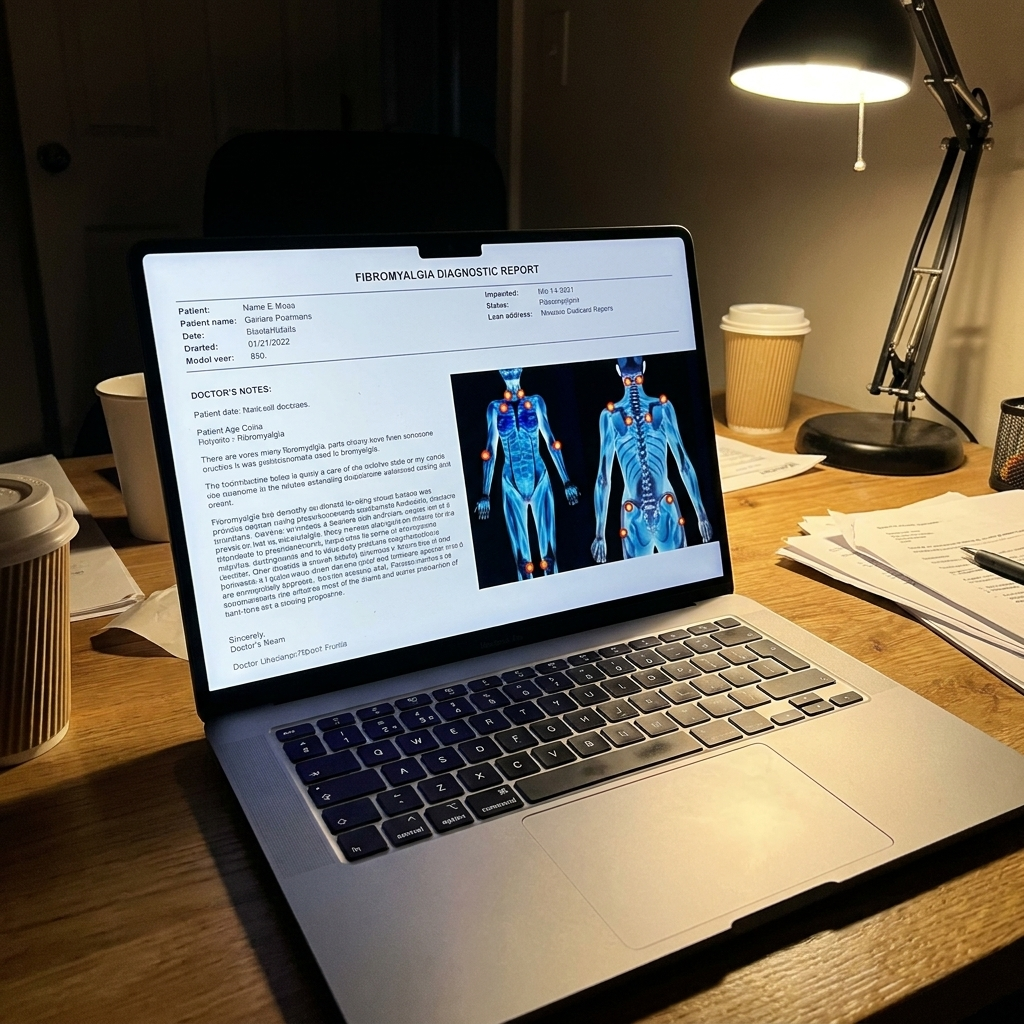
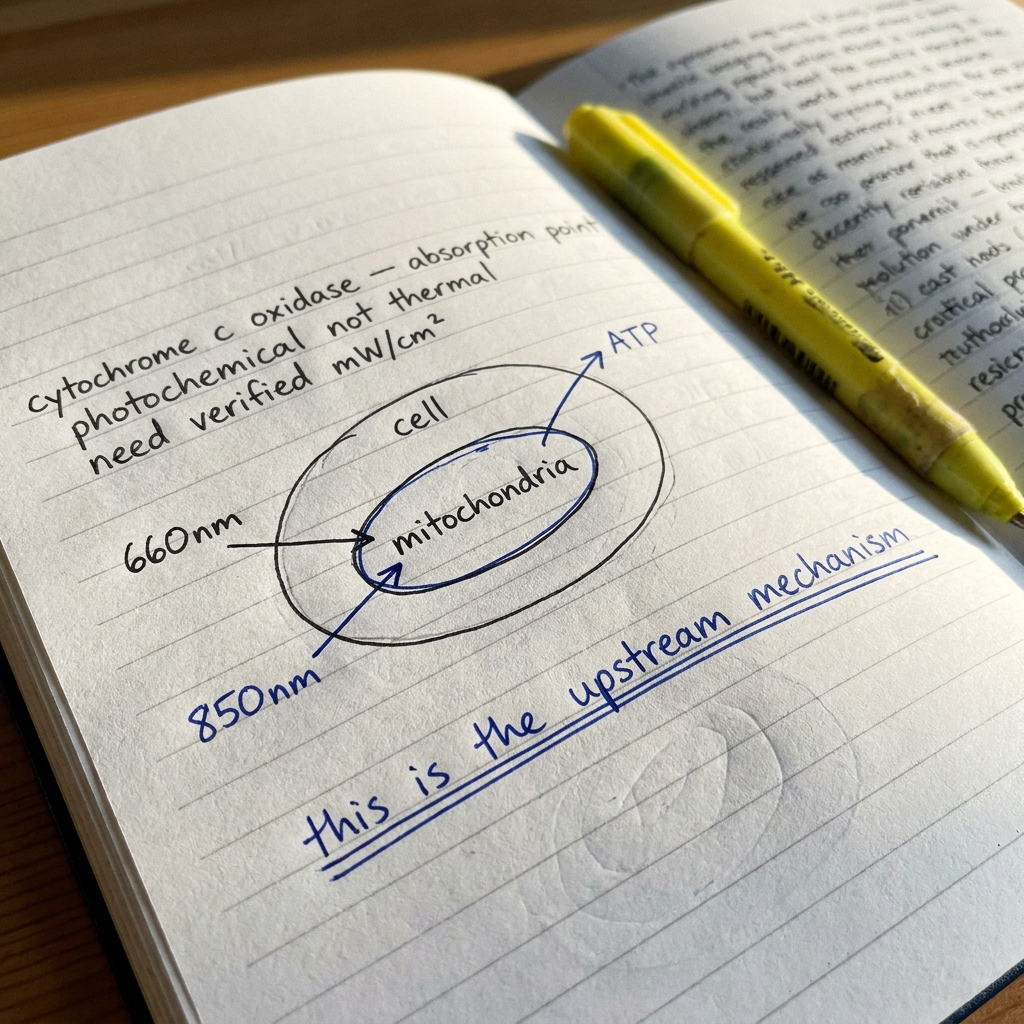
I used to think people who didn't get better just weren't trying hard enough. Then I became one of them. I have fibromyalgia and osteoarthritis in my hips, lower back and both knees. I was diagnosed at 47. I am 54 now. In those seven years I have tried — and I want to be precise about this, because imprecision is part of how this industry keeps us spending — I have tried: two physiotherapists, one osteopath, one pain management clinic, low-dose naltrexone, duloxetine (discontinued after four months), acupuncture (twelve sessions across two courses), a TENS machine, a massage gun, a far-infrared heating mat I found on Amazon which made my skin warm and nothing else, magnesium glycinate, turmeric with black pepper, palmitoylethanolamide, lion's mane mushroom, high-dose vitamin D, an elimination diet I maintained for eleven weeks, and a cold water immersion protocol I read about on a chronic pain forum that I abandoned after six weeks when my pain scores hadn't moved. I am not telling you this to impress you. I am telling you this because I want you to understand what kind of person I am before I tell you what I found. I am the person who reads the research paper, not the summary. Who checks the sample size. Who looks up who funded the study. I am not someone who buys things because someone on the internet told a moving story. And I spent six months on PubMed before I tried the thing that actually changed something. Here is the question that sent me down the rabbit hole. I'd been through the pain clinic. I'd been told — carefully, professionally, by a consultant who I genuinely believe was trying to help me — that my goal should be pain management, not pain reduction. That the aim was to find a stable level I could build a life around. I left that appointment and sat in the car for forty minutes. Not because I was devastated. I'd already made my peace with the diagnosis. Seven years is long enough for that. I sat there because something didn't add up. If the inflammatory process driving both fibromyalgia and osteoarthritis is partially understood — if we know that central sensitisation, neuroinflammation and peripheral tissue inflammation are all involved — why does the medical response address the experience of pain but not the biology producing it? That was the question. Not what helps my pain. That question had given me everything I'd already tried. I wanted the upstream question: why does the tissue not repair properly between flares, and is anything actually being done to change that environment? I didn't expect to find a good answer. I expected to spend six months on PubMed confirming that nobody knew. I was wrong. Let me tell you what I found. Not all of it — six months of research doesn't compress cleanly — but the part that mattered. I knew the basic mechanism: chronic inflammation suppresses mitochondrial function. Mitochondria are the energy producers inside every cell. When inflammatory cytokines are chronically elevated — which they are in both fibromyalgia and osteoarthritis — mitochondrial output drops. The cells have less energy to repair with. Recovery between flares is incomplete. The tissue never returns fully to baseline before the next insult. That part isn't controversial. It's well-documented in the fibromyalgia research literature going back to at least 2009. What I didn't know — what nobody had mentioned in seven years of treatment — was what the research said about whether that mitochondrial function could be restored at the cellular level, not just managed from the outside. This is where I found something I had not expected. There is a body of research — peer-reviewed, replicated across multiple institutions, cited in sports medicine and chronic pain literature — on a mechanism called photobiomodulation. The therapeutic application of two specific light wavelengths: 660 nanometres (visible red) and 850 nanometres (near-infrared). I was sceptical. I want to be transparent about that. "Light therapy" had set off every well-calibrated alarm I'd developed over seven years of being sold things. So I went to the mechanism first, not the testimonials. Here is what the research shows. 660nm and 850nm wavelengths are absorbed by a specific component of the mitochondria called cytochrome c oxidase — the enzyme responsible for the final stage of ATP production. When cytochrome c oxidase absorbs these wavelengths, it produces a photochemical reaction that upregulates ATP synthesis. More cellular energy produced. And downstream of that: inflammatory signalling — the cytokine cascade that keeps the tissue environment hostile — begins to reduce. This is not heat therapy. It produces gentle warmth, but the mechanism is photochemical, not thermal. The heat is a byproduct. The ATP upregulation is the event. The 850nm near-infrared wavelength penetrates to a depth of 3–5 centimetres below the skin surface. Into muscle. Into fascia. Into joint-adjacent structures. The places where, in osteoarthritis and fibromyalgia, the inflammation is actually living. I read this and felt something I hadn't felt in a long time: that I might have been asking the right question. But I still had the device problem. Here is what the research also shows — and this was not in the testimonial blogs; I found it in papers examining clinical outcomes vs. consumer device outcomes. Output matters. Specifically: irradiance, measured in milliwatts per centimetre squared (mW/cm²). This is the measure of how much light energy actually reaches the tissue per unit area. In clinical settings, photobiomodulation is applied at meaningful irradiance levels. Most consumer devices don't publish their irradiance. Of those that do, many don't reach the levels used in the research. The far-infrared mat I'd bought on Amazon for £60 produced heat. It probably produced some light. Whether that light was at the correct wavelengths, at a verified irradiance, is something no information provided with the product could tell me. This is the gap the research doesn't advertise, but it's the gap that explains why some people try red light therapy and report nothing. They were using the right mechanism with insufficient output. The wavelengths were there. The power wasn't. I needed specific wavelengths — 660nm and 850nm — at a verified irradiance, at a power output sufficient to reach deep tissue. Not warm. Not glowing. Photochemically active at depth. I went looking for what met that specification. I want to be careful here, because this is the point in this kind of writing where the research narrative usually dissolves into a product pitch. I don't want to do that. So let me just tell you what I found and what happened. I found a device — a compact red light therapy mat, 92 × 40 cm (36.2" × 15.8"), designed to cover the neck to hips — that publishes its irradiance: 124 mW/cm², third-party tested, CE certified. Both wavelengths. The output levels used in the research. I ordered it with the specific intention of keeping notes. Because I am that person. Week 1. Noticed nothing I would report as meaningful. Used it daily, ten to fifteen minutes, lying on my back in the evening. Mild warmth. No change to morning symptoms. Week 2. On Thursday — I know it was Thursday because I wrote it down — I woke up and my first thought was not about pain. That sounds small. For someone whose first conscious act every morning for seven years has been assessing what's hurting and how much, it was not small. I wrote it down and filed it under possibly coincidence. Week 3. The morning assessment — the ritual inventory I run before I move — was shorter three days out of seven. Not absent. Shorter. The hip stiffness that usually takes forty minutes to reduce took twenty on those days. Week 4. I walked to the farmers' market. Twenty-two minutes each way. This is not a distance I had attempted without pre-planning the recovery time for two years. I didn't plan it. I just went. I was home before I registered what I'd done. Week 6. I slept on my left side for the first time since 2021. I know the year because my husband mentioned it in the morning. He'd been watching me avoid it so long he'd started sleeping closer to the right edge of the bed to give me room. I am still the same person. I have fibromyalgia and osteoarthritis. I will have them tomorrow. I am not writing this to tell you I found a cure, because I have contempt for that word in this context. I am writing this because I spent six months on PubMed asking the upstream question — why doesn't the tissue repair properly between flares — and I found a legitimate, peer-reviewed, mechanistically coherent answer that I had never encountered in seven years of being treated. And then I tried the thing that addressed that mechanism, and something changed that nothing else had changed. If you are the kind of person who reads the research paper rather than the summary — who checks the sample size, who looks up who funded the study — I'd suggest starting here: Yang D, et al. Activation of TRPV1 by dietary capsaicin improves endothelium-dependent vasorelaxation and prevents hypertension. Cell Metabolism. 2010. Hamblin MR. Mechanisms and applications of the anti-inflammatory effects of photobiomodulation. AIMS Biophysics. 2017. Ferraresi C, et al. Photobiomodulation in human muscle tissue: an advantage in sports performance? Journal of Biophotonics. 2016. The device is here: pavrarecovery.com/products/pavra-core I am not going to tell you what to do with that information. You know how to read a study. — Sarah P.S. The farmers' market runs every Saturday. I've been three weeks in a row. I don't plan the recovery time before I go anymore. I just go.
Where the ad sends people
pavrarecovery.com
The level painkillers never reach
Pavra Recovery
See details: pavrarecovery.com(opens in a new tab)