Balanced Health Living Blog
Balanced Health Living Blog Facebook ad: “Quiet the nightly urge to drink”
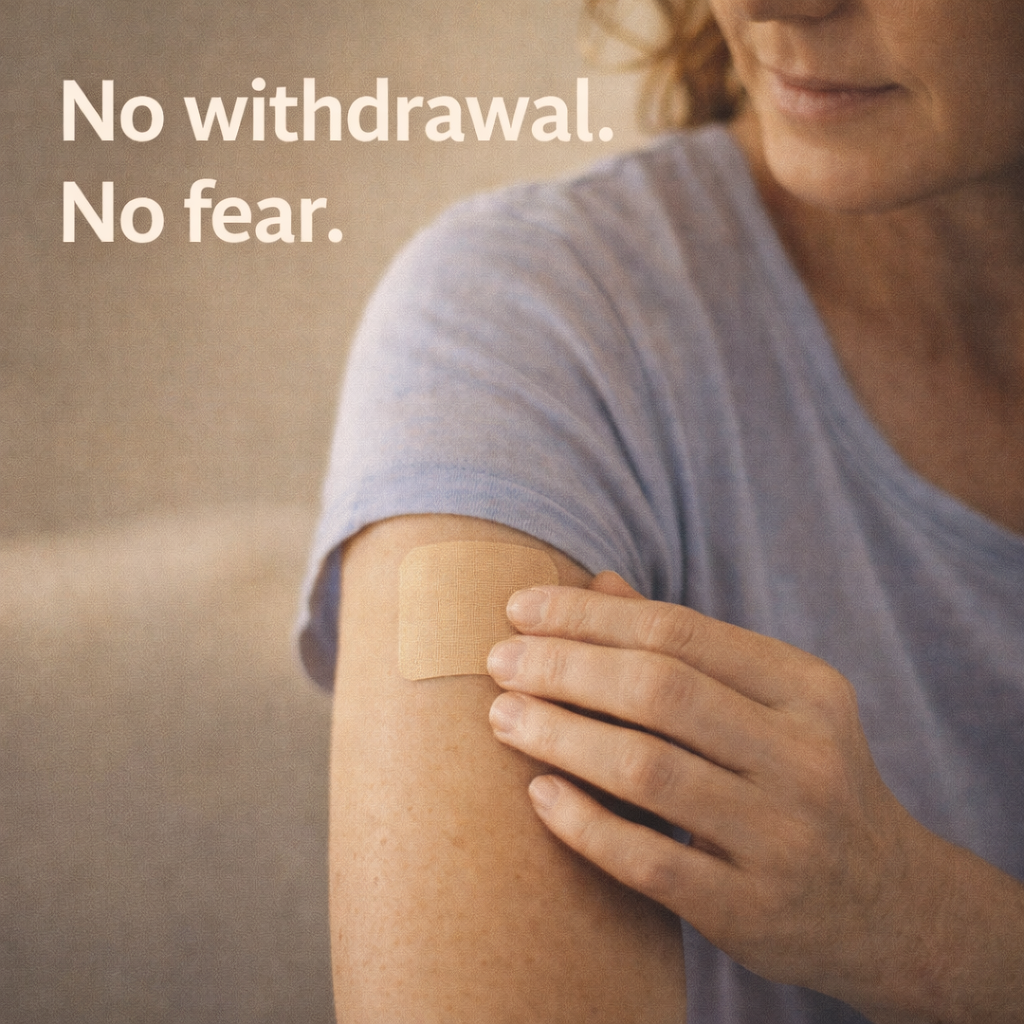
Ran for 92 days, from January 13 to April 15, 2026, the last day Crush saw it.
Run by Balanced Health Living Blog on Facebook. Crush is not the advertiser and does not verify its claims. See this ad in Meta's Ad Library(opens in a new tab)
Want an ad like this for your product?
Crush makes new ad images for your product from this ad: your logo, your product photo, your offer.
Trials from $19.95 USD, then $79.95 USD a month. Cancel anytime.
About this ad
- Meta Ad Library ID
- 1231568445524090
- Platforms
- Facebook, Instagram, Audience Network, Messenger and Threads
- Relaunches
- 2
Ad text
3:17 AM. I know because I'm staring at the clock. Again. My heart is hammering so hard I can feel it in my throat. The sheets are soaked through. My head is pounding with that familiar, sickening throb that starts behind my eyes and radiates down my neck. And that taste. God, that taste in my mouth. Like something died in there. ======== But the worst part? The absolute worst part isn't physical. It's the thoughts. The spiraling, suffocating thoughts that come flooding in at 3AM when there's nothing to distract you from what you've become. Did I say something embarrassing at dinner? Why did my husband give me that look? Did I forget to pick up my daughter from soccer practice? No, wait... that was yesterday. Or was it today? ======== I reach for my phone. Thirteen unread messages. My stomach drops. I'm too scared to open them. What if I sent something? What if I called someone? What if I don't remember? ======== This is my life now. This is what I've become. And the worst part? Tomorrow, I'll do it all over again. ======== THE MORNING AFTER (EVERY MORNING AFTER) The alarm goes off at 6:30 AM. I've had maybe two hours of actual sleep. The rest was just... sweaty, anxious half-consciousness punctuated by nightmares I can't quite remember. I sit up slowly. The room spins. My hands are shaking so badly I can barely turn off the alarm. I try three times before I manage to swipe correctly. ======== The bathroom mirror is not my friend anymore. The face staring back at me is puffy. Bloated. My eyes are bloodshot, with dark circles so deep they look like bruises. My skin has this gray, lifeless quality that no amount of makeup can hide. I'm 38 years old. I look 52. ======== I grip the sink with both hands and try to breathe. Just breathe. But my chest is tight. That familiar band of anxiety is already constricting around my ribs, making every breath feel incomplete. I can't do this again. I can't keep living like this. But I will. Because I always do. ======== I brush my teeth twice. Mouthwash. More mouthwash. My hands shake so badly that I can barely hold my coffee cup. I use both hands, like a toddler, and pray my daughter doesn't notice. But she does. She always does. ======== THE LOOK My 12-year-old daughter comes into the kitchen, and I see it. That look. That cautious, assessing look that no child should ever have to give their parent. She's checking. Checking to see which version of Mom she got today. "Morning, honey," I say, trying to sound normal. Trying to sound like a mother who has her shit together. She nods. Pours cereal. Doesn't make eye contact. ======== And something inside me breaks. Because I know what she's thinking. I know what she sees. She sees a mother who promises to come to her school play and then "forgets." A mother who volunteers to bake cookies for the class and shows up with store-bought ones because she was too hungover to actually bake. A mother who says "just one glass" at dinner and then can't remember putting her to bed. ======== This child—this beautiful, perceptive child—has learned to be quiet around me. To not ask for too much. To check my mood before she asks me anything important. And that's not motherhood. That's survival. She's surviving me. ======== THE WORK DAY (HOLDING IT TOGETHER) I make it to work. This is a miracle in itself. I sit at my desk with my oversized water bottle (because everyone says hydration helps, right?) and my third cup of coffee and try to remember what I'm supposed to be doing. ======== My coworker, Janet, stops by my desk. "Hey! Did you finish that report for the meeting today?" Report. Meeting. Today. The words float around in my head like they're in a foreign language. "Um... yeah, almost done," I lie. "Just putting some final touches on it." She smiles and walks away. I have no idea what report she's talking about. ======== I spend the next two hours frantically searching my emails, trying to piece together what I'm supposed to have done. My hands are still shaking. I spill coffee on my keyboard. Get it together. Get it together. Get it together. But I can't. Because my brain is swimming in fog. Every thought takes twice as long. Everything requires enormous effort. ======== By lunchtime, I've taken four "bathroom breaks" just to sit in the stall and put my head in my hands. I'm exhausted. Physically, mentally, emotionally exhausted. And it's only noon. ======== THE EVENING (WHEN IT STARTS AGAIN) 5:00 PM. I should go home. Make dinner. Help my daughter with homework. Be present. But all I can think about is the bottle of wine in my fridge. ======== See, here's what people don't understand about alcohol dependency. It's not that I wake up and think, "I'm going to get drunk today." It's that every single thing—EVERY thing—feels impossible without it. ======== The anxiety that's been building all day? The wine quiets it. The racing thoughts that won't shut up? The wine slows them down. The crushing weight of inadequacy, shame, and self-loathing? The wine makes it bearable. For a few hours, at least. ======== So I tell myself: "Just one glass. Just to take the edge off. I deserve it after the day I've had." One glass becomes two. Two becomes the bottle. The bottle becomes... I don't remember. ======== And then it's 3AM again. And I'm staring at the clock again. And my heart is pounding again. And the thoughts are spiraling again. And I swear—I SWEAR—tomorrow will be different. ======== THE THINGS I'VE TRIED (ALL THE THINGS THAT DIDN'T WORK) I've tried to quit. God, have I tried. Cold turkey? Made it 36 hours before the shaking got so bad I thought I was dying. Literal convulsions. I gave in because I was genuinely scared. Cutting back gradually? That lasted about four days. One stressful phone call from my mother and I was right back where I started. ======== I tried those AA meetings. Twice. The first time, I walked in, looked around at the circle of chairs, and walked right back out. I couldn't do it. Couldn't say those words out loud. "Hi, I'm Sarah, and I'm an alcoholic." It felt like branding myself. Forever damaged. Forever broken. The second time, I actually sat down. Made it through half the meeting. But everyone was so... certain. So black and white. "One day at a time." "Higher power." "Admit you're powerless." I didn't want to be powerless. I just wanted to be normal. ======== I tried those medications. The ones the doctor prescribed. Naltrexone made me nauseous all the time. Every single day felt like mild food poisoning. Acamprosate was $180 a month and I had to take it three times a day. I kept forgetting. And it didn't really... do anything. The cravings were still there. Antabuse? That stuff that makes you violently ill if you drink? That's not recovery. That's fear-based compliance. That's treating yourself like a criminal. ======== I tried supplements. Every "liver detox" and "craving reducer" on Amazon. Milk thistle. B vitamins. Magnesium. Ashwagandha. Spent hundreds of dollars. Got absolutely nothing. I tried therapy. Eight sessions with a counselor who kept asking me about my childhood and whether I felt "heard" by my parents. Look, my childhood was fine. My PRESENT is the problem. ======== I tried those sober apps. The ones that count your days and give you little badges. Made it 11 days once. Then had a fight with my husband and... yeah. I tried substituting with kombucha, fancy sodas, herbal teas. None of it touched the actual NEED. The desperate, clawing need for something to make my nervous system calm the hell down. ======== Everything failed. Every. Single. Thing. And with each failure, the shame got heavier. Why can't I do this? Why is everyone else able to have a normal relationship with alcohol? What is fundamentally wrong with me? ======== WHAT I FINALLY UNDERSTOOD (THAT CHANGED EVERYTHING) I was at my breaking point. Actually, past my breaking point. I was standing in my bathroom, 3AM, staring at my reflection, and having genuinely dark thoughts. The kind of thoughts that scare you when you think them. What if I just... wasn't here anymore? Would my daughter be better off? Would my husband finally be free of this burden? ======== I didn't tell anyone about these thoughts. How could I? But somehow, my sister-in-law knew something was wrong. ======== She came over for Sunday dinner. After we ate, as she was leaving, she pulled me aside. "I need to tell you something," she whispered. "What you're going through? It's not a willpower problem. It's not a character problem. It's a nervous system problem." ======== I stared at her. A nervous system problem? ======== "Your body has been running in crisis mode for so long that it doesn't remember what normal feels like," she continued. "Every morning, your stress hormones spike. All day, they stay elevated. By evening, your brain is screaming for something—ANYTHING—to shut off the alarm bells." "That's when wine becomes irresistible. Not because you're weak. But because your body is in a chemical emergency and alcohol is the only thing you know that makes it stop." ======== She handed me a small box. "My friend used this. After twenty years of nightly wine. She hasn't had a craving in four months." ======== I looked at the box. A patch. A PATCH. After everything I'd tried—therapy, medication, meetings, willpower, supplements—she was suggesting a patch? I almost threw it away. ======== But then she said something that stopped me. "Every time you tried to quit before, you were trying to use willpower against a cortisol crisis. That's like trying to think your way out of a heart attack. It's impossible." "This patch? It interrupts the cortisol cycle. It gives your nervous system the support it needs so you're not in chemical emergency mode by 6 PM. When your body isn't screaming for relief, the cravings just... fade." ======== THE CORTISOL-CRAVING LOOP (WHY NOTHING ELSE WORKED) She explained it like this: ======== Chronic stress floods your body with cortisol—your primary stress hormone—all day long. Your nervous system gets stuck in "fight-or-flight" mode. By evening, your overstimulated brain is desperately searching for something to flip the off switch. That's what alcohol does. It forces your nervous system into "rest mode" by flooding your brain with GABA—your calming neurotransmitter. ======== But here's the trap: The more you use alcohol to calm your nervous system, the more your brain downregulates its own GABA production. Your body learns to rely on alcohol to manufacture calm. Now you're stuck. Your nervous system can't calm itself naturally anymore. It's chemically dependent on wine to feel normal. ======== Every attempt to quit through willpower alone? You're asking a GABA-depleted, cortisol-flooded nervous system to suddenly produce calm from nothing. It's not possible. That's why you shake. That's why you panic. That's why the cravings feel like a physical emergency. Because they ARE a physical emergency. ======== Your body isn't wrong. Your willpower isn't weak. Your nervous system is broken. And willpower can't fix broken biochemistry. ======== "The patch," she said, "delivers three compounds transdermally—through your skin—that directly address this cycle." "It regulates cortisol so your nervous system doesn't spend all day in crisis mode." "It provides GABA precursors so your brain can rebuild its natural calming ability." "And it protects your liver from the acetaldehyde toxicity that creates those 3AM anxiety attacks." ======== For the first time in years, something made sense. This wasn't about being stronger. This was about giving my exhausted nervous system the biochemical support it needed to actually have a fighting chance. ======== WHY A PATCH (NOT PILLS) "Why a patch?" I asked. "Why not just take these as supplements?" ======== She explained something I'd never known: When you take supplements orally—especially for alcohol-related issues—they get destroyed by your liver in what's called the "first-pass effect." Your liver processes everything you swallow before it reaches your bloodstream. And if your liver is already compromised by alcohol and overwhelmed by stress hormones, it can't effectively absorb or activate oral supplements. That's why I'd spent hundreds of dollars on supplements and got absolutely nothing. ======== A transdermal patch bypasses your digestive system completely. It delivers compounds directly through your skin into your bloodstream over 24 hours. No spikes at 8 AM that wear off by 3 PM—right when cravings start building. Just steady, consistent support around the clock. Exactly when you need it most. ======== Pills also require you to remember to take them three times a day. When you're in the fog of hangxiety and brain fog? That's impossible. The patch? You apply it once in the morning. Under your shirt. No one sees it. No one knows. And it works all day while you go about your life. ======== THE FIRST THREE DAYS I ordered it. Figured I had nothing to lose except more money on something that wouldn't work. It arrived in completely discreet packaging. No labels screaming "ALCOHOL PROBLEM SOLUTION!" Just a plain box that could be anything. ======== Day One: I applied the patch in the morning. On my upper arm, under my shirt, where no one would see it. It felt... like nothing. Just a patch. No tingling, no warmth, no immediate effect. I went through my day. The usual anxiety. The usual counting-down-the-hours until I could have a drink. But that evening, something was different. The wine was in the fridge. I could have it. But the screaming urgency wasn't there. The physical desperation was... quieter. I still drank. Two glasses instead of the whole bottle. That night, I woke up at 3AM. But my heart wasn't pounding. The panic was less intense. I actually fell back asleep. ======== Day Two: I woke up and I'd slept for six consecutive hours. SIX HOURS. I couldn't remember the last time I'd done that. My hands were still shaky, but less. My head was clearer. That evening, I had one glass of wine. Not because I was white-knuckling it. But because I just... didn't want more. The demon that usually screamed at me to finish the bottle was... quiet. ======== Day Three: This was the real test. Friday night. The worst night of the week for me. Normally, Friday night was my "reward." The night I'd really let loose because "I deserved it after the week I'd had." But I came home, and I wasn't thinking about the wine. I was thinking about dinner. About my daughter's upcoming science project. About actually being present. I didn't drink at all that night. Not because I was forcing myself not to. But because I didn't want to. ======== THREE MONTHS LATER I'm sitting here now, writing this, and I still can't quite believe it. The 3AM wake-ups stopped after the first week. The shaking hands stopped after ten days. The crushing anxiety that made me want to crawl out of my own skin? It's not gone completely—I'm not going to lie and say everything is perfect—but it's manageable. Actually manageable. ======== My daughter looks at me differently now. This morning, she asked me to help her with her homework. Just asked, straight out, without that cautious checking-Mom's-mood-first hesitation. Last week, she invited me to her school play. And I went. And I remembered every moment. She hugged me afterward and said, "Thanks for coming, Mom." Just that. Simple. Normal. And I cried in the car afterward because I realized: this is what I've been missing. These simple, normal moments. ======== My coworker Janet commented last week: "You seem really... sharp lately. Whatever you're doing, keep doing it." I am sharp. My brain works again. The fog lifted. I can think, plan, execute. I'm actually good at my job when I'm not fighting through a constant hangover. ======== My husband and I had an actual conversation last night. Not a fight. Not a tense silence. An actual, genuine, connected conversation. He told me: "I feel like I have my wife back." ======== WHAT THE GLISERA PATCH ACTUALLY CONTAINS The patch delivers three targeted compounds that work together to break the cortisol-craving cycle: ======== Kudzu Root Extract (500mg) Clinically studied in multiple trials for reducing alcohol consumption. Kudzu works by modulating GABA-A receptors—the same receptors alcohol activates—allowing your brain to produce calm naturally without needing alcohol. In one study, participants using kudzu reduced their alcohol intake by 34% within the first week. ======== Magnesium Threonate (200mg) The only form of magnesium that effectively crosses the blood-brain barrier. Magnesium is depleted rapidly by stress and even faster by alcohol. When magnesium-deficient, your nervous system becomes hyperexcitable—muscles tense, anxiety spikes, sleep suffers, and cravings intensify. Magnesium threonate calms overactive neural firing (the source of your racing thoughts and 3AM panic) and supports healthy cortisol regulation. ======== Milk Thistle Complex with Silymarin (300mg) Supports liver recovery and protects against acetaldehyde toxicity—the actual source of your morning symptoms. When your liver processes alcohol, it creates acetaldehyde, a toxic compound 30 times more harmful than alcohol itself. Acetaldehyde accumulation is what causes the 3AM anxiety attacks, the shaking hands, the morning dread. Milk thistle accelerates acetaldehyde clearance and supports your liver's natural glutathione production—giving your body the tools to heal. ======== The Delivery System All three compounds are delivered transdermally through advanced liposomal technology over 24 hours. Steady absorption. No spikes. No crashes. Just consistent support for a nervous system that's been in crisis mode for too long. ======== THIS ISN'T A MIRACLE (BUT IT CHANGED MY LIFE) I want to be clear about something. This isn't a magic cure. This isn't "apply patch and instantly never want alcohol again." It's support. Real, tangible, physiological support for a nervous system that's been running on empty for too long. ======== It made the difference between white-knuckling through every single moment and actually having the bandwidth to make better choices. It turned the screaming demon into a whisper I could ignore. It gave my body the biochemical support it needed so my willpower finally had a fighting chance. ======== I still have hard days. Days when I'm tempted. Days when stress hits and my brain thinks, "You know what would help..." But now I have a choice. A real choice. Not the illusion of choice while fighting a chemical hurricane in my brain. An actual choice. ======== IF YOU'RE READING THIS AT 3AM If you're reading this in the dark, heart pounding, wondering how you got here and how you'll get out... If you've tried everything and failed and now you think you're the failure... If you're terrified of what you're becoming but even more terrified of trying to change because you can't handle another failure... I understand. I was you. I am you. ======== This isn't about willpower. It's not about being strong enough. It's about giving your exhausted, overstimulated, cortisol-flooded nervous system the biochemical support it needs to actually calm down. You're not broken. You're not weak. You're running on a system that's been in crisis mode for so long it doesn't remember what normal feels like. ======== HERE'S WHAT MADE ME FINALLY TRY IT Glisera offers something I'd never seen before: a 60-day money-back guarantee. ======== Not 30 days. Sixty days. Because they know it takes time for your nervous system to heal. For your GABA production to rebuild. For your cortisol rhythms to normalize. ======== If the 3AM wake-ups don't stop. If the cravings don't quiet. If you don't feel your hands stop shaking, your brain fog lift, your desperate evening urgency fade... You get every penny back. No questions asked. ======== That's the risk. The cost of returning a box. ======== Compare that to another year of this. Another year of your daughter checking which version of mom she got. Another year of lying to coworkers about reports you can't remember. Another year of broken promises to yourself. Another year of 3AM wake-ups, wondering if tonight's the night you text something you can't take back. ======== I spent $180 a month on Acamprosate that made me nauseous and didn't work. I spent hundreds on supplements that did nothing because my liver couldn't absorb them. I lost count of how much I spent on therapy that focused on my childhood instead of my present. ======== The Glisera patch is $89 for a 30-day supply. That's $2.97 per day. Less than a single glass of wine at a restaurant. Less than the bottle you're drinking at home every night. ======== And if you commit to the 90-day nervous system reset program—the timeline research shows it takes to fully restore GABA production and cortisol regulation—it's $67 per month. $2.23 per day for freedom. ======== THREE MONTHS AGO, I THOUGHT I WAS BEYOND HELP Three months ago, I was standing in my bathroom at 3AM, having thoughts that terrified me. Today, I'm free. ======== Not perfect. Not "cured." But free. ======== Free to choose. Free to be present. Free to be the mother, wife, and person I actually am underneath all this. Free from the screaming demon that made every evening feel like a battle I was destined to lose. ======== My daughter asked me yesterday if we could bake cookies together this weekend. Just asked. No hesitation. No checking my mood first. Just... asked. Like a normal kid asking her normal mom to do a normal thing. ======== And I said yes. And I meant it. And we will. ======== If there's any chance—any chance at all—that this could give you that same freedom... If there's any chance you could wake up in three months and feel like yourself again... If there's any chance your daughter could stop surviving you and start just... being your daughter... ======== Isn't it worth sixty days to find out? You've already tried everything else. And this is the only thing that addresses what's actually broken: your exhausted nervous system that's been in crisis mode for so long it forgot how to calm down on its own. ======== Try Glisera risk-free for 60 days. If your nervous system doesn't calm down, if the cravings don't fade, if you don't feel the difference—we'll refund every penny. You have nothing to lose except another night at 3AM, staring at the clock, wondering how much longer you can keep living like this.
Where the ad sends people
wellnessclarityjournal.thegliserastore.com
Quiet the nightly urge to drink
Learn more: wellnessclarityjournal.thegliserastore.com(opens in a new tab)