
Active· since Jan 31, 2026
- 227
- days running
- 0
- relaunches
Ad copy
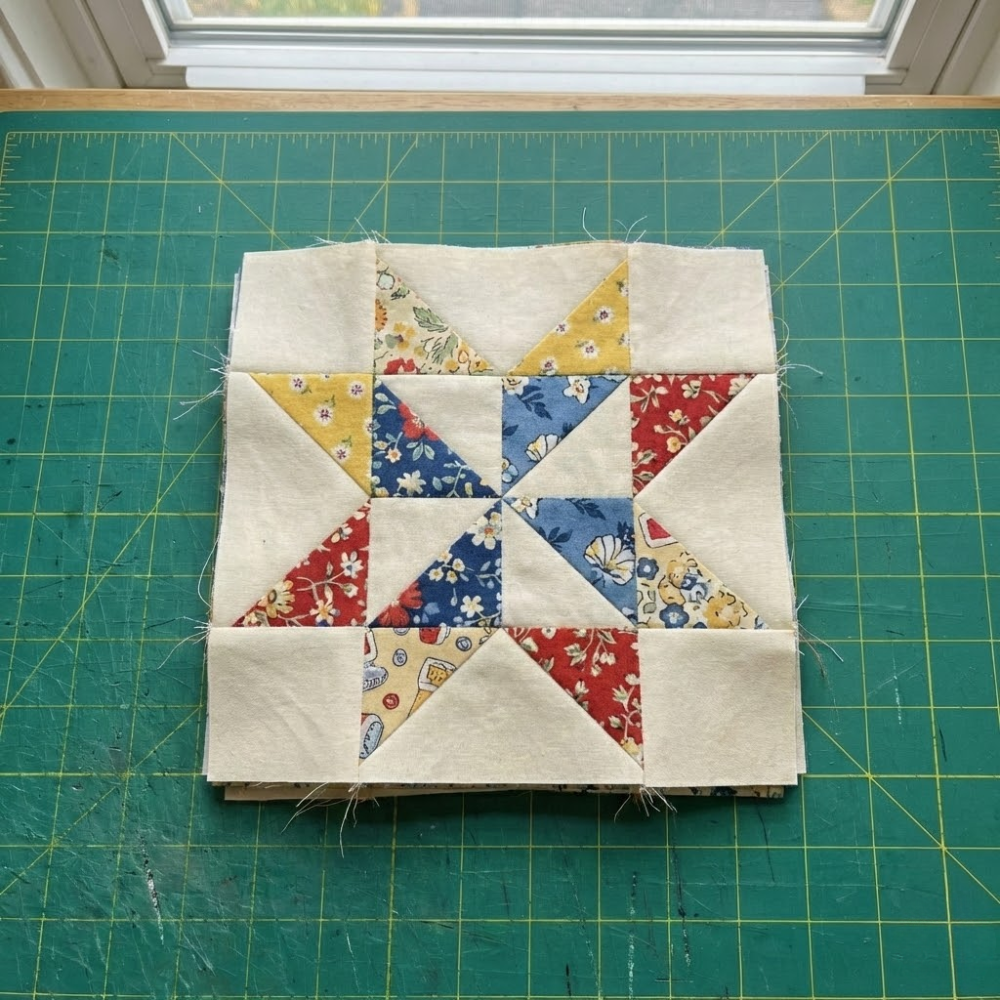
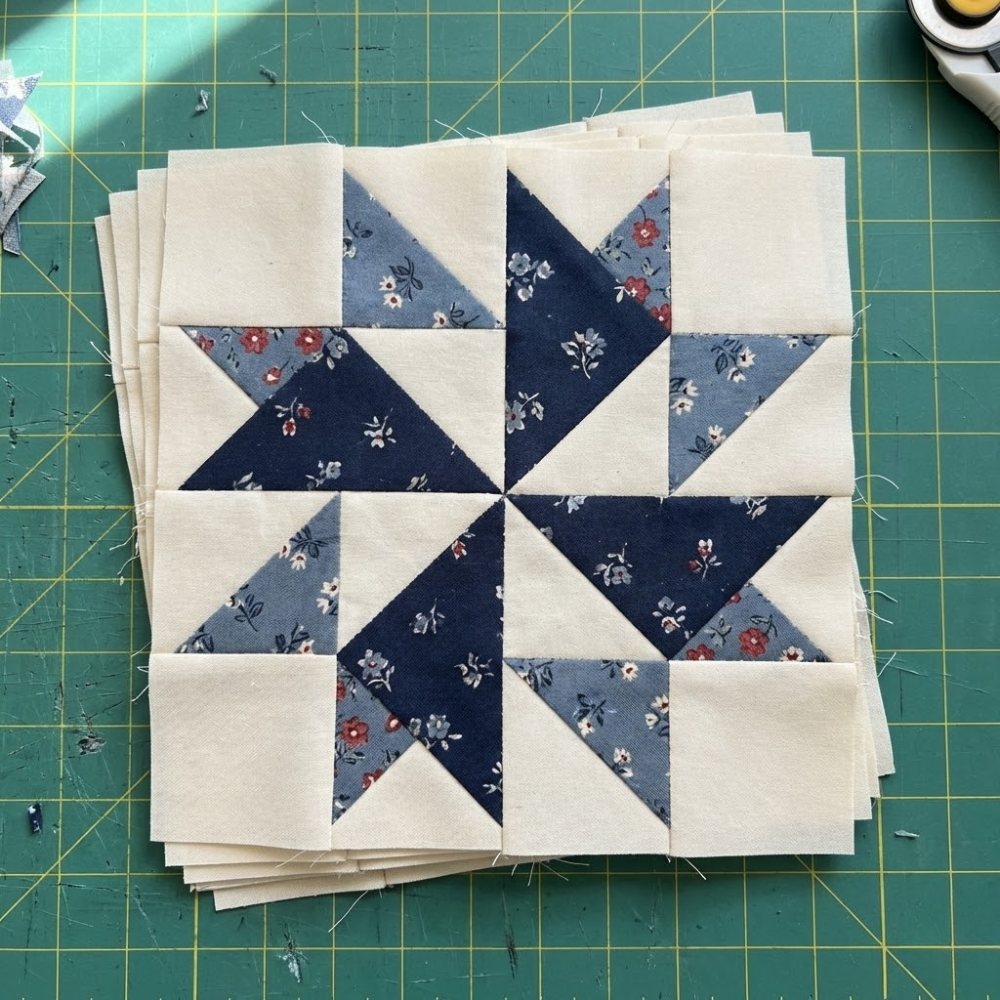
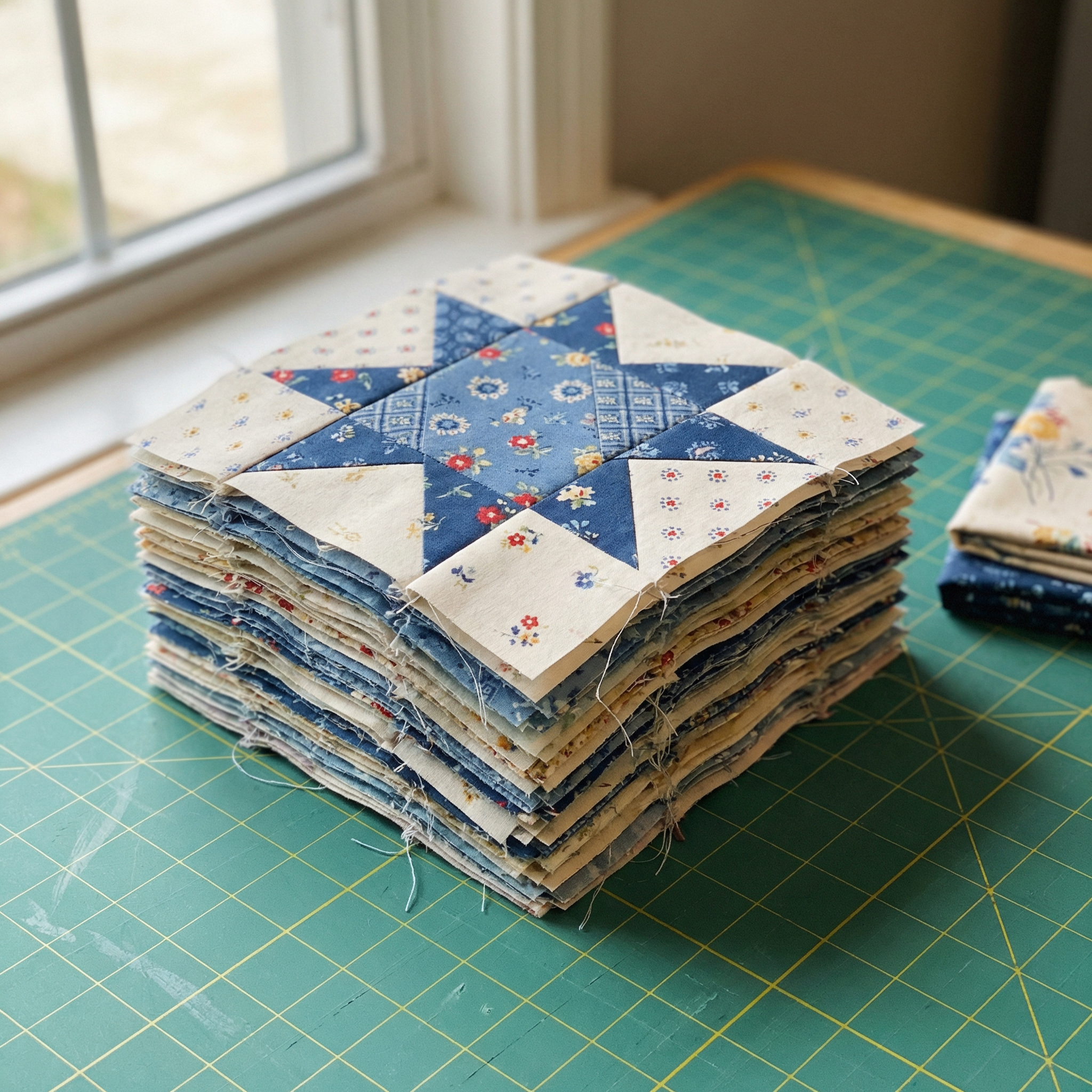
After 217 quilts and nineteen years, my points still don't match. I've tried grip dots, sandpaper strips, the $80 Stripology, and walking my fingers up the ruler until my wrist burned. None of it worked. Last month a retired aerospace engineer in my guild finally measured why—and I've never been angrier at the quilting industry. It has nothing to do with my tremor, my trifocals, or my technique. It's the MANUFACTURING TOLERANCES they're allowed to call "precision." Let me back up. I've been quilting since my kids were in elementary school. Not as a hobby. As an identity. It's how I introduce myself. It's what I do when I'm happy, when I'm stressed, when someone I love needs comfort wrapped in cotton. Two hundred and seventeen quilts. I keep a spreadsheet. Baby quilts. Wedding quilts. Memorial quilts. Charity quilts. Quilts for every grandchild, every niece, every neighbor who lost a spouse or welcomed a baby or survived something hard. And for nineteen years, my points have been close but never quite right. Not awful. Not enough to ruin a quilt. Just enough that I noticed. Just enough that I angled my camera carefully when I took pictures. Just enough that when someone said "this is gorgeous," a little voice whispered "if only you could see where the seams meet." I told myself slight imperfection was part of the handmade aesthetic. That only competition quilters cared about perfect points. That my quilts were made with love and that's what mattered. But I cared. Even if I pretended I didn't. Every time I scrolled through the quilting hashtags and saw those pristine stars with razor-sharp tips, I felt something twist in my stomach. Flying geese that actually looked like they were flying somewhere. Pinwheels where every single point met in the center like they'd been drawn by a compass. How? That was always my question. How are they doing that? I knew the answer had to be cutting. I'd read it a thousand times in the forums. Accurate cutting is the foundation of accurate piecing. If your cuts are off, your points will never match. So I went looking for solutions. You probably know the drill. First came the grip dots. The little sandpaper circles everyone recommends. $12 for a sheet. I covered every ruler I owned. They helped the ruler grip a little better. But my cuts still weren't consistent. Points still wonky. Then the spray-on grip. $14 a can. Wore off after a few uses. Left residue on my rulers. Points still wonky. Then the weighted ruler. $67. The theory was heavier meant more stable. My wrist started aching after every cutting session. Points still wonky. Then the track system where the cutter clips onto the ruler. $89. The plastic guide felt flimsy. Returned it within a week. Points still wonky. Finally I bought the Stripology. The $80 slotted ruler that every quilting group on Facebook treats like the holy grail. The one with thousands of five-star reviews. The one that was supposed to solve everything. The concept made sense. The blade drops into a slot instead of running along an edge. The channel guides the cut. No more fighting to hold the ruler still. First cut, I noticed something. The blade fit in the slot, but there was room to move. I could wiggle it side to side. Not a lot. But noticeably. I made my cuts anyway. Measured the strips. Still off. Not by much. But enough that when I pieced them together, the points didn't meet. $329 total. That's what I'd spent on solutions. Grip dots. Sandpaper strips. Spray-on grip. Weighted ruler. Track system. The Stripology. And I was still angling my camera to hide the seams. Last Thanksgiving I made a quilt for my oldest granddaughter. She was graduating high school and I wanted to give her something she'd take to college. A lone star pattern with the colors of her new university. I spent five months on that quilt. Used every technique I knew. Pressed carefully. Used good thread. Fresh blade. The Stripology for every cut. When I pieced together the first star section, my heart sank. The points didn't meet. Some were close. Some were a sixteenth of an inch off. The center had that telltale pucker where pieces weren't fitting together cleanly. I sat at my sewing table and wanted to cry. Nineteen years. Two hundred and seventeen quilts. $329 in grip solutions. The expensive slotted ruler. And I still couldn't make a star that looked like a star. I gave Olivia the quilt anyway. She loved it because she's eighteen and her grandmother made her something by hand. But every time I saw it in photos from her dorm room, I saw the mistakes. In January, Richard joined our guild. Retired. Just moved from Seattle. Thirty-eight years as an aerospace engineer before his wife taught him to quilt. I watched him at our charity quilt day. His cuts were effortless. Perfect strips. One after another. No hesitation. No death-gripping the ruler. And his hands had a slight tremor—worse than mine. During the break I worked up the nerve to ask him about it. "Can I ask what ruler you use? My cuts are never accurate no matter what I try." He asked what I'd tried. I listed everything. The grip dots. The weighted ruler. The track system. The Stripology. He nodded slowly. "Can I see your Stripology?" I brought it the next week. He looked at it for maybe five seconds. Then he pulled out a small metal tool from his bag. A feeler gauge set, he called it. The kind used in aerospace manufacturing to measure tiny gaps. He slid different blades into the slot until he found the clearance. "Two point eight millimeters of play," he said. "That's your problem. And it's the same problem with almost every slotted ruler on the market." He explained it the way an engineer would. Clear and precise. "When companies manufacture these rulers, they have to choose their tolerances. Tight tolerances cost more. Better equipment. More quality control. Higher rejection rates. So most companies mill their slots wide. Loose tolerances. Cheaper to produce at scale." He held up my Stripology. "This slot has almost three millimeters of clearance around the blade. Doesn't sound like much. But when the blade can wobble even slightly inside the channel, it drifts during the cut. Maybe a thirty-second of an inch. Maybe a sixteenth. That error compounds through every seam. By the time you've assembled a block, those tiny cutting variations become visible piecing problems." "So even with a slotted ruler, the blade can still drift?" "If the slot is too wide, absolutely. The blade has room to move laterally. And it will move. Physics doesn't care how carefully you push." He used an analogy that stuck with me. "Think of it like a turbine shaft in a bearing housing. If there's too much clearance, you get vibration. Inconsistency. If the fit is precise, the shaft can only rotate true. Same principle. Your blade is rattling around inside a slot that was milled too wide to provide actual guidance." He pulled out his own ruler. It looked similar to the Stripology. Slots running down the length. But when he dropped the blade in, the difference was immediate. The blade seated snug. Tight against the walls of the channel. When he tried to wiggle it, nothing happened. No play. No movement. "Precision-milled," he said. "Tight tolerances. The blade fits, but there's no room for lateral drift. It can only travel forward." He pushed the blade through the slot. It ran perfectly straight. "This is what the quilting industry doesn't explain," he said. "Most quilting companies don't understand precision manufacturing. They're making craft supplies, not precision instruments. There's a difference." "Why doesn't anyone talk about this?" I asked. "Because tolerances aren't marketable. You can't put 'precision-milled to .4mm tolerance' on a package and expect customers to understand. It's easier to sell grip dots and tell people to press harder. The quilting industry makes more money from your frustration than from your success." Two weeks later I asked Janet at my local quilt shop why she didn't stock precision-milled rulers. She glanced around the store. Lowered her voice. "You want the honest answer? There's no margin. A $40 ruler that works perfectly? I sell it once. A Stripology that almost works? I sell the ruler, then grip dots, then a new mat, then cutting classes." She paused. "I use a precision-milled one at home. Have for four years. Can't put it on my shelf, but I use one." That night I found the ruler Richard used. $40.99. Twenty-six precision-milled channels. The blade seats inside and travels through—not rattling around in a wide slot. When it arrived, I cut twenty strips from scrap fabric. Measured each one. For the first time in nineteen years, every single strip was the exact width I intended. I sat there staring at them. Twenty perfect strips cut by the same hands that had failed for nineteen years. My hands hadn't changed. My eyes hadn't changed. My tremor hadn't changed. The tolerances changed. The following weekend I started Olivia's quilt over. Same lone star pattern. Same university colors. I cut everything with the new ruler. The blade dropped into the slots with that satisfying click. No wobble. No play. When I pieced together the first star section, every single point met in the center. I actually said "oh my god" out loud. Alone in my sewing room. Staring at a star like I'd never made one before. Because I hadn't. Not like this. Not with every point sharp and every intersection clean. I finished the new quilt in four weeks. The star looks like a star. Every point meets. The whole thing lays flat without a single pucker. Last week I showed Richard both quilts at guild. He smiled and said "tolerances matter." Four other women asked what we were talking about. I explained about channel width and blade drift and precision milling. Three ordered that night. One texted me the next week: "My flying geese are actually the same size for the first time in twelve years." My physical therapist noticed something too. "Your wrist inflammation is down," she said last Tuesday. "What changed?" "I stopped pressing so hard when I cut." She nodded. "You were compensating for equipment limitations with muscle tension. That's why you hurt." Nineteen years of my body doing the precision work the tool should have been doing. The quilting industry sold me grip dots when what I needed was tighter tolerances. They sold me an $80 slotted ruler with slots wide enough to let the blade drift. They let me blame my tremor, my trifocals, my technique. For nineteen years. I'm not blaming myself anymore. If your points don't match, and you've tried the grip dots, and you've tried the weighted rulers, and you've even tried slotted rulers and they still didn't fix it—look at the tolerances. Ask whether your blade has room to wobble inside those channels. That's where I finally found my answer. I put the link below. I wish I'd understood manufacturing tolerances $329 and two hundred seventeen quilts ago.
Like this ad? Make it yours.
Crush rebuilds this exact creative around your product — your brand, your colors, your offer — in about a minute.