
Inactive· since Jun 25, 2026
- 6
- days it ran
- 0
- relaunches
Ad copy
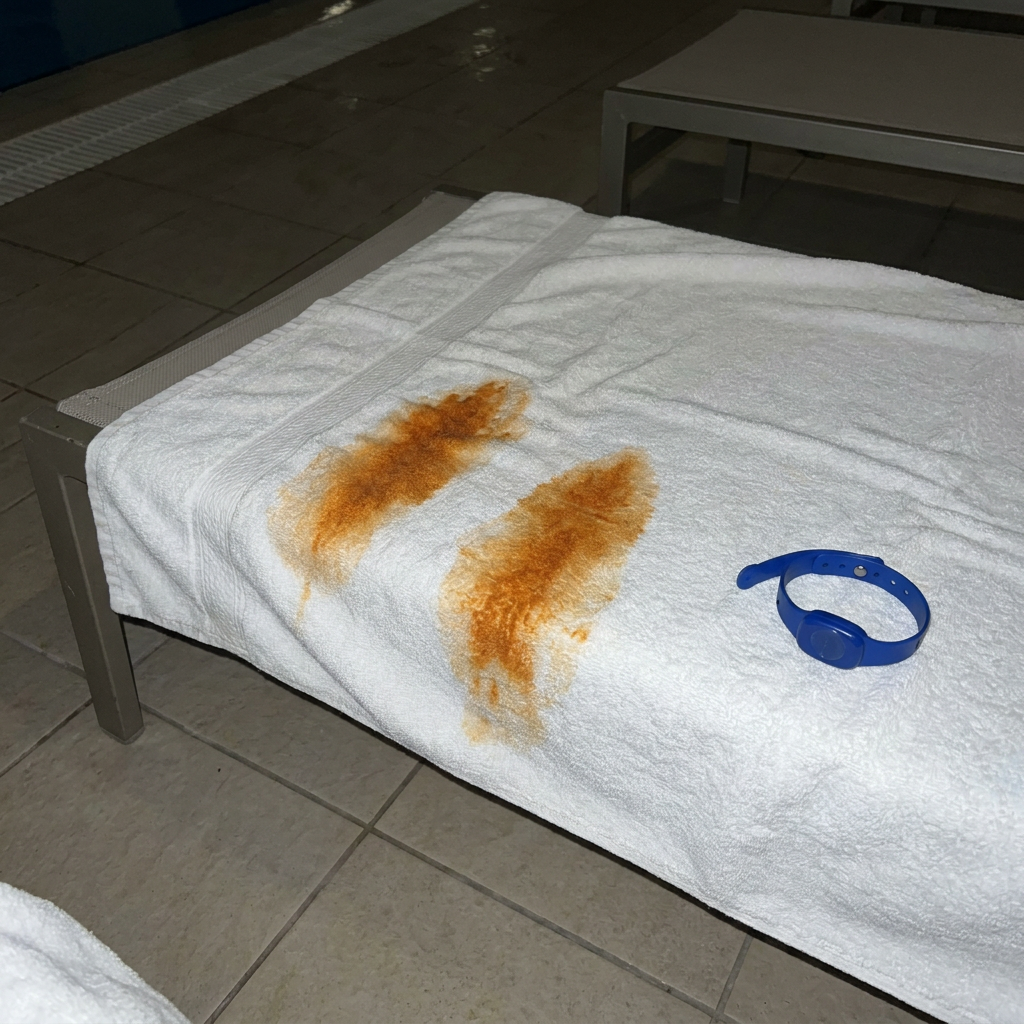
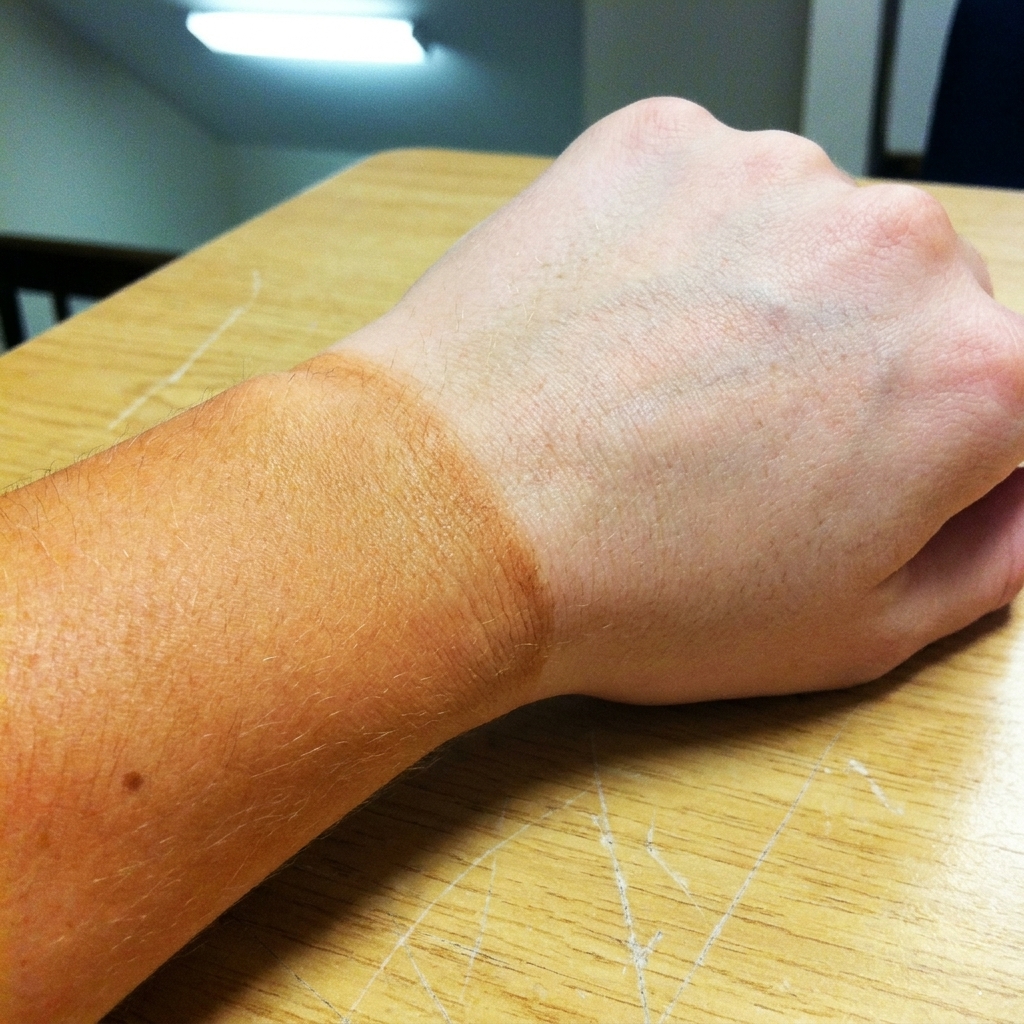
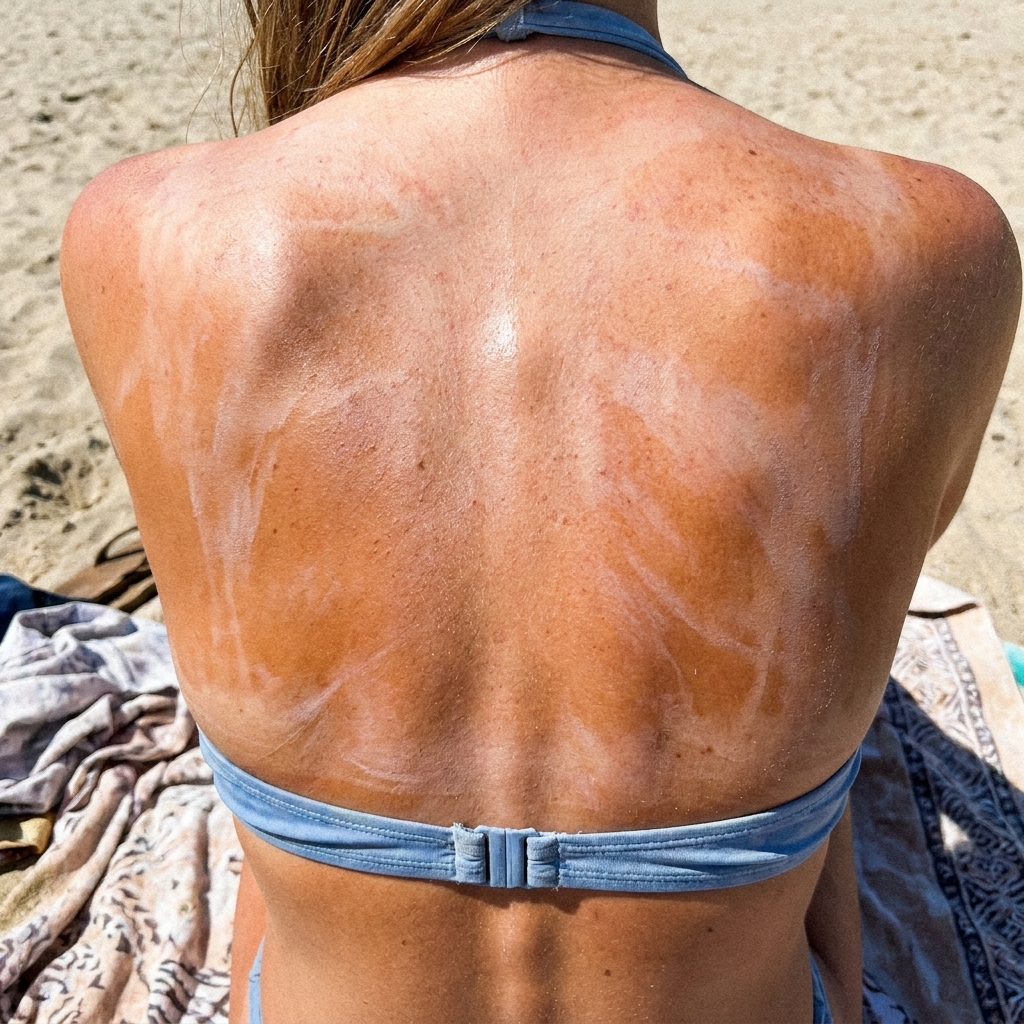
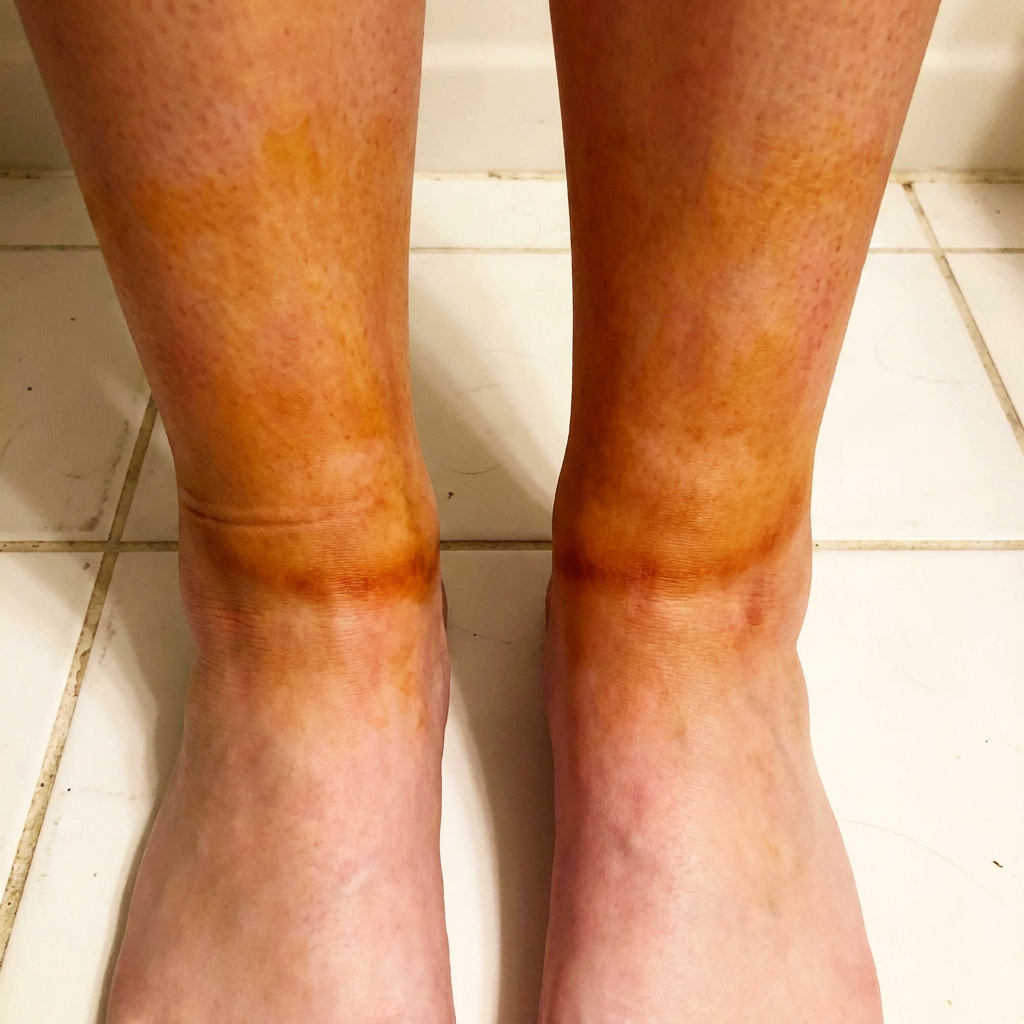
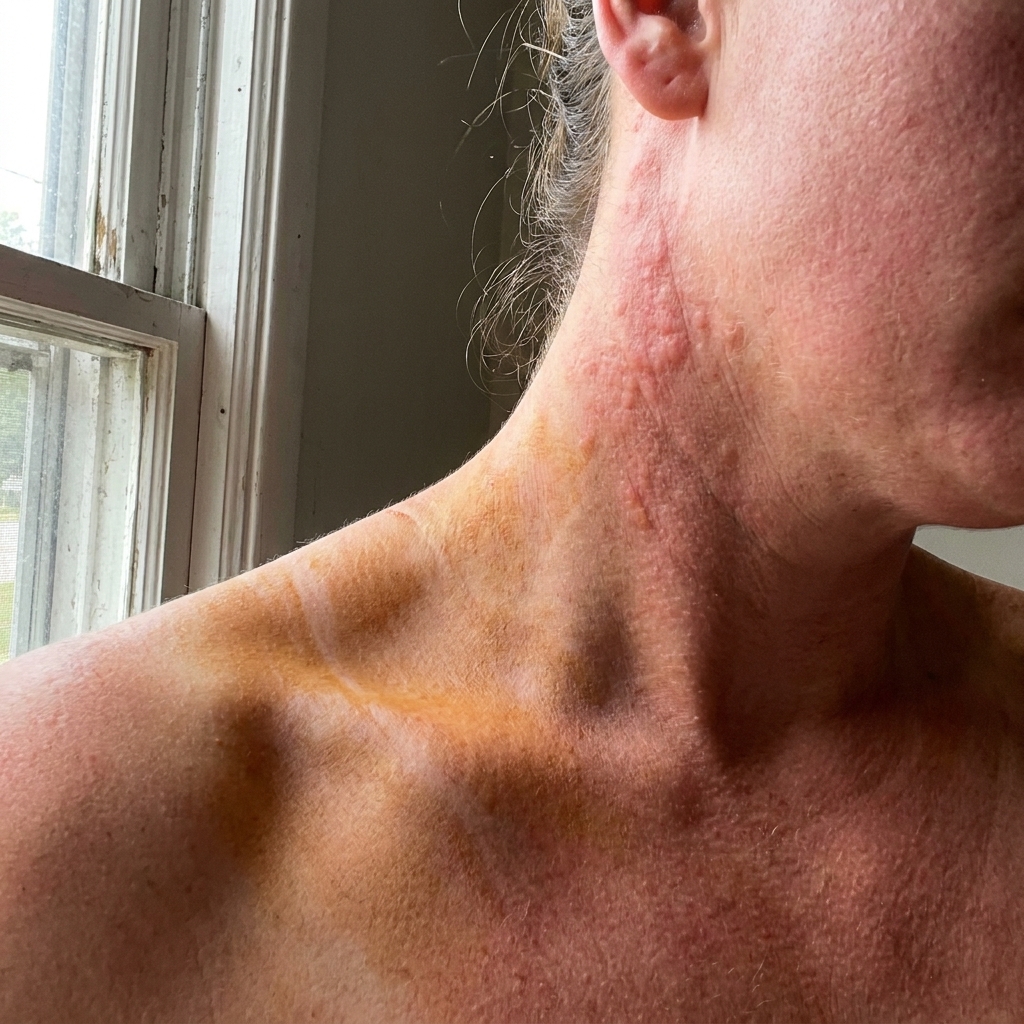
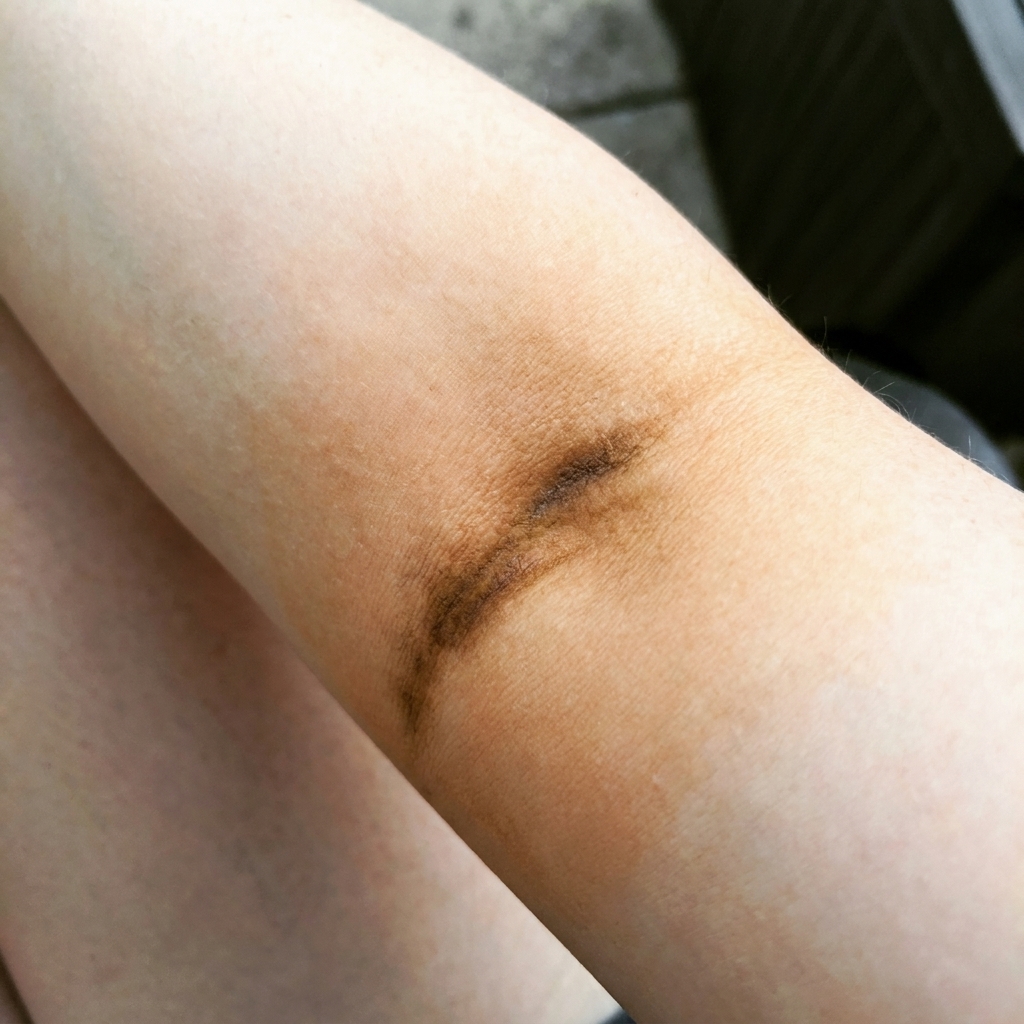
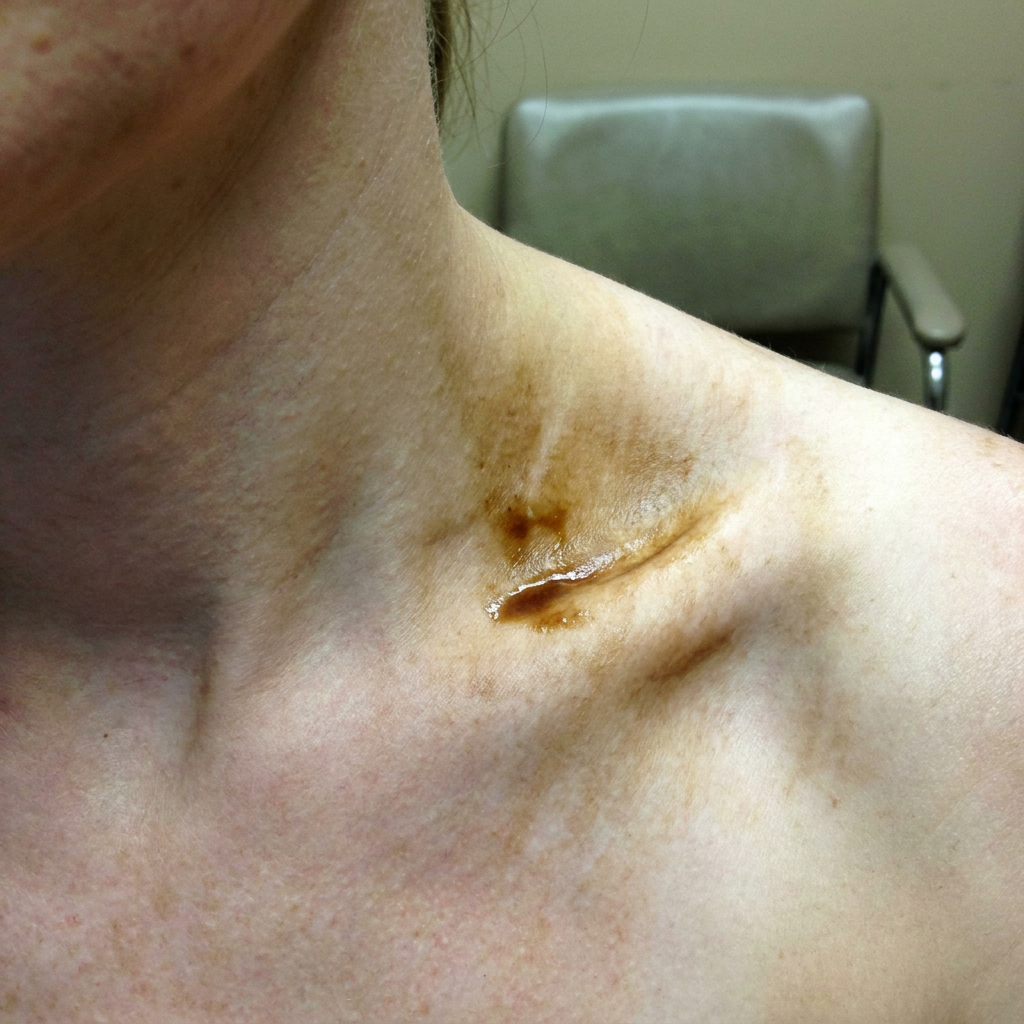
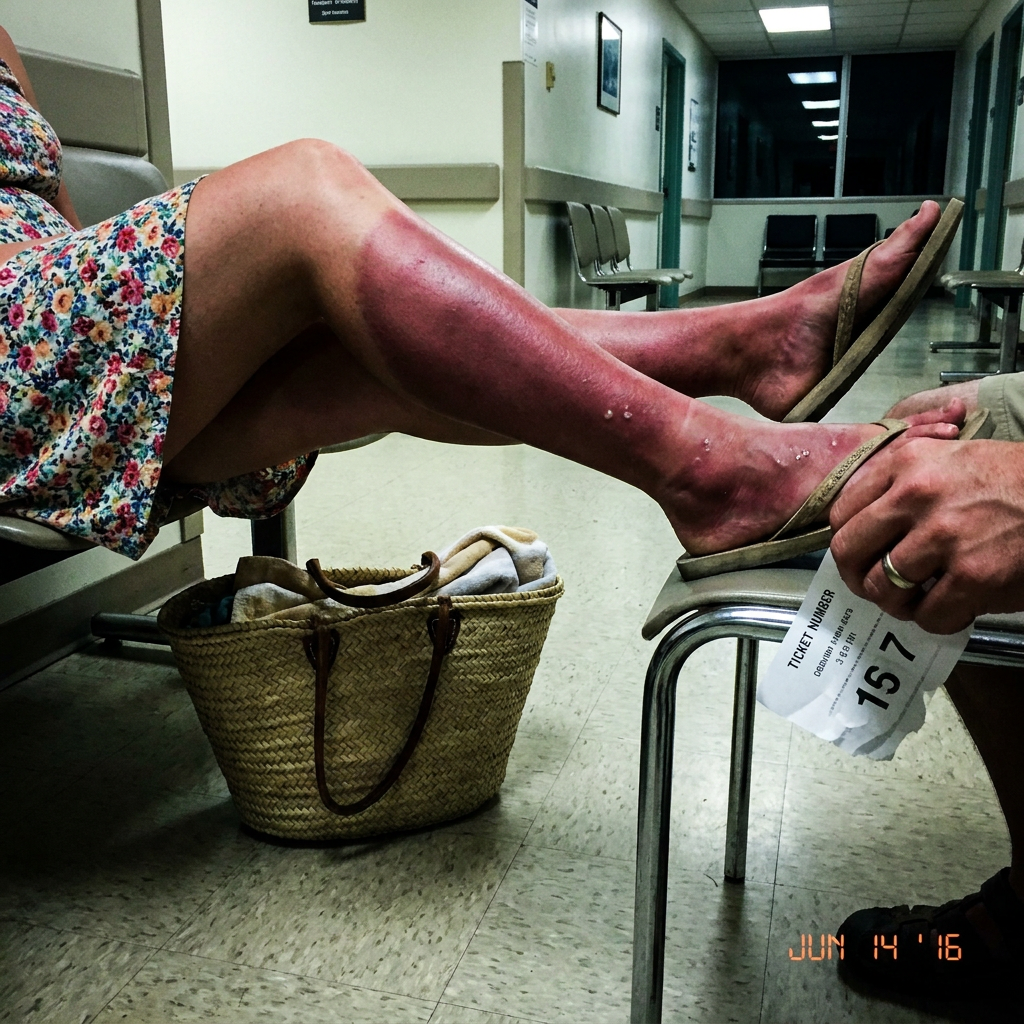
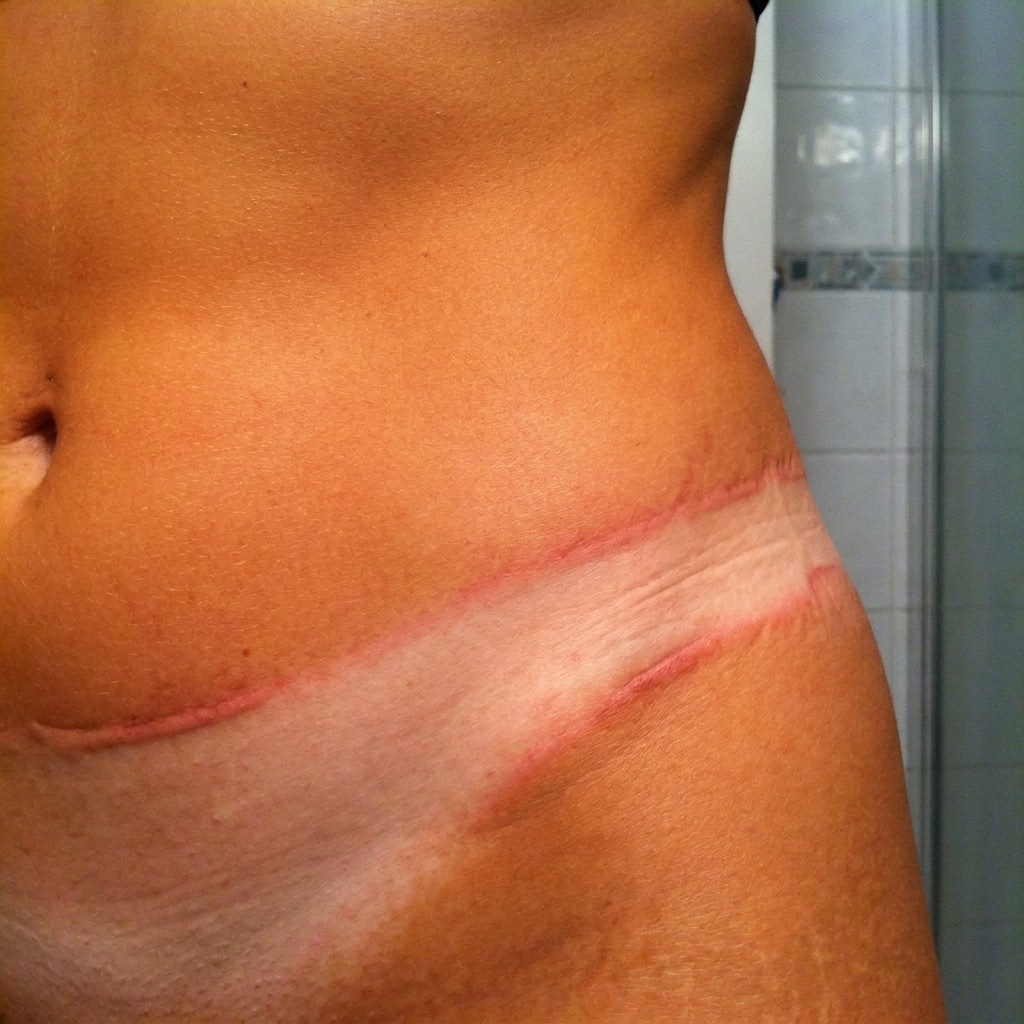
That ring on your stomach is not a bruise. It is not a rash. It is what happens when a waistband presses against developing self-tanner for three hours and blocks every single molecule of color from reaching your skin underneath it. The pale stripe it leaves behind looks so much like a clinical pressure injury photograph that women have sent pictures to their doctors thinking something was wrong with their circulation. Nothing was wrong with their circulation. Everything was wrong with the product. That image above is not from a medical file. That is what the skin around a woman's stomach looks like after she wore a tight waistband over developing self-tanner. That pale compressed stripe. Those reddened edges where the elastic bit into the skin. That stark, alarming contrast between the uneven orange-brown surrounding color and the ghostly pale band running clean across the abdomen. That is not a bruise. That is not a circulation problem. That is not a skin condition. That is self-tanner behaving exactly the way it was designed to behave, just in a place and a way the marketing never showed you. Here is what is actually happening to your skin when that ring appears. Self-tanner works by depositing a chemical called DHA onto the surface of your skin. DHA reacts with dead keratinocytes, the outermost layer of dead skin cells that your body is constantly shedding, and turns them brown through a process called the Maillard reaction. That is the same chemical reaction that browns bread in a toaster. You are not tanning. You are chemically browning dead cells. Those dead cells sit on the surface of your skin like a thin coat of paint. And like paint, anything that presses against them during the development window, which typically runs between four and eight hours depending on the formula, will interfere with the reaction, displace the product, compress the cells, and leave behind exactly the kind of uneven, banded, pressured pattern you see in that photograph. A tight waistband does not move. It sits in the same position for hours. It presses the same pressure into the same strip of skin for the entire development window. The result is that the skin under the elastic gets less product contact, less heat, less oxygen for the reaction, and the DHA either fails to develop properly or develops at a fraction of the depth it reaches everywhere else. When you take the clothing off, you see the mark. A pale ring. Clinical looking. Alarming. And there is nothing you can do about it once it is there. You cannot add more product on top of it because the surrounding color is already set and you will not be able to match it. You cannot exfoliate it away because the pale area is not discolored, it simply never colored in the first place. You wait. You walk around with a stripe across your stomach that looks like a radiologist circled something troubling on a body scan. And you tell yourself you will be more careful next time. But here is what the industry does not want you to think too hard about. There is no version of self-tanner applied to the surface of your skin that is immune to this problem. Because the mechanism is the surface. The dead cells. The chemical sitting on top of living tissue instead of inside it. Any pressure, any clothing, any waistband, any bra strap, any underwear elastic, any sports tape, any watch strap, any ring you forgot to take off, any crease in a sheet, any way you lie on your side and push your arm against your waist while the tanner develops, creates the same interference with the same result. The product is sitting on the outside of you. Anything that touches the outside of you during the window disrupts it. This is not a problem that better application technique solves. This is not a problem that waiting longer solves, because the development window does not move. This is not a problem that more expensive self-tanner solves, because the most expensive self-tanner in the world is still DHA on dead keratinocytes. The only solution the industry offers is: do not wear clothes. Do not touch anything. Do not move for eight hours. Do not sleep on your side. That is not a solution. That is a management protocol for a broken product. And the reason this matters beyond vanity is something dermatologists have been saying quietly while the tanning industry yells over them. Your mother probably told you to build a base tan before your holiday. Maybe her mother told her the same thing. The logic sounds reasonable. Get a little sun early in the season. Let your skin adjust. Then you will not burn as badly when you actually go on holiday. Three dermatologists and a significant amount of peer-reviewed literature later, here is what that advice actually translates to in biological terms. A base tan on fair-to-medium skin provides UV protection equivalent to approximately SPF 3. SPF 3. That is the protection equivalent of standing in the sun with nothing on your skin, doing slightly better than nothing. For skin types that burn easily, which is the exact skin type that is typically given the base tan advice, there is no gradual build of genuine protection. There is only accumulated UV damage. Each sunburn increases melanoma risk. Each base tan attempt, which is a deliberate early-season burn that your body then partially repairs with melanin, is not building protection. It is building damage. The tan that results from UV exposure is not a sign of health. It is a sign of your body executing an emergency repair response to radiation injury. The melanin that darkens your skin after sun exposure is not a beauty mechanism. It is your skin trying to shield deeper tissue from further damage by spreading a UV-absorbing pigment layer over the injury zone. You are tanning because you have been injured. And self-tanner, to its credit, does not injure you. But it sits on top of dead cells, washes off in patches, streaks on your knees and elbows and ankles, turns orange on some skin types due to pH interactions, and leaves clinical-looking pressure rings across your stomach any time you wear a waistband near it. Which brings us to the actual mechanism that none of this has. The reason Bronzii Tanning Gummies exist is not because someone thought the supplement market needed another gummy. It is because there is a completely different pathway by which your skin can develop a tan-like color that has nothing to do with UV radiation, nothing to do with dead keratinocytes, and nothing to do with a chemical reaction on the surface of your body. Carotenoids are natural plant pigments found in concentrated amounts in foods like carrots, mangoes, tomatoes, and certain superfoods. When you consume carotenoids consistently in sufficient amounts, your body absorbs them through the digestive system and deposits them within the living layers of your skin. Not on top. Inside. Within the living tissue. Beneath the surface. The result is a warm golden tone that builds gradually across your entire body at the same rate, because the pigment is being deposited systemically through your bloodstream reaching every surface simultaneously. There is no waistband problem. There is no waistband problem because the color is inside your skin, not sitting on top of it. No elastic waistband in the world can compress a color that lives beneath the skin's surface. No bra strap can leave a stripe. No watch strap creates a pale ring. No sleeping position disrupts anything. You wear whatever you want. You sleep however you want. You shower normally. You exfoliate. You swim. The color adjusts gradually with normal skin turnover and fades naturally when you stop taking the gummies, because your body simply processes the carotenoids out over time the way it handles any nutrient. The tone itself is golden rather than orange because carotenoids are yellow-orange pigments that read as warm gold against the varied undertones of human skin rather than the artificial burnt-sienna shade that DHA frequently creates, particularly on cooler or more acidic skin. Results build over two to three weeks of consistent daily use. Not overnight. Not in four hours with a development window you have to manage around your entire life. Gradually. Naturally. Evenly. The way a real tan looks when it builds slowly from genuine sun exposure, except without any of the UV damage, the cancer risk, the premature aging, or the SPF 3 myth your mother passed down. Fair-to-medium skin that burns before it tans. Skin that has been told for years to build a base before a holiday. Skin that has tried self-tanner and dealt with streaks and orange knees and pale rings from waistbands and uneven patches on the backs of the hands. That is exactly the skin that Bronzii was formulated for. Because that skin deserves a color that builds inside it, not on top of it. That holds through clothing and sleep and showers. That looks the way a healthy tan looks without requiring a single minute of UV exposure to get there. You have already seen what the surface solution looks like. You have seen it in that photograph at the top of this page. That pale ring is the surface solution showing its limits. https://bronzii.com/pages/lp-1
Read This If Your Stomach Ever Had A Ring Across It That Looked Like A Radiology Image
Get a natural, golden-bronze glow from within with our doctor-reviewed, 100% UV-free formula. No streaks, no mess, no orange. Shop our New Year Sale and save 50% off your order!
LEARN MORELike this ad? Make it yours.
Crush rebuilds this exact creative around your product — your brand, your colors, your offer — in about a minute.