Heart Health Tips
Heart Health Tips Facebook ad: “Diabetes & Endothelial Damage”
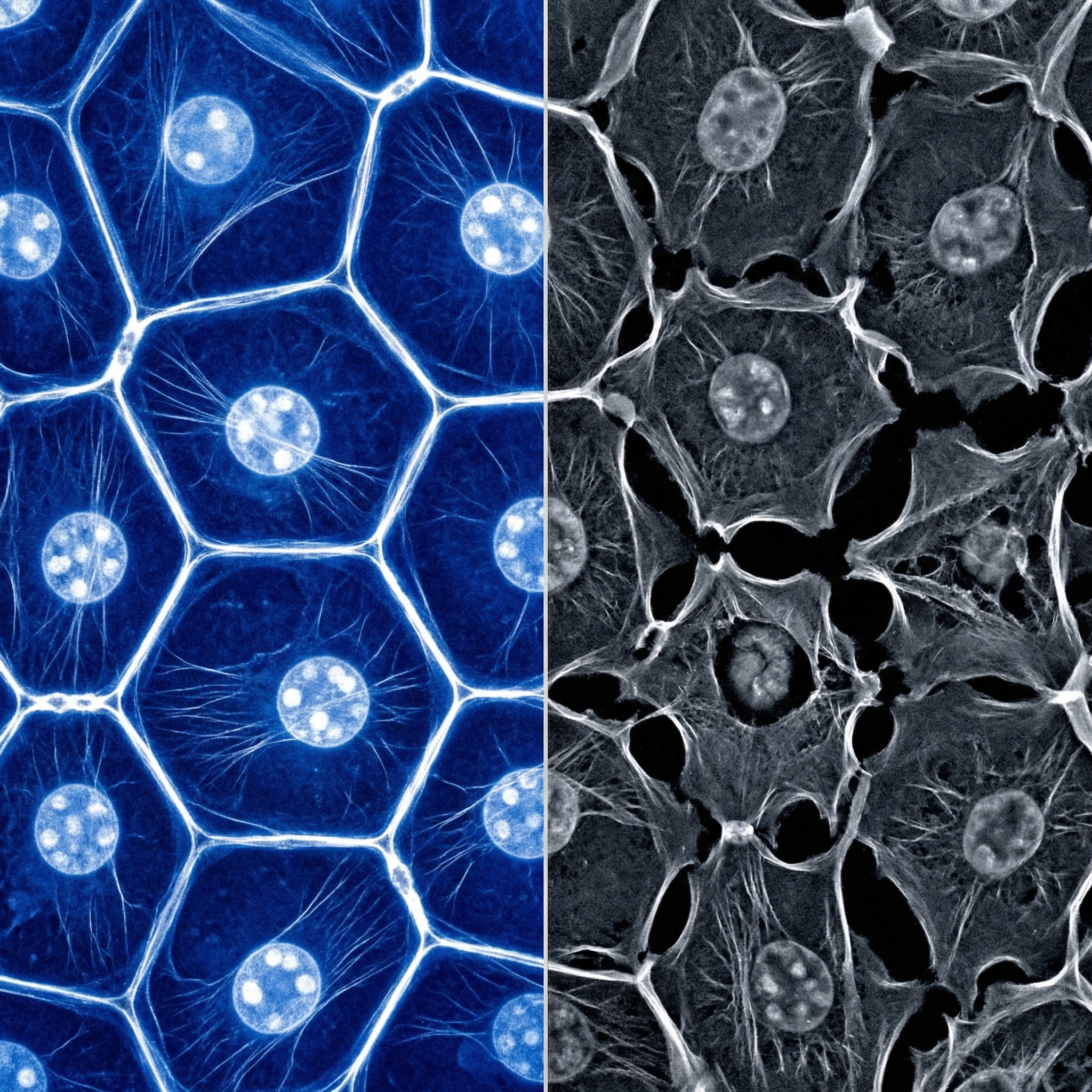
Ran for 72 days, from March 6 to May 17, 2026, the last day Crush saw it.
Run by Heart Health Tips on Facebook. Crush is not the advertiser and does not verify its claims. See this ad in Meta's Ad Library(opens in a new tab)
Want an ad like this for your product?
Crush makes new ad images for your product from this ad: your logo, your product photo, your offer.
Trials from $19.95 USD, then $79.95 USD a month. Cancel anytime.
About this ad
- Meta Ad Library ID
- 1236879158062270
- Platforms
- Facebook, Instagram, Audience Network, Messenger and Threads
- Relaunches
- 0
- Niche
- Marketing & Agencies
Ad text
The endothelium is one of the most important structures in your cardiovascular system. A damaged endothelium in a diabetic man can result in conditions such as erectile dysfunction, poor circulation, coronary artery disease, peripheral artery disease, stroke, heart attack, cold hands and feet, chronic fatigue and accelerated arterial plaque buildup. Most diabetic men never hear the word endothelium from their doctor. They just get told their A1C looks controlled and sent home with another prescription. Here is what that prescription never addresses. More than half of all diabetic men develop erectile dysfunction. A meta-analysis of 145 studies covering 88,577 diabetic men found that ED prevalence reaches 52.5% in the diabetic male population, with diabetic men carrying 3.6 times higher odds of developing ED compared to healthy controls. By age 60 that figure reaches 55% of all diabetic men. And almost none of them are being told why it is actually happening. Think about that number for a moment. If you are in a room with ten diabetic men over the age of 60, more than five of them are dealing with this right now. Quietly. Privately. Assuming it is simply what diabetes does to a man's body. Assuming there is nothing to be done beyond a blue pill their doctor handed them with a sympathetic look and not much else. There is something else. And it starts with understanding what is actually happening inside your blood vessels. The mechanism is endothelial dysfunction. The endothelium is the single cell layer lining every blood vessel in your body. In a healthy man it produces nitric oxide continuously, the compound that keeps your arteries relaxed, flexible, open and free of plaque accumulation. Nitric oxide is not a supplement. It is not something you can swallow in a pill. It is a biological signal your own arterial walls produce to regulate blood flow throughout your entire body, including to the tissue responsible for erectile function. In a diabetic man, chronic hyperglycemia triggers the overproduction of advanced glycation end products. These compounds embed themselves directly into the endothelial lining of your blood vessels and do two things simultaneously. They suppress endothelial nitric oxide synthase, the enzyme your arterial walls use to produce nitric oxide. And they trigger chronic inflammation in the vessel wall itself, accelerating the plaque accumulation and arterial stiffening that progressively reduces blood flow system wide. Your smallest blood vessels fail first. This is not a theory. It is established vascular biology documented across hundreds of peer reviewed studies. The penile arteries, at 1 to 2 millimeters in diameter, are among the smallest in your body. They begin showing the consequences of endothelial dysfunction years, sometimes decades, before your larger coronary arteries do. Your erectile dysfunction is not a bedroom problem. It is the earliest visible symptom of a system wide arterial deterioration that your diabetes has been driving silently underneath every controlled number on your lab report. Your metformin does not address this. It manages your blood sugar. It does not restore your endothelial lining. Your statin does not address this. It manages your cholesterol number. It does not restore nitric oxide production in your arterial walls. Your blood pressure medication does not address this. It forces your vessels open pharmacologically. It does not address why they stopped opening naturally. Every medication in the standard diabetic protocol treats a downstream number. None of them touch the upstream mechanism that is quietly destroying your arterial health, your circulation and your sexual function at the same time. A 2023 bibliometric analysis published in Frontiers in Endocrinology reviewing the entire field of diabetic erectile dysfunction research confirmed that endothelial dysfunction and nitric oxide synthase suppression are the dominant research themes in the field precisely because standard diabetic treatment leaves them completely and consistently unaddressed. Unaddressed. In the majority of diabetic men. By every medication they are taking. Now here is the part that most men find genuinely infuriating when they first read it. Viagara and Cialis attempt to work around this problem by forcing a chemical override of the PDE5 enzyme to temporarily push blood into penile tissue. On paper this sounds like a solution. In practice for diabetic men it is significantly less effective than it is for non diabetic men, and the research tells us exactly why. A 2023 review published in Andrology confirmed that PDE5 inhibitors have blunted efficacy in diabetic patients specifically because the underlying endothelial damage reduces the endogenous nitric oxide that these drugs depend on to produce their effect. Viagara does not create nitric oxide. It amplifies a signal that already exists. In a diabetic man whose endothelium has been suppressing nitric oxide production for years, that signal is too weak to amplify meaningfully. You are trying to turn up the volume on a system that has largely stopped broadcasting. This is why diabetic men find Viagara works less and less over time. The endothelial damage is not being addressed. It is progressing. And as it progresses the nitric oxide signal Viagara depends on gets weaker. Higher doses. Then higher still. Then the conversation with your doctor about what to try next. Meanwhile the arterial disease driving both the ED and the declining Viagara response continues to advance toward your heart. There is one compound in the peer reviewed cardiovascular literature that takes a completely different approach to this problem. It does not supply raw material to a broken system the way L-citrulline and beetroot do. It does not force a temporary chemical override the way Viagara does. It does not manage a downstream number the way every medication in your protocol does. It activates TRPV1 receptors distributed throughout the endothelial lining of your blood vessels and triggers your arterial walls to restore their own nitric oxide production from inside the vessel wall itself. This is not a workaround. This is a restoration of the biological process the endothelium was always designed to perform. That compound is capsaicin, the active compound in cayenne pepper. And the research on what it does specifically in the diabetic vascular environment is striking. A study published in Oxidative Medicine and Cellular Longevity in 2022 examined capsaicin's direct effect on diabetic vascular disorders. The researchers found that hyperglycemia had downregulated TRPV1 and eNOS expression in endothelial cells, the exact suppression driving diabetic ED. Capsaicin treatment restored both. It increased nitric oxide levels in serum and cardiac tissue, normalised vascular permeability, reduced oxidative stress in the arterial walls and improved the structural integrity of blood vessel walls that diabetes had thickened and damaged. The researchers stated directly that capsaicin may truly improve diabetic vascular disorders. A separate study published in Cardiovascular Diabetology confirmed that 14 weeks of dietary capsaicin in diabetic models restored endothelium dependent relaxation that high glucose conditions had eliminated entirely. Not partially improved. Restored. A foundational study published in Cell Metabolism in 2010 established the precise mechanism. Chronic TRPV1 activation by dietary capsaicin increases phosphorylated levels of protein kinase A and endothelial nitric oxide synthase in mesenteric arteries, augments endothelium dependent relaxation and reduces arterial pressure. Critically, TRPV1 deficient subjects showed none of these effects, confirming the mechanism is specific to TRPV1 receptor activation and not a non specific response to the compound. The research is not pointing toward capsaicin as one option among many. It is pointing toward it as the only botanical compound with a documented mechanism that directly addresses what diabetes does to the endothelium at the receptor level. But there is one critical detail that separates a capsaicin product that activates this pathway from one that does nothing at all. Capsaicin is a lipophilic compound. It requires a fat based carrier to achieve the plasma concentrations needed to activate TRPV1 receptors in the endothelium at therapeutic levels. A 2017 absorption study published in the European Journal of Nutrition found that oil suspended capsaicin produced dramatically higher plasma concentrations than equivalent doses delivered in powder capsule form. Ground cayenne powder in a standard capsule passes through the digestive system without achieving systemic concentrations sufficient to produce meaningful endothelial activation. Soybean oil, used by counterfeit and low grade products because it is a fraction of the cost of pharmaceutical grade suspension, does not achieve the absorption rates the research documents either. This is not a minor formulation detail. It is the difference between a product that reaches your endothelium and one that never gets close. Flip any capsaicin softgel product over and read the ingredients panel before you take another dose. If it lists soybean oil as the carrier you are not getting therapeutic capsaicin absorption. You are getting an expensive placebo that will leave you concluding the research does not apply to you, when in reality the product simply never delivered the compound to where it needed to go. Aurivita Capsaicin Power delivers 3mg of therapeutic capsaicin per serving in pharmaceutical grade oil suspension. Not soybean oil. Not powder. Not a heat processed extract that has degraded the active compound before it ever reaches you. Pharmaceutical grade suspension specifically formulated to achieve the bioavailability the endothelial research requires. If you are a diabetic man dealing with erectile dysfunction and your doctor has never mentioned the word endothelium, you have never been told what is actually causing it. You have been given medications that manage every number surrounding the problem while the mechanism driving it goes entirely unaddressed. You may have been given Viagara that worked less and less over time as the underlying damage progressed. You may have tried supplements that did nothing because they never achieved the absorption needed to activate the pathway they claimed to support. The research has been documenting this mechanism and this solution for over a decade. The gap between what that research shows and what appears on your prescription pad is not closing quickly. You do not have to wait for it to close. aurivita.co. 120 day guarantee. --- Sources: Cayetano-Alcaraz et al., Andrology 2023, meta-analysis of 145 studies, 88,577 men. Hostnik et al., Endocrinology Diabetes and Metabolism 2025. Sexual Medicine, Boston University Medical Center. Zhang et al., Frontiers in Endocrinology 2023. Wang et al., Oxidative Medicine and Cellular Longevity 2022. Sun et al., Cardiovascular Diabetology 2013. Zhen-Yu Chen et al., Cell Metabolism 2010. Rollyson et al., European Journal of Nutrition 2017.
Where the ad sends people
aurivita.co
Diabetes & Endothelial Damage
Discover why 12,000+ seniors over 60 trust Aurivita Capsaicin Power for better circulation.
Learn more: aurivita.co(opens in a new tab)