
Inactive· since Jan 29, 2026
- 59
- days it ran
- 43
- relaunches
Ad copy
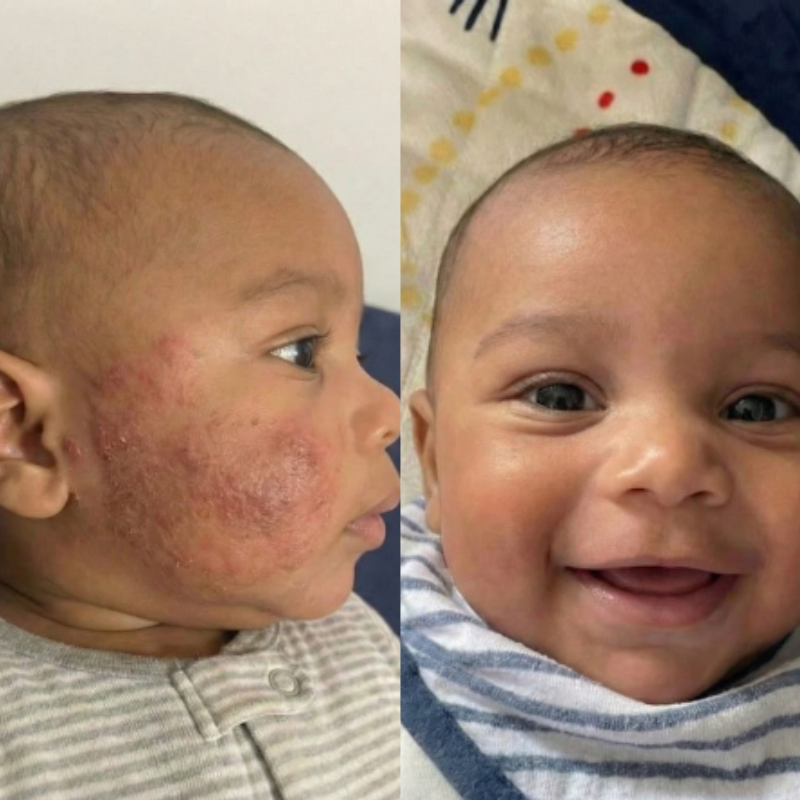
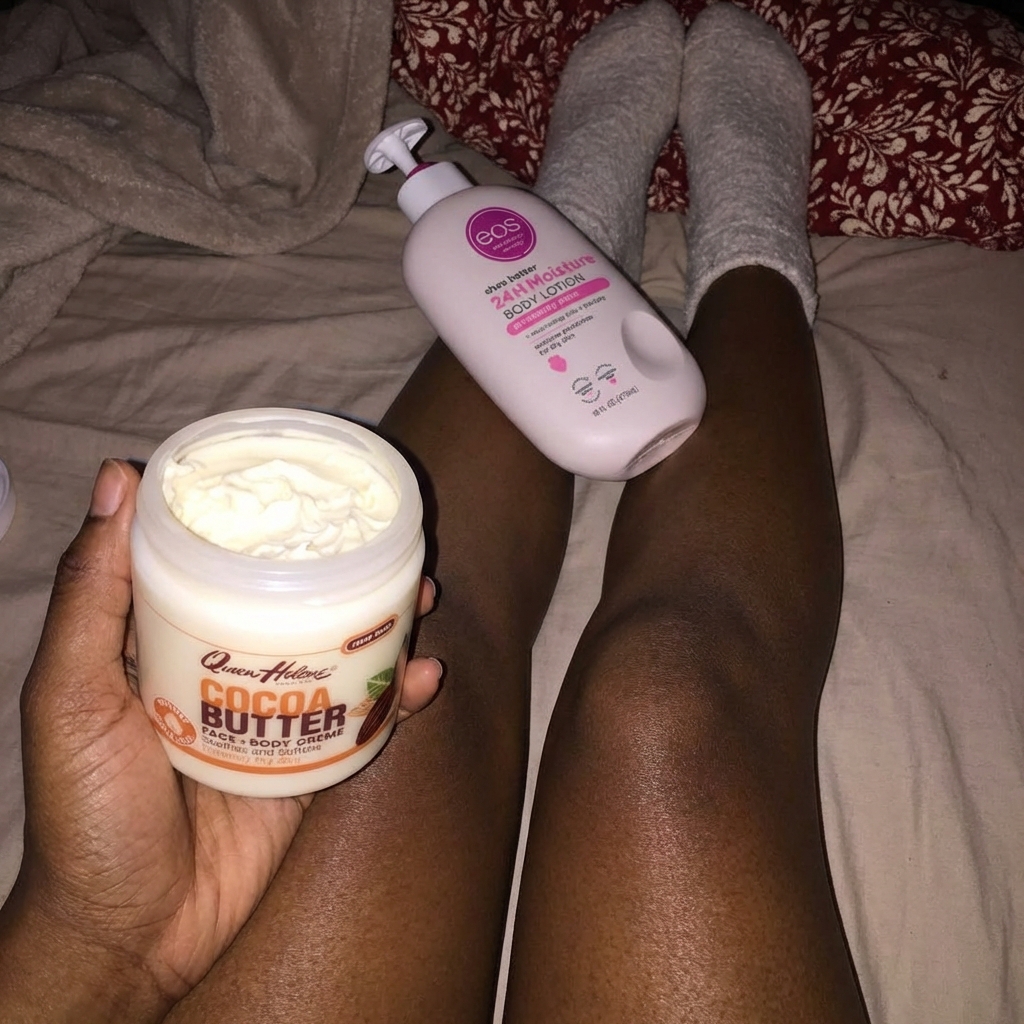
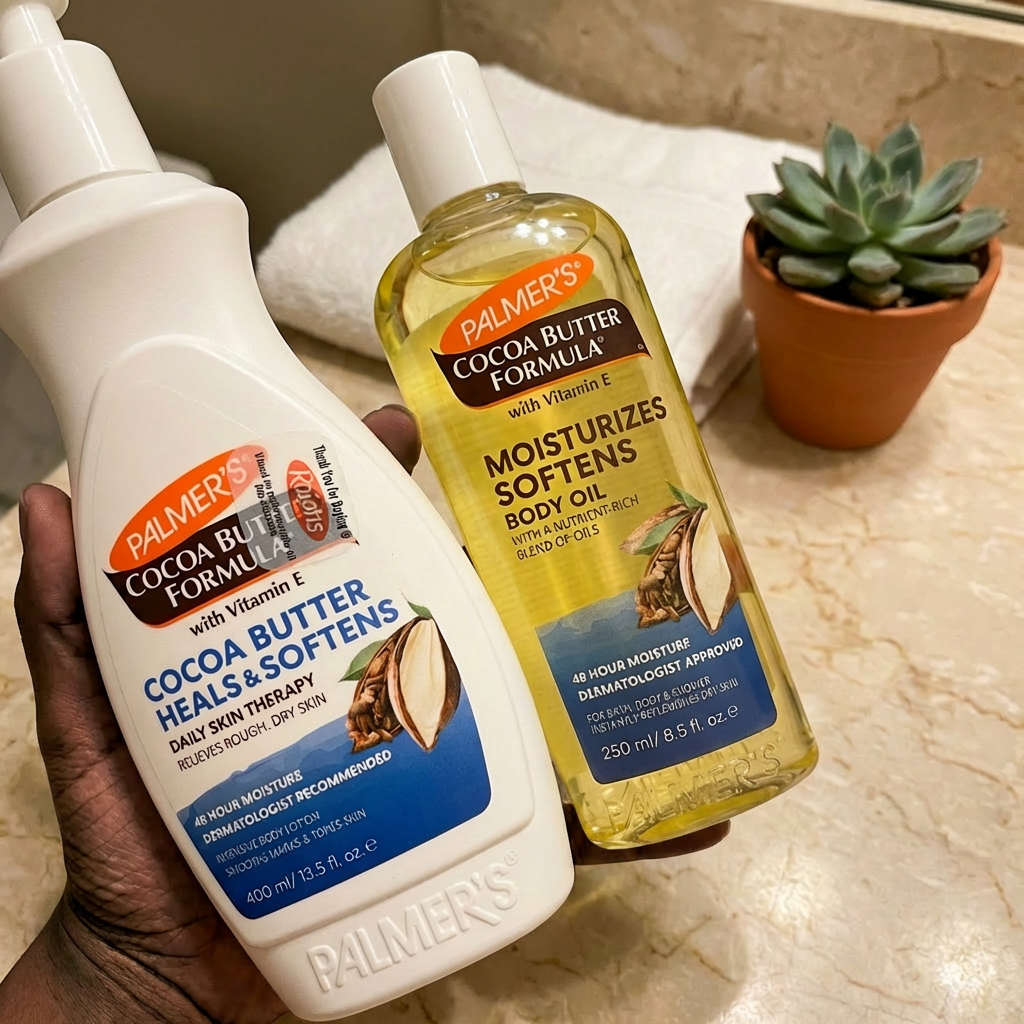
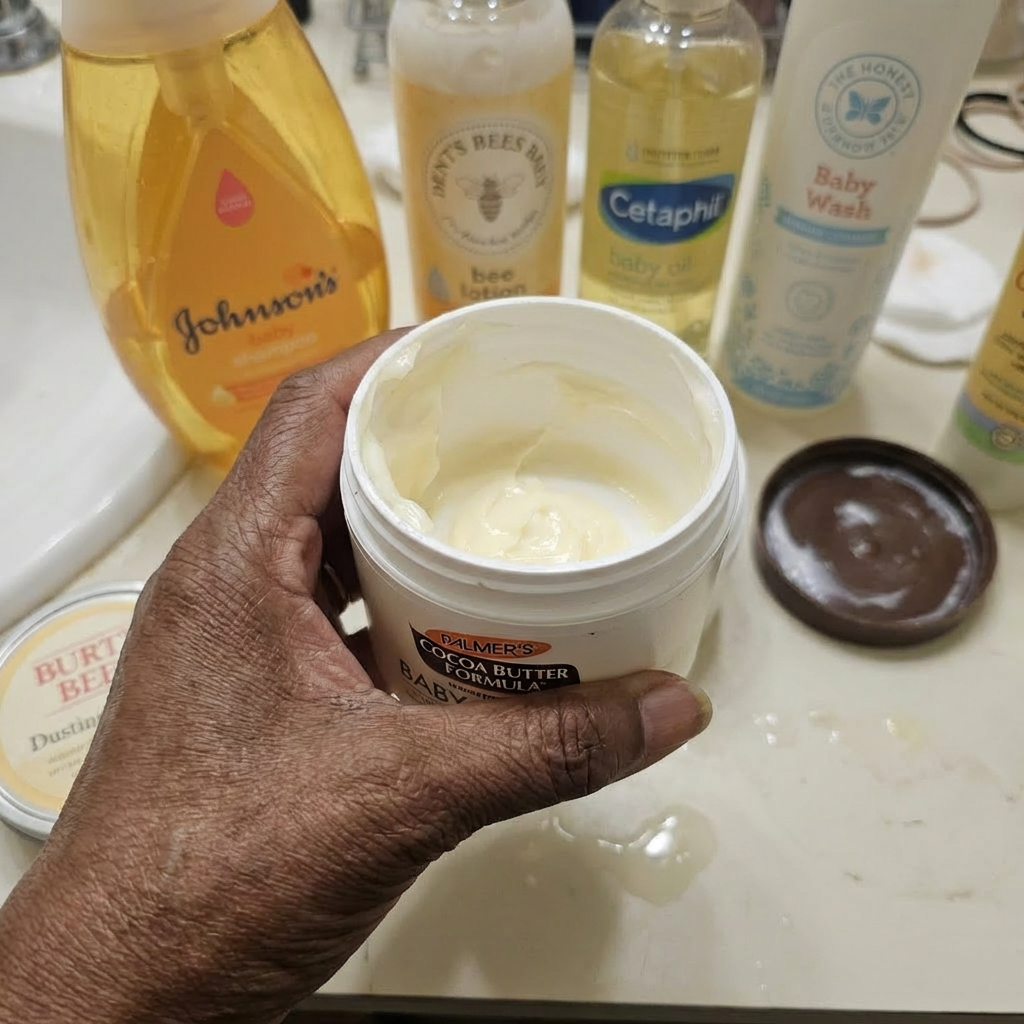
Please STOP listening to doctors who tell you to "just keep moisturising" your baby's eczema. That advice nearly destroyed my daughter's skin. The GP looked at Emma's face for exactly nine seconds. I know because I counted. Nine seconds to look at the angry, cracked patches covering her cheeks. Nine seconds to see the scratch marks around her eyes. Nine seconds to notice the dark, rough skin that used to be soft and smooth. Then she looked at me and said: "Just keep moisturising. She'll grow out of it." I wanted to scream. I'd been moisturising for four months. Four months of Cetraben in the morning and Aveeno at night. Four months of oatmeal baths and cotton everything. Four months of watching my baby's skin get worse instead of better. But she didn't ask about any of that. She didn't ask how long this had been going on. Didn't ask what I'd already tried. Didn't ask if she was sleeping through the night or waking up screaming. She just printed off a prescription for more emollient and called in the next patient. "Wait," I said. "It's getting worse. Look at these patches. They're spreading. She scratches until she bleeds." She barely paused. "Eczema can be persistent," she said. "But it's very common. Most babies outgrow it by age two. Just keep the skin moisturised and try not to stress about it." Try not to stress about it. My baby's face looked like it had been burned and I was supposed to not stress about it. I left that surgery feeling like I was going crazy. Was I overreacting? Was this actually normal and I was just being a dramatic first-time mum? I tried to get a referral to a dermatologist. The GP said it wasn't necessary. "We don't refer for standard infant eczema," she said. "The waiting list is six months anyway. Just keep using the emollient." Six months. My baby was supposed to suffer for six more months before anyone would properly look at her skin. My husband said I was making it into a bigger deal than it was. "The doctor said she's fine. Why can't you just relax?" My mother-in-law said all babies get rashes. "You're going to worry yourself sick over nothing." Even my own mother, calling from Lagos, told me to stop obsessing. "Just rub shea butter on it and leave it alone. You're overthinking." So I tried to believe them. I tried to convince myself that I was being dramatic. That this was normal. That my baby screaming during bath time and scratching herself bloody at night was just... what babies do. But every time I looked at Emma's face, every time I saw those dark, inflamed patches spreading across her cheeks, every time I peeled her little fingers away from her raw skin... I knew something was wrong. This wasn't normal baby dryness. This was something else. And nobody would listen to me. I went back to the GP three more times. Different doctors each time. Same advice. Keep moisturising. Use hydrocortisone for the bad patches. Wait it out. One of them barely looked at Emma before typing up the prescription. She spent more time looking at her computer screen than at my daughter's face. I started to wonder if they'd take me more seriously if I looked different. If I was a white mum with a white baby showing them red, angry eczema patches, would they have spent more than nine seconds looking? Would they have referred me to a specialist? I've heard the stories. Black women being dismissed by the NHS. Our pain not taken seriously. Our concerns brushed aside. I'd experienced it myself during pregnancy. The midwife who ignored my concerns about swelling. The doctor who said I was "probably just anxious" when I reported reduced movement. And now it was happening to my daughter. I don't know if race was the reason they kept dismissing me. Maybe they dismiss everyone. Maybe the NHS is just too stretched to care properly about baby eczema. But what I do know is that I spent five months being told my concerns weren't valid. Five months being told to "just moisturise" while my baby suffered. Five months trusting a system that didn't seem to care enough to actually help. I was done. I stopped waiting for a referral that was never coming. Stopped hoping a GP would finally take me seriously. Stopped believing the system was going to save us. If I wanted answers, I was going to have to find them myself. I started researching late at night after Emma went to sleep. Not just Googling "baby eczema cream" but actually digging into what causes eczema to get worse. Why some babies have mild cases that clear up and others have severe cases that spread and crack and bleed. And then I met someone named Sarah. That's when everything changed. Not in person, but in one of those Facebook groups. I'd posted a photo of Emma's cheeks asking if anyone else's kid had eczema this severe. The responses were the usual, coconut oil, elimination diet, try this cream, try that cream. Then Sarah sent me a private message. "I saw your post. My son's skin looked exactly like that six months ago. Can I call you?" That's weird, I thought. But also... I was desperate enough to say yes. We talked for an hour. She told me about her son Liam. Two years old. Eczema since he was four months old. The same cycle I was in, steroid cream works for two days, the flare comes back, and you start all over again. "I thought I was losing my mind," she said. "I was doing everything right. Every cream. Every bath. Following all the rules. And nothing worked for more than like 48 hours." "That's exactly what's happening to us," I said. "Right. And everyone acts like you're not trying hard enough. Like if you just found the right cream or cut out the right food, it would magically get better." She gets it. She really gets it. Then she said something that stopped me cold. "Did you know there's bacteria living in the eczema patches?" I didn't know that. She explained it like this: When your baby has eczema, the skin is broken. Like, actually broken. Not just dry or irritated, there are literal cracks in it. Tiny gaps where the skin should be sealed but isn't. And there's this bacteria called staph aureus, but basically it's a germ that lives on everyone's skin normally. It's completely harmless when your skin is healthy and intact. But when there are cracks in the skin, when it's broken, raw, and inflamed, the bacteria gets in through the cracks, settles deep into those gaps, and starts multiplying. "Wait," I said. "So the eczema patches are... infected?" "Not exactly infected," Sarah said. "More like... colonized. The bacteria is living there. And here's the thing, it makes everything worse." She explained it like she was learning it again herself, and couldn't believe no one had told her sooner. "The bacteria produces stuff that irritates the skin even more. Which makes the skin more inflamed, more itchy, and more damaged. That damage creates more cracks and gaps in the skin, which lets even more bacteria get inside." It's a loop. A horrible, endless loop. And that's why nothing was working. "All those creams we're using," Sarah said, "they're just moisturisers. Even the fancy expensive ones. Even the ones that say 'eczema cream' on the label. They sit on top of the skin. They might calm things down temporarily, but they don't actually reach the bacteria underneath." "Without touching that bacteria, it just stays there, multiplying, digging deeper, and making the skin even weaker. So when you use moisturisers or steroids, you're only masking it. They sit on the surface, hiding the symptoms instead of clearing the real problem." I felt like someone had turned on a light in a dark room. That's why the steroids only worked for two days. They reduced the inflammation, but the bacteria was still there. The minute the steroids wore off, the bacteria was still doing its thing. Making the eczema come right back. "How did you figure this out?" I asked. "I didn't," she said. "I was googling at like 2 AM and I fell down a rabbit hole reading about eczema and skin bacteria. There are all these studies about it. Apparently like 90% of eczema patches have this staph aureus bacteria in them. It's super common, but no one talks about it." We were both quiet for a second. "So what did you do?" I asked. She told me she'd tried almost everything to deal with the bacteria after realising it was what kept making Liam's eczema flare. She said some mums talked about doing bleach baths, literally putting bleach in the bathwater to kill bacteria on the skin, but that they're risky and not recommended for toddlers. People said they barely help anyway. She tried antibacterial soap. Same thing. It helped for a few days, made the dryness worse, and the bacteria came right back. She asked her GP about oral antibiotics. He said they usually don't recommend that for eczema because the bacteria comes right back once you stop the antibiotics. Plus, you can't just keep a toddler on antibiotics forever. "I felt so stuck," she said. "Like I finally understood what the real problem was, but I couldn't figure out how to get rid of it without making something else worse." "So what changed?" I asked. "I found this cream," she said. "I almost didn't try it because I was so tired of wasting money. But I read the ingredients and I realised it was actually designed to deal with bacteria." "The main ingredient was medical grade honey. I'd tried honey creams before, the ones everyone raves about, but they were so thick and sticky. Liam screamed when I tried to put his clothes on." "This is different," Sarah said. "Medical grade honey is not the same as regular honey. When I first saw it, I thought it was just regular honey too. But apparently there's a specific type of honey that actually kills bacteria, like, really kills it. Staph aureus can't survive in it." She explained that regular honey, the kind in most products, is just sticky sugar. It might have some antibacterial properties, but it's weak. Cosmetic level. "Medical grade honey is different. It's processed to have a specific level of antibacterial strength. They use it in hospitals for wound care because it kills bacteria that even some antibiotics can't kill." And staph aureus, the bacteria living in eczema patches, can't develop resistance to it. It just dies. "But honey is so sticky," I said. "That's what I thought too," Sarah said. "But this one isn't. I don't know how they do it, but it absorbs into the skin in like thirty seconds. I can put Liam's clothes on right after and it doesn't stick to anything." "It also has colloidal oatmeal in it, which is the only ingredient the FDA actually recognises for eczema. It calms down the inflammation and itching. And beeswax, which creates a seal over the skin so bacteria can't get back in while it's healing." "So it's like... killing the bacteria and protecting the skin at the same time?" I asked. "Exactly," she said. "That's why it actually works. It's not just moisturising the surface. It's dealing with what's happening underneath." Then she sent me the link. The cream was called Mitrophics. She said it was made by a mum whose little boy had severe eczema. She created it after learning about the staph aureus bacteria that keeps making flare ups worse. I didn't know if I believed her. I wanted to. God, I wanted to. But I'd been disappointed so many times. I'd spent so much money on creams that didn't work. I wasn't sure I could handle another failure. "I know," Sarah said. "I was the same way. I'd tried so many things that didn't work. But this one isn't like the others, it actually uses medical grade honey to target what's really causing the flare ups. You should give it a shot." "And did it work for you?" I asked. "Yeah," she said. "It worked." The way she said it, so quiet, so sure. "Liam's skin is clear now. Like, actually clear. It took about two weeks to really see it, but by week one I could already tell something was different. He stopped scratching at night. The redness calmed down. The patches started closing up instead of weeping." She sent me a photo. Before and after. I stared at it for a long time. The before photo looked exactly like Emma. Angry red patches. Raw skin. You could see where he'd scratched himself bloody. The after photo... His skin was soft. Clear. Normal. "That's really him?" I asked. "That's really him." I was still skeptical, part of me didn't want to get my hopes up again, but seeing that photo of her little boy's skin actually healing made something click. I ordered it that night. I didn't tell my husband because I didn't want him to know I was spending more money on another cream that probably wouldn't work. I figured I'd tell him only if it actually did. It arrived two days later. The first thing that surprised me was the texture. It wasn't thick or goopy like all the other creams, it was light, smooth, and absorbed into Emma's skin almost instantly. I could put her pyjamas on right away without her sticking to them. What really shocked me, though, was her reaction. She didn't fight me. Usually, cream time was a battle, crying, squirming, trying to get away, but this time she just sat there, calm and still. It didn't sting. I could tell because she wasn't pulling away or crying. She just looked up at me like she couldn't believe it didn't hurt. That night, I waited in bed, listening for the scratching I was sure would start any minute. The scratching never came. I woke up at 3 AM in a panic because I hadn't heard her. I ran to her room, terrified something was wrong. She was sleeping. Peaceful. Still. No scratching. No crying. I stood there in the doorway, not ready to believe it yet, but feeling a tiny bit of hope for the first time in months. The next morning, her cheeks looked different. Not perfect. Not cleared up. But... calmer. The redness had backed down. The patches weren't as angry. By day three, she slept through the entire night. By day five, the weeping stopped. The patches that had been raw and oozing started to dry out, not in a crusty, cracked way, but in a healing way. Like they were actually closing. By week two, I could see the baby soft skin coming back. Not everywhere yet. But in places where there had been nothing but raw red for months, her real skin was returning. Week three, her face was clear. Completely clear. I took a photo and compared it to one from a month earlier and I couldn't believe it was the same child. Emma stopped scratching. She stopped crying when I touched her skin. She let me hug her without flinching. I could finally look at my baby and see comfort instead of pain. I called Sarah crying. "It worked," I said. "It actually worked." "I know," she said. And I could hear her smiling. Here's what I understand now that I didn't before. The eczema wasn't getting better because there was bacteria living in it. Staph aureus. Making everything worse. Creating that cycle where nothing worked for more than a day or two. All those creams I tried, even the expensive ones, they're not designed to kill bacteria. They can't. They're just moisturisers. So the bacteria stays. The inflammation comes back. The itching comes back. The broken skin stays broken. You need something that actually kills the bacteria. Not just covers it up. Medical grade honey does that. It kills staph aureus on contact. The bacteria can't survive in it. And when you combine that with something that calms the inflammation like colloidal oatmeal and something that seals the skin so bacteria can't get back in while it heals, like beeswax, you're finally addressing all of it at once. Not just the surface of the skin like all the other creams, but the actual problem. That's why it works when other things don't. I think about the four months we lost. The nights Emma cried herself to sleep scratching. The mornings I found blood on her sheets. The constant guilt and worry. I think about all the money I spent on creams that couldn't possibly work because they weren't designed to deal with bacteria. I think about how simple it was once Sarah explained it to me. And I get angry that this isn't just common knowledge. That someone doesn't sit you down the minute your kid is diagnosed and say, "Hey, there's probably bacteria in those patches making everything worse. Here's what actually works." I think about that GP's office. How I showed her the photos and she shrugged. How she told me to 'just keep moisturising' while looking at pictures of my daughter's skin cracked open and bleeding. She wasn't dismissing me because she didn't care. She was dismissing me because she didn't know. She'd never heard of the bacterial component. She thought all eczema was the same, just dry skin that needs moisture. But it's not. And now I know that. I wasn't crazy for being worried. I wasn't overreacting. My instinct was right. Emma's eczema WAS different from "normal baby dryness." It WAS serious. And it DID need something more than what she was recommending. I just wish I hadn't had to figure that out alone. Emma is two now. Her skin is soft. Clear. She sleeps through the night. She doesn't scratch. She doesn't cry when I put cream on her because we barely need cream anymore. I keep a jar of Mitrophics in the bathroom cabinet, but it lasts forever now because we're not fighting a bacterial infection anymore. We're just living. Last week Emma learned to say "soft." She was rubbing her own cheek and she looked at me and said "soft, Mama." I cried. Again. Because for the first time since she was six months old, her skin actually was soft. If you're reading this at 2 AM, desperately googling why your baby's eczema won't go away, I need you to understand something: You're not failing. You're not doing anything wrong. The creams you've been trying probably can't work because they're not designed to deal with bacteria. Your baby probably has staph aureus bacteria living in those eczema patches. Most eczema kids do. And that bacteria makes everything worse. Creates that awful cycle where nothing works for more than a day or two. Regular creams, even the expensive eczema ones, they're just moisturisers. They sit on top. They might help temporarily. But they don't kill bacteria. You need something that does. Medical grade honey kills staph aureus. Colloidal oatmeal calms the inflammation. Beeswax protects the skin while it heals. That's what Mitrophics cream is made with. I don't know if it will work for your baby the way it worked for Emma. Every kid is different, but there's almost always bacteria living in those eczema patches, and no cream is really going to help until you deal with it. I wish I'd known about this four months earlier. I wish someone had explained the bacteria thing to me on day one. I wish I hadn't watched Emma suffer while I tried eighteen different creams that were never going to work. But at least I can tell you now. At least you don't have to waste months like I did. At least your baby can start healing tonight instead of next month. I'm not trying to sell you anything. I don't get paid for this. I'm just a mum who figured something out at 2 AM, something I wish another mum had shown me sooner. If someone had just told me what was really going on in my baby's eczema patches, I could've saved months of pain and sleepless nights. Your baby's eczema probably isn't getting better because there's bacteria living in it that regular creams can't touch. Now you know. Now you can do something about it. Now you can look at your baby and see comfort instead of pain. Like I finally can.
Like this ad? Make it yours.
Crush rebuilds this exact creative around your product — your brand, your colors, your offer — in about a minute.