
Active· since Mar 27, 2026
- 174
- days running
- 1
- relaunches
Ad copy
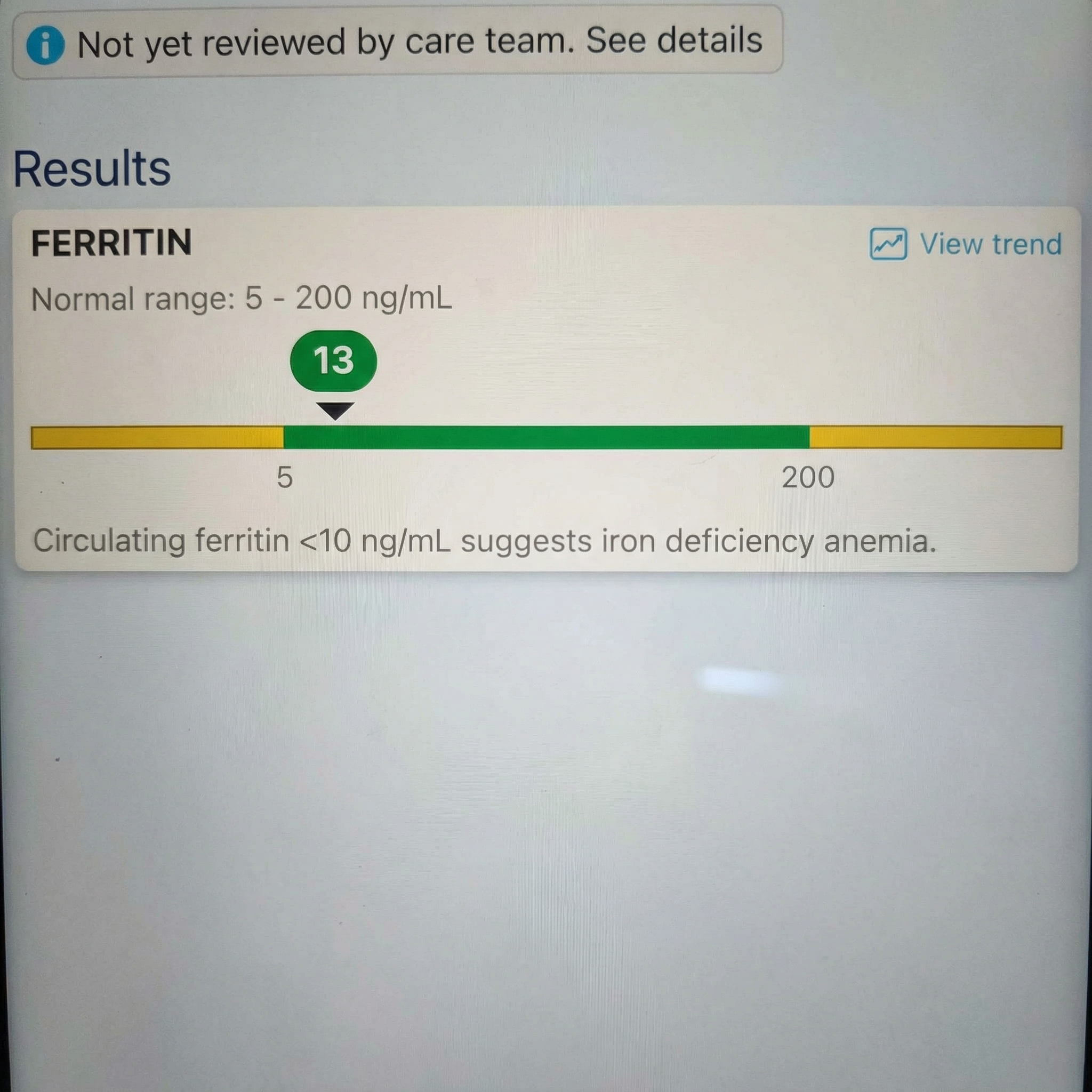
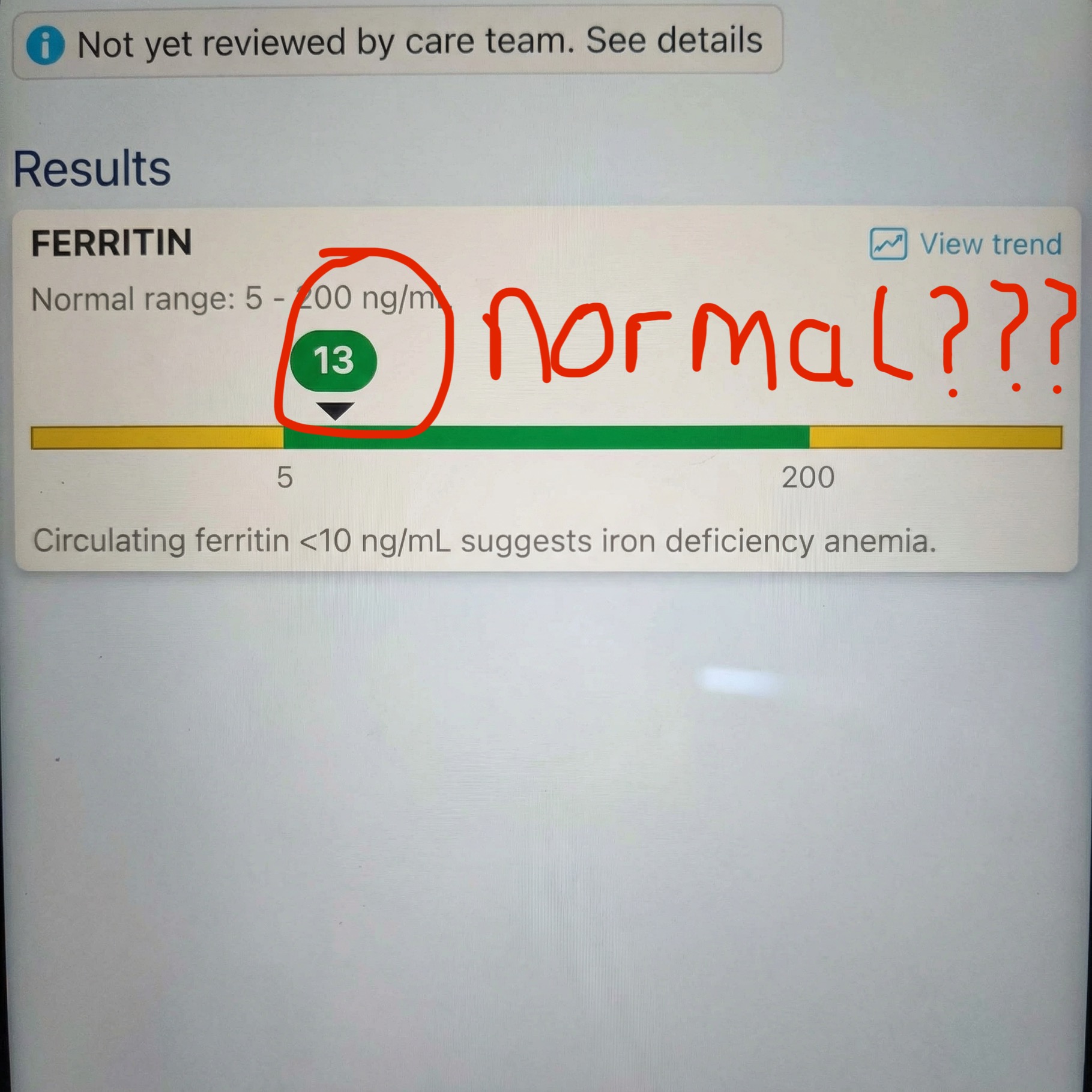
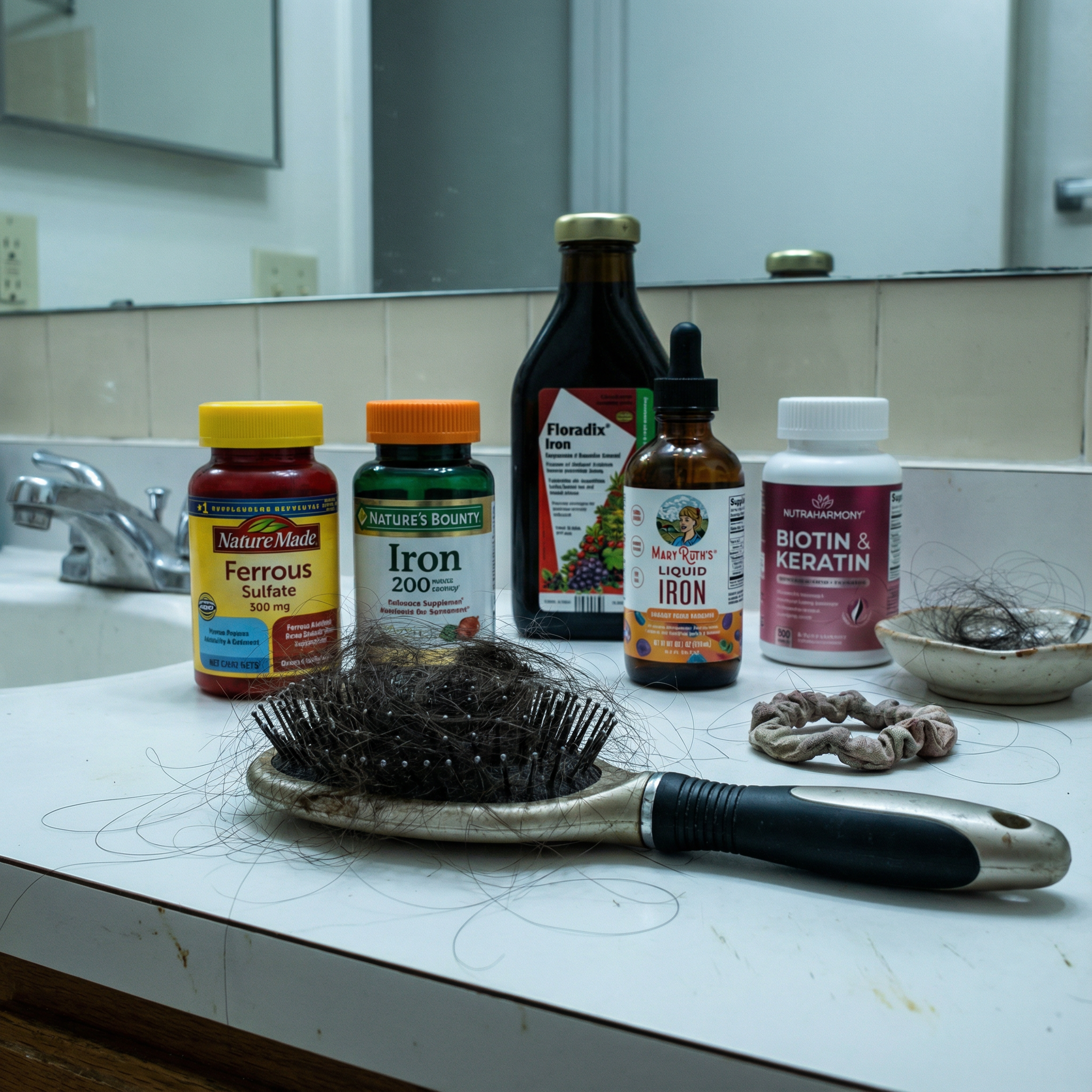
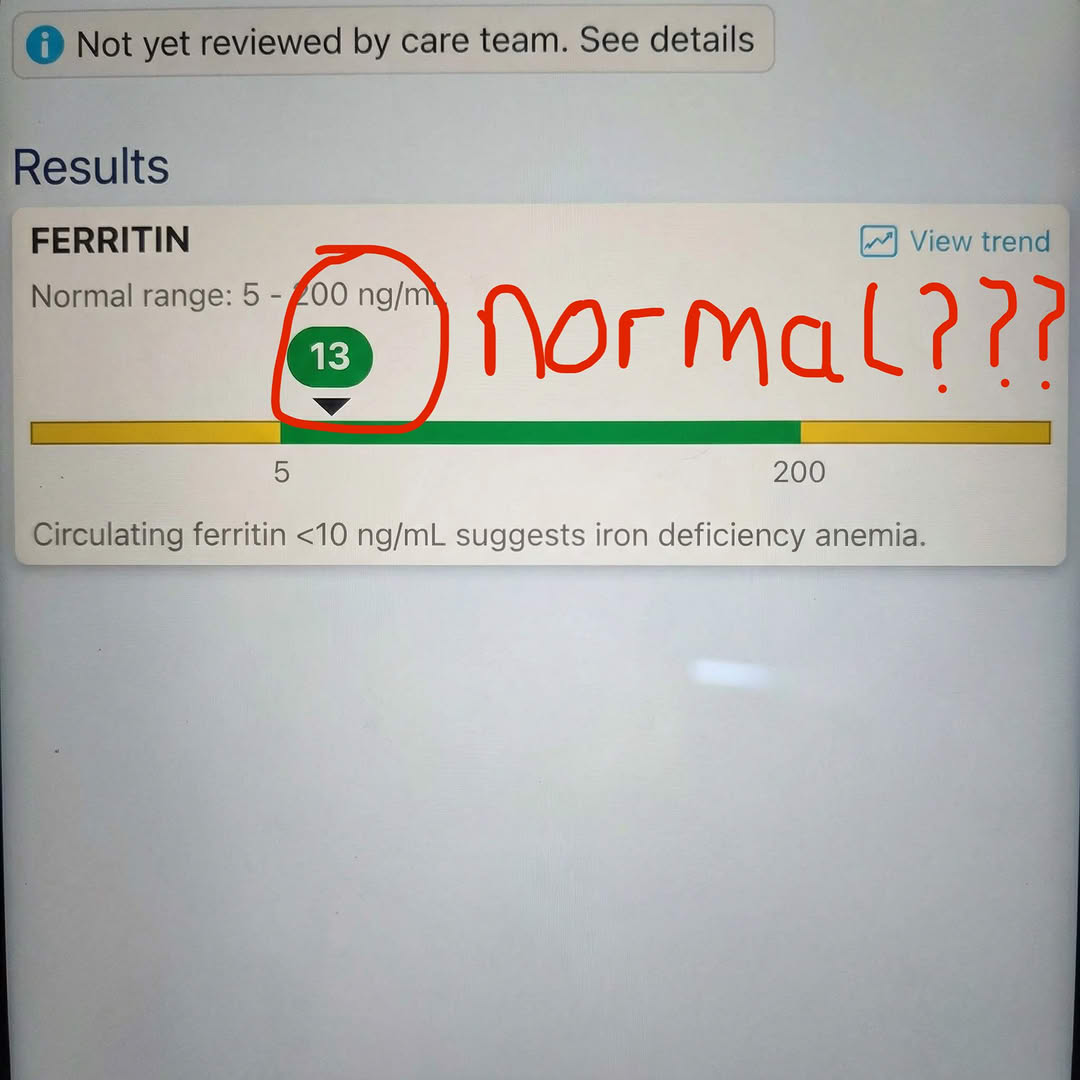
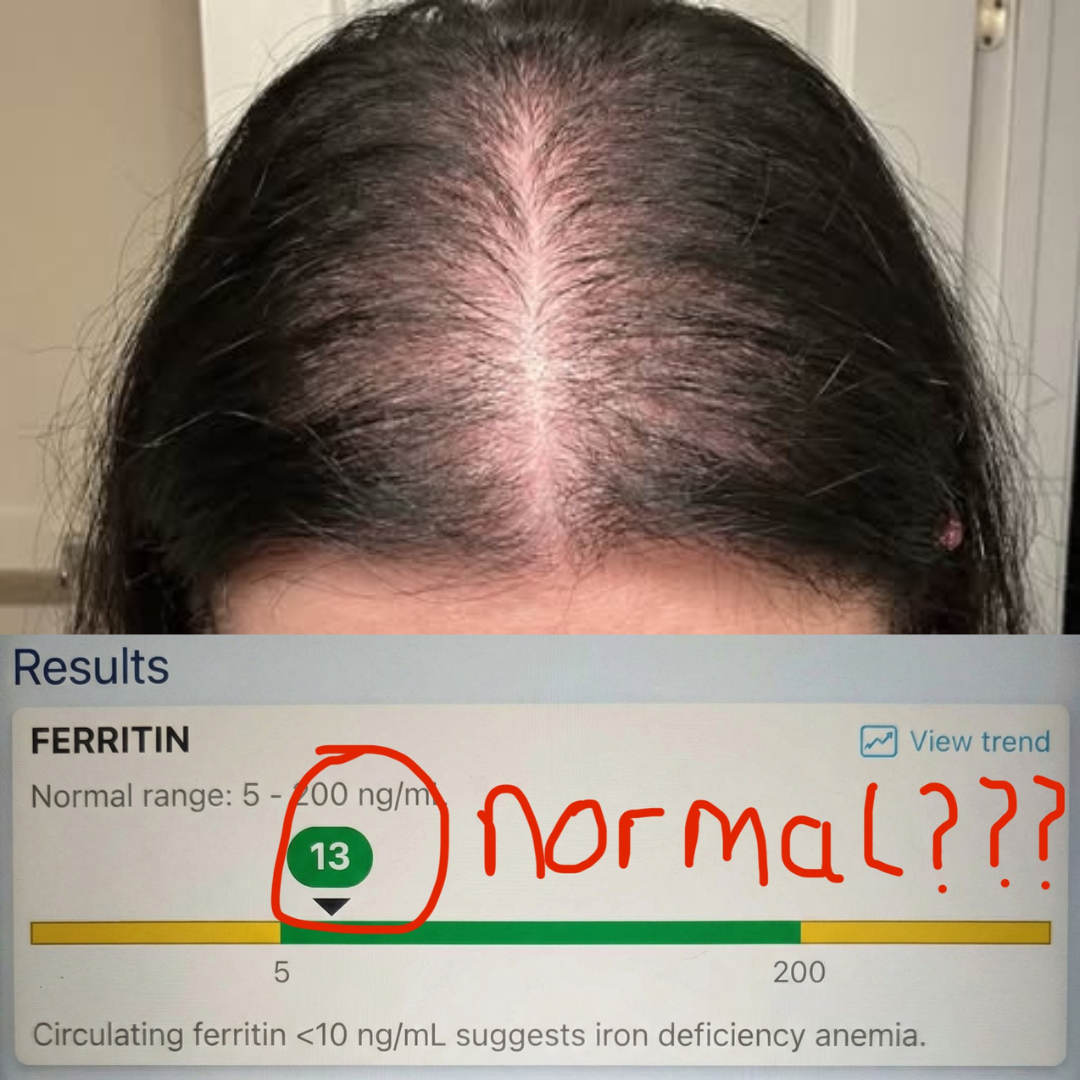
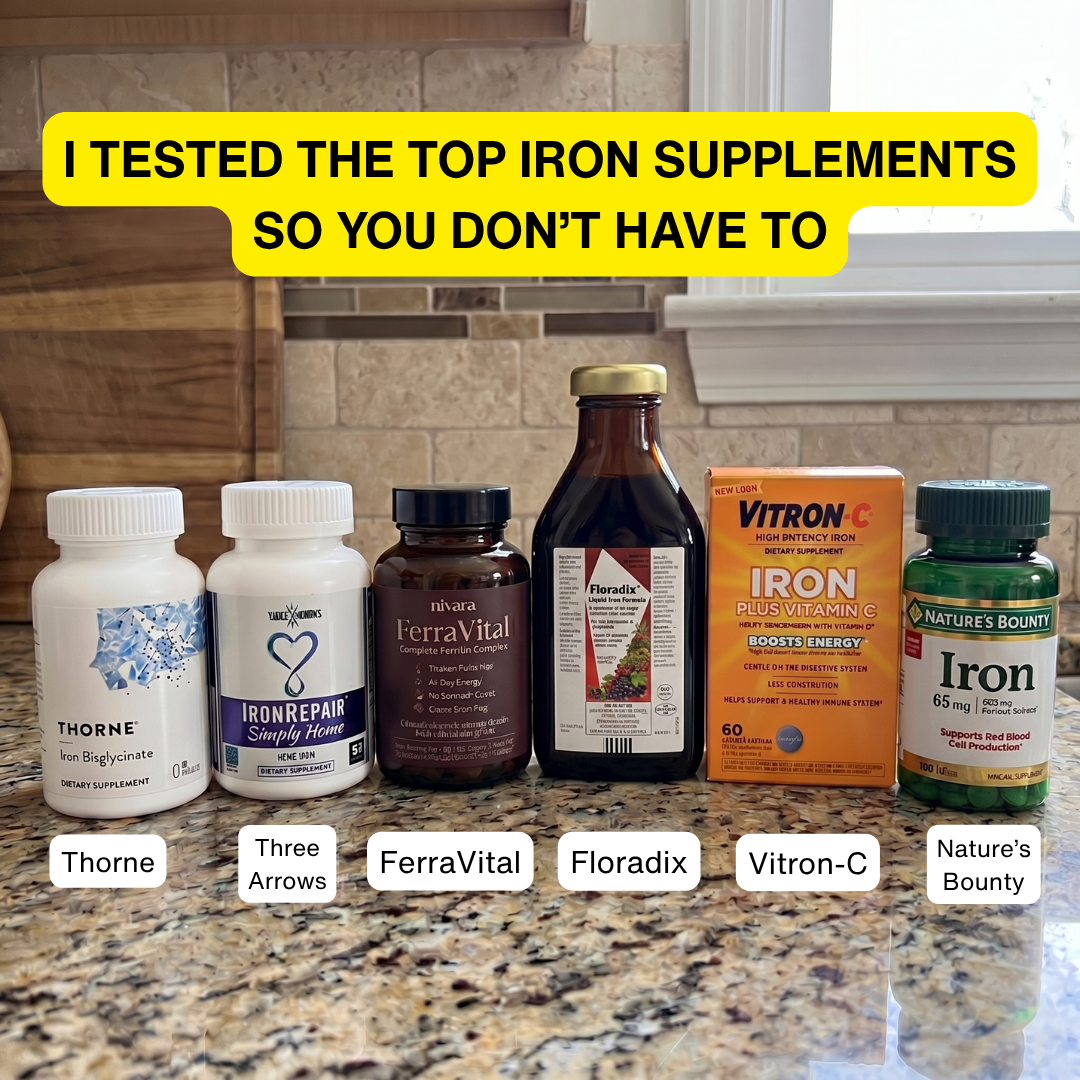
In 14 years as a clinical nutritionist I have never once seen iron alone rebuild a woman's ferritin. Not once. I need to say that clearly because I know how it sounds. Fourteen years. Hundreds of patients. And not a single case where iron by itself — ferrous sulfate, ferrous gluconate, ferrous fumarate, liquid iron, heme iron, any of them — taken alone, raised a woman's ferritin to a level where her hair stopped falling out and her energy actually came back and the number held. I've seen it raise serum iron. I've seen it move ferritin five or six points over several months. I've seen doctors look at that and say "it's working." But I have never seen iron alone take a woman from a ferritin of 14 to a ferritin of 70 in any reasonable timeframe without the patient either giving up from side effects or switching to something more complete. And yet iron alone is what almost every doctor in this country prescribes. Ferrous sulfate. 325 milligrams. Empty stomach. Vitamin C if you remember. Be patient. Come back in three months. I see the aftermath of that advice every single week. A woman sits in my office and the story is almost always the same. She's been on iron for months. Sometimes six months. Sometimes over a year. She's compliant — more compliant than her doctor probably realizes. She sets alarms. She times it around meals. She takes it on an empty stomach even though it makes her nauseous. She chases it with vitamin C. She avoids coffee and calcium and tea within two hours. She does everything every article and every handout and every doctor has told her to do. And her ferritin has moved maybe five to nine points. Meanwhile she's been constipated for months. Not mildly — the kind where she goes three or four days without a bowel movement and when she finally does it's painful. The nausea hits about twenty minutes after every dose and sits in her stomach like a fist for an hour. She's bloated. Some of her clothes don't fit right anymore. She has a metallic taste in her mouth every morning that doesn't go away until lunch. And she's still losing hair. And she's still exhausted. By the time she reaches me she's usually in one of two places. Either she's angry — angry at the supplements, angry at her doctor, angry at her body — or she's defeated. The defeated ones are harder to help. Because they've already decided the problem is them. They've already written the story in their head. My body can't absorb iron. I'm just built this way. I'm a slow responder. This is just my life now. That story is almost never true. But I understand why they believe it. When you do everything right for seven or eight or twelve months and the number barely moves, you stop blaming the approach and you start blaming yourself. That's human nature. And it's wrong. The first thing I do with every single one of these women is check their B12. Most of them look at me confused. They came to me about ferritin. About iron. About their hair. Why am I talking about B12. Because here is the thing that almost nobody in conventional medicine explains to these women and it is — in my professional opinion after fourteen years of practice — the single biggest reason iron supplementation fails. Iron does not become stored ferritin on its own. I am going to explain this as clearly as I can because I want you to understand it the way I explain it to my patients when they're sitting across from me wondering why nothing is working. When you swallow an iron supplement, the iron has to go through a series of steps before it becomes stored ferritin. It's not one step. It's a chain. And every link in that chain requires a specific nutrient to function. The first step is absorption. Iron has to get from your gut into your bloodstream. Vitamin C helps with this — most women know that part. But vitamin C does something else that almost nobody talks about. Once iron is inside your cells, vitamin C actually signals those cells to produce more ferritin protein. It tells your body to BUILD more storage containers. And it protects existing ferritin from being broken down. So vitamin C isn't just helping iron get in. It's helping iron stay stored once it's there. The second step is hemoglobin production. Iron needs to be incorporated into hemoglobin — the protein in red blood cells that carries oxygen. The very first biochemical step of building hemoglobin requires vitamin B6. Without adequate B6, that step stalls. Iron arrives at the assembly line and the assembly line isn't running. The iron backs up with nowhere to go. The third step is red blood cell turnover. Your body recycles approximately 20 milligrams of iron every single day through the natural lifecycle of red blood cells. Old red blood cells break down, the iron is recovered and either reused or deposited into ferritin storage. This recycling system requires B12 and folate to function. Without them, red blood cell production becomes inefficient. Cells are produced poorly. The recycling doesn't complete properly. Iron that should be recovered and stored is lost. When any one of those links is broken — when B12 is low, when B6 is insufficient, when folate is depleted, when vitamin C isn't present at the right time in the right amount — the chain stalls. The iron enters her body. It gets absorbed into her blood. Her serum iron looks normal. Her doctor sees that number and says "the iron is working." But the iron never completes the journey to storage. It floats in her blood looking normal on paper while her ferritin sits at 19 and her hair falls out and she lies awake at night wondering what's wrong with her body. I describe it to my patients like this: imagine filling a bathtub with the drain open. The water is going in. You can see it going in. But the tub never fills because it's leaving just as fast. You could run the water for a year. The tub stays empty. And someone walks in and sees the water running and says "well the water is working." No. The water is fine. The drain is the problem. When I check B12 on my iron deficiency patients — and I check it on every single one — the majority of them are low. Not clinically deficient. Not flagged on their labs. Just low enough that the conversion chain can't complete efficiently. Just low enough that twelve months of iron supplementation produces eight or nine points of ferritin movement and everyone shrugs and says some women are just slow absorbers. They are not slow absorbers. Their chain is broken. And nobody is checking. B12 deficiency is remarkably common in women and remarkably under-tested. Women with gut issues. Women on birth control. Women on acid reflux medication. Women who eat less red meat. Women who've had pregnancies close together. Women who are stressed — because stress depletes B vitamins faster than almost anything else. These women are everywhere in my practice. They are the majority, not the exception. And they are all being given iron alone and told to be patient. I stopped recommending iron alone years ago. I couldn't justify it anymore. Physiologically it does not make sense. You would not put fuel in an engine that's missing half its components and then blame the fuel when the engine doesn't run. You would check the engine. You would check what else it needs. You would complete the system. But that is not what happens in most doctor's offices. What happens is: ferritin is low, here's iron, come back in three months, be patient. No B12 check. No B6 check. No folate check. No assessment of whether her body has the infrastructure to actually do anything with the iron she's choking down every morning while it destroys her stomach. I recommend FerraVital to my patients. I have for the last two years and the results are why I continue to. It is the only formula I have found that puts iron bisglycinate alongside B12, B6, folate, and vitamin C in one capsule at levels that actually matter. Not token amounts listed on a label for marketing purposes. Amounts that make a clinical difference. The bisglycinate matters because it absorbs through a different pathway than ferrous sulfate — through peptide transporters rather than standard iron transporters. It doesn't dissociate in the stomach. It doesn't cause the constipation and nausea and bloating that make women quit. I cannot overstate how important this is. The best formula in the world means nothing if she stops taking it in week three because it makes her miserable. Compliance is everything. And compliance requires a supplement that doesn't hurt. The cofactors matter because they complete the chain. The iron goes in. The vitamin C drives absorption and signals ferritin production. The B6 keeps hemoglobin synthesis running. The B12 and folate keep the red blood cell recycling system intact. Every link is covered. The bathtub fills because the drain is closed. The difference I see in lab results is not subtle. It is not marginal. It is dramatic enough that I have had patients make me repeat the number. I had a woman last year who had been on ferrous sulfate for nine months. Her doctor had prescribed it the standard way — 325 milligrams, empty stomach, vitamin C on the side. She was miserable. Constipated for the entire nine months. Nauseous every morning. Her ferritin went from 14 to 22. Her doctor told her it was moving in the right direction. She told me she wanted to stop taking iron entirely because the suffering wasn't worth eight points. I checked her B12. Low. Not flagged on her labs — just low. I switched her to FerraVital. One capsule before bed. She came back six weeks later for blood work. Her ferritin was 51. Same mineral. Same woman. Same body that her previous doctor called a "slow absorber." The only difference was the chain was complete. The B12 was there. The B6 was there. The iron finally had somewhere to go. She sat in my office and cried when I told her the number. Not because 51 is a magic number. Because she had spent nine months believing her body was broken. Nine months of doing everything right and getting nowhere and slowly, quietly, accepting that she was just a person whose body couldn't hold onto iron. That she was built wrong. That this was her fault somehow. And in six weeks that entire story fell apart. She wasn't broken. She was never broken. The approach was incomplete. That's all it ever was. I see that moment in my office regularly. A woman who spent months or years thinking something was fundamentally wrong with her body finding out it was never her body. It was never her discipline. It was never her absorption. It was a supplement that was missing half the components her body needed to do its job. And she suffered through the side effects of that incomplete supplement believing she was the problem the entire time. That is what makes me angry. Not that iron doesn't work alone — that's just biochemistry. What makes me angry is that nobody tells these women. Nobody explains the chain. Nobody checks the B12. Nobody considers that maybe — maybe — the reason her ferritin isn't moving isn't because she's a "slow absorber" but because we gave her half a solution and told her to be patient while she suffered. I'm tired of seeing it. Fourteen years of seeing it. If you are taking iron right now and your ferritin is not responding — if you've been on it for months and the number barely moves and your doctor keeps saying give it more time — I am telling you as someone who has spent fourteen years working exclusively with iron-deficient women that the answer is almost certainly not more iron and it is almost certainly not more patience. It is what is missing alongside the iron. Your body is not broken. Your supplement is incomplete. There is a significant difference between those two things. And that difference will change your labs, your hair, your energy, and the way you feel about your own body within weeks. Not months. Not years. Weeks. Fix the chain. The number moves. I have seen it hundreds of times. It is the most reliable outcome in my entire practice. And I am done watching women suffer through incomplete solutions and blame themselves for the result.
How Women Are Raising Their Ferritin in 12 Weeks Without Infusions or Stomach Issues
FerraVital gets your ferritin above 70 — the level where research has proven hair actually grows instead of falling out.
SEE DETAILSLike this ad? Make it yours.
Crush rebuilds this exact creative around your product — your brand, your colors, your offer — in about a minute.