Dr. Tasha Reynolds - Nephrologist, MD
Dr. Tasha Reynolds - Nephrologist, MD Facebook ad: “Don’t Blame Your Lifestyle, Fix The Lymphatic System First”
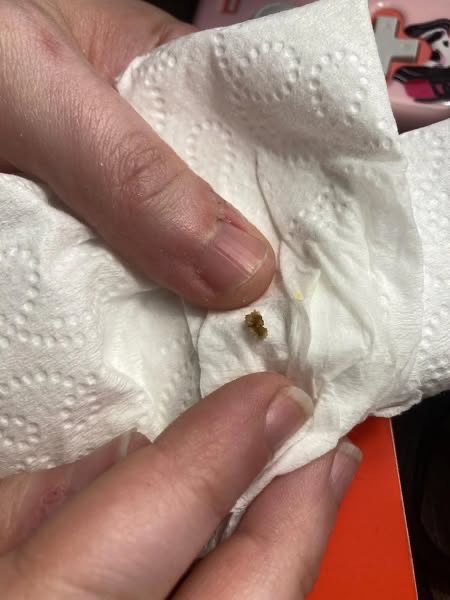
Ran for 54 days, from March 18 to May 11, 2026, the last day Crush saw it.
Run by Dr. Tasha Reynolds - Nephrologist, MD on Facebook. Crush is not the advertiser and does not verify its claims. See this ad in Meta's Ad Library(opens in a new tab)
Want an ad like this for your product?
Crush makes new ad images for your product from this ad: your logo, your product photo, your offer.
Trials from $19.95 USD, then $79.95 USD a month. Cancel anytime.
About this ad
- Meta Ad Library ID
- 1259809898915902
- Platforms
- Facebook, Instagram, Audience Network, Messenger and Threads
- Relaunches
- 0
- Niche
- Clinics & Medical
Ad text
After 12 Years as an ICU Nurse, I've Watched Patients End Up on Dialysis While Their Doctors Called It "Unavoidable." Then My Own Kidneys Started Failing. My father died on dialysis at 60. I'm 48. Three weeks ago, my doctor closed the exam room door. That click. He sat down. Pulled up my chart without looking at me first. "Tasha. Your creatinine is 2.1. Your eGFR has dropped to 33. That's Stage 3B kidney disease. Borderline Stage 4. I'm referring you to a nephrologist. We need to start discussing dialysis planning." Dialysis planning. My throat closed. The room tilted. The same words they said to my father. Twelve years ago. Almost the exact same numbers. My father noticed the foam first. In his toilet. Thick, white foam that sat on the surface and wouldn't flush away. Like dish soap in the water. He brought it up at his physical. Doctor said "It's probably nothing. Could be how fast your stream is. Drink more water." He drank more water. The foam got worse. Then the swelling started. Ankles so puffy by evening that his shoes stopped fitting. Had to buy a size bigger. Then another. His socks left grooves so deep they looked like someone had wrapped cord around his legs. Face bloated every morning — eyes nearly swollen shut. Hands so stiff he couldn't close them into a fist until noon. "Fluid retention," his doctor said. "Common with kidney issues. Take this diuretic." The water pills made him pee even more. But the swelling didn't go away. Then the exhaustion. Not normal tired. The kind of tired where you sleep seven hours and wake up feeling like you ran a marathon in your sleep. Brain fog so thick he'd forget what he was saying mid-sentence. He'd sit down after dinner and be unconscious in ten minutes. This was a man who rebuilt boat engines on weekends. Who could carry me on his shoulders up a hiking trail at 50 years old. By 54, he couldn't stay awake past 7 PM. And the nighttime trips — up at midnight, again at 2, again at 4, again at 5:30. Every single night. For years. He traded his sleep for a slightly better urine stream on Flomax. And his kidneys? Still declining. eGFR 65. Then 58. Then 49. Then 38. Every test. A little lower. His doctor kept saying: "This is the expected progression. We're monitoring it closely." Monitoring. That's the word they used for six years while they watched him die in slow motion. Year 5: eGFR 28. "We need to prepare you for dialysis." Year 6: Fistula surgery. The shunt they put in your arm so the dialysis machine can access your blood. Year 7: Three times a week. Four hours each session. In a room full of people hooked to machines. He went on a Monday. Wednesday. Friday. Never missed a session. "The machine takes everything out of me," he told me once. "I feel worse after dialysis than I did before." His boss let him go in year 2 of dialysis. Twenty-six years at the same company. "Can't keep up anymore." He wasn't making excuses. He was dying. Year 4 of dialysis: Wheelchair. Couldn't walk from the car to the clinic door. Dead at 60. His creatinine was "stable on dialysis" the entire time. Stable. That's the word on his chart the day he died. I sat in my car in the doctor's parking lot. Couldn't turn the key. Just gripped the steering wheel until my knuckles turned white. The referral crinkled in my jacket pocket. I pulled it out. Stared at it. Nephrology Consultation — Kidney Function Monitoring & Dialysis Planning My husband was making dinner when I walked through the door. "Hey. How'd it go?" The words stuck. I handed him the referral without speaking. The spatula hit the counter. Sauce splattered. He didn't notice. Both hands covered his face. "No." His voice broke. "Tasha, I watched what dialysis did to your dad. I can't — I can't watch you go through that. I can't—" He couldn't finish. Turned away. Shoulders shaking. That night I lay awake. The ceiling fan rotated. Over. And over. And over. Red numbers glowed on the clock: 11:52 PM. Rolled over. 12:41 AM. Again. 1:38 AM. At 2:23 AM I gave up. Went downstairs. Sat at the kitchen table. Opened my laptop. The screen's blue glow hurt my eyes. I typed: kidney disease stage 3b progression The results loaded. My chest tightened. Stage 3B: Moderate-to-severe kidney function loss. eGFR 30–44. Estimated progression to Stage 4 within 2–5 years without intervention. Stage 5 requires dialysis or transplant. The CDC stat hit me like a truck: 9 out of 10 adults with chronic kidney disease don't even know they have it. I was one of them. Until three weeks ago. I searched again: what causes kidneys to leak protein Article after article. "Proteinuria — the presence of excess protein in urine — is caused by damage to the glomeruli, the microscopic blood-filtering units in the kidneys. Each kidney contains approximately one million glomeruli. When these filters are healthy, they retain essential proteins in the bloodstream. When damaged by chronic inflammation, they develop micro-tears that allow protein to leak through." Micro-tears. In my filters. I searched: foamy urine kidney damage "Persistent foamy urine is a clinical indicator of proteinuria. When albumin and other proteins leak through damaged glomerular filters, they create surface tension in urine that manifests as thick, persistent foam." That's the foam. That's what I'd been seeing in my toilet for the past eight months. Thick. White. Wouldn't flush. Every single time. And my doctor — at my last two physicals — told me it was "probably nothing." Told me to "drink more water." Told me my creatinine was "still in range." While my filters were tearing apart. I searched: foamy urine doctors dismiss Reddit threads loaded. r/kidneydisease: "I've been telling my doctor about foam in my urine for two years. She keeps saying my bloodwork is fine. Should I be worried?" r/AskDocs: "Foamy urine every time I go. Doctor says it's nothing because my eGFR is 74. Am I being paranoid?" r/ChronicIllness: "My dad had foamy urine for years before his kidneys failed. His doctor said it was normal. By the time they took it seriously his eGFR was 22." That last one. I read it four times. Because that was my father's story. Written by a stranger. I searched: why do kidneys keep declining even on medication And that's when I found the thing that changed everything. A research paper. Not a blog. Not a wellness influencer. A peer-reviewed paper on renal lymphatic function. And it mentioned something I had literally never heard any doctor say in my entire life — as a patient OR as a nurse. The renal lymphatic system. Now pause for a second. You know what's insane? Every kidney treatment on the market focuses on managing blood pressure, managing blood sugar, managing the decline. Every doctor talks about reducing protein intake. Reducing sodium. Every protocol is about controlling what goes INTO the kidneys. But nobody — and I mean NOBODY — talks about what comes OUT. And that's not an accident. Because once you understand what the renal lymphatic system does, you realize that everything my father tried — and everything YOUR doctor has probably told you — is addressing the wrong half of the problem. Here's what I learned: Your kidneys have their own drainage network. Lymphatic vessels running through the tissue whose job is to flush out toxins, inflammatory waste, metabolic debris, and the very inflammatory compounds that damage your nephrons. Every single day. When that drainage system works properly? Your kidneys process damage, clear waste, and your nephrons can filter and repair. Creatinine stays low. Protein stays in your blood where it belongs. No foam. But when those lymphatic vessels get congested? That's when everything goes to hell. Over years — from high blood pressure, diabetes, toxin exposure, chronic inflammation — your renal lymphatic vessels get overwhelmed. The waste they're supposed to flush starts building up along the vessel walls. Thickening. Hardening. Compressing the drainage shut from the inside. And once drainage fails, it doesn't matter what medications you take. The damage has nowhere to go. Inflammatory waste accumulates around your nephrons. Your filters suffocate under sludge they can't flush. Protein leaks through because the nephrons are buried. Creatinine climbs because waste can't exit. That's what was showing on my labs. Getting worse every test. My kidneys weren't failing because of what was going in. They were failing because the drainage system couldn't get the waste OUT. My father's kidneys weren't failing from lack of medication. They were suffocating under decades of accumulated waste that nobody cleared. And here's the part that made my blood boil: The medical system KNOWS about this. Renal lymphatic drainage is in the research literature. It's established science. But unless you're in end-stage kidney failure on a machine — they don't address lymphatic function. At all. Why? Because there's no pharmaceutical drug for renal lymphatic drainage. You can't patent it. There's no money in telling someone to clear their kidney drainage. There IS money in blood pressure medication. In dialysis at $90,000 per patient per year. In transplant surgery at $400,000. In post-transplant immunosuppressants for life. The kidney disease industry is worth over $50 billion annually. Nobody profits from you getting better on lymphatic drainage herbs that cost under $30. My husband stared at the screen. "So the drainage is clogged. The waste is suffocating the nephrons. That's why the numbers keep dropping." "That's why they keep dropping." "And dialysis doesn't clear the drainage." "Dialysis filters blood. It doesn't touch the sludge clogging the lymphatic vessels around the nephrons. The machine flows right around it. Every session. For years." "For six years. Your dad." "For six years." He was quiet for a long time. "Find something that clears it." Monday morning I ordered cleavers capsules from Amazon. Highest rated. 4-star reviews. "Lymphatic support" on the label. Took them every day for six weeks. Nothing changed. Foam still there. Every morning. Swelling still there. Every evening. eGFR still dropping. I tried a lymphatic tea blend next. Health food store. "Traditional drainage support." Nine weeks. Never missed a day. Tasted awful. Still couldn't move the foam. Still exhausted by 2 PM. Still watching my ankles puff up like my father's did. My nephrology appointment was in three weeks. Then two. Then one. Every time I looked in the toilet — the foam sitting there, thick and stubborn — I saw my father. Year 1: foam. Year 3: wheelchair. Year 4: dead. I was on Year 1. Ten days before my appointment, I went down another rabbit hole. Not looking for hope this time. Looking for answers about why the herbs weren't working. And I found it. Forum post. Someone who'd tried capsules and teas before finding something that actually worked. He explained the difference. "Most lymphatic herbs sold on Amazon are in capsule form. When your kidneys are compromised, your gut absorption is wrecked. Those capsules sit in your sluggish stomach and dissolve in acid before the active compounds ever reach your renal lymphatic vessels. By the time anything passes through, your kidneys never see it. The teas are worse — processing destroys the active compounds before they're even brewed." Dead herbs. I'd been swallowing dead herbs for fifteen weeks. The "lymphatic support" on the label? There's no regulation requiring brands to prove their compounds survive digestion. They can print "lymphatic drainage" while selling capsules that dissolve in your stomach and never reach the congestion. I'd been paying for products that contained the NAME of lymphatic herbs without the DELIVERY to make them work. Like buying a battery with the power drained out. My father tried herbs too. In year 4. Some capsule from the health food store. Three months. Nothing changed. He assumed lymphatic drainage didn't work. It didn't work because the herbs never reached his renal lymphatic vessels. The forum post mentioned a formula. Lymphoria. So I went to their site ready to be disappointed like I'd been with every other brand. And I almost dropped my phone. They had a liquid formula. Under the tongue. Sublingual. Bypasses the gut entirely. Absorbs into the bloodstream in 15 minutes. Actually reaches the renal lymphatic congestion that capsules and teas can't touch. But that's not even the part that got me. They didn't just have one lymphatic herb. They had four. Each one targeting a different layer of the congestion: Stillingia Root — dissolves the thick stagnant sludge that's been compressing your renal lymphatic vessels shut for years. The deep waste that's been hardening around your nephrons. The blockage that dialysis can't reach and water just flows around. This is the layer that nothing else touches. Cleavers — sweeps the loosened waste through your sluggish drainage channels and out of your body. All the inflammatory debris that's been suffocating your nephrons, keeping your creatinine high, keeping protein leaking through your filters. Cleavers is what finally moves it out. Prickly Ash Bark — fires up the renal circulation so your drainage actually has power to move. After years of decline, the pump stalls. Without this, the sludge breaks apart but sits there with nowhere to go. Red Clover Blossom — calms the inflammation that's been destroying your remaining nephrons. Your kidneys aren't just clogged — they're inflamed from the trapped waste. Red Clover calms the fire while the other three clear the fuel. Four herbs. Each one mapped to a different layer of renal lymphatic congestion. Nothing random. Nothing filler. Every compound targeting the drainage mechanism that six years of doctors and dialysis had completely ignored for my father. And here's where I lost it: When I was buying those capsules and teas separately? Fifteen weeks. Nothing reached my kidneys. Lymphoria had all four herbs. In liquid form. Sublingual delivery. Actually reaches the congestion. For under $30. Plus a 60-day money-back guarantee. If it doesn't work, full refund. My husband stared at the screen. "So the capsules sat in your gut. The tea was destroyed in processing. This goes under your tongue and bypasses all of that." "In 15 minutes. Straight to the bloodstream. Straight to the renal drainage." "Order it." I ordered it at 11 PM sitting at the kitchen table. The same table where I'd read my father's dialysis reports when he was too exhausted to hold the paper. The bottle arrived two days later. I took the first dose that morning. Two droppers under my tongue. Held for thirty seconds. Done. Didn't believe it would work. I'd stopped believing anything would work. That night — I slept. Through the night. Woke up at 6 AM. Not 2:17 AM. Not 3:44 AM. Not four separate times. Once. At 6 AM. When my alarm went off. I lay there staring at the ceiling trying to remember the last time I'd slept straight through. Over a year. It had been over a year. Three days in: Less urgency. The constant feeling of "I need to go RIGHT NOW" that had been following me everywhere — it was softer. Not gone. But softer. I wasn't panicking about where the bathroom was at the grocery store. Five days in: I went to the bathroom midmorning. Looked down out of habit. Less foam. Not gone. But less. Noticeably less. Like someone had turned the dial down by half. I stood there staring at the toilet like it owed me an explanation. One week: The foam was down by at least 60%. First time anything — anything — had changed it in eight months. My ankles weren't swelling by evening. The grooves from my socks that had been there every night for a year — gone. Two weeks: Foam almost clear. Energy came back. I actually had the drive to go for a walk after work. My husband didn't say anything. He watched me lace up my sneakers with tears in his eyes because he hadn't seen me do that in six months. Three weeks: The puffiness in my face was gone. The dark circles under my eyes — fading. My wedding ring was loose again. I could close my hands into fists in the morning without pain. My husband noticed. Kept watching me. Like he was afraid to say anything in case it jinxed it. But I needed to know: Were my kidneys actually improving, or did I just feel better? My nephrology appointment was in four days. At the nephrologist's office, Dr. Reyes ran everything. Full bloodwork. Urinalysis. The whole panel. Came back with results. Looked at me. Looked at the chart. Looked at me again. "Tasha. Your creatinine dropped from 2.1 to 1.7. Your eGFR is up to 41. And your urinalysis shows significantly less protein in your urine than your last test." Silence. She pulled up my history. Side by side. Every test from the last two years. "This is a meaningful improvement. What did you change?" I told her. About the renal lymphatic congestion. About the four herbs. About the difference between capsules that sit in your gut and liquid that absorbs under your tongue. About fifteen weeks of dead herbs from Amazon before I found something that actually reaches the drainage. She typed notes. Wrote down the herb names. "I'll have to look into that," she said. My father's nephrologist said the same thing never. "Well." She closed her laptop. "Whatever you're doing, continue. These numbers are moving in the right direction. We're postponing any dialysis discussion. Recheck in eight weeks." No dialysis discussion. I walked to my car. Got in. Sat there. Same parking lot where I'd sat three months earlier, gripping the steering wheel, holding a referral that said Dialysis Planning. Called my husband. "My eGFR went up. Creatinine went down. Protein in my urine is dropping. She said no dialysis discussion." His breath caught. Then a sound I'd only heard twice in our marriage — the night his mother died, and now. "Thank God, Tasha. Thank God." That was twelve weeks ago. My eGFR this week? 48. Up from 33. Creatinine? 1.4. Down from 2.1. No foam. No swelling. Sleeping through the night every night. Energy until 9 PM. Last weekend I went hiking with my son. Three hours. Uphill trails. Laughing. Talking. Not even exhausted afterward. He grabbed me in a hug at the summit. "Mom, I thought your kidneys were failing?" My throat tightened. Eyes burned. "They were." "What happened?" "I found out what was actually blocking them. And I cleared it." Because that's what it was. My father's kidneys suffocated for six years. Suffocating under renal lymphatic congestion. Thick sludge compressing his drainage vessels shut while doctors prescribed diuretics and managed his decline and measured his eGFR every three months like a countdown clock. Nobody cleared his drainage. Nobody told him about his renal lymphatic system. Dialysis. Wheelchair. Dead at 60. I'm not following his path. If you're reading this, you see yourself in my story. Your urine foams every time you go. Thick. Persistent. Won't flush away. Your ankles swell by evening. Your face is puffy by morning. Your rings don't fit by noon. You're exhausted no matter how much you sleep because you're up three, four, five times a night. Your doctor says your labs are "being monitored." Says this is "the expected progression." Says "we'll discuss options when the time comes." Options. They mean dialysis. Maybe your father or mother or uncle went through it. Maybe you watched. Maybe the word "dialysis" is the thing that keeps you up at 3 AM. Maybe you've tried supplements. Cleavers capsules from Amazon. Kidney detox teas from the health food store. Cranberry pills. Shilajit gummies. "Kidney support" capsules with ingredient lists that read like a chemistry experiment. Nothing worked. Because your gut couldn't absorb the capsules. Because the teas lost their potency in processing. Because none of them were designed to clear renal lymphatic drainage. And the ones that had the right herbs delivered them in a form your compromised kidneys could never use. Here's what I want you to know: If I hadn't gone down that rabbit hole — if I hadn't found out about renal lymphatic congestion and the difference between capsules that sit in your gut and liquid that actually reaches the drainage — I'd be scheduling my fistula surgery right now. I'd be planning which three days a week I'd spend hooked to a machine. Figuring out how to tell my son. Watching my eGFR drop test after test. The same countdown my father went through. But I had a choice I didn't know existed. Not more water flowing around the clog. Not "monitoring" until it's time for the machine. Not capsules that dissolve in my stomach before reaching anything. A liquid formula with four herbs that each target a different layer of the renal lymphatic congestion suffocating my nephrons. Under the tongue. Into the bloodstream. To the drainage. In 15 minutes. That choice changed everything. If you're where I was twelve weeks ago — terrified of dialysis, desperate for something that actually works — try Lymphoria. Track your foam. Track your swelling. Count your nighttime trips. Get your labs retested in six to eight weeks. Here's why Lymphoria worked when capsules and teas didn't: Liquid Sublingual Delivery — Not Capsules That Die In Your Gut Standard supplements use capsules that dissolve in your stomach acid. When your kidneys are compromised, your gut absorption is even worse. Those herbs never reach your renal lymphatic vessels. Lymphoria absorbs under your tongue in 15 minutes. Bypasses the gut entirely. Goes straight into your bloodstream and reaches the congestion. I felt the difference within days. Fifteen weeks of capsules and teas gave me nothing. Four Herbs Targeting Four Layers — Not Just One Most brands sell one herb in a capsule. Lymphoria combines Stillingia Root to dissolve the deep sludge, Cleavers to sweep it through the channels, Prickly Ash Bark to fire up circulation, and Red Clover Blossom to calm the inflammation. Your renal lymphatic congestion has layers. One herb can't clear four layers. Lymphoria targets each one. Third-Party Tested. Made in USA. No fillers. No junk. No questionable sourcing. Clinical strength doses of each herb. Not trace amounts designed to look good on a label. 60-Day Money-Back Guarantee Try it. Track your foam. Track your swelling. Get labs retested. If you don't see improvement — if the foam doesn't start clearing, if the swelling doesn't decrease, if your numbers don't move — you pay nothing. You risk absolutely nothing. You're at a crossroads right now. One path: Fill the referral. Start nephrologist visits. Watch your eGFR drop every test. "Monitor" the decline. Prepare for dialysis. Three times a week. Four hours hooked to a machine. Fistula in your arm. Life shrinking around a chair. Another path: Do what I did. Give your kidneys the drainage clearing they've been starving for. Track your symptoms. Give it an honest trial with zero financial risk. I chose the second path. It saved me from dialysis planning. From a fistula. From following my father's path. From six years of "monitoring" while my nephrons suffocated. It gave me my life back. Twelve weeks ago, I was paralyzed. My doctor told me my eGFR was 33. Borderline Stage 4. He referred me to a nephrologist for dialysis planning. I was twelve years younger than my father was when dialysis started. And my numbers were worse than his at the same age. I sat at my kitchen table at 2 AM reading Reddit threads from people whose parents died on dialysis after years of "monitoring." I felt trapped. Like there was no good choice. Two paths and both ended at the machine. But I was wrong. There was a third option I didn't know existed. If you're where I was — terrified, watching your numbers drop, seeing your father's face every time you look in the toilet — try Lymphoria. Track your foam. Track your swelling. Give it an honest 60-day trial. Your future self will thank you. — Tasha Reynolds, February 2026 👉 Lymphoria.co P.S. — I noticed better sleep within days. Foam started clearing by day five. Labs improved at my first recheck. My nephrologist postponed dialysis discussion entirely. Your timeline might be different. But you won't know unless you try. P.P.S. — Every day you wait is another day your drainage stays clogged. Every day more waste accumulates around your nephrons. Every day more protein leaks through because your filters are suffocating under sludge they can't flush. Once a nephron dies, it's permanent. Don't wait until your eGFR drops below 20 and the only conversation left is which days you'll spend at the dialysis center. Get yours now: 👉 Lymphoria.co
Where the ad sends people
lymphoria.co
🌿 Don’t Blame Your Lifestyle — Fix The Lymphatic System First
Lymphoria Lymphatic Drainage Drops are crafted to support your body’s natural detox flow, helping reduce puffiness, bloating, and water retention while improving circulation and energy. This gentle herbal blend promotes daily balance so you can wake up feeling light, clear, and refreshed.
Learn more: lymphoria.co(opens in a new tab)