Children Parenting Advices
Children Parenting Advices Facebook ad: “read this if you have a kid or grandkid”
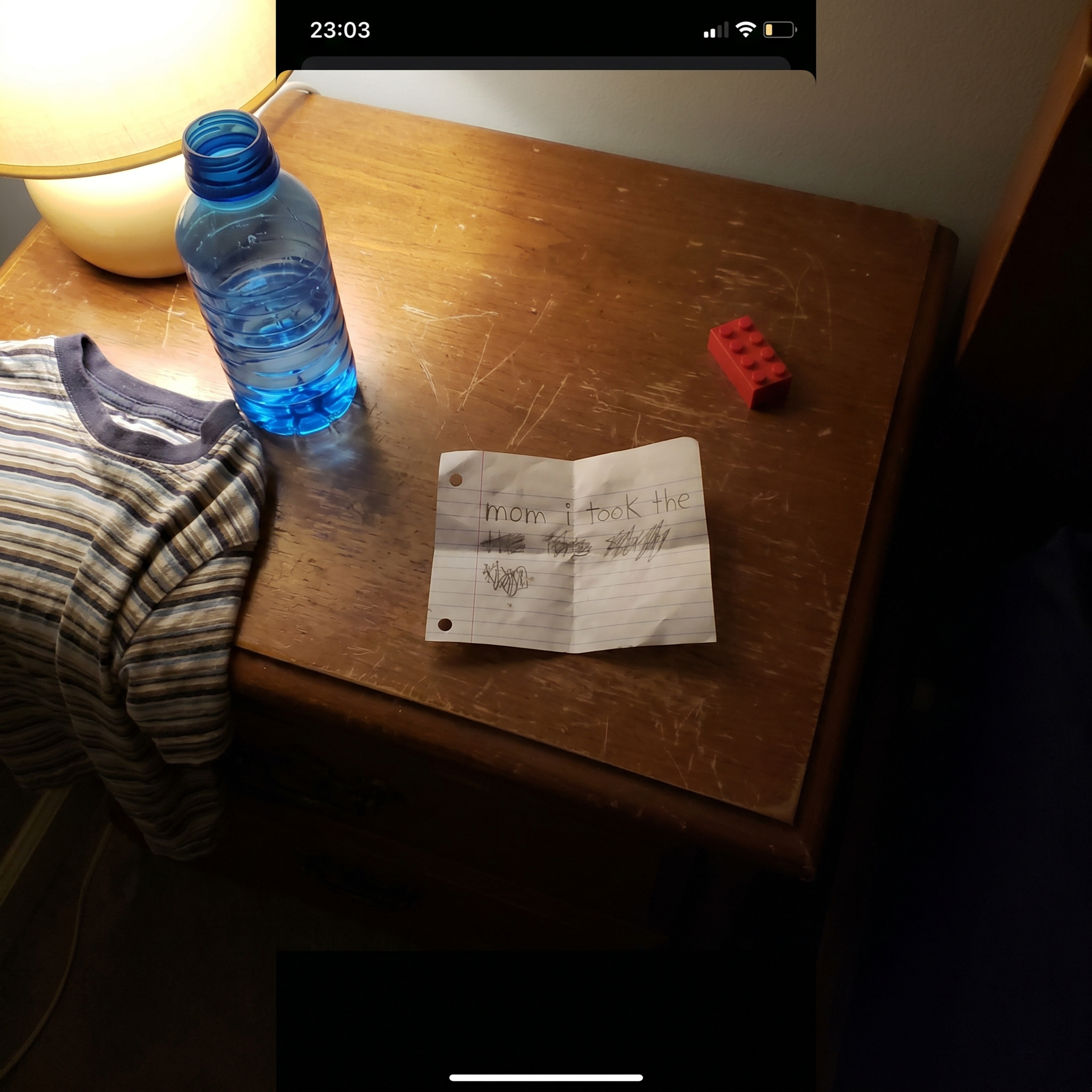
Ran for 4 days, from May 22 to May 26, 2026, the last day Crush saw it.
Run by Children Parenting Advices on Facebook. Crush is not the advertiser and does not verify its claims. See this ad in Meta's Ad Library(opens in a new tab)
Want an ad like this for your product?
Crush makes new ad images for your product from this ad: your logo, your product photo, your offer.
Trials from $19.95 USD, then $79.95 USD a month. Cancel anytime.
About this ad
- Meta Ad Library ID
- 1262463269430978
- Platforms
- Facebook, Instagram, Audience Network, Messenger and Threads
- Relaunches
- 0
- Niche
- Parenting & Kids
Ad text
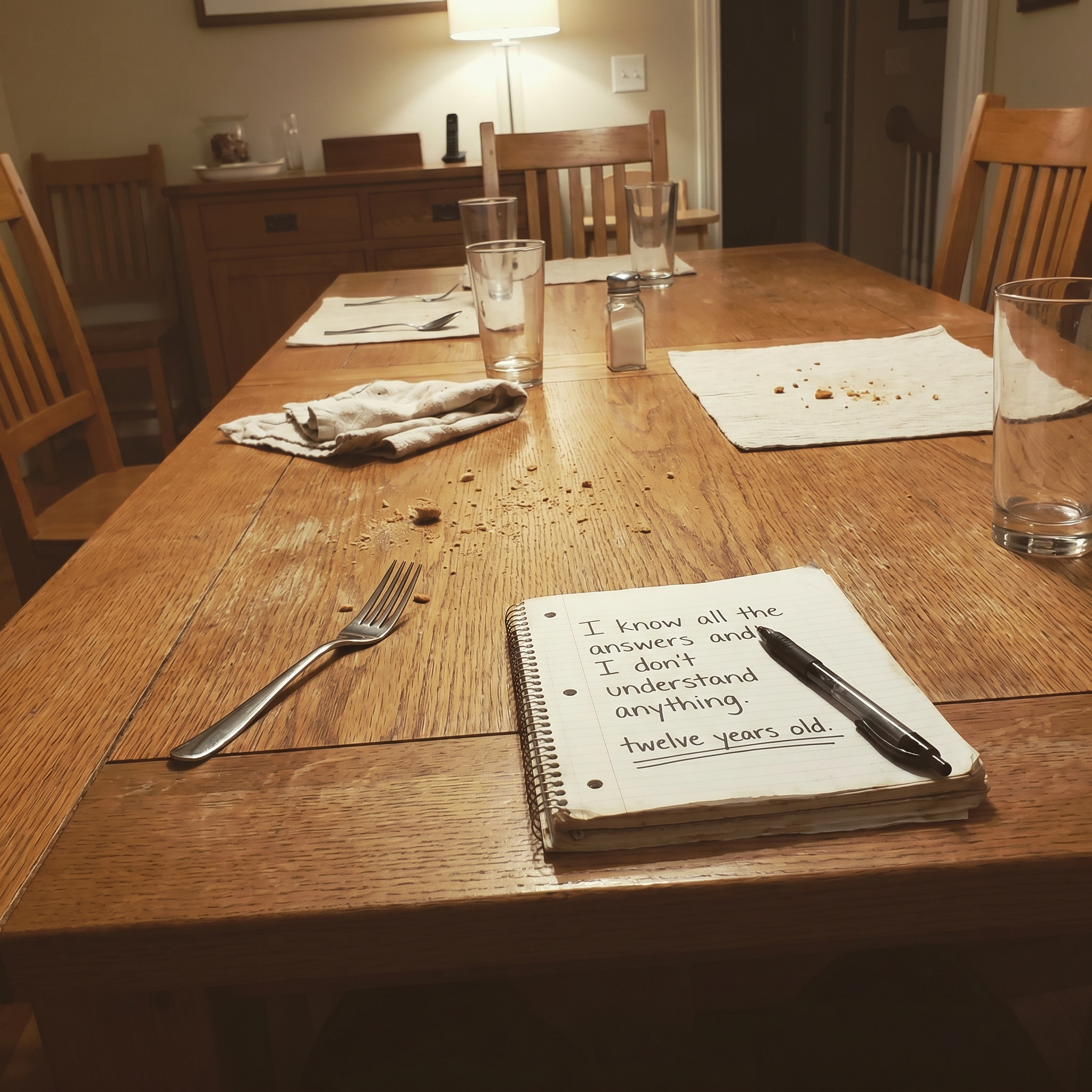
I found a note my son had written and hidden in his drawer. Not a suicide note. Something worse. It said: "Ryan is good at being alive. I don't know how he does it." Ryan is his 9-year-old cousin. My son, Noah, is also 9. I am a child therapist. Fourteen years. I specialize in helping children find their voices. I sit across from kids who have been swallowed by silence — by anxiety, by trauma, by families who didn't know how to ask — and I give them back the ability to speak. That is my credential. That is my job. My son doesn't talk. Not because of trauma. Not because of anxiety. Because nobody in his life — including me — had ever asked him a question worth answering. I didn't know that until I found the note. And I didn't know about the note until it was already too late for something I can't get back. Let me tell you what too late looks like. Noah's 9th birthday was February 14th. Six kids from his class came to the last birthday party. Three parties this year, he wasn't invited to. Not because the kids didn't like him. I asked. They liked him fine. They just — didn't think of him. When the mothers were making their lists, Noah's name didn't come. Not crossed off. Just absent. He had already become the kind of child people forgot to include. And I had been so busy listening to other people's children that I had not heard my own son go quiet. I found the note on a Tuesday. 7:43 PM. Noah was in his room. I was putting laundry away. It was folded into a square so small it had been pressed flat by the weight of whatever was on top of it. I almost put it back. I opened it. "Ryan is good at being alive. I don't know how he does it." I stood in his room for a long time. Didn't call his name. Didn't move. Just stood there with that piece of paper and no idea what to do with it. Ryan is my brother's son. They had visited six weeks earlier. Four days. Ryan is 9 — same as Noah, same grade, same everything on paper. Ryan walked into our living room and owned it in twenty minutes. He talked at dinner. He had opinions. He argued with my brother about something at breakfast and didn't check anyone's face first to see if arguing was allowed. Noah sat next to him at every meal. Said almost nothing. I had watched it happen. I had filed it under: different personalities. Then I found the note and understood I had filed it wrong. I sat on Noah's floor. Read it again. Ryan is good at being alive. Not jealous. Not angry. Not dramatic. Just — a 9-year-old observing a fact about the world. Ryan has something. I don't. I don't know what it is. I don't know how he got it. I had spent 14 years in a chair across from children, learning to hear what they couldn't say. My own child had written it down and hidden it. Because he didn't think I would ask. Because I hadn't. I went back through the year. The birthday parties he wasn't invited to. Three of them. His teacher, Ms. Chen, at the October conference: "Noah is thoughtful. He tends to observe rather than participate." I had nodded and written nothing down. The school play in March. One speaking part. Four lines. He delivered them to his shoes in a voice the second row couldn't hear. I had clapped and said nothing. The Saturday morning in April when I heard him in his room talking — really talking, full volume, animated — and I stood in the hallway listening and realized he was talking to a video game. Not to me. Not to anyone who would remember it. I spend 40 hours a week helping other people's children open up. I had not once asked Noah a question he couldn't answer with one word. Not one. That is the confession that costs me most. Not that I missed it. That I had the tools the whole time and used them for everyone except him. I didn't sleep that night. I sat at the kitchen table after Noah went to bed and did what I should have done a year ago. I thought about what I actually knew about my son. His favorite color. Blue. His teacher's name. Ms. Chen. What he wanted to be when he grew up. I didn't know. What he was afraid of. I didn't know. What he thought about when he couldn't sleep. I didn't know. What made him feel proud. I didn't know. Whether he knew that I loved him in a specific way that was only mine and nobody else's. I didn't know if he knew that. Nine years. I didn't know. At 11:52 PM I was searching. "How to reconnect with a quiet child." "Why does a child stop talking." "How to get a 9-year-old to open up." Everything I found I already knew. I had written some of it. Safe space. Open-ended questions. Active listening. I had built my career on those tools. They hadn't worked. Not at my own dinner table. Not with my own son. Because knowing the tools isn't the same as having the right questions. I closed my laptop at 12:41 AM. Didn't find anything. Went to bed. The following Saturday I was at a neighbor's house. Diane. Her daughter Sophie is 8, one grade below Noah. In forty minutes, Sophie told us a story about something that happened at school. It lasted almost fifteen minutes. She did voices. She stopped to clarify details. She said at one point, "Wait, actually, the important part is this—" and redirected the whole story. The whole table was watching her. I watched her and felt something I couldn't immediately name. Then I named it. That's what I want for Noah. Not the performance. Not the audience. Just the confidence that what he's thinking is worth saying out loud. I pulled Diane aside after. "How does she do that? Sophie. How does she just — talk like that?" Diane looked at me for a second. Then she went to her kitchen counter and came back with a small yellow box. "These," she said. QuestKids TALES. 150 conversation cards. "We do a few after dinner. She's been doing them since she was 6." "Does it actually work?" Diane smiled. "Last week she told us she was scared of becoming someone nobody remembered." She paused. "She's 8. I didn't know she thought about things like that." I drove home with the box in my bag. I put it on the kitchen table after dinner Sunday. Said nothing. Noah looked at it. "What's that?" "Questions. Want to try one?" He looked at the box the way he looked at most things. Carefully. Deciding. He pulled a card. Read it silently. Then out loud. "If you could know one thing about how other people see you, what would you want to know?" He put the card down. Picked it up again. Long silence. "Whether they notice when I'm not there," he said. My throat closed. "What do you mean?" "Like." He turned the card over. "If I wasn't in a room. Would anyone notice the room was different." Nine years old. He had been carrying that question. The birthday parties. The note in the drawer. The Saturday mornings talking to a video game because at least the game responded. All of it in one sentence. And he said it because a card asked him a question his mother had never thought to ask. We did eleven cards that night. Week 2, Thursday after dinner. "Do we have to do the cards tonight?" "We don't have to do anything." He ate. Cleared his plate. Stood up. Picked up the box. "Okay. One." One became four. Week 4, something shifted. I heard it before I saw it. Noah on the phone with my mother — his grandmother, who lives in Portland, who he speaks to for three minutes at a time on holidays — talking. Really talking. I stood in the hallway. He was telling her about deep ocean creatures that make their own light. He had facts. He had questions he couldn't answer, and he said he couldn't answer them. He said: "Grandma, doesn't that feel lonely? To be that deep and make your own light and nobody can see it?" My mother was quiet on the other end for a moment. "Yes," she said. "It does." "I think about that sometimes," Noah said. I had to go to the bathroom and close the door. Week 6, Ms. Chen called. Wednesday. 4:17 PM. "I need to ask what changed at home." "What do you mean?" "Noah answered a question today I didn't ask him. I was explaining something about the water cycle and he just — raised his hand and said something that was completely right and added something I hadn't covered." Pause. "I've had Noah in my class for seven months. I have never heard his voice at full volume. Not once." She stopped. "What changed?" "I started asking him better questions," I said. She was quiet for a moment. "I want to know what questions." I told her about the cards. She ordered a set for her classroom. Week 10. My brother's family visited again. Ryan was there. Same house. Same dinner table. Midway through dinner Noah started talking about bioluminescence. He had been reading about it since the phone call with my mother. He had gone deep. Facts. Questions. Theories. A drawing he'd made that he'd actually gone and gotten from his room to show everyone. Ryan leaned across the table to look at it. "That's actually really cool," Ryan said. Noah looked up at him. "I know," Noah said. "Right?" Just that. No checking. No looking around to see if it was allowed. Just: I know. Right? My brother caught my eye across the table. I looked away before he could see my face. After dinner I was alone with Noah for a minute while he helped me clear the table. "Was it good having Ryan here?" He thought about it. "Yeah." He stacked two plates. "He's still better at talking than me." "Do you still think he's better at being alive?" He looked at me. "You read the note." "I did." He put the plates in the sink. "I don't know," he said. "Maybe it's not about being good at being alive. Maybe it's about knowing what you think is worth saying." He dried his hands. "I'm getting better at that part." Noah is 9. The window is open. Not for long. I know because I have watched it happen. Children who decide at 7 or 8 or 9 that their thoughts aren't worth saying. Who are 14, 15, 16 before anyone notices. By then the silence has been true long enough to feel like personality. The window is between 4 and 12. After 12 the silence becomes identity. After 12 the quiet child decides: this is just who I am. And mostly — not always, but mostly — they are right. Because by then it has been true for long enough to feel permanent. Noah was already on his way. Three birthday parties. A note folded small so it wouldn't take up too much space. Already becoming the kind of child people forgot to include. If your child gives you one-word answers and you've told yourself they're just shy — I told myself that too. If you've sat at a dinner table next to your child and felt the quiet horror of realizing you don't know what they think about when they can't sleep — I sat there too. If somewhere in your house there is a version of that note — a thought your child has already decided isn't worth saying out loud — there is still time. But not unlimited time. $4,800 in activities this year. Swimming. Art. The class trip. $4,800 taught Noah skills. The $35 box on the kitchen table taught him that what he thinks is worth saying. You cannot buy that with activities. You can only buy it with the right question. Don't let your child become another Noah. The one people forget to invite. The one who talks to video games because they respond. The one who folds their real thoughts into small squares and hides them where nobody will find them. The cards that gave Noah his voice are called QuestKids TALES. 150 questions. One box. One card after dinner. That's all. Before they decide the silence is just who they are.
Where the ad sends people
eduquestkids.com
read this if you have a kid or grandkid 👆
INTELLECTUAL ADVANTAGE DAILY QuestKids 150 Cards ➡ Top Educator Exposes the 'Emotional Window': Why Most Children Stop Sharing Their Inner World With Parents Before Age 12 - And the 15-Minute 'Ritual' That Gets It Back By David Sterling, Retired Academy Director April 05, 2026 at 10:24 am EDT Betw...
Shop now: eduquestkids.com(opens in a new tab)