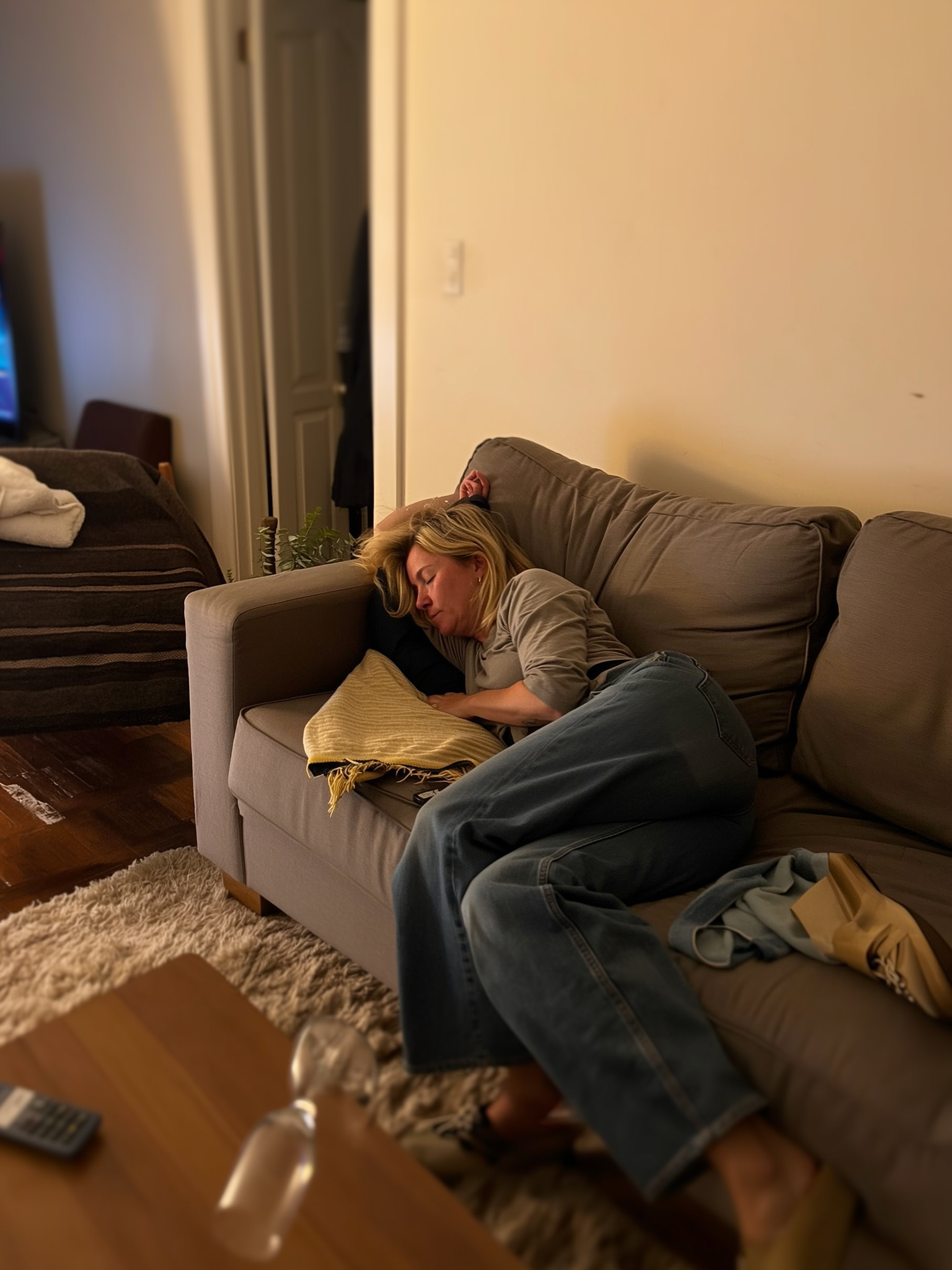

Inactive· since Apr 2, 2026
- 51
- days it ran
- 0
- relaunches
Ad copy
If your wife is drinking every day and can't stop no matter how hard she tries, hiding bottles around the house, white-knuckling sobriety until she relapses again, waking up with cravings before her feet even hit the floor, going through every treatment program the system throws at her and getting worse — and her addiction specialist just keeps telling you "commit to the program, give it time, this is a chronic disease she'll need to manage for life"... I'm about to tell you exactly what they're hiding from you and why they'll NEVER tell you the truth. And by the end of this, you're gonna be pissed. Because there are three things happening right now: One — Her brain is screaming that something is neurologically broken Two — The addiction treatment system is gaslighting both of you into thinking it's a willpower problem Three — There's a billion-dollar rehab industry that profits every single day she stays dependent So let me tell you what happened with my wife, because her story is going to open your eyes to how messed up this really is. For YEARS, and I mean like four straight years, my wife was drowning in alcohol dependency. Not like "oh she drinks too much at parties" drinking. I'm talking she needed a drink by 3pm just to feel like a functioning human being. She was shaking by morning. Breaking promises to herself by noon that she'd made at 6am. Hiding bottles in her car, in the garage, in places I still haven't found. She's 34 years old and I was watching the woman I married disappear one drink at a time. And the attempts to get sober? Every time she stopped, she couldn't sustain it. Not because she didn't want to. Because the moment alcohol left her system, this grey, crushing flatness came in that made every sober hour feel unbearable. No joy. No motivation. No sense that anything was worth doing without a drink. Just existing. Just going through the motions, waiting to feel something. She'd sit across from me at dinner and I could see it. Present on the outside. Completely hollow inside. She couldn't connect. Couldn't feel anything worth staying sober for. And I watched her hate herself for it every single day. So obviously, we go get help, right? Multiple specialists. Addiction counsellors. Psychiatrists. We're talking thousands of dollars in appointments, rehab programs, psychiatric evaluations...the whole nine yards. And you know what every single one of them told her? "It's alcohol use disorder." "You need to commit to the program." "Try naltrexone, it blocks the reward." "Call your sponsor. Go to meetings. One day at a time." "This is a chronic relapsing disease. You'll need to manage it for life." MANAGE IT FOR LIFE. My wife's brain is shutting down and they're telling her to manage it ONE DAY AT A TIME. But here's where it gets worse, and this is the part that made me start digging into what the hell is actually going on. They put her on three different protocols over two years. AA first. Then naltrexone. Then higher-dose naltrexone combined with antabuse. And their logic was "we just need to find the right combination to suppress the behaviour." Those protocols DESTROYED her. Thirty days on naltrexone feeling like a grey, joyless zombie with the craving still running in the background every waking hour. Completing rehab and relapsing worse than before. Sitting through meetings while the need for a drink felt like a physical emergency, not a character defect. And her dependency? Still there. Just now she was dependent AND ashamed AND more hopeless than when we started. So at this point I'm furious. Because I'm watching my wife do everything the system tells her to do, spend everything, try every protocol, and get WORSE. Not better. Worse. And that's when I started asking questions that nobody wants you to ask. Why are addiction specialists so quick to prescribe things that mask the craving but never fix what's causing it? Why do they treat alcohol dependency like a behavioural problem when sober life feels neurologically unbearable no matter how much she wants to stay sober? And why does nobody ever talk about what's actually happening to her brain underneath — or how to heal it? So I went down a rabbit hole. And I mean a DEEP rabbit hole. I started researching why someone would have all of these symptoms. The uncontrollable cravings. The grey flatness the moment alcohol left her system. The relapsing over and over despite genuinely wanting to stop. And every mainstream addiction site gave me the same useless answers. "Rehab. Naltrexone. AA. Willpower. Disease management." But then I found an article from a functional addiction specialist — someone who actually studies ROOT CAUSES instead of just symptoms. And he mentioned something I had never heard of in my entire life. Reward pathway degeneration. Now pause for a second. You know what's insane? We learned about dopamine in health class. We learned about serotonin. But nobody — and I mean NOBODY — ever taught us that years of heavy drinking physically degenerates the reward pathways that control your wife's ability to feel pleasure, experience motivation, and generate any sense that sober life is worth having. And that's not an accident. Because once you understand what reward pathway degeneration actually does to a brain, you realise that 90% of the treatment-resistant alcohol dependency the system can't figure out? It's ALL connected to this. The uncontrollable cravings. The grey crushing flatness the moment alcohol leaves her system. The relapsing over and over despite genuinely wanting to stop. Same cause. Same damaged architecture underneath. Here's what your wife's reward pathways actually do: They're her brain's entire emotional infrastructure. The neural circuitry that generates pleasure from ordinary things, motivation to get through a normal day, genuine connection with the people she loves, and the baseline sense of okayness that makes sober life feel worth living. They're what allow a healthy brain to feel like a sober life is something worth having. And here's what nobody explains about how they work. Her reward pathways don't run on dopamine alone. They run on dopamine AND serotonin simultaneously. Dopamine drives the reward response — the signal that generates pleasure, motivation, and baseline okayness when she's not using a substance. When dopamine signalling is healthy her brain generates reasons to stay sober naturally. She feels pleasure from ordinary life. She feels connected to you. She has something to stay sober for. Serotonin regulates the emotional quality of that experience — the ability to feel genuine joy rather than just the absence of pain, the capacity for real connection with people she loves, and the stable emotional baseline that makes a sober day feel livable rather than something to survive. Both systems working together is what a brain that can sustain sobriety actually looks like. Alcohol degenerates both. At the same time. Here's what happens. Alcohol floods the reward pathways with an artificial signal — a chemical hit that the brain's dopamine and serotonin systems simply cannot compete with. With every year of heavy drinking, the reward pathways downregulate to compensate. They lose sensitivity. The threshold for feeling okay without a drink climbs higher and higher. Until sober life — real life — simply cannot generate enough signal to feel worth staying in. That's why she can feel like a functioning human being for three hours after a drink and completely gone by the afternoon. But while the dopamine system is being destroyed, the serotonin pathways are degenerating alongside it. Because dopamine and serotonin signalling in the reward circuitry are structurally interconnected. Chronic alcohol-induced stimulation dysregulates serotonin function in the same neural architecture. The pathways that generate genuine joy, emotional connection, and the stable baseline that makes sober life feel meaningful break down at the same time. That's why every sober hour feels grey and flat and unbearable — her serotonin-dependent capacity for joy and connection has degenerated alongside the dopamine system. That's why she pours the bottle down the drain and still feels nothing worth staying sober for — the reward pathways that generate genuine pleasure from real life are degenerated across both systems. And this is why naltrexone and rehab fail almost every time. When she attempts sobriety the dopamine system starts trying to recalibrate. Slowly. Painfully. That's the craving — her brain desperately searching for the signal it has been depending on to feel anything at all. But the reward pathways don't just repair themselves because she stopped drinking. The degeneration is structural. Stopping alcohol removes the cause. It does nothing about the damage already done. So you get a wife who genuinely wants to stop. Who has been through every program. Who has white-knuckled it more times than either of you can count. Whose brain still cannot produce what it no longer has the architecture to produce. She is not choosing this. So you get: Waking up with a craving as the first thought before her eyes are even open — her dopamine pathways have degenerated to the point where alcohol is the only signal strong enough to register as relief Grey emotional flatness the moment alcohol leaves her system — her serotonin-dependent capacity for joy and connection has broken down alongside the dopamine system White-knuckling sobriety until the flatness becomes unbearable and relapse feels like neurological survival not moral failure Pouring the bottle down the drain and feeling nothing worth staying sober for — because the reward pathways that generate genuine pleasure from real life have shut down across both systems Sitting across from you at dinner, present on the outside and completely hollow inside — her brain cannot generate the emotional signals that make connection feel real Breaking a promise made at 6am before noon — not because she doesn't mean it, because her brain physically cannot sustain sobriety when sober life feels neurologically unbearable Morning shaking that starts earlier every month — the withdrawal threshold rising as the reward pathways continue to degenerate Relapse that doesn't feel like failure — it feels like the only way to feel anything at all And here's the CASCADE EFFECT that makes it worse: Degenerated dopamine pathways mean her brain's stress response is locked in the ON position the moment alcohol leaves her system. Anxiety that never shuts off. A nervous system in permanent emergency that only alcohol can temporarily quiet. Degenerated serotonin pathways mean she cannot generate the emotional baseline that makes relationships, work, and ordinary daily life feel meaningful. So isolation deepens. Every sober day feels greyer than the last. The reasons to stay sober keep shrinking because her brain can no longer feel them. And the longer both systems stay degenerated, the harder the pathways become to restore. Every month without repair the window for full recovery narrows. Her brain is completely stuck. And it cannot unstick itself without reward pathway restoration. And here's the part that made my blood boil. The addiction treatment system KNOWS about this. They know reward pathway degeneration is what makes sobriety feel neurologically unbearable for treatment-resistant patients. But they don't give a single damn about actually helping her repair the damage. Why? Because there's no program they can bill your insurance for that specifically restores degenerated reward pathways across both dopamine and serotonin signalling simultaneously. You can't run a $30,000 inpatient stay on a natural compound that rebuilds the neural architecture alcohol destroyed. There's no money in telling you that the reason sobriety feels impossible is structural — and that the structure can actually be repaired. There IS money in keeping her cycling through rehab, naltrexone protocols, intensive outpatient programs, and relapse management for the REST OF HER LIFE while her reward pathways keep declining and the system keeps telling you she just needs more commitment. See how that works? So I kept researching. Reading studies. Medical journals. Talking to functional medicine doctors. And I found out there's actual research on a specific compound that directly targets reward pathway degeneration — restoring dopamine signalling AND rebuilding damaged serotonin pathways at the same time. Not one or the other. Both. Simultaneously. The compound is called saffron extract. Bear in mind — this is not the spice sitting in your kitchen cupboard. But you'll never hear an addiction specialist mention it. So my wife finally finds a functional medicine doctor who actually knows about this stuff. And this man says exactly what I'd been reading about for weeks. He says: "Her reward pathways are severely degenerated. The dopamine and serotonin signalling architecture that's supposed to make sober life feel worth having has been progressively shutting down for years. We need to restore both systems simultaneously and allow the pathways to rebuild." He writes down saffron extract and tells my wife to start taking it daily. And for the first time in four years, someone gave her a neurological explanation instead of a moral one. But here's the problem. The functional doctor recommended saffron extract but didn't tell us which brand to trust. Because most saffron supplements on the market are either underdosed, unstandardised, or don't actually restore dopamine and serotonin signalling pathways the way the clinically studied versions do. My wife had to research brands herself. Different companies. Different doses. Some online, some in stores where the quality was completely questionable. Trying to figure out which one actually worked because, surprise, there's no standardised information about this anywhere. And the good brands were expensive. Over $50 a month for something that might not even be the right formulation. But you know what? She did it. She bought a random bottle of saffron extract 88.5mg off Amazon because she was desperate. And after about two weeks? The morning craving wasn't the first thought before her eyes were even open. First time in years. After a month? She poured the bottle she'd been hiding in the garage down the sink. Didn't feel like a heroic act. Just felt unnecessary. After two months? She drove past the liquor store on the way home and realised at the next traffic light she hadn't even thought about stopping. So we were relieved, right? It worked. But here's what kept bothering me. When I dug deeper into the research, I found that most saffron supplements have a critical problem: they don't optimise for reward pathway restoration specifically. Because saffron's ability to restore dopamine and serotonin signalling doesn't come from saffron itself. It comes from two specific active compounds inside it — crocin and safranal. Those are the compounds the clinical research actually studied. Those are the compounds that do the work at the pathway level. Without standardised, verified levels of crocin and safranal specifically, you have no idea what you're actually taking. One batch of saffron extract could contain meaningful levels of both compounds. Another batch with the identical weight printed on the label could contain almost none — depending on where it was grown, how it was harvested, how it was processed. Two bottles. Same dose on the label. Completely different effect on the reward pathways. And here's what the clinical research actually shows. Every study that demonstrated meaningful dopamine and serotonin pathway restoration used 30mg of saffron extract — not 88.5mg, not 500mg — 30mg. But specifically standardised for verified crocin and safranal levels. That standardisation is everything. Without it the dose is meaningless. That meant 30mg with standardised crocin and safranal levels was a more effective dose than 88.5mg without. My wife was getting results. But I kept thinking — what if the Amazon bottle wasn't optimised for reward pathway restoration specifically? What if the crocin and safranal levels weren't verified? What if she wasn't getting the full clinical benefit because the supplement wasn't built to the research standard? And then there was the other thing nobody talks about. Most saffron supplements are never tested for heavy metals, pesticide residue, or contamination. You're giving something to your wife daily to repair her brain and you have no idea what else is in it. I needed to find a brand that: Used 30mg of saffron extract specifically — the exact dose used in every clinical study on dopamine and serotonin pathway restoration Had standardised, verified levels of crocin and safranal — the specific active compounds the research actually studied Was third-party tested for heavy metals and contamination — not just the company's word for it Had actual neurologists and clinical researchers behind the formulation — people who understood the reward pathway mechanisms involved in addiction recovery, not just a supplement company throwing saffron in a capsule Wasn't charging an insane markup for pharmaceutical-grade quality And I'm scrolling through a Facebook group about natural addiction recovery one day, literally just looking for answers, and I see someone mention this company called Kinova Labs. So I go to their website, ready to be disappointed the way I'd been disappointed by every other company I'd looked at. And I almost fell out of my chair. They had saffron extract at exactly 30mg. The precise clinical dose used in every study on reward pathway restoration. Standardised for verified crocin and safranal levels — the exact active compounds responsible for dopamine and serotonin signalling repair. But that's not even the part that got me. When I looked into who was actually behind the company? They had neurologists and clinical researchers on their team who specialised in neuroplasticity and reward pathway function. People who understood the dopamine and serotonin mechanisms involved in alcohol dependency and recovery at a research level. Who had built the formulation specifically around the clinical evidence on pathway restoration — not around what was cheapest to manufacture. They weren't just putting saffron in a bottle. They understood the mechanism. They understood what standardisation of crocin and safranal actually means for reward pathway restoration. They built the product to the research standard. And third-party tested. Every batch. For purity, potency, and heavy metals. And here's where my jaw hit the floor. When my wife was trying random brands? $60, $70, $80 a month for unstandardised, unverified formulations. Kinova Labs? Less than half of that. Already a steal for pharmaceutical-grade standardised manufacturing. But they also have bundle options that bring the cost down even further. Go look at the price right now. I'm serious. And my wife has been taking it for six months now. The daily drinking? Gone. The grey flatness that made every sober hour feel like punishment? Gone for four months. The morning craving that was there before her eyes even opened? Gone. Her reward pathways are rebuilding. The dopamine and serotonin signalling architecture that four years of alcohol dependency destroyed is restoring itself. Last week she laughed at something on TV. Really laughed. Not performed it. Not went through the motions of it. Just laughed the way she used to before any of this started. I sat next to her on the couch and didn't say anything. I didn't want to break it. This is the protocol they don't want you to know about. Because the second her reward pathways restore their dopamine and serotonin signalling capacity, she doesn't need their rehab revolving door anymore. She doesn't need their symptom-masking naltrexone. Her brain starts GENERATING THE SIGNALS THAT MAKE SOBER LIFE WORTH HAVING. Now here's the thing I need you to understand. The longer you wait, the more her reward pathways degenerate and the harder they become to restore. Dopamine and serotonin signalling damage that has been progressing for years becomes harder to reverse the longer it continues. Every month her brain's neuroplasticity — its ability to rebuild itself — decreases. Right now, if your wife is dealing with treatment-resistant alcohol dependency, uncontrollable cravings, that grey sober flatness that makes staying sober feel neurologically impossible — she can reverse this by restoring her reward pathways. But if you wait six months? A year? The dopamine signalling drops even lower. The serotonin damage deepens. Her brain loses more of its ability to generate the pleasure, motivation, and emotional connection that make sober life feel worth having. And then it takes even longer to recover. Every month that goes by, her reward circuitry's ability to heal itself decreases. So if your wife is dealing with ANY of this — uncontrollable cravings that start before her eyes are even open, the grey emptiness that makes every sober hour feel like punishment, relapsing despite genuinely wanting to stop, hiding bottles, breaking promises to herself by noon, sitting across from you at dinner completely hollow inside, pouring a bottle down the drain and feeling nothing worth staying sober for, the alcohol dependency her addiction specialist keeps managing but never fixing — This is literally the time. Not next month when her reward pathways have degenerated further and restoration takes even longer. Right now. I put the link below. And even if you're skeptical, get one bottle. Try it for a month. See if her reward pathways respond the way my wife's did. They even offer a 60 day guarantee — so there's no risk at all. Because the addiction treatment industry isn't coming to save her. They profit too much from the revolving door while her reward pathways continue to degenerate underneath. You have to save her yourself. Go get it. And use the joy you get back — the real laughter, the genuine connection, the woman who can finally feel something worth staying sober for — to finally bring your wife back to you. https://kinovalabs.co/products/pure-saffron-capsules
Like this ad? Make it yours.
Crush rebuilds this exact creative around your product — your brand, your colors, your offer — in about a minute.