
Inactive· since Apr 15, 2026
- 30
- days it ran
- 0
- relaunches
Ad copy
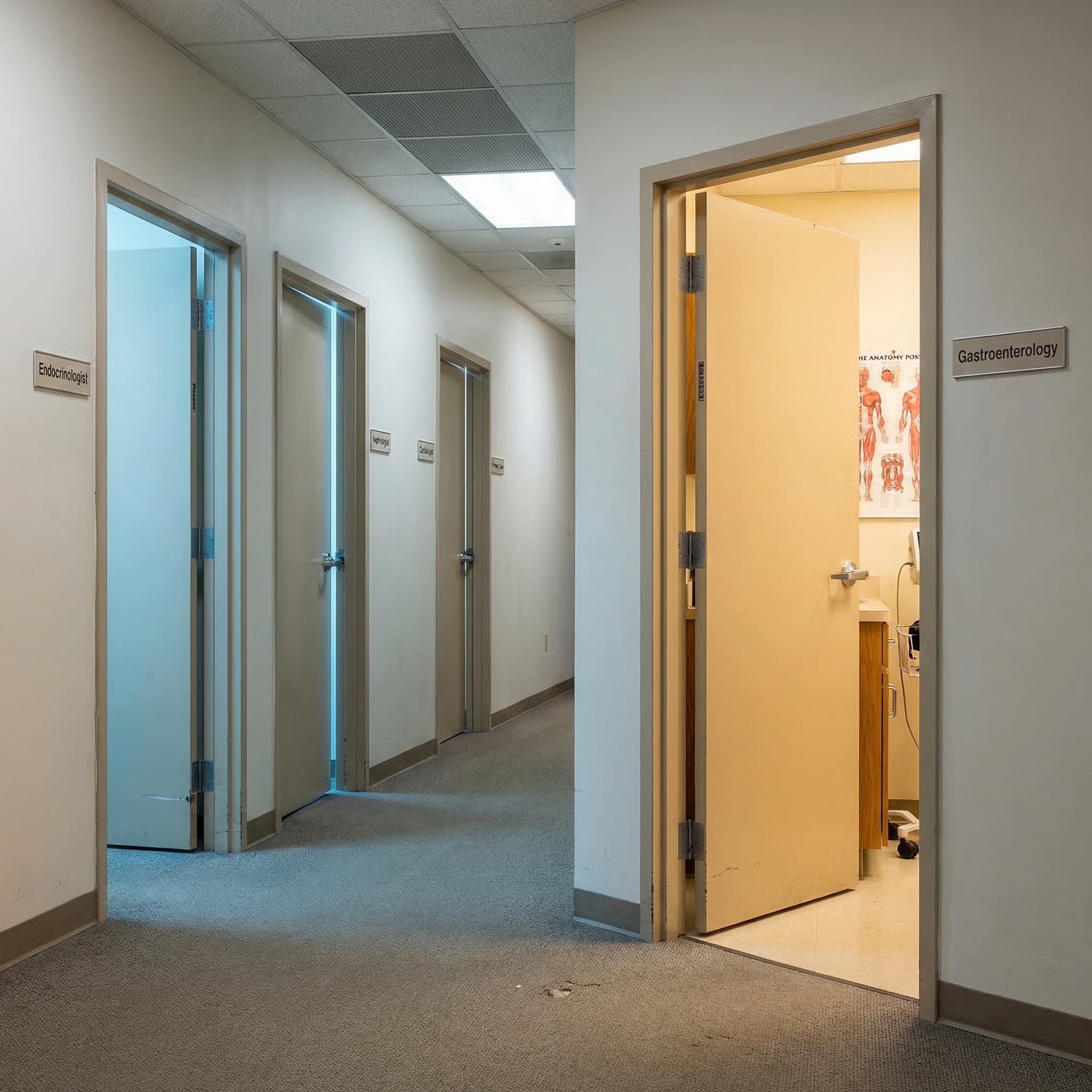
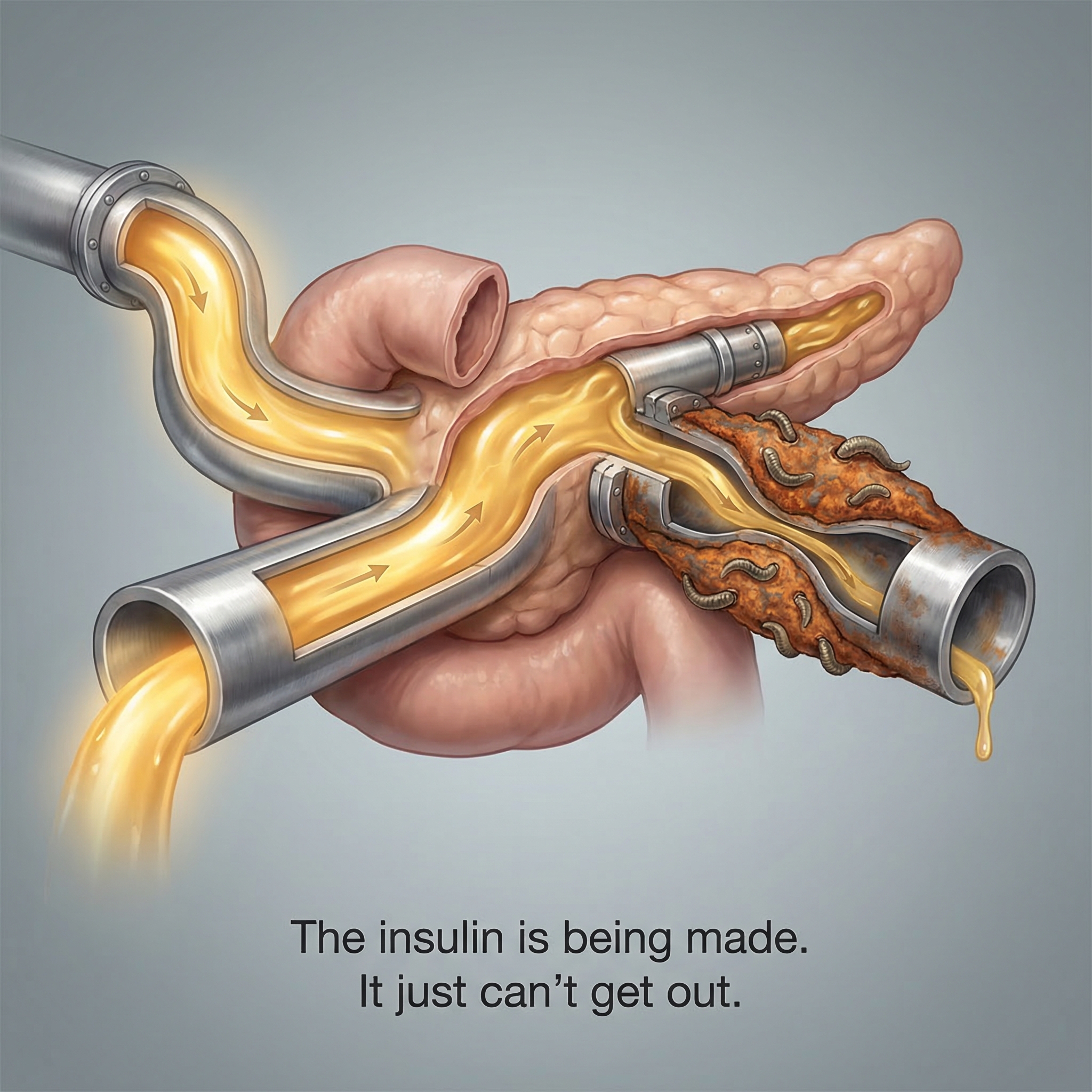
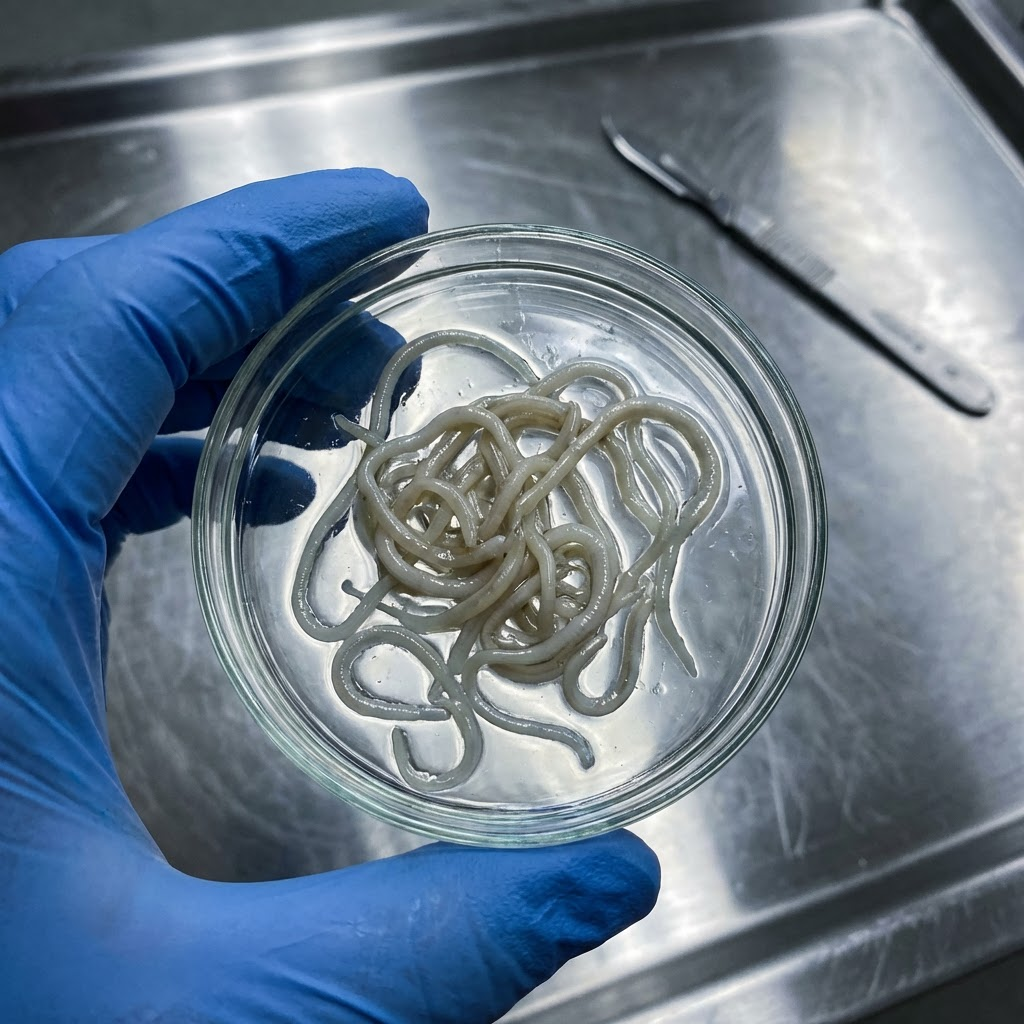
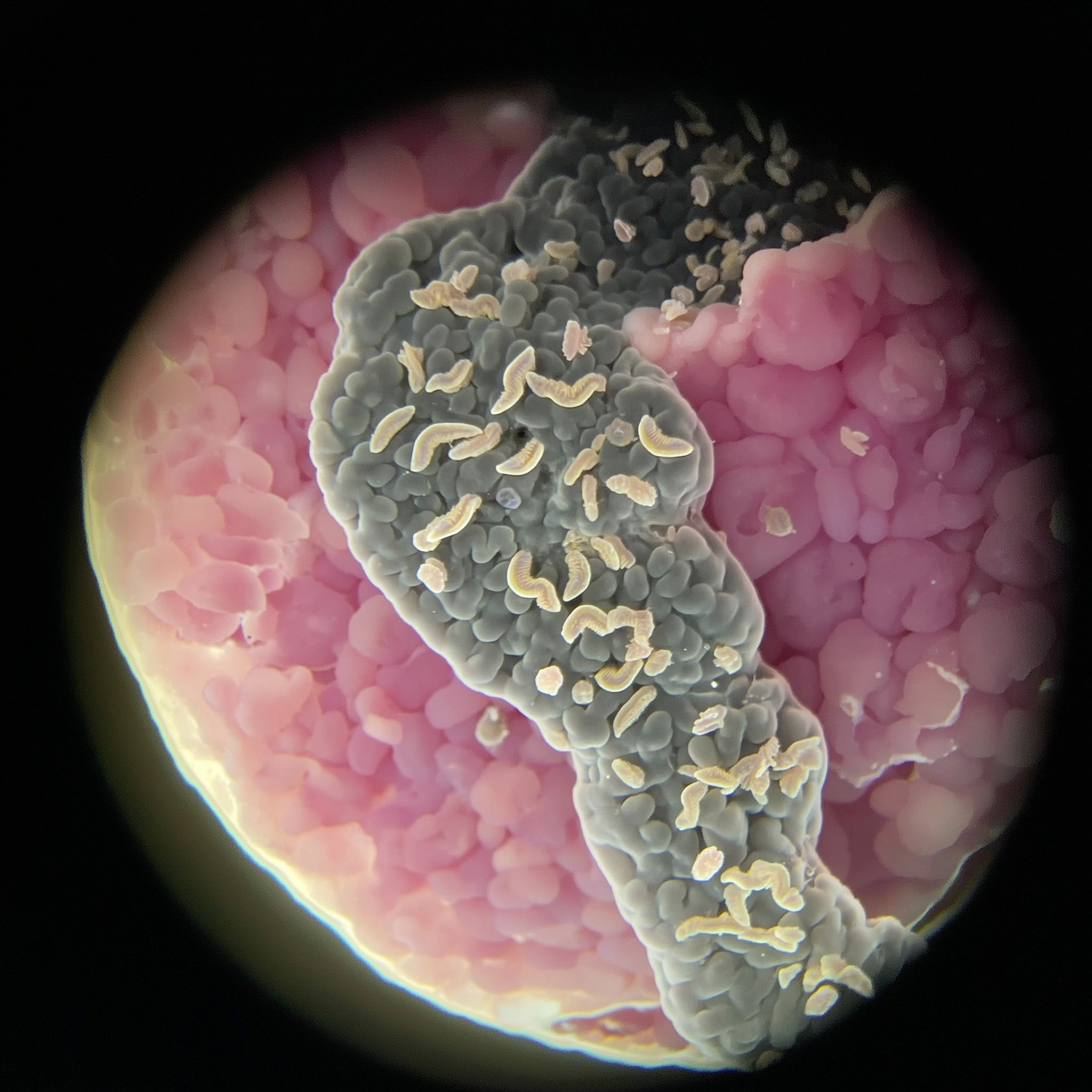
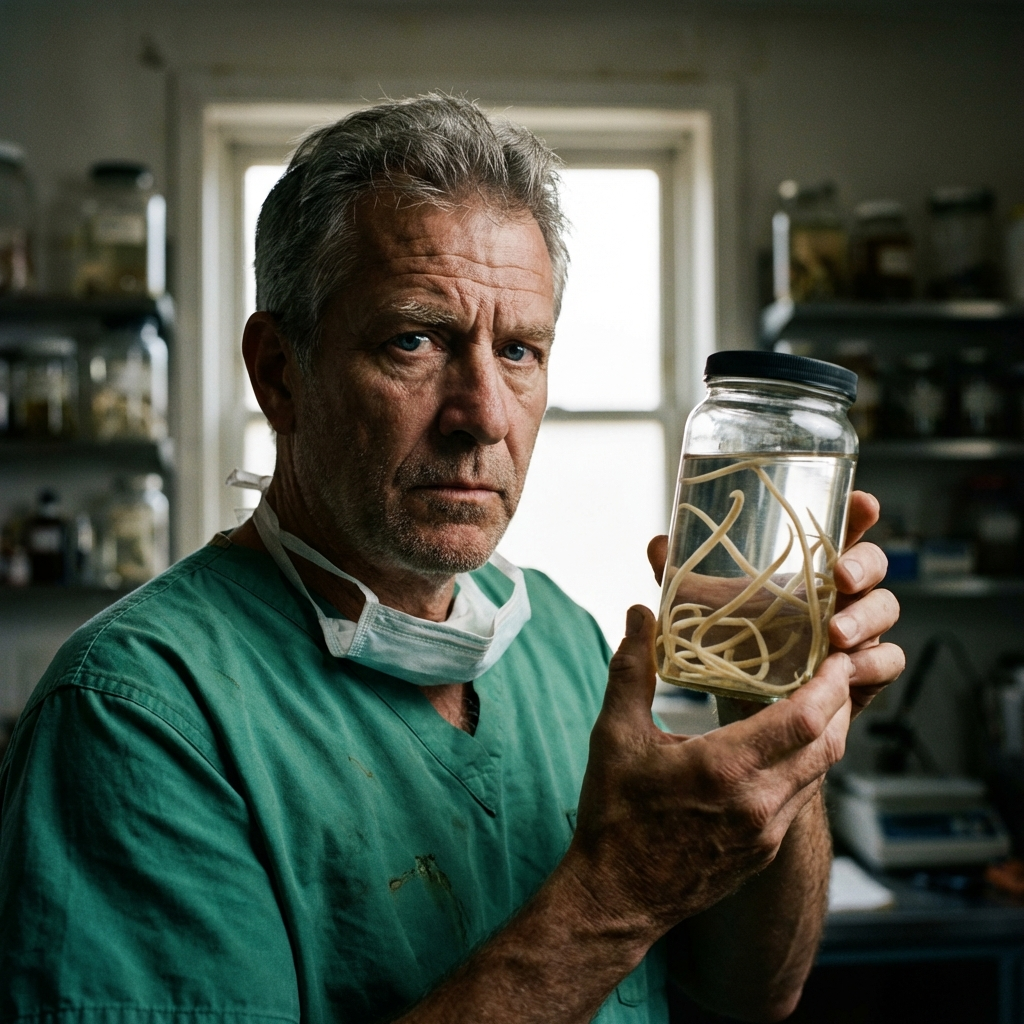
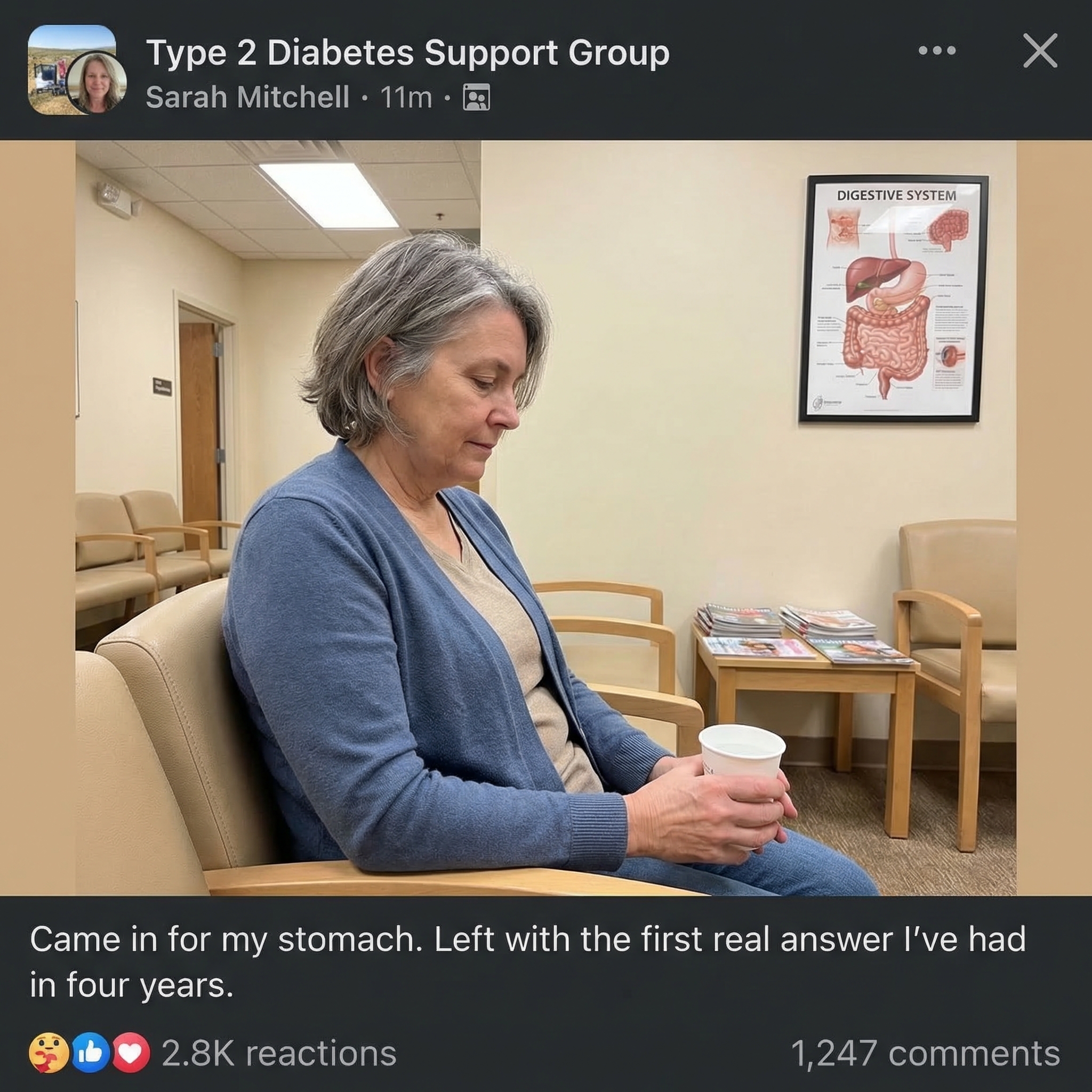
Six doctors managed my Type 2 diabetes for four years. None of them were trained to look at the part of my body where the actual problem was. The one who finally explained it wasn't a diabetes specialist at all. He was a GI doctor. And the territory he described was his from the beginning. Let me tell you how I got there. Because it didn't start with diabetes. It started with my stomach. Four years on metformin had turned my gut into a disaster zone. Constant cramping. Nausea that hit without warning. Bathroom emergencies I planned my whole day around. I told my endocrinologist every single appointment. Every single time she said the same thing. "That's normal with metformin. It usually settles down." It never settled down. So I finally asked for a referral to a GI specialist. Not for my blood sugar. Just to get someone to help me live like a normal person again. That appointment changed everything. But before I get there — I need to tell you what the four years before it looked like. Because you might know this feeling. I was a good patient. I really was. I showed up to every appointment. I took every pill. I did the low-carb thing. I did the Mediterranean thing. I walked every morning even when my feet tingled so bad it felt like I was walking on gravel. I bought three different cinnamon supplements off Amazon because I read they could help. I tracked my food in an app for six months straight. My A1C went from 6.4 to 7.1 to 7.6. Up. Every single time. And every appointment, my endocrinologist would look at the number, look at me, adjust something on my prescription list, and send me home with instructions to "stay compliant." I was compliant. I was the most compliant person I knew. It didn't matter. So I started asking questions. Not just "what should I take" but why. Why is my pancreas not responding? Why does my blood sugar spike the same amount whether I eat a salad or a sandwich? Why does my A1C keep climbing when I'm doing everything right? The answers I got were variations of the same non-answer. "Everyone responds differently." "Let's give this new medication more time." "Blood sugar management is a long process." Not once — not in four years, six doctors, and more appointments than I can count — did anyone sit down and actually explain to me what was physically happening inside my body. Not once. So I went to see the GI doctor about my stomach. He was quiet. Unhurried. The kind of doctor who actually reads your chart before he walks in the room. He asked about my medications. I listed them. When I got to metformin he paused — not a worried pause, just a still one — and he asked me something nobody had ever asked before. "Has anyone ever looked at your pancreatic ducts?" I didn't even know what that meant. "No," I said. "I don't think so." He nodded slowly. Like that was exactly the answer he expected. Then he said something that I've thought about every day since. "Your diabetes landed in the wrong specialist's hands from the beginning. This isn't a blood sugar problem. It's a plumbing problem. And plumbing is my department." Here's what he explained. And I'm going to walk you through it exactly the way he walked me through it, because it's the first time in four years that anything made sense. Your pancreas makes insulin. You know that. But here's what most people don't know — including, apparently, most diabetes specialists. Your pancreas doesn't just release insulin freely into your blood. It pushes that insulin out through a set of narrow little tubes first. Internal pipes. Before any of that insulin ever touches your bloodstream, it has to travel through this duct system and make it out the other end. Think of it like a factory with delivery pipes running out of it. The factory can be working perfectly. It can be making all the insulin your body needs. But if those pipes are blocked — if something is narrowing them, clogging them, slowing the flow — what gets delivered to your cells is weak. Thin. Not strong enough to do the job. Your cells don't respond to weak insulin. So your blood sugar stays high. And your endocrinologist sees the high blood sugar and gives you something to force the glucose down. And it works for a while. And then your body adjusts. And then it doesn't work as well. And then you need a higher dose. Or a second drug. Or a third. Does that sound like your last four years? Because that was mine. Now here's the part that made me grip the arms of the chair in his office. He told me about a specific type of parasite called a liver fluke. These aren't the kind of thing people picture when they hear the word parasite. These are microscopic. And they don't stay in the gut the way you'd assume. They migrate. They travel through a passageway called the ampulla of Vater — the GI doctor pointed to it on an anatomy chart on his wall — which is the exact junction where the gut connects to the pancreatic duct system. It is, he said, one of the first things gastroenterology students learn. It's core GI anatomy. And it's the highway that liver flukes use to get from the gut into the pancreatic ducts. Once they're inside, they latch onto the duct walls. They feed. And as they feed, they trigger an immune response that causes scar tissue to form around the outside of the ducts. The medical word for it is periductal fibrosis. But what it means, in plain terms, is this: The pipes are rusting from the outside in. Slowly. Over months. Over years. The channel gets narrower. The insulin flow gets weaker. And no one — not your endocrinologist, not your nephrologist, not your cardiologist — is trained to look at the pipes. Because that's not their department. It's his. The Journal of Helminthology has peer-reviewed, published research on this exact migration — trematode parasites traveling through the ampulla of Vater directly into the pancreatic duct tissue. Not a fringe journal. Not alternative medicine. Peer-reviewed parasitology research sitting in a database that every medical library has access to. The World Journal of Gastroenterology published specific data on periductal fibrosis as a direct result of chronic parasitic infection — the mechanism by which those duct walls narrow and restrict insulin flow. Quantified. Documented. In print. This knowledge exists. It has existed for decades. It just never made it into your endocrinologist's office because endocrinologists are trained to manage blood glucose levels — not to examine the ductal plumbing upstream of them. You know what's interesting? The average diabetes patient sees three to four specialists before their condition stabilizes. I saw six. Not one of them asked about my ducts. Because here's the thing — and I say this without anger at any individual doctor, because I genuinely don't think it was their fault — the referral system routes diabetes patients to endocrinologists. The endocrinologist owns the diagnosis. And the endocrinologist's training covers blood glucose management, not bile duct anatomy. So the question of why isn't the insulin getting out properly never gets asked. Because the person holding the chart isn't the person whose training covers the anatomy where the answer lives. You fell through a gap between two departments. That's not negligence. That's just how the system is built. But here's what makes me angry on your behalf. The gap is visible. The research exists. The anatomical connection between the bile duct, the parasitic migration pathway, and the pancreatic duct system is documented in published journals. A GI doctor recognizes it immediately because it's in his training. You have been failing medication after medication, diet after diet, supplement after supplement — not because your body is broken. Not because you're not trying hard enough. Because nobody in the room you kept being sent to was trained to look at the pipes. That is not your fault. It was never your fault. But you know what? Now you know. And that changes things. So the GI doctor finished explaining all of this. And I sat there for a moment just kind of... processing. Because the puzzle pieces were clicking. Every failed diet — my blood sugar would improve slightly and then plateau right back where it was. Of course. Because the delivery problem was still there. Every supplement that did nothing — the ones I bought from Amazon, the berberine, the three brands of cinnamon. Of course. They were working downstream of the blockage too. Then I asked him the obvious question. "So what do I do about it?" He leaned back. He said: "I can't prescribe what I'm about to tell you. But I will tell you that the patients I've mentioned it to — the ones who looked into it and actually tried it — their numbers shifted in ways their medications alone never managed." He told me about Ceylon cinnamon. Not the kind in your spice rack. Not the kind in Amazon capsules. Something specific. The active compound in Ceylon cinnamon is called cinnamaldehyde. And it does two things that nothing else your doctor has ever prescribed does. First: it has documented anti-fibrotic properties. Research published in the European Journal of Pharmacology shows that cinnamaldehyde actively works against the buildup of scar tissue in organ tissue. The rust inside the pipes — the fibrosis that's been narrowing those ducts over years — starts to break down. The pipes begin to open. The insulin flow gets stronger. Your cells start getting the signal they've been missing. Second — and this is the part the GI doctor said he found most remarkable — the specific compounds in Ceylon cinnamon make the duct walls slippery. That's the only word for it. The inner lining of the ducts becomes too smooth for the parasites to grip. They can't latch on. They can't feed. They can't trigger new rounds of scarring. So it's not just clearing what's already built up. It's making sure the walls stay clear once they are. Research published in Hormone and Metabolic Research shows Ceylon cinnamon extract protects the specific cell clusters in your pancreas — the ones that actually produce the insulin — reducing inflammation right there inside the pancreatic tissue. Not downstream. Not in the blood. At the source. No medication I have ever been prescribed does either of those things. Metformin tells the liver to make less glucose. It never goes near the ducts. GLP-1 drugs force the pancreas to release more insulin from a system that's already straining against a partial blockage — like squeezing a kinked hose harder instead of unkinking it. Neither of them touches the fibrosis. Neither of them addresses what's building the blockage back up. The GI doctor put it simply. "Every medication you've been given works around the pipe problem. This is the only thing I've seen that works on it." Now listen — I already know what you're thinking. Because I was thinking it too. I had bought cinnamon. Three different brands. Two years of trying. Absolutely nothing happened. So when he said "Ceylon cinnamon" I almost laughed. He held up his hand. "What you bought wasn't the same thing. And even if it had been, the way it was made guaranteed it wouldn't work." Here's why. Most cinnamon sold in the US — including almost everything on Amazon — is cassia cinnamon. Not Ceylon. Different plant entirely. Cassia contains a compound called coumarin at levels that actually stress your liver. And the coumarin directly competes with cinnamaldehyde for processing in the body, crowding out the only active compound that matters. But even real Ceylon won't work in standard powder form. Because cinnamaldehyde is fat-soluble. It needs fat to cross through your gut wall and get into your blood at a level that reaches the pancreatic tissue. Without fat, it dissolves in your gut, gets processed at the surface level, and gets flushed. It never goes anywhere near the ducts. It never reaches the fibrosis. It never makes anything slippery. You weren't buying cinnamon that didn't work. You were buying a fat-soluble compound with no fat delivery in a water-based gut environment. Of course it did nothing. The failure was built into the product before you opened the bottle. The traditional preparation — the one used in Costa Rica for over 200 years, the one a British colonial governor documented in 1803 when he wrote that workers who drank it showed "no signs of the sugar sickness" — always dissolved the bark extract in coconut fat first. That wasn't just tradition. That was two centuries of real-world knowledge about the only way this compound actually enters your body. The capsules you bought skipped that entirely. After the appointment I went home and looked up exactly what the GI doctor had described. A properly concentrated Ceylon extract — not a sprinkle of ground bark, but a 12:1 ratio, meaning the active compounds from 7,200mg of raw Ceylon bark packed into a single serving. Suspended in MCT oil, which works the same way coconut fat always did — it carries the cinnamaldehyde through the gut wall and into your blood at a concentration that can actually reach the pancreatic ducts. Same principle as what's been working in those Costa Rican villages for 200 years. Cleaner delivery. What I found was called LivingRoot Ceylon Cinnamon. One scoop stirred into coffee before breakfast. That is the whole thing. No new diet. No gym membership. No food log. No sad salads. You stir one scoop into a cup of coffee before breakfast and go about your morning exactly the way you always have. It's USDA certified organic, non-GMO, third-party tested in the US. The Certificate of Analysis is available if you want to see the coumarin levels compared side by side with every Amazon brand. No cassia. No fillers. No corners cut. I need to tell you what happened after that appointment. Because I went home that night and looked up exactly what the GI doctor described. And I ordered it before I went to bed. My husband thought I was wasting money. He didn't say it like that. But I've been spending money on supplements for two years and he's watched every single one of them do nothing. I heard it in his voice. I ordered it anyway. What the GI doctor had described was a properly concentrated Ceylon extract. Not a sprinkle of ground bark. A 12:1 ratio — the active compounds from 7,200mg of raw Ceylon bark packed into a single serving. Suspended in MCT oil, which works exactly the way the coconut fat in the Costa Rican preparation always did — it carries the cinnamaldehyde through the gut wall and into your blood at a concentration that can actually reach the pancreatic ducts. Same principle as what's been working in those villages for 200 years. Cleaner delivery. What I found was called LivingRoot Ceylon Cinnamon. One scoop stirred into coffee before breakfast. That was it. That was the whole thing. No new diet. No gym. No food log. No sad salads while everyone else eats normally. You stir one scoop into a glass of water before you eat anything and then you go about your morning the same way you always have. Week two I noticed the foam in the toilet was lighter. I had been watching it for months — that thick, persistent foam that I finally looked up one night and found out was protein spillage. My kidneys leaking what they were supposed to hold. I'd mentioned it to my endocrinologist. She said to monitor it. I had been monitoring it. It hadn't changed. Then week two it was lighter. Not gone. But lighter. It was the first thing that had moved in any direction in longer than I could remember. Week six my fasting glucose started doing something different. It had been locked above 140 for over two years. Some mornings it would be 142. Some mornings 151. Never under 135. I had stopped hoping for under 130. Week six I woke up one morning and it read 118. I tested again. 121. I stood in my bathroom for a minute just holding the meter. Week nine I went back to my endocrinologist for a scheduled lab visit. I hadn't told her anything. I wanted to see what the numbers said before I said a word. She came in with the results and she looked at them for a moment longer than usual. Protein at 280. It had been at 490 at my last visit. She looked up at me. "What changed?" I told her about the GI appointment. About the ducts. About the cinnamaldehyde and the MCT oil delivery and why the capsules I'd been buying for two years never worked. I told her all of it. She was quiet for a few seconds. Then she wrote it down. Four months after that first scoop in a glass of water: A1C at 6.2. Down from 7.6. Fasting glucose two mornings running at 97. Protein at 158 — just barely outside normal range and still dropping. She said something I had stopped expecting to hear. "This is the kind of reversal I rarely see. Whatever you're doing — don't stop." I drove home and I sat in the car in the driveway for a while. Not because I was sad. Not because I was scared. Because I was trying to remember the last time I sat in the car after a doctor's appointment and felt something other than that quiet weight. I couldn't remember. Four years of that weight. Four years of leaving appointments smaller than I arrived. Four years of trying hard and being handed proof every few months that it wasn't enough. It was enough. It was always enough. The problem was never my effort. It was never my body failing me. It was a plumbing problem sitting in the wrong specialist's hands from the beginning — and one scoop of the right thing delivered the right way started clearing those pipes in two weeks. I need to tell you one thing before you scroll. LivingRoot sources directly from a small farming co-operative in Costa Rica. Small batches. No bulk warehousing. The last two times a post like this circulated, they sold out within 72 hours. People waited six weeks for restock. So take action. Every day the scar tissue is still there. Every day the ducts are still narrow. Every day the insulin is still weak. Waiting has a cost. It just doesn't show up on a receipt. Here's what I want you to know before you decide. If you take LivingRoot for 90 full days and your fasting glucose hasn't shifted, if your labs come back flat, if you don't feel something real changing in your energy and your numbers — they give you every single dollar back. No forms. No hoops. No arguing. They built the whole guarantee around people who have been burned before. Who need to know the risk is completely off the table before they'll trust one more thing. So let me say it plainly. If your numbers don't move — you pay nothing. The only thing you lose by not trying is time. And I lost four years of it to six doctors who were all looking at the right numbers in the wrong department. Four years. Four years of pill organizers and food logs and early morning walks with feet that tingled on the pavement. Four years of specialist waiting rooms and the same non-answers and that quiet car ride home. You know that quiet. It's not sadness exactly. It's just the weight of trying hard and getting nowhere. You were not broken. You were not weak. You were not failing. You were in the wrong room. Every single time. Being looked after by people whose training covered the output of the problem and never once the source of it. The GI doctor asked one question in ten minutes that six specialists never asked in four years. Has anyone ever looked at your pancreatic ducts? Now you know the answer matters. And now you know what to do about it. EDIT: People keep messaging me, asking for the link. Here it is: https://trylivingroot.com/products/livingroot-ceylon-cinnamon-powder
Like this ad? Make it yours.
Crush rebuilds this exact creative around your product — your brand, your colors, your offer — in about a minute.