Endocrinologist - Dr. Patrick Garner
Endocrinologist - Dr. Patrick Garner Facebook ad: “Reactivate your body.”
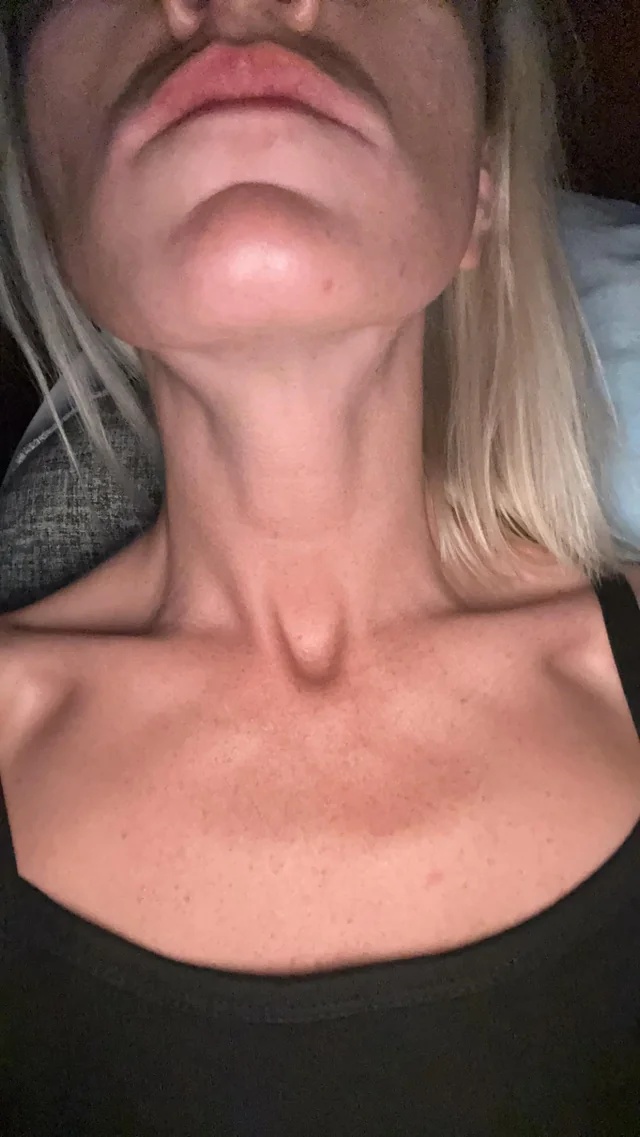
Ran for 13 days, from March 17 to March 30, 2026, the last day Crush saw it.
Run by Endocrinologist - Dr. Patrick Garner on Facebook. Crush is not the advertiser and does not verify its claims. See this ad in Meta's Ad Library(opens in a new tab)
Want an ad like this for your product?
Crush makes new ad images for your product from this ad: your logo, your product photo, your offer.
Trials from $19.95 USD, then $79.95 USD a month. Cancel anytime.
About this ad
- Meta Ad Library ID
- 1269110328483552
- Platforms
- Facebook, Instagram and Messenger
- Relaunches
- 0
Ad text
"Mr. Patterson, I need to ask you something. Do you know what your wife's levothyroxine dose is?" That's how my Wednesday started. A phone call from Sarah's endocrinologist. No, I didn't. Not exactly. Sarah takes her pill every morning at 5:30 AM. She told me the doctor had it "figured out." She told me "I'm fine" every morning. Sarah has been on levothyroxine for four years. Her dose has been increased three times. She's now at 125 micrograms — and her doctor wants to raise it again. And her doctor just told me something about that medication that I wish I'd known a long time ago. It didn't happen overnight. It crept in. The way these things always do. Four years ago, Sarah was diagnosed with Hashimoto's. Put on levothyroxine. The doctor told her the medication would handle it. "Take this every morning. You'll feel fine." She didn't feel fine. First it was the fatigue. Not tiredness — something heavier. Like someone had poured concrete into her body while she slept. She'd wake up after ten hours looking like she hadn't slept at all. She started canceling things. Not all at once. First the Wednesday night dinner with the Hendersons. Then the weekend farmers market. Then the walks we used to take after dinner every evening. She didn't announce it. She just stopped suggesting them. I stopped asking. Then the weight. Sarah eats cleaner than anyone I know. 1,200 calories. She tracked everything. Walked four times a week. And gained. Twenty pounds the first year. Then thirty. Then thirty-five. She stopped stepping on the scale. She stopped looking in mirrors. She stopped wearing anything that wasn't loose and dark. She lowered herself into chairs now like she was negotiating with her own body. Not from joint pain — from exhaustion. Carefully. Slowly. Like standing up might be the last thing she had energy for. Both hands on the kitchen counter to push herself up. A long exhale before she straightened. The brain fog was the part that scared me most. Sarah is a teacher. Sharp. Quick. The kind of person who remembers every student's name, every parent's concern, every detail of every lesson plan. She started forgetting words mid-sentence. Standing in front of her class, mouth open, searching for something she'd said ten thousand times. She started writing everything on Post-it notes. Then she started forgetting where she put the Post-it notes. Her principal noticed. And the hair. I'd find it on her pillow. In the shower drain. On the back of her chair. Clumps. Her ponytail was half the size it used to be. She stopped wearing it down. Then stopped going out without a hat. "You should see a doctor about that," I said once. "My TSH is normal," she said. Like that ended the conversation. It did. Every time. "I'm fine." She said that a lot. Every morning. "I'm fine." But I heard her crying in the bathroom. I saw her staring at old photos of herself. I watched her look in the mirror with an expression I can only describe as grief. I'd seen this before. Her mother had Hashimoto's for twenty years. That's not something Sarah talks about often. But I watched it. Her mother was diagnosed at 42. Put on levothyroxine. Took it every morning for two decades. TSH always "perfect." Labs always "fine." And she disappeared. First she stopped hosting Sunday dinners. She was too tired. Then she stopped coming to the grandkids' games. Then the stairs in her house became a negotiation — one hand on the railing, one on the wall, stopping halfway to catch her breath. Not from her lungs. From exhaustion that lived in her bones. The doctors talked about dose adjustments. They tweaked her numbers. Bumped her levothyroxine by 12.5 micrograms every few months. Her TSH would tighten. She'd feel the same. Then they suggested antidepressants. "Maybe it's depression." It wasn't depression. It was a body shutting down while a number on a screen said it shouldn't be. She spent the last decade of her life in a chair. Not from any single disease. She just... couldn't anymore. Couldn't stand long enough to cook. Couldn't think clearly enough to read. Couldn't stay awake past 6pm. She died in that chair. Not from Hashimoto's directly. Heart failure at 67. But she died in it. And now I was watching Sarah grip the kitchen counter the same way her mother used to grip the armrest. Making the same excuses. Withdrawing the same way. Saying "I'm fine" the same way she did. I wasn't going to watch it happen again. But I didn't know what to do. Sarah was already taking the supplements. The selenium that the Hashimoto's support group recommended. Six months. Her antibodies dipped for a few weeks. Then climbed right back above 800. She went gluten-free. Eight months. Gave up bread, pasta, everything she loved. Her bloating improved slightly. Her energy, her weight, her hair, her fog — all the same. She tried ashwagandha. It was like magic for two weeks. Energy came back. She was almost herself. Then it faded. Like someone slowly turning down a dial. By week four it was like she'd never taken it. She tried AIP — the most restrictive diet I've ever seen anyone attempt. Four months of eating almost nothing. Lost six pounds. Reintroduced one food and everything came back like it had never left. She was spending over $120 a month on eight bottles lined up on the bathroom counter. Taking them every morning like a ritual. Hoping. Waiting. Nothing changed. I was running out of things to suggest. And Sarah was starting to accept this as her life. I could see it in the way she stopped complaining. That scared me more than the symptoms did. Sarah had her quarterly endocrinologist appointment in April. I went with her. Her doctor was reviewing her labs. "TSH is 2.4. Within normal range. Free T3 is 2.1 — low end but still within range. TPO antibodies are 847." Sarah nodded. Like she expected it. "I'm going to increase your levothyroxine to 137 micrograms." Sarah opened her mouth. Closed it. Then: "I've been on levothyroxine for four years. You've increased it three times. Every time my TSH looks better. And every time I feel exactly the same. Why?" The doctor paused. "Hashimoto's is progressive. Some decline is expected even with medication." "So this is just my life now?" "We'll keep monitoring. Let's recheck in six months." Sarah didn't say anything in the car. She stared out the window. I kept my hands on the wheel and tried to think. The doctor had given us another dose increase — the same intervention that hadn't worked the last three times. Told us decline was "expected." And sent us home with nothing except a six-month follow-up and the shadow of Sarah's mother's story hanging over everything. That night, after Sarah went to bed, I sat at the kitchen table and opened my laptop. I wasn't looking for miracle cures. I typed "why does levothyroxine not work for Hashimoto's" and hit enter. But the doctor had given us one thing: a fact I couldn't let go of. Sarah's Free T3 was 2.1 out of a possible 4.4. She was barely converting. The T4 from the medication was in her blood — that's why her TSH looked normal — but her body wasn't turning it into the active hormone. Something was blocking the conversion. And nobody could tell us what. I found the usual noise. Medical sites that told me to "consult her endocrinologist" — the same one who just told us decline was expected. Supplement ads that felt like infomercials. Generic advice about selenium and ashwagandha — which she'd been taking for years with no result. Then I found a forum. Real people. Hashimoto's patients talking to each other. Husbands and wives sharing what they'd learned. And someone mentioned something I'd never heard of. Lymphatic congestion. "My wife's endocrinologist never mentioned this," one husband wrote. "But her thyroid sits inside a drainage network. When that network gets clogged — from years of autoimmune inflammation — the medication can't reach the cells. That's why the TSH looks normal and she still feels terrible. The hormone is in the blood. It can't get through to the tissue." Someone replied: "It's real. Hashimoto himself called it struma lymphomatosa in 1912 — a lymphatic disease. They renamed it and buried the connection for over a hundred years." Another: "My wife tried selenium for two years. It supports the conversion enzymes — but the enzymes are buried in congested tissue. The selenium can't reach them. That's why it works for a month and then stops." And another: "We tried three lymphatic supplements. First two were designed for leg swelling — wrong anatomy. Third was Sculptique — specifically targets cervical drainage around the thyroid. She was different within a month." I sat back. Part of me wanted to close the laptop. I'd been here before — selenium forums, ashwagandha forums, people swearing something worked when it didn't. But these posts were different. Nobody was selling anything. They were specific about what worked, what didn't, and why most supplements fail. They explained the mechanism. They referenced research. I started digging. The more I read, the more something clicked. The doctor said Sarah's conversion was failing. These people were saying the tissue around the thyroid was clogged — and that's why conversion fails. I needed to see the research. I found the mechanism they described. Sarah's thyroid sits inside one of the densest lymphatic networks of any organ. In Hashimoto's, years of autoimmune inflammation damage those drainage vessels. Sticky mucopolysaccharides swell to a thousand times their size, physically compressing the lymph channels. Fibrin deposits accumulate. The tissue surrounding the thyroid becomes a congested, toxic swamp. The levothyroxine enters her bloodstream every morning. It reaches the cervical tissue where the thyroid sits. And it hits a wall of inflammatory waste that nobody is clearing. Same target. Same hormone. But a blocked delivery pathway. I read that three times. The medication works. The pathway is blocked. And nobody checks the pathway. They just increase the dose — pumping more hormone into a bloodstream that already has enough while the tissue stays clogged. That's why the dose increases never changed how Sarah felt. The problem was never the amount. It was the delivery. Then I found out why the supplements failed. Selenium supports the conversion enzymes — deiodinases. But those enzymes sit in tissue. If that tissue is congested with inflammatory waste, the selenium can't reach them. It's like sending fuel to an engine through a clogged line. The fuel is good. The line is blocked. Ashwagandha supports the gland. But the gland is drowning in waste it can't clear. Supporting a suffocating organ doesn't unsuffocate it. Gluten-free reduces one source of inflammation. But it can't drain years of waste already trapped around the thyroid. Everything Sarah tried was addressing the right target through a blocked pathway. No wonder nothing lasted. I ordered what the forum recommended. Sculptique. Eight botanical compounds targeting cervical lymphatic drainage around the thyroid. Not gland support. Not another selenium-and-ashwagandha formula. A drainage protocol designed to clear the blockage between her blood and her cells. When it arrived, I put it next to her levothyroxine. "I found something I want you to try." She gave me the look she gives me when she thinks I'm grasping at straws. But she took it. She'd stopped believing anything would work. But she took it. For me. The first two weeks: nothing obvious. The bottles on the counter. The routine. I didn't mention it. She didn't mention it. Then something shifted. It was a Tuesday. Week three. I came home from work and Sarah was in the kitchen. Not sitting at the table — standing at the counter, chopping vegetables. She hadn't cooked dinner on a weeknight in over a year. "What are you making?" I asked. "Stir fry," she said. Casually. Like it was nothing. It wasn't nothing. The first month: the ibuprofen comparison doesn't quite work for Sarah — her equivalent was the 2pm crash. That's when her body would shut off every day like someone pulled the plug. Couch. Blanket. Gone. By week four, the crash started fading. She had energy at 4pm. At 5pm. She was still awake and present at dinner. Still talking. Still there. I didn't say anything. I just watched. The fifth week: I noticed her face. Something was different but I couldn't place it. Then it hit me — the puffiness. The swelling that had been there for years. It was going down. She looked like Sarah. Not the puffy, swollen version that Hashimoto's had built on top of her. Sarah. I stood in the kitchen doorway looking at her. She caught me. "What?" "You look like you." Her eyes filled. The sixth week: she suggested a walk after dinner. I almost dropped the dish I was drying. Short — maybe fifteen minutes. But she suggested it. First time in over a year. I said yes before she could change her mind. The seventh week: I heard something from the bathroom. Not crying. Not the hair dryer. Humming. She was humming while she got ready for work. I stood in the hallway and listened. And realized I couldn't remember the last time I'd heard her hum. The eighth week: the grandkids came over. Lucas and Ella. They were playing on the living room floor. Sarah was watching from the couch — the way she always did now. The way her mother used to. And then she did something I hadn't seen in over a year. She pushed herself up from the couch. Walked to the middle of the room. And sat down on the floor with them. Ella climbed into her lap immediately. Lucas brought her a drawing. "Look, Grandma." Sarah's face — I can't describe it. Like someone had given her something back that she'd accepted she'd lost. I went into the kitchen. Stood at the sink. Took a breath. A few days later, Sarah said — almost offhandedly — "I feel better." That's all she said. She's not someone who makes speeches about her health. But I knew what it meant. I looked at the eight supplement bottles on the bathroom counter. I couldn't remember the last time she'd opened any of them. At her next appointment, her endocrinologist pulled up the labs. "Sarah. Your TPO antibodies have dropped from 847 to 340." Silence. "Your Free T3 is 3.5. Three months ago it was 2.1." She pulled up the history. Scrolled back. Looked at Sarah. "This is on the same dose of levothyroxine. The dose I wanted to increase. Your conversion has improved more in three months than in the previous four years combined." She looked at Sarah. "What changed?" Sarah looked at me. I told the doctor about the lymphatic drainage — how the tissue around the thyroid becomes congested in Hashimoto's, how the medication can't reach the cells through the blockage, how we found a formula that clears the cervical drainage so the levothyroxine can finally get through. She listened. Typed something into her notes. "Whatever you two are doing," she said, "keep doing it. Let's take the dose increase off the table." Let's take the dose increase off the table. Sarah exhaled. I reached over and squeezed her hand. That was three months ago. Last Saturday, the grandkids came over. Sarah was already on the living room floor when they arrived. Lucas ran in, saw his grandmother sitting there with a pile of building blocks, and said: "Grandma, you're on the floor!" Like it was Christmas. They built something together. A tower that fell over three times. Sarah laughed harder than I've heard her laugh in years. When Ella asked "Can we do this again next weekend, Grandma?" — Sarah didn't hesitate. "You bet." Her mother spent her last decade disappearing into a chair. I was watching the same thing happen to my wife. The same exhaustion, the same excuses, the same slow withdrawal from the life she used to live. She's not disappearing into that chair. Not anymore. I'm sharing this because I hope it can help someone else the way it helped us. If you're watching someone you love lose a little more of their life to Hashimoto's every day. If the supplement bottles are multiplying every month and nothing is changing. If the doctor keeps saying "your labs are normal" while you watch your wife fade. If you've tried selenium, ashwagandha, gluten-free, dose adjustments, and nothing worked — now you know why. The supplements were addressing the right target through a blocked pathway. The medication was reaching the blood but not the cells. The drainage system around the thyroid — clogged from years of autoimmune inflammation — was blocking everything. Sculptique is different. Eight botanical compounds targeting cervical lymphatic drainage around the thyroid. Not gland support. Drainage restoration. The formula that clears the blockage so everything she's already taking can finally get through. 👉 https://trysculptique.com/products/sculptique-lymphatic-drainage-capsules-otp They're running buy two get one free right now — three months, exactly the window where most women see real changes in their labs. And there's a 90-day money-back guarantee. If it doesn't work, full refund. No questions. I wish I'd known this earlier — would have saved us years of selenium and ashwagandha that couldn't reach the enzymes through congested tissue. The only issue is Sculptique is a small company. They've been getting attention lately and can't always keep up with demand. If you click the link, they might be out of stock. It happened to me the first time I tried to order — took two weeks to come back. But I'd still check. If you're watching someone you love struggle with Hashimoto's — if you've seen what years of "normal labs" and failed supplements really look like — if you refuse to watch them disappear the way I watched Sarah's mother disappear... She went from gripping the kitchen counter to stand up to sitting on the floor with our grandkids. She's not disappearing into that chair. And I'm not letting her. 👉 https://trysculptique.com/products/sculptique-lymphatic-drainage-capsules-otp P.S. — Tom here. A few things I wish I'd known before ordering. Sculptique has a 90-day guarantee. If it doesn't work, money back. I wish I'd known that — would have saved months of wasting $120 on supplements that couldn't get through. They're running a promotion right now with significant savings. That's how I stocked up. Three months is the sweet spot — that's when Sarah's labs confirmed what we'd been seeing in her face, her energy, and her hair. Don't wait as long as we did. P.P.S. — Every month you wait is another month of inflammatory waste accumulating around her thyroid. Another month the drainage vessels take more damage. Another month of a woman you love disappearing while her labs say she's fine. Don't wait until she stops complaining. That's the worst sign of all.
Where the ad sends people
trysculptique.com
Reactivate your body.
Clinically formulated 7 active ingredient formula developed to make you feel good about your cellulite. First ever solution for thighs that works from within. 🍑 Strengthens skin and connective tissue, smoothing out the appearance of cellulite.❤️ Enhances blood flow to help tighten and firm yo...
Learn more: trysculptique.com(opens in a new tab)