Health Mommy
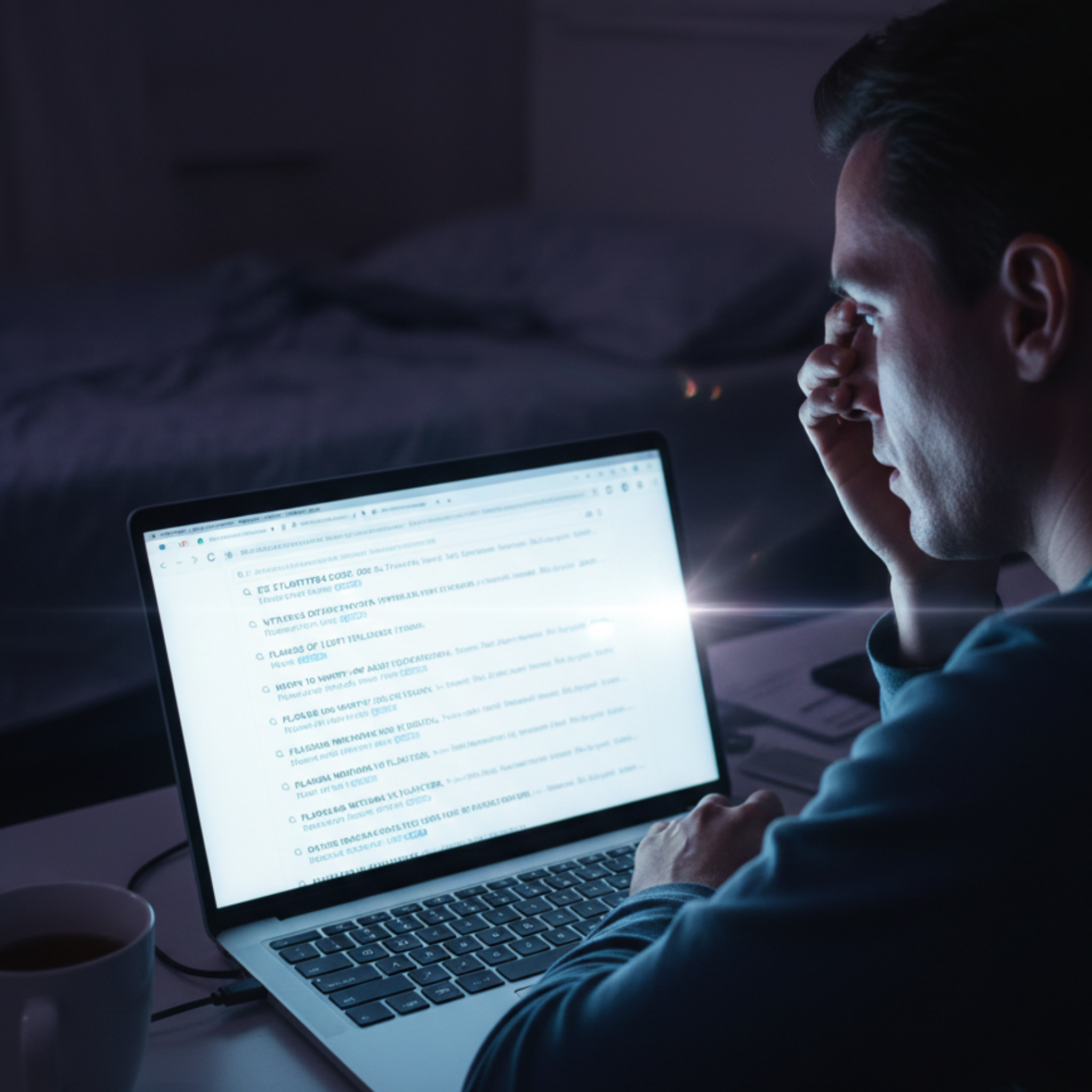
Health Mommy Facebook ad: “If you have 15 browser tabs open researching floaters…”
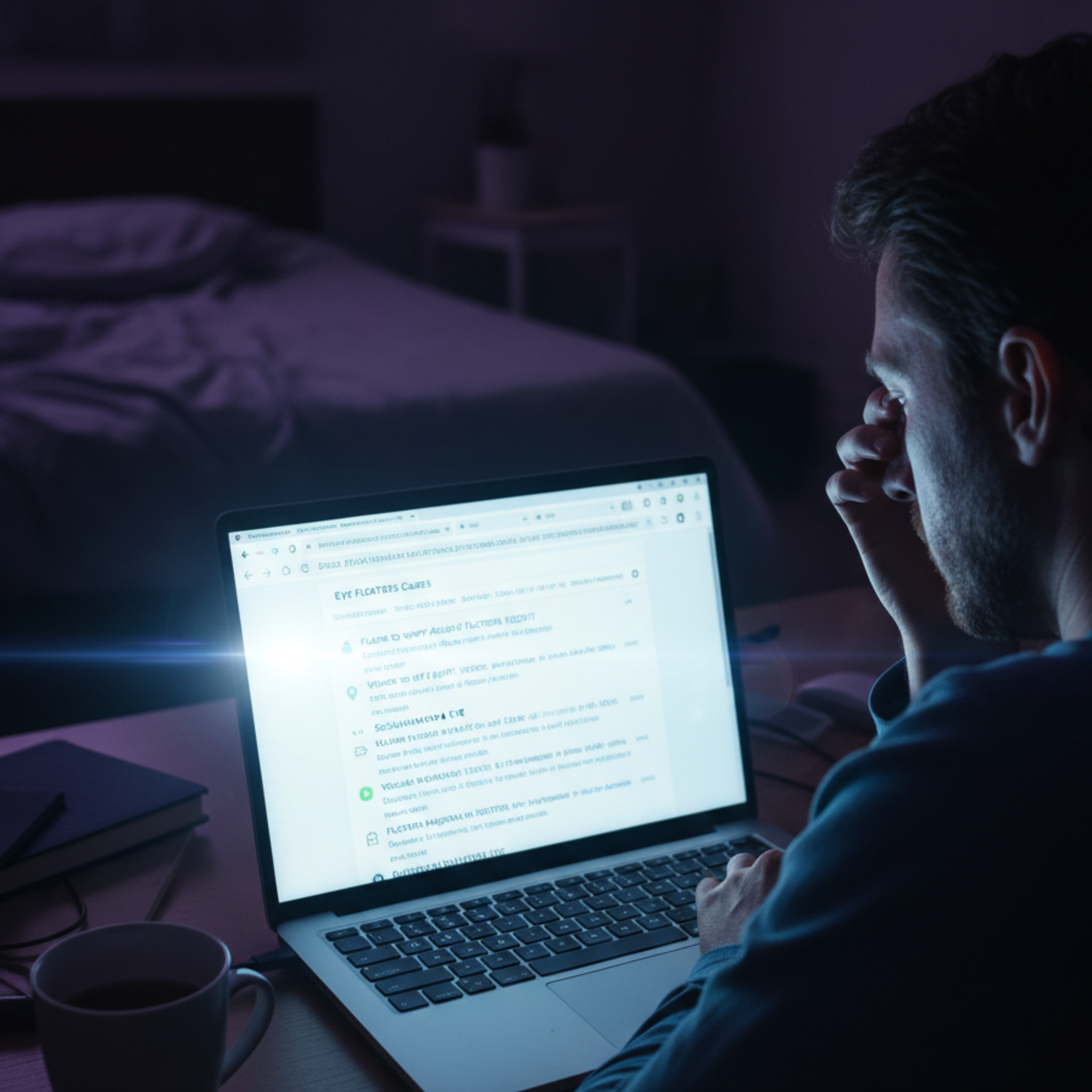
Ran for 10 days, from February 10 to February 20, 2026, the last day Crush saw it.
Run by Health Mommy on Facebook. Crush is not the advertiser and does not verify its claims. See this ad in Meta's Ad Library(opens in a new tab)
Want an ad like this for your product?
Crush makes new ad images for your product from this ad: your logo, your product photo, your offer.
Trials from $19.95 USD, then $79.95 USD a month. Cancel anytime.
About this ad
- Meta Ad Library ID
- 1273426774851162
- Platforms
- Facebook, Instagram, Audience Network, Messenger and Threads
- Relaunches
- 0
Ad text
I checked my floaters forty-three times today before I finally admitted I needed help. I counted. Forty-three times looking at white walls, blank computer screens, the sky—checking if they'd gotten worse. My husband asked me what I was doing. I lied and said I was stretching my neck. --- The floaters appeared eight months ago. I woke up one morning, looked at my white bedroom ceiling, and saw them: translucent worm-like shapes drifting across my vision. A constellation of dark spots. Cobwebs that moved when I tried to focus on them. I panicked and went to urgent care ophthalmology that afternoon. The doctor dilated my eyes, examined my retina, and said four words that changed nothing: "Posterior vitreous detachment. Completely normal." He said it happens to most people over 50. The vitreous gel in my eye was shrinking and pulling away from the retina. The floaters were clumps of collagen casting shadows. "Benign," he said. "You'll get used to them." He told me to come back immediately if I saw flashing lights or a curtain falling over my vision. Otherwise? Learn to live with it. --- I couldn't learn to live with it. The first three months were hell. Every time I looked at anything bright—the sky, a white wall, my laptop screen—the floaters were there. Constant. Distracting. Impossible to ignore. I started checking obsessively. Morning: look at the wall. Count the floaters. Are there more than yesterday? Midday: look at my computer screen. Are they moving differently? Evening: look at the sky before sunset. Has the pattern changed? I couldn't focus on anything else. I'd be reading a book and suddenly become aware of the floaters moving across the page. I'd lose my place. Forget what I'd just read. I'd be having a conversation with my husband and I'd drift off mid-sentence because I was noticing the floaters again. I stopped doing outdoor photography—my hobby for fifteen years—because blue skies made the floaters impossible to miss. --- My husband noticed. "You seem distracted," he said one night over dinner. I wasn't distracted. I was obsessed. "I'm fine," I told him. I wasn't fine. I was checking my floaters thirty, forty, sometimes fifty times a day. And every time I checked, the anxiety got worse. What if they multiply? What if it's a sign of something worse? What if I'm developing a retinal tear and don't know it? --- I went back to the eye doctor at the three-month mark. "Still seeing floaters," I told him. He examined my eyes again. Everything looked normal. "This is something you'll need to adapt to," he said. Not unkindly. Just matter-of-fact. "There's nothing I can do?" "Some people try pineapple enzyme supplements. No strong evidence, but it won't hurt." I tried pineapple enzyme. Bromelain. 500mg daily. Two months. No change. Except now I had digestive issues. --- I Googled everything. "How to get rid of floaters naturally" "Floaters disappear over time?" "Eye exercises for floaters" I found a YouTube video claiming eye exercises could help. I did them religiously for three weeks. Nothing. I found articles about laser vitreolysis—a procedure that breaks up floaters with a laser. I called three ophthalmologists. None of them offered it. Too risky, they said. Not worth it for "benign" floaters. I found articles about vitrectomy—surgery to remove the vitreous gel entirely. Even riskier. Reserved for severe cases. Mine wasn't severe. It was just ruining my life. --- The worst part wasn't the floaters themselves. It was the mental loop I couldn't escape. Check the floaters → feel anxious → try to ignore them → notice them again → check again → feel more anxious. Over and over. All day. Every day. I couldn't read a book without interruption. Couldn't watch a movie without distraction. Couldn't enjoy a walk outside because I'd see them against the sky. My brain had latched onto this one thing and wouldn't let go. I knew it was irrational. I KNEW the floaters were benign. I KNEW checking them forty times a day wouldn't change anything. But I couldn't stop. --- Six months in, I realized I'd stopped doing almost everything I enjoyed. No photography. Too triggering. No hiking. Blue skies were everywhere. I'd even stopped gardening because bright daylight made the floaters worse. My world was shrinking. And I was doing it to myself. --- Then I read something that made me cry. It was a study about the psychological impact of floaters. The researchers found that patients with symptomatic floaters had anxiety and depression rates comparable to people with macular degeneration. Comparable to people who were actually losing their vision. I wasn't losing my vision. But I was losing my life to the fear that I was. The study said the obsessive monitoring—checking floaters constantly—created a feedback loop. The more you check, the more aware you become. The more aware you become, the more anxious you feel. The more anxious you feel, the more you check. I was trapped. --- I sat with that for a week. The floaters weren't the problem. My relationship with them was the problem. I needed to break the cycle. But how? Every article I found said the same thing: "You'll get used to them over time." I'd been trying to get used to them for eight months. It wasn't working. --- Then my husband said something offhand that shifted everything. We were talking about my dad, who has glaucoma. He takes three different eye drops daily to manage his pressure. "At least he's doing everything he can," my husband said. "It probably helps him not worry about it as much." Doing everything he can. I wasn't doing everything I could. I was taking bromelain that didn't work. I was avoiding triggers. I was checking compulsively. But I wasn't actually SUPPORTING my eye health comprehensively. What if the floaters were a sign that my vitreous health was declining? What if there were things I could do—not to make the floaters disappear, but to protect the overall health of my eyes so I could finally let GO of the obsession? --- I started researching eye health supplements from a different angle. Not "floater cures." Instead: "vitreous health," "oxidative stress in the eye," "macular protection." I found research on antioxidants that cross into the vitreous and retina. Astaxanthin. Lutein. Zeaxanthin. I found studies on saffron extract supporting photoreceptor health. I found information about macular carotenoids reducing visual disturbances and supporting overall retinal function. None of it promised to eliminate floaters. But all of it suggested that comprehensive eye protection might reduce the anxiety by giving me confidence I was doing EVERYTHING possible. --- I found PrimeSight. It had all three macular carotenoids—lutein, zeaxanthin, and meso-zeaxanthin. It had astaxanthin, which crosses the blood-retinal barrier. It had saffron, bilberry, ginkgo biloba, omega-3s, alpha-lipoic acid. Fourteen ingredients total. I wasn't looking for a floater cure anymore. I was looking for permission to stop obsessing. And somehow, a comprehensive formula felt like that permission. If I was taking the most complete protection available, maybe I could finally close the fifteen browser tabs in my mind. --- I ordered it on a Thursday night. Started taking it the following Monday. One capsule with breakfast. For the first two weeks, I still checked my floaters constantly. Old habits. But somewhere around week three, I noticed something. I'd gone an entire morning without checking. Not because the floaters were gone. They weren't. But because I wasn't thinking about them. I was reading an article online—fully focused—and only realized afterward that I hadn't been monitoring my floaters the entire time. That was new. --- Week five, I went for a walk. Bright afternoon. Clear blue sky. Normally I'd avoid this. Too many floaters visible against the blue. But I went anyway. And yes, I saw them. But I also saw the trees. The clouds. The neighbor's dog running in the yard. I saw the whole picture. Not just the shadows. --- It's been four months now. The floaters are still there. I'm not going to lie and say they disappeared. They didn't. But I check them maybe twice a day now. Down from forty-three. I went back to outdoor photography last month. I took my camera to the park, pointed it at the sky, and took pictures of clouds. When I looked through the viewfinder, I saw floaters drifting across the frame. And I took the picture anyway. --- Here's what I finally understood: The floaters were never going to go away. But the obsession could. I needed to do everything possible for my eye health so my brain could finally let go. Taking PrimeSight wasn't about curing floaters. It was about comprehensive protection that gave me permission to stop researching, stop checking, stop catastrophizing. It was about supporting my whole eye—vitreous, retina, macula—so I could trust that I'd done enough. And once I trusted that? I could think about other things again. --- I don't know if it's the ingredients themselves—the antioxidants, the carotenoids, the omega-3s—or if it's the psychological relief of knowing I'm covering all the bases. Probably both. But it worked. --- If you're checking your floaters twenty, thirty, forty times a day, I understand. If you've stopped doing things you love because the floaters are too distracting, I understand. If your brain won't let go of this one thing no matter how hard you try, I understand. The floaters aren't the problem. The anxiety loop is the problem. And you can't think your way out of an anxiety loop. You need action. Comprehensive action. The kind that lets your brain finally exhale and say, "Okay. I've done everything. I can stop now." --- I found PrimeSight at tryprimesight.com. It has fourteen ingredients for complete eye health. All three macular carotenoids. Antioxidants that protect the vitreous and retina. It didn't make my floaters disappear. But it gave me my life back. I stopped checking forty-three times a day. I went back to photography. I can read a book without losing my place. I can have a conversation without drifting off mid-sentence. I'm thinking about other things again. Finally.
Where the ad sends people
tryprimesight.com
If you have 15 browser tabs open researching floaters right now, read this
This vision support supplement, made in the USA, is formulated to nourish the eyes with essential nutrients and antioxidants. It combines Vitamin C, Vitamin E, Zinc, and specialized botanicals like Bilberry and Eyebright Extract, aimed at promoting eye health, help maintain visual acuity and support...
Shop now: tryprimesight.com(opens in a new tab)