

Inactive· since May 4, 2026
- 55
- days it ran
- 1
- relaunches
Ad copy
My doctor looked at my food journal and said I wasn't trying hard enough. I wanted to throw it at her. It started four months after my periods stopped. I was 48 years old. One day my knees didn't hurt. The next day they did. Not a gradual ache that crept in over months. A switch flipped. Overnight, my body was different. My hands felt stiff in the morning. My hips ached after sitting. Going down stairs required me to hold the railing and lower myself carefully, feeling the resistance, negotiating with my own knees. I called my doctor. Dr. Mitchell — I'd been seeing her for twelve years. She said: "It's probably early arthritis. Try ibuprofen. Stay active. Maybe add some strength training." That was it. Twelve-minute appointment. No blood work. No explanation. Just "take ibuprofen and stay active." I wasn't satisfied with that answer, but I took the advice. Month 1: I bought every joint supplement on Amazon with five-star reviews. Move Free Advanced — the classic. Everyone's grandmother takes it. Glucosamine and chondroitin, been around for thirty years. Surely it works. I took two capsules every morning for eight weeks exactly as directed. Nothing. My knees still hurt. My hips still ached. My hands were still stiff. I read the reviews: half said "life-changing," half said "complete waste of money." I was in the second half. Again. Month 2: I switched to turmeric. I'd read about curcumin being anti-inflammatory. I'd seen the Instagram posts about "turmeric lattes" and "golden milk" and how it cured everything from arthritis to heartbreak. I bought the highest-rated turmeric supplement on Amazon. Then a second one from a "premium" brand. Then turmeric powder I mixed into my coffee every morning because the supplement alone clearly wasn't enough. Eight weeks. Three different turmeric products. One still sitting in my cabinet half-empty because I gave up. My knees: exactly the same. My doctor, at my follow-up, looked at the turmeric bottle and said, "Supplements are often overhyped. The evidence is weak. You're better off focusing on diet and exercise." She didn't ask WHY I was taking turmeric. Didn't ask if my pain had changed. Just dismissed it. I felt something twist in my chest. Not quite anger yet. Dismissal. Month 3: Collagen. Everyone was taking collagen. For skin, hair, joints, gut — collagen was the answer to everything. Vital Proteins was the brand everyone recommended. I spent $70 on a month's supply. I took it faithfully. Mixed it in my coffee. Waited for my joints to rebuild. Twelve weeks later: My skin looked slightly better. My hair might have been shinier — hard to tell. My knees? Unchanged. I called Dr. Mitchell again. This time she was more direct: "I'm concerned that you're relying on supplements instead of making real lifestyle changes. Your BMI is fine, but joint pain at your age is often related to not enough strength training or flexibility work. Have you considered physical therapy?" Physical therapy. As if I hadn't been walking. As if I hadn't been stretching. As if the problem was my effort and not something she hadn't bothered to investigate. Month 4: I did physical therapy. Three times a week for six weeks. $45 per session. A young therapist who'd never had a day of joint pain in her life, telling me to "push through" the discomfort. I did the exercises. Strengthened my quads. Did hip mobility work. Foam rolled until my shins bruised. My knees hurt less during the exercises. But the underlying ache? Still there. By week four, I wasn't even surprised anymore. I was just tired. Month 5: Back to Dr. Mitchell. This time I brought a list. Everything I'd tried. Every supplement. The physical therapy records. The fact that I walked three miles most days. That I'd cut back on sugar. That I was doing everything the internet told me to do. She glanced at the list. Didn't read it carefully. Just glanced. "Your joints aren't actually damaged," she said, looking at my X-rays. "There's no arthritis. No cartilage loss. This is likely inflammation from aging and possibly your weight, even though your BMI is normal. I'd really recommend being more disciplined with diet and exercise. Maybe you're not being as consistent as you think." Not being as consistent as I think. I wanted to ask her if she thought I was lying about the physical therapy. About the supplements. About the three-mile walks I'd been doing in rain and cold because I was desperate. Instead I said, "My pain is real. Something changed in my body." And she said: "Of course it's real. You're 48. Your body is changing. That's just what happens." Just what happens. Like there was no explanation. No mechanism. No reason. Just aging, and I needed to accept it, and maybe if I tried harder everything would be fine. I left her office and sat in my car for twenty minutes. Then I did something different. I stopped asking: "How do I manage this pain?" And started asking: "Why did this happen?" Not the surface question. The real one. Why did my joints suddenly start failing at 48? Why was I 48 and already negotiating with my body every morning? Why did every supplement and intervention do nothing? Why, when I was doing everything right, was my body still breaking down? That night — 1 AM again, laptop, darkness, desperation — I searched: "why do joints hurt during menopause" And I fell into a rabbit hole that should have been explained to me months ago. Here's what I found, and here's what no doctor, no physical therapist, no supplement bottle ever told me: Estrogen does more than manage your hormones. It directly protects your joints. Estrogen keeps inflammation down in your connective tissue. It supports the production of collagen type II — the specific type cartilage needs. It maintains synovial fluid — the "oil" that lubricates your joints. And it supports the growth factors and cellular signals that keep cartilage rebuilding itself continuously. For forty years, since puberty, estrogen has been running this protective system in the background like a program you never knew was open. Then you hit menopause. And that program shuts down. Your cartilage stops getting the hormonal support that kept it intact. Inflammation that estrogen used to suppress now runs unchecked. The "oil" in your joints gets thinner. And the cellular signals that told your body to continuously rebuild cartilage just... stop. Not because you're not trying hard enough. Not because you need more exercise. Not because you're weak or undisciplined. Because a biological protection system that's been running for four decades quietly shut down. And nobody told you. That's why Move Free didn't work. Glucosamine gives your joints one isolated compound. It can't restart a hormonal protection system. That's why turmeric didn't work. Turmeric reduces inflammation, yes. But when the root problem is hormonal protection loss, reducing inflammation is like trying to mop a floor while the faucet is running. You can mop faster. The floor stays wet because the problem isn't the floor. That's why collagen didn't work. Your joints need collagen, yes. But without the hormonal signals that tell your body to USE that collagen to rebuild cartilage, you're just adding material to a system that's been told to stop rebuilding. That's why Dr. Mitchell kept telling me to "try harder." She wasn't being cruel. She genuinely didn't understand that I had a hormonal problem masquerading as a discipline problem. I sat at my kitchen table at 1:30 AM and felt something shift. Not relief exactly. Something sharper. Fury. Eight months of trying. Eight months of doing everything right. Eight months of a doctor telling me I wasn't trying hard enough, when the actual problem was something she never even investigated. But then the fury turned to something more useful. If the problem is hormonal protection loss — if menopause disabled the system that keeps cartilage intact — then what I need isn't more of the same. I need the complete ancestral matrix that actually rebuilds cartilage. Not one compound. Not reduced inflammation. Not just collagen. I need the full system. That research led me to bone marrow. Not as a trend. As actual ancestral nutrition that every human culture prized above all others. I read the clinical breakdown: Bone marrow contains collagen type II — the exact type cartilage is made from. Glycosaminoglycans (chondroitin sulfate, hyaluronic acid, glucosamine) — the shock absorbers. The same compounds I'd been taking separately, but in their whole-food form where they actually work together. Growth factors (TGF-beta, BMPs) — the cellular signals that tell your body to rebuild cartilage. The signals menopause suppressed. Alkylglycerols — compounds that calm the unchecked inflammation that comes when estrogen drops. This wasn't one ingredient isolated in a lab. This was the complete matrix. And when I looked for a bone marrow supplement, I found one that combined it with exactly what menopause-era joints need: Curcuwin® Ultra+ — not regular turmeric with its catastrophic absorption problems, but a patented form with 46x greater bioavailability. The anti-inflammatory support that actually reaches your joints. Sodium hyaluronate — direct lubrication for joints that lost the hormonal signals supporting synovial fluid. Boswellia — a second anti-inflammatory pathway, because when you're fighting unchecked inflammation from lost estrogen, you need more than one angle. AstraGin® — to ensure every ingredient actually absorbs, because what good is feeding your joints if your body can't use it? It was called MARROW. And it addressed every gap I'd found in eight months of trying things that were only half-solutions. I ordered it on a Tuesday. Bottle arrived Thursday. Two capsules a day with food. I didn't expect much. I'd been wrong five times already. Week 2: I noticed I didn't need ibuprofen on Monday. That was unusual enough to write down. By Friday, I realized I'd taken it zero times that week. I was so used to taking it daily that the absence felt strange. Week 3: Going down stairs. I tested it deliberately — no railing, no caution, just walked down like a normal person. My knees didn't protest. I did it three more times because I didn't trust the first time. They were quiet. My husband noticed. "You're moving different." "Different how?" "Less careful. Like you stopped negotiating with your body." Week 4: I got bloodwork. Not because MARROW required it, but because I needed data. I needed to prove to myself — and potentially to Dr. Mitchell — that something was actually happening. CRP (C-reactive protein): 3.2. Normal range is below 3.0, but the closer to zero the better. Six months ago: 4.8. In the inflammation zone. It dropped. Week 6: My friend Sarah called. We'd been walking together three times a week for four years. Same route. Same pace. "Where are you?" she asked. "Home. Why?" "You weren't at the park." "I was. I did the full three miles." "No you weren't. I walked the whole route and didn't see you." Then she paused. "Wait. Did you... did you just do the walk without me?" I had. For the first time in months, I'd walked fast enough and long enough that I'd outpaced her without even thinking about it. She said: "You're moving like you again." Week 8: Back to Dr. Mitchell. I sat down with my CRP results and my walking data and my pain scale (8/10 at start, 2/10 now) and I said: "I need to tell you what I found." I explained the mechanism. Estrogen loss. Dormant cartilage-rebuilding signals. Bone marrow's complete nutrient matrix. Why isolated supplements don't work when the problem is systemic hormonal loss. She listened. Actually listened, not the polite nodding doctors do. Then she said: "This is... actually well-researched. I want to know the exact product." Not dismissive. Not skeptical. Interested. "Your inflammation markers improved. Your pain is down. And your X-rays still show no cartilage damage, which means we caught this before it became degenerative. Keep doing what you're doing." She paused. "And I'm going to look into this mechanism. I think my other patients need to hear it." That was six months ago. My latest bloodwork: CRP 1.8. Solidly normal. Better than normal. Pain level: 1/10. Background noise. Hardly noticeable. Mobility: I can get up from the floor without using my hands. I can walk four miles without thinking about it. I played with my grandkids on the floor last week and didn't worry about whether I could get back up. I still eat healthy. I still walk. I still do the physical therapy exercises. Not because I'm trying to fix something broken anymore. Because I actually enjoy them. Because my body is working properly again. Here's what I learned that no one told me: The reason most joint supplements don't work for menopausal women is that they're treating the symptom, not the cause. Glucosamine is one compound. Move Free is one compound. They can't restart a hormonal system. Turmeric reduces inflammation, but if the root problem is hormonal protection loss, you're treating the wrong level. Collagen provides structure, but without the hormonal signals telling your body to rebuild cartilage, you're just adding material to a system that's been told to stop working. Physical therapy strengthens muscles, but it can't address the cartilage degradation happening at the hormonal level. Dr. Mitchell kept telling me to "try harder" because she didn't understand that I had a hormonal problem, not an effort problem. She wasn't being dismissive on purpose. She just wasn't looking at the right mechanism. Your joints during menopause aren't failing because you're weak. They're failing because estrogen loss shut down the system that protected them. And nothing you do in the kitchen, on the walking trail, or in physical therapy can turn that system back on. What you need is the complete ancestral matrix — collagen type II, glycosaminoglycans, growth factors, and anti-inflammatory support — combined with targeted botanical compounds that address the specific gaps menopause creates. That's what MARROW does. I went from 8/10 pain to 1/10. From needing ibuprofen daily to needing it zero times in the last month. From negotiating with my knees every morning to just getting out of bed. My CRP dropped 3 points. My doctor asked me to tell her what I found so she could help her other patients. If you're reading this and you see yourself — if you've done the physical therapy, taken the supplements, eaten perfectly, and your joints still hurt — please hear me. It's not your effort. It never was. Your menopause didn't just change your hormones. It changed the system that protected your joints for four decades. You can't exercise it back. You can't supplement it back with isolated compounds. You have to feed it with what it needs to rebuild. Give this 90 days. Get your pain scale before. Track it honestly. Get bloodwork if you can — CRP, inflammation markers, whatever you can access. Then see if your body responds when you finally give it the right nutrition. I don't think you'll need much more than that. Because I spent eight months trying everything else. And it took one compound — the complete ancestral matrix — to do what all of it couldn't. I kept that food journal Dr. Mitchell looked at. The one where she implied I wasn't trying hard enough. I looked at it last week. Thirty weeks of entries. Every meal tracked. Every exercise noted. Every attempt to fix something that, it turns out, diet and exercise alone cannot fix. I'm not angry anymore. I'm just grateful I found the answer before I accepted her prescription for NSAIDs forever, or worse, accepted the narrative that this was just "what happens" and resigned myself to slower, stiffer aging. The mechanism matters. When you understand why something is happening, you can stop blaming yourself for not fixing it the wrong way. My sister called last month. She's 52, dealing with the same joint pain I was. She told me her doctor said the same thing mine did: "You need to exercise more." So she joined a gym. Started doing CrossFit. Her knees got worse. I walked her through the mechanism. The estrogen loss. The dormant cartilage signals. Why more exercise actually stressed an already-compromised system. She started MARROW the same day. Last week she texted me: "Week 4. Pain is down. I can deadlift again without my knees screaming." That's the thing about understanding the actual mechanism. It changes everything. It's not just about results. It's about knowing you weren't broken — your system just needed the right support. Dr. Mitchell is different now too. I sent her the research on bone marrow, the clinical data on Curcuwin® absorption, the mechanism of growth factors in cartilage rebuilding. She told me she brought it up with three patients who'd been complaining about joint pain — all women 48-55, all dismissed as "aging normally," all about to be put on chronic ibuprofen. All three started MARROW. I don't know if they got the same results I did. But I know they at least have a different explanation for what's happening to their bodies. And that explanation changes everything. Because you can't fix what you don't understand. I ran into someone at the grocery store — Lisa, a woman from my walking group. She asked me what I was doing differently because I was "glowing" and moving better than I had in years. I told her about MARROW. About the mechanism. About why isolated supplements and exercise alone don't work when the problem is hormonal. She said: "My doctor has been pushing me toward a cane. I'm 51. A CANE." I gave her the research. She ordered MARROW that night. We're walking together again. Same route. Same pace. Both of us without pain for the first time in years. That's what changes when you understand the actual mechanism instead of accepting the surface explanation. MARROW comes with a 365-day money-back guarantee. Full refund. No questions asked. No judgment. No paperwork. I'm telling you this because I tried five other things with my own money and got nothing back but frustration. Every dollar was a sunk cost. Every bottle that didn't work was money I'd never recover. MARROW made me this promise: if it doesn't work, full refund. That kind of confidence tells you something. They know what they're selling works. They're not afraid of refunds because they're not selling false promises — they're selling a mechanism that addresses the actual problem. If you've been where I was — stuck between joint pain and a doctor who keeps telling you to "try harder" — this is the answer. Give it 90 days. Track your pain. Track your mobility. Track what changes. But don't wait another eight months trying things that address symptoms instead of the system. Your joints are starving for the nutrition menopause took away. Feed them.
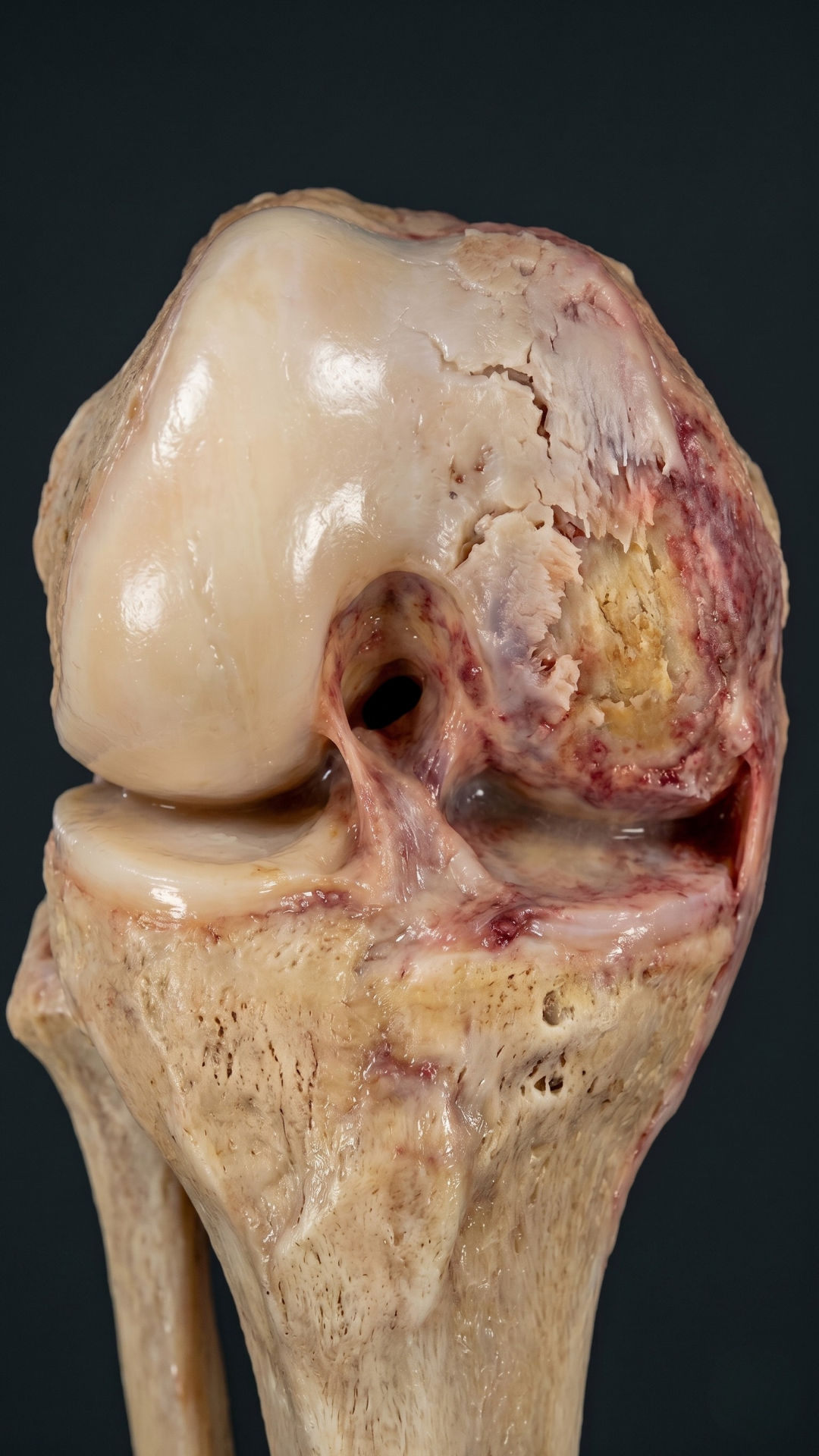
Your Joints Aren't Aging. They're Starving.
Your joints aren't aging. They're starving. MARROW combines grass-fed bone marrow, hyaluronic acid & boswellia for pain relief & flexibility. Order now!
SEE DETAILSLike this ad? Make it yours.
Crush rebuilds this exact creative around your product — your brand, your colors, your offer — in about a minute.
