COPD and Me
COPD and Me Facebook ad: “Pulse Ox Said 96%. I Was Gripping The Kitchen Sink Gasping”
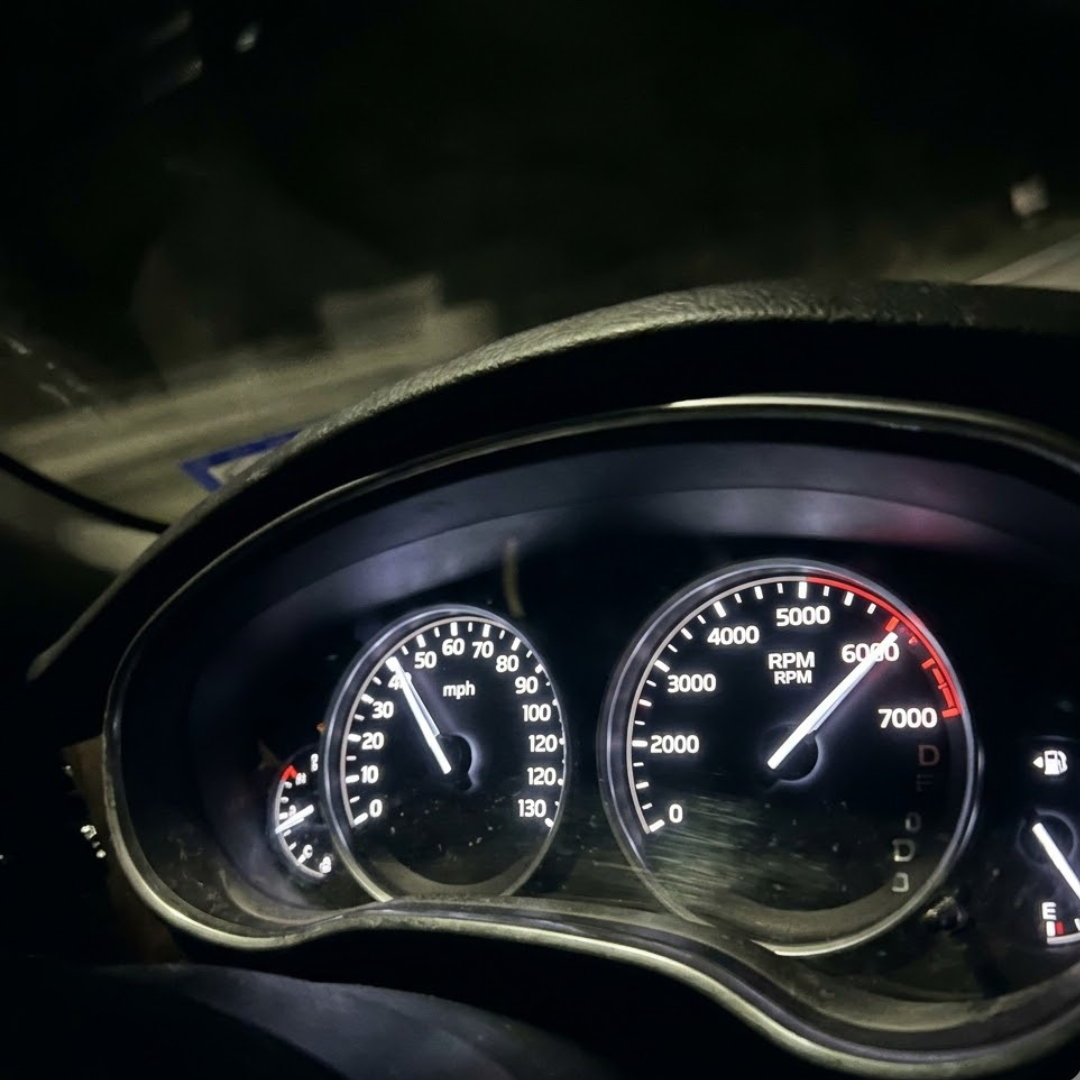
Ran for 68 days, from May 9 to July 16, 2026, the last day Crush saw it.
Run by COPD and Me on Facebook. Crush is not the advertiser and does not verify its claims. See this ad in Meta's Ad Library(opens in a new tab)
Want an ad like this for your product?
Crush makes new ad images for your product from this ad: your logo, your product photo, your offer.
Trials from $19.95 USD, then $79.95 USD a month. Cancel anytime.
About this ad
- Meta Ad Library ID
- 1279911551007977
- Platforms
- Facebook, Instagram, Audience Network, Messenger and Threads
- Relaunches
- 0
- Niche
- Business & Money
Ad text
My pulmonologist told me if I kept insisting I couldn't breathe when my oxygen was 96%, she'd have to refer me for a psych evaluation for health anxiety. I had nine minutes with her. She'd looked at my chart for about forty seconds before she said it. Dr. Halverson's appointment letter came on a Tuesday. Standard printed form. "Six-month COPD follow-up with Dr. Halverson, March 14th at 10:45 AM. Please bring your home oxygen log and any questions you have for the doctor." I sat at the kitchen table staring at it. Twenty-two years. I'd been going to that pulmonary practice for twenty-two years. Started with Dr. Ackerman when I first got the cough that wouldn't quit. He'd worked with me for seventeen years before he retired. Listened to me. Took the time. "Wally, you know your own body. If you say something's wrong, something's wrong. Let's figure it out." Now he was gone. Dr. Halverson took over the practice two years ago. My first appointment with her was March 14th. Routine six-month follow-up. Review the numbers. Renew the scripts. Meet the new doctor properly. I sat in the exam room. Same room I'd sat in for two decades. Same posters about lung function and smoking cessation. Different doctor. Dr. Halverson walked in. Mid-forties. Laptop in hand. "Mr. Janusz." Quick handshake. All business. "I've been reviewing your file before I came in." She sat down. Pulled up my chart. Scrolled. Her expression didn't change. "Your oxygen saturation readings from home." She turned the screen toward me. "January: 96%. Last week: 97%. This morning in the waiting room: 96%. Your FEV1 has been stable for eighteen months. Your last CT showed no progression." She looked at me. "Your numbers are fine, Mr. Janusz. Why are you here?" "I'm exhausted. I can't walk from my car to the kitchen without gripping the counter. My chest feels like there's a weight sitting on it all the time. I feel like I'm breathing through a wet cloth." "Your saturation is 96%." "I know what my saturation is. I check it ten times a day. That's not the problem. The problem is I can't breathe." "Mr. Janusz, a saturation of 96% means you ARE breathing." My stomach dropped. "Dr. Ackerman always said —" "Dr. Ackerman isn't your doctor anymore." Her voice didn't rise but it got flatter. "Mr. Janusz, I see this sometimes with COPD patients. Your numbers look good. The disease is stable. But the anxiety around breathing creates a feedback loop. You feel short of breath, you check the number, the number reassures you briefly, then you check again. It becomes compulsive." "I'm not anxious." "I'd like you to see Dr. Patel in behavioral health. I can make the referral today." "I don't need behavioral health. I need somebody to tell me why I feel like I'm suffocating when the number says I'm fine." "The number says you're fine BECAUSE you're fine." She was already typing. "If you continue insisting there's a physical breathing problem when your numbers don't support that, I'll have to document this pattern in your chart and refer you for a psych evaluation for health anxiety. That's the standard protocol." The printer hummed. She handed me the referral card. "Follow up in six months. Try to relax and trust the numbers." She stood. Left the room. The whole appointment took nine minutes. I sat there holding the referral card. Hands shaking. Psych evaluation. Health anxiety. In the parking lot, I called my wife Teri. "How was the new doctor?" "She thinks it's in my head." Silence. "What?" "She said my numbers are fine. 96%. Said if I keep insisting I can't breathe, she'll refer me for a psych eval." "But... Dr. Ackerman always said —" "I know what he said. She doesn't care. Either I accept the number or it goes in my chart that I have health anxiety." That night I couldn't sleep. Lay in bed staring at the ceiling. Teri's breathing steady next to me. Dr. Ackerman had listened. For seventeen years he'd worked with me. Tracked the decline. Adjusted the inhalers. Watched the numbers but also listened to my body. Now I was a chart. A 96. An FEV1 graph. Was he wrong to listen to me? Was I walking around making this up? At 2 AM I went downstairs. Sat at the kitchen table with my laptop. oxygen saturation 96 but feel short of breath pulse oximeter reading normal but cant breathe copd shortness of breath with normal o2 Every forum said the same thing. Hundreds of people. Same exact story. 95%, 96%, 97% on the oximeter — and the feeling of drowning. One Reddit thread had ninety-four people in it. Ninety-four. All saying their doctors told them the same thing Dr. Halverson told me. "You're fine. Have you considered anxiety?" Ninety-four of us couldn't all be crazy. Then I found something I hadn't read before. A comment from a respiratory therapist. She said pulse oximetry measures ONE variable. Oxygen saturation. That's it. It doesn't measure how hard your respiratory muscles are WORKING to maintain that number. Your lungs can be dragging every breath through a cemented mucus layer — redlining to hit 96% — and the oximeter can't tell the difference. I read that comment three times. Then I closed the laptop. It wasn't me. The machine just wasn't measuring the right thing. Let me back up. My name's Wally. Wally Janusz. Sixty-six years old. I live in a little bungalow outside Detroit. Spent thirty-two years as a mechanic for the city bus system. Diesel engines. Transmission rebuilds. Brake lines. Graveyard shift most of it. Smoked a pack and a half a day for most of those years. Quit at fifty-seven when my daughter had her first kid. Got diagnosed with COPD at sixty-one. Stage 2. Spiriva every morning. Albuterol rescue inhaler in my pocket. Mucinex 1200mg twice a day. Nebulizer on the nightstand. And a pulse oximeter I started carrying in my pocket like a talisman. Every time my chest got tight, I'd clip it on, see the number, and try to convince myself I was fine. The number said fine. My body said dying. That weekend after the appointment with Dr. Halverson, I searched everything. Forums. Reddit. Medical papers. Pulse oximetry limitations. Here's what I kept finding: Oxygen saturation only tells you the percentage of your hemoglobin carrying oxygen at that exact moment. It tells you nothing about how hard your lungs are working to get that oxygen in. It tells you nothing about the WORK of breathing. If your airways are partially blocked, your lungs can compensate. Your diaphragm works harder. Your accessory muscles — the ones in your neck and between your ribs — kick in. You pull harder on every inhale. You push harder on every exhale. And the oximeter still reads 96%. Because your body is heroically maintaining that number. While exhausting itself. Think of a car. Speedometer reads 45 mph. Sounds fine. But if the transmission is slipping and the engine is redlining at 6,000 RPM to hit that speed, something is very wrong — and the speedometer can't tell you. Mucus is the transmission problem. The cemented layer stuck to your airway walls is the resistance your lungs are fighting through every breath. The oximeter only reads the speedometer. My lungs were redlining. So I tried harder to clear the mucus. Doubled up on Mucinex. 1200mg twice a day, then three times a day. Nothing. NAC capsules. 1200mg a day for four months. Nothing. Mullein tea from the health food store. Thirty-two bucks a bottle. Four months. Nothing. Guaifenesin extra strength from the pharmacy. Steam showers. Chest percussion cups my wife bought on Amazon. Breathing exercises from a YouTube channel run by a pulmonologist. Everything I've tried only made me cough up a LITTLE more surface phlegm. The deep stuff — the cement-heavy weight in the bottom of my chest — never moved. Pulse ox: still 96%. Body: still drowning. I stopped mentioning it to Teri. Stopped mentioning it to my daughter. I was the guy whose doctor said he had health anxiety. What was I supposed to do — keep complaining? Nobody believes you when the numbers say you're fine. You stop believing yourself too. Then there's Reggie. Every Thursday morning at nine o'clock, four of us meet at the senior center for euchre. Me, Reggie, Stan, and Big Mike. Same table by the window. Same bad coffee. Same trash-talking for two hours straight. Reggie's a retired forklift driver. Same age as me. Sixty-seven. Same disease — quit smoking late, got COPD, Stage 3 now. For three years Reggie's euchre was interrupted by coughing. Every single hand. He'd go to play a card, a coughing fit would hit, he'd put the card face-down and say "give me a minute" while he hacked and wheezed and turned red. About four months ago, Reggie sat down, dealt the cards, and played a full hand without coughing once. Next week — same thing. No coughing. Third week — dealt faster. Talking more. Looked pinker. By week five I had to ask him. "Reg, what the hell. You stop coughing?" He got this little smile. "Yeah. Mostly." "Since when?" "About two months ago." I put my cards down. "Two months ago what?" "My sister-in-law came over for Easter. She's an RT — respiratory therapist. Works at the VA hospital. She saw me hacking and she told me something I'd never heard before." Stan and Big Mike leaned in too. "She said there's two layers of mucus down there," Reggie said. "The top one is the fresh stuff. Water-based. That's what Mucinex works on. That's what you hack up every morning." "Okay." "Underneath that — sitting on your airway walls — is the OLD stuff. Years of it. Hardens up like a biofilm. She compared it to the gunk that builds up inside a carburetor. That's the layer that's actually blocking you. And my sister-in-law said nothing you swallow even reaches it — stomach acid destroys most of it before it gets anywhere near your lungs." "So how do you —" Reggie pulled a small spray bottle out of his coat pocket and set it on the table next to the cards. "Direct airway spray. Same delivery they use in the hospital nebulizer. Got eucalyptus, licorice root, peppermint, calendula. Dissolves the bonds in the old mucus. Wakes the buried cilia back up. My sister-in-law said she's been telling her VA patients about it." The bottle said Naturva. Then Reggie said something that froze me. "Wally. The pulse ox thing. Teresa told me this too. Your oximeter only reads saturation. Doesn't read the EFFORT your lungs are doing to hit that number. She said once the cemented layer clears, same 96% reading — half the work. That's when you actually FEEL the breathing again." I wrote the name down on the back of a euchre scorecard. I wasn't crazy. The number wasn't lying. They were just measuring the wrong thing. I ordered Naturva that afternoon from the senior center parking lot. Bottle showed up three days later. Day four — sprayed it morning and night. Nothing dramatic. Day nine — I coughed up something in the shower that stopped me cold. Dark brown. Almost black. Thick. Not normal phlegm. Something OLD. I actually called out to Teri. She came in, looked at the drain, said "what IS that." I didn't know. But I had a pretty good idea. Day fourteen — another one. Same dark color. Less shock. More relief. Week three — I carried a basket of wet laundry up from the basement. Didn't have to sit down at the top. Clipped the pulse ox on at the kitchen table. 96%. Same number as before. But I wasn't gasping this time. Same 96. Half the effort. Week five — I walked from my truck into the grocery store, did my full shop, walked back out, loaded the truck. Didn't sit on the bench once. Pulse ox said 97% when I got home. Used to say 97% when I collapsed onto the couch. Now it says 97% and I'm about to help my neighbor move a freezer. Week seven — I went back to Dr. Halverson for the six-month follow-up. She pulled up my chart. Said, "Oxygen still looking good. 96 to 97 average." Then she actually looked at me. Paused. "Your color is better. You're not out of breath from walking in here. What changed?" "Nothing the oximeter can measure." She tilted her head. "The number was right," I said. "My body was right. They weren't measuring the same thing. I found something that cleared what was making my lungs work twice as hard." She asked what. I told her. She typed it in. Read for a minute. Didn't comment. "Continue what you're doing. See you in six months. No psych referral necessary." No psych referral necessary. I walked out of that office. Sat in my truck. For the first time in two years I wasn't crying in the driveway. I was laughing. That was four months ago. My pulse oximeter sits in a drawer. I haven't checked it in six weeks. I don't need a machine to tell me if I'm fine. I can feel it. If you're reading this and your pulse ox keeps saying you're fine while your body keeps saying you're drowning — you're not crazy. You're not anxious. You've been measuring the wrong thing. A woman named Dr. Barbara Miller wrote the whole thing up in an article I read twice the first night. The two layers. Why pulse ox misses the effort. Why Mucinex stops at the surface. Why direct airway delivery is the only way to reach the cemented layer nothing else touches. The four botanicals and exactly what each one does. Read it here: [naturvahealth.com/pages/listicle2](https://naturvahealth.com/pages/listicle2) You'll see the mechanism for yourself. Then you can decide. — Wally Janusz P.S. Reggie warned me that the dark brown mucus in the first two weeks would scare me. It did. His sister-in-law said it's the cemented layer finally breaking apart — the darker it is, the longer it was stuck. That's the proof. Mine showed up day nine. Don't stop when you see yours. P.P.S. My pulse ox still reads 96-97%. Same number it read when I was gripping the kitchen sink gasping. Same number it reads now while I'm loading firewood. The number didn't change. The EFFORT did. That's everything. → https://naturvahealth.com/pages/listicle2
Where the ad sends people
lunghealthtips.com
Pulse Ox Said 96%. I Was Gripping The Kitchen Sink Gasping
Naturva
Learn more: naturvahealth.com(opens in a new tab)