
Inactive· since Apr 13, 2026
- 6
- days it ran
- 0
- relaunches
Ad copy
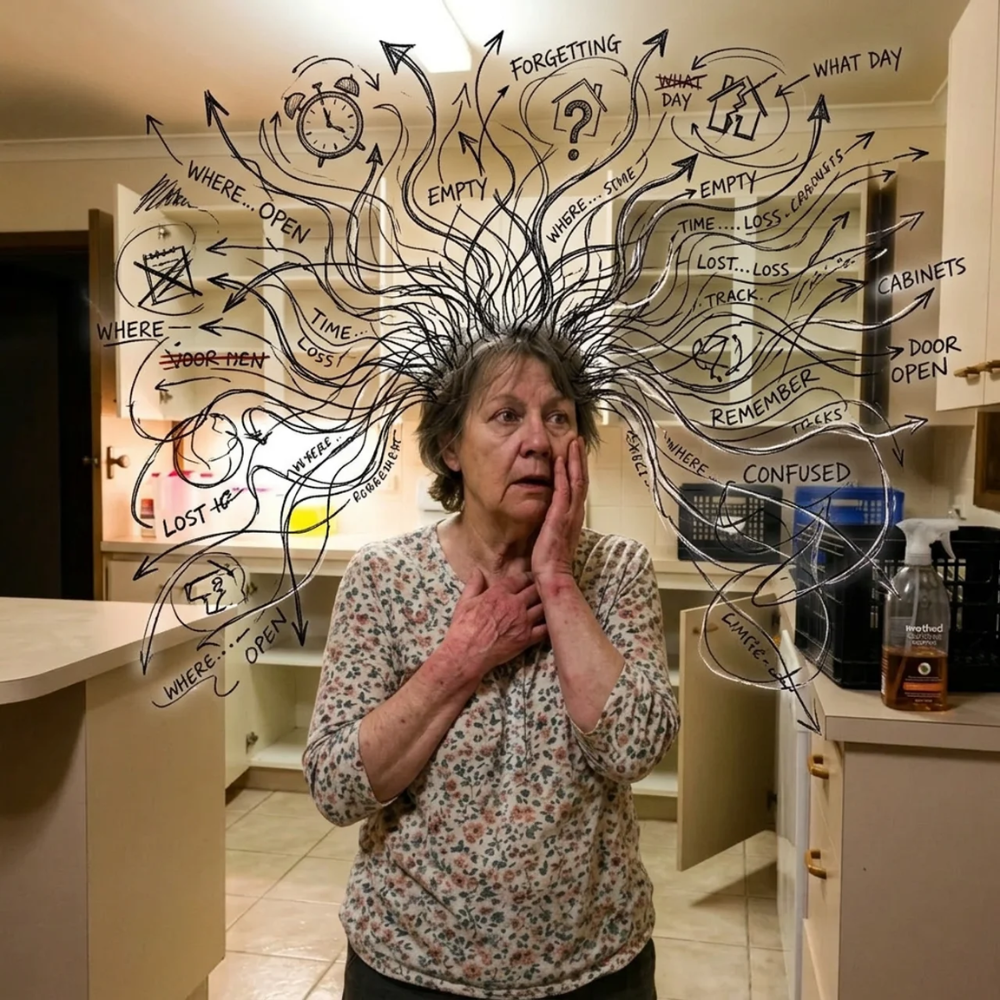
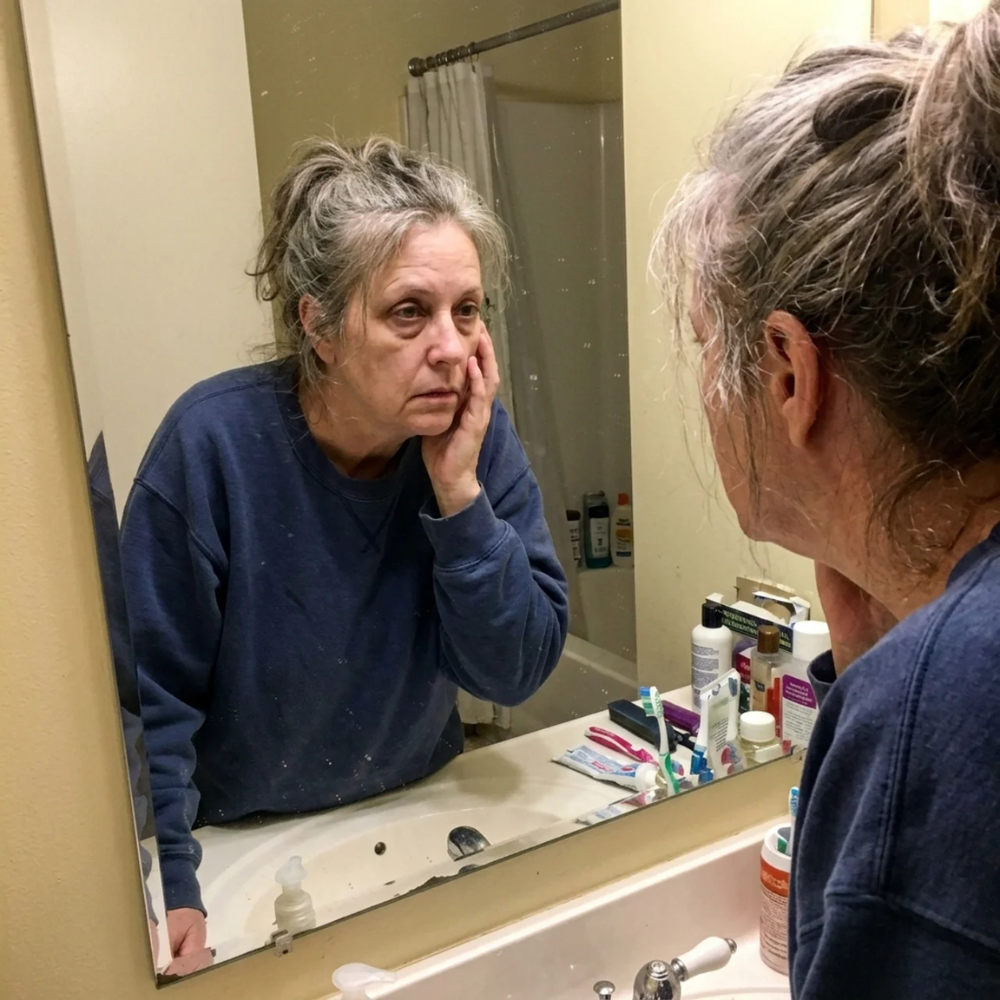
My granddaughter climbed into my lap last Easter and my first thought was so horrible I almost dropped her. I'm not going to tell you what the thought was. I can't. I've never said it out loud, not to anyone — not my husband, not my doctor, not my pastor, not my sister. Not once in the 23 years I've been having thoughts like this. But I need to tell you that it happened. Because if you're carrying the same kind of secret — if your brain shows you things that make you sick to your stomach, things that go against everything you are and everything you believe — then you need to hear what I found out. It might be the most important thing anyone ever tells you. Let me start from the beginning. Or as close to the beginning as I can get. I was 44 the first time it happened. Sitting in the pew on a Sunday morning. The choir was singing. My eyes were closed. And out of nowhere — like a flash of lightning in a clear sky — my brain showed me an image so blasphemous, so violent, so sexually grotesque that my eyes snapped open and I grabbed the armrest like I'd been slapped. My husband leaned over. "You okay?" "Fine," I said. "Just a chill." That was the first lie. There have been thousands since. The thoughts didn't stop after that Sunday. They got worse. And they mutated. In church, they were blasphemous. Obscene images involving sacred things. Words I would never say screamed inside my head during prayer. The more I prayed for them to stop, the louder they got. Around my family, they turned violent. Flashes of harming people I love. Not fantasies. Not desires. More like my brain forcing me to watch a horror movie I never chose to play — except the characters were my husband, my children, my grandchildren. I'd be cutting vegetables for dinner and my brain would show me an image of the knife doing something unspeakable. I'd be bathing my granddaughter when she was little and a thought would flash through my mind that was so wrong, so depraved, that I'd hand her to my daughter and lock myself in the bathroom and shake. And the worst part — the part that kept me silent for over two decades — was what I believed those thoughts meant about me. I believed I was a monster. A good person doesn't think these things. A normal grandmother doesn't picture violence when she's holding a baby. A real Christian doesn't have those images during communion. So clearly, I wasn't good. Wasn't normal. Wasn't the person everyone thought I was. I was something else. Something rotten underneath. And if anyone ever found out what went on inside my head, they would be horrified. My family would never look at me the same way. So I hid it. For 23 years. I smiled. I cooked Thanksgiving dinner. I went to Bible study. I held my grandchildren — when I could bear to — and I fought the images every single second. And when I couldn't bear to hold them, I made excuses. Headaches. Bad back. Feeling tired. My daughter once said, "Mom, sometimes it feels like you don't want to be around the kids." That sentence almost destroyed me. Because the truth was the exact opposite. I loved them so fiercely that the thoughts felt like punishment. Like my brain was using the people I loved most as weapons against me. I didn't search for help for a long time. Because how do you type what I was experiencing into Google? How do you explain to a search engine that you're not dangerous — you're terrified of what you're thinking? I was afraid if I typed those words, someone would show up at my door. When I finally did search — carefully, vaguely, at 1 AM with the screen brightness turned all the way down like someone might be watching — I typed something like "why do I have horrible thoughts about people I love." And what came back changed the entire trajectory of my life. It wasn't a supplement. It wasn't a product. It was a clinical description of something called intrusive thoughts. And as I read, I started to cry so hard I had to put the phone down. Because every single thing they described was me. Unwanted thoughts that are violent, sexual, or blasphemous in nature. Thoughts that are ego-dystonic — meaning they go against the person's true values and desires. Thoughts that cause intense shame, guilt, and secrecy. Thoughts that get WORSE the harder you try to suppress them. Thoughts that attach specifically to the people and things you care about most. And then the line that broke me open: "The presence of these thoughts does not indicate desire, intention, or character. They are a neurological misfiring — not a moral failing." I read that sentence four times. Not a moral failing. I sat in my kitchen at 1 AM and said it out loud to nobody. "It's not a moral failing." And I sobbed like I hadn't sobbed in twenty years. Because for twenty-three years I had been carrying the weight of believing I was secretly evil — and that sentence lifted it off me like it weighed nothing. But I kept reading. Because I still didn’t understand what it WAS. And that's where I found the cause of it all. The thoughts aren't random. They're not evidence of hidden desires. They are the product of a signaling malfunction in the brain — specifically, a breakdown in the serotonin delivery system. When your brain makes an intrusive thought, serotonin is supposed to send a calming signal to your cells: "That thought doesn't matter. Let it pass. You're safe." But that signal needs a carrier molecule — a messenger — to actually deliver it. If the messenger is depleted or missing, the calming signal never arrives. The thought doesn't get tagged as "junk mail." Instead, your brain treats it as urgent. Important. Real. And it replays it. Over and over. And here's why the thoughts are about what you love most: The brain's threat detection system is designed to flag things that matter to you. The more you love something, the more your brain monitors for threats to it. In a normal signaling system, those false alarms get dismissed instantly. But when the messenger is broken, every false alarm becomes a five-alarm fire. Your brain latches onto the people you love the hardest because they are what you value the most. The thoughts aren't proof that you're dangerous. They're proof that you love fiercely and your signaling system is broken. When I read that, I put my phone down and I just breathed. For the first time in 23 years, I breathed without the weight of believing I was a monster sitting on my chest. The missing messenger is a compound called inositol. Your body makes it naturally. It was classified as Vitamin B8 decades ago. It was studied specifically for OCD and intrusive thoughts in clinical trials in the 1990s — and it showed real, measurable reduction in the exact kind of looping, ego-dystonic thoughts I'd been suffering from. Not by adding more serotonin. By repairing the delivery system so that thoughts actually get dismissed. I started taking inositol the following week. I told no one. I expected nothing. After about ten days, I noticed that the thoughts were still there — but the GRIP was different. Normally when an intrusive image hit, it would hook me. I'd be pulled into a spiral of shame and panic and self-interrogation: "Why did I think that? What does it mean? Am I capable of that?" The spiral could last hours. This time, the thought came — and for the first time, it just... passed. Like a cloud moving across the sky. I noticed it, felt the familiar flinch, and then it was gone. No spiral. No interrogation. No three-hour shame session. I stood in my kitchen and realized what had happened. And I held onto the counter because my knees went weak. By week three, the thoughts were noticeably less frequent. Not gone. But the ones that came were softer. More distant. By week five, my daughter brought the kids over. And my youngest granddaughter — the one from Easter — climbed into my lap to show me a drawing she'd made at school. And I held her. No images. No flash of violence. No wave of nausea. Just her warm little body against mine. I held her and I was just... there. Present. Clean. Whole. After years of believing I was too dangerous to hold my own grandchild…I don’t even have words that can describe how it felt. If you've read this far — if you recognized yourself in any part of this story — I need you to hear me clearly: You are not your thoughts. You are not a monster. You are not broken in a way that means what you fear it means. Your brain has a SIGNALING problem. It has a name. And there is a compound — natural, gentle, studied for decades — that addresses it. You don't have to carry this secret alone for one more day. And you don't have to be afraid to hold the people you love. I’ve linked the ones I use below. Third party tested and cGMP-certified. Please remember, none of this is your fault. It is a deficiency in your brain causing it.
Like this ad? Make it yours.
Crush rebuilds this exact creative around your product — your brand, your colors, your offer — in about a minute.