Dog Arthritis Support Community
Dog Arthritis Support Community Facebook ad: “The GSD Puppy Growth Stage: What To Know”
Running for 11 days since September 25, 2026. Crush last saw it on October 6, 2026.
Run by Dog Arthritis Support Community on Facebook. Crush is not the advertiser and does not verify its claims. See this ad in Meta's Ad Library(opens in a new tab)
Want an ad like this for your product?
Crush makes new ad images for your product from this ad: your logo, your product photo, your offer.
Trials from $19.95 USD, then $79.95 USD a month. Cancel anytime.
About this ad
- Meta Ad Library ID
- 1293828886109972
- Platforms
- Facebook, Instagram, Audience Network and Threads
- Relaunches
- 0
Ad text
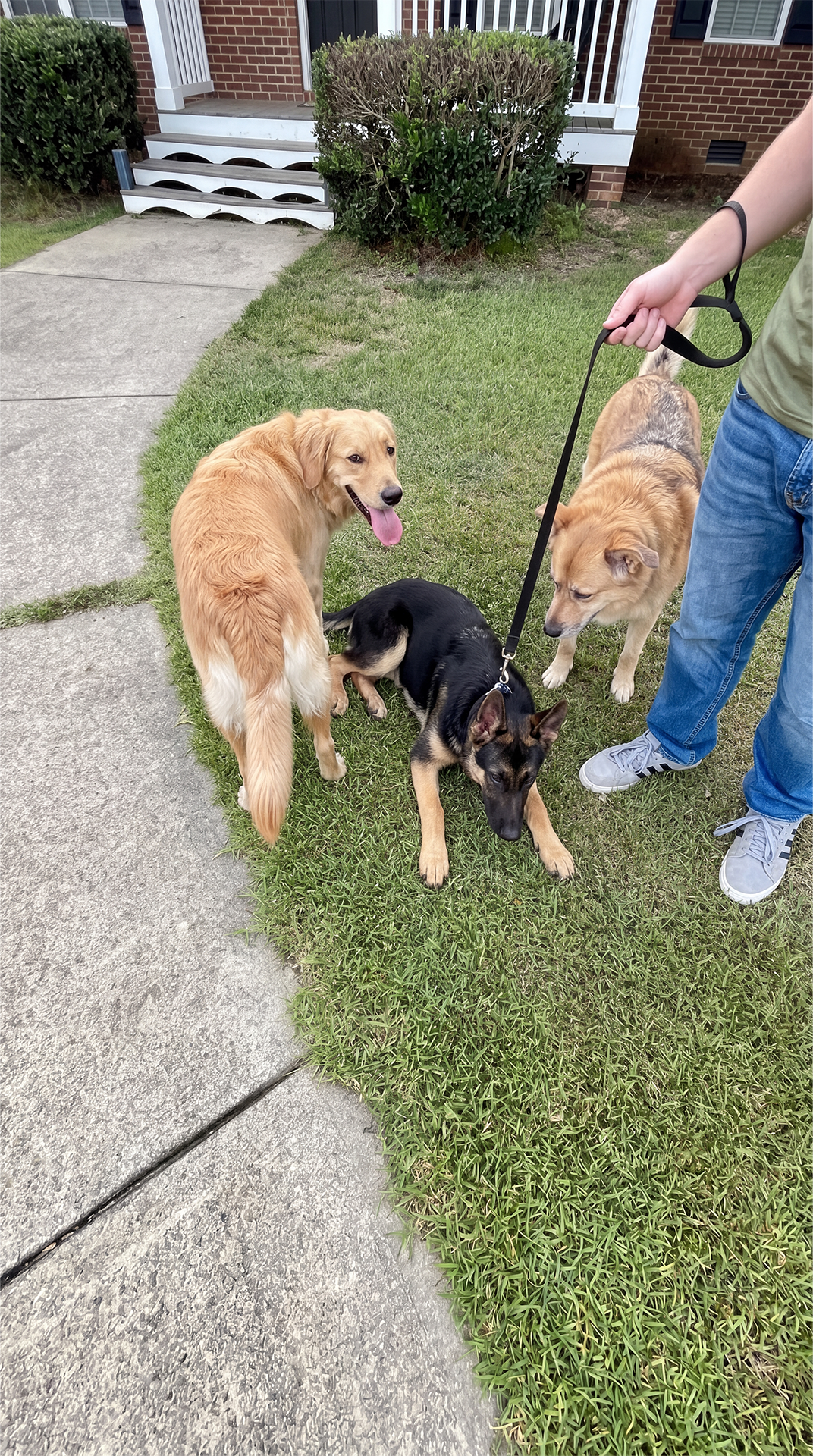
I never planned on having three dogs. If you'd asked me two years ago, I would've told you two was already pushing it. But life doesn't care about your plans — especially when a crying teenager is on the other end of the phone. Let me back up. My name's Danny. I'm 41, married to Emma since 2024, and we live in Savannah, Georgia. When we first talked about getting a dog, we agreed on one. Just one. We went with a golden retriever because we wanted a dog that would love everyone who walked through our door — adults, kids, didn't matter. Easy to train. Eager to please. We named him Woofles. It took about three months before we realized Woofles seemed lonely when we were at work. He'd just sit by the back door and wait. So we did what any reasonable couple does — we adopted a second golden retriever, two years younger. His name is Mack, short for Macaroni and Cheese. Don't ask. Emma named him. Two goldens. That was the deal. That was the line. Our house is the biggest between our three families — my parents, my sister's family, and ours — all living within ten minutes of each other here in Savannah. So every last Sunday of the month, everyone comes over for lunch. Emma keeps it simple. Tacos. Burgers. Chicken salad. Sometimes we just order in. It's never going to win any awards, but that's not the point. The point is everyone's together. The dogs weave between legs under the table. My niece, Lily, sits on the floor with them half the time. Lily's the reason I'm writing this. Two years ago, during one of those Sunday lunches, Lily — she was twelve at the time — started telling me about this new thing she was doing. She'd started volunteering at a local animal shelter, walking the dogs. It made perfect sense. She's been obsessed with animals since she could talk. My sister and I grew up with dogs ourselves, all the way through until we each left for college. It's in the blood. At first, my sister had to be there with her every time. Liability stuff, I think. But after a couple of years, they started letting Lily go on her own. She'd send me pictures after every shift. A chocolate lab one week. A Great Dane the next. A tiny little dachshund. Yorkies. Chihuahuas. Terrier mixes with crooked ears. I loved getting those pictures. Then one afternoon, she called me. Not texted. Called. She was crying. There was a German Shepherd puppy at the shelter. Seven months old. And according to Lily, he was "the sweetest boy in the whole entire world" and he "didn't deserve to be there." She hadn't learned the "life isn't fair" lesson yet. To be honest, I hope she never fully does. I told her I couldn't take another dog. Two was already a lot. Emma and I had our routine down, our walks scheduled, our vet bills budgeted. Three dogs would throw all of that off. But then the pictures started coming. Every day. Sometimes twice a day. This round-faced, dark-furred puppy staring up at the camera with those soft brown eyes. He looked like a little black bear cub — that's actually how he got his name later. Bear. Emma and I held out for about two weeks. Then we caved. We told ourselves we'd just do a "meet and greet" — bring Woofles and Mack to see how they got along with him. It's the dog-owner equivalent of going to a car dealership "just to look." We came home with him. Never thought I'd have a German Shepherd. But dang it, I love this dork. It didn't take long for the three of them to bond. Within a week, they moved like a unit. Woofles and Mack practically adopted Bear as their kid. Two golden retrievers raising a German Shepherd. It was the funniest, sweetest thing I've ever seen. Bear was a ball of energy. I'd take all three of them out for walks — Bear would do the first fifteen minutes with me, then I'd bring him back and finish the second half with Woofles and Mack. He was still young, and I didn't want to push him past what his growing body could handle. And he was growing. Fast. I'd scroll back through photos from just three months earlier and he looked like a completely different animal. A true puppy in those shots. Now, standing next to me, he had the frame of a full-grown German Shepherd. It felt like it happened overnight. Then one week, I noticed something. Bear was taking longer to get up after naps. Not a lot longer. Just a beat. A pause before he'd push himself to his feet. I figured he tweaked something. A sprain, maybe. Puppies are clumsy. He'd be fine. And he was — for about a week. He bounced back. Got up normal. Played normal. I forgot about it. Then two weeks later, it came back. Worse. I could tell he wasn't comfortable. He'd lean away from one side in the morning, then switch by afternoon... stand at the back door, look outside, and just turn around. There was no pattern. No obvious injury. One day he'd seem almost fine. The next day he wouldn't even want to go to the backyard. I felt helpless. With a kid, at least you can ask what hurts. They can point. They can tell you. Bear just looked at me with those same soft eyes, and I had nothing. No way to help. No way to understand. For a moment — and I'm not proud of this — I doubted everything. Maybe adopting him was a mistake. Maybe we'd taken on something we weren't equipped for. We took him to the vet. The vet told us it was common in German Shepherds. Discomfort during the growing phase. He was growing too fast. His body was changing faster than it could adjust to. He recommended some rest and switching Bear to adult kibble. Said puppy and adult food have different protein levels for different life stages, and Bear should be on adult now. We came home and made the switch. Put him on the same adult kibble we fed Woofles and Mack. But he stayed the same. Second visit. Same answer... normal for dogs his size and age, and that we might be dealing with it for a while. We did everything the vet suggested. And for a bit, things looked better. Bear had some good days. Up more. Engaging more. I thought we were past it. Then some tougher days came back. Then the tiredness crept back. He started resting more. When he did get up, he'd take a second. Just stand there, not moving, like he needed a moment before he could decide what to do next. It was breaking my heart to see him like this. It got to me. He was supposed to be in his most energetic phase. Instead, he was the calmest dog in the house — and not in a good way. I couldn't stop wondering what this meant for him when he would get older. I drove to the shelter where we adopted him. I wanted to know anything they could tell me — about his parents, his history, whether he'd had any injuries before we got him. The shelter vet met with me. She told me Bear had been found alone on the street. No history on his parents. No prior injuries. If there had been, they would've told us at adoption. Then she paused. "We've actually seen this same thing here," she said. "A lot." I braced myself. My gut tightened and I just waited for whatever she was about to say. She explained that working with hundreds of dogs every year — big breed puppies especially — they see this kind of thing all the time. German Shepherds. Labs. Great Danes. Rottweilers. Dobermans. She said they'd learned a lot about what helps. "Everyone assumes it's just a size thing," she said. "Big breed puppy. Growing fast. Changing so quickly you can see the difference week to week." That was exactly what I'd assumed. That was exactly what our vet had told us. It's how the body responds to it. When a dog changes size that fast, the body has a natural inflammatory response. But sometimes, that response does more than what's actually needed — and your dog feels discomfort. She leaned forward a little. That's why rest helps for a day and then it returns. That's why a different food doesn't change what you're seeing. Those approaches aren't bad — they're just not addressing the full picture. She didn't say it like it was a big deal. But I felt every word of it. The rest helped. The food change made sense. But none of it seemed to add up to the shift we were hoping for. Something was still missing.. We were trying everything we could. We just hadn't found the thing that made it all click. And meanwhile, Bear was still managing is body response to how fast he grow. I didn't feel angry. I felt late. Like I'd been wasting time I didn't know I was wasting. She told me about green-lipped mussel. I'll be honest. I almost tuned out. Green-lipped mussel? For a dog? It sounded like one of those things you'd scroll past in an Instagram ad. But she kept talking, and what she said changed everything I thought I understood about joint supplements. Green-lipped mussel — specifically one species, harvested in New Zealand — contains a rare omega-3 fatty acid called ETA. Most fish oils give you EPA and DHA, which support one pathway. ETA is different — it supports two, giving your dog a more complete approach to joint comfort. It doesn't shut inflammation down completely. A growing puppy actually needs some inflammation — it's part of how the body builds bone and tissue. What ETA does is support the body's natural response — helping it find the right balance during the growth process. And it's natural — designed to complement whatever joint care routine your dog is already following. Now here's the part that matters — and the part most people never hear. The green-lipped mussel supplements you see on Amazon and in pet stores? There's one compound that does the heavy lifting — and not every formula has it. ETA is incredibly fragile. Heat destroys it. Standard manufacturing processes destroy it. Even how the mussel is harvested and stored can degrade the ETA before it ever reaches a capsule or chew. Not all green-lipped mussels supplements are created equal. Some are made from the whole mussel. Others are made after the beneficial fats have already been extracted. Same label — very different product. That's the difference between a green-lipped mussel supplement your dog actually benefits from — and one that just sounds good on the label. What matters: freeze-dried. Full fat profile. ETA verified and intact. She said it took a while to find one that met his standards. The brand the shelter used — the only one they recommended after testing multiple options — was GoPaws. 150mg of freeze-dried green-lipped mussel per chew, sourced from New Zealand. Full fat profile intact, meaning the ETA that most other supplements process out is still there. Backed by 500mg glucosamine, 400mg MSM, 110mg chondroitin, plus Vitamin C and manganese to support healthy joints and mobility. Independently lab-verified. No fillers. No heat processing. No defatted powder. They only sell direct. Not through Amazon. Not through third-party resellers. Because freeze-dried green-lipped mussel degrades from heat and improper storage, and they won't risk the ETA breaking down in some warehouse before it ever reaches your dog. I ordered GoPaws that night. It arrived in five days. I started Bear on the recommended dose with his midday meal. Just folded it into the routine like everything else. Week 1. Honestly? I didn't notice much. Maybe a little more willingness to move around, but nothing I could point to and say, "That's it." Week 2. He started leaving his bed on his own. Not because I called him. Not because it was mealtime. He'd just get up and walk over to where Woofles and Mack were lying. That hadn't happened in weeks. Week 4. He was doing laps. Actual laps around the house. Walking room to room, sniffing around, following Emma into the kitchen. Moving like a dog that wanted to move. Week 6. He was playing again. Mack would bring him a toy, and Bear would actually engage. Tugging. Chasing. Rolling around with his brothers like he used to. Week 8. Bear sprinted from one end of the fence to the other, turned on a dime, and came barreling back toward Woofles and Mack. Full speed. Full confidence. That's the dog I remember. I couldn't tell you the last time I'd seen that. And it wasn't a one-off. The next day, same thing. The day after, same thing. Day after day, no interruption. I'll be straight with you. Having three dogs is a lot. More vet bills. More food. More fur on every surface I own. More walks. More logistics every time we go anywhere. But I wouldn't trade it for anything. Lily comes over now and she doesn't even say hi to us first. She walks straight to the dogs. Bear rolls over for belly rubs the second he sees her. Woofles leans against her legs. Mack brings her a shoe — not a toy, always a shoe. She lights up every time. That's what it's about. If you're still reading this, I want to make sure you actually understand what made the difference — because it's easy to hear "joint supplement" and lump it in with everything else on the shelf. Here's what a typical joint supplement for dogs includes. Glucosamine for cartilage support. MSM to support the body's natural response. Chondroitin for joint cushioning Those are good things, and GoPaws includes all of them. But what made the difference for Bear was the green-lipped mussel — specifically the ETA omega-3 that's only found in one species of mussel from New Zealand. Helps support a balanced inflammatory response for lasting joint comfort. That's what made us choose GoPaws from the other bottles available. Not the label. How it's made. The thing that made me actually pull the trigger? GoPaws has a 90-day money-back guarantee. Ninety days. That's three full months to decide if it's working for your dog. If it doesn't, send it back. Full refund. No questions asked. I'm not paid to write this. I don't receive a cent whether you try it or not. But if it does for your dog what it did for Bear — if you see them getting up easier, moving more freely, playing like they used to — then that's the whole reason I sat down to write this. Because I went through it. I watched my dog struggle and I didn't know what to do, and I wish someone had told me sooner. Half a chew to two chews a day. That's it. Bear's asleep on the couch right now. Mack's next to him. Woofles is at my feet. The house is quiet, and all three of them are comfortable. That's all I ever wanted.
Where the ad sends people
go-paws.com
The GSD Puppy Growth Stage: What To Know
An all-in-one dog joint supplement with 6 active ingredients for cartilage support and inflammation relief. Vet-formulated. Try risk-free.
See details: go-paws.com(opens in a new tab)