James Colloway
James Colloway Facebook ad: “Read this if you've had prostate surgery”
Ran for 14 days, from March 23 to April 6, 2026, the last day Crush saw it.
Run by James Colloway on Facebook. Crush is not the advertiser and does not verify its claims. See this ad in Meta's Ad Library(opens in a new tab)
Want an ad like this for your product?
Crush makes new ad images for your product from this ad: your logo, your product photo, your offer.
Trials from $19.95 USD, then $79.95 USD a month. Cancel anytime.
About this ad
- Meta Ad Library ID
- 1295560099106869
- Platforms
- Facebook and Instagram
- Relaunches
- 0
Ad text
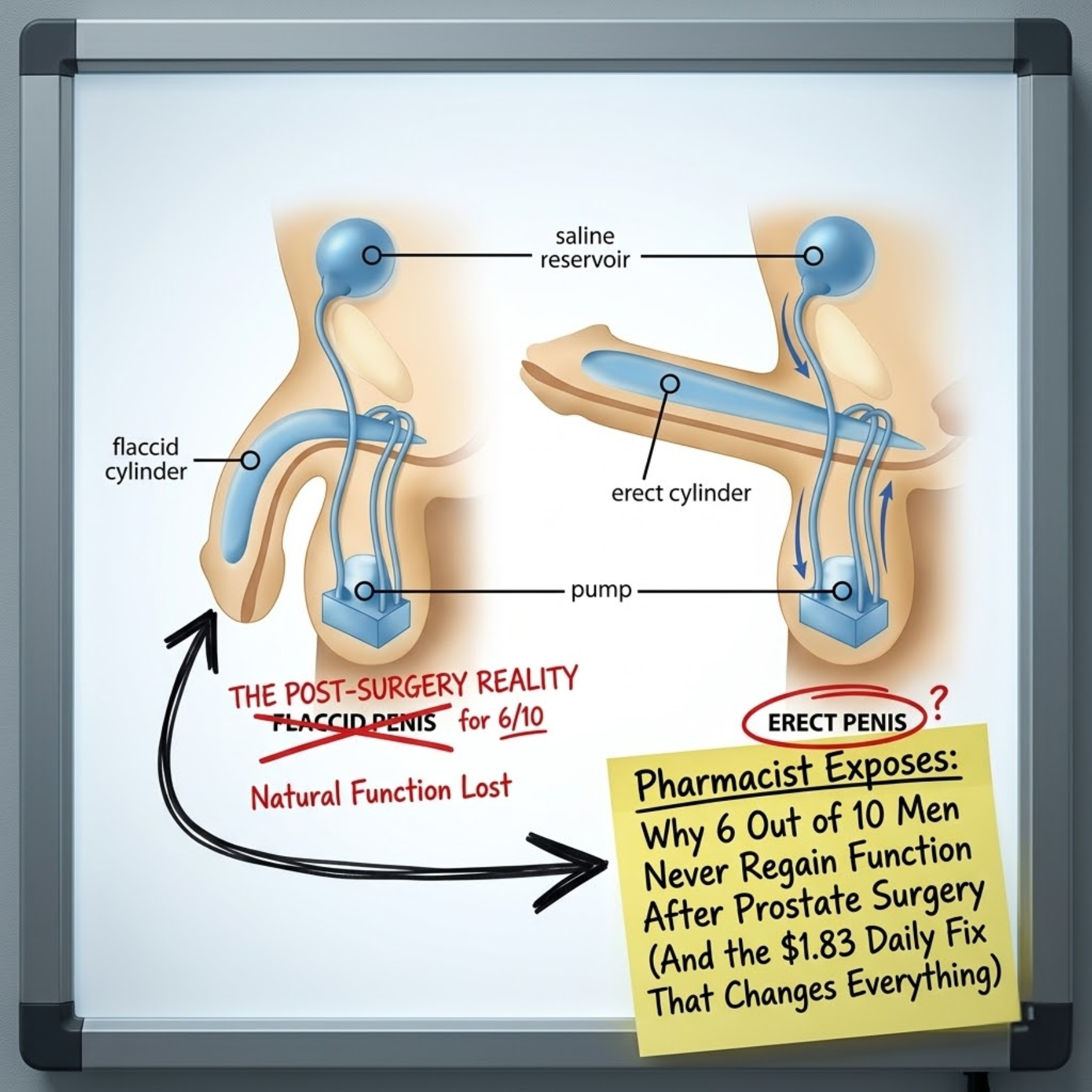
My surgeon removed the cancer. Saved my life. Then left me with a penis that doesn't work. 16 months of waiting. Until this one conversation changed everything. I'm 61 years old. I had my prostate removed 16 months ago. Robotic-assisted radical prostatectomy. Nerve-sparing technique. My surgeon told me the margins were clean—they got all the cancer. He saved my life. I'm grateful for that. But he also left me with a body I don't recognize. The morning after surgery, I woke up with a catheter running out of my penis into a bag strapped to my leg. Five small incisions across my abdomen. A pressure in my pelvis that felt like someone had shoved a golf ball inside me and left it there. The nurse told me the catheter would stay in for 10 days. It stayed in for 12. When they finally pulled it out—and I mean *pulled*, like yanking a garden hose through a narrow pipe—I thought the worst was over. It wasn't. **The First Three Months: "Give It Time"** For the first month after the catheter came out, I couldn't control my bladder at all. I'd be standing in the kitchen making coffee and feel a warm rush down my leg. I'd be getting out of the car and soak through my pants before I could even stand up straight. I started wearing pads. Then I upgraded to what they politely call "disposable underwear." I'm 61 years old, and I was buying adult diapers at CVS. But the incontinence wasn't even the worst part. The worst part was the complete and total absence of anything resembling an erection. Nothing. Not even a flicker. My penis felt cold, numb, and dead. I went back to my urologist at the 6-week mark. Told him I hadn't had a single erection—not even in the morning—since the surgery. He didn't look concerned. "You had nerve-sparing surgery," he said. "But those nerves got bumped around during the procedure. They're stunned. It takes 12 to 18 months for them to wake up. Some men recover faster. Some take longer. Just be patient." He prescribed Viagra. 50mg. "This is part of penile rehabilitation," he said. "Even if you don't get a full erection, the Viagra will help keep blood flowing to the tissue. We want to prevent atrophy while the nerves heal." He didn't use the word "scar tissue." He didn't explain what "atrophy" actually meant. He just said, "Take it an hour before you want to try." I tried it that weekend. I got a splitting headache that lasted 4 hours. My face turned red. My sinuses felt like they were packed with cotton. But my penis stayed completely soft. I went back two weeks later. He upped the dose to 100mg. Same result. Worse headache. Worse flushing. Zero erection. **Month 4: Switching to Cialis** At my 4-month checkup, my urologist said, "Let's try Cialis instead. Some men respond better to it." He started me on 5mg daily. "This will help keep blood flowing while the nerves heal," he said. "Think of it as physical therapy for your penis." I took it every morning for 2 months. Nothing changed. He increased it to 20mg on-demand. "Take it a few hours before you want to try." Still nothing. **Month 7: The Vacuum Pump** "Let's add the vacuum pump," he said. "Some men have success combining the pump with the medication." He handed me a prescription for a vacuum erection device. I picked it up from the medical supply store. Brought it home. Opened the box. It looked like a piece of industrial equipment. I tried it once. The sensation of air pulling blood into my penis—mechanically, coldly—was one of the most humiliating experiences of my life. My penis turned purple. It felt cold to the touch. I put the pump back in the box and shoved it in the back of my closet. **Month 9: Trimix Injections—Hope, Then Failure** At month 9, my urologist sat me down and said, "I think it's time we try Trimix." Trimix is a cocktail of three drugs—alprostadil, phentolamine, and papaverine—that you inject directly into the side of your penis with an insulin needle. The idea of sticking a needle into my own penis made my stomach turn. But I was desperate. He showed me how to do it. Taught me the injection sites. Sent me home with a vial and a box of syringes. The first time I did it, my hands were shaking so hard I could barely hold the needle steady. But it worked. For the first time in 9 months, I had an erection. Not 100%—maybe 75%—but it was enough. My wife and I had sex for the first time since the surgery. Afterward, she cried. So did I. For the next 3 months, I injected myself 2 to 3 times a week. It wasn't spontaneous. It wasn't natural. But it was something. Then things started going wrong. **Month 12: The Injections Stop Working** The first sign was curvature. My penis started bending slightly to the left when it was erect. Not much at first—maybe 10 degrees. But over the next few weeks, it got worse. Then I started getting bruising. Black and blue marks that spread from the injection site down toward my scrotum. One time, I hit a vein. Blood spurted out. My penis swelled up like a balloon and stayed hard for 6 hours. My wife wanted to take me to the ER. I refused. I sat in a cold bath until it finally went down. After that, I was terrified every time I injected. Then, around month 12, the injections just stopped working. I'd inject the same dose that had been working for months, and I'd get maybe 40% hard. Then 30%. Then nothing. I went back to my urologist. He examined me. Felt along the shaft of my penis. "You've got scar tissue," he said. "Fibrosis. That's why the injections aren't working anymore. The tissue can't expand the way it used to." I asked him what we could do. He pulled up a diagram on his computer. "At this point," he said, "I think we need to talk about a penile implant." **The Implant Consultation** He referred me to a urologic surgeon who specializes in penile prosthetics. I went to the consultation 2 weeks later. The surgeon was matter-of-fact. Clinical. He showed me a model of the device—a three-piece inflatable implant. Two cylinders would be surgically inserted into my penis. A pump would go in my scrotum. A reservoir of saline would sit in my abdomen. When I wanted an erection, I'd reach down, squeeze the pump in my scrotum a few times, and the cylinders would inflate. When I was done, I'd press a release valve and deflate it. He walked me through the risks: infection, mechanical failure, erosion of the cylinders through the tissue, loss of another half-inch of length. "But," he said, "it works. You'll be able to have penetrative sex again. It won't feel exactly like a natural erection, but it's functional." He scheduled the surgery for 4 weeks out. I left his office feeling numb. This was it. This was my only option. I was going to have a mechanical pump installed in my body just to approximate something my body used to do on its own. **The Conversation That Changed Everything** Three days later, I ran into Mark at Home Depot. Mark is a guy from my prostate cancer support group. He'd had surgery about 6 months before me. We'd talked a few times at meetings, but we weren't close. He saw me in the aisle and came over. "Hey man, how's recovery going?" he asked. I didn't know what to say. I was standing there holding a can of wood stain, and I just... broke. "Not great," I said. "I've got an implant scheduled in 4 weeks." His face changed. "Implant?" he said. "Hold on. Before you do that, can I tell you something?" We stood there in the middle of Home Depot while he told me his story. He'd been exactly where I was. Viagra didn't work. Cialis didn't work. Pump didn't work. Injections worked for a while, then stopped. His urologist scheduled an implant. But two weeks before the surgery, he went to pick up another Trimix refill at his pharmacy. The pharmacist—who'd been filling his prescriptions for months—asked him how things were going. Mark told him about the implant. The pharmacist said, "Before you do that, let me explain something your urologist probably didn't tell you." **What the Pharmacist Explained** Mark pulled out his phone and opened his notes app. He'd written it all down. "Your urologist told you the problem is nerve damage, right?" Mark said. I nodded. "That's true," he said. "But it's not the whole story. The nerve damage means you can't get erections on command. But here's what they don't tell you: you're *supposed* to get erections every single night while you sleep. 3 to 5 erections during REM sleep. They last 90 minutes to 3 hours total." "Those aren't sexual," he continued. "They're maintenance. Your body is flooding the tissue with oxygen-rich blood to keep it alive." "When the nerves get damaged during surgery, that whole system shuts down. No nerve signal, no nocturnal erections, no oxygen delivery." He looked at me. "How many mornings have you woken up with an erection since your surgery?" "None," I said. "Not a single one." "Right," he said. "That's 16 months. About 480 nights. 480 nights of zero oxygen delivery to that tissue." He scrolled down in his notes. "Here's what happens when tissue doesn't get oxygen. The smooth muscle cells start dying. Your body replaces them with scar tissue—collagen fibers. It happens slowly. Week by week." "At first, maybe you're 5% scar tissue, 95% muscle. Then 15% scar tissue. Then 30%. Then 45%." "Smooth muscle is elastic. It expands when blood flows in. Then it compresses against the outer wall of your penis to trap the blood inside. That's what keeps you hard." "Scar tissue can't do that. It's rigid. It doesn't compress." "So when you use Trimix and force blood into your penis, the scar tissue can't trap it. Blood flows in, but it leaks right back out through the veins. That's called a venous leak." I felt my stomach drop. "That's why the injections stopped working?" I asked. "Exactly," Mark said. "You weren't losing response to the drug. You were losing the tissue's ability to hold blood." "And that's what your urologist was trying to prevent when he prescribed Viagra for 'penile rehab,'" he continued. "He knew this could happen. He just didn't explain it. The Viagra was supposed to keep blood flowing to prevent the tissue from dying. But Viagra can't work if your nerves aren't sending a signal in the first place." **Why the Implant Felt Like the Only Option** "Your urologist isn't wrong to recommend the implant," Mark said. "At a certain point, if the tissue is too far gone, an implant is the only way to get penetrative function back." "But here's the thing: if you still have *some* smooth muscle left—if you're not 100% scar tissue yet—you can stop the spiral. You can preserve what's left. And maybe even get some function back." "The implant is irreversible," he said. "Once they put those cylinders in, they destroy whatever natural tissue you have left. You're committed to the device for life." "I'm not saying don't get it. I'm saying: before you do, make sure you've tried everything to save your natural tissue." He told me what the pharmacist recommended. **The Solution: Daily Oxygen Delivery** "You need to restore daily oxygen delivery to that tissue," Mark said. "You can't fix the nerve damage—those nerves take 18 to 24 months to heal, if they heal at all. But you can bypass the nerves." He explained that there's a compound called L-Citrulline that your body converts into nitric oxide—the molecule that tells blood vessels to relax and open up. "Normally, nitric oxide gets triggered by a nerve signal," he said. "But L-Citrulline produces it through your blood vessel walls instead. It bypasses the damaged nerves entirely." "But," he said, "L-Citrulline alone isn't enough. You need something called Pine Bark Extract to activate the enzyme that converts it. Without that enzyme working, the L-Citrulline just sits there." He showed me a study on his phone. Men with nerve damage and blood flow issues—guys like us, post-surgery. One group took L-Citrulline alone—17% saw improvement. The other group took L-Citrulline plus Pine Bark Extract—80 to 92.5% saw improvement. "That's the difference between the enzyme being blocked and the enzyme being activated," he said. He told me the pharmacist recommended a formula called Masculis Core. "It's got L-Citrulline at 1,200 milligrams—that's the clinical dose. Pine Bark Extract at 100 milligrams. Plus a few other things to support testosterone and reduce stress." "I started taking it 8 weeks before my implant was scheduled," Mark said. "By week 3, I had my first partial morning erection in over a year. By week 8, I was waking up hard 4 days a week." "I cancelled the implant." **I Looked It Up That Night** I went home and tried to find it on Amazon first. Couldn't find it. Went to their website instead. Pulled up the ingredient label. L-Citrulline: 1,200mg. ✅ Pine Bark Extract: 100mg. ✅ Ashwagandha: 600mg. ✅ Tongkat Ali: 300mg. ✅ Magnesium: 400mg .✅ Everything Mark said was there. I clicked on their FAQ. Saw the question: "Why don't you sell on Amazon?" Their answer: "We don't cut corners on ingredient quality to hit Amazon's price points. Our Pine Bark Extract is standardized to 95% proanthocyanidins—the active compound that clears blockages and activates enzymes. The cheap Pine Bark on Amazon is 40 to 60% purity. You might see '100mg Pine Bark' on the label, but you're only getting half the actual active dose." That made sense. This wasn't a quick-fix pill. This was pharmaceutical-grade vascular repair. I ordered 3 bottles. $175 for a 90-day supply. It came with a 90-day money-back guarantee. I figured: I've got 4 weeks until the implant. If this doesn't work, I'm not any worse off. **What Happened in 8 Weeks** Week 1-2: Nothing dramatic. Maybe I felt slightly more alert during the day. But no erections. Week 3: I woke up one morning with a partial erection. Maybe 30%. It only lasted a few minutes. But it was the first time in 16 months I'd woken up with anything. Week 4: Morning erections started happening 2 to 3 times a week. Still partial—maybe 40 to 50%—but they were there. Week 5: My wife and I tried without injections. I got to about 60% hard with manual stimulation. We couldn't finish, but it was more than I'd had in months without a needle. Week 6: I was waking up hard 4 to 5 mornings a week. During sex, I hit 70% hardness. I could last 3 to 4 minutes before I started losing it. Week 8: I woke up fully hard for the first time since before surgery. We had sex that morning. I was at 80% firmness. I didn't lose it when we changed positions. We finished. Afterward, my wife looked at me and said, "You're back." I called the surgeon's office that afternoon and cancelled the implant. **Why This Works When Everything Else Failed** Viagra and Cialis try to preserve nitric oxide that your body is already making. But if your nerves are damaged and you're not producing nitric oxide in the first place, there's nothing for those drugs to preserve. The vacuum pump tries to pull blood in mechanically. But if your tissue can't compress to trap the blood, it just drains right back out. Trimix forces blood into the tissue chemically. But if that tissue is turning into scar tissue, it can't expand evenly. You get curvature, bruising, and eventually the injections stop working entirely. Masculis Core works differently. It restores daily oxygen delivery by bypassing the damaged nerves. L-Citrulline provides the raw material for nitric oxide. Pine Bark Extract activates the enzyme that produces it. Your tissue starts getting oxygen again. The smooth muscle that's left stops dying. The scar tissue formation slows down. You're not forcing an erection. You're preserving the tissue so your body can heal. **This Isn't a Quick Fix. It's a Rescue Protocol.** Mark's pharmacist made this very clear: "This isn't like taking Viagra before sex. This is a daily tissue preservation protocol. You're stopping damage that's happening every single night." The results were gradual. But they were cumulative. And I didn't have to get surgery. **If You're Post-Prostatectomy and Facing an Implant, Here's What You Need to Know** 1. Nerve damage isn't the only problem. Yes, the surgery damaged your nerves. But the bigger problem is what's happening while you wait for those nerves to heal. 480 nights without oxygen delivery is 480 nights of tissue death. 2. Pills can't fix a nerve problem. Viagra and Cialis amplify a signal your damaged nerves aren't sending. That's why they give you side effects but no erection. 3. Injections are a band-aid, not a solution. Trimix forces blood into tissue that's deteriorating. Eventually, the scar tissue gets so bad the injections stop working. 4. The implant is irreversible. Once those cylinders go in, they destroy whatever natural tissue you have left. You're locked into a mechanical solution for life. 5. You need daily oxygen delivery to stop the damage. L-Citrulline bypasses your damaged nerves. Pine Bark Extract activates the enzyme that produces nitric oxide. Together, they restore the overnight maintenance system your body lost. **How to Get Masculis Core** They don't sell it on Amazon. You order directly from their site. 3 bottles (90-day supply) costs $175. About $1.94 per day. It comes with a 90-day money-back guarantee. If you're post-prostatectomy, and your urologist has mentioned an implant, and you're still within the first 24 months after surgery, I'd ask you to remember what Mark's pharmacist told him: "An implant destroys the tissue you're trying to save. Before you commit to that, make sure you've tried everything to preserve what you have left." I'm 10 weeks in now. I'm at 80 to 85% function. My wife and I are having sex 2 to 3 times a week without injections. I didn't need the implant. If you want to try it, go to their site. Order the 3-bottle pack. Give it 8 weeks. If it doesn't work, get your money back and proceed with the implant. But if it works the way it worked for me and for Mark, you'll save your natural tissue. And you won't need surgery.
Where the ad sends people
masculis.co.uk
Read this if you've had prostate surgery ☝️
Masculis Core is designed for men after prostate surgery and diabetic-related performance issues, supporting confidence, vitality and intimate health.
Shop now: masculis.co.uk(opens in a new tab)