Anne's Cat Diary
Anne's Cat Diary Facebook ad: “Cats Keep Fighting? Read this NOW”
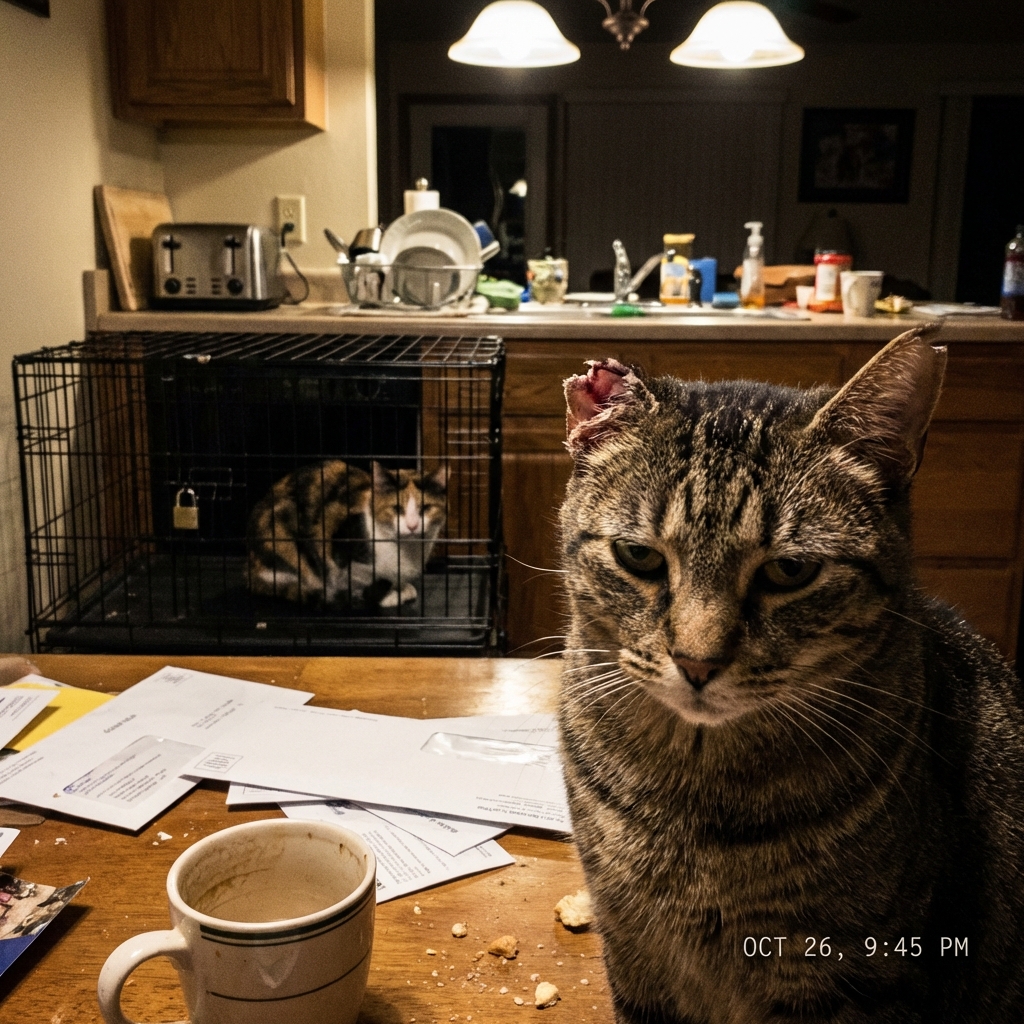
Ran for 28 days, from March 5 to April 2, 2026, the last day Crush saw it.
Run by Anne's Cat Diary on Facebook. Crush is not the advertiser and does not verify its claims. See this ad in Meta's Ad Library(opens in a new tab)
Want an ad like this for your product?
Crush makes new ad images for your product from this ad: your logo, your product photo, your offer.
Trials from $19.95 USD, then $79.95 USD a month. Cancel anytime.
About this ad
- Meta Ad Library ID
- 1296472005630553
- Platforms
- Facebook, Instagram, Audience Network, Messenger and Threads
- Relaunches
- 0
Ad text
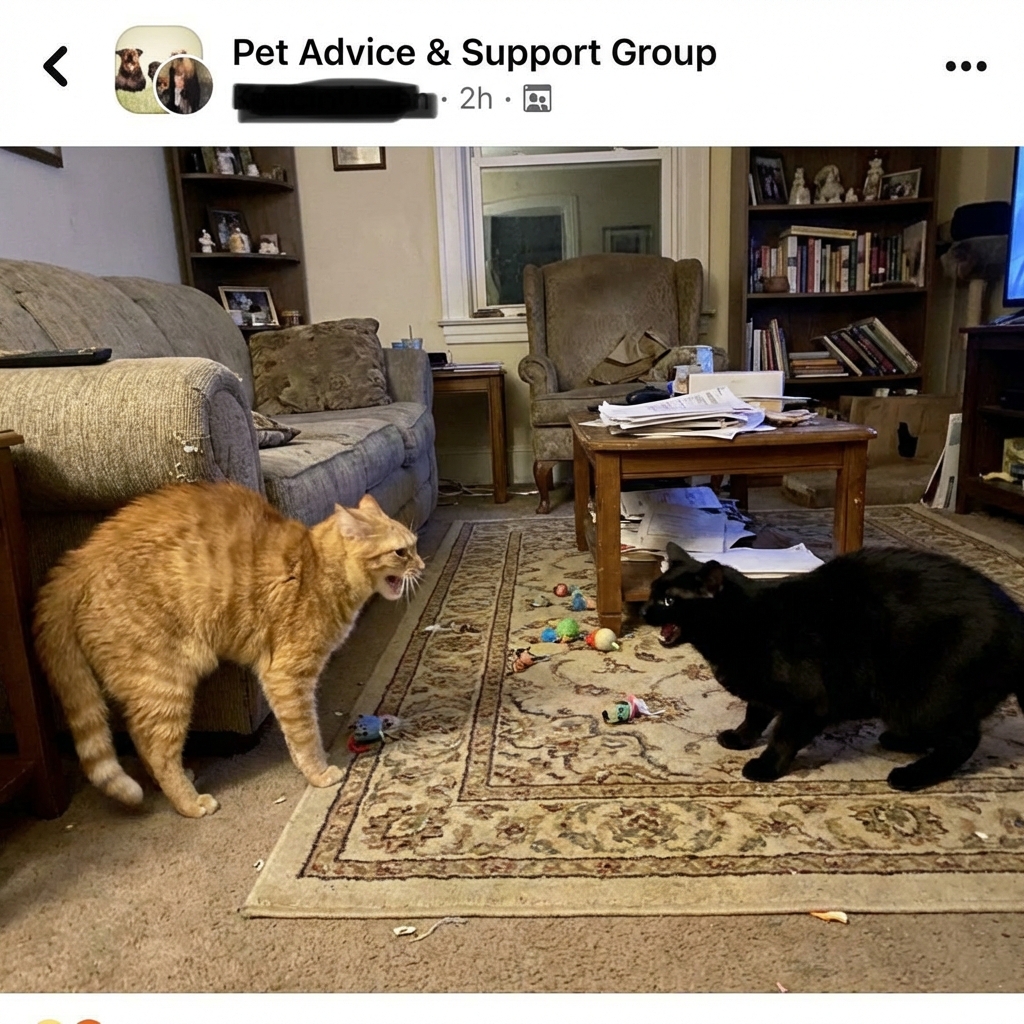
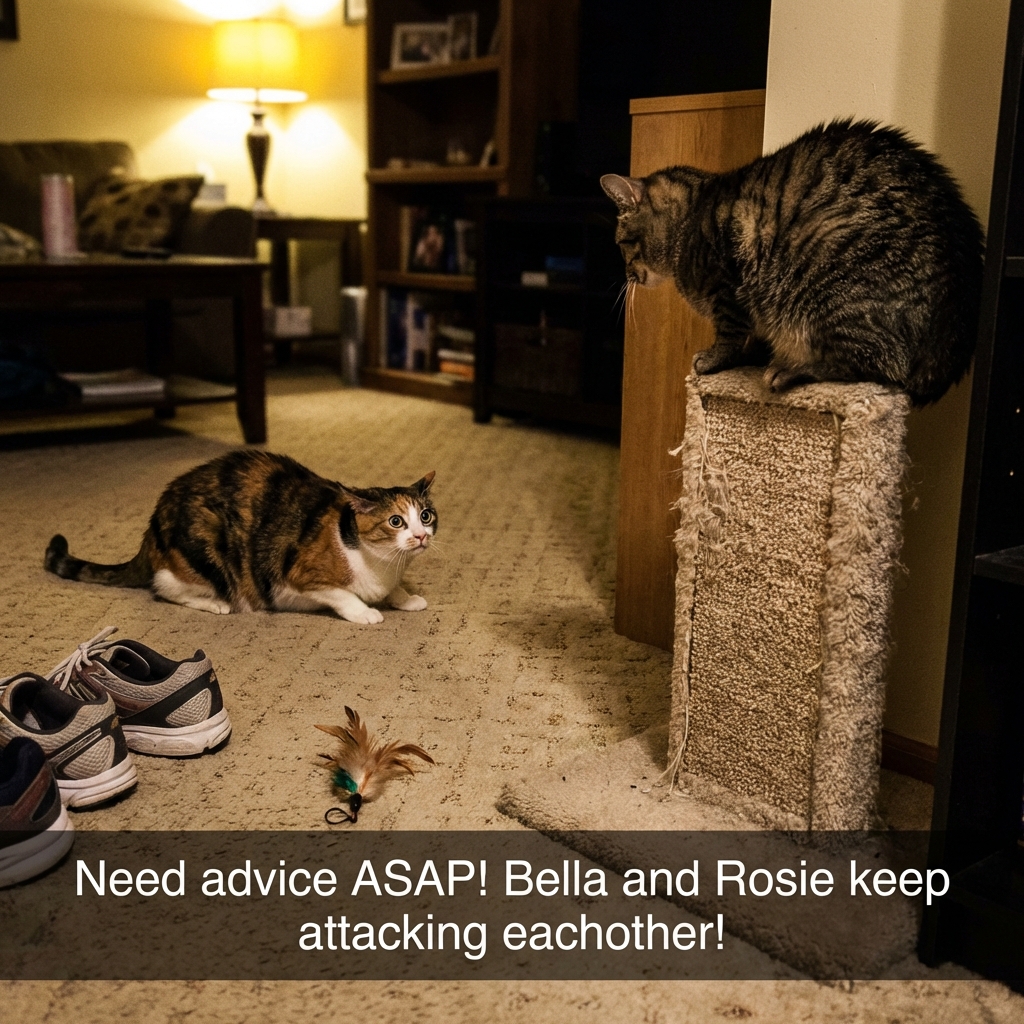
Blood on the walls. Fur on the carpet. They used to be loving sisters. Five vets couldn't tell me what changed. A behaviorist knew in ten minutes. If your cats can't be in the same room without a fight and you've been told it's a "personality conflict," every word of this is going to make a lot of sense to you very quickly. Because what I found out at 1 AM on a Tuesday night explained why every single thing I'd tried for six months was designed to fail. My name is Linda. I have two cats. Poppy and Mabel. Poppy is nine. She's been mine since she was eight weeks old. My girl. My shadow. Slept on my pillow every night for seven years before Mabel came along. Mabel is four. I adopted her two years ago from a rescue because the house felt empty after my husband passed and I thought Poppy could use a friend. And for a while, she did. They would groom each other on the sofa. Chase each other around the kitchen. Sleep in a heap on my bed like a tangle of kitty limbs. Poppy accepted Mabel within a week. They were inseparable. We used to be a family and now… it's a nightmare. About six months ago, something snapped. The cats, who previously would lounge and play together, can't be in the same room with each other without there being conflict. I came home from a doctor's appointment and there was blood smeared across the hallway wall. Fur everywhere. I have seen fur fly up in the air before during their little tiffs. But this was different. This was vicious. One cat's inside of their ears bloody for weeks from a claw stuck inside his ear. That was my Poppy. Mabel was on top of the fridge, puffed up, growling at nothing. The emergency vet cost me $247. Poppy had a claw fragment embedded in her ear canal. They cleaned it, gave me antibiotics, and told me to keep them separated. That was the first of five vets I'd see over the next six months. And every single one of them failed me. The first vet said "keep them separated and give it time." The second vet said "try Feliway. Most multi cat homes see improvement." The third vet said "some cats just aren't compatible. It might be a personality thing." The fourth vet said "have you considered anti anxiety medication?" The fifth one barely looked up from his clipboard. "Sometimes you just have to accept they won't get along." Five vets. Six months. Over $800 in visits, diffusers, calming treats, supplements, and a cystitis treatment caused by the stress of the fighting. And the only answer the entire veterinary system could give me was "give up." But they weren't giving up on the cats. They were giving up on me. Meanwhile I'm running a prison in my own home. Poppy got the bedroom. Mabel got the living room. I have to only let one out at a time. If I have them both out of their rooms at the same time I'm constantly checking to make sure they aren't around each other so no fight breaks out. I basically have two apartments now. I can't relax when they are both out of the rooms at the same time. Listening for growling. Watching for the stare. Jumping off the sofa every time one of them moves too fast. I feel like a prisoner in my own house managing the separation. These cats were my company after Jim died. They were what made the house feel alive. And now I spend every day managing a war between them instead of enjoying them. Ready to hear what I tried? And why ALL of it made things worse? I had Feliway plug ins everywhere and the Feliway spray. I gave them calming treats to help ease their stress. Nothing was working. I even bathed both of them on the same day to rid of any scent and cleaned the house top to bottom thinking maybe that would help. It didn't. I tried the slow reintroduction process. Three separate times. I been trying this reintroducing process and it doesn't seem to work. I tried it for 2 months and gave up. I tried playing with both of them in the same room. When I throw a toy they chase it and when they accidentally come at an ambush they start growling and attacking. I tried transferring scents with blankets. I tried feeding them on opposite sides of a closed door. I tried everything the internet said to try. We've invested money in the vet and aroma spray and calming supplements. The vet said if the stress doesn't stop she'll develop cystitis. So now I'm paying to treat a medical condition caused by a problem nobody can explain to me. I'm at my wit's end. Then my daughter called from Portland. "Mom, maybe it's time to find Mabel a new home." I hung up and cried for an hour. Because she wasn't wrong. I was out of options. I was out of money. I was out of ideas. We don't want to get rid of either cat. I love them both. But I cannot keep living like this. Some cats simply cannot live together peacefully. That's what the internet told me. That's what five vets implied. That's what I believed. Ready to give up? I almost did. But something kept nagging me. If Poppy and Mabel were truly incompatible, if this was really a personality conflict like three different vets told me, then why were they inseparable for a year and a half before this started? You don't groom another cat's ears every night for eighteen months if you can't stand them. Something else changed. And nobody I was paying could tell me what. So I did the one thing none of those five vets ever suggested. I booked a video consultation with an actual feline behaviorist. Not a general vet. A specialist in intercat aggression. It cost me $120 for forty five minutes at 11 PM on a Tuesday. I was desperate. I was exhausted. I was ready to hear one more person tell me to "give it time." Dr. Whitfield was different from the first second. She didn't type on her computer while I talked. She didn't rush me. She didn't glance at the clock. And when I broke down crying and told her I thought I'd ruined Poppy's life by bringing Mabel home, she stopped me. "Linda. This is not your fault. And I can prove it using your own life. Will you let me?" I nodded. Couldn't speak. "I need you to think about something. Not about the fights. About the quiet moments." She asked me four questions. And each one dismantled something I'd believed for six months. "When Poppy sniffs under the door where Mabel is, what do her ears do?" I thought about it. Forward. Not flat. Not pinned back. Forward. Curious. "That's not a cat who hates what's on the other side of that door. That's a cat who's interested. If Poppy truly couldn't tolerate Mabel, she wouldn't go near anything Mabel had touched." That was a yes. I'd seen it a hundred times and never thought about what it meant. "Now think about the days you played hard with them separately. The long wand toy sessions where they were panting afterward. Did they fight on those days?" I went quiet. Because the answer contradicted everything five vets had told me. No. They didn't. On the days I'd exhausted them, the hissing was less. The staring was less. Twice they'd sat in the same hallway for ten minutes without a single growl. "So the same two cats who supposedly can't live together… can sit peacefully in the same room after a hard play session. Does that sound like a personality conflict to you?" No. It didn't. "Now think about when the worst fights happen. Not just that they happen. When." Late afternoon. Early evening. Always after both cats had been sitting in their separate rooms all day doing absolutely nothing. Hours of zero stimulation. Then one of them would move too fast or round a corner and the whole house would explode. "You're seeing the pattern now, aren't you?" she said. I was. And it was making me sick to my stomach. Because the pattern had been right in front of me for six months. "One more thing," she said. "When you throw a toy and both cats chase it, what happens?" When I throw a toy they chase it and when they accidentally come at an ambush they start growling and attacking. "Right. Because one toy moving in one direction creates competition. Two predators locked onto the same target in the same direction will always collide. And collisions between cats who are already carrying unspent energy become wars. That's not play. That's a fuse." Every single thing she described was something I had lived. Something I had watched with my own eyes. The calm after hard play. The explosions after inactive days. The collisions during shared toy chasing. The curious ears under the door. It was all right there the entire time. Want to know what she told me next that made every vet I'd seen look incompetent? Cats are predators. Every single day their brains build up what she called stored hunting energy. In the wild they burn this through stalking, chasing, and catching prey. Indoors, that energy has nowhere to go. And when two cats live in a home with no adequate outlet, the brain redirects all of that unspent energy at the nearest moving target. The other cat. Behaviorists call this redirected aggression. According to the 2024 AAFP guidelines, intercat tension affects between 62% and 88% of multi cat households. It is the number one cause of cat on cat conflict in homes. And it has nothing to do with personality. It was never about Mabel being the wrong cat. It was never about Poppy being incompatible. It was about two predator brains in a house with nothing to hunt. Then she told me something that made me want to scream. "This is documented in veterinary behavior literature. It's in the AAFP guidelines that every vet has access to. But most general practice vets receive almost no training in feline behavior. They see two cats fighting and they default to separation, pheromones, or medication. They treat the symptom and completely ignore the cause." The rage that shot through me could have powered a small city. Five vets. $800. Six months of guilt so heavy I could barely get out of bed. Six months of believing I'd destroyed my cat's life. Six months of running two separate households under one roof. And not ONE of them thought to tell me that the real problem was stored predatory energy with no outlet? That's not healthcare. That's neglect. And I was DONE being neglected. "So what can I actually DO?" I asked, bracing for another useless suggestion. But Dr. Whitfield's whole energy changed. "There's something called parallel play. And it's the single most effective intervention for redirected aggression in multi cat homes." Not one toy thrown in one direction that forces competition. A shared enrichment object with multiple engagement points that both cats can use independently but at the same time. When two cats engage with the same object from different angles without competing for it, their brains register the other cat as part of the hunting environment instead of as a threat. She said the best results she'd seen were with shapeshifting scratchers that had ball tracks. Multiple entry points. Different angles of approach. A design that could be reconfigured regularly so the brain never habituated to it. "You need to drain both hunting circuits simultaneously," she said. "Not mask the aggression. Drain the energy that creates it." Now. When she said a cardboard scratcher with ball tracks could fix what six months of Feliway and five vets could not, part of me wanted to laugh. A toy? For aggression this serious? But think about something. Think about the last time you dangled a string in front of your cat. Remember how locked in she got? Eyes went black. Body went low. The rest of the room disappeared. Nothing else existed. That's the hunting circuit firing. That's the exact energy that's currently being redirected at your other cat. Now imagine both cats in that state at the same time. From different angles. Different entry points. Both brains locked onto the same object instead of each other. There's nothing left to redirect. The tank is empty. It wasn't about the toy. It was about what the toy does to the energy. That night at nearly 1 AM I fell down the rabbit hole HARD. Most cat toys only gave one cat something to do at a time. Useless for this. Some were flat scratching pads that shredded in a week. Useless. Others were expensive electronic gadgets that cats ignored after two days. Useless. Then I found something called Twisty Paws. A corrugated cardboard accordion toy with built in ball tracks and bells that you could fold and reshape into different configurations. It matched what Dr. Whitfield described almost exactly. My daughter called the next morning. "Mom, what did you order at 1 AM?" "Another miracle fix?" she asked. Gently. Poor girl had watched me try everything. The Feliway. The calming treats. The reintroductions. The vet visits. The scent swapping. The separate litter boxes. I told her what Dr. Whitfield explained. The stored energy. The redirected aggression. Why everything I'd tried was treating smoke instead of fire. "This one's different. It fixes what's actually causing the fighting instead of just covering it up." She went quiet for a second. Then: "I really hope so, Mom." I read the reviews first. Because I was not spending another cent on hope without proof. And these women were describing my exact life: "Both cats play in this ALL THE TIME. Both on the inside chasing each other, or one on the inside and one outside batting at each other." — Trebeca "I can't express enough how much this has changed mine and my cats' lives. Merging two households wasn't easy on the cats." — Verified Buyer "The scratcher really helps with our overly aggressive cats. We just pick them up, set the cat near one of the scratchers and redirect them that way." — wmchef "Now they both sleep in the bed, sometimes together, which is so impossibly cute and a tangle of kitty limbs!" — cle These weren't sponsored posts. These were women who had been exactly where I was. I ordered it. Hands shaking. When it arrived I set it up in the hallway. Neutral territory. Let Poppy out first. She sniffed it for about two minutes and then locked onto the ball track. Ears forward. Eyes wide. I hadn't seen her that alert in months. This was not the ghost cat who'd been hiding under my bed. This was Poppy. The real Poppy. Then I opened Mabel's door. I had a towel ready. My heart was slamming. Mabel walked to the opposite end and started digging her claws into the cardboard. Poppy was batting the ball on one side. Mabel was scratching on the other. Three feet apart. No growling. No staring. No puffing up. For the first time in six months they were in the same room and neither one was trying to kill the other. I stood there with my hand over my mouth and cried. Here's what the next few weeks looked like: Week 1: Both cats engaging with the toy in the same room. I reshuffled the shape every other day and they investigated it like it was brand new each time. Zero fights. Week 3: Poppy ate in the kitchen again for the first time in months. Mabel watched from the doorway. No tension. No stalking. Nothing. Week 5: I found them sleeping on opposite ends of the sofa. Same sofa. I sent my daughter a photo and she called me back in tears. Week 7: I came home and found them both on the Twisty Paws at the same time. One batting the ball track from the left. One scratching from the right. Three feet apart like it was nothing. Week 9: Poppy groomed Mabel's ear. Seven seconds. I held my breath the entire time. Seven seconds of tenderness that made six months of hell worth surviving. But it wasn't just about the cats. I stopped running two apartments. I stopped rotating feeding times and litter trays. I stopped listening for screaming in the night. I stopped feeling like a warden in a house that was supposed to be my home. I started having my friend Carol over for tea again without apologizing for the "cat situation." I started sleeping through the night. I started sitting on the sofa in the evening with both cats in the same room, watching television like a normal person. This house felt empty after Jim died. Then it felt like a war zone. Now it feels like a home again. When you get your cats back, you get your LIFE back. I sent Dr. Whitfield an update with photos two months later. She wrote back: "This is exactly what I expected. The mental stimulation was the most important step. When both cats have somewhere to direct that energy, the other cat stops being a target and starts being a roommate." You just want to see your sweet cats be buddies and not have to worry about if one will claw at the other cat just for existing. I know. I was you. So if you're reading this at midnight with two cats in separate rooms and blood on your shirt… if you've tried the Feliway and the calming treats and the slow reintroductions and none of it is working… if you've been told "some cats just can't live together" and you're starting to believe it… Listen to me. Your cats don't hate each other. You didn't bring home the wrong cat. You didn't ruin anyone's life. It's not a personality problem. It's not a compatibility problem. It's an energy problem. And once you understand that, the solution becomes obvious. Here's why Twisty Paws worked when everything else failed: ❌ Feliway diffusers? They calm surface level anxiety but do nothing about the stored hunting energy building every single day. That's treating smoke while the fire keeps burning. ❌ Calming treats? Same problem. You're sedating the symptoms while the predatory pressure keeps building underneath. ❌ Slow reintroductions? You're putting two pressurized cats back into the exact same empty environment that triggered the aggression. Nothing has changed. Of course it fails. ❌ Anti anxiety medication? Masks the behavior. Doesn't touch the energy. The moment you stop, the fights come back. ✅ Twisty Paws drains the actual cause. Both cats engage simultaneously from different angles through ball tracks, bells, and scratchable cardboard. The shapeshifting design means you reconfigure it every few days so it never becomes background furniture. You're not masking aggression. You're eliminating the energy that creates it. It's not a toy. It's a peace treaty. Your cats don't need more separation. They don't need more sprays. They don't need you to give it more time. They need somewhere to put the energy that's currently pointed at each other. The link is below, just click on Learn More. Stop letting vets who don't understand feline behavior tell you to give up on your cats. P.S. It's been 9 weeks since the last fight. 9 weeks of both girls in the same room. 9 weeks of no blood, no towels, no separation. Last Tuesday I woke up and they were both on my bed. Poppy on the left. Mabel on the right. Just like it used to be before everything broke. This house feels like a home again. And yours can too.
Where the ad sends people
shopelvessa.com
Cats Keep Fighting? Read this NOW ☝️
Elvessa
Learn more: shopelvessa.com(opens in a new tab)