Olivia Jones
Olivia Jones Facebook ad: “A ‘facelift’ without surgery, swelling or downtime, even…”
Ran for 1 day, from April 2 to April 3, 2026, the last day Crush saw it.
Run by Olivia Jones on Facebook. Crush is not the advertiser and does not verify its claims. See this ad in Meta's Ad Library(opens in a new tab)
Want an ad like this for your product?
Crush makes new ad images for your product from this ad: your logo, your product photo, your offer.
Trials from $19.95 USD, then $79.95 USD a month. Cancel anytime.
About this ad
- Meta Ad Library ID
- 1297544718903673
- Platforms
- Facebook, Instagram, Audience Network, Messenger and Threads
- Relaunches
- 0
Ad text
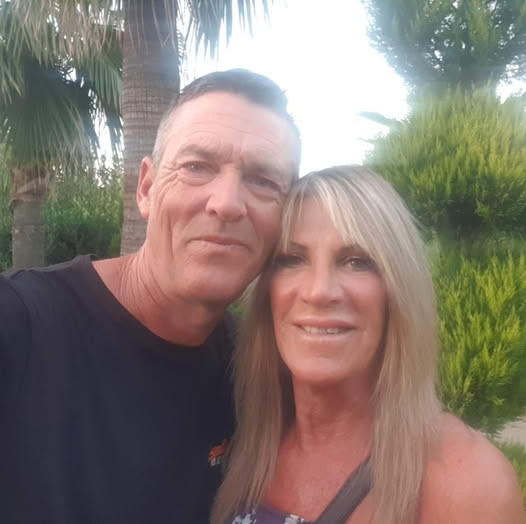
My name is Dr. Marie Bennett. I am a cosmetic dermatologist. I have spent twenty-three years studying what happens to skin when oestrogen withdraws, when collagen collapses, when the structural foundation of a woman's face quietly dismantles itself in the years after menopause. I know the science better than almost anyone. And for three years — between the ages of 54 and 57 — I stood in front of my own bathroom mirror every morning and watched my face age in ways I could not stop. I want to tell you about those three years. Because I think it will explain why I developed DermaLisse™. And why I developed it the way I did. I turned 54 the year my oestrogen dropped. I knew it was coming. I had watched it happen to thousands of patients. I understood the mechanism precisely — the withdrawal of oestrogen, the collapse of collagen production, the rapid structural changes to the skin that follow. I had explained it to women sitting across from me in my consultation room more times than I could count. I thought understanding it would make it easier. It didn't. Because knowing why your face is changing does not stop it changing. The lines around my mouth appeared first. Deep. Vertical. The kind that foundation settles into rather than covers. Then the jowling. That soft, resigned droop along the jaw that I had described so many times in clinical language — skin laxity, loss of structural support, ptosis of the soft tissue — and that felt, when it happened to my own face, nothing like clinical language. It felt like losing something. Then the skin itself. The colour went. The luminosity I had always had — the thing patients sometimes mentioned when they said "you have such good skin, what do you use?" — quietly withdrew. Replaced by something flat. Grey. Defeated in a way I had not expected and could not name in any of the textbooks I had written chapters for. I was a cosmetic dermatologist. I knew exactly what was happening. And I had no idea what to do about it. Let me tell you what I tried first. Because I need you to understand that I did not go straight to the treatments I had access to as a clinician. I went to the same place every woman goes first. The pharmacy. Not because I didn't know better. Because I wanted to know whether what I recommended to patients who couldn't afford clinical treatments actually worked. I had been recommending No7 Protect and Perfect for years. I had read the University of Manchester research. I knew the double-blind methodology Boots used. I knew the 70% positive response rate they required before releasing a product. I bought it. I used it morning and evening. For four months. I took photographs in controlled lighting every two weeks. I compared them systematically. I am a scientist. I do not allow wishful thinking to colour my observations. At four months the photographs showed marginal improvement in surface hydration. Nothing structural. The jowling was unchanged. The nasolabial folds were unchanged. The grey flatness was unchanged. I was not surprised. I was frustrated. Because I knew why. The Matrixyl in the No7 formula — the ingredient the Manchester research had shown produced genuine collagen synthesis — was present at a concentration far below the level used in the studies. The research showed efficacy at clinical concentrations. The product was formulated at mass market concentrations. Because clinical concentrations cost too much to use at a £25 price point. Boots is not dishonest. Their methodology is more rigorous than most of their competitors. But the gap between the research and the product is real. And standing in my bathroom at 54 with my own photographs in front of me, I felt that gap personally for the first time. I tried the rest. I want to be thorough about this. The La Mer moisturiser that costs £180 and is 80% petrolatum and mineral oil with a proprietary blend of fermented sea kelp that has essentially no clinical evidence behind it. The SkinCeuticals CE Ferulic — which is genuinely good for antioxidant protection and which I still recommend for morning use — but which does nothing for structural collagen loss. The NuFace microcurrent device. The Foreo Luna. A course of professional grade glycolic acid peels. All of them good for surface improvements. None of them touching the structural problem. The collagen collapse. The muscle contractions carving lines deeper every day. The cellular signalling breakdown that comes with age. None of the products on the market — at any price point — were addressing all four mechanisms simultaneously at the concentrations needed to produce real results. I sat in my consultation room one afternoon between patients and looked at this problem the way I look at any clinical problem. What does the research actually say? Not the marketing. The research. I went back to the primary literature. I read every peer-reviewed study on topical peptides and facial ageing published in the preceding decade. And what I found was both exciting and deeply frustrating. The research was there. The results were there. Argireline — Acetyl Hexapeptide-3 — had been studied extensively. A clinical trial in the International Journal of Cosmetic Science had demonstrated a 30% reduction in wrinkle depth at a 10% concentration after 30 days. The mechanism was sound. Argireline inhibits the SNARE complex — the protein machinery responsible for triggering neurotransmitter release at the neuromuscular junction. In plain language — it tells the facial muscles to contract less forcefully. The same mechanism as botulinum toxin. Without the needle. Without the clinic visit. Without the bruising and the frozen expression and the £400 every four months. The research was conclusive. At 10%. Most products on the market contained it at 1 to 3%. At that concentration the inhibitory effect on the SNARE complex is insufficient to produce measurable results. It is enough to list on the label. It is not enough to work. Matrixyl Synthe'6. The Sederma research showed a 137% increase in collagen IV synthesis at clinical concentrations. A 65% increase in hyaluronic acid production. Measurable reduction in wrinkle volume after 60 days. Collagen IV is the structural protein that forms the basement membrane of the skin. When oestrogen withdraws, collagen IV synthesis is one of the first things to collapse. Rebuilding it is not cosmetic. It is structural. It is the difference between skin that has a foundation and skin that doesn't. At clinical concentrations — Matrixyl Synthe'6 rebuilds it. At mass market concentrations — it doesn't. I sat with this research for three months. I consulted with colleagues in biochemistry and formulation chemistry. I asked one question repeatedly. What would happen if you formulated a product using these ingredients at the concentrations the studies used. Not at the concentrations the market used. The ones in the actual research. The answer was consistent. You would get the results the research showed. But the product would cost significantly more to produce than anything currently on the mass market. And you would need to be willing to sell it without the retail margins that Boots and the department stores require. Which meant selling it directly. Without a middleman. Without a retailer taking 40 or 50% of the price. Without the compromise that turns a clinical concentration into a marketing one. I spent eighteen months developing the formulation. I was not trying to create a luxury product. I was not trying to create a premium brand. I was trying to answer the question I had been unable to answer standing in my bathroom at 54 with my own photographs in front of me. What actually works. At the doses that the research says actually works. For skin like mine. Post-menopausal. Structurally compromised. Trying to rebuild something that oestrogen withdrawal had dismantled. The formula I developed became DermaLisse™. Argireline at 10%. The concentration at which the peer-reviewed research demonstrated a 30% reduction in wrinkle depth after 30 days. Matrixyl Synthe'6 at clinical concentration. The concentration at which the Sederma research demonstrated a 137% increase in collagen IV synthesis. Matrixyl 3000+ alongside it. Because the research on the combination is stronger than either ingredient in isolation. No filler ingredients. No proprietary blends of things that sound impressive and do nothing. No compromises made for retail margins. I started using DermaLisse™ myself before I made it available to anyone else. Because I am a scientist. And I do not recommend things I have not tested. Week 3. I took my photographs in controlled lighting. Compared them to week one. The nasolabial folds. Measurably softer. Not dramatically. But measurably. I noted it without excitement. I am a scientist. I wait for patterns. Week 5. My practice manager — who has worked with me for twelve years and has never once commented on my appearance — looked at me across the reception desk. "Dr. Bennett," she said. "You look different." "Different how?" She studied my face. "Your skin looks — I don't know. Firmer." I noted it. Week 7. A colleague — a consultant dermatologist whose opinion I respect more than almost anyone in my field — sat across from me at a conference dinner. She looked at my face for a long moment. "What are you using?" she said. "Something I developed," I said. "Can I see the formulation data?" I sent it to her the following morning. She rang me that afternoon. "The concentrations are correct," she said. "I know," I said. "Why isn't anyone else doing this?" she said. "Margins," I said. A pause. "Send me a bottle," she said. Week 12. I took my photographs. I compared them to week one. I compared them to the clinical research predictions for Argireline at 10% and Matrixyl Synthe'6 at clinical concentration after twelve weeks of use. The results matched the research. Not exceeded it. Matched it. Which is all I had ever asked of it. The jowling had visibly lifted. The nasolabial folds had softened to a degree I had not seen from any topical product I had used or recommended in twenty-three years of practice. The grey flatness — that thing I had watched drain from my own face and been unable to name — had resolved. My skin had colour again. Structure. Life. I looked like myself. Not a younger version of myself. Not an altered version. Myself. I want to say one more thing before I finish. I am aware that this reads like marketing copy. A doctor who develops a product and then tells you it worked on her own skin. I understand the scepticism. I share it professionally. So let me be precise about what I am claiming and what I am not. I am not claiming DermaLisse™ produces results beyond what the clinical research on its active ingredients predicts. I am not claiming it is a miracle. I am not claiming it replaces surgery for advanced skin laxity. For some patients, at some stage of skin ageing, surgery remains the most appropriate option. What I am claiming is this. The research on Argireline and Matrixyl Synthe'6 at clinical concentrations is conclusive. The results are documented in peer-reviewed journals. The mechanism is understood. The concentrations matter. And DermaLisse™ uses the right ones. That is the entire claim. No more. But also — finally — no less. Because for three years I stood in front of my own mirror knowing exactly what was happening to my face and not being able to find a product that used what the science said would help at the dose the science said would work. DermaLisse™ is my answer to that. To myself at 54. To the thousands of women who have sat across from me in my consultation room and asked — is there anything I can try before surgery? The answer — finally — is yes. This.
Where the ad sends people
try.verdana-home.com
A ‘facelift’ without surgery, swelling or downtime – even her doctor was speechless!
Over 20x stronger than medical wrinkle creams and serums. Experts say it should really be a prescription drug, but it's still available in United Kingfom (for now!)
Learn more: try.verdana-home.com(opens in a new tab)