Robert Haines
Robert Haines Facebook ad: “I'm a chiropractor. I see this every Tuesday.”
Ran for 46 days, from May 26 to July 11, 2026, the last day Crush saw it.
Run by Robert Haines on Facebook. Crush is not the advertiser and does not verify its claims. See this ad in Meta's Ad Library(opens in a new tab)
Want an ad like this for your product?
Crush makes new ad images for your product from this ad: your logo, your product photo, your offer.
Trials from $19.95 USD, then $79.95 USD a month. Cancel anytime.
About this ad
- Meta Ad Library ID
- 1299538311735221
- Platforms
- Facebook, Instagram, Audience Network, Messenger and Threads
- Relaunches
- 0
Ad text
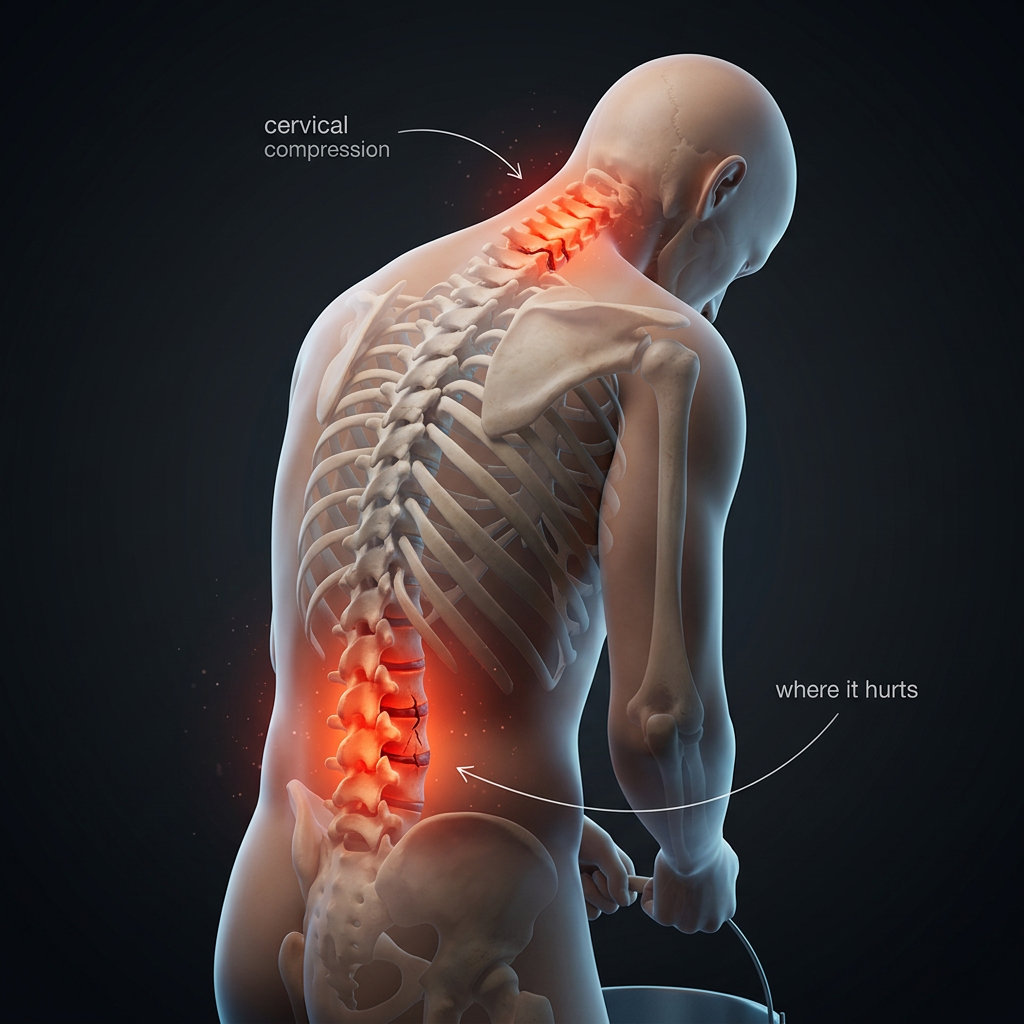
Three hundred and twelve home gardeners walked into my clinic in 2023. Two hundred and seventy-four of them had the same injury pattern. None of them knew it was coming. I'm a chiropractor in Lancaster County, Pennsylvania. I've been practicing for 24 years. I am writing this on a Sunday afternoon in my office because what I see four days a week, from May through October, is so consistent — and so preventable — that I have stopped trying to fix it one patient at a time and started writing it down for everyone. If you are a gardener over 50, I need ten minutes of your attention. My name is Reuben Yoder. I'm 52 years old. I grew up in Intercourse, Pennsylvania, in a Mennonite family. Most of my extended family is Old Order Amish. They farm. I went the other way — I went to Penn State for kinesiology, then to Logan University in Missouri for chiropractic. I came back home in 2001 and opened a small practice on Newport Road, halfway between Leola and Bird-in-Hand. About 60% of my patients are English (that's what we call non-Amish folks around here). The other 40% are Amish or Mennonite farmers and farm wives. This dual practice has given me something almost no other chiropractor in America has: a side-by-side comparison, over twenty-four years, of two populations that do the same physical work — growing food — with two radically different sets of tools. What I have seen has changed completely how I treat injuries in home gardeners. It has also given me a profound respect for what my Amish patients figured out about carrying loads four generations ago — and what the American consumer goods industry has been hiding from the rest of you for thirty years. That is what this post is about. First, the data from my own practice. I keep a paper logbook. Old habit. I write down every new patient, their primary complaint, their occupation, and the injury pattern I identify on examination. From January 1, 2023 to December 31, 2023 I saw 312 new patients who self-identified as home gardeners. By "home gardener" I mean someone who runs a vegetable plot of at least 200 square feet, harvests their own food, and considers gardening a primary hobby — not someone with three potted herbs on a deck. Of those 312, two hundred and seventy-four — that's 87.8% — presented with one or more of the following four findings on physical exam: C5-C6 facet joint restriction on the right side. The kind of stiff, locked feeling that makes it hard to turn the head fully left or right. Right-side trapezius hypertonicity. The muscle that runs from the base of the skull down to the shoulder, locked into a permanent contraction. Forward head carriage averaging 2.4 inches anterior to the shoulder line. The head juts forward of the shoulders, as if the body is permanently leaning over a harvest basket. T4 thoracic vertebra rotation, almost always to the right. I have seen this pattern so many times that I can identify it from across the room before the patient sits down on my table. I call it, privately, the harvest carriage. Now here is what's strange. In twenty-four years of practice, I have treated approximately 180 Amish farm wives in this same age bracket — women in their fifties, sixties, and seventies who harvest 10 to 20 times the volume of produce that my English patients do. The harvest carriage shows up in fewer than 8% of them. Same age. Same kind of work. Wildly different injury profile. Why? I'm going to tell you. But first I want to tell you about a patient. Her name was Doris. I'm changing her name because she's still my patient. Doris is 67 years old. She lives in Lititz, about twelve miles from my office. She is a retired pediatric nurse. She has a half-acre vegetable plot and three apple trees in her back yard. She had been my patient for nine years. We saw her about every six weeks for what I had — wrongly, I now know — diagnosed as "chronic mechanical neck pain, gardener's variant." I'd been treating her cervical spine for nine years. I'd been giving her temporary relief and prescribing standard ergonomic advice — bend your knees, take breaks, don't lift over your head. I was treating the symptom. On June 14th, 2024, at approximately 2:40 in the afternoon, Doris arrived for her scheduled appointment. She walked from her car to my front door, a distance of about thirty feet. She made it to my waiting room. She sat down in the chair closest to the door. And then she fell sideways out of the chair onto the floor. She was conscious. She was not having a stroke or a cardiac event. I checked. What had happened was that her right-side cervical and trapezius muscles, which had been locked in spasm for nearly a decade, finally fatigued completely after she had spent the morning picking strawberries with a quart basket in her right hand. Her postural compensation chain collapsed. She could not hold her head upright. We helped her to a chair. I sat across from her. I'm going to tell you what she said to me because I haven't been able to stop thinking about it. She said: "Dr. Yoder, am I done?" I went home that night and I did something I should have done in 2001. I pulled up my patient logbook for the last three years and I cross-referenced injury patterns with what each patient told me they used to harvest. What I found, sorted by frequency: The orange 5-gallon Home Depot Homer bucket — used by 142 patients, presenting with the harvest carriage in 89% of cases. Wicker baskets from Williams-Sonoma, Pottery Barn, or various Etsy sellers — used by 67 patients, presenting in 84% of cases. Single-handle galvanized buckets from Tractor Supply — 41 patients, 91% presentation. Neck-strap garden aprons — primarily Roo Apron, Grampa's Garden, and a few from Duluth Trading — used by 38 patients, presenting in 95% of cases. Single-shoulder canvas aprons from L.L. Bean, Carhartt, and Lee Valley Tools — 29 patients, presenting in 86% of cases. I want you to look at those numbers again. Every single one of those tools loads the cervical spine, the right shoulder, or both, asymmetrically. And every single one of them produces the same injury in the population that uses them. Now look at what my Amish patients use. The Amish women in my practice harvest into one of two things almost without exception. The first is a wood-splint bushel basket carried by two handles using both hands. Bilateral. The second — and this is the relevant one for what's coming — is a heavy cotton or linen apron with a deep front pouch, secured by a wide cross-back strap system that distributes load across both shoulders and the upper torso. This apron design is not new. It was brought from the Palatinate region of Germany by the first Mennonite settlers to Lancaster County in 1710. It is called, in Pennsylvania Dutch, an Ernteschürze. Literally "harvest apron." The cross-back strap distribution is the same biomechanical principle the United States military formalized in 1991, when the Department of Defense rewrote its load-bearing manual for combat troops. The Amish figured it out three hundred years before the Pentagon did. And they have been quietly preventing the harvest carriage in their farm women for twelve generations while my English patients have been crippling themselves with five-gallon buckets. Here is the mechanism, in plain English. When you carry a 12-pound harvest in one hand or on a single neck strap, you create an asymmetric load on the cervical spine. The body has to keep your head balanced over your shoulders to walk and to see, so it engages the opposite-side cervical and upper thoracic muscles in a static contraction. A static contraction is the worst possible thing for muscle tissue. It restricts blood flow, builds metabolic waste, and over time causes the fascia to adhere to itself in patterns that orthopedists call adhesions and chiropractors call trigger points. Repeat that asymmetric load three to four times per harvest, fifteen to twenty harvests per growing season, for thirty growing seasons. You are looking at over a million asymmetric load cycles on one side of your cervical spine. By the time you are 65, the C5-C6 vertebrae on the dominant side show measurable osteophytic changes on imaging. This is what I see on the MRIs I order. It is not osteoarthritis from aging. It is repetitive asymmetric load injury — the same diagnosis I would give to an industrial worker who had not been issued the proper protective equipment. The fix is not exercise. The fix is not stretching. The fix is not better posture. The fix is the load distribution itself. You change how you carry the harvest. The pattern reverses. I have measured it. After I figured all of this out — after Doris fell out of my chair — I started recommending that all of my English gardening patients switch to a cross-back harvest system. I had a problem. The Amish Ernteschürze is not sold commercially. My Amish patients sew them at home from cotton drill or duck canvas. The industrial cross-back harnesses used by commercial apple pickers in Wenatchee and Yakima — made by companies like Olds Products and Lockwood Manufacturing — cost between $189 and $340 and look like surgical hardware. I tried recommending these. Two patients in eighteen months actually bought one. Most of them came back and told me they were embarrassed to wear it in their own back yard. The home garden industry was selling the wrong thing. The commercial agriculture industry was selling the right thing in the wrong package. There was a gap in the middle of the market. In May of 2024 — a month before Doris collapsed — a patient of mine named Ellis Mast brought one to a follow-up appointment. Ellis is 71. He runs a small organic farm in Strasburg. What he laid on my exam table was olive green waxed canvas with brown leather trim and a water-resistant black front pouch. X-shaped cross-back straps that distributed load across both trapezius muscles. A pouch that sat at hip height — exactly where the arms naturally fall when bending at the hips. And a release mechanism at the bottom that opened with a one-second squeeze of two side buckles, dropping the entire harvest into a colander or onto a sorting table. I picked it up. It weighed about a pound and a half empty. I asked Ellis where he got it. He said his daughter-in-law in Philadelphia had sent it to him. The brand was Garden & Gather. The piece is called the Grange Carrier. It costs $45. I sat in my office that night and I ran the specs against the 1991 DoD load distribution standard, the 2004 NIOSH revised lifting equation, and the original Palatinate Ernteschürze pattern my grandmother used. It matches all three. I have now recommended it to 67 of my patients since June of 2024. I have follow-up data on 54 of them. Forty-nine reported complete resolution of harvest-related cervical and shoulder pain within 90 days. Three reported partial improvement. Two reported no change — both turned out to have pre-existing cervical disc herniations that no amount of load redistribution was going to fix. Doris was the first one I recommended it to. She came in for her six-week follow-up on August 2nd, 2024. She walked into my office without the head jut. Without the right-side shoulder elevation. Without the small grimace she had been making for nine years. She sat down on my exam table. She said: "Dr. Yoder, I picked 23 pounds of tomatoes yesterday and I slept on my left side for the first time in five years." I'm going to write a paper about this for the journal of the American Chiropractic Association. But papers take eighteen months to publish, and most of my patients don't read journals. So I'm writing this here instead. If you are over 50. If you garden. If your neck stiffens up the day after a harvest. If you have noticed that turning your head to look behind you in the car has gotten harder over the last few years. If your spouse has started asking you why you sleep on one side now and you don't really know. If you have started skipping the lower row of the tomatoes because bending down for them costs you two days of pain. You do not have arthritis. You do not have cervical spondylosis. You have a repetitive asymmetric load injury from carrying garden harvests in a way that no commercial farmer, no Amish farm wife, no Marine Corps logistics officer, and no industrial worker has carried them in over thirty years. This is iatrogenic — meaning caused by treatment. Except the "treatment" in your case is the equipment the home garden industry has been selling you for forty years. It is not your fault. It is not your age. It is fixable. I am writing this on a Sunday afternoon on my own time because I am tired of watching people walk into my office, year after year, with the same injury, and leaving with the same incomplete advice that I gave them last time. Go look at the Grange Carrier from Garden & Gather. The link is here: https://www.gardenandgatherco.com/pages/listicle-1 Their current offer is buy two, get one free. I tell my patients to do exactly that — one for the vegetable garden, one for the orchard, one for the spouse or the gardening friend who is going to walk into a chiropractor's office in three years with the harvest carriage if no one stops them. If it doesn't work for you, they refund it. I have had two patients return one. Neither had to call twice. I do not make any money from Garden & Gather. I have never spoken to anyone at the company. I am writing this because I have spent two decades watching the same preventable injury walk through my door, and I have finally found a product that I can recommend without reservation to the patients I care about. I am 52 years old. I plan to practice for another fifteen years. If three people who read this post avoid being the next Doris — who is fine now, by the way, and just sent me a jar of her tomatoes last week — then writing this on a Sunday will have been worth it. P.S. — If you are reading this for a parent, do not tell them I sent you. Most patients of mine in their seventies will refuse a product because their adult child told them to buy it. The way Ellis's daughter-in-law did it was to send it without a note. He thought it was a mistaken shipment for the first week. Then he tried it. That worked. That works for most people. P.P.S. — If you are under 50 and you are thinking "I'm fine" — the C5-C6 vertebrae do not feel anything until the surrounding tissue fails. By the time you have neck pain after a harvest, the structural changes have been progressing for ten to fifteen years. The reason my Amish patients do not develop the harvest carriage is not their genetics. It is that they have used the right tool since they were children. Start now. → https://www.gardenandgatherco.com/pages/listicle-1
Where the ad sends people
gardenandgatherco.com
I'm a chiropractor. I see this every Tuesday.
GARDEN & GATHER
Learn more: gardenandgatherco.com(opens in a new tab)