
Inactive· since Apr 18, 2026
- 5
- days it ran
- 0
- relaunches
Ad copy
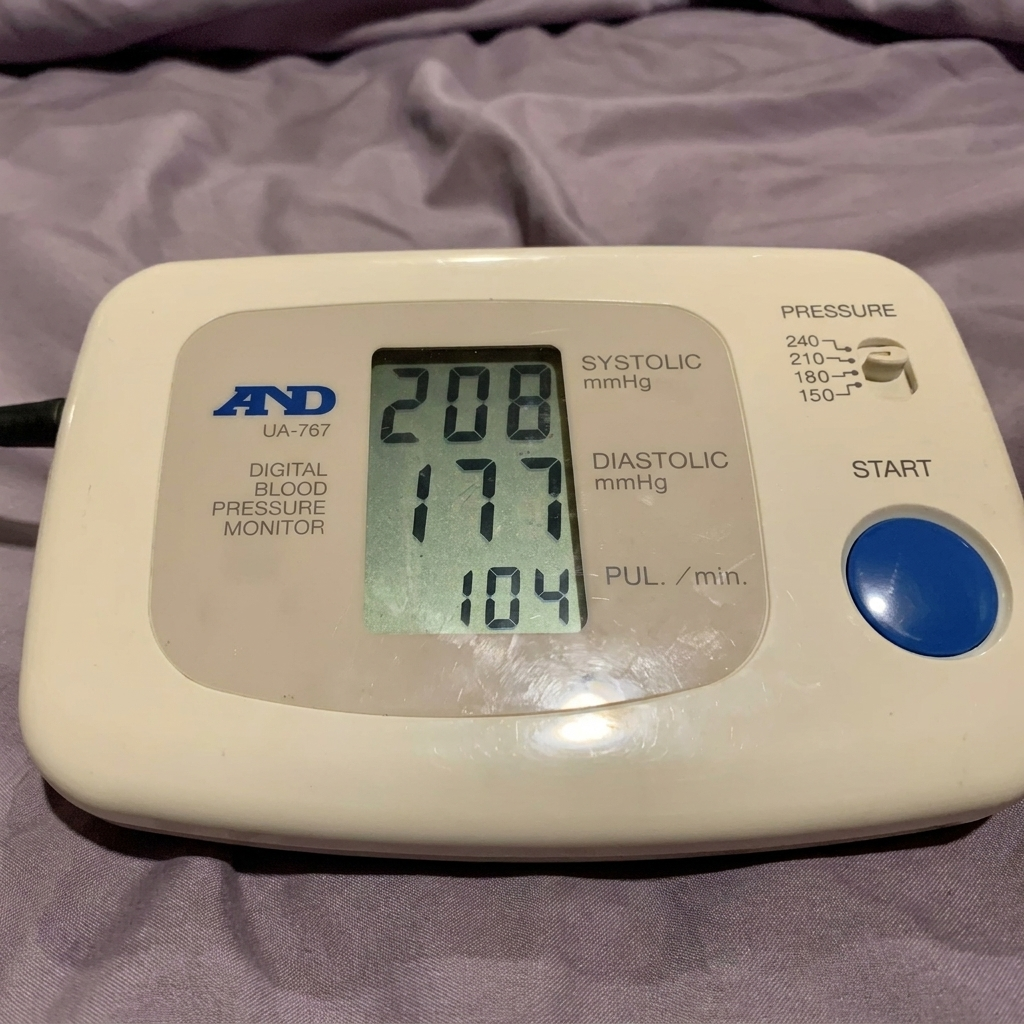
My Cardiologist Told Me My Arteries Looked Like a Man Twenty Years Older Than Me. I'm 28. My Previous Doctor Had Been Telling Me Everything Was Fine for Two Years. Now I Had a Prescription I Didn't Want, a Specialist I Didn't Trust, and a Body That Was Apparently Aging Twice as Fast as I Was. Daniel Reeves is 28 years old. For two years, Dr. Patterson was my doctor. He knew everything that mattered about my situation. He knew my father had his first cardiac event at 44. Knew my uncle was on three blood pressure medications before he turned 50. Knew I'd spent most of my adult life quietly terrified that the same thing was coming for me — just earlier than I expected, because that's how it seemed to run in my family. He'd been tracking my numbers since I was 26. First reading: 144/93. "Given your age, I'm not alarmed," Dr. Patterson said. "We'll keep an eye on it. Watch the diet. Get some consistent exercise in. Your body has time to self-correct." Time to self-correct. I held onto that phrase. 155/97 six months later. "Still within a range we can manage with lifestyle. Let's give it another few months." 162/101 the following year. "These things fluctuate. You're young. Stay consistent." Then Dr. Patterson retired. His practice closed. I was referred to a cardiologist named Dr. Shen. My first appointment with her was supposed to be routine. New patient intake. Review the file. Nothing significant. I sat in the examination chair. Different office. Same feeling of waiting for numbers I didn't want to hear. Dr. Shen came in without small talk. She opened my file on her tablet. Scrolled. Stopped. Scrolled again. Then set the tablet down and looked at me with an expression I couldn't immediately read. "Mr. Reeves. Walk me through what your previous doctor told you about these readings." "He said we were managing it. Lifestyle changes. Give it time." "Give it time." She repeated it the way you repeat something when you're deciding whether to say what you're actually thinking. "Your blood pressure today is 174 over 106. You're 28 years old. The arterial stiffness I'm seeing in your preliminary scan is consistent with someone in their late forties, early fifties." She paused. "Whoever told you this was manageable with dietary adjustments at these numbers was giving you false reassurance." I felt something drop in my chest. "Dr. Patterson knew my family history. He knew I was worried. He was trying not to—" "I understand the intention. The outcome is that you've spent two years watching your blood pressure climb without intervention." She picked up her tablet again. "I'm prescribing amlodipine. 5 milligrams daily. We start today." "I don't want to start medication at 28." "Mr. Reeves, your cardiovascular age is not 28. That's the reality we're working with." "My father didn't go on medication until his mid-forties." "And how did that work out for him?" The question landed harder than she probably intended. Or maybe exactly as hard as she intended. She printed the prescription. Set it on the desk between us. Didn't push it toward me. Just placed it there. "Your reluctance is noted. If you choose not to fill this, that will be documented in your file as refusal of recommended treatment." I took the prescription. Thanked her. Walked to my car and sat there looking at it for a long time. That evening my roommate Jake found me at the kitchen table. Laptop. Printed articles. A pen I'd been clicking without realizing. "Still at it?" "Trying to work something out." He sat across from me. Looked at the screen. "What's the problem exactly?" "Two doctors. Same file. Two completely different conclusions. Patterson said lifestyle changes and time. Shen says he basically left me to get worse while pretending it was management." "Could they both be partially right?" I looked at him. "Think about it," he said. "What if Patterson wasn't wrong that medication isn't the only answer — but Shen isn't wrong that doing nothing wasn't working either? What if neither of them is actually offering you the thing that fixes it?" I didn't answer. But I didn't sleep. At 2 AM I was still at the table. what causes high blood pressure in your 20s amlodipine long term side effects young adults arterial stiffness age 28 The research was uncomfortable. Sustained hypertension at my age — the studies were consistent — wasn't just a number problem. It was a vascular problem. Vessels losing elasticity. The lining of the arteries changing in ways that made future events more likely regardless of whether the reading was suppressed by medication. I kept reading. Every article about amlodipine mentioned the same things. Ankle swelling. Persistent fatigue. Dependency. The way calcium channel blockers managed the reading without addressing the underlying mechanism driving it. I thought about my father in his late forties. The medication that kept his numbers acceptable while his energy disappeared. The way he'd stopped doing things he used to do — not because of the blood pressure, he'd say, just because he was getting older. Just because that's how it goes. I wasn't getting older. I was 28. I put the prescription in a drawer. Dr. Shen's office called four days later. Then again the following week. I told them I was researching alternatives. The receptionist's voice carried the specific neutrality of someone reading from a script about medical compliance. I hung up and kept researching. Beetroot appeared everywhere. Dietary nitrates. The nitrate-to-nitrite-to-nitric-oxide pathway. University studies. Clinical trials. The mechanism by which blood vessels received the signal to relax and widen — a mechanism that declined with age and inflammation and stress, and that medication suppressed symptoms of without restoring. I ordered the first product I found with strong reviews. Six weeks. Every morning. 171/104. Three points down. I'd been at 174/106. I tried a second brand. Spent more. Read the label more carefully this time. Took it for five weeks. 173/105. Went up. Two beetroot supplements. Eleven weeks. Money I didn't have to waste. The follow-up with Dr. Shen was in eight days. I was going to walk in with the same numbers I'd walked out with and hear the word "non-compliance" used about me like I was a problem to be managed rather than a person trying to find a real answer. Three days before the appointment I was standing in a pharmacy. Picking up something unrelated. Completely ordinary afternoon. The man next to me at the supplement section was talking to someone — a younger guy, maybe a college student. The older man was pointing at a row of beetroot products with the specific authority of someone who has explained this before and finds it quietly frustrating every time. "The issue is what happens to the compound before it gets to you," he was saying. "Nitrates are fragile. High heat destroys them. Most of these products are processed at temperatures that degrade the active compound before the packaging is even sealed. You're buying the idea of beetroot. Not what makes beetroot work." I stopped. "Sorry," I said. "Are you talking about why beetroot supplements don't work?" He turned. Looked at me with the unhurried assessment of someone who has spent a long time understanding things other people haven't gotten to yet. "I'm talking about why most of them don't. Some do." He picked up a bottle from the shelf. "This one doesn't. Heat-spray dried. By the time it reaches your cabinet the dietary nitrates — the compounds that trigger the nitric oxide pathway — are substantially degraded. You'd need to take ten times the listed serving to approach a therapeutic dose. And even then." "I tried two brands over the last eleven weeks. Neither one moved my numbers." He nodded once. Not surprised. "What does the label say about processing?" I tried to remember. "They don't list it," he said before I could answer. "Because if they did, you'd see temperatures that no dietary nitrate survives. The clinical research showing blood pressure reduction from beetroot used cold-processed extracts standardized to a specific nitrate concentration. Not whole beetroot powder. Not heat-dried extract. Cold-processed. Standardized. Verified independently." "How would I know what I'm getting?" "Certificate of Analysis. Published by the company. Showing exact dietary nitrate content per serving, tested by a third party. Not estimated from extract weight — actually measured. Most companies don't publish it because the numbers don't support what they're claiming." He pulled out his phone. Showed me a product. UltimaPeak. "Cold-extracted at every stage. 500 milligrams standardized dietary nitrate per serving. Third-party tested. Certificate of Analysis published online. You can verify the nitrate content before you buy." He looked at me directly. "How old are you?" "28." Something shifted slightly in his expression. "Then you want to fix the pathway, not just manage the reading. The pathway is still responsive at your age. You have an advantage most people who find this don't have." He pocketed his phone. "Give it three weeks before you decide anything." He walked away. I ordered UltimaPeak before I left the pharmacy parking lot. What he'd explained in four minutes at a supplement shelf was the answer to eleven weeks of failed attempts and two conflicting doctors and 2 AM research sessions that kept circling the same drain. Most commercial beetroot products are heat-processed. The dietary nitrates — the specific compounds that initiate the conversion chain leading to nitric oxide production — degrade under heat exposure during manufacturing. By the time the product is dried, packaged, and sitting in your cabinet, the active compound that makes the mechanism work is partially or completely gone. You're consuming what beetroot used to contain. Not what your vessels actually need. The clinical dose that produces measurable blood pressure reductions in research settings is 400 to 500 milligrams of dietary nitrate per serving. Most commercial products deliver 10 to 50 milligrams. And those milligrams have already been degraded by heat before they reach you. "It's like being handed a key that was melted before anyone checked if it fit the lock," he'd said. "The key exists. The door exists. But nothing opens." The bottle arrived two days later. I took the first gummy at 7 AM. Held it against my tongue the way the instructions specified — the oral bacteria that initiate nitrate conversion live on the tongue's surface, the dissolution needs to happen there, not in the stomach. 7 AM. 7:30. Nothing I could name. 7:52. Something. Not dramatic. Not the sensation I'd been half-hoping for and fully not believing in. A quality of space. Like something that had been operating at a low hum of constriction released fractionally. I checked my blood pressure at 8:15. 168/102. Down from 174/106 three days earlier. Small. But the direction was new. I didn't let myself believe it yet. One week in. Morning reading: 159/98. Fifteen points systolic in seven days. I checked it three times. Sent a photo to Jake without explanation. He texted back immediately. "Is that yours?" "Yes." "That's down like fifteen points." "I know." "What are you doing?" "Tell you in two weeks." Two weeks in. The afternoon exhaustion that I'd been attributing to work hours, to stress, to being the kind of person who just ran low on energy by 3 PM — it was gone. Not reduced. Gone. I was making it through full days without the cognitive fog that had become so normalized I'd stopped recognizing it as a symptom. Jake noticed before I said anything. "You've been different this week." "Different how?" "Present. Like you're actually here instead of somewhere half a mile away." He looked at me. "What changed?" I hadn't told him about the readings yet. Hadn't wanted to say it out loud. Reading that morning: 151/93. Three weeks in. I went for a run. Halfway through I realized my chest felt clear in a way it hadn't felt in two years of running. The tightness I'd normalized as just how running felt — the subtle resistance that arrived around the fifteen-minute mark and made me slow down — wasn't there. I ran further than I'd run in months without planning to. Reading that evening: 143/88. The night before my appointment with Dr. Shen I checked my blood pressure four times. 138/84. 138/85. 137/83. 139/85. All of them. Below Stage 2. Below where I'd been when this started. Below where I'd been for two years of Dr. Patterson telling me to give the lifestyle changes more time. At the appointment the next morning, the nurse wrapped the cuff. Pumped. Looked at the screen. Looked at me. Pumped again. 136/82. She wrote it down without saying anything and left the room. Dr. Shen came in. Opened my file. Read the screen. Looked at me. Read the screen again. "136 over 82." "Yes." "You filled the amlodipine prescription." "No." Her jaw tightened slightly. "Mr. Reeves—" "I found a cold-processed beetroot supplement. Standardized to 500 milligrams of dietary nitrate per serving. Third-party tested. Certificate of Analysis published online. My blood pressure dropped 38 points systolic in three weeks." She looked at me for a long moment. Then she typed something. Pulled up a browser. Typed UltimaPeak into the search bar. Read the website. The research citations. The Certificate of Analysis. The manufacturing process documentation. She read for longer than I expected. The room was quiet. "These nitrate standardization numbers are legitimate," she said finally. More to herself than to me. "I know." She looked at me. "Continue what you're doing. Come back in six weeks. If the readings hold in this range we won't need to revisit the prescription." Won't need to revisit the prescription. I called Jake from the parking lot. "136 over 82. She told me to continue without medication." I heard him exhale. "Marcus, you're 28." "I know." "You fixed this at 28." "I know." What he meant — what neither of us said directly — was that my grandfather was 31 when his heart stopped. I was fixing the pathway at 28. Three years younger than Frank Webb was when he died. That's what the number meant. That's what it will always mean to me. Three months later my blood pressure is 127 over 79. I went hiking last weekend. Eight miles. Vertical gain that would have had me managing my pace and monitoring how my chest felt at every plateau. I didn't think about my chest once. At the summit my friend took a photo. When I looked at it later I didn't recognize the expression on my face. It took me a moment to identify it. I wasn't bracing for anything. If you're reading this you probably know what it feels like to be young and handed a diagnosis that doesn't belong to your age. To sit in a doctor's office at 27 or 28 or 31 and hear numbers that are supposed to describe someone twenty years older than you. To carry a family history like a forecast — not if, but when, and the question is just whether you can push the when far enough forward that it stops mattering. Maybe you've been told to give the lifestyle changes more time. Maybe you've been told you've already given them too much time. Maybe both doctors said something that felt partially right and you're standing between them not knowing which direction to move. Here's what I know now. Dr. Patterson wasn't wrong that medication isn't the only path. Dr. Shen wasn't wrong that watching numbers climb for two years without real intervention wasn't a strategy. What both of them were missing — what I had to find in a four-minute conversation at a pharmacy supplement shelf — was the mechanism. Your vessel walls produce nitric oxide. A signaling molecule that tells them to relax and widen. When production is sufficient, blood flows freely and pressure stays manageable. When production declines — which it does with inflammation, with stress, with the chronic metabolic pressure that comes with modern life even at 28 — vessels tighten. The heart compensates. The reading climbs. Medication suppresses the reading. It does not restore the signal. Dietary nitrates from beetroot — cold-processed, standardized, verified — restore the signal. Not by forcing anything. By giving the pathway what it stopped receiving naturally. That's the difference between the two brands that failed me and the one that brought my reading from 174/106 to 127/79. Cold-processed. No heat at any stage of extraction or manufacturing. The nitrates survive. 500 milligrams standardized dietary nitrate per serving. The clinical dose. Not estimated from extract weight. Independently measured and verified. Certificate of Analysis published online before you buy. The exact nitrate content of every batch. Tested by a third party. Nothing hidden. And the format — a gummy that dissolves against the tongue — matters because the nitrate-to-nitrite conversion begins in the mouth. The bacteria on your tongue initiate the chain before you swallow. A capsule bypasses that entirely. A gummy works with the biology instead of around it. Within the first session I felt something shift. Within the first week my reading dropped fifteen points. Within three weeks I was below Stage 2 for the first time in two years. Within six weeks my cardiologist told me to continue without medication. UltimaPeak backs it with a 60-day money-back guarantee. Take it daily. Track your readings every morning. Same arm. Same time. Same log. If your numbers don't move the direction mine did — full refund. No questions. You keep the product. You risk nothing except finding out sooner rather than later. [LINK] You're at a fork. One path: fill the prescription. Start the medication at 28 or 29 or 31. Hope the side effects stay manageable. Hope the reading stays controlled. Hope the mechanism that's actually driving the pressure doesn't keep compounding underneath the suppressed number. And spend the next decade watching your cardiovascular age continue to outrun your actual age while your doctor calls it managed. Another path: restore the pathway. Give your vessel walls the signal they stopped receiving. Track what happens to the number when the cause is addressed instead of the symptom. The medical system will not offer you the second path. There is no prescription for nitric oxide restoration. There is no billing code for addressing the mechanism instead of the number. But you're young. Which means the pathway is still responsive. Which means you have an advantage the people who find this in their fifties don't have. Your grandfather didn't get the chance to find this at 28. You do. Every day the pathway stays depleted is another day your vessels work against pressure they weren't designed to sustain. The window where this is most fixable is now. Not in five years. Not when the second medication gets added. Not when the cardiovascular age gap gets wider. Now. If it's available — order it. https://ultimapeak.com/products/ultimapeak-organic-beetroot-gummies P.S. — I noticed something different within the first hour of the first dose. My reading had dropped fifteen points by day seven. By week three I was below Stage 2. By week six my cardiologist told me to continue without pharmaceutical intervention. Your timeline may differ. But the mechanism is the same. And you won't know what your pathway responds to until you give it what it actually needs. P.P.S. — My younger brother is 24. Same family history. First elevated reading at his last physical — 146/94. I sent him the Certificate of Analysis before I even told him what the product was. He ordered it the same day. His two-week reading: down eleven points. He called me and said he didn't know blood pressure was something that could actually get better. Neither did I. Until it did.
Hypertension at 28. How I fixed it...
4,000mg of pure organic beetroot powder — nature's most powerful source of dietary nitrates to support healthy blood pressure, boost nitric oxide, and fuel lasting energy and circulation. Feel the difference. Naturally.
LEARN MORELike this ad? Make it yours.
Crush rebuilds this exact creative around your product — your brand, your colors, your offer — in about a minute.