
Inactive· since Jun 24, 2026
- 6
- days it ran
- 3
- relaunches
- 3
- EU reach
Ad copy
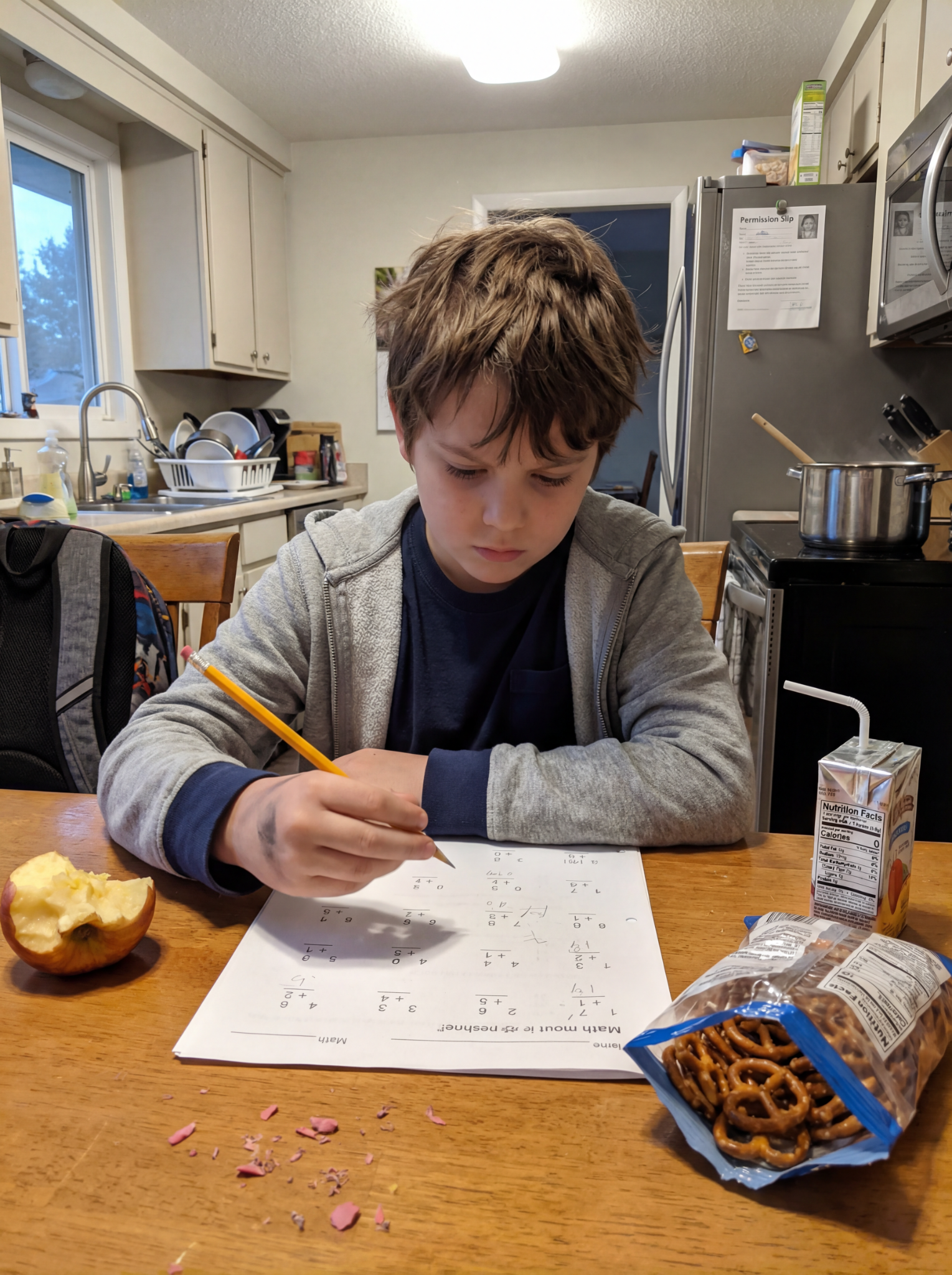
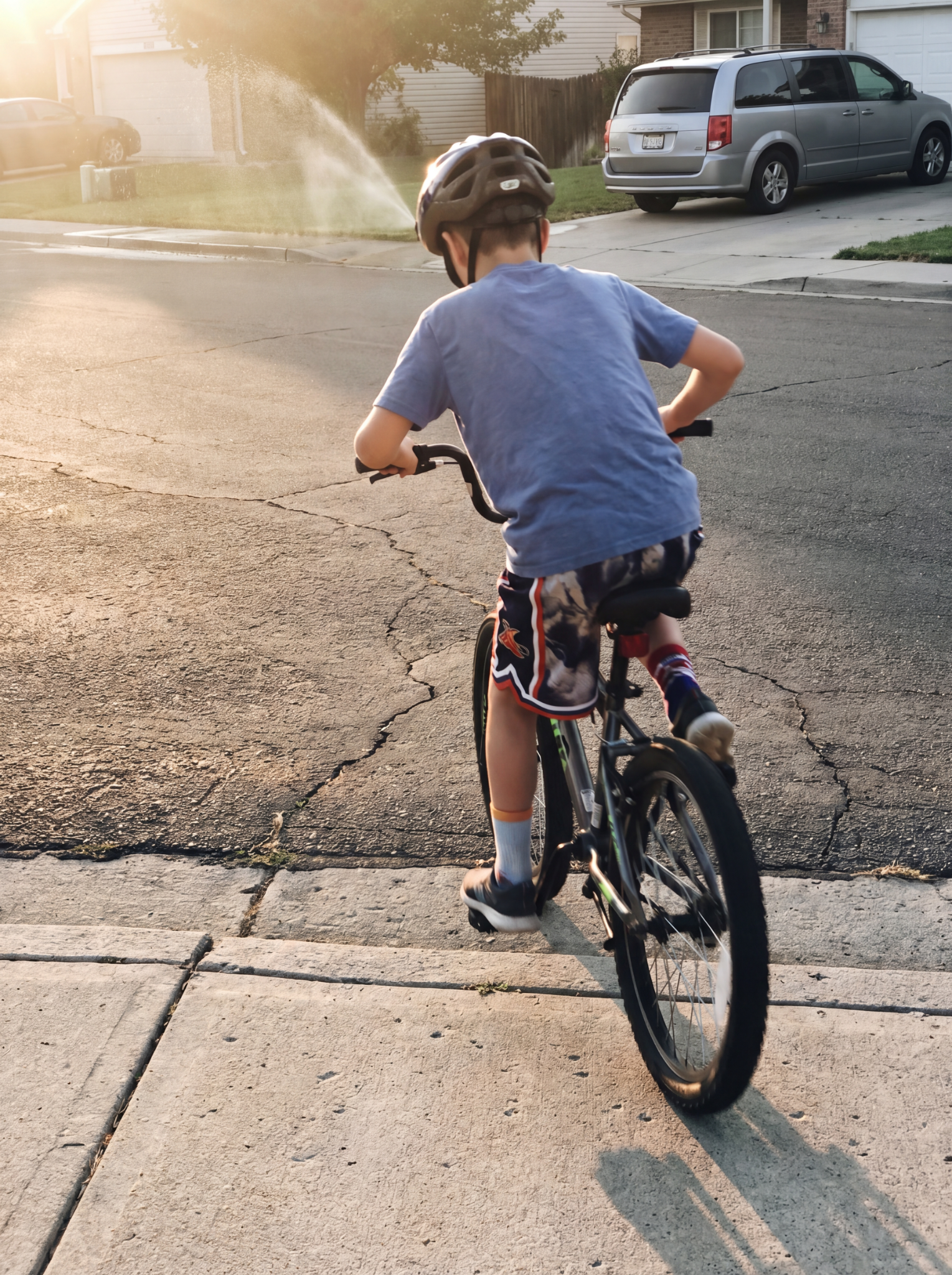
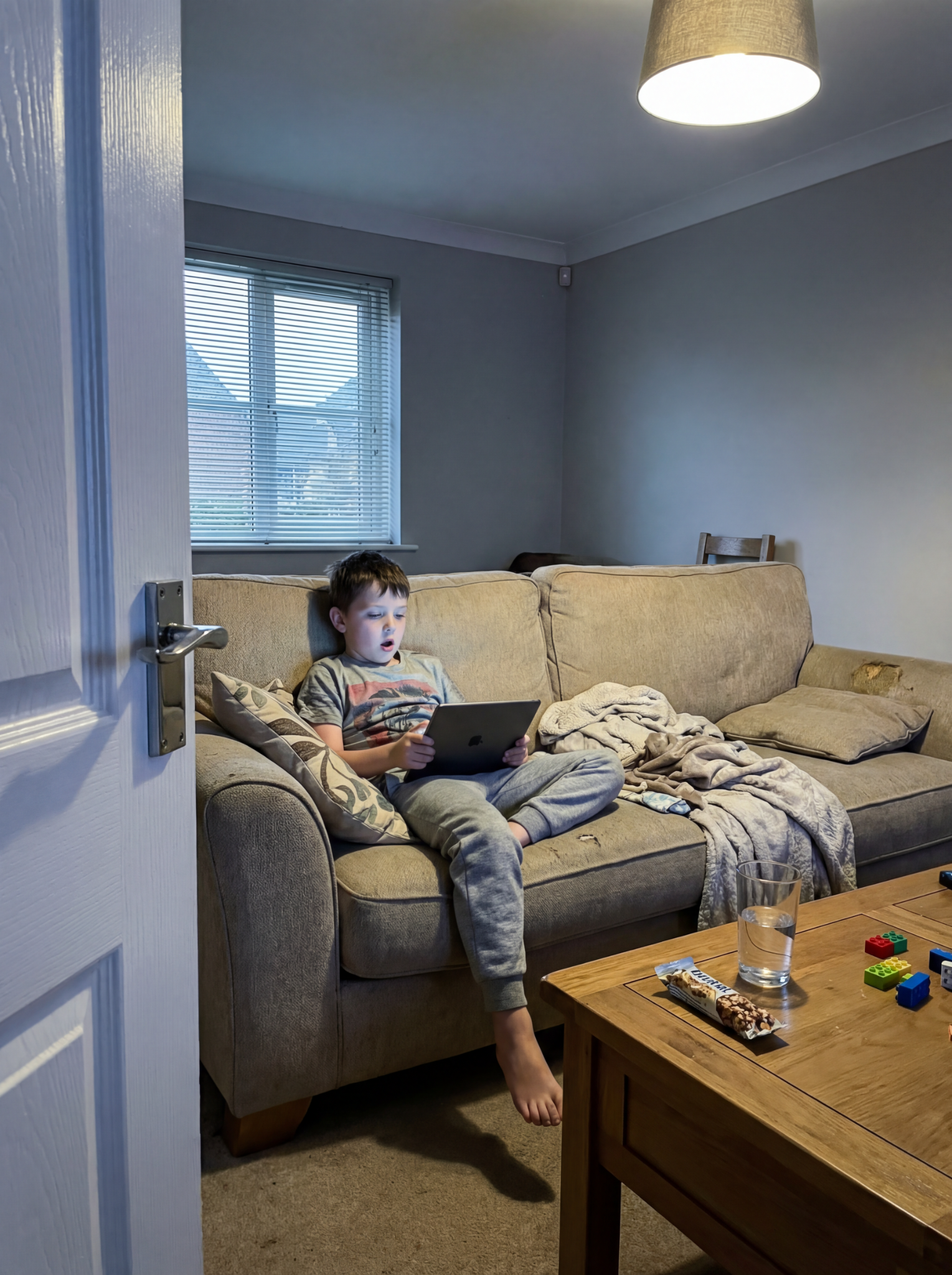
My son can't focus at school, can't control his emotions at home, and the only thing that calms him down is a screen. I thought the screen was the problem. I thought if I could just get him off the iPad, the rest would fix itself. I was wrong about all of it. And I need to tell you what someone finally explained to me — because it would have saved me two years of fighting the wrong battle. — Owen is 10. Fifth grade. And he's struggling in a way I can't fix no matter what I try. At school his teacher says he drifts. Starts a worksheet, gets three problems in, and his brain just leaves. Staring at the wall. Picking at his eraser. His teacher keeps saying he's smart. "When he's locked in, he's one of the sharpest kids in the class." But he's almost never locked in. Hes not locked in for her. Not for homework. Not for anything that doesn't have a screen attached to it. At home it's the emotions. Everything hits him at a 10. I tell him it's time to stop playing Roblox— meltdown. I tell him we're having chicken instead of pizza — meltdown. I ask him to start his homework— full screaming, crying, door-slamming. Ive been waiting for him to just grow out of this phase but he just never has control. The worst thing is the screens. He can sit with Minecraft for two hours straight. Calm. Quiet. Focused. Building entire worlds with his friends online. Totally locked in. But the second I say "time's up" — that kid vanishes. iPad hits the couch. Screaming starts. Full volume. Tears. The "I HATE YOU." Fifteen minutes later he's on the floor. Drained. Staring at the ceiling. And I'm sitting on the other end of the couch wondering how the same kid who was calm and focused five minutes ago is now lying on the floor because I asked him to stop. And here's the part that really gets me. When the iPad is off and there's nothing to replace it — he doesn't do anything. Doesn't want to go outside. Doesn't want to call a friend. Doesn't want to play. Just sits there. "What do you want to do?" "I don't know." In this flat, empty voice that doesn't sound like my son. He gets so frustrated he doesn't even want to talk to me. He loves to ride his bike. He used to love Legos. Used to come home excited about something other than the screen. Now the only time he comes alive is when he's playing Roblox. Everything else gets a shrug. — I did what made sense. I went after the screen. That's the problem, right? Every parenting article says it. Every mom in the Facebook group says it. Too much screen time. He's addicted. Take it away and he'll learn to cope without it. So I did. One month No iPad. No screens for anyone. It was the worst month of our lives. The meltdowns didn't stop. They got worse. And they spread to everything. Getting dressed — meltdown. Homework — meltdown. Being told it was time for dinner — meltdown. It was like the iPad had been holding something together inside him and without it he fell apart completely. His focus at school didn't improve. His emotions didn't stabilize. And the flatness, he would get excited to play outside or start a new LEGO set, but most of the time he wouldn’t care. He had nothing that made his brain feel okay. I gave the iPad back. Because at least when he had it, there were a few calm hours. But I knew it wasn't the answer. Taking it away proved the screen wasn't the root cause. If it were just screen addiction, removing screens should have helped. It made everything worse. So I tried other things. A tutor for the focus — it helped when someone sat with him, but alone he drifted right back. School therapist for the emotions — breathing exercises worked in her office, fell apart in the car on the way home. Supplements — magnesium gummies, omega-3s, those Olly vitamins from Target, calm drops from Amazon. None of them changed a thing. I tried being stricter. More consequences. Earning screen time. Losing screen time. I tried being softer. More patience. More connection time. Sitting with him through the meltdowns instead of fighting them. Nothing stuck. Every strategy worked for a day or two then fell apart. And with every failed attempt, the same thought crept in: maybe I'm the problem. Maybe I'm not consistent enough. Not patient enough. Maybe I gave him screens too early and this is the result. Every parenting article, every well-meaning comment, every expert on Instagram — they all imply the same thing: if you parent correctly, your child responds. So if Owen isn't responding, the math says it's me. I carried that for two years. — My friend Kendra is the one who changed everything. Her son Eli is in Owen's class. Same age. Same teacher. And a year ago — same struggles. Couldn't focus. Meltdowns over nothing. Glued to a screen and flat without one. Kendra had done the same things I was doing. Took screens away. Therapist. Tutor. Supplements that did nothing. She brought it up at Eli's birthday party. I was watching Owen sit on a bench by himself while every other kid ran around, and she sat down next to me and said: "Owen looks exactly like Eli did last year." I told her everything. The school stuff. The meltdowns. The screen dependency. Taking the iPad away and watching him get worse. The things I'd tried. The things that failed. How I was starting to think it was my fault. She shook her head before I even finished that sentence. "It's not you. It's not the screen. It's not his behavior. And it took me a specialist to understand what it actually is." — Kendra had taken Eli to a pediatric neuropsychologist. Someone who doesn't look at behavior — they look at what's happening chemically in the brain. The specialist asked Kendra to list everything Eli was struggling with. Can't focus. Can't control his emotions. No motivation without a screen. Can't handle transitions. Can't start tasks. The specialist explained that all five of those problems stem from a single root cause. She explained that there are three chemicals in the brain — dopamine, serotonin, and norepinephrine. They're called monoamines. And they work as one connected system. When this system is running, a kid can focus, regulate emotions, handle frustration, feel motivated, and move through their day. When it's not, everything feels harder for kids Dopamine is what lets a kid sit with a worksheet without his brain checking out after two minutes. That's Owen drifting through tests. Not choosing not to focus — his brain doesn't have enough of the chemical that sustains attention. Serotonin is the buffer between a small frustration and an explosion. That's Owen screaming because I said time's up on the iPad. His brain doesn't have the buffer. Every small thing hits at full force. Norepinephrine is what makes a kid want to DO things. That's Owen on the couch saying "I don't know" to everything. Not lazy. Not depressed. His brain doesn't have enough of the chemical that creates drive. "And here's what nobody told me about the screens," Kendra said. When this system isn't working — when dopamine is low, serotonin is low, norepinephrine is low — the brain goes searching for the fastest source of dopamine it can find. Not as a choice. As survival. The brain needs dopamine the way a body needs water. Roblox, Minecraft, YouTube — they deliver constant, rapid hits of dopamine straight to the reward center. For a kid whose brain has been running on empty all day at school — managing impulses, trying to focus, burning through whatever little it has — the iPad isn't entertainment. It's relief. It's the only thing that makes his brain feel normal. "That's why Owen can play Roblox for two hours but can't do homework for five minutes," Kendra said. "The game floods his brain with what it's been starving for. Homework doesn't produce dopamine. His brain can't sustain attention on it — not because he's choosing the screen over homework, but because the fuel isn't there." "And when you take the iPad away — you're not ending a game. You're cutting off his brain's only source of the chemical it needs. What you see isn't a tantrum. It's a brain losing the only thing keeping it stable." I sat there and felt two years of guilt lift off my chest in one sentence. He wasn't addicted. He wasn't spoiled. He wasn't choosing the screen over real life. His brain was starving, and the screen was the only thing feeding it. And every time I took that away, I was removing his only source of stability and wondering why he fell apart. The focus issues weren't about discipline. The meltdowns weren't about parenting. The screen dependency wasn't about screen time rules. It was one system — not getting what it needed — and showing up three different ways. That's why nothing I tried worked. I was fighting the symptoms. The tutor addressed focus. The therapist addressed emotions. Taking the iPad away addressed the screen. But none of them touched the root beneath it all. — "So why doesn't the system have what it needs?" I asked. "Two things," Kendra said. "His brain isn't getting the building blocks, and his day is draining whatever his brain needs to focus and manage his emotions." The brain builds dopamine, serotonin, and norepinephrine from specific nutrients — amino acids, B6, B12, magnesium. Those are the raw materials. And most kids aren't getting enough. The soil our food grows in has been depleted — measurably less magnesium, less B vitamins than a generation ago. And our kids are eating junk all day, Chicken nuggets, Goldfish, granola bars, pasta. Enough calories. Almost none of what the brain needs to build these chemicals. Then school uses up whatever the brain does produce. Seven hours of sustained attention, impulse control, emotional regulation, task switching. And they get twenty minutes of recess. By 3 PM Owen's brain has spent everything it had. That's why he walks through the door and goes straight for the iPad — his brain is empty and the screen is the fastest way to fill the void. That's why the meltdowns are always worse after school. Every request after that point is one too many for a system running on nothing. "I told the specialist about the supplements I tried," Kendra said. "Magnesium. Omega-3s. Olly gummies. She shook her head at every one." "She said those each target one thing. Maybe a little magnesium for calm. Maybe omega-3s for general brain health. But the monoamine system runs on three chemicals built by one process. You can't fix a whole system with a single ingredient. It's not that natural doesn't work — those products were never designed for what's actually going on." — "So what do you do about it?" I asked. "I can't change his genetics. I can't change the school system.” "You don't have to," Kendra said. "But you have to stop fighting the symptoms — the screen, the behavior, the emotions — and address why his brain is chasing them in the first place. If you don't fill the gap from the inside, nothing changes. You're just taking away his coping mechanism without giving him a replacement." The specialist told Kendra about saffron extract. Not the cooking spice. A clinical-strength extract — two compounds called crocin and safranal — studied for their ability to support the brain's natural production of all three monoamines. Not just one. All three. Dopamine — so his brain has its own internal supply instead of depending on a screen. When dopamine comes up naturally, the brain can sustain attention on things that aren't instantly rewarding. Homework. Chores. Conversations. Getting dressed. The things that don't deliver dopamine on their own become manageable because the brain isn't empty anymore. Serotonin — so emotions stop coming in at a 10 when the situation is a 2. So "time's up" on the iPad doesn't trigger a crisis. So his nervous system has enough stability to handle frustration without exploding. Norepinephrine — so the drive comes back. So the kid who sits on the couch saying "I don't know" to everything starts wanting to do things again. Ride his bike. Call a friend. Get up and move. Not because you bribed him off the screen — because his brain has the chemical that makes real life feel worth engaging with. "There's a study," Kendra said."Compared saffron extract head-to-head with Ritalin in kids with ADHD. Focus, attention, behavior — rated by both parents and teachers. The results were comparable." I asked about side effects. "That's the thing. No appetite loss. No sleep disruption. No personality disappearing. It doesn't override the brain. It feeds it. Helps it make more of what it's been missing." "But saffron can only do so much on its own," she said. "It supports production and helps the brain hold onto what it makes. But the system still needs the raw materials — B6, B12, and magnesium — the building blocks for actually producing the chemicals. Without the fuel, even the best saffron can only take you so far." I asked if she'd tried the cheap stuff. The Amazon brands. She shook her head. "I tried two different ones for Eli before the specialist. Garbage. Both of them. The specialist said most saffron supplements use generic extract — maybe 20% active compounds. The study used extract standardized to over 95% pure crocin and safranal. Below that threshold, brain chemistry doesn't change. Most products on the shelf aren't anywhere close. It's a decorative sprinkle on the label." "That's why the Olly gummies did nothing," I said. "Right. Wrong dose, wrong form, wrong everything. It was never going to work. Not because natural doesn't work — because those products weren't built for this." She told me about the one the specialist recommended. Mood Balance. Clinical-dose saffron extract — 95%+ pure crocin and safranal. The actual concentration from the study. Plus magnesium glycinate — the form that actually crosses the blood-brain barrier, not the oxide that barely absorbs. B6 and B12 to fuel the production chain. Lion's mane for clarity. L-theanine for calm focus. All in one gummy. The saffron to drive the system. The nutrients to fuel it. Everything together. "Does Eli take it?" I asked. Because I've fought the supplement war. I've lost every battle. "It's a gummy. Tastes like candy. He asks for it every morning. No fight. No smoothie-hiding. Ten seconds and it's done." "And how is he now?" Kendra got quiet. Watching the kids run around. He's still my wild little but but he can focus, he participates in class and actually has control over his emotions. The screen went from being the only thing that he enjoyed to just another thing he does. Because his brain wasn't starving anymore." She looked at me. "Four months ago he was glued to a screen and flat without one. Yesterday he asked me if he could sign up for basketball." — I ordered it on my phone before the party was over. Didn't tell my husband. Didn't tell Owen's teacher. Two years of trying things and watching them fail had burned every ounce of hope out of me. But for the first time I wasn't fighting the screen or the behavior or the emotions. For the first time I understood what was underneath all of it. One system. And for the first time, what I was giving him was built for that system — not just one piece of it. — Owen chewed the first gummy Monday morning. Said it tasted good. Asked for another one. I said one is enough. — Week two Tuesday after school. He dropped his backpack, went to the kitchen for a snack, and sat at the table. Normally he'd go straight for the iPad without a word. But he sat there. And when I said "homework before screens" — no argument. No negotiation. He pulled out his worksheet and worked through it. Thirty minutes. Still long. But no screaming. No "I can't do this." After homework I braced for the iPad demand. Instead he said: "Can I ride my bike before dinner?" He hadn't asked to ride his bike in months. Hadn't asked to do anything that wasn't a screen in months. I didn't let myself feel it yet. — Week three. After dinner. Owen had been on the iPad for an hour. I said: "Time's up, buddy." My body braced. Two years of this trains your muscles before your brain even finishes the sentence. He looked up. I saw the flash — that spark of frustration that's always been the fuse. He set the iPad down. Stood up. "Can I have a popsicle?" I stood in the doorway and couldn't move. Because that had never happened. Not once in two years of warnings and battles and meltdowns and his sister retreating to her room. He turned it off and walked away. Like his brain just let go. — Week four. I told him we were having chicken for dinner. Not pizza. This has triggered full meltdowns more times than I can count. "Aw man." Pause. "Can we have pizza tomorrow?" "Sure." "Okay." He walked away. Disappointed for three seconds and moved on. His brain finally had the buffer to absorb a small frustration without crashing. Same week — homework took eighteen minutes. He asked for help on one problem, finished the rest himself. Put it in his backpack and went outside. — Week six. His teacher emailed. My stomach dropped — reflex from two years of bad news. "I've seen real changes with Owen. He's staying on task during independent work. He finished his math test today — the whole thing, no blank sections. He raised his hand during discussion twice this week. His energy is different. He seems more present. More engaged. Whatever is happening, keep doing it." Finished the whole test. No blank second half. His brain had enough to sustain it from the first problem to the last. More present. More engaged. The drive was back. Raised his hand. Participated. His brain had the stability to risk being wrong without it feeling like a catastrophe. One system. Running again. — It's been three months. Owen is still Owen. Still quiet. Still an observer. That's who he is. But the flatness is gone. He rides his bike after school. Calls his friend. Came home last week and talked for ten minutes about a book they're reading in class. Animated. Present. Excited. The iPad is still in our house. He still plays Minecraft. I didn't take screens away and I didn't need to. The screen went from a need back to a want. And a want has an off switch. He plays for an hour, I say time's up, most days he turns it off and moves on. The meltdown is gone. The "I HATE YOU" is gone. Homework takes fifteen to twenty minutes. Tests come back completed. Mornings work. My husband said it last week: "It's like he came back online." — If your kid is struggling to focus at school, can't seem to control their emotions at home, and the only thing that calms them down is a screen — I need you to hear what I wish someone told me two years ago. It's probably not the screen. It's probably not your parenting. And it's probably not something you can fix with stricter rules or better consequences. The monoamine system — dopamine, serotonin, norepinephrine — runs as one machine. When it's struggling, focus struggles, emotions struggle, motivation struggles. And the brain chases the screen because it's the only thing filling a tank that's been empty all day. You don't have to fight the screen war. You just have to provide them with what they've been missing. One gummy. Every morning. Clinical-dose saffron to support production and retention across all three pathways. B6, B12, and magnesium glycinate to give the brain the building blocks it's been missing. The saffron to drive the system. The nutrients to fuel it. That's what helped my son. Not stricter screen rules. Not more discipline. Not three different solutions for what turned out to be one thing. His brain just needed what it was missing. And once it had it, the screens stopped being a lifeline and went back to being a toy. EDIT: Everyone keeps asking which one. Mood Balance. Clinical-dose saffron extract with 95%+ active compounds, magnesium glycinate, lion's mane, L-theanine, B6, B12. This is what Owen takes every morning. [uselumexa.com/pages/saffron-2]
Like this ad? Make it yours.
Crush rebuilds this exact creative around your product — your brand, your colors, your offer — in about a minute.