Antony Hylton
Antony Hylton Facebook ad: “Inspirational Teachings of Bethel: From the Bondage of…”
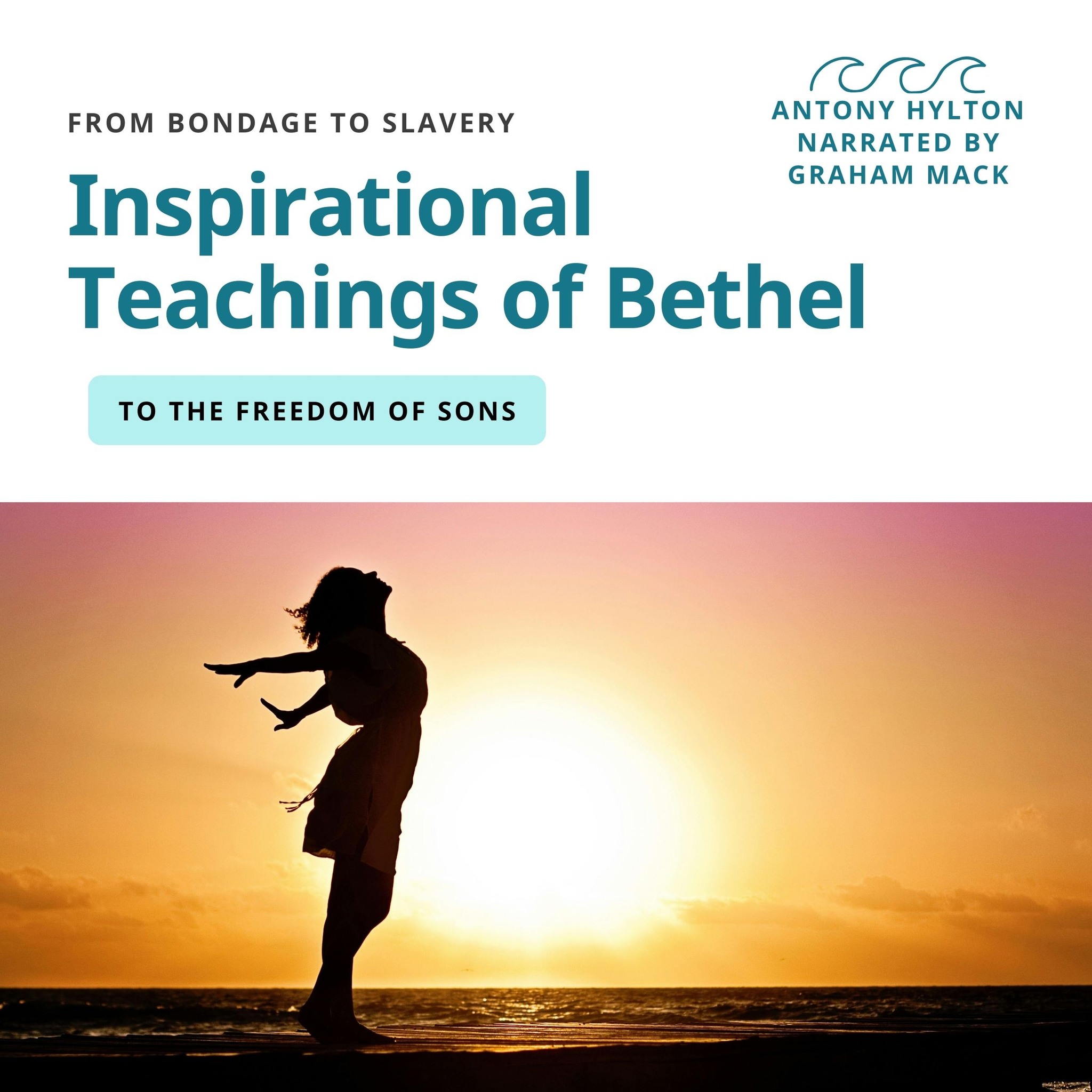
Ran for 18 days, from March 6 to March 24, 2026, the last day Crush saw it.
Run by Antony Hylton on Facebook. Crush is not the advertiser and does not verify its claims. See this ad in Meta's Ad Library(opens in a new tab)
Want an ad like this for your product?
Crush makes new ad images for your product from this ad: your logo, your product photo, your offer.
Trials from $19.95 USD, then $79.95 USD a month. Cancel anytime.
About this ad
- Meta Ad Library ID
- 1309188284566575
- Platforms
- Facebook, Instagram, Audience Network, Messenger and Threads
- Relaunches
- 0
- EU reach
- 54
Ad text
The Books that Empower Identity as Sons of God 1 When Heaven Invades Earth Bill Johnson (Link in the comments) The book is written to inspire to Church to take up the dream of God to invade earth with the life style and good conditions which are present in heaven. Every tool we have including prayer and teaching are supposed to be used to affect this purpose. This dream came from over hearing witnesses of the revival of Aimee Semple Macpherson saying, "it was like days of heaven on earth". The author understands that the Holy Spirit is the ultimate key in working in the Church to manifest heavens glory on earth. He sees a revival coming so great as to outstrip all the revivals of the past and it will bring over a billion souls into the kingdom of God. His book is written to facilitate this revival and the author has dedicated his life to facilitating a life of miracles for the Church which will let the world experience the manifestation of heaven on earth. The major points of the book are 1. Man was initially created to live in the glory of God. 2 That Jesus did his miracles as a human without sin and by the power of the Holy Spirit, not because he was God. 3. From this he argues that man was created to be with God in glory, but sin spoilt that. 4. The normal Christian life should conform to the model of Jesus. 5. The commission of man on earth before sin however is restored through Jesus after the resurrection. We as saints live on the resurrection side of the cross and glory is our path and destination. He then makes a way for us all to receive the Holy Spirit and live the way he did, a life of miracles. A key point is that worship is the key way to dwelling in the presence of God so this is a main function. From worship comes the presence of God from the presence come miracles which are designed to line the earth realm up with the God realm, heaven. Thus, wherever we go as saints we should be releasing the presence of God by the Holy Spirit moving through us. We are to fill this earth with God's glory from heaven. We are not to submit to fear of failure, which leads to acceptance that the miracles present in the Bible were a thing of the past. The Antichrist Spirit tries to remove the expectation of power and leave the Church powerless, and in some sense hopeless, this poor vision have a high cost. Rather we must accept what the word really says and run with the vision even if we look foolish at times. We owe the world an encounter with God and knowing who we are can help us give them one. One main strength of the author is that he focuses on the positive message of the Biblical text in regard to his understanding that Yahuah's activities in the Bible include lessons for every saint in every generation, to equip them to bring heaven, and all it stands for, to earth. For example, in looking at the issue of who was healed and who was not healed in a particular case, the author emphasizes the fact the somebody was healed, even if not everybody present was. He notes that theologians focus on the fact that many were left unhealed, but for the saints the example is Jesus, and he healed everybody he was supposed to heal. From this we derive the fact that we saints are supposed to live a life whereby all those we are supposed to heal, will be healed, because health is the state of all beings in heaven. The issue of those not healed should not be our focus when we are looking at how heaven invades earth. The author’s vision that the purpose of prayer is to take the conditions of life which are present in heaven and to reproduce them on earth is laudable. This thesis, that God's purpose in Messiah Jesus is to produce heaven on earth - and we as people who live in Messiah are instruments which God is using to effect this purpose - is a powerful hermeneutical key which can be used to re-read many biblical texts and to take great lessons from them. A second, very powerful point of Johnson, is that Jesus - in doing his signs and wonders - was not acting in his status as creator of the universe, God the Son - but rather as God, stripped of his glory, and made man. He then was dependent on the indwelling of the Holy Spirit and the power of the Holy Spirit to perform the signs. Since we, as saints, also have the indwelling of the Holy Spirit and are men, he becomes the perfect model for us, and we can walk as he did: a man led by the Spirit of God. Johnson sees a close connection between the Spirit of God and the Kingdom of God illustrated from the passage where Jesus compared the two "if I by the Spirit of God cast out demons, the Kingdom of God has come upon you". This ties in with his thesis that through the saints, through the disciples of Jesus, heaven itself is invading the earth. On page 59 the author argues that the phrase "lead us not into temptation" means lead us not into the temptation to do evil. This, in my view, implies the possibility that the Father might possibly lead us into temptation, or the prayer would be in vain. He also points out that James makes clear that it is impossible for God to tempt us to sin. I read the phrase differently. The word perasmos which is here translated "temptation", can also be translated "testing". Thus, I hold that "lead not into perasmos" means lead us not into testing. Testing can be persecution, sickness, death of a loved one - not necessarily a temptation to sin. It could be a testing like Job was tested or Apostle Paul was tested by apparently being stoned to death. I believe the prayer is that we should literally ask God not to test us, because if we fail the test, the consequences can be challenging. Additionally, if Job is an example of testing, the test could have evil consequences on our loved ones, our property and our health. This does not mean he will never test us, but we pray with David: "in wrath remember mercy". I would support my understanding from the episode where Yeshua says to his disciples. "Watch and pray lest you fall into the testing. The Spirit is willing, but the flesh is weak" in that context he was about to be arrested. He was ready for it, but his disciples were not. Therefore, they needed to be watchful and pray so they would not be caught and tested in an unprepared, pre-resurrection, pre-Holy Spirit state. A second phrase I would interpret differently to Johnson is his understanding of Jesus saying, "Satan has nothing in me" (2003,59). He interprets this paraphrase to mean "The believer is to be completely free from all satanic influence and attachments." Whilst it is true the believer is to be free, for me the meaning of the statement of Jesus had a legal context. He said, "The Prince of this world is coming but he has nothing in me". I believe this refers to the judgement of Yahuwah when he had to decide whether the blood or invisible life of Jesus was acceptable as a sacrifice of the sins of the world or not. Jesus was first assessed by Annas, then the High Priest Caiaphas and the Sanhedrin, he was then judged by Pilate who represented Caesar or the world power. Pilate found nothing in him worthy of death but condemned him anyway. He represented the prince of the Roman Empire. Now Jesus would be presented before the Father. The prince of this world came to accuse him before the father. If he could demonstrate any disobedience or sin in Jesus, Jesus could not have risen from the dead for the wages of sin is death. Jesus however had a completely clear conscience and could say before the cross that the prince of this world had nothing in him. The Father after judgement agreed and so he was raised from the dead and declared son of God with power by the spirit of Holiness. When Jesus told the disciples "The spirit is willing, but the flesh is weak", I read it two ways. The Spirit was willing that the disciples stay awake and watch and pray instead of falling asleep, get arrested and fall into testing. The Spirit was also willing their deliverance from the authorities who were looking to stamp out the work of Jesus. The Spirit willed their deliverance. Finally, this reading is connected to the words of Jesus, "if they persecute in one city, flee to the next". This is pretty good advice since Jesus said, "I send you out as sheep among wolves". Peter put this into practice after his last escape from prison, he disappears from the pages of the book of Acts. This book is amazing. it is so full of faith and acceptance of what the Bible actually says about the saints that every page is a veritable treasure house of divine wisdom. It has confirmed in a practical and enlightening way much of what the Holy Spirit has been teaching me about our identity. Thus, it has built much faith. Johnson's insight that faith comes from the continual hearing of the voice and word of God enlightened me as to processes I was already experiencing but the book somehow gave a clear context to these experiences. it challenges me to expect God to move through me even when I am not fully conscious of what he is doing. For example, Pastor Surprise saw a resurrection just by exuding the life-giving presence of the life-giving God. He was not conscious of what the Holy Spirit was doing through him and almost by accident produced a resurrection. Hence, I as a revivalist understand that just by staying in the presence of the Lord, I can bring life to those around me. As I read the book my spirit was filled with energetic joy, and I found myself praying in the Spirit and rejoicing. it is as though Johnson's ability to give clear illustration and to deal with the nay saying theologians encourages us to understand we are not alone in our conclusions regarding who we are in Messiah Jesus and that there is a brilliant wise man out there who is saying what we are thinking and saying in a contextual manner. I will also be more conscious of our impact on the world around us and what we can do even without fully comprehending it. Seeing the big picture of God's plan for us laid out so clearly enables us having read to run. Also, it will strengthen me in taking risks because if we do not "How will we learn?" This thought of Johnson reminded me of very important advice given by Denzel Washington. "Fail big". By this he meant we should go for big vision so much so that if we succeed the impact will be immense.
Where the ad sends people
amazon.com
Inspirational Teachings of Bethel: From the Bondage of Slavery to the Freedom of Sons
Inspirational Teachings of Bethel: From the Bondage of Slavery to the Freedom of Sons
Shop now: amazon.com(opens in a new tab)