Elaine Porter
Elaine Porter Facebook ad: “Read this if you have yellow teeth”
Ran for 8 days, from May 6 to May 14, 2026, the last day Crush saw it.
Run by Elaine Porter on Facebook. Crush is not the advertiser and does not verify its claims. See this ad in Meta's Ad Library(opens in a new tab)
Want an ad like this for your product?
Crush makes new ad images for your product from this ad: your logo, your product photo, your offer.
Trials from $19.95 USD, then $79.95 USD a month. Cancel anytime.
About this ad
- Meta Ad Library ID
- 1310193073953192
- Platforms
- Facebook, Instagram, Audience Network, Messenger and Threads
- Relaunches
- 0
- Niche
- Skincare & Beauty
Ad text
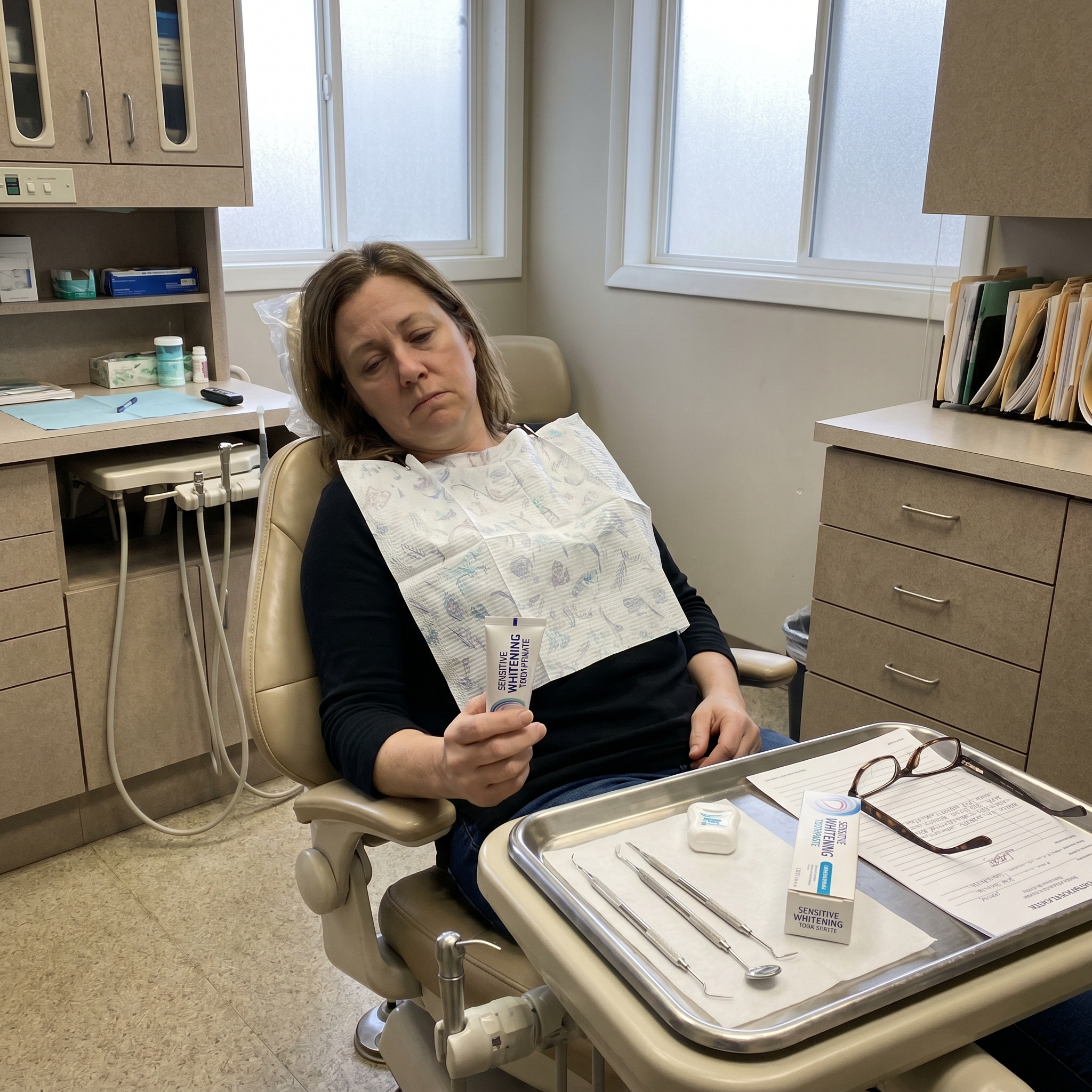
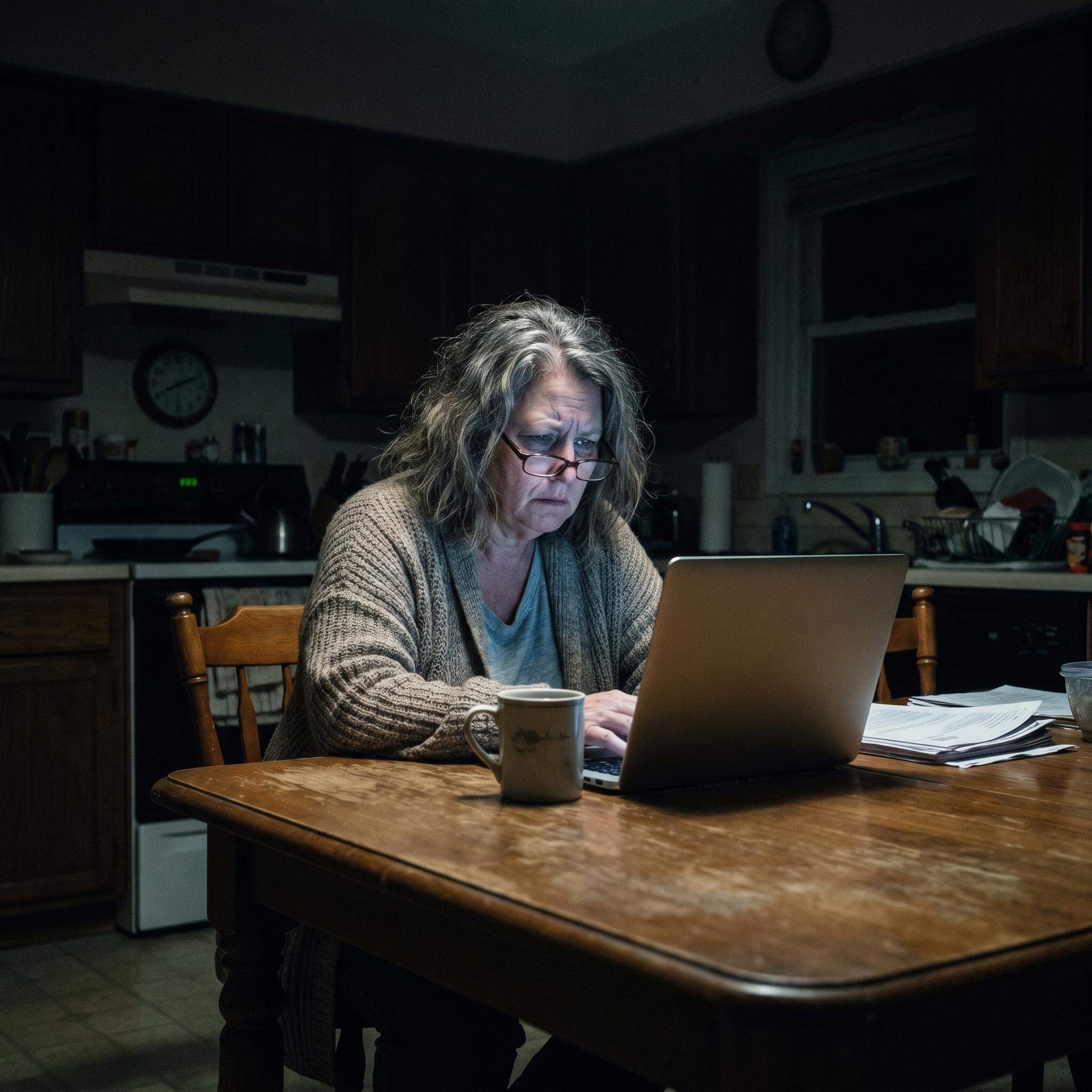
I want to tell you something that took me three years and about fifty wasted products to figure out.If you brush twice a day if you floss, if you use mouthwash, if your dentist smiles when you sit down and your teeth are still yellow? You're not lazy. You're not failing at basic hygiene. And it is not "just your coffee." My name is Elaine. I'm 63 years old. For the past thirty-five years, I have been the kind of person who takes care of her teeth. Not because anyone told me to. Because my mother had her teeth pulled at 42 and wore dentures her entire adult life, and I watched what that did to her. So I brushed. I flossed. I went to the dentist every six months without fail. I drank my coffee through a straw when I remembered. I used the whitening toothpaste, the whitening mouthwash, the whitening everything. And for most of my life, it worked. My smile was something I didn't think about. It was just there. Then it wasn't. Sometime around my fifty-seventh birthday, I started noticing it. Not dramatically. Just a gradual dimming. My teeth didn't look dirty. They looked... old. That warm, yellowed ivory that you see in old photographs and think, "that was before dental hygiene." Except I had dental hygiene. I had excellent dental hygiene. I mentioned it to my dentist. She looked in my mouth for about thirty seconds and said: "Carol, you're doing everything right. Some yellowing is just part of getting older. The enamel gets thinner and the layer underneath shows through. There's only so much we can do." There's only so much we can do. I went home with samples of a whitening toothpaste I'd already tried twice. I threw them in the back of a cabinet. That was the year I stopped smiling in photos. Not consciously. Just — stopped opening my mouth. My daughter started noticing it and didn't say anything. My husband didn't say anything either. Nobody says anything. That's somehow worse. For the next three years, I tried everything. Whitening strips from the pharmacy — the ones everyone recommends. I had what dentists call "zingers": electric shocks shooting up into my jaw every time cold air hit my teeth. I couldn't drink cold water. I stopped on day four. The slight whitening that had appeared was gone within two weeks anyway. Professional bleaching at the dentist. $650. The most painful dental experience of my adult life. Results lasted about four months before everything faded back. Charcoal toothpaste. The mess. No change. An LED kit my daughter saw on an ad. The whitening looked dramatic right after. Gone in 48 hours. That one hurt the most — because I let myself get excited. A PAP-based strip I'd seen recommended everywhere. Supposedly gentler different chemistry, no peroxide. The strips kept sliding off my teeth. Left a thick gummy residue I had to scrub off. Three boxes. The delivery format was the problem, not the chemistry but I didn't know that yet. I just knew it didn't work. After every failure, my dentist said some version of the same thing: "Carol, at this stage, the options are limited. Professional whitening is your best bet, but I wouldn't expect dramatic results given the enamel situation." The enamel situation. Six products. About $900. More sensitivity. More frustration. And my dentist's voice, patient and gentle, telling me that some things just can't be changed. I believed her. I stopped trying. I told myself that this was just what 63 looked like and I needed to make peace with it. And somewhere in those four years, I stopped thinking of it as a problem I hadn't solved yet. I started thinking of it as a fact about me. I was the kind of person for whom whitening doesn't work. I had sensitive teeth. I had thin enamel. I had tried everything and been told by my own dentist that the options were limited. That wasn't a verdict about the products anymore. That was a verdict about me. The cruellest part? I had accepted it. Filed myself neatly under: not a candidate. I almost made peace with that too. Then my sister Janet came to visit for Thanksgiving. Janet is 67. She drinks more coffee than I do. She has never been particularly diligent about dental care I say this lovingly, because she would tell you herself. She is not the person who flosses every night. She is the person who flosses the night before a dentist appointment and crosses her fingers. And her teeth are white. Not Hollywood white. Not veneers. Just normal white. The white that looks like a person who takes care of herself. I am not proud of what I felt sitting across the table from her at Thanksgiving. But I felt it. "Janet," I said during dishes. "Your teeth." She looked at me. "What?" "They look good. They're white." She thought about it. "I've been using these strips." "What strips?" She pulled out her phone and found the website. Something I hadn't heard of. She'd been using them for a few months. Her dentist had recommended them. Something about a different kind of whitening — not peroxide, something else. I wrote down the name and forgot about it for three weeks. Then I had a night where I couldn't sleep. It was 2:51 in the morning. I'd been lying there thinking about a family photo my daughter had texted me from the previous weekend. A good photo — everyone smiling, the grandkids in front. I'd asked her to delete it. Told her I looked tired in it. I didn't look tired. My teeth were open and they looked exactly the way they looked in the mirror every dayand I couldn't have that photo existing on someone's phone. I went downstairs and opened my laptop. Here is what I found. And I need you to understand none of this came from the product. I found it myself, at four in the morning. My enamel had thinned. She told me that. What she never told me was why — or what it actually meant. Here's what nobody explained: After menopause, your enamel gets thinner. Not because of coffee. Not because of anything you did wrong. Because estrogen is part of what keeps enamel strong, and when estrogen drops, the enamel gradually loses density. As it thins, it also becomes slightly see-through. And beneath it sits a layer called dentin which is naturally a warm ivory yellow. That yellowing you see? It's dentin showing through from the inside. No whitening toothpaste in the world touches that. Because it's not on the surface. And at the same time, menopause reduces saliva — the thing that used to naturally rinse staining away between brushes. Less saliva means coffee and tea sit on your teeth longer. Stain that used to rinse away now doesn't. Two things going wrong at once. And every product I'd tried only made both worse. Here's why. Every whitening product I ever used — strips, professional gel, LED worked with peroxide. And peroxide doesn't know what it's supposed to attack. It breaks down stains, yes. But it also damages the enamel itself at the same time. For a woman with thin, post-menopausal enamel, that's why the electric shocks happened. Why cold air felt like something reaching up into my jaw. The peroxide was getting straight through to the nerve through enamel my own body had already thinned. My dentist wasn't wrong to recommend it. She just didn't know it was the wrong thing for my teeth specifically. And then I found what Janet had found. PAP. It whitens completely differently. No peroxide. No damage to the enamel. It only breaks down the stain molecules — nothing else. In studies it actually whitens better than peroxide. And zero sensitivity. Not "less sensitivity." Zero. smilepure also contains a mineral called nano-hydroxyapatite which is literally what enamel is made from. It fills back in the thinning that menopause caused. So it's not just whitening the surface. It's actually rebuilding the wall. My dentist had never mentioned any of this. Not because she was hiding it. Because no one is paying to put it in front of her. I sat at my kitchen table at 4 AM. The house was quiet. And I felt something I hadn't felt about my teeth in four years: not hope exactly. More like — the case had been reopened. The verdict wasn't final. I had been convicted on the wrong evidence. I ordered SmilePure that morning. I want to be honest about what happened next, because every product I'd tried before had given me hope and taken it away, and I'm not willing to do that to you. Day one. Two strips. No residue. No sensitivity. No drama. I was cautious and deliberately did not check my teeth in the mirror afterward. Day four. Still nothing I could see. I was prepared for this. Day eight. I caught myself in the bathroom mirror under the overhead light and something was different. Not dramatically. Subtle enough that I almost explained it away. I didn't say anything. Day twelve. My husband said without prompting, while I was making coffee "Your smile looks nice." He is not a man who says things like that without a reason. Week two. I took a photo of myself with my phone just to look. Not for anyone else. Just to see. I looked at it for a long time. I didn't delete it. Week three. My friend Margaret called and said I looked different in a photo from Sunday. "Did you do something?" I told her everything. The research. The mechanism. The estrogen-enamel connection. Long silence. Then: "Why didn't anyone ever explain that to us?" I didn't have a good answer. Week six. Dentist appointment. She looked in my mouth. Looked at my chart. Looked at me. "Elaine. What are you doing differently?" I told her about smilepure. About PAP. About the nHAp. She was quiet for a moment. Then she nodded slowly and typed something in my chart. "I've seen some of the PAP research. I should have mentioned it to you. The clinical data is actually quite good." Should have mentioned it. I looked at her. "I spent four years and close to a thousand dollars on things that weren't right for my enamel." She held my gaze. "I know. I'm sorry." That was four months ago. My teeth today look the way my teeth looked when I was fifty-two. Not thirty-five I am 63 years old and my smile looks like it belongs to a 63-year-old woman who takes care of herself. That's all I ever wanted. I have a photo from last month at my granddaughter's school play. I am in the front row. My mouth is open. I am laughing at something she did on stage. I have not deleted it. My daughter texted me after she saw it: "Mom, you look so happy." I am happy. I also — for the first time in four years — am not calculating my smile before it happens. It just happens. The way it used to. My daughter doesn't know that's what she's seeing. She just sees her mother laughing with her whole face. That's enough. If you're reading this, you've probably tried several things. They probably didn't work, or worked temporarily, or hurt. You've probably had a dentist say something like "only so much we can do" or "some yellowing is just aging." Here's what I want you to understand: The products that failed you were designed for teeth that don't have the biology your teeth have now. They used chemistry that damages enamel that menopause has already compromised. PAP only breaks down the stain. Nothing else. No sensitivity. And it rebuilds what menopause took. This isn't a better whitening strip. It's a different mechanism applied to the actual problem. Your dentist probably hasn't mentioned it. Not because it doesn't work. Because no one is paid to walk it into her office. Now you know. Try smilepure for 30 days. Full refund if you're not satisfied. No questions. The only thing you're risking is the possibility of proving yourself wrong about whether this can still change. 👉 https://smilepure.eu/products/teeth-whitening-strips P.S. — I felt the difference in sensitivity on day one. Saw visible change by week two. My dentist confirmed the result at week six. She is now recommending SmilePure to patients with similar enamel history. P.P.S. — My sister Janet has been using it for seven months. Her dentist asked last month what she'd changed. She told him everything I told her at Thanksgiving. He wrote it down.
Where the ad sends people
smilepure.eu
Read this if you have yellow teeth ☝️
Experience your most confident smile – in just 30 minutes.Our Smile Confidence Kit gently removes tough stains without sensitivity.Powered by a 12% PAP formula, designed for fast, visible results — no peroxide needed.Simple to use. Bright results. Repeat whenever you want.
Shop now: smilepure.eu(opens in a new tab)