
Inactive· since May 27, 2026
- 3
- days it ran
- 0
- relaunches
- 6
- EU reach
Ad copy
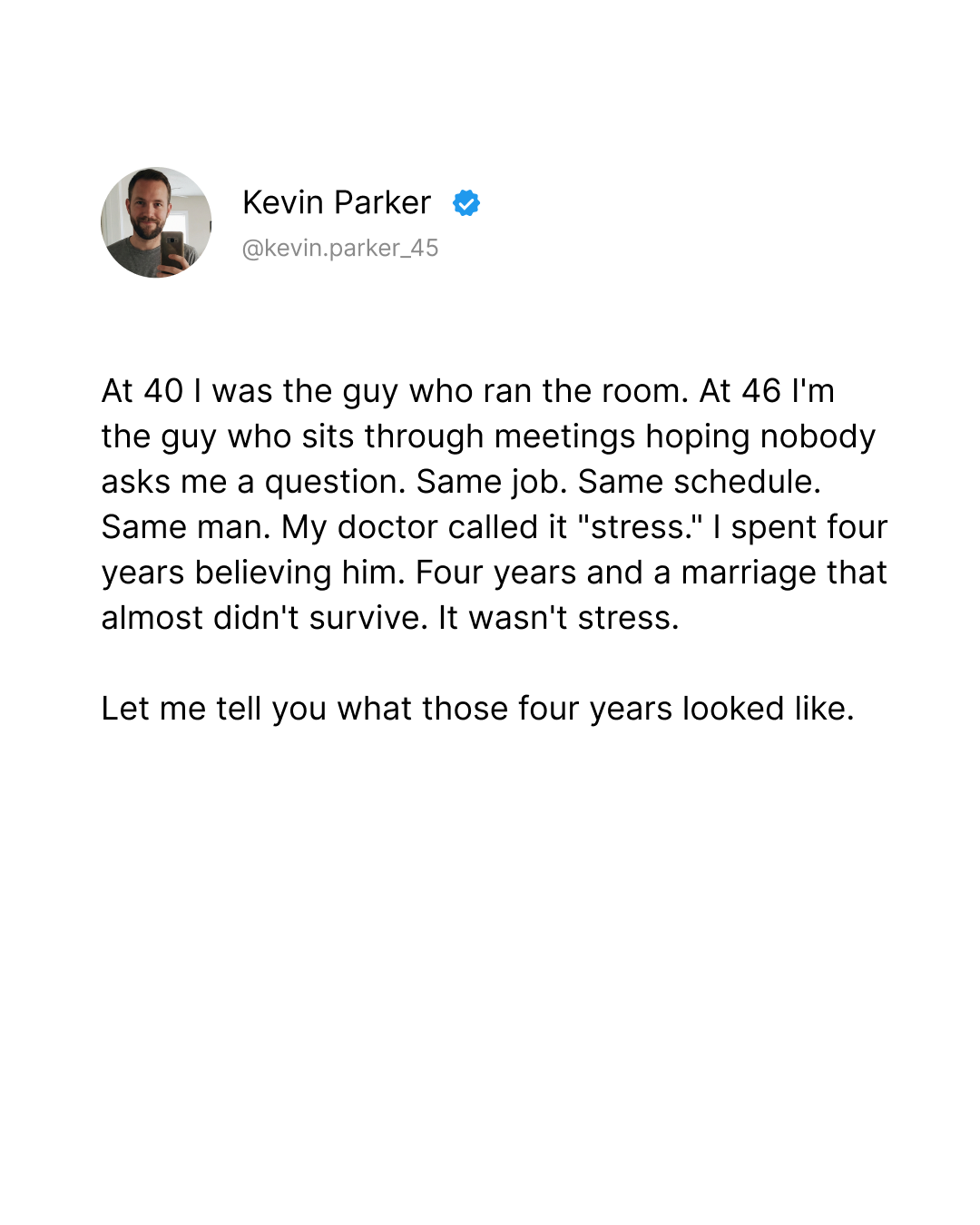
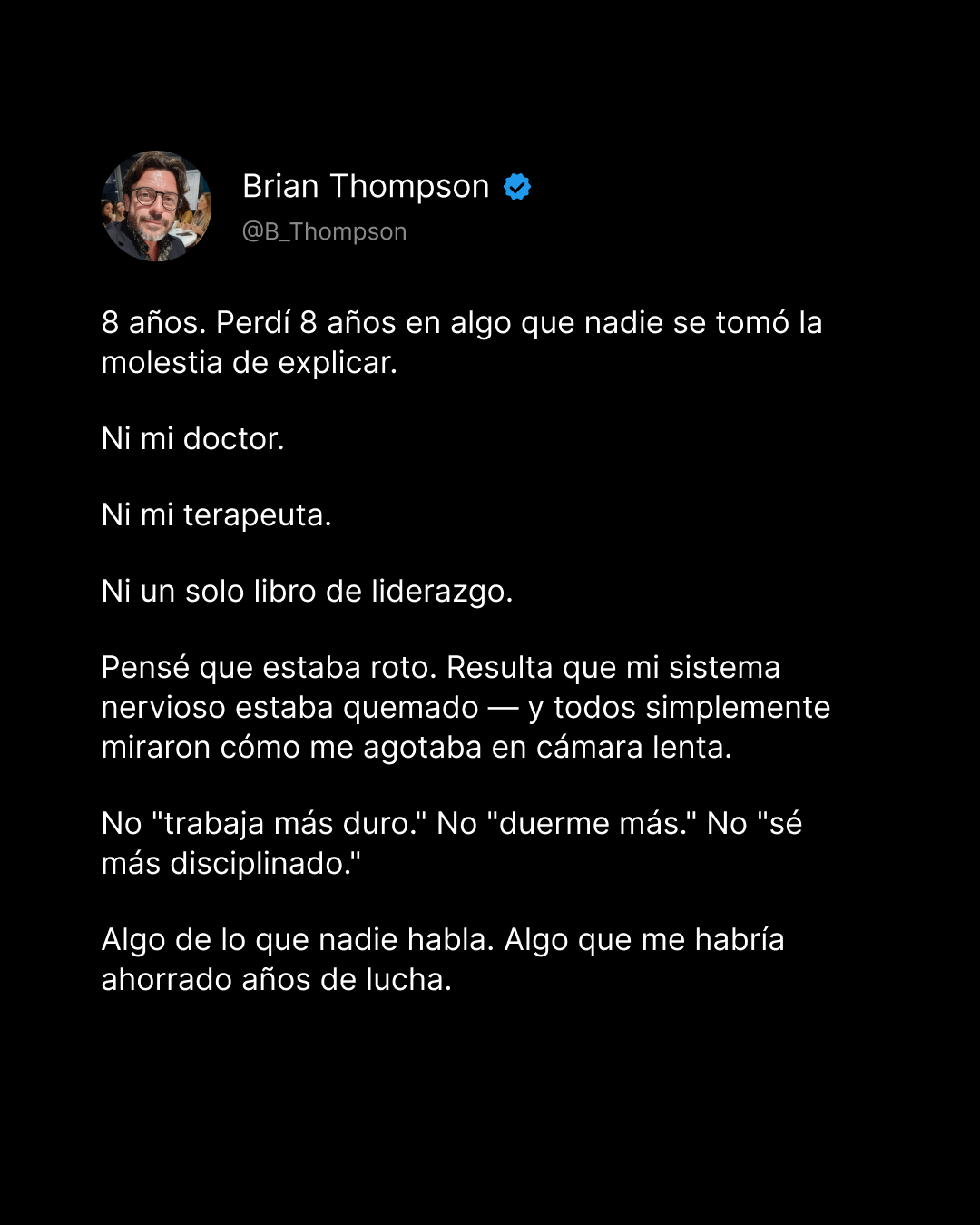
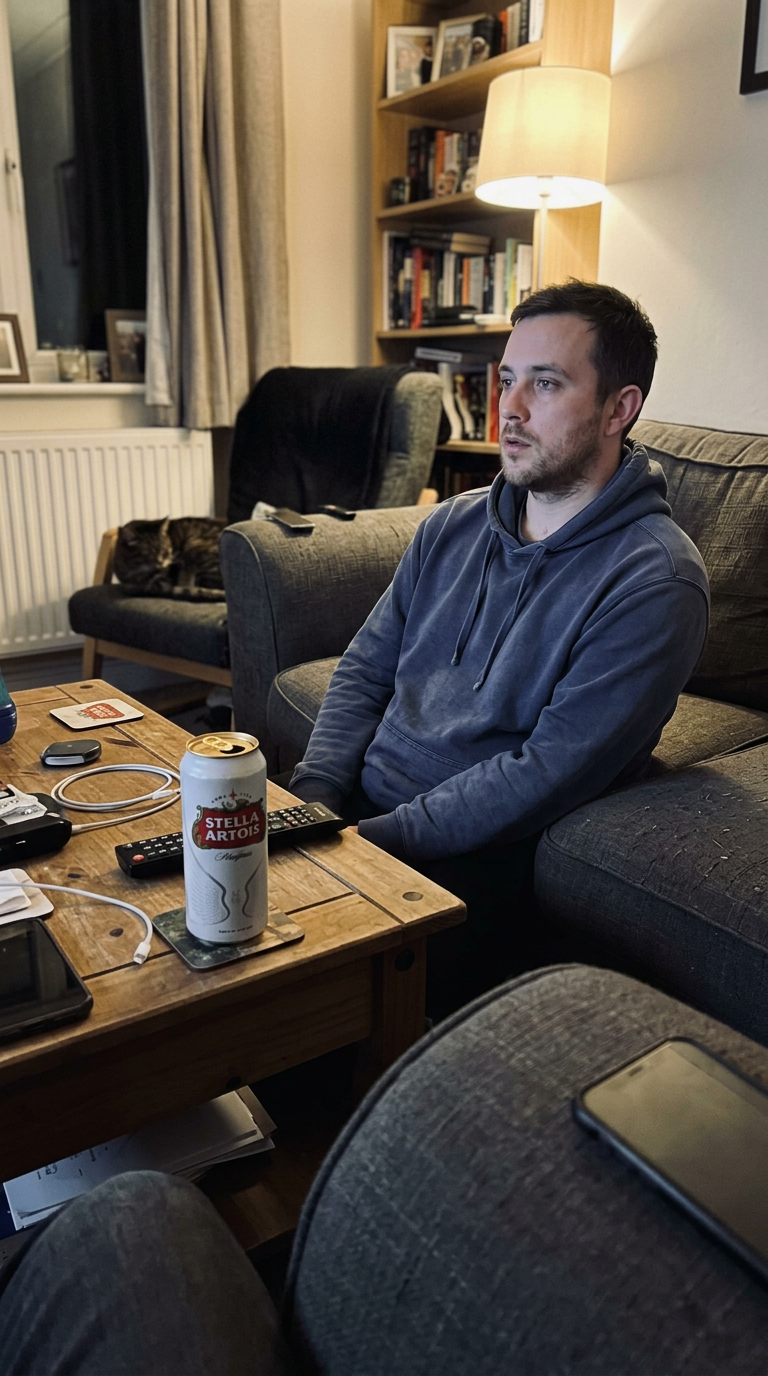
I knew something had shifted the night I watched my brother crack his first beer before he'd even taken his coat off. It was a Tuesday in February. I remember because the game was on and I'd come over to watch it. Marcus got home at 6:47 — I know because I checked the clock when I heard his key in the lock. He walked through the door, dropped his bag, and went straight to the fridge. Coat still on. Still wearing his work shoes. The can opened with that specific hiss before he'd said a single word to me. He drank half of it standing at the counter, still in his coat, staring at nothing. I didn't say anything. I told myself: he had a hard day. Everyone has hard days. We watched the game. He had five more. That was twenty-two months ago. Here's what the next twenty-two months looked like, numbered, because I kept track without meaning to. Month one: six cans on a Tuesday. I told myself it was a one-off. Month two: I noticed it was every weekday. Weekends were lighter. Something about the work week specifically. Month three: I stopped by on a Thursday without warning. He was on his third before 7 PM. He seemed fine. He seemed like Marcus. That was the part that confused me. Month five: His wife, Dana, pulled me aside at a family dinner. She didn't say much. She just said: "You see it too, right?" I said yes. We didn't talk about it again for a long time. Month eight: I watched him pour the last two cans of a six-pack down the sink at midnight because he'd told himself he'd stop at four. He was furious at himself. Not drunk. Furious. "I don't even want them," he said. "I just can't stop." Month eleven: Dana told me he'd been passed over for a promotion he'd spent three years working toward. He didn't tell me himself. He just showed up that Friday with a twelve-pack instead of a six. Month fourteen: His oldest son, Tyler — he's nine — asked me once when his dad was going to stop being tired all the time. I didn't know what to say. I want to be honest about what I was actually watching. Marcus wasn't falling apart. He was holding everything together — the job, the mortgage, the kids, the whole architecture of the life he'd built. He was showing up. He was functioning. By most measures, nobody would have called it a problem. But I'd known Marcus before the cans were part of every evening. I'd known him when a beer was a Saturday thing. When he'd turn one down because he had an early morning. That Marcus was present. This Marcus was somewhere else by 8 PM every night — not drunk, exactly, just gone. The lights on but nobody home. The thing I kept not understanding was: why couldn't he just stop? He's not weak. He's one of the least weak people I know. He ran a half-marathon at 38. He built a deck by himself over two weekends. He is not a man who lacks discipline. So why six cans every night like clockwork? I started paying attention differently. Not to the drinking. To what happened before it. Every evening, Marcus came home carrying something invisible and enormous. The job was high-pressure in a specific way — the kind where you're responsible for other people's mistakes, where the phone doesn't stop, where you spend eight hours braced for the next thing to go wrong. He never talked about it. He just absorbed it. All day, every day, he held it. And then he'd walk through the door and his body still didn't know it was over. He was still braced. Still coiled. Still carrying. Until the first can. Within twenty minutes: the shoulders dropped. The jaw unclenched. He'd laugh at something on TV. He'd actually look at his kids instead of through them. He wasn't drinking to feel good. He was drinking to feel less. To put down whatever he'd been carrying since 8 AM. The beer wasn't the problem. The beer was the only exit door he'd found. I was up late one night — couldn't sleep, turning all of this over — and I went looking for something that wasn't about alcohol. Not AA, not willpower, not "have you tried cutting back." I typed something like: why can't a stressed person relax without drinking. And I found myself reading about the nervous system. What I read changed how I understood everything I'd been watching. When a body has been in survival mode for years — running on cortisol, never fully recovering between the pressure and the next pressure — it loses the ability to come down on its own. The system that's supposed to signal "you're safe now, you can rest" stops firing reliably. The body gets stuck in the carrying. It doesn't know how to transition from holding everything together to actually putting it down. And when that happens, the body looks for the fastest shortcut it can find. Something that does in twenty minutes what it can no longer do on its own. Not because the person is weak. Because the nervous system has been running so hard for so long that it's forgotten the off-switch exists. Marc wasn't drinking because he liked beer. He was drinking because his body had lost the ability to put the day down without it. And a Reddit thread in that same late-night spiral mentioned Liven — not as an addiction program, someone was clear about that, but as something built specifically for nervous system regulation, for people whose bodies had forgotten how to decompress and were outsourcing that job to something else. I sent him the link at 1:30 AM. No explanation. Just: "Read this. It's not about the drinking." He texted back at 6 AM: "When did you send this." I said 1:30. He said: "I've been reading it for an hour." He took the Liven quiz that morning. Started the same day. Week one: still six cans. Texted me: "Nothing yet. Staying with it." Week two: "Stopped at four last night. Didn't fight it. Just didn't want the fifth." Week three: "Three nights this week under three. The thing that happens at 7 PM — that restless can't-sit-still thing — it was quieter." Week five: I came over on a Wednesday. He opened the door. No can in his hand. I looked. He saw me look. He said: "Relax." We watched the game. He had two beers. The whole night. Week seven: Dana texted me separately. She said: "I don't know what changed but he sat with Tyler for an hour last night just talking. Tyler looked like Christmas morning." Week ten: Marcus called me on a Sunday afternoon. Just to talk. The way we used to call each other before his evenings got heavy. We talked for forty-five minutes about nothing important. He sounded like himself. It's been four months since that night. Last week he told me: "The 7 PM thing is gone. I don't know exactly when it left. I just noticed I was sitting in the backyard after dinner and I wasn't looking for anything. I was just sitting there. My body knew it was over for the day." His body knew it was over for the day. That's the whole thing. His nervous system learned to come down on its own. So the exit door stopped being necessary. If you have a Marcus — a brother, a husband, a man you love who comes home every night and needs six of something before he can breathe — don't ask if he's drinking too much. Ask what he's carrying. Ask what he can't put down. And if you are Marcus — if the coat barely makes it off before the first one, if you've tried cutting back and you're baffled by how hard it is, if some part of you knows this isn't really about the beer — It's not a willpower problem. It's a body that forgot how to decompress without help. And you've been using the fastest tool available because nobody showed you there was another way. Liven has a short quiz. Free. It asks about the carrying, not the cans. Link is below. Marcus said I could post this. He read it first. He said: "Tell them Tyler climbs into my lap now when I'm watching TV. Tell them I didn't realize how far I'd gone until I came back." 💙
THIS IS what you need to do
LEARN MORELike this ad? Make it yours.
Crush rebuilds this exact creative around your product — your brand, your colors, your offer — in about a minute.