Andrea A.
Andrea A. Facebook ad: “Read this if your child cant concentrate!”
Ran for 5 days, from June 9 to June 14, 2026, the last day Crush saw it.
Run by Andrea A. on Facebook. Crush is not the advertiser and does not verify its claims. See this ad in Meta's Ad Library(opens in a new tab)
Want an ad like this for your product?
Crush makes new ad images for your product from this ad: your logo, your product photo, your offer.
Trials from $19.95 USD, then $79.95 USD a month. Cancel anytime.
About this ad
- Meta Ad Library ID
- 1312437957143507
- Platforms
- Facebook, Instagram, Audience Network, Messenger and Threads
- Relaunches
- 0
Ad text
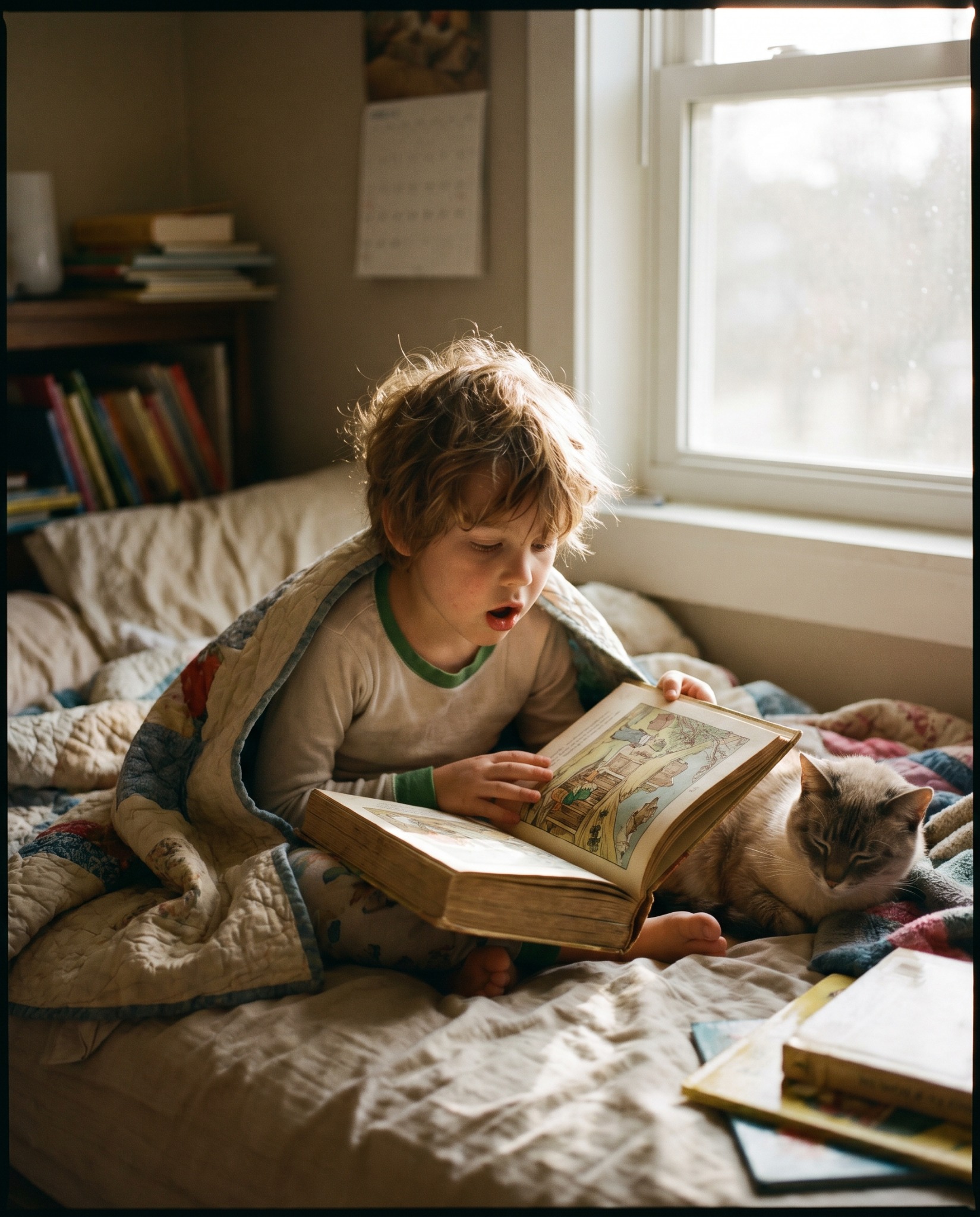
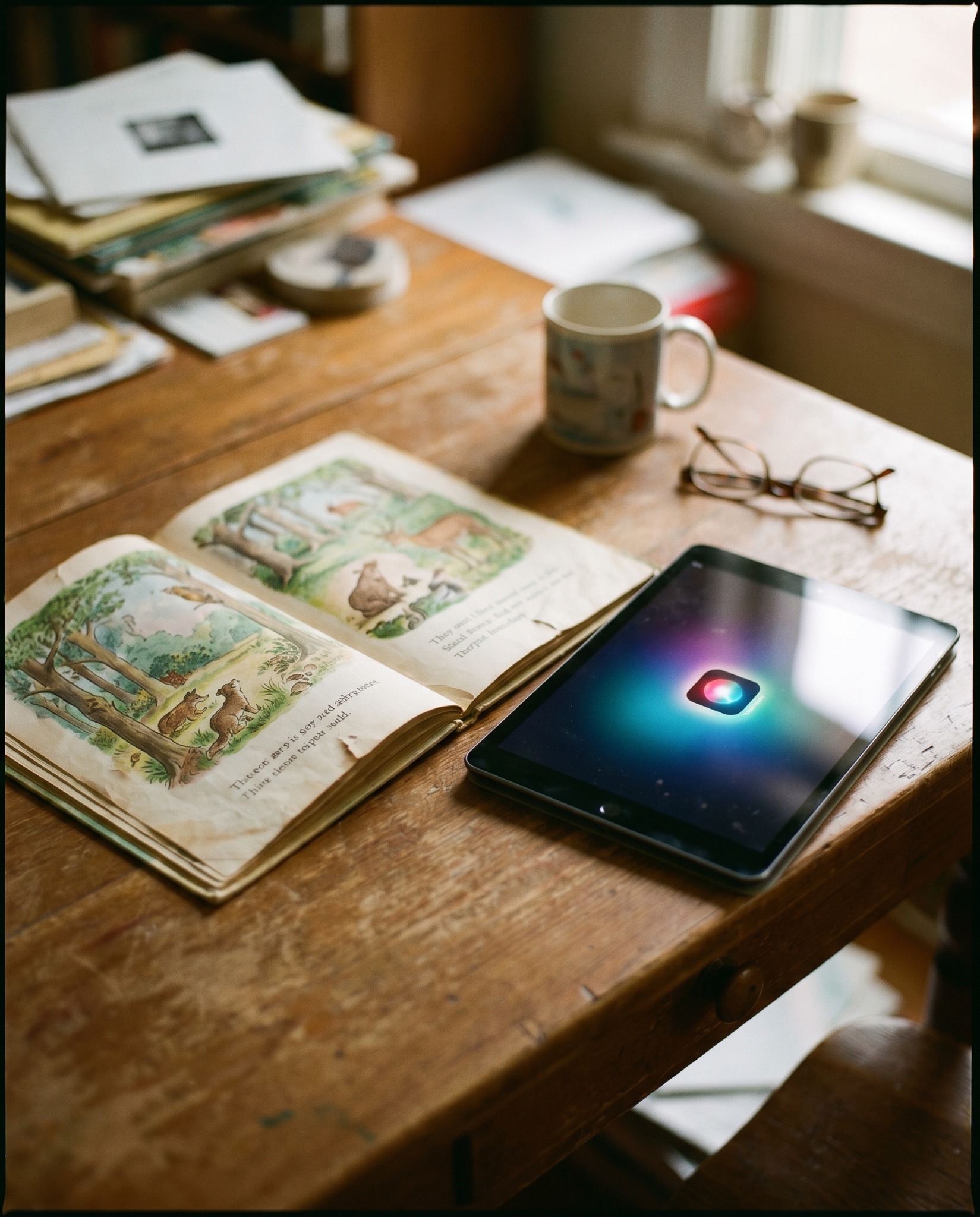
Nobody told parents that the one thing that built focused kids for a hundred years quietly disappeared. I'm going to tell you what it was. And why your child isn't broken. My name is Andrea. I'm 42, I live outside of Portland, and I have a son named Owen who just turned eleven. For the last two years I've been convinced — genuinely convinced — that something was wrong with his brain. Not in a dramatic way. Not in a way I said out loud at dinner. Just this low, persistent hum of dread that would surface every time he sat down to do his homework and was on TikTok six minutes later. Every time I asked him what he was thinking about and he said "nothing." Every time I watched him start something — a Lego set, a drawing, a conversation — and walk away from it before it was anywhere close to finished. He's a smart kid. His teachers say so. His pediatrician says so. Everyone says so. He just can't stay with anything for five minutes. I've read everything. I've done the screen time limits. I've done the reward charts. I've done the twenty-minute homework sprints with timers that are supposed to work because of some thing called the Pomodoro method that I definitely mispronounced the first six times I mentioned it. I had him assessed for ADHD. His scores came back in the normal range. "He's fine," the psychologist said. "Some kids just need more support focusing." I nodded and smiled and drove home and cried in the driveway for four minutes before I remembered he was in the back seat. --- Here is what I didn't know. Here is what nobody told me. For almost a hundred years, there was a specific set of habits that middle-class American households built into their children almost without thinking about it. Not through parenting philosophy or deliberate technique. Just through the environment that existed in the home. Children came home from school. There was nothing designed to compete for their attention. The television had three channels and the interesting programming ended at 6pm. The radio was for adults. The neighborhood was for running around in until dark. And in almost every living room in the country, on a shelf between the family bible and the dictionary, there was a set of illustrated children's encyclopedias. World Book. Compton's. Britannica Junior. The Book of Knowledge. You may have seen them at your grandmother's house. Those thick, cloth-bound volumes with gold lettering on the spines, organized from A to Z, with illustrations that made a nine-year-old want to turn the page. By 1960, a set of illustrated children's encyclopedias was present in roughly 90 percent of American middle-class homes. World Book alone had a sales force of over 40,000 door-to-door agents. These were not luxury items. Families saved for them. Bought them on installment plans. Left them to their children in wills. The entire premise of those books was simple: a child would open one when they were bored or curious or had a question, and the book would answer that question in a way the child could understand, with pictures, and then immediately open two or three more questions on the next page. The child would follow those questions. Then follow the ones after that. There was no notification. No streak. No dopamine hit engineered by a behavioral scientist. Just a question that went somewhere and led to another question that went somewhere and the quiet, building feeling of knowing more than you knew an hour ago. Child psychologists in the 1970s and 80s had a phrase for what those books were developing. They called it sustained inquiry. The ability to stay with a question long enough to find an answer. The ability to find an answer that generates more questions. The ability to sit in the space between not knowing and knowing without feeling unbearable discomfort. Sustained inquiry is not the same thing as focus. Focus is a muscle. Sustained inquiry is a loop. And the loop — once it starts running — compounds. A child who asks one question and gets an answer and asks another question learns something that no worksheet teaches. They learn that wondering goes somewhere. That sitting with a question is not a failure state. That the discomfort of not-yet-knowing resolves into something. That is what built curious, focused children for a hundred years. Not schools. Not parenting techniques. Not genetics. The loop. And then the loop was broken. And nobody told us. --- In 1989, Microsoft released Encarta. A digital encyclopedia on a CD-ROM. It was cheaper than the printed sets and parents bought it instead. By 1995, World Book had cut its sales force from 40,000 agents to fewer than 500. By 1998, the major children's encyclopedia publishers had stopped printing their home editions entirely. Wikipedia launched in 2001. Encarta was discontinued in 2009. In 2010, the iPad arrived. Within eighteen months, the children's encyclopedia category had been replaced almost entirely by educational apps. Apps that were marketed to parents as the modern version of what their parents had bought them in print. But here is what nobody said out loud. The apps were not the modern version of an encyclopedia. The encyclopedia was built to run the loop. A child opened it when they had a question. The question got answered. The answer generated more questions. The child kept going. The loop ran. Sustained inquiry developed. The apps were built by behavioral scientists, many of them recruited out of the gaming and social media industries, with one job: keep the child on the screen. Stars appeared when children completed tasks. Streaks rewarded daily return. Characters cheered and danced. The next level unlocked automatically. This is not sustained inquiry. This is the opposite of sustained inquiry. In sustained inquiry, the reward is internal. The good feeling comes from inside the loop — from the experience of a question resolving. The child learns that sitting with something until it makes sense produces something good. In the app model, the reward is external. The star. The cheer. The streak. The dopamine is front-loaded and fast. And the child's brain, which is extraordinarily efficient, learns the opposite lesson. It learns that the good feeling comes from the external hit, not from the act of staying. It learns that when the hit doesn't come fast enough, the right move is to move on. To tab over. To find the next source of fast reward. The brain is not broken. The brain is doing exactly what it was trained to do. Your child is not failing to focus. Your child is succeeding at a skill they practiced ten thousand times. The skill of finding the next fast reward when the current one slows down. That is The Focus Drain. Not a character flaw. Not a diagnosis. Not something that happened to your child because you made a mistake. A trained response. Built by ten thousand repetitions of a loop that rewards speed over depth. And it built itself so gradually — an hour here, an educational app there, PBS Kids while dinner cooked, YouTube on the drive to swim practice — that nobody saw it happen. I didn't see it happen. I was the one handing him the iPad. --- I found all of this at 1:15 in the morning, the night after the driveway. I had started the way I always start. Typing my way through a search bar hoping someone else had already figured it out. *Why can't my kid focus. Is screen time making kids worse at concentrating. How do you rebuild attention span in a ten-year-old.* The usual loop of searching and scanning and clicking and not finding anything that felt true enough to stop on. And then I ended up somewhere I hadn't expected to go. I was reading a review of a parenting book I'd never heard of, and in the comments section a woman named Diane from Minnesota mentioned that her son had turned a corner when she started understanding what she called "the reward loop problem." She wasn't talking about screen addiction in the standard sense. She was talking about what happens when a child's brain gets trained on external rewards for a long enough period that it loses the ability to tolerate internal ones. I read her comment three times. Because that was Owen. That was exactly Owen. He wasn't refusing to do homework because he was lazy. He wasn't walking away from the Lego set because he had a short attention span. He was walking away because his brain had learned, through thousands of repetitions, that when the fast reward stops coming, the right move is to move. And homework and Lego sets and conversations and books all had the same problem: they made him wait too long before they paid off. I kept reading. And then I found something that reframed everything. The research on sustained inquiry and what destroys it. Studies showing that children who grow up with regular access to slow, self-directed reading — not guided reading, not comprehension quizzes, just reading that a child chooses and follows for their own reasons — develop significantly stronger ability to stay with difficult problems. The effect is not small. Attention researcher Mary Helen Immordino-Yang at USC has written about the link between boredom tolerance and deep cognition. Cognitive scientist Maryanne Wolf at UCLA has documented what she calls the deep reading network and what happens to it when children's early reading diet shifts to screens. The finding that stopped me was this: the loop can be rebuilt. The brain is not damaged. The reward pathway has been trained in one direction, and it can be trained in another. But the tool for doing that is specific. It's not a worksheet. It's not a timer app. It's not a screen-free afternoon. It's the thing those encyclopedias did. A question that goes somewhere, that leads to another question, with no external reward for following it. Just the intrinsic pull of one interesting thing leading to another interesting thing, at the child's own pace, without anyone telling them what to find. The loop, rebuilt. Slowly. Deliberately. One question at a time. --- I looked up whether anyone had built that tool back for children growing up right now. It turns out one country never stopped building it. While the Western publishing market was dismantling the children's encyclopedia category through the nineties and two-thousands, China was still printing them. The same format. The same structure. Questions children actually ask. Illustrated answers that open more questions. No app tie-in. No streak. No external reward. Just the loop. The series that never went away is called 100,000 Whys. It has been in print continuously since 1961. Over a hundred million copies sold. Present in the bookshelf of almost every Chinese middle-class home with a child in it. I found an English edition. I bought it that night. --- I want to tell you what happened honestly, because I don't trust the stories where everything changes in a weekend. Owen picked it up, flipped through three pages, and put it on the kitchen counter. That was day one. Day four he picked it up again. I watched him from the hallway. He read one entry, something about why the ocean has salt, and then flipped to another one. He was on it for maybe eight minutes. Then he put it down and went to find his Switch. I didn't say anything. I didn't make it a thing. I left it on the counter. Day nine I noticed it was not on the counter. I found it in his room, on the floor next to his bed, open to a page about how birds navigate during migration. He had apparently moved it there himself at some point. Week three. He came downstairs on a Saturday morning before I was up. I found him at the kitchen table with the book open and a glass of orange juice. Nobody had asked him to be there. Nobody had told him to read anything. He had just walked down and opened it. He came into my room twenty minutes later and asked me why the stars don't appear to move even though the Earth is spinning. I didn't know the answer. We looked it up together. It was the first time in over a year that Owen had wanted to find out something with me that wasn't a YouTube video. Week six. His teacher mentioned at pickup that he had asked a question in class that she said "showed real curiosity." She said it like it was a pleasant surprise. She didn't know what she was telling me. Two months in. He sits with things now. Not for hours. Not perfectly. But he finishes things he starts. He asks questions that come from inside him, not from a prompt. He has opinions about things he read in that book that he shares at dinner without being asked. The loop is running again. --- What I bought is part of a guide called The Focus Drain — Why Your Child Can't Stay With Anything for Five Minutes. It's a digital book built specifically around understanding the reward loop problem and the concrete, small steps for rebuilding it. Worded sentences for the moments that used to end in a fight. Specific daily structures that don't feel like punishment. The approach that undoes the loop without creating a new war. It's thirty-seven dollars. It comes to your inbox in two minutes. No program to enroll in, no subscription, no app. There's a thirty-day guarantee. If you read it and it doesn't fit, they'll refund you fully with no questions. I'm sharing this because I sat in a driveway crying and Googled for two years before I understood what was actually happening in my son's brain. Not a diagnosis. Not a character flaw. A trained response to ten thousand fast rewards. And a loop that, once you understand it, you can quietly rebuild. You haven't broken your child. You just didn't know the loop had been broken first. 👉 https://trysteady.shop/products/the-focus-drain-e-book P.S. — The one thing I still think about is how long I spent trying to fix Owen's focus by taking things away. The iPad limits. The no-screens-until-homework rule. The timer on the router. All of it made him angrier and changed nothing, because none of it rebuilt the thing that was actually missing. You can't build sustained inquiry by removing fast rewards. You have to replace them with something the brain wants more. That's the part nobody tells you. That's what this book explains in the first twenty pages.
Where the ad sends people
trysteady.shop
Read this if your child cant concentrate!
Steady
Learn more: trysteady.shop(opens in a new tab)