
Active· since Jun 6, 2026
- 102
- days running
- 0
- relaunches
Ad copy
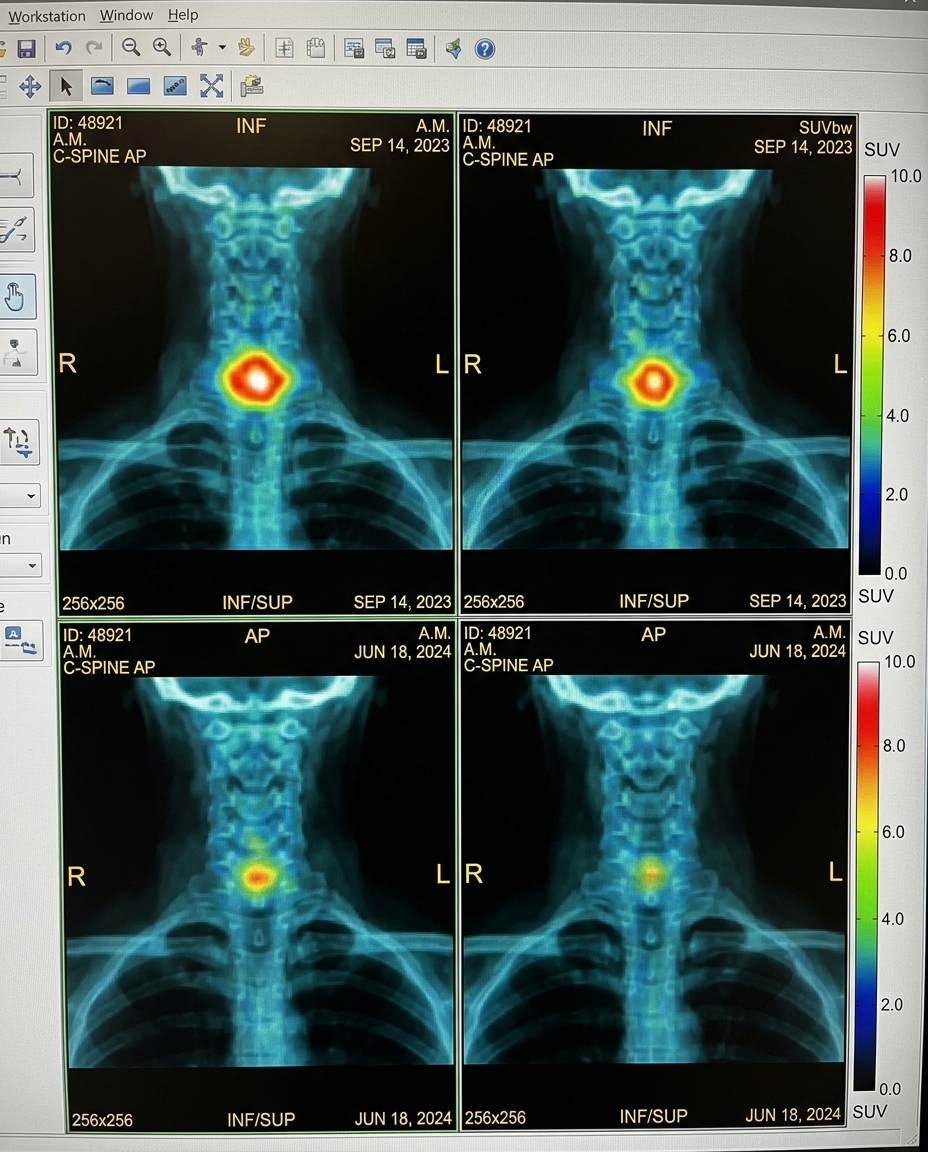
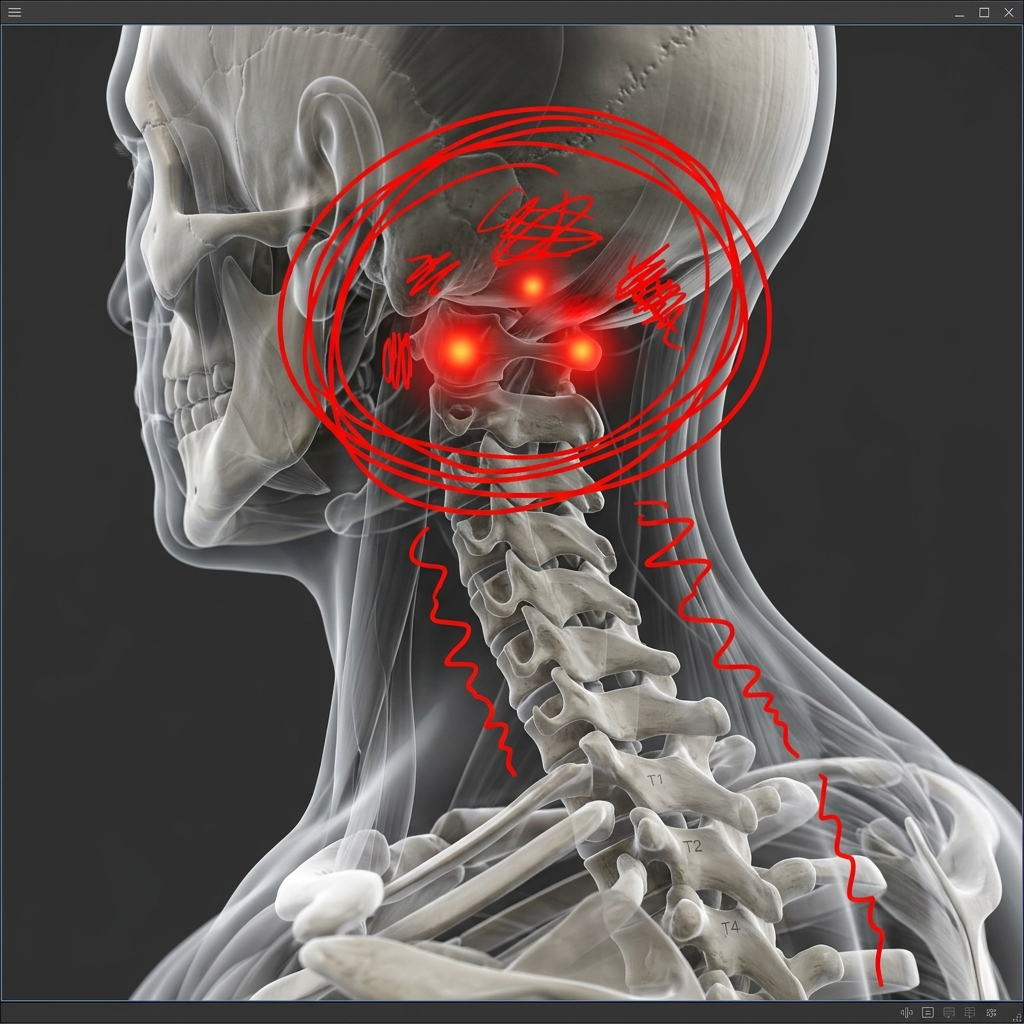
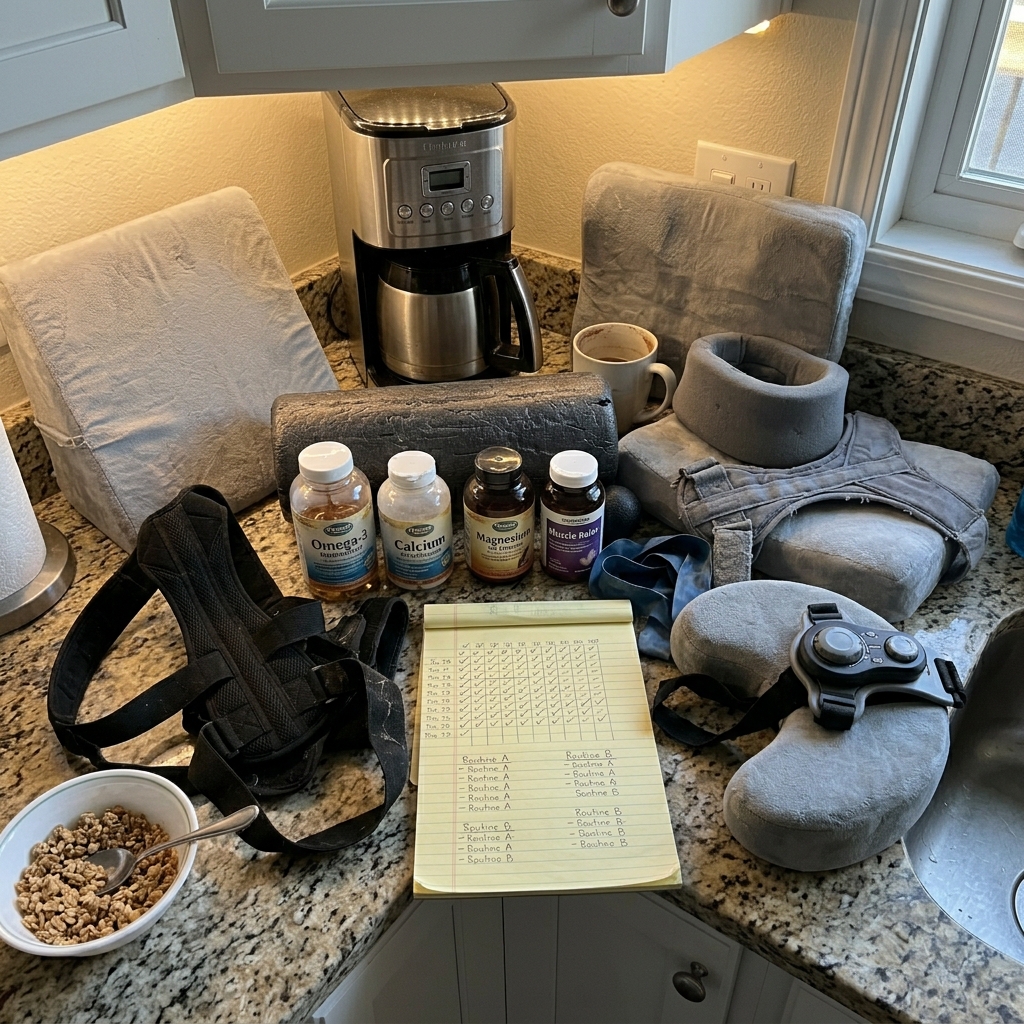
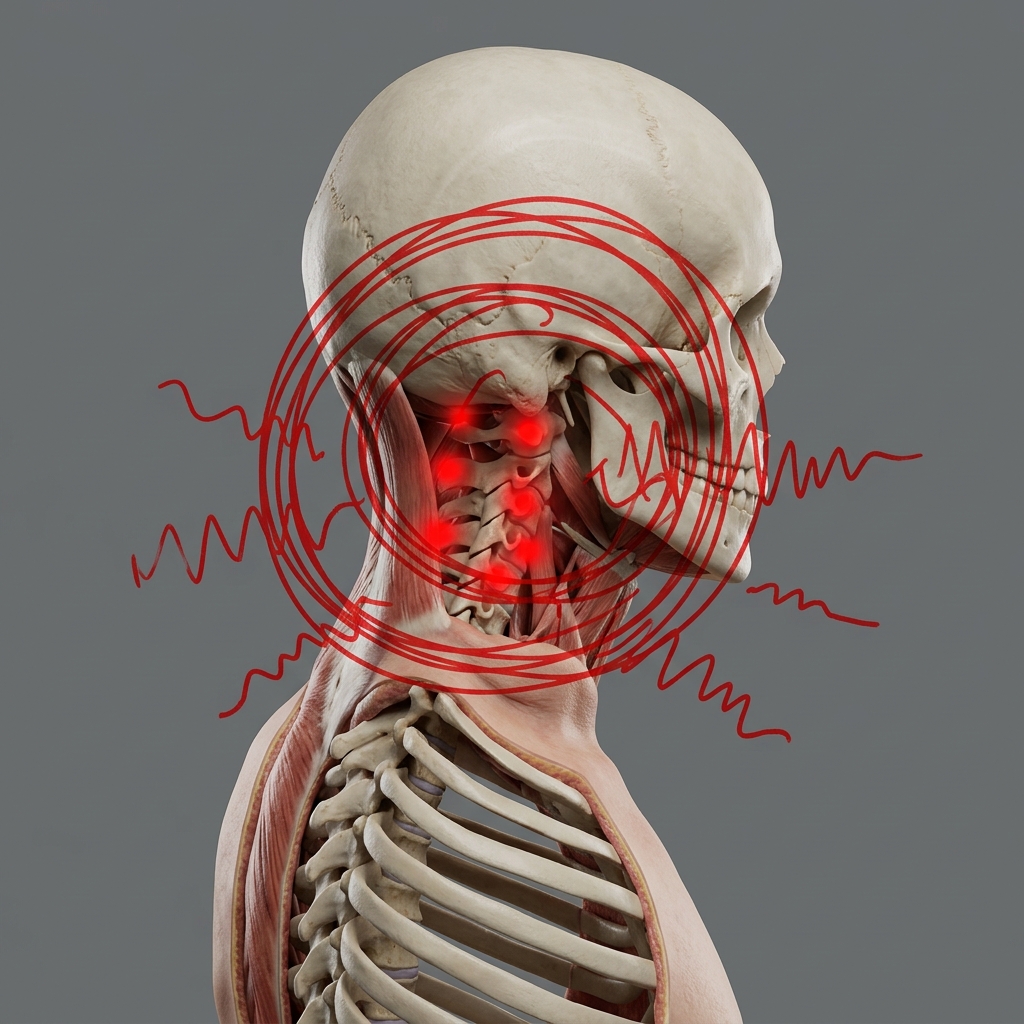
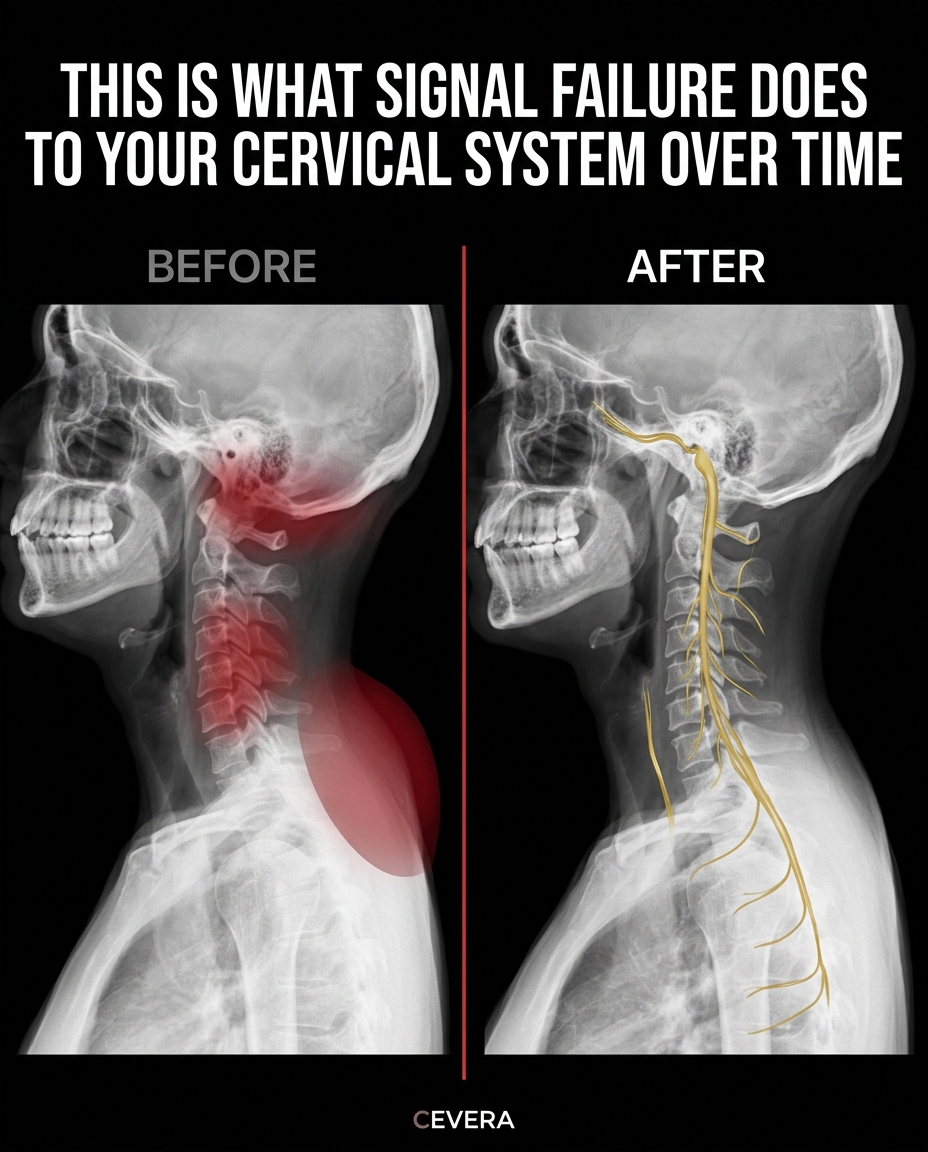
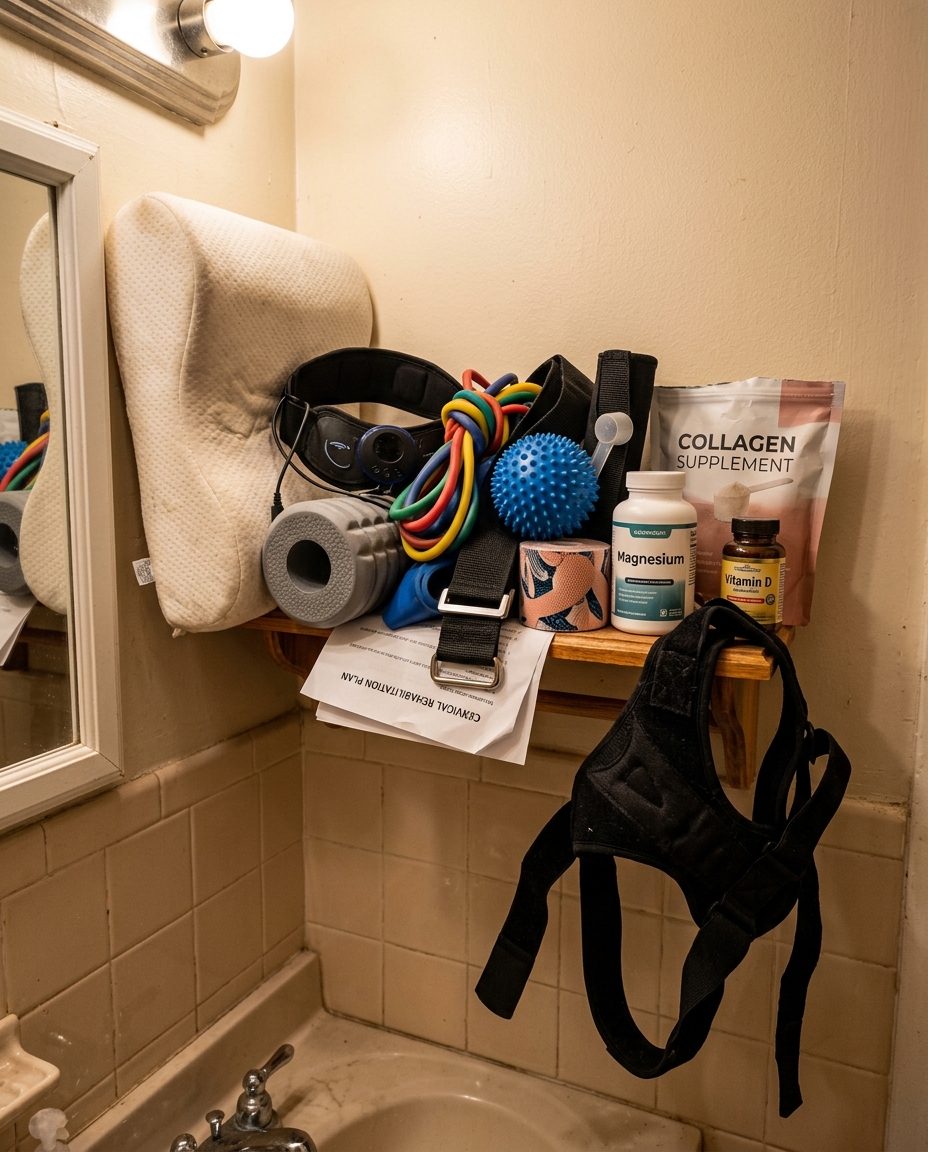
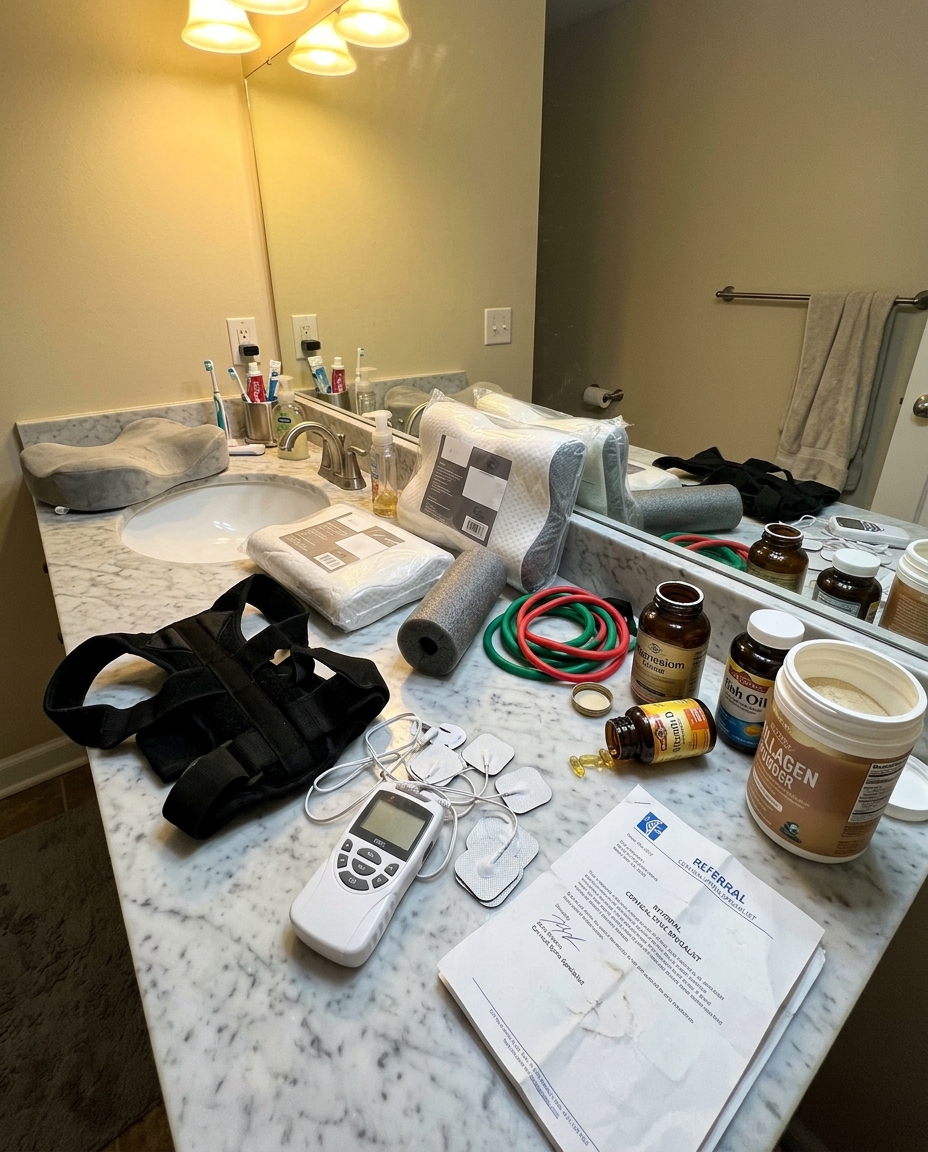
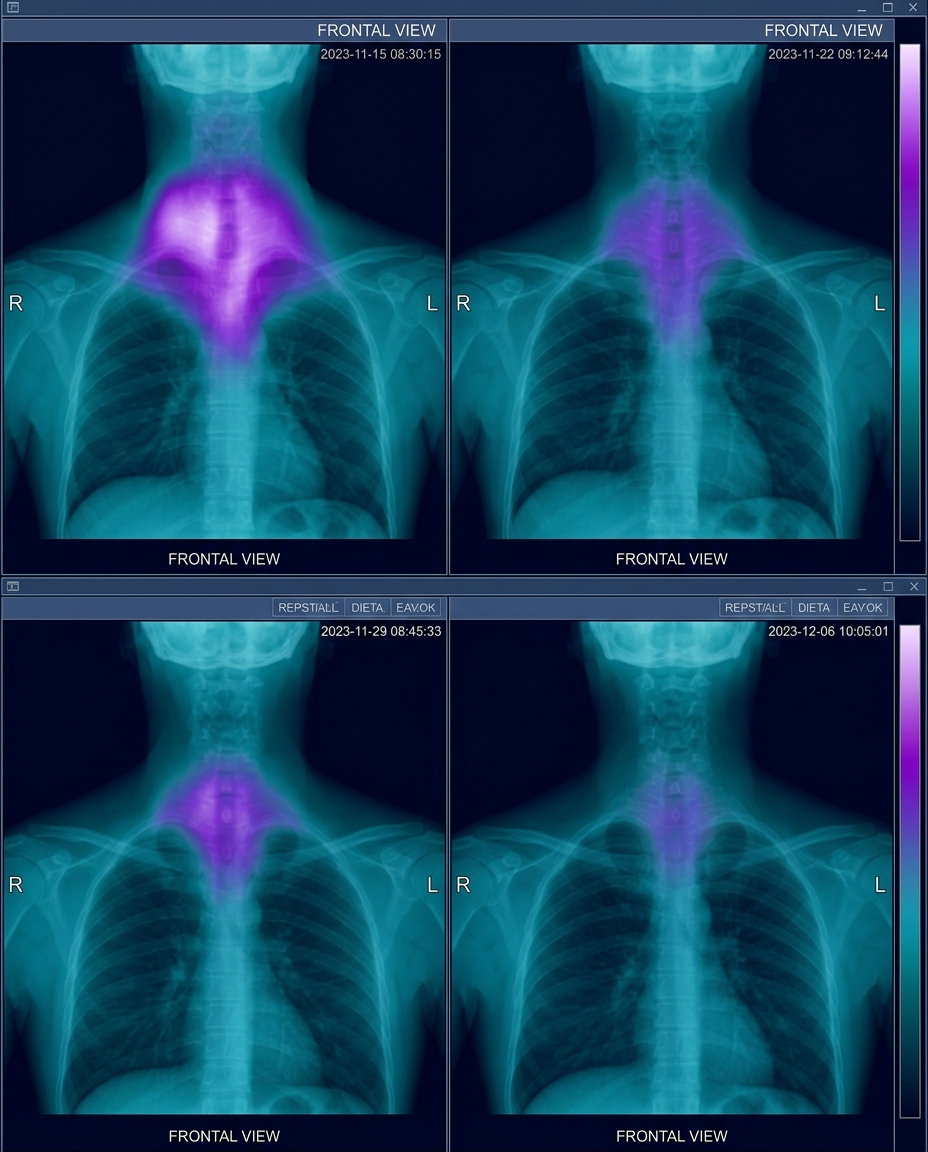
If your practitioner told you that you have a neck hump and all she said was "improve your posture," I'm writing this for you specifically. Because I was you three years ago and nobody told me what was actually happening inside my body. My name is Barbara. I'm 56. Found out I had cervical tissue progression at a routine assessment when I was 53. My forward head translation was 2.4cm. My practitioner said "you have some tissue building at the cervical base, try to work on your posture habits and we'll recheck in a year." That was the whole appointment. So for two years that's all I did. I changed my screen habits. I cut out all forward head positions. I started doing cervical exercises four days a week. I attended my management sessions consistently. Went back for my recheck expecting good news. Translation was 2.6cm. I'd done everything right and my measurement had gotten worse. My practitioner looked at the chart and said "well, keep doing what you're doing. These things take time." But here's what she didn't tell me. While I was focused on posture correction, something else was happening at the base of my skull. Something that posture awareness alone can't fix. I didn't find out until much later. And when I did, I was furious. About six months after that appointment, the morning calculation started. Not dramatic at first. Just a heaviness when I opened the wardrobe. Like deciding through wet sand. I'd stand at the mirror and lose track of what I was actually trying to achieve. I'd reach for something and put it back. I'd put on an outfit and take it off and start again. I told my practitioner. She said it was probably stress. Maybe the sessions needed adjustment. Then the stepping back started. Not dramatic stepping back. Just automatic. The kind where you're in a group photograph and you find yourself at the edge without deciding to be there. The kind where your husband asks if you want to come to the front of the family photo and you say you're fine where you are. I went back again. More assessment. Translation was now 2.7cm. Still going up. She said "your measurements are a little elevated but nothing alarming. Let's keep monitoring." Monitoring. That word should have made me angry. It didn't at the time. But it does now. Because here's what monitoring means: we're going to watch this get worse and do nothing until it's too late. I started researching on my own. Late at night. Googling things I didn't want to Google. Cervical tissue stages. Suboccipital contracture. Established progression. Fixed structural changes. And I thought about my aunt. She was assessed with early cervical tissue progression in her late 40s. Same thing I heard. Work on your posture. Watch your habits. Come back next year. She came back every year. She watched her habits. She used her foam roller. Year 3: tissue kept building. Practitioner said keep monitoring. Year 6: a specialist referral showed established contracture. They called it "moderate progression." She was scared but they said it was "manageable." Year 9: the progression continued. They used the words "fixed structural change" for the first time. Year 12: she was stepping back from everything. Her world had gotten smaller season by season. She couldn't attend family events without spending the entire time managing her position. She was 61 years old. She never got back to the front of a photograph. Her starting translation when she was first assessed? 2.3cm. Almost exactly what mine was. I was not going to be my aunt. I refused. I read that millions of women develop cervical tissue progression over time. That most don't know what's actually driving it. That it's called a "posture problem" because you feel fine right up until you don't — until the world has quietly reorganized itself around the one thing you can't stop. I read that tissue progression follows a pattern. Early tissue builds. Tissue triggers receptor dormancy. Dormancy triggers continuous forward pull. Forward pull builds more tissue. Tissue becomes structural. And then I read something that changed everything. The real problem isn't the tissue. The tissue is a symptom. The tissue triggers a chain reaction. It increases the forward load on the C1-C2 suboccipital receptors. That continuous forward load creates proprioceptive receptor dormancy. And your cervical structure's only defense against that dormancy is the release signal — the signal that fires when the receptor threshold is met. The release signal is the master mechanism. Your cervical structure's primary weapon against tissue accumulation. Without it your suboccipital muscles are continuously contracting and there's nothing stopping the forward pull. And here's the part that made me furious. In people with established neck hump progression, the release signal is chronically failing to fire. The continuous forward load burns through the receptor threshold faster than any management session can restore it. The worse the progression gets, the more dormant the receptors become. The more dormant the receptors become, the more tissue builds. The more tissue builds, the more the progression advances. It's a cycle. And nothing my practitioner told me to do breaks that cycle. Management sessions help. Exercises help. Postural awareness helps slow the visible progression. But none of those things fire the proprioceptive release signal at the receptor threshold. That's why my translation didn't improve in two years. I was managing the symptom but the underlying contracture was still re-engaging. And my cervical structure had nothing to stop the forward pull continuing between sessions. I felt like I'd been running a marathon in the wrong direction. I called my practitioner. I said what about the proprioceptive receptor threshold? Why aren't we addressing the contracture directly? Why are we only talking about posture? She said receptor dormancy is something they're "aware of" but the clinical tools for addressing it directly are limited. I said what about home tools? She said she can't recommend most of what's available because the evidence is inconsistent. So I went looking myself. First thing I tried was a cervical pillow. Because that's what everyone uses for neck hump progression. $65 from a specialist supplier. Used it every night for five months. Got my assessment done. Translation 2.6cm. Five months. No meaningful change. Turns out cervical pillows support the cervical curve overnight. But they cannot fire the proprioceptive release signal. They support the position but they don't address the contracture that's re-engaging the moment you stand up. It's like propping a door open with a chair while the spring is still broken. The moment the chair is removed, the door closes again. Then I tried a posture brace. Then a foam roller. Then one of those traction devices with 15 settings. Translation stayed between 2.5cm and 2.7cm the entire time. Bouncing around. Never coming down consistently. I was spending hundreds of dollars on tools that weren't doing a single thing about the receptor dormancy. That's when I found the research on direct suboccipital compression. I'd never properly understood the mechanism before. But what I read stopped me cold. Direct C1-C2 suboccipital compression is the direct input to the proprioceptive receptor threshold. It provides the exact address, the sustained gravity-assisted force, and the minimum hold duration — the three specific inputs your C1-C2 receptors need to fire the release signal. The threshold inputs. The one combination your cervical structure has been missing. Direct suboccipital compression doesn't just support the position from the outside like a pillow or brace. It gives your C1-C2 receptors the raw input to fire the release signal from the inside. And cervical biomechanics researchers have been documenting this mechanism for over a decade. When someone has an acute cervical crisis and the contracture is in severe spasm, clinicians don't use pillows. They don't use posture braces. They use direct sustained pressure at the exact C1-C2 suboccipital address. Because it's the only thing that rapidly fires the receptor threshold when the contracture is in acute re-engagement. Same mechanism. Same address. Same threshold. The only difference between acute contracture management and chronic neck hump progression is the speed. One happens in hours. The other happens over years. But the root mechanism is identical. I ordered a basic suboccipital pressure tool that week. $28 from a health forum recommendation. Used it every day for two months. The placement was difficult to maintain. The tool kept shifting away from the exact C1-C2 address. I couldn't tell if I was getting the input to the right location. Got my assessment done. Translation 2.5cm. Tiny improvement. But the placement uncertainty was frustrating and 2.5cm was still building. I almost gave up. Then someone in a cervical health forum mentioned that standard pressure ball tools have a serious precision problem. The placement is too imprecise to consistently deliver input to the exact C1-C2 suboccipital address. The ball shifts. The force disperses. The receptor threshold is never reliably met. So even if you're trying to do direct suboccipital compression, the cheap tools aren't keeping you at the right address long enough to fire the threshold. That same person mentioned engineered precision. Two foam nodes at exact C1-C2 anatomical placement — not adjustable, not imprecise, locked to the address. Gravity-assisted delivery through your own head weight providing consistent uninterrupted force. And a minimum ten-minute hold — the threshold duration the research requires. And instead of the imprecise ball, you need the precision nodes with the gravity assist. That's what the clinical studies used. That's the combination that actually moved tissue measurements in suboccipital compression trials. I found Cevera. Two precision foam nodes. Exact C1-C2 placement. Gravity-assisted delivery. Ten-minute protocol. It was more considered in design than anything I'd tried before. But at this point I'd spent hundreds on tools that didn't work. I figured one more try. Week 1: I slept differently. Not dramatically. Just with less awareness of my cervical line when I woke up. Less of the first-thing-in-the-morning calculation about what I was going to do with the day. Week 2: I noticed I wasn't positioning myself automatically at the side of the room at my book club. I'd sat down without thinking about which seat gave me the best angle. Week 3: my husband said something I wasn't expecting. He said "you seem like yourself again." I hadn't even told him I was trying something new. Week 4: the morning calculation wasn't gone completely but I could feel it thinning. Like a fog that had been there every morning for years was slowly clearing from the edges inward. Week 8: I had my assessment scheduled anyway. Almost didn't want to look. Forward head translation: 1.7cm. I read it three times. Then I read it again. 1.7cm. Down from 2.4cm to 1.7cm. First time in the manageable range since my progression began. I sat in my car in the assessment center parking lot and cried. Not because of the number. Because of the three years I wasted not knowing this existed. My practitioner pulled up the trend line at my next appointment. She looked at the screen for a long time. "What changed?" she asked. I told her everything. The receptor dormancy. The three-input requirement. The precision placement. The gravity-assisted delivery. The ten-minute threshold versus the imprecise tools I'd been using. She listened. She wrote it down. She didn't say "you should have told me you were trying something new." She didn't dismiss it. She looked at the measurements and she wrote it down. That was nine months ago. My last translation was 1.4cm. Still going down. The morning calculation is gone. Not reduced. Gone. I open the wardrobe in the morning and reach for what I want without thinking about angles. My confidence is back. I don't position myself at the edge of group photographs anymore. I don't calculate which seat gives me the best angle before I sit down. I appeared in the front of the family Christmas photograph for the first time in four years. My husband noticed before I said anything. And for the first time since my diagnosis, I'm not afraid of what my next assessment will show. I'm not afraid of the words "established contracture" anymore. I'm not Googling fixed structural changes at 2am anymore. I understand now what was happening to me. The tissue was creating forward load. The forward load was depleting the receptor threshold. Without the threshold being met, my cervical structure couldn't fire the release signal. And everything my practitioner told me to do managed the tissue but nothing met the receptor threshold. It's like telling someone with a flat tire to drive slower. Yes, driving slower helps. But until you fix the tire, you're still riding on the rim. Cevera fixes the tire. If you're reading this and you have a building neck hump. If your measurements are elevated. If you've been told to improve your posture and come back next year. If you've been using cervical tools and watching your numbers stay the same. If the morning calculation has crept in. If the stepping back has gotten worse. If you're scared of what comes next. Please hear me. Your C1-C2 receptor threshold is not being met. That's the root cause. And nothing you've been told to do addresses it. Cevera delivers the three required inputs simultaneously at the exact address. It gives your cervical structure what it needs to fire the release signal on its own. Cervical biomechanics researchers have documented this mechanism for over a decade. The clinical studies use exact C1-C2 placement with gravity-assisted sustained delivery held for the minimum threshold duration. Precision-engineered delivery is what gets the input to the right address. My practitioner told me something I keep coming back to: "Cervical tissue progression can be reversed. The receptor system can reactivate if you give it what it needs. But once tissue becomes fixed structural change, the options narrow significantly. The difference between addressable tissue and fixed change is timing." My aunt ran out of time. I almost did too. The window where your cervical structure can still reduce is open right now. But it doesn't stay open. Every month that your C1-C2 receptor threshold goes unmet is another month of tissue accumulation that's harder to address. Don't wait for the next appointment. Don't wait until your measurements climb higher. Don't wait until they use the words "established contracture." Don't wait until you're where my aunt ended up. My forward head translation went from 2.4cm to 1.4cm in about nine months. The morning calculation is gone. My confidence is back. My practitioner went from "keep monitoring" to "whatever you're doing, keep doing it." I wish someone had told me this the day I was assessed instead of three years later. I can't get those three years back. But I can tell you now so you don't lose yours. 👉 https://trycevera.com/pages/adv-womens-wellness-report P.S. A few things: 90-day money-back guarantee. If your measurements don't improve, every dollar back. No questions. The only issue is Cevera is a smaller company. I've seen them limited on stock twice. I went from a 2.4cm translation and three years of morning calculation to 1.4cm and opening my wardrobe without thinking about it. My aunt lost twelve years of her life because nobody told her any of this. You know now. 👉 https://trycevera.com/pages/adv-womens-wellness-report
Like this ad? Make it yours.
Crush rebuilds this exact creative around your product — your brand, your colors, your offer — in about a minute.