

Quinn Parker
Active· since May 12, 2026
- 134
- days running
- 0
- relaunches
Ad copy
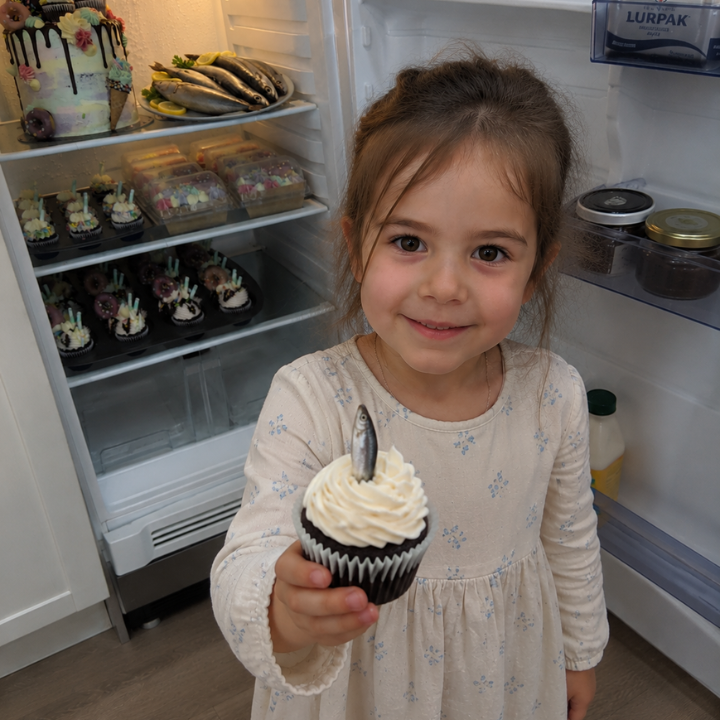
A customer said my cupcakes tasted like fish. My 7-year-old daughter was reading the text over my shoulder. I'm telling you what I found out because I can't stay quiet about it. My name is Rachel. I'm forty-two. I live in Marysville, Ohio. For the past three years I've been baking on weekends with my eleven-year-old daughter, Lily. I sell cupcakes and cookies to neighbors out of my kitchen. Word-of-mouth only. Maybe twelve regular customers. Nothing big. I called it Lily's Little Bakes. Because she was the whole reason it existed. Last March, a customer texted me. Her name was Mrs. Patterson. She'd been buying my lemon-blueberry cupcakes for her grandkids every other Friday for over a year. The text said this. "Rachel, are you using new butter? The kids said the frosting tasted off. Like fishy almost. Probably nothing but wanted to tell you." I read it three times before I could move. I went to the fridge. Pulled out the leftover cupcakes from yesterday's batch. I smelled one. Smelled fine. I tasted one. Fish. Not strong. Not obvious. Just sitting underneath the lemon. Like something that didn't belong. Two days later another customer sent almost the same message. That Saturday morning, Lily came downstairs in her pajamas ready to bake. She asked me if she'd done something wrong. I told her she hadn't. Then I started noticing it everywhere. The cold chicken from Sunday tasted faintly like onion. There were no onions in the recipe. The block of butter I'd unwrapped that morning had a sourness under the cream. I poured myself a glass of milk and could swear I tasted last week's salmon. Even the ice cubes had a smell. Not strong. But there. When you brought the glass up to your face. My yogurt at breakfast had a bite to it that wasn't supposed to be there. My strawberries tasted like the deli ham next to them. The cheddar I'd shredded for an omelet had a weird sour note that didn't belong in cheese. The strawberries were also going soft in three days instead of a week. The cilantro turned to mush by Tuesday. I was throwing out half my produce drawer every Thursday and blaming myself for buying too much. Everything in the fridge tasted like everything else in the fridge. And the things that didn't taste wrong went bad before I could use them. I went back to the fridge and tore it apart. I bleached every shelf. Scrubbed the seals with a toothbrush. Threw away anything suspicious. I put three open boxes of Arm & Hammer on three different shelves. The smell came back the next day. So did the taste. I tried white vinegar in a bowl. Coffee grounds in a dish. Lemon slices on a plate. I drove to Target and bought a $19 charcoal thing in a wooden box. Promised to absorb ten times more than baking soda. I unplugged the fridge overnight. Propped the door open with a chair. Put crumpled newspaper inside for two days like a woman on YouTube swore by. I did all of it. Two weeks in, I baked a test batch and tasted one before frosting. Fish. That night I sat at the kitchen table and seriously thought about telling Lily we were done. My husband, who hadn't tasted any of the cupcakes, said "just buy a new fridge." I pulled up Lowe's. A comparable Frigidaire was $1,899. Ours was three and a half years old. It still ran cold. The icemaker still worked. I closed the tab. I called my brother-in-law, Tom. Tom has been fixing appliances out of his garage in Springfield for twenty years. Word-of-mouth. Older neighbors who've stopped trusting Sears. I asked him to come look at the fridge. He came by the next morning with a coffee from the Speedway. He opened the fridge. Sniffed. Looked at me. "Rach, when's the last time you replaced the air filter?" I blinked. "I have an air filter?" He reached up. Opened a flip-down panel on the top back wall. A panel I had never noticed. Inside was a small round disc. About two inches across. He pulled it out. Held it in his palm. It was darker than charcoal. Wet. Not from condensation. From absorbed grease. He held it close to my face. "Smell that." I almost gagged. It smelled like every meal we'd ever made. Compressed into a hockey puck. Old fish. Old onion. Sour milk. Takeout from months ago. Tom said this. "Every Frigidaire built in the last fifteen years has one of these. They call it the PureAir filter. Whirlpools have something called FreshFlow. LG, Samsung, same little carbon disc. Behind a panel almost nobody opens. It's supposed to trap the smells coming off your food. Works great for the first six months." I asked him what happens after that. "It fills up. The carbon pores saturate. On a heavy-cooking fridge, that takes twelve to eighteen months. Not the six the manual says." He paused. "Once it's saturated, it doesn't just stop working. It starts releasing the molecules back out. Slowly. Every time the fan kicks on. It breathes everything it ever trapped back into the air. Onto your food." That stopped me. "Onto the food." Tom nodded. "Every glass of milk pulls those molecules down through it. Every stick of butter takes them in through the surface. Your ice cubes form around them. Anything not sealed in Tupperware or wrapped in Saran is sitting in that air. Soaking it up." "That's why the milk tastes like fish. That's why the butter tastes off. Cross-contamination. You're not cooking with separate ingredients anymore. You're cooking with every smell that's ever been in this fridge." "And those same molecules speed up spoilage. The bacteria coming off your leftovers lands on your produce. That's why your strawberries go bad in three days instead of a week." He held the filter up like evidence. "This isn't trapping anything anymore, Rach. This is the source." "We call it the Carbon Leak in the trade. Nobody outside the repair business has ever heard the term. But it's in almost every fridge in this country more than two years old. And almost nobody knows it's happening." I asked the question I'd been asking myself for two weeks. "So that's why nothing I cleaned worked?" Tom almost laughed. "Rach. You could've cleaned that fridge a hundred more times. The smell wasn't on the shelves. It was behind the wall." He had a replacement filter in the truck. $129. He charged me $110 for the service call on top of it. $239 all in. Then he told me the part that made me feel worse than the cupcakes. I'd need to replace that filter again. In six months. And six months after that. Forever. "Every six months for the life of the fridge, Rach. Otherwise the Carbon Leak just comes back." I did the math after he left. $258 a year. In filters alone. Over twenty-five hundred dollars over the next decade. And it didn't account for the two and a half years the original filter had already been leaking. Every cupcake. Every glass of milk. Every bottle I'd handed to Lily when she was small. All of it pulled through saturated carbon. All of it tasting like everything else. I didn't want to be on the manufacturer's six-month leash for the next ten years. I wanted the Carbon Leak gone for good. I wanted my fridge to stop ruining my food. I didn't go shopping. I went where I trust people. There's a Facebook group I've been in for three years. The Home Baker's Co-op. Fourteen thousand home bakers. Mostly Midwest. Mostly moms. I wrote a post about the cupcakes. About what Tom showed me. Forty-seven comments in an hour. Most of them had stories. Most of them had never heard of the filter either. A baker in Iowa said her sugar cookies had started tasting like the roast next to them. A woman in Michigan said her husband refused to drink the milk because it tasted like the fridge. A mom in Wisconsin said her toddler kept refusing yogurt and she thought it was a phase until she tried a spoonful and tasted garlic. Someone in Pennsylvania said her father-in-law, a retired refrigeration mechanic, had told her the same thing Tom told me. Word for word. One product name kept coming up. Over and over. FridgeDefender. A woman named Becky from Goshen, Indiana wrote me a long comment. I screenshotted it. The part I underlined twice. "Rachel, same thing happened to me two summers ago. My sister-in-law told me about FridgeDefender. A little food-safe stainless steel canister. You put it inside the fridge and leave it. No batteries. No charging. No filters to change. Nothing to replace, ever. Mine's been in there 18 months and I haven't touched it once. My cheese stopped tasting like onion. My berries actually taste like berries. I'm not throwing out spinach on Thursday anymore. Bought a second one for my mother. She's 74, was never going to remember to replace some hidden filter every six months. This thing just sits there and works." She added one more line at the bottom. "You won't find it in stores. Target makes its money on the boxes of baking soda you buy every month. The company sells direct. That's the only way to get it." I ordered one that night. It arrived three days later. Brushed stainless steel. About the size of a coffee mug. Heavier than I expected. Food-safe. Nothing inside it touches the food. No cord. No buttons. No app. The instructions, printed on a single card, said: place inside refrigerator. That was it. That was the whole setup. You put it inside. You close the door. You walk away. No charging. No changing filters. No refills. Nothing to plug in. Nothing to swap out. Nothing to remember every six months. You just leave it. Lily watched me unbox it on the counter. She asked if it needed batteries. "Apparently not." What I figured out from the FridgeDefender site is that it's built for exactly what Tom showed me. The factory filter inside your fridge fills up. Starts leaking the smells back out. The Carbon Leak. Those molecules land on every uncovered piece of food in there. FridgeDefender doesn't leak. It captures odor molecules and locks them in. They don't come back out. They don't get on your milk. They don't soak into your butter. They don't end up in your ice. They don't speed up your produce going bad. They call it Lock-In Filtration. It runs continuously for ten years. No batteries. No refills. No replacements. No maintenance. You put it in. You leave it. That was the whole pitch. That was enough for me. I put it on the middle shelf and closed the door. Day one. The fridge smelled different when I opened it. Not gone. Just different. Quieter. Like the air wasn't pushing back at me anymore. Day two. I poured Lily her usual glass of milk before school. She drank half of it and asked for more, which she hadn't done in weeks. I made grilled cheese for lunch. The cheddar tasted like cheddar again, not like whatever was sitting two shelves above it. I cut up strawberries for a snack. They tasted like strawberries. Bright. Sweet. Like they did at the farmer's market when I bought them. Not like the deli drawer. Day three. I baked a small test batch and let Lily try one before I added the frosting. I watched her face. "Mom. These taste like before." I texted Mrs. Patterson that night. Offered her a free dozen, on me, with an apology. She wrote back two days later. "Rachel, they're back to normal. The kids inhaled them. We're good." I read it twice and put my phone down on the counter. By the end of the week, I noticed something else. The strawberries I'd bought on Sunday were still firm on Thursday. The cilantro hadn't turned. I wasn't dumping the produce drawer into the compost bin on grocery day anymore. I bought a second FridgeDefender for the chest freezer in the garage. A third for my mom's house. It felt like making it right with everyone I'd been feeding. You'll know within three or four days whether it's working. That's the whole test. If your fridge doesn't smell different and your food doesn't taste cleaner by the end of the first week, you'll know. It's been eight months for me. I have not touched it once. No charging. No changed filters. No replacements. No refills. Honestly, I forget it's in there. My yogurt tastes like yogurt. The cold cuts taste like cold cuts. The orange juice doesn't taste like leftover takeout anymore. The produce I buy on Sunday is still good on Friday. That was the pitch. That's what's actually true. Eight months in, ten years to go on the same canister. If your fridge is more than three years old, the Carbon Leak is probably happening to you right now. The longer that factory filter has been sitting behind the wall, the more it leaks back out. The more of it ends up on the food your family is eating tonight. Tom told me his older customers, the ones with five and six-year-old fridges, are the worst. By that point the original filter has been releasing molecules for years. And nobody ever told them. If you've been opening your fridge and wondering why the milk tastes faintly off. Why your produce is going bad days before it should. Why everything you store in there tastes a little like everything else. That's the Carbon Leak. It's not the food. It's not the brands you're buying. It's not you. It's behind the wall. And it's getting on everything. You don't have to keep guessing. I've been getting a lot of DMs asking where I got mine. So here's the link if you want to check it out.👇 https://shopoxie.com/products/fridgedefender
If your fridge is more than 3 years old, READ THIS 👆
Eliminate Odors and Keep your Space Fresh. For the Next 10 Years. The Stainless Steel Odor Eliminator That Works for a Decade Without Replacement
LEARN MORELike this ad? Make it yours.
Crush rebuilds this exact creative around your product — your brand, your colors, your offer — in about a minute.