Voncile Vass
Voncile Vass Facebook ad: “The Artist Who Files Her Own Hate Mail”
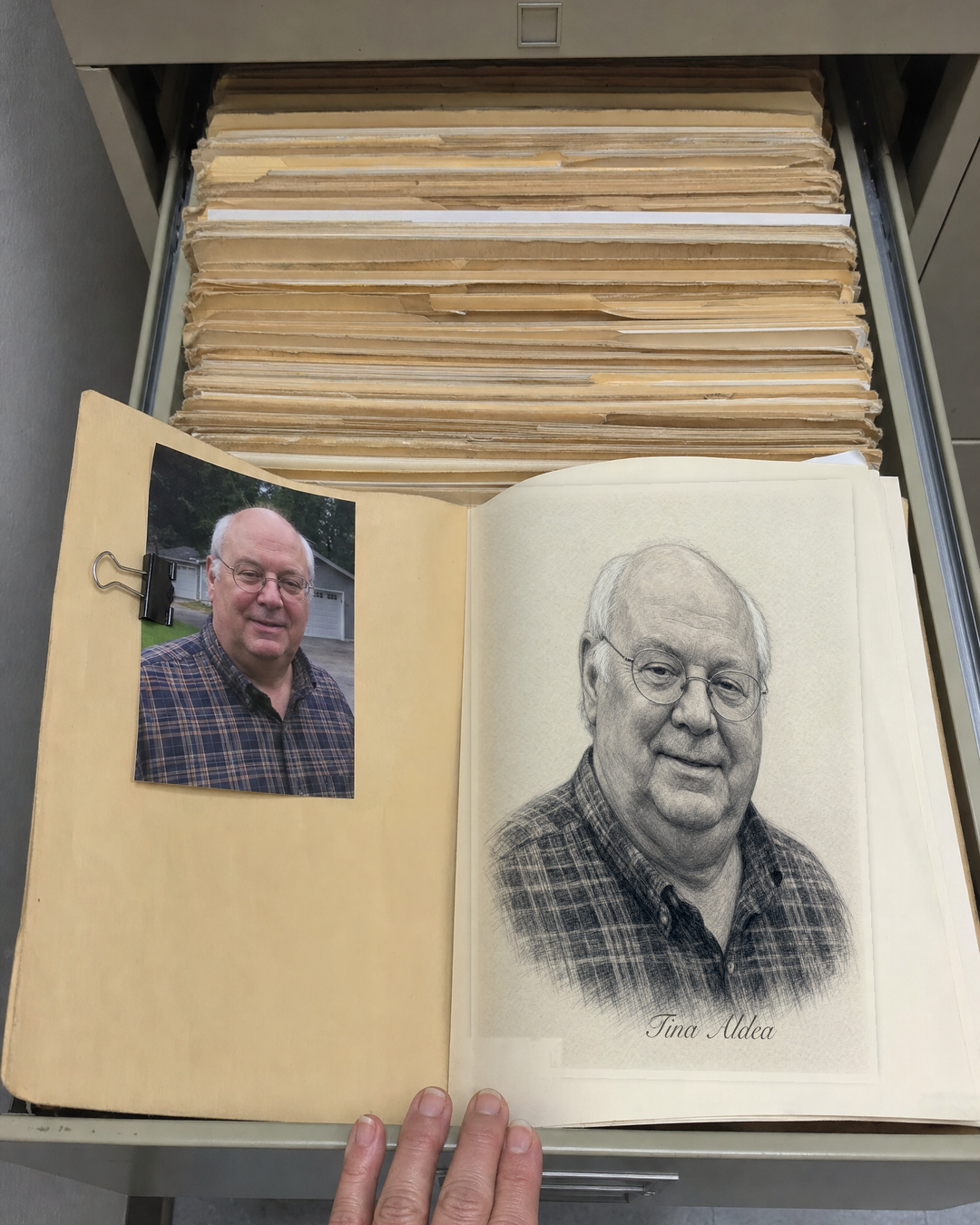
Running for 4 days since September 28, 2026. Crush last saw it on October 2, 2026.
Run by Voncile Vass on Facebook. Crush is not the advertiser and does not verify its claims. See this ad in Meta's Ad Library(opens in a new tab)
Want an ad like this for your product?
Crush makes new ad images for your product from this ad: your logo, your product photo, your offer.
Trials from $19.95 USD, then $79.95 USD a month. Cancel anytime.
About this ad
- Meta Ad Library ID
- 1319026093488741
- Platforms
- Facebook, Instagram, Audience Network and Threads
- Relaunches
- 0
Ad text
Three of the folders in the drawers behind her table belong to women who put it in writing that she was a crook. Day 11: a hotel kitchen in Vermont, a man on his back under a dish machine, two letters stitched over his pocket. Day 17: a checkout line in North Dakota, a cashier reading two letters off a shop account card. Day 26: a sign-in card in Louisiana. Three folders, three numbers under thirty, the complaint letter still clipped to the front of each. She works at a table by a window, by hand, which is the first thing a woman is meant to notice and the first that checks out. Two pencils, a kneaded eraser gone gray, a sharpener clamped to the table edge that gets used thirty-one times in an afternoon. Her nails are filed to nothing so the side of her palm rides flat on the paper. The pencil stops when she talks, which is not often. Four file drawers stand behind her, one folder to a woman: the drawing, what she wrote back, and what happened afterward, if anything did. At ten minutes to three she stopped, counted the printed orders at her left, wrote the count on a scrap of card stock and said the week was full. The website stops taking money the moment she says so. Then she drew four more faces and did not look at the stack again. The drawers are not locked. Three of the women whose folders hold a complaint will talk, one in Vermont, one in North Dakota, one in Louisiana, and all three called her a crook in writing first. Case one. Doralee is 69 and runs the dish line in the kitchen of the Crown Point Inn, a hotel in Rutland, Vermont. She paid with her own debit card at 10:40 at night, at her kitchen table with the television off, in what she calls the mood to be proved wrong. The drawing landed in her email the next morning, inside the promised 24 hours. She could not stand it. The man on the page read a decade younger than she is and still had all his hair. "I have not been out with a man with that much hair since I was thirty-one," she says. On day 3 she wrote to Aldea. The word she used for him was stranger, and what she wanted was her money. On day 11 a man came into her kitchen to pull the drain pump on a dish machine. She had walked past him for two years without once registering the face. That afternoon she registered it. Two letters over his pocket, T.H., and the work order he left on the steel table carried the same two. Aldea's page had given her those letters and one line about the trade: he fixes the machines other people cook with. "There was a rack of plates in both my hands," Doralee says. "I stood there like a fool." Fourteen months later they ride in to work together three days a week. She has never asked for her money back, or for the letter back either. Case two. Vesta is 74, in Jamestown, North Dakota, nine years a widow. Her own card went in at 6:35, morning, coat still on, standing at her counter and already half angry at herself. Her drawing came back too young and wrong around the mouth. She did not write to Aldea at all. On day 2 she called her bank and disputed the charge, which is the least forgiving thing a customer can do to a small seller and costs the seller a fee either way. Then she told her sister she had been taken. Day 17, the checkout line at the Coborn's on the east side of town. Ahead of her a man was putting a flat of windshield washer fluid on a shop account, and the cashier read the two letters off the card out loud. W.B. Vesta had been carrying those two letters folded in her purse for seventeen days. He runs a two-truck wrecker outfit, which was the other thing on the page. She said nothing that day. She walked out to the lot, sat in her truck a while, and came back the following week to ask if he took calls out in the county. "The bank had already put my money back," she says. "That is the part I feel worst about." Nine months later he sold one of the two trucks. Case three. Velda is 66 and works the front desk of a physical therapy clinic in Thibodaux, Louisiana. She paid at 11:50 at night, her own card, the phone flat on her chest in bed, telling herself it was the last thing she would ever buy on the subject. The face was bald and heavy through the jaw and it was nobody she knew. On day 5 she did what none of the others did. She printed the drawing, wrote two lines across the man's face in ballpoint, sealed it and mailed it back. Aldea kept it. It sits in the drawer with the rest, and the two lines are not printable. Day 26, a man came in to book a knee and filled out the sign-in card on the ledge at her elbow. She read the two capitals at the top, C.M., and the line where the card asks what a person does: he builds and hangs hurricane shutters. Both had been on the page she mailed back on day 5. Two years this spring. She has never asked for the drawing back, and Aldea has never offered. Then there is the arithmetic, which is hers. She puts it at 30 years of pencil work and over 3,000 women drawn, and the claim attached is that 89% of those women meet him within 30 days. Nothing certifies a figure like that and she does not pretend otherwise; the drawers stand open to anyone who wants to count. What the three folders show is eleven, seventeen and twenty-six days written in their corners, and that the only one of the three who got her money back got it from a bank, not from Aldea. What she is up against cannot be graded, and that is the whole of her problem. A reading that promises he is close can be sold to the same woman again next spring, because nothing in it ever comes due. A subscription runs the other way around: a woman who stops looking stops paying, so the product is built to keep her looking. Neither one can ever be marked wrong. A face, a trade, two initials and a window of days can be marked wrong by any woman standing in her own kitchen, which is exactly why four drawers behind that table are full of letters calling her a crook. The facts of the product are plain. A woman orders through officialtinaaldea.com. She gets his face, the name or two initials, plus when and where the crossing happens, all of it pencilled by one pair of hands and in her email within 24 hours. If sixty days pass and that face has meant nothing to her, the whole price goes back. She is careful about that part and said it twice in one afternoon. "The money goes back out through the processor itself, not through me. There is no button here that stops it and no argument that slows it. She clicks, and it leaves." Asked what she tells a woman certain the whole thing is a con, she does not soften it. "Order it. Tape it to the refrigerator where you cannot avoid it. If that face has meant nothing to you by day sixty, take the money back and go tell people I am a fraud. In thirty years, most of them never get that far. Something usually happens inside the first month." Then she picked the pencil up. The orders, the delivery time and the refund terms are all at officialtinaaldea.com.
Where the ad sends people
officialtinaaldea.com
The Artist Who Files Her Own Hate Mail
Your soulmate's face, his name or initials, and when and where you'll cross paths. Drawn by hand for $37 and delivered within 24 hours. 60-day refund.
Learn more: officialtinaaldea.com(opens in a new tab)