Donna Miller
Donna Miller Facebook ad: “Summer Sale Ends Tonight!”
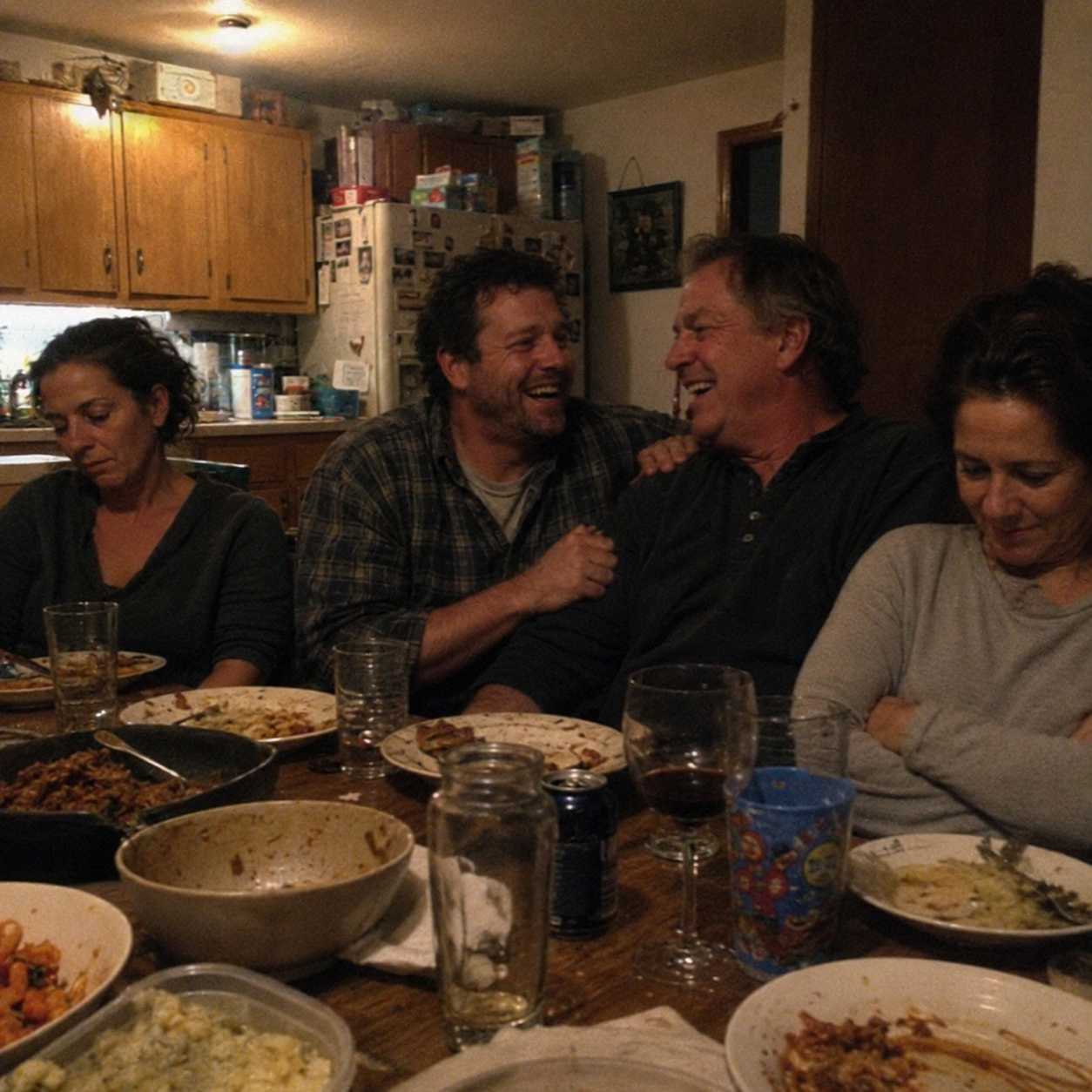
Ran for 6 days, from July 6 to July 11, 2026, the last day Crush saw it.
Run by Donna Miller on Facebook. Crush is not the advertiser and does not verify its claims. See this ad in Meta's Ad Library(opens in a new tab)
Want an ad like this for your product?
Crush makes new ad images for your product from this ad: your logo, your product photo, your offer.
Trials from $19.95 USD, then $79.95 USD a month. Cancel anytime.
About this ad
- Meta Ad Library ID
- 1319125397100282
- Platforms
- Facebook, Instagram, Messenger and Threads
- Relaunches
- 0
- Niche
- Sports & Training
Ad text
I taught him to respect women. His father taught him to belittle them. I didn't notice until last Tuesday, when my son said six words to his wife that his father has been saying to me since 1992. She smiled. I smiled. We laughed along, because that's what we were taught to do. But first, I need to tell you about Jake first so you understand why this broke something in me. Jake is thirty-one. He calls me every Sunday, even when he's busy. He coached youth basketball for two years because a kid at his office had no one to take him to practice. When my husband David's mother was in the hospital, Jake drove three hours in the middle of the night with soup and clean clothes without anyone asking. He's the kind of man other mothers tell me they hope their sons become. He married Megan four years ago. She's smart in that quiet way where you don't realize she's the sharpest person in the room until she says something that makes everyone else go still. She works in environmental policy. She reads more than anyone I've ever met. She has this laugh that takes over her whole body, and when she walks into a room she brings something warm with her. They came over for dinner last Tuesday. Nothing special. Pasta. A bottle of red. Jake and Megan sat across from us. Megan had Olivia on her lap, their daughter, two years old, already with Megan's big eyes and Jake's stubborn chin. David was at the head of the table doing his thing, topping off wine before anyone asked, steering the conversation like air traffic control. Megan had been talking about their anniversary trip. She'd been planning it for weeks. I could see it in her face, that glow someone gets when they've found something they're excited about and they're waiting for the right moment to share it. She'd found this converted farmhouse outside of Savannah. She was pulling up photos on her phone, leaning across the table so I could see, swiping through rooms with exposed beams and clawfoot tubs and a garden with string lights. "It's a former artist's residence," she was saying. Her voice had that energy in it, the kind you only hear when someone has been daydreaming about something for days. "They converted the old studio into this reading room with floor-to-ceiling windows and—" "So I looked into it," Jake said. He said it gently. Smiling. He put his hand on the back of her chair the way he always does when he's about to redirect something. "The reviews were great, but honestly there's nothing around it. No golf. No restaurants within walking distance. So I found this resort about forty minutes south, pool, spa, three restaurants on-site, and I went ahead and locked it in so she wouldn't have to keep going back and forth." He looked at Megan. Squeezed her shoulder. "You would've stressed about it for another month, babe. I just pulled the trigger." David pointed at Jake with his wine glass. "That's my boy. Your mother would still be picking a restaurant for our anniversary if I let her. Women will research something to death and then ask you what you think anyway." He laughed. Jake laughed. And then Jake said it. "It's not their fault. They're just not wired for decisions like that. They see too many options and they freeze. That's why you just handle it. It's actually the nice thing to do." David nodded. "Exactly. It's not a knock on them. It's just how they're built." Megan was still holding her phone. The farmhouse photos still on the screen. The reading room with the floor-to-ceiling windows. She locked her phone. Set it face down on the table. "No, he's right," she said. "I would've gone back and forth forever. He's good at just making the call." She smiled at Jake. That smile. I know that smile. I've been wearing it for thirty-two years. The one where your mouth does exactly what it's supposed to do, and something behind your eyes quietly closes, and you tell yourself it doesn't matter because he meant well and he probably is right and it's easier and you weren't that attached to it anyway. Olivia reached for Megan's phone. Megan moved it away gently, tucked it in her pocket. The farmhouse was gone now. David was already talking about something else. Jake was pouring more wine. The moment passed like it always passes, like water over a stone, smooth and quick and gone. But I was still sitting in it. Not because Jake said something new. Because I'd heard my husband say that sentence, or a version of it, at every dinner table, every holiday, every car ride for thirty-two years. Women aren't wired for it. It's just how they're built. I just handle it so she doesn't have to stress. And I'd been nodding along the whole time. And now my son was saying it to his wife at my dinner table and his two-year-old daughter was sitting right there absorbing every word like oxygen. Jake and Megan left around nine. Hugs at the door. Megan had Olivia on her hip, half asleep, her little fingers curled around Megan's collar. Jake kissed my forehead and said, "Love you, Mom." David shook his hand and said, "Book that golf course early, trust me. Don't let her talk you into some art museum instead." They both laughed. Megan shifted Olivia to her other hip. She didn't laugh. But she smiled. That smile again. I loaded the dishwasher and I couldn't figure out why my hands were shaking. David came into the kitchen and said, "Good night, right?" and I said, "Great night," and he kissed my cheek and went to bed. I stood at the sink for a long time after the water stopped running. Then I went upstairs and lay next to him while he snored and I stared at the ceiling and I tried to figure out why a dinner that everyone else had already forgotten about was sitting on my chest like a cement block. Women aren't wired for decisions like that. It's just how they're built. I just handle it so she doesn't have to stress. And then I started remembering. Not one thing. Everything. David and I met when I was twenty-three. I was loud then. I had opinions about everything. I wore red lipstick to job interviews and argued with professors and once talked my way into a sold-out concert by convincing the door guy I was a music journalist. Our first date, I ordered for both of us. He laughed and said, "I like a woman who knows what she wants." Our second date, I picked the restaurant. He said, "You've got good taste." Our third date, I picked the movie, the bar after, and the route we walked home. He said, "You're a lot, you know that?" He was smiling when he said it. But that night when we got back to his apartment, he said something I didn't think about again for thirty years. "You've got all this energy but it goes in every direction. You just need someone to focus it. That's what guys are for." He winked. I laughed. I thought it was charming. By our first anniversary, he was picking the restaurants. Not because I asked him to. Because the one time I picked a place he didn't love, he spent the whole dinner being polite about it, and the next morning he said, "Maybe I should handle the reservations. I'm just better at this stuff. It's a guy thing." He squeezed my hand when he said it. So I let him. By year two, we were at his colleague's holiday party. I was telling a story and the group was laughing and I was in the middle of it and it felt like being twenty-three again. In the car afterward, David said, "You were really fun tonight." Then, quiet for a few seconds: "Just maybe dial it back a little around my boss. Women who are too loud in those settings, it reads a certain way. I'm just looking out for you." I asked what way it reads. "Nothing bad. Just... aggressive. Men don't love that." By year three, he was ordering for me. "She'll have the salmon." And the waiter would look at me and I'd nod because it was easier. And one night I said actually I was thinking about the steak, and he said, "Babe, you always regret heavy food. Trust me, I know what you like better than you do." And I heard myself say, "You know what, the salmon is fine." By year five, he was booking the vacations. "I handled everything. Women overthink travel, it's just how you guys are, so I just knocked it out." Before one trip I bought a new dress, bright yellow, and he looked at it and said, "That's a lot of color. You don't want to be the flashiest person at dinner. Men notice when women try too hard." He said it the way you'd tell someone they had spinach in their teeth. Helpful. I returned the dress the next day. Bought a navy one. He said I looked elegant. "See? Classic. That's what works for women like you." By year ten, I'd stopped picking restaurants. Stopped researching trips. Stopped having opinions about where we went or what we did or how we got there. Not because he told me to stop. Because every time I did, David would listen with this patient look on his face, the way you'd listen to a child explain why they should have ice cream for dinner, and then he'd do what he was already going to do. And I learned that having a preference you know won't matter is worse than not having one at all. And the whole time, the sentences kept coming. Not angry ones. Never angry. Just facts. Delivered the way you'd say the sky is blue. "Women just aren't spatial. That's why I drive on trips." "Your mom couldn't balance a checkbook if her life depended on it. That's not a knock, it's just biology." "I don't let her handle the finances. Women are emotional spenders." "You want me to let YOU navigate? Babe. Come on." He'd say these things at dinner with friends. The men would nod. The women would laugh or roll their eyes or take a sip of wine and move the conversation somewhere else. Nobody ever stopped the table and said, "Wait. What did you just say?" Because it never sounded like an insult. It sounded like nature. Like something everyone already knew. Like weather. And here's the thing that kept me awake that night staring at the ceiling. I didn't just hear it from David. My father said it to my mother at every restaurant we ever went to. She'd open the menu. He'd order for the table. She'd close the menu and smile. One time she tried to order something different and my father said, "She doesn't know what she wants," to the waiter, right in front of her, and the waiter laughed, and my mother laughed too, and I was eleven years old and I filed that moment somewhere deep and I didn't look at it again until last Tuesday. My eighth grade teacher, Mr. Hannigan, would ask the boys what they thought first. Every time. Then he'd turn to the girls and say, "Anything to add?" Like our thoughts were dessert. Optional. Extra credit. One day Katie Mueller gave the entire answer before any of the boys could speak, and Mr. Hannigan said, "Let's give the guys a chance to weigh in first, Katie. That's how things work in the real world." The boys laughed. Katie didn't raise her hand again for the rest of the semester. My college boyfriend broke up with me because I "had too many opinions about everything." He said, "I need a woman who lets me lead." I spent the next two years making sure I had fewer opinions and let whoever I was dating lead, even when they were leading us somewhere stupid. And now here's Jake. My son. Who I raised to be kind. Who I raised to listen. Who has never once raised his voice at Megan. Sitting at my dinner table telling his wife that women aren't wired for decisions. That he handled it so she wouldn't have to stress. That it's the nice thing to do. And he believes it. That's what makes it different from cruelty. He's not trying to control Megan. He genuinely thinks he's loving her. The same way David genuinely thinks he's loving me. The same way my father genuinely thought he was taking care of my mother. They all think they're being good men. And they are. By every definition they were given. They just were never given one that included letting us finish our own sentences. Jake didn't learn this from anything I taught him. He learned it from thirty years of watching his mother nod when his father ordered for her. Close her menu and smile. Say "whatever you think is best, David" with a warmth that sounded like love but was actually surrender. He watched me disappear one dinner at a time and he thought that was what a happy marriage looked like. And now Megan is locking her phone and putting the farmhouse away and their daughter is sitting right there learning that when Daddy talks, Mommy listens, and when Mommy had an idea, Daddy found a better one, and that's just how it works. And if nobody says anything, Olivia will grow up and marry a man who books over her choices and she'll smile and say thank you and she won't know why it stings because nobody ever told her it should. Three weeks after the dinner, I was still thinking about it. Not constantly. Not like a crisis. More like a bruise you keep bumping into. You forget it's there and then you lean against something and there it is. I hadn't said anything to David. I wouldn't even know what to say. "I think you've been slowly erasing me for thirty years?" He'd look at me like I was having an episode. He'd say, "Where is this coming from?" and I wouldn't have an answer that made sense in his language. I called my friend Ruth. Ruth and I met in college. She was the only woman I knew who never got quieter. Not for boyfriends. Not for bosses. Not for anyone. We lost touch in our thirties because our lives went in different directions, meaning I got married and started disappearing and she didn't. Ruth had spent twenty years as a documentary producer. She'd traveled to forty-something countries. She'd been married twice. Both times to men who, as she put it, "loved the idea of a strong woman right up until they had to live with one." She picked up on the second ring. "Something happened," I said. "Or maybe nothing happened. I don't know." "Tell me." I told her about the dinner. About Jake. About Megan's phone going face down on the table. About David saying women aren't wired for decisions. About lying in bed hearing thirty-two years of sentences I'd been swallowing without chewing. Ruth was quiet for a long time. Then she said, "Can I ask you something?" "Yeah." "When was the last time you did something David didn't arrange, suggest, or approve of first?" I opened my mouth. Nothing came out. "I'm not asking to make you feel bad," she said. "I'm asking because you just described my first marriage word for word. Except I didn't figure it out until year eight, and you've been in it for thirty-two." "He's not a bad husband, Ruth." "I know he's not. That's what makes it so hard to see. If he yelled, you'd know. If he hit you, you'd leave. But he smiles and says 'I've got it' and 'women just aren't built for this' and calls it love, and you nod because what are you going to do, argue with someone who's being nice to you?" I didn't say anything. "Catherine, listen to me. You were the most opinionated person I knew in college. You were the one who told Professor Whitfield he was wrong about Hemingway in front of two hundred people and backed it up with evidence. You were the one the rest of us wanted to be. And the woman you're describing right now doesn't pick restaurants." "I know." "So what happened?" "I married a good man who told me my whole life that good women don't need to." Ruth exhaled. "David and I are doing this couples trip in October," I said. "Portugal. He booked the whole thing already. Flights, hotel, everything. With his friends Greg and Nate and their wives Lisa and Beth. The men planned it. The wives are 'coming obviously.' His words." "And you want to go?" "I want to go differently." "What does that mean?" "I don't know yet. I just know I don't want to show up the way I always show up. Standing slightly behind him. Letting him carry my bag. Letting him order my food. Being pleasant. Being easy. Being the version of me he built." Ruth was quiet. "I think you should go," she said. "But not like that. Not standing behind anyone." "I haven't planned a trip in fifteen years. He handles everything." "Because he told you women aren't wired for it and you believed him." That sentence hit me in the chest. "You know what you need to do?" Ruth said. "You need to show up to this trip carrying your own bag. One bag. Packed by you. Planned by you. Not coordinated with David, not fitting into his system, not tucked into his suitcase because it's 'easier if it's all in one place.' YOUR bag." "That sounds—" "Small? It's not. It's the first thing. When I left my first husband, the very first thing I did was book a flight by myself and pack my own bag. And I stood in that airport holding something I'd chosen and packed and carried with no one else's hands on it, and I cried. Not because I was sad. Because I was fifty-one years old and it was the first time in twenty years I'd walked through a building without a man directing traffic." She paused. "I'll send you a link. There's this bag I've been using for three years. It's called a Luhxe. I've taken it to thirty-something countries. Everything I need fits inside. No checking bags. No waiting at carousels. No asking anyone to carry anything." "Ruth—" "Let me finish. When you show up to this trip with one bag over your shoulder and David reaches for it the way he always does, you say, 'I've got it.' And when he looks confused, you let him be confused. And when you walk through that airport carrying everything you need without anyone's help, you're going to feel something you haven't felt in thirty-two years." "What?" "Like yourself." She sent me the link that night. I sat on the couch looking at it after David went to bed. She'd added a text: "Don't wait. They do limited runs. My producer friends have been trying to order for months. When this batch is gone it's gone, and the price jumps when they restock." I thought about the yellow dress in the back of my closet. The one I told David I returned seven years ago. I'd kept it hidden behind the winter coats. Never wore it. Never got rid of it either. Some part of me had been holding onto it the way you hold onto a name you stopped using but never legally changed. I ordered the bag at midnight. Didn't tell David. When the bag arrived three days later, I brought it upstairs and closed the bedroom door and sat on the bed with it before I even unzipped it. It was the first thing I'd bought for a trip without David's input in probably fifteen years. I opened it. Charcoal black. Structured. Smaller than I expected. I ran my hand along the inside and found the hidden garment compartment. I thought about David's system. The big suitcase we share. How he packs my things into his bag because "it's easier if it's all in one place, you'd just overpack anyway." How I haven't carried my own luggage through an airport since our honeymoon because he always grabs it before I can reach for it and says "I've got it" like he's catching something I dropped. I packed it myself. Everything I wanted. Not what David would pick for me. Not what was safe or simple or toned down or classic or "what works for women like you." I packed the yellow dress. The one from the back of the closet. The one I'd been hiding behind winter coats for seven years. I packed it first. Then I zipped the bag and put it in my car so David wouldn't see it and offer to repack it for me. I need to tell you about the couples so you understand what happened in Portugal. Greg and Lisa have been married twenty-two years. Greg runs a commercial real estate firm. He's loud the way certain men are loud, where it's not volume exactly, it's territory. He walks into a room and the room rearranges itself around him. Lisa was a pediatric nurse for fifteen years before Greg convinced her to stop working. He said it wasn't about the money. He said it was about logistics. "Someone has to run the house, and women are just better at the home stuff. It's not sexist, it's efficient." Lisa runs their entire household. Four kids. Every schedule. Every meal. Every permission slip. Greg handles "the big decisions." Lisa handles everything else. And somehow the big decisions are the ones that count. Nate and Beth have been married eleven years. Nate works in finance. He's quieter than Greg, but it's the same operating system, just a different interface. Beth used to run her own interior design business. Small but growing. Then Nate got a promotion that required relocation and Beth closed the business because, as Nate put it at the time, "mine is the real income, yours is more of a hobby that makes money." Beth hasn't worked since. She's on three nonprofit boards and plans every charity gala in their zip code, but when people ask what she does, Nate says, "She keeps busy." These are the women I've been going on trips with for over a decade. Lisa, who managed a pediatric ward with thirty beds and now manages Greg's dry cleaning. Beth, who built a business from a kitchen table and closed it because her husband called it a hobby. And me. The woman who argued with professors and now can't remember the last time she ordered her own dinner. We don't talk about it. Not because we don't see it. Because we've been told so many times that this is how it works, that men lead and women support, that questioning it feels like questioning gravity. You'd sound crazy. You'd sound ungrateful. You'd sound like one of those women. And none of us wants to be one of those women because we all saw what happened to the ones who were. The morning of the flight, David had everything staged by the front door. His big roller, the shared suitcase where he usually packs my things, a garment bag, and a backpack. "I laid out what you should bring," he said. He was in the kitchen pouring coffee. "Casual stuff for day, one nice dress for the group dinner. I put the navy one on the bed. Don't overpack. Greg said the hotel has laundry service if you need it." He'd laid out my clothes. He'd picked the navy dress. "I packed my own bag," I said. He looked up. "What?" "I have my own bag. I'm bringing it." He set down his coffee. Looked at me the way he looks at me when I've done something that doesn't fit the script. "Where is it?" "In my car." "Why is it in your car?" "Because I packed it there." He stared at me for a few seconds. Then did the head tilt. The half smile. "Okay. Whatever makes you happy. But you know there's room in the big suitcase." "I know. I don't need it." "Suit yourself." He said it lightly. But I saw something cross his face. Not anger. Confusion. The look of a man who has been carrying something for thirty-two years and just got told she'd rather carry it herself and doesn't understand why that feels like a rejection. We drove to the airport in mostly silence. David parked. Got out. Walked around to my side of the car and reached for my bag the way he always does. "I've got it," I said. "Babe, I can—" "I've got it." He put his hands up. "Okay." Laughed a little. "Independent woman over here." He said it like a joke. But I heard it the way I'd been hearing everything since the dinner. Like independence in a woman was cute. A phase. Something to be amused by until she came back to her senses. I put my bag on my shoulder and walked into the terminal. Greg and Lisa were at check-in. Greg had two enormous hard-shell suitcases and was arguing with the agent about weight limits. Lisa was standing behind him holding his boarding pass and his passport and her own bags and a tote with snacks for the flight, and Greg hadn't looked at her once. Nate and Beth were behind them. Beth had a large roller and a garment bag and a carry-on tote. Nate had one small duffel. He saw us and waved. "Ladies are bringing the whole house, as usual," Nate said to David. David laughed. "Mine tried to pack her own bag this time. We'll see how that goes." He said it to Nate. About me. While I was standing right there. The way you'd tell someone your kid insisted on making their own lunch. Nate laughed. "Beth wanted to book her own seat. I said, babe, just let me handle it, you'll end up in a middle seat in the back." Beth was three feet away. She didn't react. She was organizing her bags on the scale. The agent told Greg his bag was overweight. Seventy-five dollars. "Are you serious?" Greg said. "Lisa, what did you put in here?" Lisa's face went flat. She hadn't packed his bag. He'd packed it himself. But he said it loud enough for the whole line to hear and she didn't correct him. She just said, "I can reorganize it," and knelt down on the airport floor and started pulling things out of his suitcase while he stood over her checking his phone. I walked to the counter with my bag on my shoulder. "Just the one?" the agent said. "Just the one." She tagged my boarding pass. Two minutes. Done. I walked to security. David was still at check-in, waiting for Greg to finish yelling about the weight fees. Lisa was still on the floor. Beth was behind me in the security line. She looked at my bag. "That's all you brought? For eight days?" "That's everything." "How?" "I packed it myself." She looked at me like I'd said something in another language. Not the bag part. The "myself" part. We landed in Lisbon six hours later. At baggage claim, Greg's suitcase came out with a dent in the side. He spent ten minutes inspecting it and blaming the airline. Nate's bag came out fine. Beth's garment bag didn't come out at all. She stood at the carousel watching it go around and around and around while Nate filled out a lost luggage form and said, "This is why I told you to let me handle the packing." Her garment bag had her dress for the group dinner. Her nice shoes. Her makeup bag. She had nothing. Nate said, "We'll figure it out. I'll handle it." The same sentence. Every time. I'll handle it. As if the only options were him handling it or everything falling apart. I walked out of the airport with my bag on my shoulder. The hotel was in Alfama. Narrow streets. Blue tile on every wall. Fado music leaking out of open windows. The taxi driver dropped me off at the bottom of a steep cobblestone hill and pointed up. I walked up the hill alone. One bag. Nobody carrying it. Nobody telling me to be careful on the stones. Nobody walking ahead of me to clear a path. I checked in. The woman at the desk smiled at my bag and said, "Traveling light?" "Traveling right," I said. I don't know where it came from. But she laughed and I laughed and it felt like the kind of thing the twenty-three-year-old version of me would have said. I dropped my bag in the room. Opened the garment compartment. Took out the yellow dress. Not a wrinkle. Not a crease. I put it on. Looked at myself in the mirror. I hadn't worn anything that color in seven years. David had called it "a lot." Too flashy. Too much. "Men notice when women try too hard." It was the brightest thing I'd ever seen. I wore it downstairs. The first group dinner was that night. A restaurant Greg had picked. Long table, candles, wine already ordered before the women sat down. David saw the dress. He didn't say anything at first. Then, quietly: "You're wearing that?" "I'm wearing this." "It's very... bright." "Yes." He looked at me like he was doing math he couldn't finish. Then he pulled out my chair for me and said nothing else about it. Greg ordered for the table. A set menu he'd arranged with the restaurant. He announced the wine pairing. Explained the dishes. Told a story about the sommelier he'd met that afternoon. Lisa sat next to me. She was wearing a blouse she'd worn on the plane because her nice top was wrinkled from the suitcase. She kept pulling at the hem. Beth was across the table in a sweater she'd bought at a shop near the hotel that afternoon because her garment bag was still missing. She looked uncomfortable. Out of place. She kept touching her hair like she was checking if she was presentable. I was in the yellow dress. Straight from the garment compartment. No wrinkles. No creases. No panic shopping. No borrowed clothes. The waiter came around for individual orders. Side dishes, preferences, allergies. Greg started to order for Lisa. "She'll have—" "I'll have the grilled sea bass," Lisa said. "And can I see the wine list?" Greg stopped. Looked at her. "I already ordered the wine for the table." "I know. I'd like to see what else they have." The table went quiet for a second. Not long. Just a half-beat. Like a record skipping. Greg recovered. "Sure. Whatever you want." But he said "whatever you want" the way David says it. Like a concession, not an invitation. Lisa ordered a glass of vinho verde. Separate from Greg's selection. I caught her eye. She didn't smile exactly. But something in her face shifted, like a window opening an inch. After dinner, the group walked through Alfama. Steep streets. Cobblestones that went in every direction. Fado music pouring out of doorways. Greg was walking ahead. Lisa was behind him. Nate was looking at his phone. Beth was holding Nate's arm because her shoes, the ones she'd bought that afternoon because her real shoes were in the lost garment bag, didn't have the right grip for the cobblestones. David was walking next to me. He kept glancing at the dress. A woman stepped out of a fado bar. Mid-sixties. Silver rings on every finger. Dark shawl over her shoulders. She stopped when she saw me. "Beautiful dress," she said. "You wear it like you mean it." "Thank you." "Most women who come through here dress like they're trying not to be noticed." She looked me up and down. "You're not doing that." "Not tonight." She smiled. Disappeared back into the bar. David was quiet. He'd heard all of it. The next day, the men had planned a boat excursion. Deep sea fishing. Six hours on the water. The wives were not invited. Greg announced it at breakfast. "We booked the boat months ago. You ladies can hit the spa or do some shopping. We'll meet up for dinner." He said "you ladies" the way you'd say "you kids." Go play. The adults have plans. Lisa said, "What if we wanted to come?" Greg laughed. "Babe, it's deep sea fishing. You get seasick on a kayak." Nate chimed in. "Beth doesn't do boats either. You guys would hate it." David looked at me. "You'd rather explore anyway, right? You've been wanting to see the city." He'd decided for me. Again. Told me what I wanted before I'd said a word. "Actually," I said, "I'd rather do the boat." Every man at the table looked at me. "You want to go fishing?" David said. "I want to go on the boat." Greg looked at David like this was David's problem to solve. David leaned over. "You don't even like fishing." "I like boats. I like the ocean. And I wasn't asked." That last sentence landed heavier than I meant it to. Or maybe exactly as heavy as I meant it to. David sat back. "Fine. If you want to come, come." "I'll come too," Lisa said. Greg looked at her. "Since when do you want to—" "Since just now." Beth was quiet. She looked at Lisa. Looked at me. Then: "I'm coming." Nate started to say something. Beth held up her hand. Not dramatically. Just a small palm raised about six inches off the table. He stopped. We went on the boat. Four hours in, the wind picked up. The waves got rough. The fish weren't biting. Greg was turning green. Nate was gripping the railing. David was fine but frustrated. He'd been fighting with a tangled line for twenty minutes and the captain had tried to help twice and David kept saying, "I've got it." The universal male sentence. I've got it, I've got it. Even when he clearly did not have it. Lisa was sitting at the bow with her face in the wind, eyes closed, completely calm. Not seasick. Not scared. Just there. Beth was talking to the captain about the coastline. Asking questions about the rock formations. The captain was answering her like she was the most interesting person on the boat, because she was. I was standing at the stern watching the wake trail out behind us and thinking about how David told me I'd rather explore the city. How Greg said the women would hate it. How Nate said Beth doesn't do boats. And here we were. Three women on a boat we weren't supposed to be on. Steady. Curious. Present. The men were the ones struggling. Nobody said it out loud. Nobody had to. Day four. The coast. We'd driven out to Sintra. Fairy-tale palaces. Forests that felt alive. The kind of place that makes you feel small in the good way, the way that reminds you how big everything else is. The group was at a lookout point overlooking the Atlantic. It was one of those moments where everyone goes quiet because the view is louder than anything you could say. I was standing at the edge with my bag on my shoulder when a man behind me said, "Excuse me." I turned. Late fifties. Linen blazer. Wire-rimmed glasses. A leather notebook in his hand with a pen clipped to it. "I'm sorry to bother you. But I noticed your bag." He pointed. "Is that a Luhxe?" "It is." "My wife is a senior editor at Condé Nast Traveler. She's been writing about these for months. Her assistant has been checking the website every week trying to get one." He looked at it properly. "How long have you been traveling with it?" "Five days. Everything I brought fits in there." He shook his head slowly. "Five days. She is going to be absolutely furious she's not here." He looked at it again. "Would you mind if I took a photo? She'll want to see exactly which model." "Of course." He took two photos from different angles. "You know," he said, "she writes about this all the time. The way someone travels tells you everything about them. She says the women who figure out how to carry everything they need in one bag have usually figured out something much bigger than packing." David was standing about ten feet away. He'd been watching. Not the man. Me. Greg walked over. "What's that about?" "He wanted a photo of her bag," David said. Quietly. Like he was still processing it. "Of her BAG?" Greg said. "Why?" David didn't answer. That night was the nicest dinner of the trip. Seaside restaurant. Sunset turning the whole Atlantic gold. White tablecloths. Candles. I wore the yellow dress again. Not because I was making a point. Because I wanted to. The waiter came. Greg picked up the wine list and started to order for the table. "Actually," Lisa said. "I'd like to order my own tonight." Greg looked at her. "I've been reading about Portuguese wines all week," she said. "I want to try the Alvarinho." She said it calmly. Not a challenge. Not a fight. Just a woman saying what she wanted. Beth ordered next. Didn't wait for Nate. Didn't look at him for approval. I ordered the grilled octopus and a glass of the white Douro. The men were quiet for a moment. That same half-beat from the first dinner. The record skip. The tiny gap where the pattern breaks and nobody knows what fills it yet. And then dinner happened. Lisa told a story about a patient she'd had years ago in the pediatric ward. A little girl who'd come in with a broken arm and ended up teaching the whole nursing staff how to say "thank you" in sign language. She told it beautifully. Detailed. Funny. The whole table was leaning in. Greg was watching her like he'd never heard her tell a story before. Maybe he hadn't. Maybe she'd stopped telling them years ago. Beth talked about a building she'd studied when she was still doing design work. A library in Copenhagen with a rooftop garden. She described it the way someone describes a place they loved, and Nate was listening with this expression on his face that looked like he was hearing something he'd forgotten. I told them about Ruth. Not everything. But the part about how she'd said, "You were the most opinionated person I knew in college." And I told them about the journal. The line I'd written at twenty years old. Don't take up too much time. Lisa put her wine glass down. "I used to run a thirty-bed pediatric ward," she said. "I managed staffing schedules for forty-two nurses. I handled emergency triage decisions in the middle of the night." She looked at Greg. "And now you order my dinner for me." She didn't say it with anger. She said it with wonder. Like she was only just now hearing how strange it sounded. Greg didn't say anything. He picked up his wine glass. Took a long sip. Put it down. The table was quiet. Beth said, "Nate called my design business a hobby." Nate looked at her. "I didn't mean—" "I know you didn't mean it as an insult. That's the part that's hard to explain. You said it like you were describing the weather. Like it was just a fact. And I closed my business because I believed you." Nate opened his mouth. Closed it. David was watching all of this. He hadn't said a word. I looked at him across the candlelight. He was looking at me in the yellow dress. The one he told me was too much. The one I hid in the closet for seven years. The one I'd packed into a bag he didn't know about and carried through an airport without his help and wore to a dinner he didn't choose at a table where I ordered my own food and told my own stories and didn't wait for anyone to tell me it was my turn. He didn't look angry. He didn't look confused. He looked like a man who was seeing something clearly for the first time and wasn't sure yet whether it was beautiful or terrifying. On the last night, David and I were on the balcony. The ocean was black. The air smelled like salt and jasmine. He was quiet for a long time. "You were different this trip," he said. "Different how?" He thought about it. Not his usual half-second pause before saying something he already planned. Really thought. "Like you were louder. Not louder. Just more. More of something." "More of me." "Yeah." He was quiet again. "I think I've been doing something I didn't know I was doing," he said. I waited. "When I say things like 'women aren't wired for this,' I don't think I'm... I mean, I never meant it as—" "I know you didn't." "But I think maybe it did something anyway." I looked at him. "My mother closed her menu every time my father ordered for the table," I said. "I wrote in my journal at twenty to take up less time. Our son told his wife she's not wired for decisions. And our granddaughter is sitting there learning all of it." David didn't say anything for a long time. "I don't want Olivia to grow up like that," he said quietly. "Neither do I." He reached for my hand. I let him hold it. Not because he reached. Because I chose to. We sat there for a long time watching the ocean in the dark. I flew home on my own. Early flight. One bag on my shoulder. At the gate, a woman sat next to me. She looked at my bag. "I love that. What is it?" "It's a Luhxe." "I've been looking for something like that. My husband always packs for both of us and I've been wanting to just... do it myself." She laughed like she was embarrassed. "That sounds ridiculous." "It doesn't sound ridiculous at all." "Do they still have them?" "They do limited runs. This batch might already be gone. And the price goes up when they restock." She typed something into her phone. "My sister told me about these months ago. I keep putting it off." "Don't put it off." She looked at me. "You sound like you mean that about more than the bag." "I do." Here's what I know now. Nobody sat me down and told me to be smaller. That's not how it works. It works at dinner tables where your husband orders your food and calls it chivalry. In living rooms where your son says women aren't wired for decisions and everyone nods. In classrooms where the teacher calls on the boys first and tells the girls "good addition." In cars where your boyfriend says "you're a lot" and you spend thirty years trying to be less. It works because every sentence sounds like love. "I've got it." "Don't worry about it." "I'll handle it." "Women just aren't built for this." "You'd just overthink it." "It's not a knock, it's just biology." And after thirty-two years of hearing it, you forget that you argued with professors. You forget you talked your way into concerts. You forget you had a yellow dress you loved and you hid it in a closet because a man who loved you said it was too much. The bag didn't make me louder. But it was the first thing I chose on my own in fifteen years. The first trip I packed myself. The first time I walked through an airport without someone carrying my things or telling me where to go or deciding I'd rather do something else. I carried one bag through Lisbon in a yellow dress while the men who said women aren't wired for decisions were tangled in fishing line and fighting with airlines and struggling on cobblestones. Lisa ordered her own wine. Beth told Nate the truth about her business. David sat on a balcony and said, "I think I've been doing something I didn't know I was doing." And a two-year-old girl named Olivia might grow up in a house where her mother keeps the farmhouse. Where her grandmother wears yellow. Where the women in her life take up space without apologizing for it. Not because anyone gave us permission. Because we stopped waiting for it. Ruth texted me when I landed. "How'd it go?" "Lisa ordered her own dinner. Beth told Nate about her business. David said he didn't know he was doing it." Ruth sent back: "That's how it starts. One woman stops shrinking and the rest of them remember they can stand up straight." Then: "Also, don't wait to tell people about the bag. They're pausing production again. Something about their Italian supplier. When they come back the price goes up. My producer friends have been panicking about it for weeks." I thought about the woman at the gate. The one who said her husband always packs for both of them. I thought about Megan locking her phone at my dinner table. I thought about my mother closing her menu and smiling. I thought about Katie Mueller, who had the whole argument and was told it was an addition. I thought about a journal entry written in 1989 by a twenty-year-old woman who had more fire in her than anyone in the room. And how she spent the next thirty-three years learning to keep it down. If you've been told you're "a lot." If you've been told to dial it back. If someone has been ordering your dinner and booking your flights and carrying your bag and calling it love for so long that you forgot you ever did those things yourself. You did. You always could. You just stopped because every room you walked into told you the same thing in a different voice: be less. Be easier. Be quieter. Let him handle it. One bag. One trip. One yellow dress you've been hiding. That's all it takes to remember. Your move.
Where the ad sends people
luhxe.com
Summer Sale Ends Tonight!
Free 90 day returns
Shop now: luhxe.com(opens in a new tab)