
Inactive· since Jul 7, 2026
- 41
- days it ran
- 0
- relaunches
Ad copy
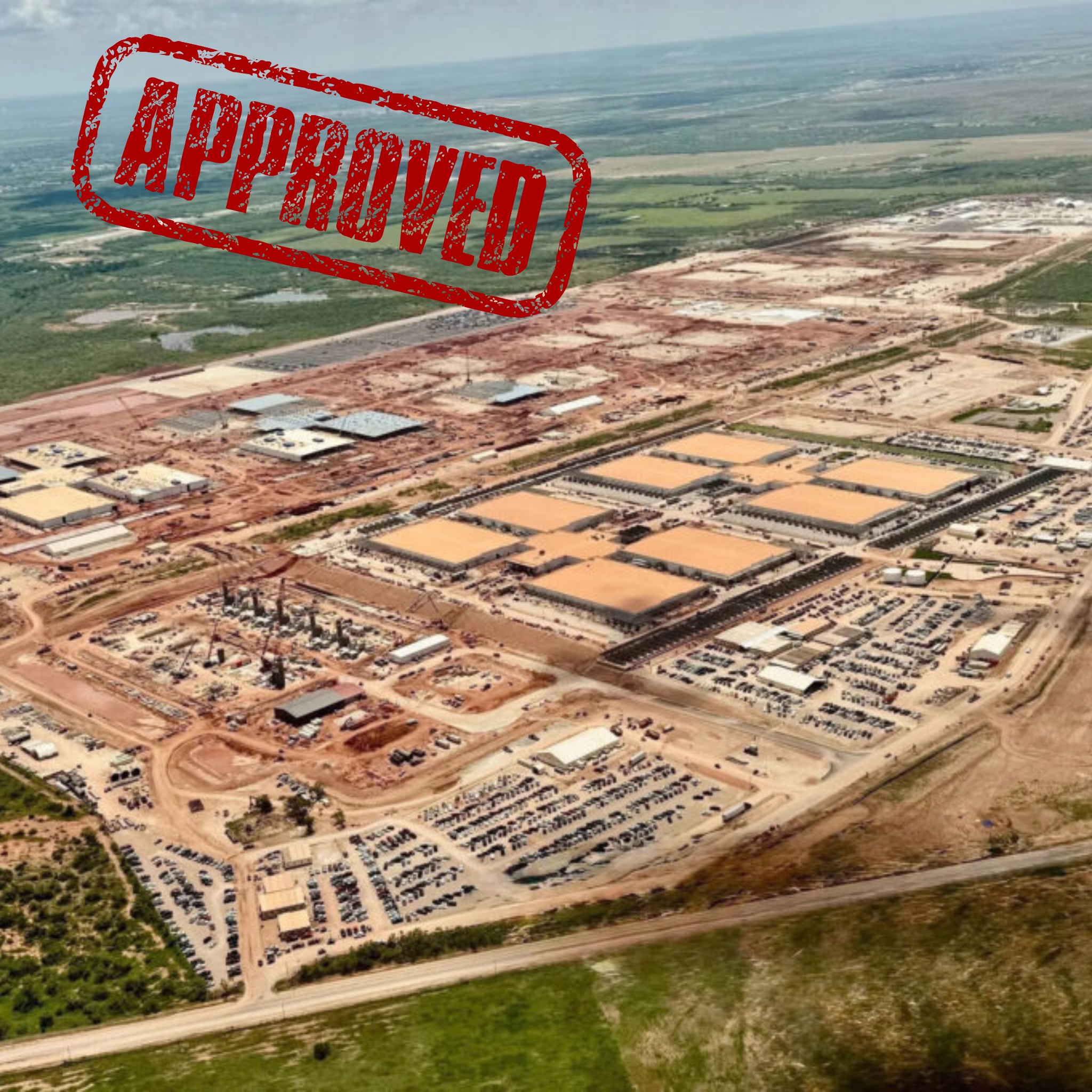
Utah just approved a 40,000-acre AI data center backed by billionaires that could use more electricity than the entire state uses now, and the part that made me feel sick wasn’t even Utah. It was realizing Utah is just the one that made the news. They’re building these things in Texas. Virginia. Georgia. Ohio. Arizona. Illinois. Anywhere they can get land, water, power, tax breaks, and politicians willing to call it “progress” while ordinary families are told to turn their thermostats up, use less, pay more, and be grateful the machines are still running. That’s when I stopped worrying about AI taking my job. I started worrying about AI taking priority over my house. Because nobody has been able to answer the one question every parent should be asking right now: Where is all that power coming from? I need to back up. I’m 41. Wife, two kids, normal house, normal bills, normal life. I’m not anti-technology. I use AI sometimes. I get why people are excited about it. I understand it can write emails, make images, answer questions, help businesses, all of that. But this isn’t about an app anymore. That’s what people are missing. AI stopped being something on your phone the second they started building giant machine cities across America just to keep it alive. And that’s what these data centers are. Machine cities. They need land. They need cooling. They need water. They need transmission lines. They need backup systems. And most of all, they need power. Not sometimes. Not when it’s convenient. Twenty-four hours a day. Seven days a week. Through heat waves. Through storms. Through shortages. Through grid warnings. Through the exact hours your local utility texts you asking your family to “reduce non-essential usage.” That phrase used to annoy me. Now it scares me. Because after I read about the Utah project, I brought it up at dinner. My husband thought I was doom-scrolling again. He gave me that look like, “Please don’t tell me we’re doing another end-of-the-world conversation while the kids are eating pasta.” I didn’t blame him. I sounded dramatic even to myself. But I kept thinking about the same thing. If one AI campus can use more power than an entire state uses now, what happens when they build these in every state? What happens when every billionaire, every tech company, every cloud provider, every AI startup, every government contractor, and every politician who wants to say they’re “leading the AI race” starts demanding guaranteed power at the same time? Where does that power come from? My husband said, “They’ll just build more power plants.” I wanted that to be enough. It sounded reasonable. More demand, more power plants. Problem solved. But it didn’t feel solved. So the next morning, I called the only person I knew who might actually understand it. My dad’s old friend Tom. Tom spent thirty years around utility planning and power plants. Not some internet expert. Not a podcast guy. Just an old-school power guy who knows what happens behind the wall when everyone else just flips the switch and expects the lights to come on. I expected him to calm me down. He didn’t. I told him about the Utah data center. The size. The power demand. The other states. The way everyone keeps calling it progress. Then I asked him the question. “Where are they getting all that power from?” He was quiet for a few seconds. Then he said, “That’s the question they don’t want normal families asking.” I didn’t say anything. He said, “Because the honest answer is ugly.” “What’s the answer?” “They’re not just building power. They’re buying priority.” That word bothered me immediately. Priority. He said it again. “Priority is the whole game.” I asked him what that meant. He sighed. “It means these companies don’t spend billions building AI campuses and then just hope the grid has enough left over for them. They sign power agreements. They build private generation. They push for new transmission. They lobby utilities. They get treated like critical infrastructure. They make themselves too expensive to shut off.” “And homes?” “Homes become flexible.” There was that word. Flexible. I hated it the second he said it. “What does flexible mean?” “It means your house can be asked to use less. Your AC can cycle down. Your water heater can wait. Your neighborhood can get rolling outages. Your family can be told to reduce demand between 4 and 9 PM.” He paused. “An AI campus doesn’t get told that. Not if they can help it.” I looked across the kitchen at my kids’ backpacks by the door. “So they get protected.” “They get prioritized.” “And we get told to conserve.” “Exactly.” I sat there with the phone against my ear, staring at the light over our kitchen table like I had never really understood what it meant to have power. Tom kept going. “People think the grid is fair because everyone’s lights come on the same way. But when the grid gets tight, it isn’t about fair. It’s about contracts. Politics. money. infrastructure. penalties. who has backup generation. who has utility relationships. who can say they’re critical to national competitiveness.” “National competitiveness?” “That’s the phrase they’ll use.” He sounded tired. “AI is going to be framed like a national emergency. Like if these machines don’t keep running, America falls behind. Once that happens, your family’s comfort becomes optional. Their uptime becomes strategic.” Strategic. Another clean word for something ugly. I asked him if he was saying families would literally lose power because of AI. He didn’t answer right away. Then he said, “I’m saying when demand grows faster than supply, somebody becomes the flexible part of the system. And it won’t be the billion-dollar machine campus with lawyers, contracts, backup turbines, and politicians cutting ribbons out front.” That line sat in my stomach. Because it made sense. That was the worst part. It made sense. The tech elites are not building these things because they hope the grid works out. They are building them because they know how to make the grid bend around them. And regular families? We get the emails. Please reduce usage. Please delay appliances. Please raise thermostat. Please conserve. Please understand. Tom said, “Utah is not special. Utah is just the one people noticed.” I asked him what he meant. He said, “These are going up anywhere they can get cheap land, water, power access, tax breaks, and a local government desperate enough to call it economic development.” “Texas?” “Yes.” “Virginia?” “Already overloaded in places.” “Arizona?” “Yes.” “Georgia?” “Yes.” “Ohio? Illinois?” “Yes. And more.” He paused. “Every state wants the money until the grid starts acting different.” I asked him what “acting different” meant. He said, “At first? Higher bills. New transmission lines. more gas plants. more strain. More conservation requests. More summer warnings. More utilities asking people to use less during peak demand.” “And later?” “Later is priority.” There was that word again. He said, “When the grid has enough, everyone pretends this is progress. When the grid gets tight, progress starts choosing winners.” That sentence bothered me for the rest of the day. Progress starts choosing winners. I thought about the people building these places. Billionaires. Tech elites. investment funds. cloud companies. politicians. developers. people who fly private to conferences and talk about “AI infrastructure” like the rest of us are just background noise. They are not going to be the ones sweating in a hot house with kids asking why the air won’t turn back on. They are not going to be the ones opening a fridge full of spoiled groceries. They are not going to be the ones wondering why the faucet is slowing down. And that is when Tom said the thing that changed the whole conversation. He said, “But honestly, power isn’t even the part that scares me most.” I almost laughed. “What could be worse than power?” “Water.” I didn’t answer. He said, “That’s the part families don’t connect.” “What does AI have to do with water?” “Everything has to do with water when power gets unstable.” He asked me where my drinking water came from. I said, “The tap.” “And before the tap?” I didn’t answer. He said, “Treatment plant. pumps. pressure stations. electric controls. sensors. chemical feed systems. backup generators. All of it depends on power. People think water is separate from electricity because the faucet is in the kitchen and the breaker box is in the garage.” He paused. “It’s not separate.” I felt that one. Because I knew he was right and also knew I had never thought about it. Not really. My faucet has always worked. So I treated it like a law of nature. Turn handle. Water comes out. But it isn’t nature. It’s a powered system. Tom said, “When the grid gets managed, water gets fragile. Pumps slow down. pressure drops. treatment gets interrupted. boil advisories go out. Sometimes the tap goes dry. Sometimes worse, it keeps running and people don’t know if it’s safe.” I said, “Wouldn’t they protect water plants?” He gave a little laugh. Not mean. Just tired. “Some will be protected. For some amount of time. In some places.” I hated that answer. “Some?” “Some is the truth.” Then he asked me a question. “How many cases of water do you have?” I looked toward the garage. “Maybe six.” “For four people?” “Yes.” “And a dog?” “Yes.” He said, “That feels like a lot because it takes up space. But it isn’t a lot.” I didn’t say anything. “A family can burn through bottled water fast. Drinking, cooking, brushing teeth, pets, washing hands, coffee, baby formula if you have little ones, cleaning. Every bottle you open is one fewer you have.” I knew that. But I had never actually done the math. Tom said, “Bottled water is storage. Storage is fine. But storage is a countdown.” That line hit me. Storage is a countdown. Then he said, “What you want is access.” “Access to what?” “Freshwater you can make safe yourself.” I thought about the creek behind our neighborhood. The retention pond by the soccer fields. The lake fifteen minutes away. The rain barrel my husband bought during a gardening phase and then never used again. Water everywhere. None of it drinkable. Tom said, “Most families are surrounded by water they can’t use. That’s the problem.” Then he said, “If I had young kids right now, I’d solve that before I worried about another case of cans.” That got my attention. “What do you mean solve it?” He said, “You need a way to turn nearby freshwater into clean water without power.” I asked what he used. He said, “I keep a gravity system.” “A what?” “A gravity-fed water filter. Dirty water goes in the top bag. You hang it. Gravity pulls the water through the filter. Clean water comes out the other side.” “No power?” “No.” “No batteries?” “No.” “No pumping?” “No.” “Chemicals?” “No.” He said, “That’s why I like it. When the grid is the problem, I don’t want my water solution depending on the grid.” That made too much sense. I asked him if it was one of those little straw filters. He said, “No. Those are fine if you’re alone. But you’re not alone. You have a family.” Then he said the line that made me order it. “A straw is for one person. A gravity bag is for people who depend on you.” I wrote that down. Because that was exactly the difference. I didn’t need to feel prepared for some imaginary solo survival trip. I needed my husband to be able to fill bottles. I needed my kids to have water in cups. I needed water for cooking, brushing teeth, washing hands, the dog bowl, and everything else a family needs when life does not pause just because the tap does. Tom told me the system he trusted was called the Aqua-GS1 from Guard Survival. I had never heard of it. He said most people hadn’t. “That’s usually how useful things work before everyone needs them.” He sent me the link. I clicked it and stared at the product photo for a while. Blue dirty-water bag. Hose. small filter. clean-water pouch. hang loop. Simple. Almost too simple. Tom said it filters through a 0.1-micron filter and is rated for up to 1,500 gallons depending on source water and maintenance. Freshwater sources like creeks, ponds, lakes, rivers, rainwater. Not saltwater. Not chemical runoff. Real-world water still requires judgment. But if you have freshwater nearby, this gives you a way to make it usable. By the gallon. That was the part I kept coming back to. By the gallon. Not one sip at a time. Not “hope the bottled water lasts.” Not “stand in line at Costco with everyone else.” A way to make clean water by the gallon without power. I ordered one that afternoon. Just one. I still wanted to test it. When it showed up, my husband did the same thing he always does when I buy something preparedness-related. He held it in his hand, looked at me, and said, “This is what kept you up for three nights?” I said, “Come with me.” We took it to the creek behind our neighborhood. The water looked disgusting. Brownish. Leaves floating. Mud around the edge. The kind of water you tell kids to stay away from. I filled the top bag. Hung it from a branch. Connected the hose. Set the clean pouch underneath. Opened the valve. For a few seconds, nothing happened. Then water started moving. Slow at first. Then steady. No pump. No battery. No sound. Just gravity. The dirty water stayed in the top bag. Clear water came through the hose into the pouch. My husband stopped joking. I picked up the pouch and smelled it. Nothing. No creek smell. No algae. No mud. I poured it into a clear bottle. It looked like normal water. Then I drank it. Clean. Cold. No grit. No weird taste. Nothing. My husband just stared at the creek. Then he said, “That’s been here the whole time.” Exactly. That was the point. The water was always there. We just didn’t have a way to use it. On the walk home, he didn’t say much. Then, right before we got to the driveway, he asked, “How many did Tom say he had?” I told him I didn’t ask. He said, “Order more.” That was the first time he didn’t argue. So I did. One for the house. One for my car. One for his truck. One for my parents. Then I sent the link to my sister. She laughed at first. Said I was becoming one of those people. Then I asked her one question. “If the tap stopped working for three days, what would you give the kids?” She didn’t laugh after that. I don’t know who is reading this. Maybe you think AI is exciting. Maybe you think data centers are just progress. Maybe you think the grid will be fine because it always has been. Maybe you think I’m dramatic for connecting billionaires building machine cities to the water coming out of my kitchen faucet. I hope you’re right. I really do. But I can’t unsee it now. They are building these places everywhere. Utah. Texas. Virginia. Georgia. Ohio. Arizona. Illinois. And those are just the names normal people are hearing. They need power. They need cooling. They need water. They need priority. And the people funding them are not going to let the machines blink first. Families like ours will be told to be flexible. Use less. Wait longer. Pay more. Understand. Conserve. Cooperate. And if power becomes unstable, water becomes unstable with it. That is the part nobody is talking about. Not loudly enough. Because the second normal parents understand the connection between the grid and the tap, the bottled water aisles empty. And when that happens, I don’t want to be standing there with everyone else, hoping the last few cases are enough. I want access. Here’s the same system I bought: 👉 https://guardsurvival.com/products/aqua-gs1 It’s called the Aqua-GS1. It’s a one-gallon gravity-fed water filtration system. No power. No batteries. No pumping. No chemicals. You fill the top bag from a freshwater source like a creek, pond, lake, river, or rainwater, hang it, and gravity pulls the water through the 0.1-micron filter into the clean pouch below. It’s rated for up to 1,500 gallons depending on source water and maintenance. I’m not saying don’t store bottled water. Store it. But understand what it is. Stored water is a countdown. Access is different. As long as there is a freshwater source near you, the Aqua-GS1 gives your family a way to make clean water by the gallon. That matters because if AI data centers get priority power, and homes become “flexible demand,” and the grid gets tight, and your tap stops being something you can trust, you do not want to be figuring out water at the same time everyone else is panic-buying the last cases at Costco. You want to have solved it already. That is what the people with money are doing. Quietly. For their families. Do the same for yours. 👉 https://guardsurvival.com/products/aqua-gs1 P.S. — My husband said something that stuck with me after we tested it. He said, “It’s not about being scared of AI. It’s about not trusting the people building it to care what happens to us.” That’s exactly it. If the machines need power, cooling, water, and priority, someone else becomes flexible. I don’t want my kids’ water plan to be flexible. P.P.S. — This is not for saltwater or chemical runoff. Be smart about your source. But for freshwater sources like creeks, ponds, lakes, rivers, and rainwater, this is the kind of simple backup I wish I had thought about years ago. P.P.P.S. — If you’re thinking you’ll just buy cases of water and stack them in the garage, do the math. A case of water is about three gallons. A family can run through that fast. Then you need another case. And another. And another. Bottled water is a countdown clock. You drink it and it’s gone. A gravity system is access. As long as there’s a creek, pond, lake, river, rain barrel, or bathtub you filled in advance, you have a way to make clean water by the gallon. 👉 https://guardsurvival.com/products/aqua-gs1
If you’re a parent or grandparent, please read this👆
Shocking Congressional Report Warns: 9 in 10 Americans Won't Survive One Year Of Grid Collapse — And The Overlooked Reason Why Shocking Congressional Report Warns: 9 in 10 Americans Won't Survive One Year Of Grid Collapse — And The Overlooked Reason Why Published — A congressional EMP Commissi...
SHOP NOWLike this ad? Make it yours.
Crush rebuilds this exact creative around your product — your brand, your colors, your offer — in about a minute.