Donna Miller
Donna Miller Facebook ad: “Summer Sale Ends Tonight!”
Ran for 3 days, from July 14 to July 17, 2026, the last day Crush saw it.
Run by Donna Miller on Facebook. Crush is not the advertiser and does not verify its claims. See this ad in Meta's Ad Library(opens in a new tab)
Want an ad like this for your product?
Crush makes new ad images for your product from this ad: your logo, your product photo, your offer.
Trials from $19.95 USD, then $79.95 USD a month. Cancel anytime.
About this ad
- Meta Ad Library ID
- 1330707119092133
- Platforms
- Facebook, Instagram, Messenger and Threads
- Relaunches
- 0
Ad text
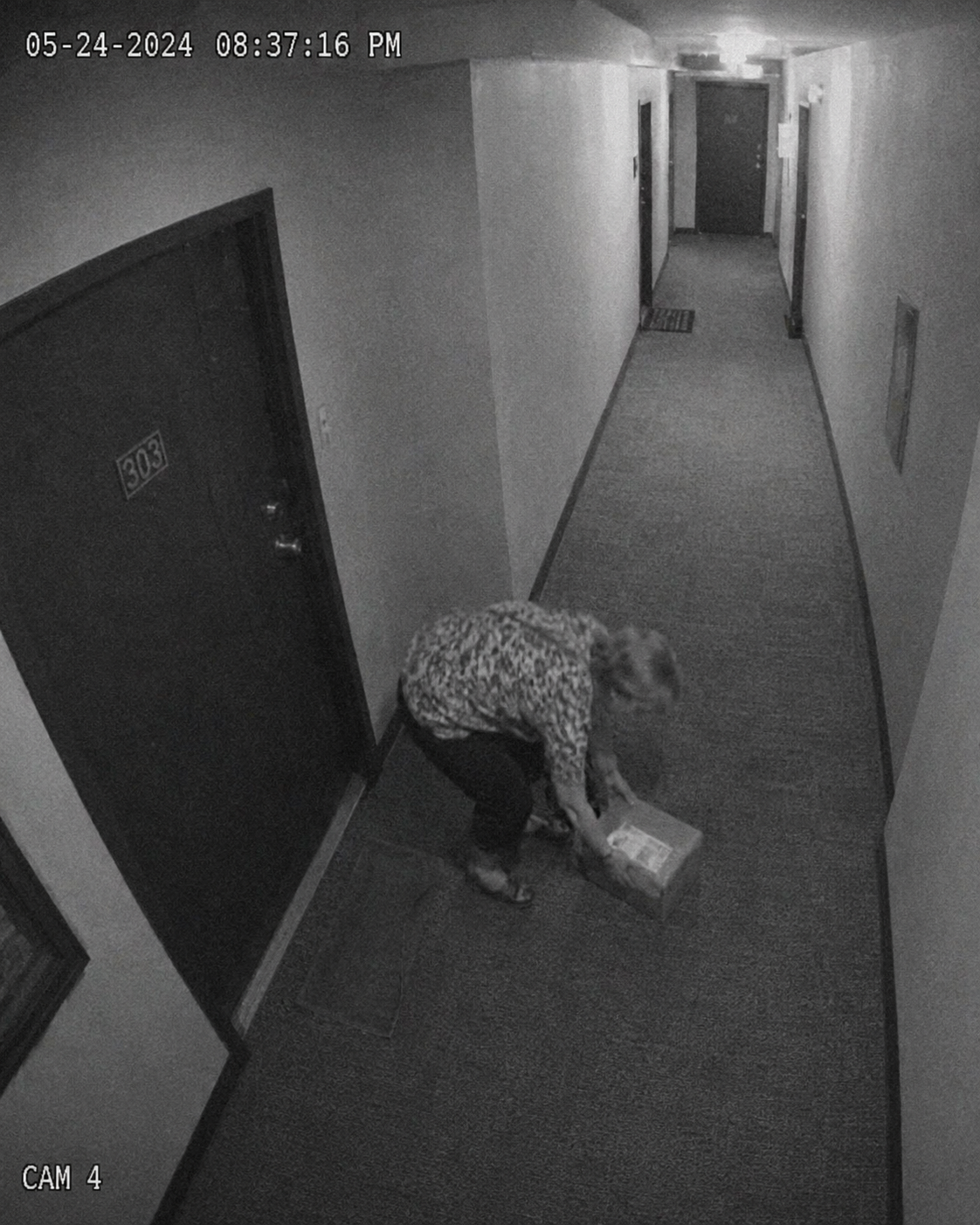
My next door neighbor collected my packages for three weeks without asking me. When I finally knocked on her door, she opened it three inches and said, "I was wondering when you'd come." I should've demanded my stuff. Instead, I walked in. I wish I was making this up, but I'm not. The day before I knocked, a delivery driver stopped me at my door. My neighbor in 4B had been signing for everything since the beginning of the month. Told him I was out of town. I wasn't out of town. I'd been in my apartment the entire time. I was standing in my doorway in the same sweatpants I'd been wearing for four days, blinking at sunlight that felt too bright. I'd been ordering things at 3 AM when I couldn't sleep and never noticed they didn't arrive. I hadn't noticed much of anything lately. I'd lost my job two months before. The relationship ended badly before that. Somewhere in there I stopped leaving. I hadn't spoken to the woman in 4B once in two years. Didn't know her name. So the next day I knocked. She was maybe seventy. Gray hair pulled back. She looked at me for a long moment and smiled in a way that wasn't quite happy. More like relieved. She stepped aside and gestured me in. And I don't know why, but I walked into a stranger's apartment like I was moving through water. The boxes were on a table by the window. Stacked by size. My name on every label. That's when it hit me that none of this was normal. I was in a stranger's apartment. Nobody knew I was here. "Why do you have my packages?" She didn't answer. She was already walking to the kitchen. "Do you take sugar?" "I... what?" "In your tea." "I don't want tea. I want to know why you've been signing for my mail." She stopped. Her back was to me. She stood there with the kettle in her hand for a second too long, and I watched her shoulders do something. Rise, then settle. Like she was deciding something. "You look like you could sit down," is what she finally said. That's not an answer. I knew it wasn't an answer. I sat down anyway. The apartment was very clean and very quiet in a way I can't fully describe. There was a chair by the front window, angled toward the street. A folded newspaper on the armrest. A pair of reading glasses. That chair faced my building. She came back with two cups. Neither of us said anything. I don't know how long we sat there. She kept looking at me like she was waiting for something, and I kept not knowing what. "You ordered a lot of blankets," she said. "What?" "Three weeks of packages. Most of them are blankets." She said it the way you'd mention the weather. "And a lamp. One of those ones for the sunlight." My face went hot. She'd read my labels. She'd built a picture of me out of my 3 AM shopping and she wasn't pretending otherwise. "That's none of your business." "No," she said. "It isn't." And then she just drank her tea. I should have grabbed my boxes and left. Instead I heard myself ask, "How long have you been watching my apartment?" She set the cup down. Looked at the window. Looked back. "You should take the packages home," she said. "The cart's in the hall closet. Bring it back whenever." That was it. She stood up. The conversation was over because she decided it was over. I was at the door, arms full, when she said one more thing. Quietly, almost to the hallway instead of to me. "Tuesdays. If you ever want tea, I'm here Tuesdays." I walked back to my apartment and stood in my living room surrounded by boxes and realized she never answered a single question I asked. I didn't go the next Tuesday. Or the one after that. The third Tuesday, I found a note under my door. Not a letter. Just an index card: "Soup tonight. Too much for one person. 6 o'clock or don't." Or don't. Something about "or don't" is why I went. That first Tuesday, we barely talked. She made soup. I ate two bowls, which surprised both of us. When I left, she said "next Tuesday" like it was already decided. It was. The second Tuesday, she asked what happened. Not gently. Just, "So what happened to you," while she was cutting bread, not even looking at me. And somehow it all came out. The job. The relationship before that. How the days had gone soft around the edges until leaving my apartment became something I thought about instead of something I did. She didn't interrupt once. Didn't hug me. Didn't tell me it would be okay. When I finished, she nodded like I'd confirmed something she already knew, and said, "The soup's getting cold." That was it. And I swear it helped more than anything anyone had said to me in months, and I couldn't tell you why. Tuesdays became the fixed point I built my weeks around. She started texting me every morning. Just "good morning." Two words. If I didn't answer by ten, she knocked. I found out things about her in pieces, because that's the only way she gave them. Her name was Margaret. She'd lived in 4B for six years. Her husband Harold died four years ago. Forty-one years married. When she said his name she'd touch her wedding ring with her thumb, one small pass, and keep talking about something else. She helped me find a therapist. Didn't suggest it. Just slid a name and number across the table one Tuesday and said, "She's good. She lets you get there yourself." I found out later Margaret sat in that same waiting room once a week for a year and a half. Which meant Margaret had needed saving once too. I started noticing things after that. How her hall closet had two winter coats in it, one clearly a man's, still on its hanger. How she cooked like she was cooking for two and froze half. How that chair by the window faced out, always, with the glasses on the armrest. And the shelf. I'd walked past it every single Tuesday. Wedding photo. Harold on a boat, mid-laugh, holding up a fish like it was bigger than it was. The two of them in front of somewhere old and beautiful, hills stacked with white buildings behind them, his arm around her waist, both of them sunburned and young. And at the end of the shelf, one frame lying face-down. Every other photo dusted, angled, cared for. This one flat on its face like it had been put down mid-thought and never picked back up. The fourth or fifth Tuesday, I finally asked. I pointed at the sunburned one. "Where was this?" Margaret looked at it for a second longer than she looked at anything. "Lisbon. Harold's pick." "It's beautiful. Did you go back?" "The bread's done," she said, and got up, and that was the end of Lisbon. But here's the thing about Margaret. She taught me to read the signs of someone disappearing. The closed blinds. The mail. The car that never moves. She just never thought I'd learn to read hers. Not that she made it easy. I started paying attention after that Tuesday. The way she'd touch her ring when Harold came up, one pass of the thumb, and move on. The way the man's coat stayed in the hall closet, dry-cleaned, on its hanger. Once I asked her if she'd ever thought about traveling again, just to see, and she said, "Who'd water my plants?" and we both knew she didn't own plants. She deflected the way other people breathe. And every deflection told me there was something under there. I just couldn't get to it. Then March did it for me. I knew something was off before I even sat down. The soup wasn't on. The bread wasn't out. Margaret was in the chair by the window, and for the first time since I'd known her, the blinds were closed. Margaret's blinds. Closed. "Should I come back?" "Sit down." There was a bottle of wine on the table. Open. Two glasses, one already poured. Margaret didn't drink. In seven months of Tuesdays, I'd never seen her drink. "Today would have been forty-five years," she said. I didn't say I'm sorry. She once told me "I'm sorry" is what people say to end the conversation. I just sat down and poured my own glass. She was quiet for a long time. Then she got up, walked to the shelf, and picked up the face-down frame. Looked at it. Brought it back and set it in front of me, upright, facing me. It was a travel itinerary. Framed. Not a photo, a printed itinerary, the old kind from an actual travel agency. Lisbon. Two names. Harold's handwriting in the margin, little notes next to each line. The dates were four years ago. And six weeks after them was the other date I knew. The one on the church program she kept in her kitchen drawer. "He booked it for our anniversary," Margaret said. "Forty-one years. He'd been talking about going back since the day we left. That photo on the shelf, the sunburned one — that was 1986. He brought it up every year for four decades. She almost smiled. "I always said next year. There was always a reason. The knees. The money. The dog." She turned the frame slightly, read Harold's margin notes upside down like she'd memorized them anyway. "So he stopped asking and just booked it. Came home with this printed out like it was 1986 again. Said, 'No next year. This year.'" She drank. "He got sick eleven days later." I sat there doing the math I didn't want to do. He booked the trip. He got sick. The trip dates came and went somewhere between the hospital and the end. And then she framed the itinerary for a trip that never happened and laid it on its face because she couldn't look at it and couldn't throw it away. "Margaret. Why didn't you ever go?" And here's the thing. I expected grief. I was ready for grief. That's not what came out. She laughed. A small, tired laugh at herself. "You know what's stupid? It's not even the missing him. I miss him at the grocery store. I miss him on Tuesdays." She looked at the itinerary. "It's that I don't... Harold carried the trips. All of them. Forty-one years, I don't think I touched a suitcase in an airport. He checked the bags. He found the gates. He fixed it when things went wrong." "You never traveled without him? Ever?" "Once. To my sister's, years ago. Four days. I checked a bag and the airline lost it, and Harold drove two hours with my things." She shook her head. "I was fifty-five years old and I needed rescuing over a suitcase." "That was one bad flight." "It's not the flight." Her thumb passed over her ring. "Every trip we took, Harold did half and I did half. He got us there. He carried the stuff. I made it a trip. And his half..." She shook her head. "I never learned his half. I never had to." She took the frame back. Set it on the shelf. Face-down. "Anyway," she said. "The soup. I got distracted." And she walked to the kitchen, and Lisbon was closed again, like the blinds. But I'd seen it now. And I knew something Margaret didn't know I knew. Margaret had spent seven months making sure I answered my door. And the whole time, hers had been locked from the inside. I went home that night and sat in my apartment with the blinds open, because that's who I was now, and I thought about what she'd said. The trip had two jobs in it. His and mine. And I thought about a woman who read shipping labels to figure out if a stranger was okay. Who left an index card under my door. Soup tonight. 6 o'clock or don't. Who never once asked me for a single thing back. You can't repay someone like that with words. I'd tried. Every time I got anywhere near a thank you, she'd change the subject to bread. But Margaret had taught me exactly one method for saving a person. You don't ask permission. You see someone stuck behind a door, and you make a decision. So I made one. I'm not going to pretend it wasn't terrifying. I sat with my cursor over the button for a long time. She might be angry. It might be too far. There's a difference between collecting someone's packages and booking a dead man's trip. Then I thought about her turning that frame back over, just for one night a year, alone with a bottle of wine she doesn't even like. I hit the button. Two tickets. Lisbon. Ten days in May. I printed the confirmation, because Margaret doesn't trust things on phones. The next Tuesday, I let her get all the way through dinner. Then I slid the paper across her kitchen table, over the spot where the frame had sat, and said: "You made me answer my door. Now you're answering yours." She read it. Read it again. Put her hand over her mouth. And Margaret, Margaret who never chased, never flinched, who watched my whole collapse without blinking, cried the way I cried on her couch that first day. The deep kind. I didn't hug her. I just sat there and let her, the way she'd let me. Then she laughed, wiped her face, and said, "Okay. Okay." And for about ten minutes she was twenty years younger. Harold's restaurant list. The tile museum he'd circled in a guidebook she still has. His notes in the margin, she said, were mostly about food. Then I watched it happen. The exact thing she'd taught me to see. She got quiet. Started clearing plates that were already clear. "What is it?" "Nothing. It's wonderful. It's just a lot." "What's a lot?" She stood at the sink with her back to me for a moment. Then she turned around, and her voice was small in a way I'd never heard it. "Ten days. That's not a visit, that's... I'd have to check bags. You know what happened last time I checked a bag. And even the carry-on, my shoulder can't lift those things into the bins anymore. Lisbon is hills. It's cobblestones. Harold used to—" She stopped herself. Folded the dish towel. Smoothed it flat on the counter. "I only ever learned my half." I didn't argue with her. She taught me that too. Arguing with someone's fear just makes them defend it. She was scared of something with a shape. Bags. Bins. Hills. A suitcase turning on a carousel that her person wasn't standing next to anymore. And a fear with a shape can be solved. So I went home. And I did the second thing without asking. I called my sister Dana. She's a flight attendant, fifteen years now. Lives out of one bag four days a week. I told her everything. Margaret, the packages, Lisbon, the itinerary in the frame. And then the kitchen. The bags, the shoulder, the carousel. Dana was quiet for a second. Then she said, "I'll tell you what she shouldn't do. She shouldn't check anything. The second her clothes are on a carousel, she's fifty-five in that airport again waiting for a bag that isn't coming. And she shouldn't bring one of those hard rollers either. Lisbon eats those alive. I've watched passengers drag them up those hills. She'd hate every minute." "Okay, so what, she goes with no bag at all?" Dana laughed. "No. There's one bag that actually solves this. It's called a Luhxe. Half my crew carries them. It's carry-on size but it fits ten days, easy. Double compartments, the main one on top and a hidden garment compartment underneath where dresses lay completely flat. And it's light. I watch people fight their luggage for a living. The Luhxe people are the ones not fighting." Then she said, "If you're ordering, don't sit on it. They do small runs and pause between them. Half my crew got stuck waiting months after the last batch sold out, and the price went up when it came back." I ordered two that night. One charcoal, for me. One rose pink. Because Margaret's whole apartment is beige and gray and cream, except one rose pink teacup that was clearly a gift, and she uses it every single Tuesday. The bags arrived that Friday. I brought hers over on Tuesday and set it on the kitchen table where the confirmation had been. "What's this?" "It's how you're getting to Lisbon." She looked at it the way she looks at everything new. Suspicious first. She circled it once, actually circled it, like it might do something. "It's lovely. But ten days doesn't fit in that." "Show me what you'd bring." And this is the part I'll remember. Margaret disappeared into her bedroom and came back with armfuls. She'd already thought about it. Maybe that night after I showed her the tickets. Maybe four years ago. She laid it all out on the table. Walking shoes for the hills. A cardigan, because the water makes it cool at night, Harold always said the water makes it cool at night. Slacks. Blouses. And a dress. A proper dress, deep blue. "He booked a restaurant," she said, not looking at me. "It's in the itinerary. His note says 'wear the blue one.'" She smoothed it with one hand. "It still fits. I checked." Then she looked at the pile, and the pile looked back, and I could see her doing the math against one small bag. "There's no way." I unzipped the main compartment. We started folding, her handing, me placing, until she took over because I was doing it wrong. Shoes, cardigan, slacks, blouses. All of it went in. The bag kept taking it. She stopped at the dress. "This can't go in there. Folded in with everything for ten days, it'll come out looking like a dish rag. And then what, I iron it in a hotel? Harold handled the—" She caught herself. "There's always an iron thing. There's always something." I unzipped the bottom. The hidden compartment. Its own space, under everything, where nothing presses on it. The blue dress went in flat. Completely flat. She stared at it for a long moment. "It just... lies there?" "It comes out the way it went in. That's what this compartment is for." She zipped it, unzipped it, checked the dress again like it might have moved. Then the last one. She said it quietly, to the bag, not to me. "I can't lift things into those overhead bins anymore. My shoulder. And I am not asking strangers, I refuse to be the woman who holds up the aisle asking—" "Pick it up." "What?" "That's everything you're bringing. Ten days. Pick it up." She picked it up. And her face changed. She lifted it again, higher, one hand, like she was checking whether the scale was broken. "That's everything?" she said. "That's all of it?" "That's all of it." Margaret stood in her kitchen holding ten days of Lisbon off one shoulder, the bad one, and I watched forty-one years of Harold-carried-the-trips meet a bag she'd just lifted like her purse. She set it down. Looked at it. "Well," she said. That was it. Well. But she left it packed by the front door all week, where she could see it from her chair. Not face-down in a drawer. By the door. Lisbon, day one. I want to tell you about the airport, because I was watching her the whole time and she didn't know it. Margaret checked nothing. We walked past the bag drop line, past the carousel level, past all of it. She kept looking over at the check-in queue like she was waiting for someone to call her back. Nobody called her back. There was nothing to call her back for. At the gate, she lifted her bag into the overhead bin herself. Rose pink, one push, done. Then she sat down next to me and was quiet for a minute. "That's the part I've been dreading for three weeks," she finally said. "That exact part." "How was it?" "It was nothing." She said it almost annoyed. "It was nothing." The hills were the second thing she'd been dreading. Lisbon doesn't apologize for its hills. Cobblestones going up at angles that make no sense, streetcar tracks, stairs carved in wherever the street gives up. Our first afternoon, I watched a couple half our age fighting a hard-shell suitcase up the hill to our hotel. Taking turns. Stopping every few meters. The wheels rattling on every stone like a shopping cart full of dishes. Margaret walked past them with her bag on her shoulder and one hand free for the railing. At the top she stopped, caught her breath, and looked back down the hill. Not at the couple. At the whole street. The water behind it. "Harold said the light here doesn't look real," she said. "He undersold it." I didn't help her once. Not with the bag, not with the gates, not with the tickets for the tram. That was the promise I'd made myself before we left. She didn't know about the promise. She just kept doing everything, and every so often I'd see her notice that she was doing everything. Day three she led us through the Alfama with the map upside down and got us perfectly lost and didn't apologize for it. Day four she ordered for both of us in restaurant Portuguese she'd learned off index cards. Harold's tile museum was day five. She stood in front of one blue wall for twenty minutes and I stayed back and let her. Then the restaurant. It was still there. Same name, same street as the itinerary. I'd called ahead from home, weeks ago, and told a very patient man the whole story, and when Margaret gave her name at the door he said, "Yes. The reservation from four years ago. We have your table." I thought that might break her. It did the opposite. She stood up straighter. The blue dress had come out of the bottom compartment that evening exactly the way it went in. Flat. Ready. She'd laid it on the hotel bed and looked at it and said, "Huh," which from Margaret is a standing ovation. She wore it to Harold's restaurant with her hair done and his itinerary folded in her purse. At the table next to us was a woman about Margaret's age, eating alone, a small notebook next to her plate. Halfway through dinner she leaned over. "I'm so sorry to interrupt. But I saw you two come up the hill earlier, from the miradouro. Is that bag a Luhxe?" "It's mine," Margaret said, which wasn't the question, but she said it like it was the best part of the answer. The woman smiled. "I write for a travel magazine. I've been trying to get one since the spring. My editor has one and guards it like a passport." She looked at Margaret. "You carried it up that hill like it was empty. I watched you and thought, that woman has done this a hundred times." Margaret was quiet for a second. "First time," she said. "First time doing it myself." The woman raised her glass to her. And Margaret, who deflects the way other people breathe, did not deflect. She raised hers back. I looked away because I was crying and it wasn't my moment. The last night, we sat on the hotel's little terrace and she had the itinerary out, Harold's notes in the margins, most of them about food. Every line was crossed off. She'd done that herself, each one, with the pen from her purse. "He would have been impossible this whole trip," she said. "He'd have told everyone we met that he planned it." "He did plan it." "He planned half of it." She folded the paper and put it away. "I did the other half. Turns out I can do both." Then she looked at me. "You know what you did, don't you. You did to me exactly what I did to you." "You took my packages without asking." "You booked a dead man's trip without asking." "You taught me that." She laughed, the real one, and we sat there until the terrace closed. We've been home three weeks now. Margaret's blinds are open. Both bags are in her hall closet, next to Harold's coat, and there's a new list on her refrigerator in her handwriting. Porto. Seville. My sister Dana is on it, because Margaret decided they're friends now, which means they are. The itinerary frame is on the shelf. Face-up. Here's what I learned, and then I'll let you go. A stranger noticed I'd stopped answering my door, and she refused to let me disappear. It took me seven months to see that she'd stopped answering hers. Hers just looked different. Hers looked like a framed trip lying face-down and a packed life she never lifted. She wasn't grieving wrong. She was carrying a story that half of every trip belonged to someone who was gone, and she'd never learned his half. The bags. The gates. The carousel. So I didn't argue with her fear. I handed her a bag that made the fear impossible. Ten days fit in it. The dress he asked her to wear came out flat. She lifted it with her bad shoulder like it was her purse, and she carried it up hills that were eating suitcases half her age, and a travel writer watched her do it and assumed she'd done it a hundred times. The bag didn't make her ready. She was ready for four years. It just took away every excuse she'd been hiding behind. My sister's whole crew carries them. She's the one who told me: they do small runs, they pause between them, and the last batch sold out with a waitlist. When it came back, the price came back higher. If you're thinking about it, that's the honest picture. So if there's a trip in your house that somebody isn't taking. If there's a folder, or a frame, or a list that says someday, and the person who did the other half is gone. The someday doesn't wait. Harold booked his and got eleven days. One bag. Ten days. Nothing checked. Nothing lost. Nothing carried by anyone but her. Margaret answered her door. Answer yours.
Where the ad sends people
luhxe.com
Summer Sale Ends Tonight!
Free 90 Day Returns
Shop now: luhxe.com(opens in a new tab)