
Active· since Jun 23, 2026
- 35
- days running
- 3
- relaunches
Ad copy
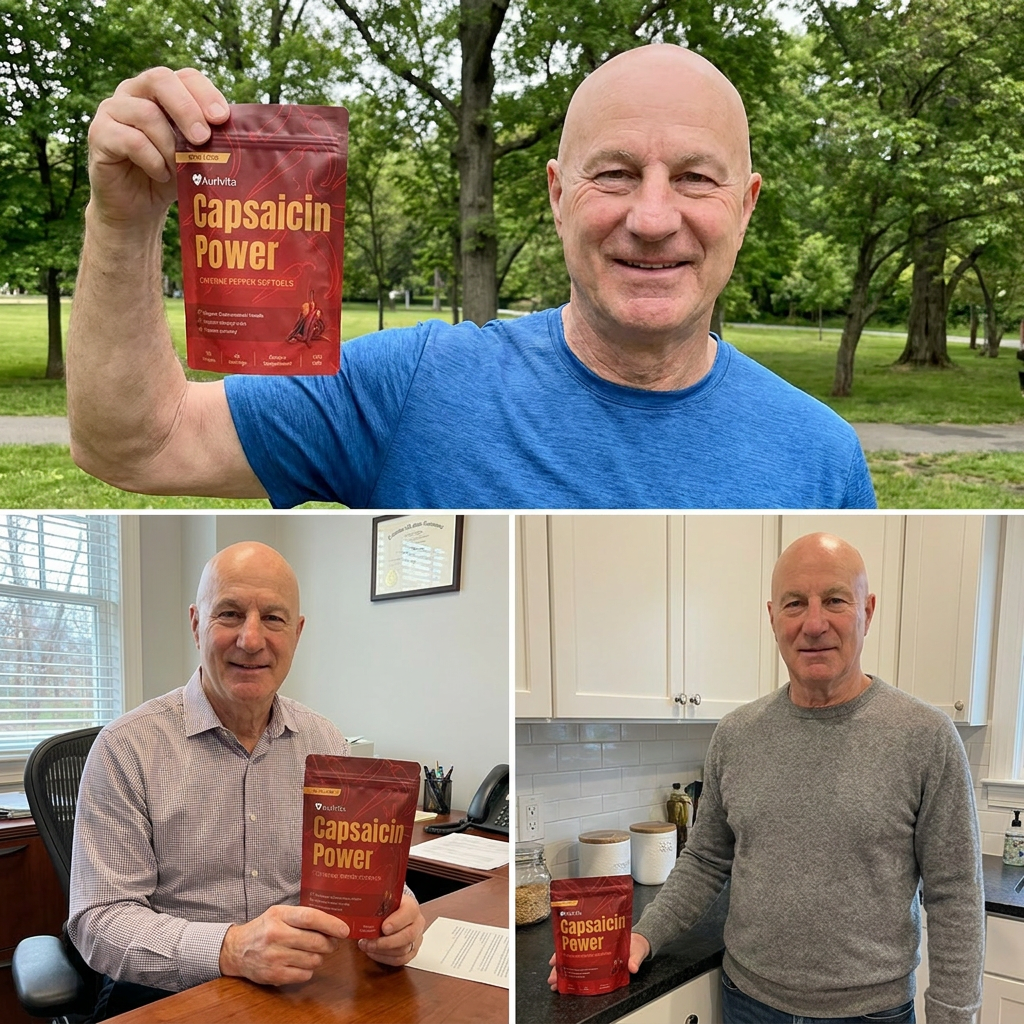
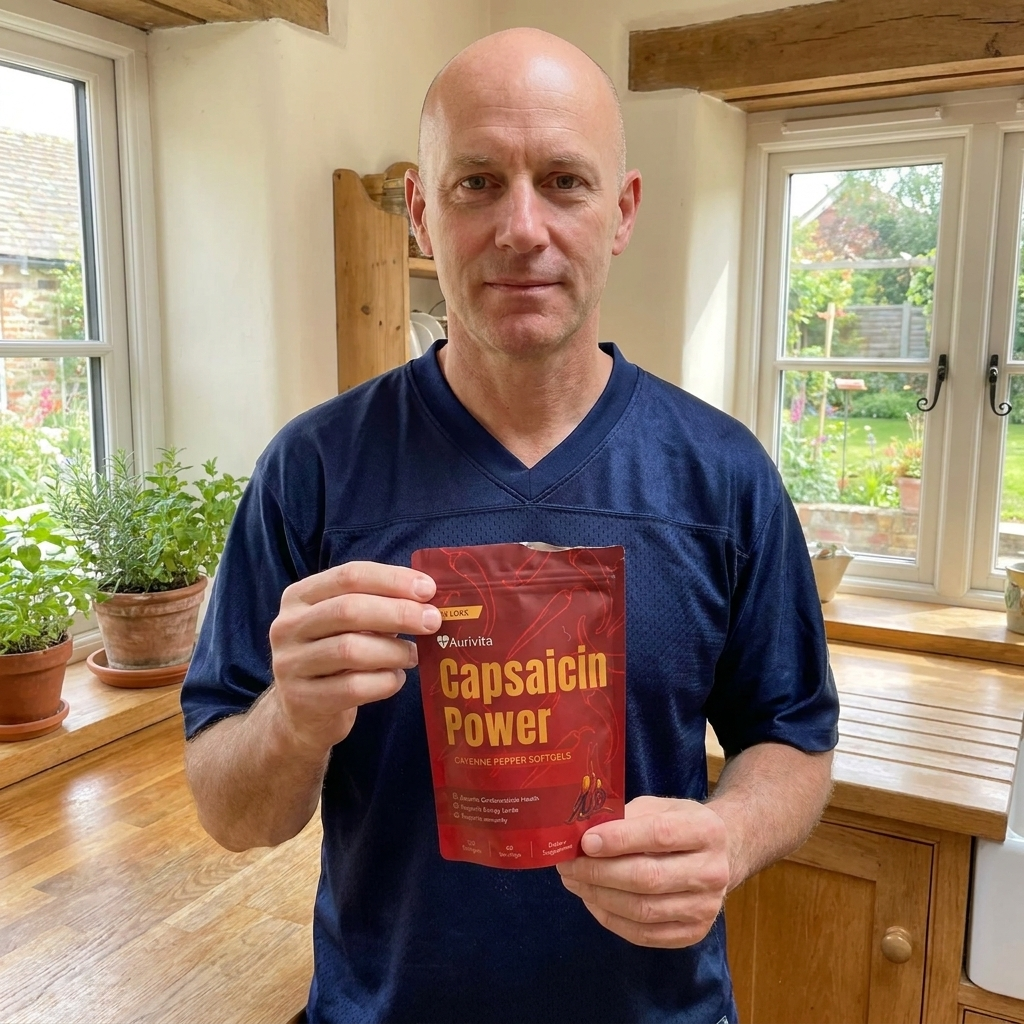
I spent 90 days investigating Aurivita Capsaicin Softgels to see if they actually work. Here's what I found. Before I get into what happened, I want to be straight about who this review is for, because not every cardiologist's perspective on a supplement is going to be useful to you, and not every reader of this letter is going to get value out of it. If you've never heard of Aurivita, if you don't know what TRPV1 activation is, if you haven't already done some reading on capsaicin and endothelial function — this isn't really for you. You'd be better served starting with the foundational material first. The doctor letters that explain the basic mechanism. The early research on TRPV1 and nitric oxide signaling. The cardiology literature on endothelial dysfunction. There's a starting point and this letter isn't it. This is for the man who's already done that work. You've read the studies, or at least the abstracts. You understand why the carrier oil matters. You've been on the Aurivita website at least once already, probably sat on the checkout page and closed the tab. You're skeptical because supplements have disappointed you before and you don't want to be the guy who keeps buying the next promise. You want to know whether this specific product, formulated this specific way, actually delivers the mechanism it claims to deliver — or whether it's the same marketing in a nicer bag. That's what I set out to determine. And that's why I'm writing this down. My name is Dr. David Gibbs. I'm a board-certified cardiologist with 22 years of clinical practice and an additional 7 years of cardiovascular research before that. My subspecialty is preventive cardiology and endothelial function. I've read more than 5,000 coronary calcium scores in my career and I see between 25 and 40 patients per week in clinical practice. I'm not a supplement marketer. I don't sell anything. I don't receive any compensation from Aurivita or any other supplement company. I'm writing this as a clinician who tested a product on himself for ninety days because I was tired of telling my patients I didn't know whether it worked. I'm going to give you the clinical context first, because if your situation doesn't match the kind of patient profile I'm describing, this review won't be useful to you regardless of how interesting it might be to read. The patients I see most often in my practice are men in their fifties and early sixties who present with three findings that travel together so reliably I now consider them a single clinical pattern. The first is erectile dysfunction, which the patient often won't volunteer until I ask directly. The second is mildly elevated blood pressure — usually somewhere in the 140 to 155 over 88 to 96 range — which has typically been managed for a few years with an ACE inhibitor like lisinopril. The third is borderline-elevated LDL cholesterol, usually in the 140 to 180 range, accompanied by an LDL-to-HDL ratio that's beginning to deteriorate. These three findings are not three separate problems. They are three downstream expressions of the same upstream process: endothelial dysfunction. The single-cell-thick lining of the patient's arteries has stopped producing nitric oxide at the rate his body requires. The penile arteries — the smallest in the body — show the symptom first as ED. The systemic vasculature shows the symptom as elevated blood pressure, because vessels that can't dilate properly require more pressure to perfuse the same tissue volume. And the inflamed, dysfunctional endothelium accelerates LDL particle penetration into the arterial wall, which is what cardiologists are measuring when we follow your lipid panel. One disease. Three symptoms. Three separate prescriptions, none of which addresses the upstream cause. Sildenafil forces nitric oxide signaling artificially for four to six hours and wears off. Lisinopril relaxes the muscle wall of the vessels without doing anything to repair the lining. A statin lowers the LDL count but does nothing to repair the endothelial damage that allowed the LDL to deposit in the arterial wall in the first place. Each prescription is competently treating its assigned symptom. None of them is treating the disease that's producing all three symptoms simultaneously. This was the patient profile I had been treating for years, and increasingly, it was also the patient profile I had become. I'm 54. Two years ago my own blood pressure was 152 over 94 at my annual physical, run by an internist colleague who knew exactly what to do with the number. He started me on a low dose of an ACE inhibitor and the pressure came down into the 130s over 80s, which is where it stayed. My LDL at the same visit was 168, with an LDL-to-HDL ratio of 4.1. He suggested watchful waiting with a recheck in six months. My erections, which I had taken for granted for thirty years, had been quietly failing for about eighteen months by that point. I had not mentioned this to my colleague. I'm not particularly proud of that, but I include it here because it matters for the next part. I was, in other words, my own patient. I had become the man I'd been treating in my practice for two decades. What I had also become, by virtue of being a cardiologist who reads the literature, was someone who could no longer convince myself that the standard approach was treating my disease. The cardiology literature has been describing endothelial recovery as theoretically possible for at least fifteen years. The endothelium is not a static, irreversibly damaged tissue. Under the right conditions — reduced inflammatory load, restored nitric oxide signaling, improved vascular shear stress — it can recover function. The question I had been unable to answer in my own practice was: what intervention, available to the average patient, actually drives this recovery in a reliable way? What I kept coming back to was TRPV1 activation. The TRPV1 receptor is a temperature- and chemical-sensitive ion channel expressed in the endothelium of essentially every vascular bed in the human body. When activated, it produces sustained intracellular calcium signaling, which in turn activates endothelial nitric oxide synthase and drives continuous, physiological nitric oxide release. The mechanism is well-described, and the discovery of the receptor itself won the Nobel Prize in Physiology in 2021. The natural agonist for TRPV1 is capsaicin, the compound that gives chili peppers their heat. I want to be careful here about what the evidence says and what it doesn't. The evidence for therapeutic capsaicin in endothelial dysfunction is strongest in animal models, moderate in human observational studies, and still emerging in well-designed human RCTs. I'm not telling you the cardiology community has converged on capsaicin as a standard-of-care intervention, because it hasn't. What I am telling you is that the mechanism is biologically plausible, the existing human data is suggestive in the right direction, and the safety profile is excellent. Those three conditions together were enough for me to consider testing it on myself. The barrier I encountered, which is the same barrier most physicians who consider this encounter, is bioavailability. Capsaicin is fat-soluble and is degraded rapidly in the gastrointestinal tract unless it is pre-dissolved in an appropriate lipid carrier. Most commercial cayenne supplements are powdered capsaicin in gelatin capsules, which deliver only a fraction of the labeled dose to the systemic circulation. The few that use lipid carriers usually use the cheapest available oils — soybean, safflower, sunflower — which are themselves pro-inflammatory and counteract the anti-inflammatory action of the capsaicin they're carrying. This is why most cayenne supplements fail to produce measurable clinical effects. It's not that the compound doesn't work. It's that the delivery system is wrong. What I needed was a product that delivered a therapeutic dose of capsaicin — roughly 3mg per serving based on the human literature — in a non-inflammatory lipid carrier, with appropriate bioavailability enhancement, and ideally with supporting compounds that addressed adjacent aspects of vascular and metabolic function. I evaluated four cayenne supplements before I selected one. Three of them failed the formulation criteria for the reasons I described above. The fourth was Aurivita Capsaicin Power. Let me walk you through the spec sheet the way I evaluated it, because if you've already researched this product you've seen the marketing — but you may not have seen the clinical reasoning behind why the formulation matters. Three milligrams of pharmaceutical-grade capsaicin per softgel. This matches the dose used in the human studies I considered most credible. Many competing products use far less and rely on label inflation to make the product look comparable. Cold-pressed avocado oil as the lipid carrier. Avocado oil is anti-inflammatory and has been shown to support endothelial function in its own right. It is dramatically more expensive than the seed oils used by competitors, and its presence in the formulation indicates that the manufacturer is making decisions based on efficacy rather than cost. BioPerine, a patented piperine extract, to inhibit hepatic glucuronidation of the active compound. Piperine is well-documented to slow phase II metabolism of fat-soluble compounds, extending their plasma half-life and improving systemic exposure. This is a sophisticated addition and uncommon in lower-tier supplements. Vitamin K2 in the MK-7 form. This is the addition that told me the formulator understood vascular biology. K2 activates matrix Gla-protein, which directs calcium away from arterial walls and toward bone. In the context of a supplement designed to support endothelial repair, K2 prevents the calcium deposition that would otherwise occur in vascular tissue during the inflammatory remodeling process. Most cayenne supplements do not include K2. The presence of MK-7 specifically — not the cheaper MK-4 form — suggests the formulator is current with the K2 literature. Beetroot extract for the nitrate-nitrite-nitric oxide pathway, which operates independently of and in parallel to the TRPV1-eNOS pathway. Stacking the two pathways is sound vascular pharmacology. Hawthorn, with decades of cardiology literature behind it for mild heart failure and vascular function. Korean red ginseng, with reasonable evidence for endothelial function and modest erectile function improvements in older men. Vitamin D3 and Vitamin E for general vascular and metabolic support. Berberine and cinnamon for glucose regulation, which matters because impaired glucose tolerance accelerates endothelial dysfunction. Turmeric, paired with the BioPerine for absorption. This is the formulation of someone who has read the literature. It is not the formulation of someone who threw ingredients onto a label. The price was $54 for a 60-day supply. This is less than I was paying for one month of a brand-name PDE5 inhibitor at my pharmacy, and roughly equivalent to what I would spend on a high-quality fish oil for the same period. Before I tell you what happened when I started taking it, I want to address something that doesn't appear on the Aurivita website but that I want to put on the record, because it's the most important practical recommendation I can make to a patient reading this letter. The product is sold as a 60-day supply. The standard dosing on the bottle is three softgels per day, which gives you sixty days of use per bag. The reason it's dosed this way is because it's the safe starting point for the broadest possible audience. Some men are sensitive to capsaicin — they develop mild gastrointestinal warmth, a sensation of heat in the chest, or sometimes a slight feeling of internal flushing. For those men, the three-softgel daily dose is the right pace. They tolerate it, the endothelium responds over a longer window, and they typically see meaningful improvements between weeks four and twelve. For everyone else — which in my clinical observation is the large majority of men — the three-softgel daily dose is too conservative for the kind of response the research describes. The men I see the strongest results in are the men who take the 60-day supply in 30 days. That is, six softgels daily — two doses of three, one with breakfast and one with dinner — rather than spreading a single bag over two months. Let me explain the reasoning, because I'm not asking you to overdose anything. I'm asking you to understand what the dosing is actually optimized for. The published research on therapeutic capsaicin for endothelial function uses doses in the range of 6mg per day, sustained over 8 to 12 weeks. Three softgels at 3mg per softgel gives you 9mg, which means three softgels is technically above the research dose. Six softgels gives you 18mg, which sits within the well-tolerated range documented in higher-dose studies. The endothelium responds dose-dependently within the therapeutic window — more sustained TRPV1 activation produces faster recovery, up to the point where tolerance becomes the limiting factor. In other words, the 60-day supply is a 30-day therapeutic course for the patients who can tolerate the heat. The two-month framing exists for the patients who can't. If you can tolerate the heat — meaning, you eat spicy food occasionally, your stomach doesn't react badly to chili, and you don't have a history of acid reflux or peptic ulcers — I'd recommend taking the bag in thirty days at six softgels per day, then evaluating your symptoms, your home blood pressure log, and your bloodwork at the end of the thirty days. The men who do this typically see the changes I'm about to describe on a compressed timeline — the first improvements at day five to seven instead of day ten to fourteen, the meaningful changes at week three to four instead of week six to eight. If you can't tolerate the heat, take it at three softgels per day across sixty days. The mechanism still works. The results take longer to arrive, but they do arrive. The two-month framing on the bottle is, in this sense, an accommodation for the lower-tolerance audience rather than the optimal protocol for the higher-tolerance one. This recommendation is mine, not the manufacturer's. I want to be clear about that. The bottle says three softgels daily and the manufacturer is — appropriately — conservative about dose recommendations because they have to be safe for the widest possible audience. I'm not telling you to ignore the bottle. I'm telling you what I do, what I recommend to my own patients who match my own tolerance profile, and what the published research actually supports for men who can handle the higher dose. I started at six softgels per day, in two doses, on a Monday in early February. I established a baseline of objective measurements before I started: a home blood pressure log over fourteen days with three readings per day, a recent lipid panel from two months earlier, my coronary calcium score from the previous year, and a subjective ED score I will not reproduce here for the sake of dignity but which I documented honestly for my own records. Day five, I noted the first subjective change, and it wasn't what I'd expected. My morning blood pressure reading, taken at the same time and in the same chair as every reading for the previous fourteen days, came back at 128 over 81. The lowest reading I'd had since starting the ACE inhibitor. I assumed it was variation. I retook it three times throughout the day. The lower range held. Day eight, I noticed the first sign of endothelial recovery in a place a cardiologist learns to watch for it. Morning erectile function — which is one of the closest things we have to an objective measure of overnight endothelial nitric oxide production — returned at a level I had not experienced in over eighteen months. This is meaningful because morning erectile function is not a function of conscious desire or psychological state. It's a direct measure of the vascular system's capacity to produce and respond to nitric oxide while the patient is unconscious. Its return indicates that endothelial function is recovering. By day fourteen, my home BP average had dropped from 131 over 84 to 121 over 76. I called my internist and walked him through what I was doing and what the readings were showing. He looked at the log, asked questions, and said: "Whatever you're doing, keep doing it. If your pressures stay in this range, we should consider lowering the medication." We held the dose for another two weeks to confirm the pattern, then reduced the ACE inhibitor by half under his supervision. Day twenty-one, I ran a follow-up lipid panel. My LDL had dropped from 168 to 141 in three weeks. My HDL had risen from 41 to 46. My triglycerides had dropped from 158 to 119. I had this panel reviewed by a colleague who did not know I was running an experiment on myself. He looked at the three-week delta and asked what intervention I had undergone. I told him. He was quiet for a long time. He then asked me to send him the product specifications, which I did. Day thirty — the end of the first 60-day bag, taken in 30 days — I ran a complete repeat panel and a fresh BP profile. The fasting LDL was 132. The HDL was 49. The LDL-to-HDL ratio had improved from 4.1 to 2.7. My average BP across two weeks of readings was 119 over 73, on half the original ACE inhibitor dose. Erectile function had fully returned. No side effects of any kind beyond a mild warmth in the chest in the first ten minutes after each dose, which faded by week three as my system adjusted. This is what an aggressive therapeutic course looks like in the data. Three weeks to clinically meaningful LDL improvement. Eight days to restored endothelial function as measured by morning erectile response. Two weeks to a BP delta that justified medication reduction. I bought a second bag at the end of the first thirty days and continued at the same six-softgel daily dose for another thirty days, to consolidate the response and let the endothelial healing work through a longer treatment window. By day sixty — my second bag, taken in thirty days — my LDL was 126. My HDL was 51. My BP was averaging 116 over 71. I was off sildenafil completely, off half my ACE inhibitor dose, and my erectile function was at a level I had not experienced since my mid-forties. By day ninety, on a third bag at a maintenance dose of three softgels daily, the results had consolidated and held. I am now four months past the start of the experiment, on a maintenance dose, and my numbers remain in the range I established by day sixty. No further reductions, no rebound, no diminishing return. I want to be clear about what didn't change, because supplement reviews tend to overclaim and I'm trying not to. I'm still on a low dose of an ACE inhibitor. I'd want to stay on it through another quarter of monitoring before I'd consider coming off it entirely, and I'd only do that under my internist's supervision. I still wear reading glasses. I still have a few pounds I'd like to lose. The supplement didn't turn back time. What it did was return the specific functions that the prescriptions had been masking, by addressing what was actually broken at the level of the endothelium. I came off sildenafil completely. That happened naturally — I just stopped needing it. I reduced the ACE inhibitor under my own supervision and with my internist's agreement, which is a privilege I have as a cardiologist that most patients don't have. If you're reading this and considering doing the same, do it with your prescribing physician. Don't make medication changes on your own. I now recommend Aurivita to a selected subset of my patients. I want to be clear about the conditions under which I do this. I do not recommend it to patients in acute cardiovascular distress. I do not recommend it to patients with active coronary disease, recent stents, or anticoagulation regimens without first consulting their interventional cardiologist. I do not recommend it as a replacement for established cardiac medications without supervised tapering. I do recommend it to patients who match the profile I described at the beginning of this letter — mild-to-moderate hypertension, borderline-elevated LDL, ED, no acute coronary disease, and the kind of motivation that comes from wanting to address the upstream cause rather than manage three downstream symptoms separately. For those patients, I recommend a thirty-day aggressive course at six softgels daily — if they can tolerate the heat — with objective measurements before and after, conducted under the supervision of their primary care physician. I want to close with a comment about the guarantee. Aurivita Capsaicin Power comes with a 120-day money-back guarantee. The customer returns the bags, even empty, and receives a full refund. In 22 years of clinical practice I have never encountered a pharmaceutical intervention that offers a guarantee of this nature. I have never encountered a surgical procedure that comes with one. The structure of the guarantee tells me something about the formulator's confidence in the product, because no manufacturer offers a four-month guarantee on a supplement that doesn't reliably produce results within that window. The economics simply don't work. The presence of the guarantee, in other words, is itself a form of evidence. If you are sitting on the checkout page right now, having done the research I'm assuming you've done to get this far, the question in front of you isn't whether the science is real. The science is real and you've read it. The question is whether the product is formulated well enough to deliver the mechanism, and whether thirty to ninety days of self-experimentation is worth the cost. The product is formulated well enough — I've laid out the clinical reasoning above. The cost is $54 if it works and $0 if it doesn't, because the guarantee makes the test free. I spent 90 days investigating Aurivita Capsaicin Softgels to see if they actually work. They work. They work faster when taken at the dose the research actually supports. They work at a slower pace for men who need the gentler ramp. Either way, the mechanism delivers. If you've already done the homework and you're just looking for a clinician in your situation to tell you whether to pull the trigger, that's my answer. Pull the trigger. Take the first bag in thirty days if you can tolerate it, in sixty days if you can't. Pay attention to your own body, your own home BP cuff, your own next bloodwork. The numbers will tell you whether it's working, the same way mine did. I would have wanted a cardiologist to write this letter to me five years ago, when I was the patient I now treat every week. I'm writing it now in the hope that it reaches the man I would have been five years ago, who would have read it and finally clicked. https://aurivita.co/products/cayenne-pepper-softgels Dr. David Gibbs, MD, FACC Board-Certified Cardiologist 22 years in clinical practice Preventive Cardiology and Endothelial Function
My Honest Review of Aurivita
Support strong circulation today with our powerful cayenne pepper formula. 180 softgels and 60 servings per bag.
LEARN MORELike this ad? Make it yours.
Crush rebuilds this exact creative around your product — your brand, your colors, your offer — in about a minute.