Dr Julia Garvey, Certified MD
Dr Julia Garvey, Certified MD Facebook ad: “URGENT, H3N2 Is Filling ERs. Adults Over 55 Are Getting…”

Ran for 56 days, from January 13 to March 10, 2026, the last day Crush saw it.
Run by Dr Julia Garvey, Certified MD on Facebook. Crush is not the advertiser and does not verify its claims. See this ad in Meta's Ad Library(opens in a new tab)
Want an ad like this for your product?
Crush makes new ad images for your product from this ad: your logo, your product photo, your offer.
Trials from $19.95 USD, then $79.95 USD a month. Cancel anytime.
About this ad
- Meta Ad Library ID
- 1331276782137873
- Platforms
- Facebook, Instagram, Audience Network, Messenger and Threads
- Relaunches
- 0
Ad text
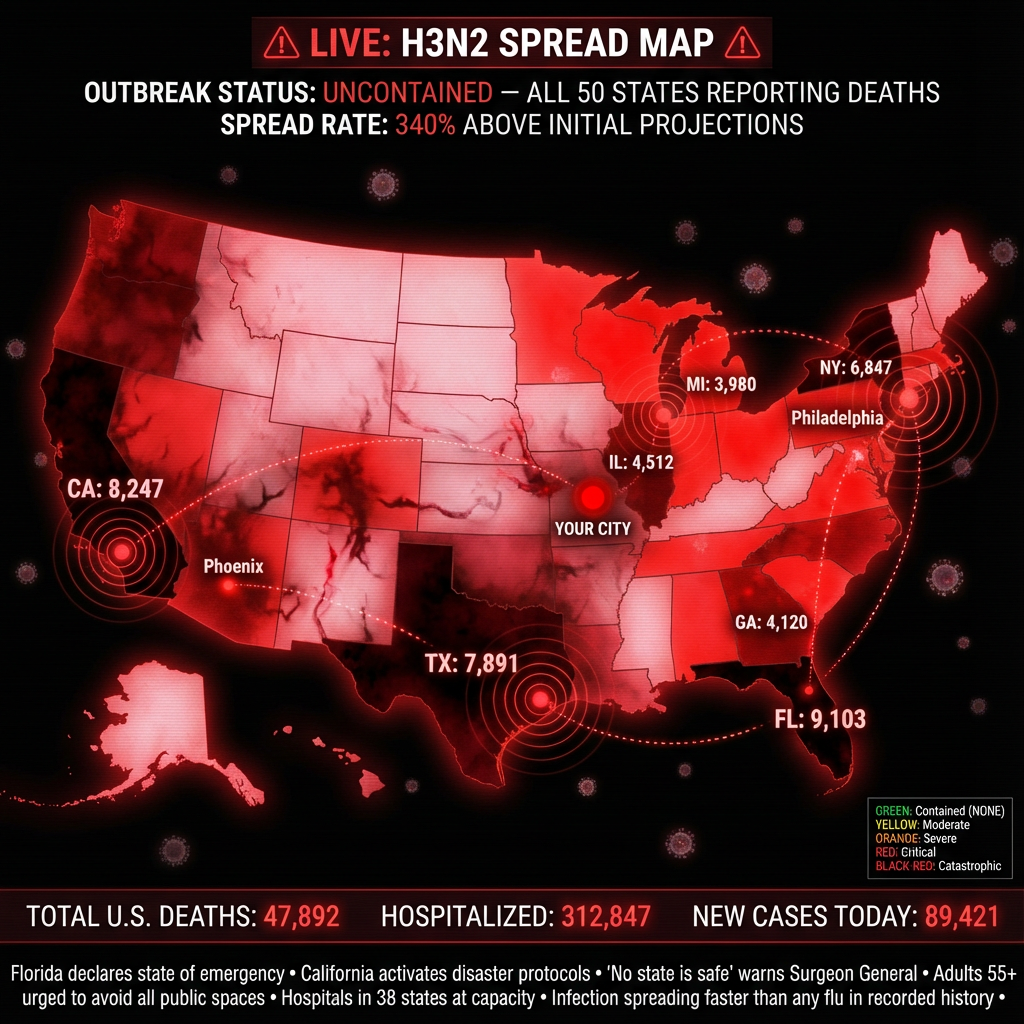
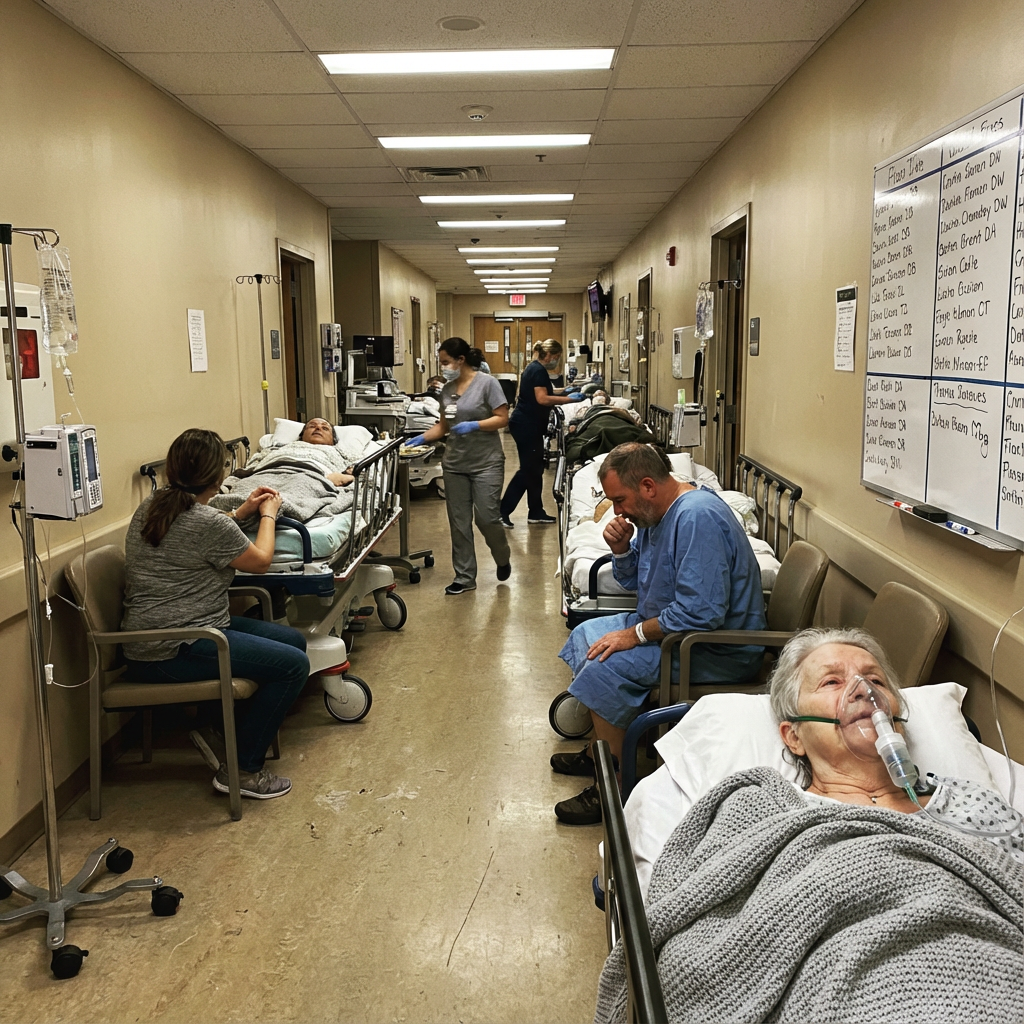
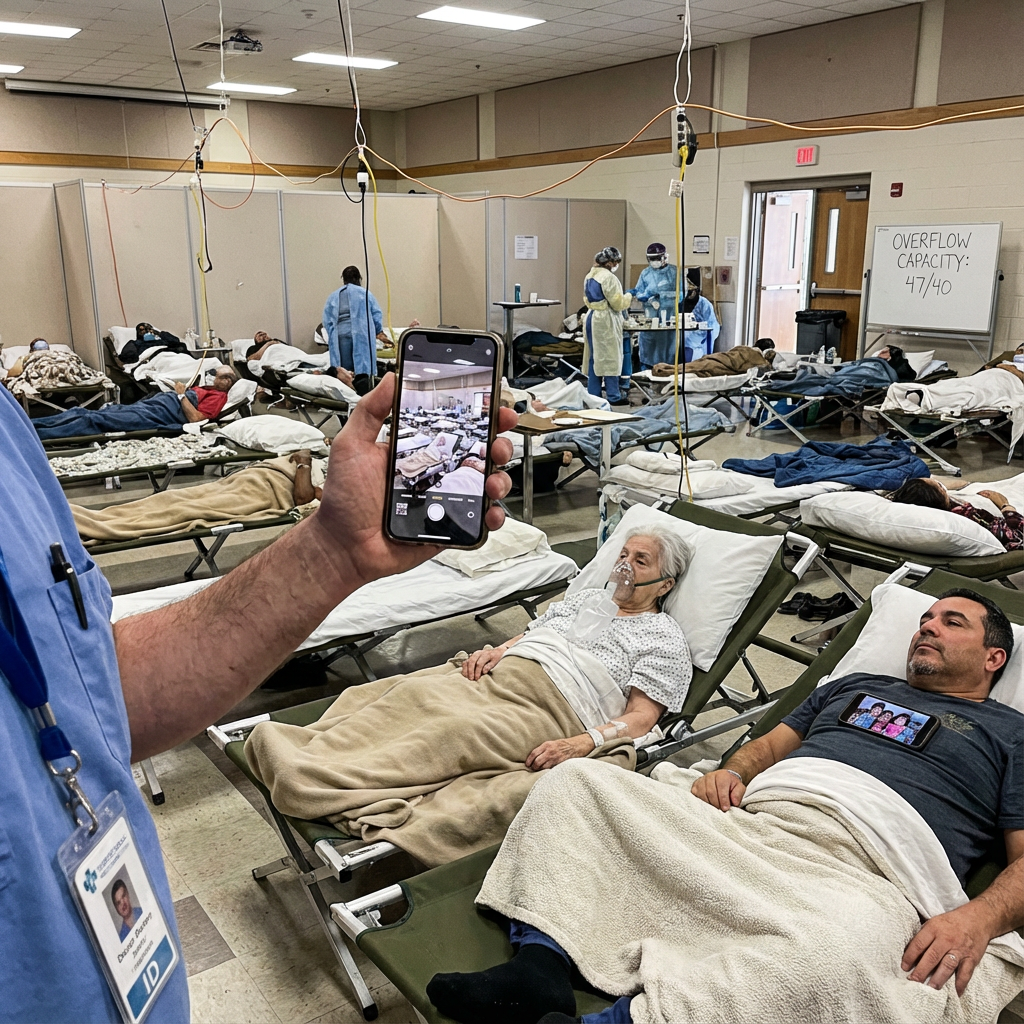
You need to prepare for H3N2 NOW—before you're the one in my waiting room on day 8, struggling to breathe, asking why nobody warned you. I'm about to tell you something that could cost me my medical license. But after watching what's happening in my ER this week, I don't care anymore. I'm an ER physician at a major hospital in Chicago, and the CDC is not being honest with you about how bad this flu season really is. And the worst part? Most people over 55 have no idea what's coming for them. Last Thursday, I worked a 12-hour shift. We saw 94 patients. Forty-one of them were Influenza A. H3N2 strain. That's over 40% of our ER volume. Just the flu. Not COVID. Not RSV. Not "winter respiratory illness." Flu A. People coming in with fevers of 104 that won't break. Oxygen saturation dropping into the low 80s. Chest pain from coughing so hard they've cracked ribs. Spouses pushing wheelchairs because their partner is too weak to walk. And here's what's keeping me up at night: These are the people who waited. Who thought it would get better on its own. Who are now on day 8, day 11, day 14—and it's not getting better. It's getting worse. The ones who are developing pneumonia. The ones whose "just a flu" turned into something that requires hospitalization. I'm not supposed to tell you this, but I'm going to anyway: The hospital is not a safe place to be right now. Let me explain what I mean by that. A man came into our ER two weeks ago for back pain. 63 years old. Retired. Just wanted to make sure it wasn't anything serious. He was in our waiting room for 5 hours because we were overwhelmed. He left with a clean X-ray and a flu diagnosis he didn't come in with. His wife called our patient liaison 10 days later: "My husband came to the hospital healthy. He left with the worst illness of his life. He's been in bed for almost two weeks. He had to miss our grandson's birthday." This is happening constantly. People coming in for non-respiratory issues—back pain, medication refills, routine checkups—and catching H3N2 in our waiting room because we are saturated with it. One of my colleagues put it perfectly last week: "The hospital didn't save you—it just changed what was killing you." I laughed when he said it because the alternative was screaming. We're telling people—especially those over 60—to avoid the hospital unless it's absolutely necessary. Not because we don't want to help. But because right now, walking into our ER is like walking into a viral hotspot. And here's the part that's going to make you angry: The CDC data you're seeing? It's lagging. It's incomplete. And it's been sanitized for public consumption. I'm watching what's happening in real-time on the ground. The numbers they're publishing don't match what I'm seeing in my ER. We have a saying in emergency medicine: "Trust the nurse, not the news." Because the nurse sees it first. We see the surge before it hits the headlines. We see the ICU filling up before the press releases go out. And what I'm seeing right now terrifies me. Let me tell you about a patient I saw two days ago. 62 years old. Healthy. Retired teacher. Walks two miles every morning. Got his flu shot in October like he was supposed to. Came in on day 9 of symptoms. Still had a fever. Couldn't shake the cough. Said it felt like his chest was filled with wet cement. We tested him. Influenza A. H3N2/K strain. "But I got vaccinated," he said. "I did everything right. Why am I this sick?" I had to explain to him what the CDC isn't saying loudly enough: The H3N2/K strain that's hospitalizing people right now emerged AFTER this year's vaccine was formulated. The vaccine was designed for last year's dominant strains. Then in August 2025, H3N2 mutated. By the time we identified the new variant, the vaccines were already manufactured and distributed. So yes, the flu shot helps. It reduces severity in some cases. It's not useless. But it's also not designed for what's actually circulating. It's like showing up to a gunfight with a knife. Better than nothing. But not what you actually need. And people are finding this out the hard way—in my ER, on day 9, when they're too sick to function and desperate for answers. Here's what else I'm seeing that nobody's talking about: This isn't just affecting the usual high-risk groups. Yes, we're seeing elderly patients. Yes, we're seeing people with chronic conditions. But I'm also seeing active, healthy adults. People in their 50s and 60s with no underlying conditions who are getting absolutely destroyed by this. One of my nurses—58 years old, walks every morning, hasn't called in sick in 8 years—was out for 11 days. She came back to work looking like she'd aged a decade. Told me it was worse than when she had COVID. A paramedic I work with—18 years of experience here in Chicago—told me last week: "The only winter I can think of that's rivaling this is 2019-2020 right before COVID hit. That December through February was brutal. This is matching it." Think about that. We're seeing flu activity that matches the worst pre-pandemic season in recent memory. And we're only in early January. Peak flu season typically hits mid-January through February. This is going to get worse before it gets better. Now, I need to be very clear about something. I'm not telling you this to panic you. I'm telling you this because the people who prepare NOW—before they're sick—are the ones who don't end up in my ER. And I need you to understand: once you're in my ER, your options are limited. We can give you IV fluids. We can manage your fever. We can monitor your oxygen. But we can't turn back time. We can't give you Tamiflu on day 9 (it only works in the first 48 hours). We can't undo the viral replication that's been happening in your body for over a week. All we can do is manage the damage. The time to act is BEFORE you're symptomatic. BEFORE you're exposed. BEFORE you're the one sitting in a waiting room full of sick people, breathing recycled air for 5 hours. About two months ago, I started asking myself a different question. Not "how do we treat this better in the ER?" but "how do I keep people out of my ER in the first place?" Because here's what I know after 14 years of emergency medicine: Every single respiratory virus—Flu A, COVID, RSV, Adenovirus—enters the body the same way. Through the nose. The nasal cavity is the first point of contact. Viruses land there, attach to the mucosa, and start replicating. Within hours, you have millions of viral copies. By the time you feel symptoms, the infection is already established. The war is already raging. And once it's in your lungs, once it's systemic, we're in damage control mode. So I started researching: what if we could stop it at the entry point? What if we could neutralize the virus in the nose before it ever establishes itself? That's when I found the research on nasal iodine. Iodine has been used as a broad-spectrum antimicrobial for over 100 years. We use it in every surgical prep. It's in the Betadine we scrub with before procedures. It kills bacteria, viruses, fungi—everything. And here's what makes it different from vaccines: Iodine doesn't care what strain it is. Flu A, Flu B, H3N2, H3N2/K, Adenovirus, the next variant that hasn't been named yet—iodine neutralizes all of them through oxidation. It's a physical mechanism. Viruses can't develop resistance to it. Research shows 99% viral reduction in 90 seconds. Ninety seconds. Compare that to the two weeks my patients spend in bed, or the 5-hour wait in my ER breathing in everyone else's viral load. The challenge has always been tolerability. Traditional iodine preparations burn. They dry out nasal tissue. Most people can't use them consistently. But a company called Nasomin developed a formulation that solved this—iodine combined with fulvic acid, which buffers the harshness while enhancing delivery. I started recommending it to my colleagues. To my family. To patients who ask me: "What can I actually do to avoid getting this?" And I'm recommending it to you now. Not because I'm selling it. Not because I get anything out of this. But because I'm tired of seeing people in my ER on day 11, asking me why nobody told them how to prevent this. Last week, one of our triage nurses told me something that stuck with me. She's 59. Her grandkids are in daycare and elementary school. Every winter, they bring home everything. She used to just accept she'd be sick for half the season. She said, "I started using that nasal spray you mentioned. Twice a day. My grandkids bring home every virus known to man." "I haven't been sick once this season. Not once. First time in years." That's not a clinical trial. That's not a peer-reviewed study. That's a nurse who sees 100+ sick people every shift and hasn't caught what they have. Because she's guarding the entry point. I'm going to be very direct with you: The CDC is going to keep publishing their weekly updates. The news is going to keep saying "flu season is here, get your vaccine." And that's all true. That's all good advice. But it's not the full picture. What they're not telling you—what I'm seeing in my ER every single day—is that this flu is more severe, more prolonged, and more resistant to our standard interventions than most people realize. The vaccine helps. But it's not enough for what's actually circulating. Tamiflu helps. But only if you catch it within 48 hours, and most people don't. And once you're in the hospital, you're playing defense. The people who are staying healthy right now—the healthcare workers who are surrounded by this every day and NOT getting sick—are the ones who've figured out how to guard the entry point. They're the ones using nasal iodine. Creating a hostile environment for viruses before they can establish infection. I came across an article recently that explains all of this better than I could in a Facebook post. *The American Health Digest* published an in-depth breakdown on exactly what I've been seeing—why ER doctors are warning their own parents, the science behind nasal iodine, and what thousands of Americans over 55 are now doing to stay healthy this flu season. If you only read one thing this winter, make it this. 👇 Tap below to read the full article: https://shopnasomin.com/pages/iodine-listicle Don't wait until you're on day 9, sitting in a waiting room full of sick people, wondering why you didn't prepare. — Dr. Julia Garvey, MD Emergency Medicine, Chicago
Where the ad sends people
shopnasomin.com
⚠️ URGENT — H3N2 Is Filling ERs. Adults Over 55 Are Getting Hit Hardest.
⚠️ URGENT — H3N2 Is Filling ERs. Adults Over 55 Are Getting Hit Hardest.
Learn more: shopnasomin.com(opens in a new tab)