
Inactive· since Jun 4, 2026
- 20
- days it ran
- 0
- relaunches
Ad copy
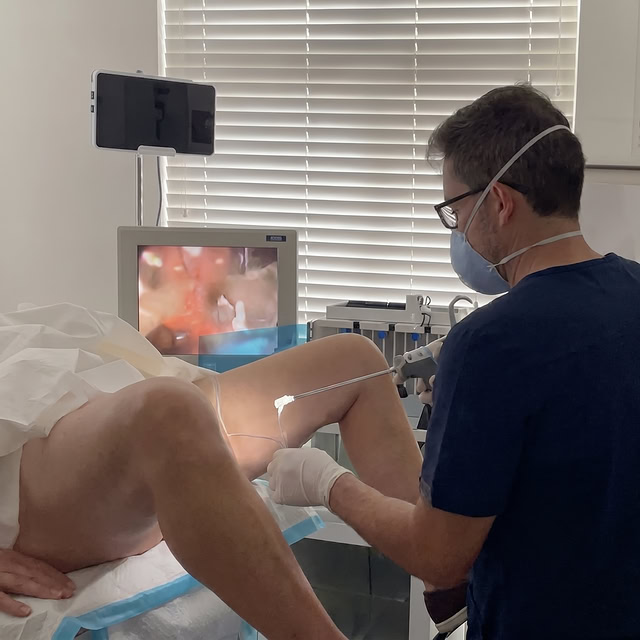
In 1998 the global medical establishment made a decision about enlarged-prostate treatment. That decision made pharmaceutical companies tens of billions of dollars and cost my father his sex life at 63, his ejaculation at 67, his cancer-detection window for the eight years before he was diagnosed, and his life at 73. What was buried in 1998 is the same thing keeping you on Tamsulosin that worked for two years and then stopped, sitting in your urologist's office watching her hand you a Finasteride prescription, listening to her mention TURP as the "eventual next step," and wondering quietly whether you are going to die the way my father did or whether something else is possible. My name is not important. What matters is that I have spent the last five months and sixty hours of medical library research verifying a documented historical record. Everything I am about to tell you is public. All of it has been sitting in archives for almost three decades. Your urologist has never been taught any of it. If you have been on Tamsulosin for years — if your urologist has proposed adding Finasteride, if TUNA or TURP has been mentioned, if your PSA has been "normal" but you have been on a 5-ARI for so long that you should not trust that number — I need you to read this to the end. Because the BPH protocol is not treating the disease that is causing your symptoms. It is managing one piece while compounding side effects that, given enough years, will take more from you than the BPH ever would have. My father, Edward, was diagnosed with benign prostatic hyperplasia in 2003. He was 58 years old. His IPSS — International Prostate Symptom Score — was 19, classifying his BPH as "moderate." His urologist started him on Tamsulosin 0.4mg at night. The medication worked. His nocturia dropped from three times a night to once. His stream improved. His urinary urgency reduced. For two years he reported feeling like he had his life back. By 2005 the symptoms started creeping back. His urologist doubled the Tamsulosin to 0.8mg. By 2007 the IPSS was climbing again. In April 2007 his urologist added Finasteride 5mg daily — a 5-alpha reductase inhibitor that shrinks prostate tissue by blocking the conversion of testosterone to DHT. Within four months my father lost interest in sex. He told my mother it was age. By the end of 2007 he could no longer maintain an erection reliably. By 2008 he had stopped initiating with my mother entirely. He told his urologist about the sexual side effects. His urologist told him this was a known but rare side effect of Finasteride and would resolve when he discontinued the medication. He did not discontinue the medication. The Finasteride was the only thing slowing his prostate growth. My mother told me, after my father died, that they had not had sex since 2008. My father took Tamsulosin 0.8mg + Finasteride 5mg for the next eight years. The combination eventually became insufficient. In 2015, at age 70, his urologist scheduled him for a transurethral resection of the prostate. TURP. The surgical removal of obstructing prostate tissue through the urethra. The procedure went well technically. He recovered in six weeks. The urinary symptoms resolved. The retrograde ejaculation did not resolve. Retrograde ejaculation — when semen flows backward into the bladder instead of out through the urethra — affects roughly 70 to 90 percent of TURP patients. It is permanent. My father had been told it might happen. He had not understood until afterward what it would mean. Three years after the TURP, in 2018, my father reported blood in his urine to his urologist. His PSA at his most recent annual check had been 1.8 — within the "normal" range for a 73-year-old. His urologist ordered a cystoscopy. The cystoscopy revealed a bladder tumor that had been growing, by pathology estimate, for somewhere between four and eight years. The tumor had already invaded the bladder muscle and metastasized to two lymph nodes. Finasteride suppresses PSA by approximately 50 percent. The FDA acknowledges this. My father's "normal" 1.8 PSA was, accounting for Finasteride suppression, more accurately around 3.6 — elevated enough to have triggered earlier workup if he had not been on the 5-ARI. The cancer had been growing for years undetected because the medication treating his BPH had been suppressing the biomarker that would have caught the cancer earlier. He died of metastatic urothelial carcinoma in March 2019. He was 73. Sixteen years on the BPH medications. Lost his sex life at 63. Lost his ejaculation at 70. Lost his cancer-detection window for 8 years. Lost his life at 73. Every loss caused or accelerated by the medications treating the enlarged prostate. I started investigating four months after the funeral. In July 2019 I was reading the 1998 Nobel Prize lecture transcripts in the archives of the Yale Medical Historical Library. I came across the lecture given by Dr. Louis Ignarro on December 8, 1998 — "Nitric Oxide: A Unique Endogenous Signaling Molecule in Vascular Biology." I spent the next forty-five hours in three different university medical libraries tracing what happened between 1998 and 2026 to the science that should have changed how BPH is treated. In the same research period I came across the work of Dr. Mark Moyad, the Jenkins/Pokempner Director of Preventive and Alternative Medicine at the University of Michigan Medical Center's Department of Urology. Dr. Moyad has been publishing peer-reviewed research and advocating for integrative approaches to BPH for over 25 years. He holds a joint appointment in the U-Michigan Medical School and the School of Public Health. He has appeared on The Dr. Oz Show specifically to argue that the standard Tamsulosin-plus-Finasteride-plus-TURP protocol over-medicates a condition that often responds to inflammation reduction, vascular support, weight management, and lifestyle modification. The prostate is one of the most vascular organs in the male body. The dominant driver of BPH growth in middle-aged men is not DHT. It is chronic low-grade inflammation in the prostate stroma, fueled by microvascular dysfunction. DHT is a contributor. The inflammation is the driver. Standard BPH medications target the contributor and ignore the driver. I also found the FDA 5-ARI labeling data. Finasteride suppresses PSA by approximately 50 percent. Dutasteride suppresses it more. The labels acknowledge this. Most urologists do not adjust the interpretation of PSA results in patients on 5-ARI therapy. The screening accuracy is compromised. The cancer-detection window for prostate cancer or bladder cancer in long-term 5-ARI users is years shorter than in men not on the medication. My father's bladder cancer had been growing for somewhere between four and eight years before it was detected. He had been on Finasteride for eleven years at the time of diagnosis. The medication treating his BPH had been masking the screening signal for the cancer that killed him. Louis Ignarro shared the 1998 Nobel Prize in Medicine for proving that the endothelium of every blood vessel — including those supplying the prostate — produces nitric oxide that maintains tissue health. Restoring endothelial function in the prostate microvasculature would reduce the chronic inflammation driving BPH growth — without DHT suppression, without sexual side effects, without PSA masking. This was the obvious conclusion in 1998. Here is what happened between 1998 and 2026. Tamsulosin (Flomax): launched 1997. Cumulative global revenue: approximately $35 billion. Currently generates $2-3 billion annually as the dominant alpha blocker for BPH. Finasteride: originally marketed as Proscar for BPH (1992) and Propecia for hair loss (1997). Cumulative global revenue: approximately $20 billion. Currently generates $1-1.5 billion annually. Dutasteride (Avodart): launched 2002. Cumulative global revenue: approximately $9 billion. TURP procedures: approximately 90,000 performed annually in the United States at $12,000 to $18,000 per procedure. Estimated annual procedural revenue: $1.2 to $1.6 billion. Multiplied across two decades of the standard BPH protocol: approximately $25 to $30 billion in cumulative TURP procedural revenue since 1998. Treatment costs for prostate and bladder cancers detected late due to PSA-suppression on 5-ARI therapy: untracked but estimated in the billions annually. The pharmaceutical industry profits from the alpha blockers. It profits from the 5-ARIs. The medical-procedure industry profits from the TURPs. The oncology industry profits from the cancers that get detected late because the BPH medications are masking the screening biomarkers. The standard BPH protocol generates revenue at every stage of the cascade my father went through. 2005 to 2015: Three separate pharmaceutical companies attempt to develop patentable nitric oxide donor compounds. All three programs fail or are quietly discontinued because the most effective natural activator of the endothelial repair pathway is a compound that cannot be patented. That compound is capsaicin. The active ingredient in cayenne pepper. 2021: Dr. David Julius at UCSF wins the Nobel Prize in Medicine for discovering the TRPV1 receptor — the cellular switch that capsaicin activates inside endothelial cells, including those of the prostate microvasculature. Two Nobel Prizes, twenty-three years apart, mapping a pathway to address the inflammation that drives BPH growth without DHT suppression and without PSA masking. In 2022, a research team at the Frankfurt am Main Cardiovascular Institute replicated the endothelial repair pathway using modern methodology. Published in the European Heart Journal. 196 patients. Double-blind, placebo-controlled. Bioavailable capsaicin at therapeutic dosage. 31 percent improvement in flow-mediated dilation. Significant reductions in inflammatory markers. Studies on prostate-specific endpoints have replicated the anti-inflammatory mechanism in prostate tissue. Your prostate is not enlarging because of hormones. Your prostate is inflamed because of microvascular dysfunction. The growth is the symptom. The vascular inflammation is the disease. Tamsulosin relaxes one set of muscles to improve urinary flow. Finasteride blocks DHT conversion to slow growth modestly while masking your PSA. Neither addresses the underlying inflammation. Both have side effects that compound across years. You will have tried saw palmetto. Beta-sitosterol. Pumpkin seed oil. Pygeum. Prostadine. ProstaStream. None of it has made the difference you were hoping for. Saw palmetto in standard formulations shows inconsistent results in randomized trials. The "proprietary blends" marketed as prostate-supplement miracles rarely disclose actual milligram amounts of any active compound. Bioavailable capsaicin dissolved in oil bypasses gastric destruction, binds to the TRPV1 receptor inside endothelial cells (including prostate microvasculature), and activates the anti-inflammatory cascade that addresses the root inflammation driving BPH growth. The mechanism is documented. The application to prostate tissue is published. One man I have been in correspondence with since January — he asked me to keep his name private but gave me permission to share his numbers — had moderate BPH for six years. 60 years old. Three children. His own father had died of metastatic bladder cancer at 75 after years on Finasteride for BPH. He had been warned by the family history. His IPSS in January 2024 was 24 — severe. His nocturia was four times nightly. His stream had weakened progressively. His urologist had increased him from Tamsulosin 0.4mg to 0.8mg six months earlier without meaningful improvement. At his January visit, his urologist proposed adding Finasteride 5mg. He declined. He wrote to me instead. He began the bioavailable capsaicin formula on January 18th alongside his existing Tamsulosin. At 30 days his nocturia dropped from four times nightly to two. At 60 days nocturia was once nightly. His stream was noticeably stronger. His IPSS had dropped to 14. At 90 days his IPSS was 8 — mild range. Nocturia was once a week, sometimes not at all. His urologist ordered a follow-up ultrasound. His prostate volume had decreased from 64cc to 50cc — a 22 percent reduction. He came off Tamsulosin at month 5 under his urologist's supervision. His symptoms remained stable. He never started Finasteride. His PSA at his next check came back at 2.4 — within the normal range and uncompromised by 5-ARI suppression, meaning the screening will catch a problem if one develops. His urologist told him "your prostate has measurably shrunk and your symptoms have resolved without medication, keep doing whatever you're doing." She did not ask what he was doing. He has both of his children's weddings still ahead of him and intends to be at both with full sexual function and uncompromised cancer screening. The formula I have described is called Aurivita Capsaicin Power. It is the first widely available capsaicin formulation produced at therapeutic dosage with the oil-soluble delivery system the Ignarro mechanism requires. The capsaicin is dissolved in cold-pressed avocado oil to protect it through digestion. The formula also includes turmeric specifically positioned for its prostate-tissue anti-inflammatory mechanism, along with berberine, cinnamon, beetroot, hawthorn, vitamin K2, BioPerine, vitamin D3, vitamin E, and Korean ginseng. It is available directly from the manufacturer through the link below. 120-day guarantee — if your IPSS does not drop and your nocturia does not resolve, every dollar refunded. aurivita.co/products/cayenne-pepper-softgels My father lost his sex life at 63 from the Finasteride side effects. He lost his ejaculation at 70 from the TURP. He lost his cancer-detection window for the previous 8 years because the same Finasteride was suppressing his PSA. He lost his life at 73 to a cancer that should have been caught earlier. Every one of those losses was caused or accelerated by the medications treating his enlarged prostate. The BPH itself never killed him. The treatments for the BPH did. Your father may have already started down this cascade. You may have started down it yourself. The Tamsulosin worked for two years and stopped. The Finasteride was added and your morning erections quietly stopped. Your urologist mentioned TUNA or TURP at your last visit. Your PSA has been "normal" — but you have been on a 5-ARI for years and you cannot trust that number anymore. There is a Nobel-recognized pathway for addressing the inflammation that drives BPH growth without losing your sexual function, without permanent retrograde ejaculation, without masking your cancer screening. It was published in 1998. It has been buried for 28 years by a pharmaceutical industry that has made over $1.8 trillion on the decision to bury it. It was yours before they took it. Take it back.
The Treatment For The BPH Killed Him.
Support strong circulation today with our powerful cayenne pepper formula. 180 softgels and 60 servings per bag.
LEARN MORELike this ad? Make it yours.
Crush rebuilds this exact creative around your product — your brand, your colors, your offer — in about a minute.