David Carter
David Carter Facebook ad: “She quit drinking. Did everything right. Died anyway.”
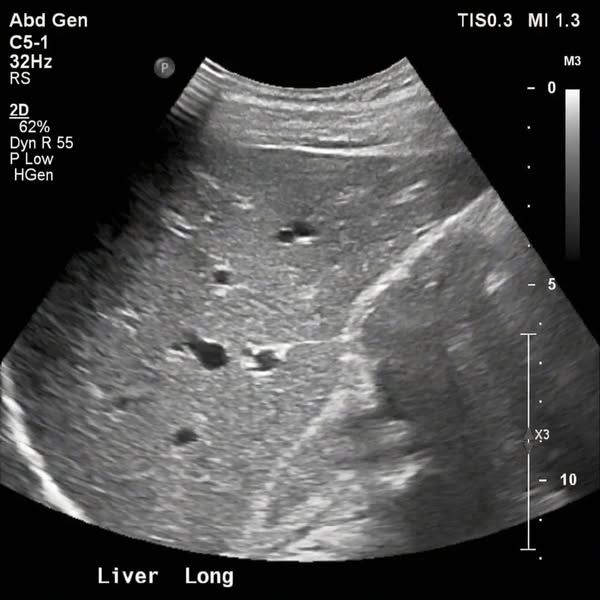
Ran for 61 days, from July 12 to September 11, 2026, the last day Crush saw it.
Run by David Carter on Facebook. Crush is not the advertiser and does not verify its claims. See this ad in Meta's Ad Library(opens in a new tab)
Want an ad like this for your product?
Crush makes new ad images for your product from this ad: your logo, your product photo, your offer.
Trials from $19.95 USD, then $79.95 USD a month. Cancel anytime.
About this ad
- Meta Ad Library ID
- 1342364487389653
- Platforms
- Facebook, Instagram, Audience Network, Messenger and Threads
- Relaunches
- 0
Ad text
My wife was diagnosed with fatty liver in June 2019. She had two or three glasses of wine most evenings. After the diagnosis, she cut out alcohol completely. Cut out sugar. Went on the Mediterranean diet. Walked three miles a day. Lost 31 pounds. She died of liver failure on October 19th, 2021 at 5:54 AM. She was 54 years old. She stopped drinking completely on June 11th. Cut out sugar entirely. Did the Mediterranean diet for two years and four months. Lost 31 pounds. Walked three miles every single morning before work, rain or shine. She did everything the hepatologist told her. The hospital bill was $68,000. The funeral was $10,800. Her wine glass is still on the shelf, I can't move it. If I move it, she's really gone. I need to tell you what happened to my Margaret. Because every week I see posts on Facebook from women like her, "my doctor told me my liver enzymes are elevated and I need to cut back on the wine, anyone tried milk thistle?" and it makes me physically ill. If you're a woman over 45 who has a glass of wine most evenings, or you love someone who does, please read this entire thing. I know it's long. I know you're scrolling. I know you have things to do. Two years ago I would have given anything.. everything.. for someone to tell me what I'm about to tell you.. Margaret went in for her annual physical on June 4th, 2019. She felt fine. Better than fine. She'd just turned 52. She was still running her book club every other Thursday. She still kept the most organised garden on the street. She thought she was healthy and honestly so did I, she'd never smoked, she cooked everything from scratch, her mother was 84 and still sharp. Two or three glasses of wine most evenings. A bit more on weekends when her girlfriends came over. The kind of thing nobody would ever look twice at. The kind of thing every woman she knew did. Three days later her doctor called. ALT of 94. AST of 88. The ultrasound came back with moderate steatosis. The hepatologist confirmed it two weeks later. Fatty liver disease. Grade 1 moving toward Grade 2. "This is very common in women your age, Margaret. The wine needs to stop completely. No exceptions. Cut out sugar entirely. Mediterranean diet. Lose about 10 percent of your body weight. Walk every day. We'll retest in six months." Margaret hung up the phone and sat at the kitchen table for forty minutes without saying anything. Then she stood up, went to the wine rack, and started taking everything out. I watched her take out the Pinot Grigio she kept for weeknights. The Malbec we'd brought back from Argentina three years before. The Champagne in the fridge she'd been saving since Christmas. Two bottles of the Sancerre her sister brought whenever she visited. Then she opened the pantry. The biscuits. The crackers. The chocolate she kept at the back of the shelf. The honey she put in her yogurt every morning. Three boxes of cereal our grandkids ate when they came over. Gone. "That's it," she said. "I'm done." And she was. For 28 months, she didn't break once. No wine at dinner. No glass on a Friday evening after a long week. Not at her best friend's 60th birthday party in September where everyone clinked glasses of rosé on the patio and Margaret stood there with sparkling water and smiled like it wasn't costing her something. Not on our 30th anniversary dinner where they brought out a complimentary glass of Prosecco and she asked them to take it back. Not at her own 54th birthday dinner where I cooked her grilled salmon and a salad and she said it was the best birthday meal she'd ever had. She stopped hosting her Thursday book club because everyone brought wine and she couldn't sit in her own living room watching her friends pour themselves a glass without feeling like a stranger in the life she'd built. She stopped going to her sister's Sunday lunches because everyone had wine with the meal and sitting there with sparkling water at a table she'd been coming to for thirty years felt impossible. Her friend Claire told her she "wasn't herself anymore" and gradually stopped calling. She lost a piece of herself she'd been carrying since her thirties. And she did it anyway. Because the doctor said to. She lost 31 pounds. She walked three miles every morning before the rest of the house was awake, summer and winter, didn't matter. She bought a juicer. Margaret. With a juicer. I still can't picture it. She took the milk thistle her hepatologist "wasn't against." She took a B-complex vitamin. She tried the liver detox tea her sister ordered online. She drank lemon water every morning. She ate exactly what they told her to eat. She did everything right. The follow-up labs came back on December 10th, 2019. ALT: 91. AST: 84. Six months of doing everything right and the numbers had barely moved. The doctor said "the liver heals slowly. Give it more time. We'll retest in six months. Keep doing what you're doing." So she did. June 2020 labs: ALT 97. AST 91. Higher. December 2020 labs: ALT 106. AST 99. The fibroscan in January 2021 showed Grade 2 with early fibrosis. She had progressed. Margaret came home that night and sat at the kitchen table. The same table she'd sat at after the first phone call. She didn't say anything for a long time. Then she said: "David, I gave up everything. The wine. The sugar. The Friday evenings. Twenty months of walking and grilled fish and sparkling water at every table I sat at. And it's getting worse." I told her to give it more time. I told her the hepatologist said it could take two years. I told her to trust the process. She nodded. She kept walking. She kept eating the salmon and the spinach. She kept taking the milk thistle. Five days later. five days.. she woke up at 2 AM with a pain in her right side that doubled her over. I drove her to the ER. By the time they admitted her at 4:30 AM, the whites of her eyes were yellow. Not "a little off." Yellow. Like a highlighter. Like someone had switched a light on behind them. The ER doctor, a young guy, couldn't have been 35, looked at Margaret's bloodwork and his face did this thing. "Mrs. Carter, your bilirubin is 9.1. Your ALT is now 618. Your liver is in acute decompensation. We're admitting you to ICU." "But I haven't had a drink in 20 months," Margaret said. The doctor just looked at her. "I know, Mrs. Carter. I'm so sorry." Margaret spent 9 days in the ICU. I learned things about the liver I never wanted to know. I learned that when a liver shuts down, the toxins your body produces every single day, ammonia, mostly, start building up in your blood and crossing into your brain. They call it hepatic encephalopathy. It means your wife stops being your wife. She looks at you like she's trying to remember who you are. She says things that don't connect. On day 4, Margaret asked me three times in twenty minutes if I'd poured her wine yet. She hadn't had wine in the house in 20 months. She didn't know that. She didn't know where she was. I learned that they inject something called NAC intravenously when a liver is shutting down. The nurse told me it's the same compound they use for acetaminophen overdoses. She said it forces the liver to start rebuilding the master antioxidant it uses to protect itself, something called glutathione. She said it's the only thing they've got, and at this stage they were hoping it could buy her time. It bought her 9 days. Day 6, her kidneys started failing. The doctors talked about a transplant. Then they talked about her not being a candidate because of how fast she was declining. Then they stopped talking about transplants altogether. Day 7, her belly swelled up like she was nine months pregnant. They drained 4 liters of fluid out of her abdomen. Four liters. The nurse called it ascites. I called our daughter. Day 9.. October 19th, I was in the family waiting room down the hall. They'd asked me to step out. At 5:45 AM I heard the long beep down the corridor. At 5:54 AM, a young doctor I'd never seen walked into the waiting room. I knew. "Mr. Carter. I'm so sorry. We did everything we could." I drove home at 7:30 AM. The juicer was still on the counter. Her walking shoes by the back door. The milk thistle on the windowsill above the sink, right next to the B vitamins and the lemon she sliced every morning for her water. Her wine glass, the one she used to take down every Friday evening, the one she'd had since before we were married, the one she stopped reaching for in June 2019, was still on the shelf above the kitchen counter. Where it sits today. I sat in her chair. I didn't move for seven hours. The house was so quiet I could hear the refrigerator hum. 31 years. And the loudest thing in my house was a sleeping refrigerator. The funeral was October 26th. Margaret's sister flew in from Vancouver. Our daughter came up from London with the grandkids. Our son flew in from New York. The grandkids wore suits that were too big for them. My five-year-old granddaughter asked me: "Grandpa, when is Grandma coming home?" I told her Grandma was in heaven now. She said: "Can we call her there?" I had to walk out of the room. After the funeral, I tried to go back to normal. I couldn't. Because every time I opened Facebook I saw women Margaret's age posting things like "doctor told me to cut back on the wine because of my liver enzymes, anyone tried milk thistle?" or "been alcohol-free for a year and my fatty liver isn't improving, what else can I do?" And I knew.. I KNEW some of them were doing exactly what Margaret did. No wine. No sugar. Walking every morning. Taking the milk thistle. The lemon water. And ending up where I am. I couldn't just sit there and watch it happen. So I started researching. Not because I wanted to. Because I had to. Because if Margaret gave up two years and four months of everything she loved, the wine at dinner, the Friday evenings, the Sunday lunches at her sister's, the book club in her own home, for nothing, if I can't save even one person from what happened to her, then I can't live with that. I read for weeks. PubMed papers I had to read three times to understand. Hepatology forums where people described Margaret's exact trajectory. Studies out of Japan and Germany. And one thing kept coming up, over and over, that no doctor ever told us. The reason Margaret's numbers didn't come down is that stopping the wine and cleaning up the diet only slows the damage coming in. It doesn't restore the molecule her liver had been running on for years. Specifically: glutathione. Glutathione is the master antioxidant your liver uses to filter everything that passes through your body, every glass of wine, every medication, every environmental toxin, every bit of stress. Every cell in your liver depends on it. And here's what no one told us. After age 40, your body produces significantly less glutathione every single year. Decades of normal adult life, the wine, the medications, the stress, the processed food, burns through what's left even faster. By their early 50s most women have lost a significant portion of their production capacity without ever knowing it. When glutathione runs low your liver keeps running but has nothing to work with. Fat backs up inside liver cells. Toxins recirculate. Enzymes climb. The damage has nowhere to go. Read that again. Margaret's liver wasn't failing because she drank too much. It was failing because her glutathione reserves were chronically depleted, and once they're depleted, stopping the wine, as important as it was, would never be enough to restore them. And here's why stopping the wine alone didn't save her: cutting out the alcohol stops new demand on a depleted system. It doesn't refill what's been running low for years. Her reserves were already critically low by the time the hepatologist told her to stop. That's why her numbers wouldn't move. She gave up everything she loved to stop adding demand to a system that was already running on empty. But nobody ever restored the system. I sat with that for three days. And then I started looking at what I'd been doing. I'd thrown out Margaret's milk thistle the week after the funeral. But I bought a new bottle for myself. Because I'm 58. Because my last physical came back with "mildly elevated" liver enzymes too. Because I was terrified. I took it for a month. My GP, a different one to Margaret's, who I called because I trusted her, was blunt when I told her. "Milk thistle protects liver cells. But you cannot protect cells running on an empty glutathione tank. It sits on the surface while the depletion continues underneath. It doesn't refill anything." Then she said something I'll never forget. "If Margaret had been on something that actually rebuilt her glutathione, her story might have been very different." I stopped breathing for a second. "Why didn't her doctor prescribe that?" She was quiet for a long time. "Because we don't prescribe supplements. And the version that works isn't a prescription." I went to the pharmacy the next day. I stood in that aisle for forty-five minutes. Milk thistle. Liver detox tea. Dandelion root capsules. 30-day liver cleanse kits. B-complex vitamins with "liver support." Generic NAC capsules, $14.99 a bottle, 200mg, dry powder. I bought the NAC. Took it for three weeks. Ran my labs. Nothing. I started digging again and what I found made me throw the bottle in the trash. Standard NAC capsules are 200mg or 300mg, a token amount designed to make the label look credible while delivering a fraction of the 600mg dose used in peer-reviewed clinical research. And dry powder NAC is a disaster for absorption. The sulfur smell before you've even swallowed it. The burps. The stomach discomfort that makes most people quit within ten days before the compound has had time to do anything at all. And the absorption. Dry powder NAC degrades significantly during digestion. A fraction of what you swallow actually reaches the bloodstream. They're selling you the idea of glutathione support. Not the dose or the delivery that actually restores it. I was furious. I'm still furious. I also found the second system that was failing simultaneously. NAD+. Nicotinamide Adenine Dinucleotide. A coenzyme every single cell in your body depends on to produce energy. In your 20s NAD+ levels are optimal. Your liver cells have the fuel they need to function at full capacity. By your late 40s and 50s NAD+ levels have declined by roughly 50% from their peak. Margaret's liver cells were trying to do their job, clear the fat, neutralize the toxins, repair the damage, with half the cellular energy they used to have. Restoring glutathione without restoring cellular energy is a car with a full tank and a dead battery. NAD+ alone without glutathione restoration is an engine running at full power through a clogged filter. Both have to be addressed together. That's the part nobody told us. About two weeks later I was up at 1 AM on a liver health forum, the same one I'd been reading since Margaret died, and a woman posted something that stopped me cold. She said her husband had been told to quit drinking at 55. Fatty liver Grade 2. He quit. His numbers barely moved for eight months, sound familiar? and then he found a formula that combined 600mg of NAC at the clinical dose with NAD+ in the same formula, delivered in coconut MCT oil softgels so it actually absorbed without the sulfur burps and degradation. His ALT went from 112 to 34 in ten weeks. His next fibroscan showed meaningful improvement. Without changing anything else. I read that post four times. I went back to the pharmacy the next day. There were three NAC products on the shelf. I bought all of them. The first was dry powder capsules. I lasted four days. The sulfur smell before I'd even swallowed it. The burps. The stomach cramps that woke me up at 3am on the third night. I stopped. The second was 200mg. Everything I was reading used 600mg. Not 200. I threw the bottle in the trash. The third had no third-party testing. No certificate of analysis. A "proprietary blend" on the label which I now knew meant they could put anything in there at any dose and I'd never know. That one went in the trash too. I kept reading. I needed 600mg of NAC at the clinical dose. I needed NAD+ in the same formula because both systems were failing simultaneously and treating one without the other was half a solution. And I needed it in a form that actually survived digestion, not dry powder that degraded before it reached the bloodstream. I went through everything I could find online. Most brands sold them separately. NAC alone. NAD alone. Charging you for two products when the research was clear both were needed together. The ones that combined them used dry powder capsules. Which I already knew didn't work. I was running out of options. I typed one last search into Google at 11pm. "NAC supplement that actually works for liver enzymes." The first result was a Reddit thread. The title stopped me. "After 16 months of elevated ALT and three failed supplements I finally found something that moved my numbers, here's exactly what I was doing wrong." 2,400 upvotes. 340 comments. I had never been on Reddit in my life. I read every single comment. Women in their 40s and 50s posting their before and after bloodwork. ALT numbers dropping. Doctors asking what they changed. Someone whose hepatologist had used the word fibrosis six months earlier posting a follow-up fibroscan showing improvement. The thread kept coming back to the same things. The dose had to be 600mg. Not 200. Not 300. The studies used 600mg and everything below that was marketing. It had to be oil-based. Not dry powder. Dry powder was why everyone had quit, the sulfur smell, the burps, the stomach cramps. Oil-based softgels eliminated all of it and actually reached the bloodstream. And it had to include NAD+ in the same formula. Not sold separately. Together. Because both systems were failing and treating one without the other was half a solution. One commenter had posted a direct link to what they were using. That's when I found The Vital Labs NAC600 + NAD+. 600mg of NAC. The dose that matched the research. NAD+ already in the same formula. Not sold separately. Delivered in coconut MCT oil softgels. Not dry powder. No sulfur smell. No burps. Third-party tested. Certificate of analysis available. No proprietary blends. No hidden anything. I almost didn't order it. After the pharmacy aisle. After the milk thistle. After Margaret. After everything. But Margaret's sister Janet was sitting on an ALT of 138 and a "borderline fatty liver" diagnosis her GP said to "monitor." She still had her glass of wine every evening. She wasn't ready to give up her evenings the way Margaret had. My daughter had just been told her liver enzymes were mildly elevated at her last physical. I had my own labs creeping in the wrong direction. I ordered it. Janet first. ALT 138. Diagnosed with fatty liver a year before. Doing what they told her. Watching the numbers climb anyway. I didn't ask. I sent her a bottle and a note that said "If you don't take this every day I will never speak to you again, Janet, I mean it." She took it. She didn't stop drinking, she's stubborn the way Margaret was stubborn, but she took two softgels every morning with her coffee. She went back to her doctor last month for a follow-up. ALT: 39. Down from 138. In ten weeks. She hadn't stopped drinking. She hadn't changed her diet. She hadn't started a new exercise routine. The only thing she changed was what she took in the morning. She called me crying. Janet. 61 years old. Crying on the phone like a kid. She said: "David. I think Margaret died because nobody told her about this." I had to hang up. Then there's my daughter. 39, two little girls, mildly elevated enzymes at her last physical. Doctor told her to watch her alcohol intake and come back in six months. Started taking it seven weeks ago. She says the afternoon fog she'd been writing off as just being a working mother is gone. She says the dull ache she'd been feeling under her right rib for over a year, the one her GP told her was "probably just stress," is gone. My neighbour Patricia. Her husband died of cirrhosis fourteen months before Margaret. Two widowed households on the same street. She started taking it three days after I told her. She says it's the first time since he died that she doesn't feel like she's waiting for her own diagnosis. I told Margaret's friends from book club. I told her sister. I told every woman I know who mentioned their liver enzymes in passing the way Margaret used to before she knew what it meant. I'm not a doctor. I'm not a scientist. I'm not selling anything and I don't get one penny from any of this. I'm a 58-year-old widower sitting in my dead wife's chair at 2 in the morning because I can't sleep and I can't stop thinking about Janet and my daughter and the women on Facebook asking what else they can try. Here's what I know because I lived it. Stopping the wine slows the damage coming in. It doesn't restore the glutathione that decades of living have depleted. The liver is still running on empty either way. Milk thistle protects liver cells. But you cannot protect cells running on an empty glutathione tank. Margaret took it for 28 months. Her enzymes kept climbing. Cheap NAC capsules at 200mg in dry powder form don't reach the liver at the concentration required to do anything. You're taking something that sounds right and does nothing. Margaret gave up two years and four months of the evenings that were just hers, the wine at dinner, the book club in her own home, the Sunday lunches at her sister's, the Friday nights on the couch after a long week, and it didn't save her because nobody told her that her liver had been running on depleted glutathione for years and that stopping the wine, as important as it was, would never be enough to restore it. I wish someone had told us before June 4th, 2019. Before the diagnosis. Before the wine rack was emptied. Before the 28 months of sparkling water at other people's dinner tables. Before October 19th at 5:54 AM. I can't go back. Margaret can't come back. Her wine glass is still on the shelf and it's going to stay there. But you can still go forward. Your wife can. Your sister can. You can. The Vital Labs NAC600 + NAD+. 600mg of NAC at the clinical dose. NAD+ in the same formula. Coconut MCT oil softgels that actually absorb. Third-party tested every batch. No proprietary blends. No hidden underdosing. 60-day money-back guarantee. If you don't feel a meaningful difference, every penny back. No questions asked. Margaret used to say: "You can't change what already happened. But you can change what happens next." You can change what happens next. thevitallabs.com/pages/7-reasons-why — David Carter, age 58 P.S. Her wine glass is still on the shelf. I still can't move it. Every morning I walk past it and for one second I forget. For one second I think she's about to come downstairs and ask me what we're having for dinner tonight. She's not. $68,000 in hospital bills. $10,800 for the funeral. 28 months of her giving up the one glass of wine in the evening that was entirely hers. And a softgel that costs less than a bottle of the Pinot Grigio she used to love, a softgel that contains exactly what the ICU nurse told me her liver had been starving for. Please. Don't end up here. Don't let someone you love end up here. thevitallabs.com/pages/7-reasons-why P.P.S. I don't work for The Vital Labs. I don't get a penny from this. I'm writing this at 2:41 AM because I can't sleep and Margaret's side of the bed is cold and Janet is 61 and still having her evening wine and I check in on her every week because I'm terrified every time my phone rings. Share this with any woman you love who drinks socially. Even two or three glasses a week. Even if she's already cut back. Especially then. Please.
Where the ad sends people
thevitallabs.com
She quit drinking. Did everything right. Died anyway.
The Vital Labs
Learn more: thevitallabs.com(opens in a new tab)