
Active· since Jul 9, 2026
- 73
- days running
- 0
- relaunches
Ad copy
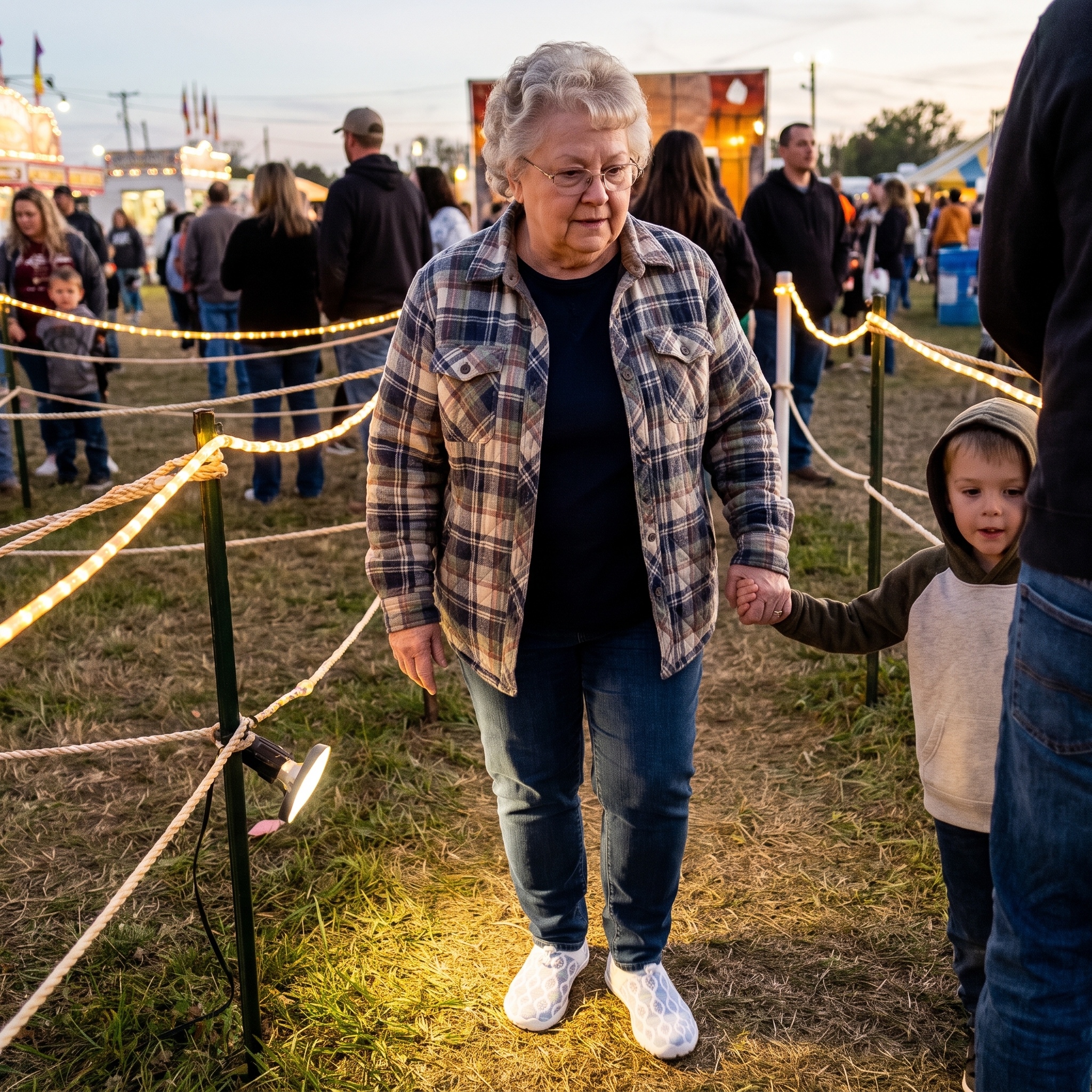
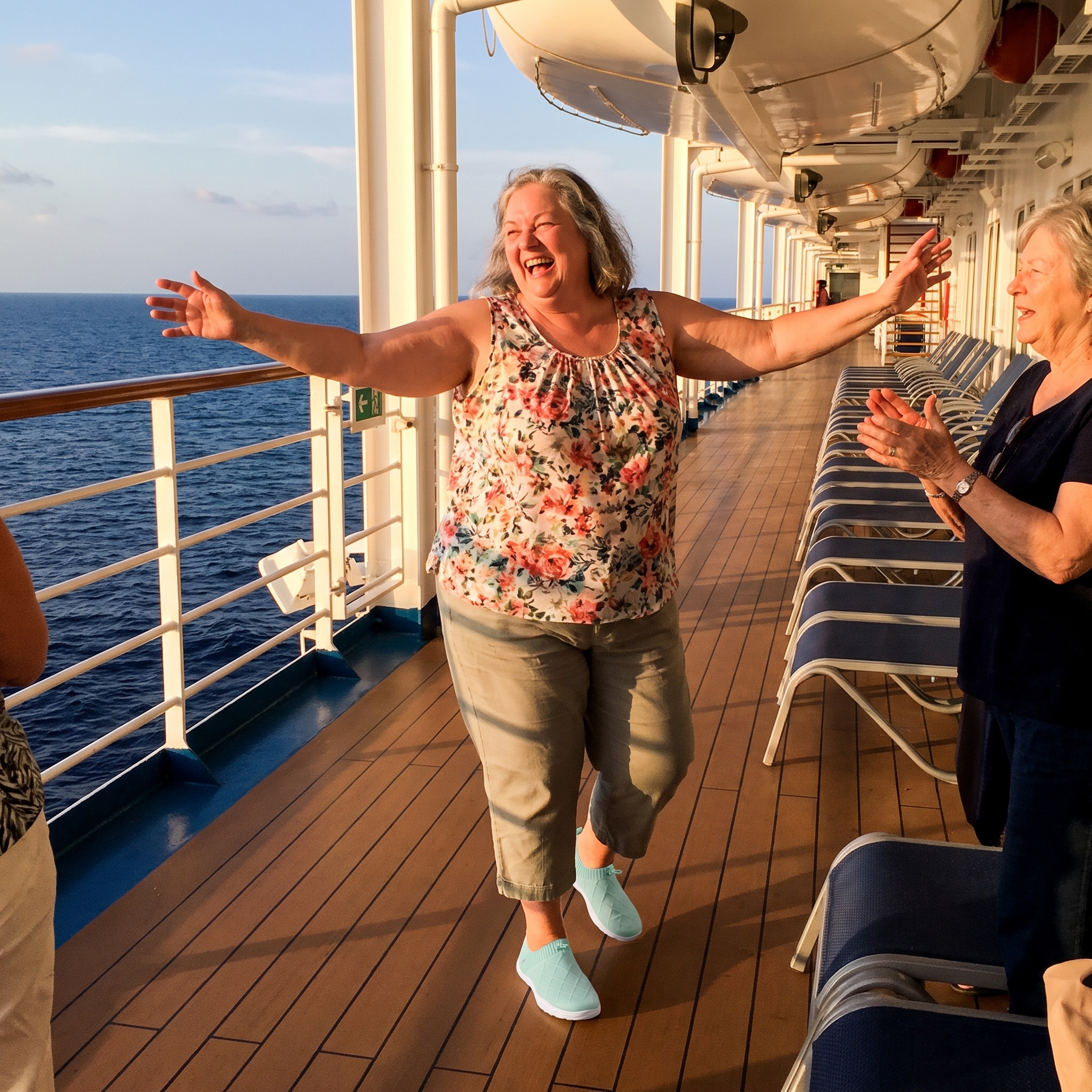
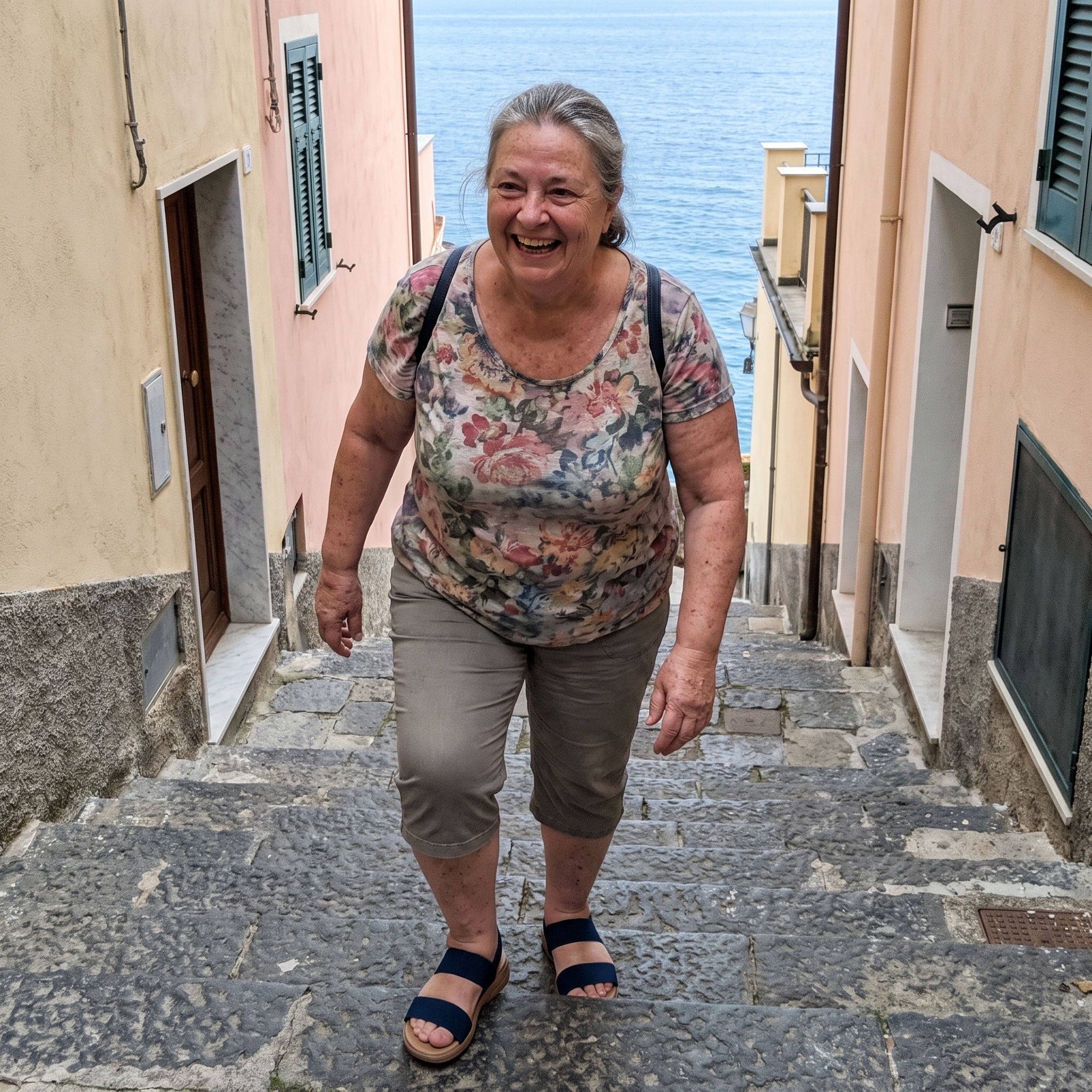
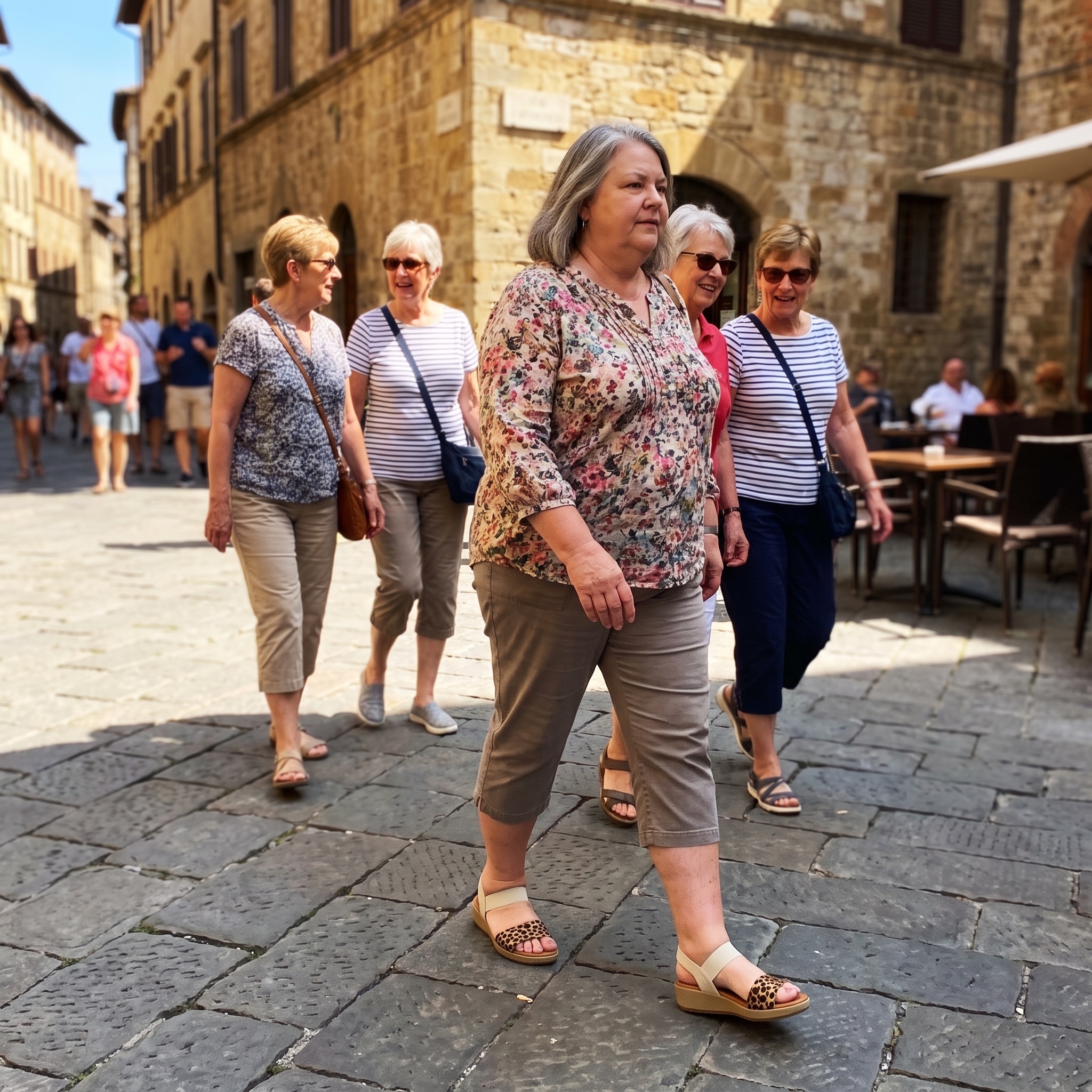
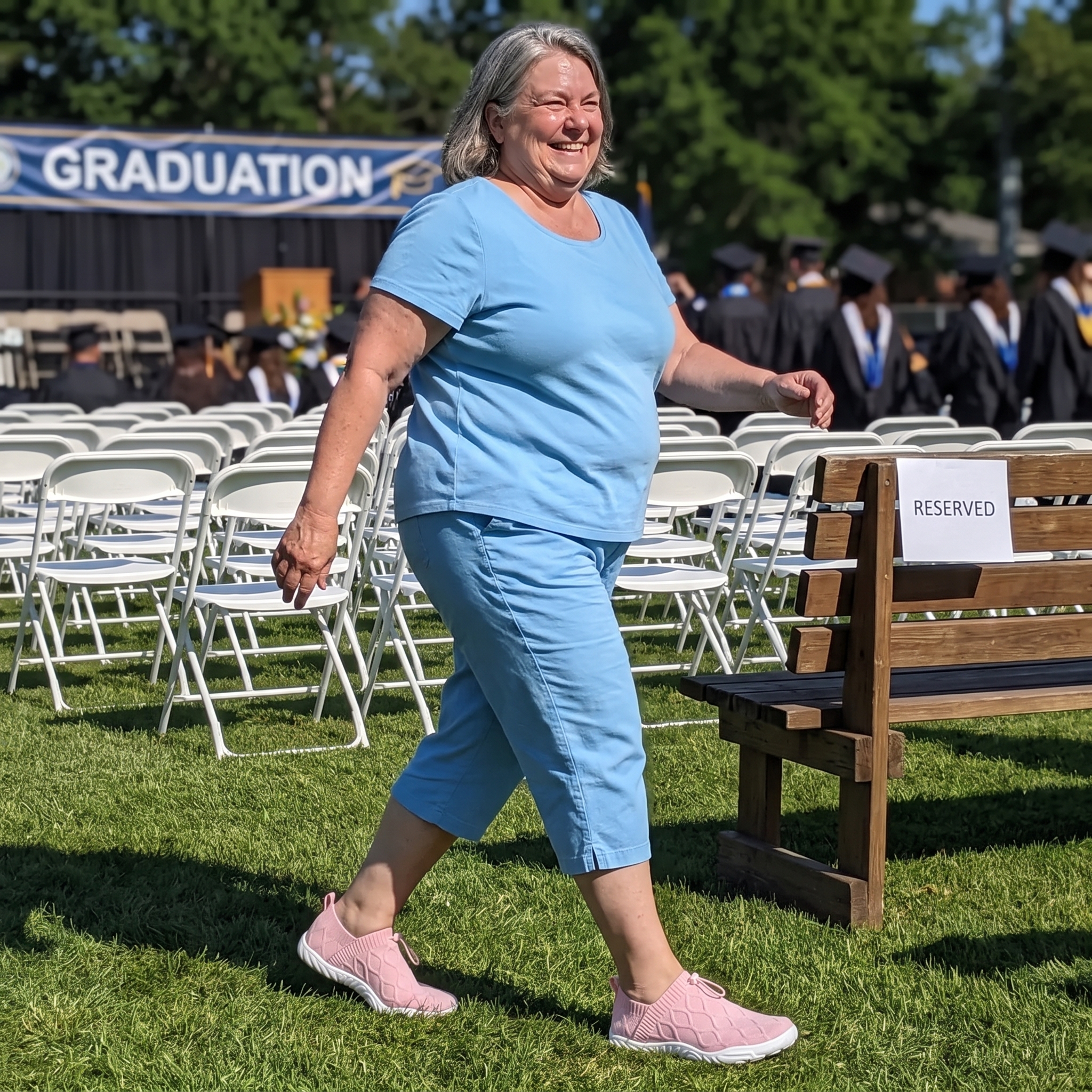
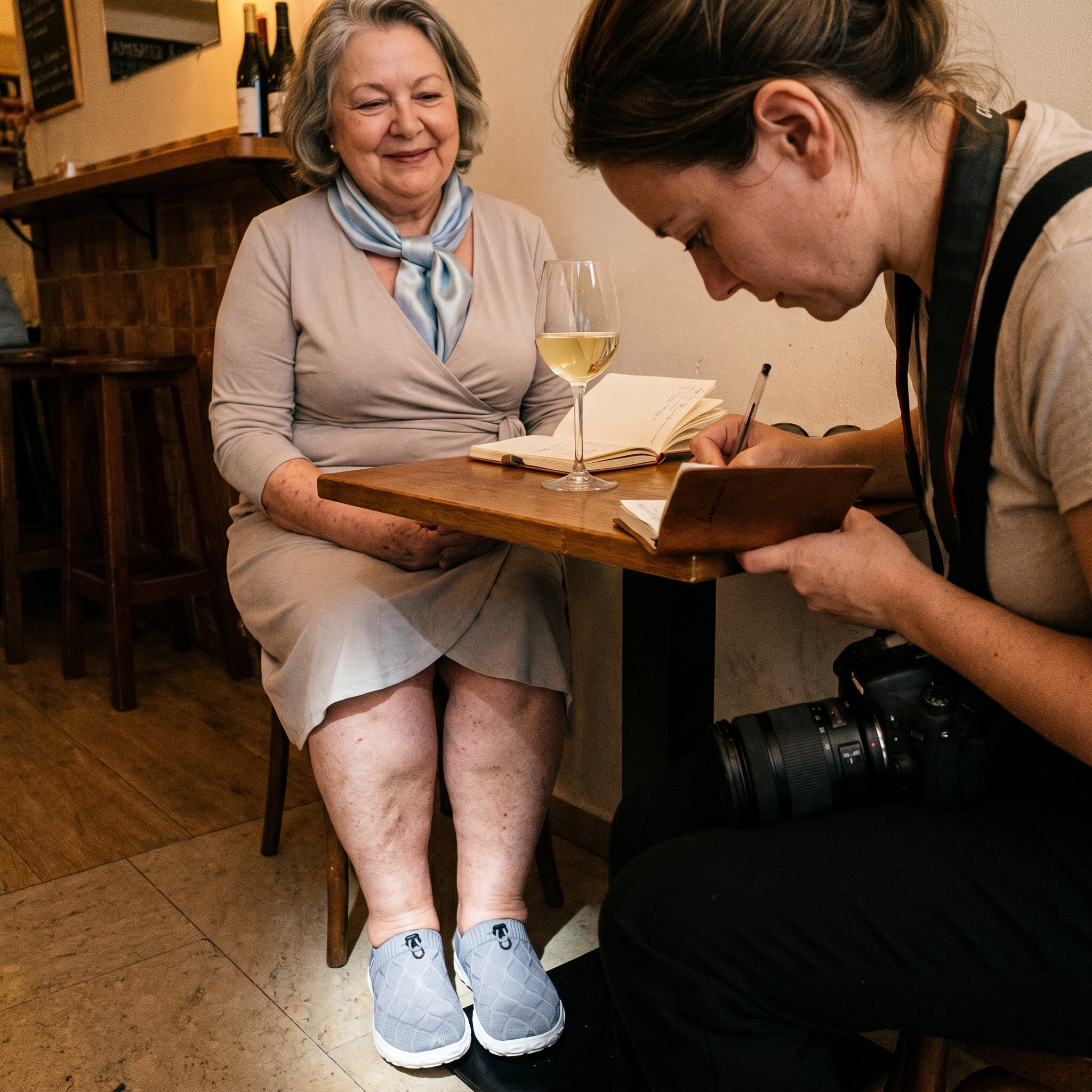
My ex-husband's mother sent me a card when I announced my solo trip to Portugal. Inside it said: "I admire your courage. It was always Michael who held things together for you. You will figure it out." Barbara is 86 years old. She has doubted me for 38 years. But that card was never about Michael. It was about my feet. I kept the card and used it as a bookmark on the flight over. My name is Sandra. I am 64. Michael and I were married for 38 years. The divorce was final in February. I have a degree in accounting, and I ran our books for three decades. I raised three kids and worked full time. I am not a woman who cannot manage things. But my family believed one thing about me. They believed I could not travel without Michael. Not because of bookings, because of my feet. Nobody ever said it in those words, of course. Families rarely say the real thing in the real words. I have wide feet. And a bunion on my left foot that showed up twenty years ago. By sixty it looked angry and felt worse. Regular shoes never closed over my foot. The wide sizes pinched anyway. One hour of walking and the ball of my foot burned. By afternoon my feet swelled, every single day. By evening the bunion throbbed with its own heartbeat. I planned my whole life around that throb. I remember a saleswoman at the department store. She brought out the widest size they kept in the back. It still would not close over my foot. "Some feet are just difficult," she said. I bought them anyway and wore them twice. My doctor looked at the bunion last spring. "Surgery, or shoes that actually fit your foot," she said. "They do not make shoes that fit my foot," I told her. She did not argue with me. I priced the surgery and the recovery, eight weeks off my feet. I decided to live with the throb instead. My niece got married in 2022. I carried ballet flats in my purse. I still spent the dancing at table nine. My foot was done before the cake. Michael planned every trip around my feet. Taxis instead of walks, benches mapped out like landmarks. Museum days cut in half. Back at the hotel by two, ice on my foot while he went out exploring alone. "We plan around your mother's feet," he told the kids. They grew up saying it like a house rule. Rome, in 2018, the family went into the Vatican museums for four hours. I sat on a bench outside with the water bottles. My foot was done by ten that morning. A tour group from Ohio shared the bench with me. Their guide assumed I was waiting for a bus. Michael came out glowing. "You did not miss much," he said. I missed the Sistine Chapel. I heard about it at dinner. Paris was the same story two years earlier. I waited in a cafe at the bottom of Montmartre while the family climbed to the basilica. Michael brought me back a postcard of the view. "So you can see it too," he said. He meant it kindly. I still have never seen Paris from above. My son once booked a wheelchair for me at an airport. As a surprise, to be kind. I was 58. I cried in the terminal bathroom. That was my life in every beautiful city. I was a passenger in it. I have seen the great cities of Europe through taxi windows. I have photos other people took for me. Lisbon was supposed to be our thirty-fifth anniversary trip. Michael cancelled it three weeks out, and everyone assumed it was because of me. "Your mother's feet," he told the kids again. I never corrected him, and I should have. To Barbara, all of that became the family story. Sandra cannot manage. Sandra needs Michael, Sandra and her feet. Every Thanksgiving, Barbara asked the same question in front of everyone. "And how are the feet, Sandra?" She asked it the way you ask about a failing hip. Sweetly, and loud enough for the whole table. One year she gave me a catalog of walking canes for Christmas. "Just to look through, dear, for someday." I was 61 years old. I smiled and passed the potatoes. Michael never said a word in my defense. I used to think that was neutrality. We had a shelf of travel guides at home. Michael circled things in red ink. My circles were in pencil, easy to erase. When the divorce was final, I drove home from my attorney's office. I opened my laptop at the kitchen table. I sat there for a long moment with the browser open. Then I typed one word into the search bar, Lisbon. I booked ten days in Portugal. Lisbon, then the Algarve coast. I booked the flights myself, the hotels myself, the trains myself. It took one evening and two cups of coffee. Every place Michael and I had circled and never really seen. Because really seeing them meant walking them. I called Barbara to tell her. She is still the grandmother of my children, and 38 years of family does not dissolve with a signature. "Sandra, are you sure that is wise? Lisbon is nothing but hills, dear." "I booked the whole thing myself, Barbara. Flights, hotels, trains." "I am sure you will manage." The little pause she has used for 38 years. "Somehow." Two days later her card arrived. Cream envelope, proper stamp, her careful handwriting. Barbara does nothing by accident. "I admire your courage. It was always Michael who held things together for you. You will figure it out." I put it on my nightstand. I read it every morning for a week. My daughter saw it there and read it out loud. "Mom, this is not a compliment," she said. "She is 86," I said. "She means well." My daughter raised one eyebrow and put the card down. Ten days before the trip, Barbara called again. "Has someone looked over your itinerary? Alfama is all cobblestones, you know. Steep ones." "I planned every day myself, Barbara." A long pause. "Michael always knew to build your days around your feet. Who will do that now?" "I will, Barbara." "You could still invite one of the kids along," she said. "Just so somebody is there." "I am going alone, Barbara. That is the point." "Well, do not be too proud to ask for help. I have given your hotel my number, just in case." I thanked her and hung up. I read the card again. I admire your courage. Here is the part I have not told anyone. Part of me believed her. Not about the bookings. I could plan a trip in my sleep. About the walking. You cannot plan away your own feet. I kept seeing day two. Me on a bench in Alfama, icing my foot. Calling the front desk for help. Proving her right. Forty years of habit does not leave quietly. I met Janet for lunch the week before I left. Janet is a retired pharmaceutical rep. Thirty years on planes, two cities a week. She has that ease some people just develop. She once talked her way onto an earlier flight in Frankfurt with a smile and two sentences. I have watched her do it. I told her about the card and the calls. And about the hotel having Barbara's number, just in case. She read the card twice. "She meant it kindly," I said. "She absolutely did not mean it kindly." First real laugh in a while. "Eighty-six years old and still sharpening that knife," Janet said. "She has been underestimating you since Reagan was in office." "I am nervous about one thing," I said. "Not the language, not the trains." "The walking," Janet said. "I know." "Lisbon is hills and cobblestones," I told her. "My feet quit after one hour." "Michael built every day around them," I said. "Benches, taxis, early afternoons." "So I have been googling benches in Lisbon parks. Marking them on a map, like he used to." Janet set down her fork. "No, that is exactly what Barbara expects." "She expects you limping by day two, calling the hotel desk. Proving her right." "Sandra, listen to me. It was never your feet, it is the shoes." "You have spent forty years forcing a wide foot into narrow shoes. Then everyone blamed the foot." "I have tried every comfort brand in the mall," I said. "My Skechers still pressed on the bunion." "Not these." She pulled out her phone. "These are called Cloud Walk, from Nimbao." "They stretch right where the bunion pushes. Nothing presses, nothing rubs." "I did nine days in Athens in mine," she said. "Marble, ruins, hills, not one bad morning." "My feet swelled every afternoon over there. I never once felt it happen." The photo surprised me. They did not look orthopedic. "They look like actual cute shoes," I said. "That is the other reason I wear them. I am 66, not finished." She typed something. My phone buzzed with the link. "They run buy one get one free right now. So get two. I never travel with one of anything, thirty years of packing." "And do not sit on it. I wanted the Lemon last month and it was nearly gone by the weekend." "And Sandra," she said. "Take pictures." I ordered the Grey that night. Two pairs, like Janet said. The box arrived four days before the flight. I slipped them on standing up at the kitchen counter. No sitting, no shoehorn, no fight. My toes spread out flat. The bunion touched nothing. I stood there waiting for the pinch that comes with every shoe I have ever owned. It did not come. I walked the hallway twice. The night before the flight, I packed my suitcase. Two silk blouses, one wrap dress for dinners. Toiletries, medications, my journal. The Grey Cloud Walks went on my feet, not in the suitcase. And one last thing. My mother's silk scarf. Pale blue, hand painted, bought in Lisbon in 1987. Michael always said it was too delicate to travel with, too impractical. It sat in a drawer for twenty years. I folded it carefully and packed it first. On day one I walked from Baixa all the way up to the castle. That is a climb locals complain about. I stopped once, for coffee, not for my feet. That night my phone said 16,400 steps. Seven miles. Day two was Alfama, narrow streets, steep cobblestones, fado spilling out of doorways. The stones that break ankles, according to Barbara. I climbed them like the stairs in my own house. Seven miles a day. Every single day, for ten days. In the Algarve I took the 230 steps down to the beach and back up. My feet swelled in the afternoon heat, like they always do. The knit just stretched with them. Every evening I waited for the ache that used to end my days. It never showed up. On day four I was at a wine bar in Alfama. A glass of Vinho Verde and my journal. I was wearing the wrap dress. My mother's scarf draped over my shoulders. Her scarf, back in her city, 39 years later. She would have loved that. A woman sat down nearby, travel photographer, professional camera bag, the easy manner of someone always moving. She looked down at my feet. "Sorry, are those knit walking shoes? What are they?" "They are called Cloud Walk, by Nimbao." "I have been hunting for shoes that survive these streets. I walk twelve miles a day when I shoot." "Everyone I photograph here is limping by noon," she said. "You are not limping." "I am 64. I walked seven miles today, uphill." She pulled a leather notebook out of her bag, wrote the name down, and underlined it twice. "Nimbao, Cloud Walk, in Grey," she murmured as she wrote. She looked up at the scarf. "That is beautiful. Is it Portuguese?" "My mother bought it here in 1987." She nodded, tucked the notebook away, and went back to her wine. I sent photos home every day, me at the castle, me on the tram steps, me at the lookout we once saw from a taxi window. Standing this time, on my own two feet. The Sunday after I got home, my daughter hosted a family dinner. Barbara came. She arrived in her stiff patent pumps. The ones she has worn to every occasion since 1995. She limped from the front door to the table. She held the wall for the last few steps. Nobody said anything. We are polite people. After dinner my daughter passed my phone around the table. The castle, the cobblestone stairs, the lookout. "Seven miles a day," my daughter said. "Every day." Barbara scrolled longer than anyone. She stopped on the photo of the Alfama stairs. "You walked these?" "Up and down. Twice." "Alone?" "Alone." She handed the phone back and was quiet through dessert. Later, while I rinsed plates, Barbara came and stood beside me. Her voice was low, so nobody would hear. "Those grey shoes in your photographs. What are they called?" "Nimbao Cloud Walk. But the Grey sold out, I checked for a friend last week." Silence. "Of course it did," she said quietly. She had me put her name down for the restock before she left. Barbara, 86, waiting on my shoes. I went home and found the card in the drawer. I admire your courage. It was always Michael who held things together for you. You will figure it out. I thought about the photographer in Alfama. Her notebook out, my shoes underlined twice. I thought about Barbara limping from the door to the table. In the pumps she refuses to retire. I thought about seven miles a day, ten days straight. On the hills my whole family used to plan around. Here is what I learned. For 38 years my family believed my feet were the reason I could not go anywhere alone. Michael booked the taxis. Michael found the benches. Michael cut the days short. And everyone decided that meant Michael held things together. It was never my feet. It was forty years of narrow shoes crushing a wide foot and a bunion. A family can mistake your pain for your personality. Mine did. The shoes did not make me capable. They proved I always was. If you have wide feet or a bunion, and your family plans around you like furniture, hear me. It is not your feet, it was never your feet. If your trips end at two in the afternoon, with ice on your foot while everyone else keeps exploring, you have been a passenger long enough. If you have been told, in a card or just in a little pause, that someone else held things together for you, seven miles a day up a hill is a very quiet answer. You need these shoes. Not because they are pretty. Though they are. But because somewhere there is a version of you still sitting in the taxi, watching her own trip go by. She deserves to walk it. One pair. Ten days. Seventy miles. Zero pain. Janet made me promise to pass the link on, the way she passed it to me, so here it is: https://nimbao.com/cloudwalk Your move.
Like this ad? Make it yours.
Crush rebuilds this exact creative around your product — your brand, your colors, your offer — in about a minute.