
Active· since Jul 8, 2026
- 71
- days running
- 0
- relaunches
Ad copy
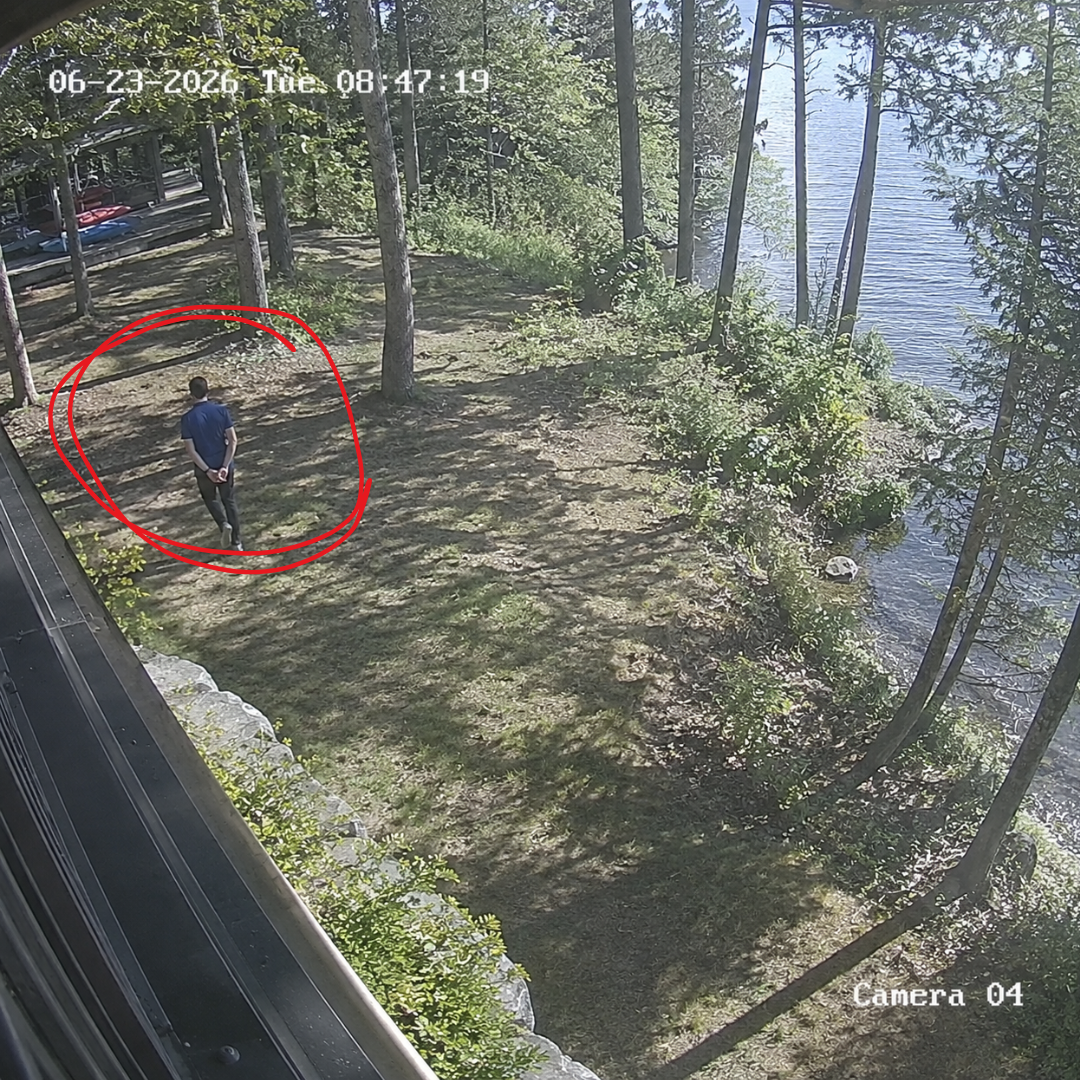
I have four cameras on my property that nobody knows about. Not my guests. Not the rental company. Not even my wife until two weeks ago. They’re in the eaves above the deck, in the stone trim around the fire pit, in the dock light housing, and in the gutter above the boathouse door. I put them there after a break-in in 2024. Motion-triggered. Silent. They record to a hard drive in my cottage. Two weeks ago, three men booked my entire lakefront property for a full week. $34,000 wire. No event. No company retreat. No wedding. No explanation. First thing they did was tape over every camera inside the house. Swept the rooms. Pulled the router. Unplugged the smart TVs. Then they went outside. Where my cameras were still rolling. What they said next, I was never supposed to hear. But it may have just saved my family’s life. If you have kids or grandkids, please stop scrolling and read this. I own a lakefront place in Virginia. Stone and timber. Big property — main house, two guest cottages, a boathouse, private dock. Nine acres. Creek running through the back. Lake on three sides. Sleeps sixteen. I didn’t build it. My uncle left it to me in 2021. I couldn’t afford the taxes, so I fixed it up and turned it into a rental. I do everything — cleaning, grounds, repairs, bookings. My wife and I live in the small cottage on the far side of the lot with our two kids. Marcus is eight. Briana just turned five. The place rents for $4,800 a night. Wedding parties. Corporate retreats. Women turning 40 who want a weekend on the water. I know what normal guests look like. These men were not normal guests. The booking came in on a Monday. Full property. Seven nights. No event listed. No company name. Just a wire for $34,000. I texted asking if they needed anything. One reply. “No. Privacy.” My wife said it sounded like drug money. I told her if it was drug money, they probably wouldn’t wire it to a bank account with my name on it. She didn’t think that was funny. Tuesday around 5 PM, two black Escalades came up the gravel. Three men got out. No golf bags. No coolers. No wives. No kids. Two leather bags, a hard-shell case, and a duffel. They looked like they’d walked off a private strip, not through a terminal. When they came in, I saw their IDs on the counter — the booking forms I leave out for guests. Three names. Richard Calloway. David Meyerink. James Turcotte. Photo IDs that looked right but felt wrong. The kind of thing you’d hand someone at a charter desk, not a government office. I looked all three up that night. Nothing. Not Google. Not LinkedIn. Not a company bio. Not even some old wedding registry or random charity mention. Three men wiring $34,000 and talking numbers that would make your head spin — and their names didn’t exist on the internet. Travel IDs. The kind you use when you go private and don’t want a trail. The one in charge — Richard — was tall. Mid-fifties. Gray at the temples. Dressed like money that does not want to be seen. He stood at the edge of the drive for a full minute after he got out. Looking at the lake. The tree line. The creek behind the barn. Not taking in the view. Taking inventory. David was shorter. Glasses. Talked the most. Carried himself like someone who runs rooms but doesn’t sit at the head of the table. James barely spoke. Laptop bag on his shoulder at all times. I never heard his voice once on the footage. They went inside. Twenty minutes later, every indoor camera was taped. All six. Black tape. Room by room. Then through one outdoor angle into the kitchen, I saw David checking outlets and pulling the smart TV plug. I thought about calling the sheriff. But they had paid. They hadn’t broken anything. And the four outside cameras were still rolling. They barely came out the first day. Food showed up once — white van, no logo, no name. Private. Couldn’t find it online. That night, the kitchen light was on past midnight. Through the deck camera I could see them at the dining table. Laptops. Papers. Satellite images. Maps everywhere. Night two. 11:07 PM. Motion trigger on the deck camera. They came outside. All three. Drinks. Laptops. A leather folio Richard set on the table that fell open when he reached for his glass — land surveys, water table maps, pages with seals. They sat at my table and started talking. The outside cameras have audio. I’d set them up that way after the break-in. The gain isn’t great, and wind off the lake eats some of it. But that night was dead still. I turned it up from my cottage. Wife and kids asleep. Richard started. Sitting back, looking out at the lake. “Nobody’s folding. That’s what people here don’t get. The U.S. made its call early. Iran made theirs. Everything since — the talks, the rounds in Switzerland, Versailles — that’s for cameras. So the news has something to show.” David said, “Both sides decided early. Contest of whose people break first.” Richard said, “And ours are softer. Iran’s lived under sanctions for forty years. They know how to go without. Americans don’t. Most of the country thinks this wraps up by Christmas. It doesn’t.” David asked, “How long?” Richard said, “What I told our clients in March. Six to nine months before it bottoms. Could be twelve. The bottom won’t look like anything anyone here has seen.” David said, “It already looks like something. Most people just aren’t looking.” Richard stood up and walked to the railing. “Cuba’s grid is gone. Three weeks without a stable hour of power. Whole island. Hospitals out of diesel. Pumping stations down. Water trucks thirty hours behind.” David said, “Nigeria collapsed six days ago. Whole national grid. Called it a technical issue. Wasn’t. Fuel ran out.” Richard said, “Brazil — nationwide blackout last month. Rolling brownouts. Nobody saying when it ends.” He paused. “Australia is rationing diesel. Trucking companies capped. School districts cutting trips for the year. Government called it ‘managed scarcity.’ Want to see what managed scarcity looks like here in three months? Look at Australia right now.” David asked, “What do those four have in common?” Richard said, “Need oil they can’t make. The place they buy it from isn’t shipping. Same oil stuck behind the blockade. Twenty percent of the world’s supply through that gap every day. Shut it down and everything downstream starts breaking.” He turned around. “Cuba first canary. Nigeria second. Brazil third. Australia fourth. Six months ago I’d have said they’re not us. Smaller. Worse run. I was wrong. This doesn’t pick by who’s rich. It picks by who needs that oil and can’t replace it.” David asked, “And us?” Richard said, “Better off than them. Not safe.” He sat back down. Voice dropped. “Three refineries offline in two months. Rotterdam. Houston. South Korea — hasn’t hit the news yet. They’re calling each one maintenance.” David asked, “Is it?” Richard said, “Three on three continents in two months is not maintenance. Connected or planned. We don’t know which.” James looked up from his laptop. “Iran’s grid?” Richard said, “Hit twice in two weeks. Patching what they can. Can’t replace the equipment we used to send them. Their lights are flickering. Theirs first. Ours next.” David said, “The IEA?” Richard answered, “Called this the greatest disruption in modern history. Out loud. In Paris. Worse than the seventies. The people who watch every barrel on the planet don’t say things like that unless they’re allowed to say it.” Silence for a full minute. Just the lake. David asked, “Timeline. Here. What does it look like?” Richard said, “Starts soft. Advisories. ‘Cut your power between four and nine.’ Polite. You ignore it three times. By week four it’s not a choice. By week six they have a name for it.” David asked, “What name?” Richard said, “Energy lockdown. Watch for it. You’ll hear it on the news before people understand what it means. It’ll feel like 2020 without the masks.” David said, “Lockdown?” Richard said, “Same playbook. Stay home this hour to that hour. Don’t run the AC. Don’t run the dryer. Don’t charge the car. Please comply. Except this one doesn’t end when somebody finds a vaccine. This one ends when oil flows freely again.” David asked, “When’s that?” Richard said, “It doesn’t.” He let that hang. David asked, “How long until the first major region loses power for more than seventy-two hours?” Richard said, “Six to ten weeks.” James stopped typing. Richard kept going. Flat. “People think this hits everyone the same. It doesn’t. Bottom up.” “The people at the top have been moving for six months. Generators. Fuel. Water by the pallet. Second house. Kids pulled from school. They knew before the news.” “By the time a regular family sees the first advisory, those people are past the part where it touches them.” “Then working folks. Hourly. Truck drivers. Hospital staff. Anyone whose check got tight when gas hit five. They run out first.” “Then middle class. Two cars. Mortgage. Two kids. Too much to ask for help. Not enough to buy out. Watch the freezer go warm week three. Watch the savings drain. Wait for the advisory to say it’s getting better.” Pause. “It never says that.” “By the time it hits the top, the bottom’s been drowning six months. The middle’s been holding their breath. And the rich only feel it after the country’s already broken.” David was quiet. Richard said, “The people who think they’re fine because they have a house and a job and a 401k — those get hit hardest. They think the system covers them. The system already picked who it covers. They’re not on the list.” Then came the part that won’t let me sleep. Richard said, “The grid you can plan for. Generator. Fuel. Food. That’s not what keeps me up.” David said, “Water.” Richard said, “When the grid goes, the water goes. Nobody thinks about it. Tap on, water out. That’s all they know.” He stood up and looked at the lake. “The tap needs power. Pumps are electric. Treatment plants are electric. Everything between the river and your sink is electric. Take the power out, the system stops.” David asked, “How fast?” Richard said, “Hours. Not days. Pumps first. Pressure drops. Whatever’s in the line drains. Then nothing.” Pause. “Texas. 2021. Three-day grid failure. Millions lost safe drinking water. Boil warnings for weeks. People melting snow. Draining pipes. Standing in lines.” Another pause. “That was three days. And it was an accident. What we’re talking about isn’t three days. And it isn’t an accident.” David said, “Bottled water.” Richard said, “Aisle goes in forty-eight hours. Costco in seventy-two. After that, nothing to buy. You’re drinking what you stored or you’re drinking nothing.” David asked, “For how long?” Richard said, “Until the grid comes back.” Nobody spoke. Richard said, “You can live a month without food. A week without heat. Three days without water and the body gives out. Of everything people are about to lose, water is the one nobody’s talking about. Every other aisle goes slow. People notice. Plan. Drive to the next county. Water goes in two days. No warning. Doesn’t come back.” He looked at the lake. “That’s what I can’t sleep about. Not the gas. Not the lockdowns. The five-year-old in some kitchen on day four with nothing clean to give her.” I looked down the hall. Briana’s door. Star nightlight. Then they talked land. David said, “Same pattern. Gates closed another twenty-two thousand acres in the spring. Two seventy-five total. Nineteen states. Biggest private farmland owner in the country. Bezos buying through LLCs. Burry went farmland with water. BlackRock listed water as a top priority. Trading on the exchange since 2020.” Richard said, “They’re not buying land.” David said, “They’re buying water. The land is just what sits on top.” Then David looked around my property like he was seeing it on paper. “This property is the fourth this week. Best one. Creek year-round. Lake on three sides. Well-fed, not county. Cut the grid and this place still runs.” Richard asked, “Who owns it?” David said, “Some guy. Inherited it.” Richard said, “If it was on the market, we’d buy it tonight.” Then Richard said something that stopped me cold. “The land is the long play. Short play — every client we’ve moved into property this year, first thing. Before the well pump. Before the solar. Before the generator. Make sure they’re set. Every property has a full gravity setup. No power. No grid. Turns freshwater into drinking water. Creek, pond, ditch — doesn’t matter.” David said, “Bill’s setup in Medina has had them since January. Before any of this. His whole lakefront is done.” Richard said, “The people who see this don’t build bunkers first. They secure water and the tool that makes it safe. Everything else is noise.” David said, “Supply window is closing. These systems take time to make. Some countries already pulling civilian access because this one thing makes a family harder to control. A family that can walk to water and make it clean doesn’t need the system the same way.” Richard said, “The public should not be hearing about this. The second it gets out — panic. Supply gone. And the people who’ve been doing what they should end up in the same line as everyone else.” David said, “Self-reliance is the thing the system can’t survive. Can’t hold leverage over someone whose family can walk to a creek and make clean water.” They went inside around midnight. I sat in the dark until 2 AM. Told myself rich guys talk themselves into things at midnight that sound crazy by lunch. Then it got stranger. They had booked seven nights. Paid for the full week. But the next morning — day three — I saw them on the cameras loading up the Escalades. Bags in the back. Hard-shell case. They were leaving five days early. Whatever they came here to do, they had done it in two nights. Then a third vehicle pulled up. Black sedan. Two men got out wearing gloves. No greeting. No small talk. They walked straight into the main house. From the outside camera angles, I watched them wipe down the counters, the door handles, the table where the laptops had been. Methodical. Like they had done it a hundred times. A clean-up crew. For a rental property. In the middle of Virginia. I walked up to the main house. I don’t know why. Something pulled me there. Maybe I needed to see these men with my own eyes instead of through a camera feed. As I came around the side of the house, I heard David on the phone, walking toward the second Escalade. “Yeah, tell Maurice we’re coming. Jet’s fueled. We should be at the strip in forty.” He hung up and got in. Richard was already in the first car. James was in the back seat, laptop open. The two men in gloves were still inside the house. Richard’s window was down. He saw me standing there. Looked at me the way you’d look at a mailbox. Then he spoke through the window. “How much for this place?” I blinked. “How much for what?” “The property. The land. The water. All of it.” I stood there for a second. “It’s not for sale.” He didn’t react. David leaned forward from the passenger side of the second car and called over. “Nine acres. Lakefront on three sides. Creek. Well-fed. Place is worth what — two, two and a half? We’ll double it. Cash. End of the week.” I looked at the lake. The dock my kids fish off on Saturdays. The barn where Marcus keeps his bike. “I don’t need cash. It’s not for sale.” Richard gave a small grin. Not warm. The kind that says he has never heard that word before and doesn’t plan to hear it again. He looked at David. David looked at me one more time, shook his head, and pulled his door shut. James didn’t look up. Both Escalades started. Richard’s pulled forward. David’s car didn’t move yet. The back door opened. David got out, grabbed a duffel from the trunk, slung it over his shoulder, and walked toward me. The Escalade with Richard and James rolled down the gravel. Turned onto the road. Gone. David stood there. Duffel over one shoulder. Looking at me. “Good for you,” he said. “Not selling. Most people would’ve taken the money.” I didn’t say anything. He looked at the creek. Then back at me. “Your family is going to need this place sooner than you think. It has everything. The water. The land. The access.” I looked at the ground. Then at him. “The energy lockdowns,” I said. I didn’t mean to say it. It just came out. The phrase from the footage. The one Richard used on the deck at 11 PM. The one I had played back eleven times. David’s face went flat. He looked at me for a long time. “You heard that.” “I didn’t mean to. There are cameras on the outside. The ones you didn’t find. I heard some of the conversation. I wasn’t trying to—” “Stop.” He looked over his shoulder. Both cars were gone. Road was empty. He set the duffel down and took a breath. “Listen to me. You don’t tell anyone what you heard. Not the guys who were just here. Not their people. Not anyone. You don’t know their names. You didn’t hear anything. If Richard finds out you were recording—” He didn’t finish. “You have kids,” he said. “Two. Eight and five.” He walked to the sedan. The two guys in gloves were coming out of the house. David reached past one of them into the back seat and came out with something. Not a straw. Not a bottle. A folded blue bag system with a hose and filter packed inside. He walked back and held it out. “Take this. Keep it for your family.” I looked at it. “What is it?” “It’s what we were talking about on your deck. Gravity water filtration. Dirty water goes in the top bag. You hang it. Gravity pulls it through the filter. Clean water comes out below.” He pointed toward the creek. “You take water from that creek right there — or a pond, lake, rain barrel, whatever freshwater source you can safely get to — run it through this, and you have water your family can actually use.” I looked at the bag. “No power?” “No.” “No batteries?” “No.” “No pump?” “No.” “Chemicals?” “No.” He said, “That’s the point. When the grid is the problem, your water solution can’t need the grid.” He opened the folded bag enough for me to see the layout. Top bag. Hose. 0.1-micron filter. Clean pouch. “One gallon at a time,” he said. “Not sips. Gallons. You’ve got a wife and kids. You need water you can pour.” I looked at him. He said, “A straw helps one person drink. A gravity system helps a family function.” That line hit me harder than anything else. Because I wasn’t picturing myself surviving in the woods. I was picturing my wife in the kitchen if I wasn’t home. Marcus asking if the tap was safe. Briana holding a cup. The dog bowl empty. The last bottle on the counter. David put the bag in my hand. “Every client we work with has these. Multiple. Every property. Bill’s lakefront in Medina had a full setup before any of this was news. This is the first thing. Before the solar. Before the generator. Before everything.” He stepped back. “I’m serious. Don’t talk about what you heard. Don’t mention the cameras. You don’t know us. But protect your family. Get more of these. House. Car. Parents. Anyone you’d hand a cup of water to if the tap stopped.” He looked at the creek one more time. “You made the right call not selling. Your kids are going to drink from that creek before the year is out. When the taps go dry and the lines start in town, your family won’t be in them.” He picked up the duffel, got in the sedan, and the driver pulled out. I stood in the driveway holding the bag. Watched the car turn onto the road and disappear. I went inside. Set it on the kitchen table. Looked at it for a long time. Then I picked it up and walked to the creek. Thirty feet behind the barn. Brown. Silty. Leaves in it. Something green near the edge. Water I’ve never let my kids touch. I filled the top bag. Hung it from a low branch. Connected the hose. Set the clean pouch underneath. Opened the valve. For a few seconds, nothing happened. Then water started moving. Slow at first. Then steady. No pump. No battery. No noise. Just gravity. The dirty water stayed in the top bag. Clear water came through the hose into the clean pouch. I smelled it. Nothing. No creek smell. No algae. No mud. I poured some into a bottle. Clear. Then I drank. It tasted like water. Regular water. Cold because the creek was cold. No grit. No weird taste. Nothing. I stood there for a long time. Four years of mowing around this creek. Four years of thinking it was a drainage problem. Three men paid $34,000 for two nights on my property. Offered to double its value in cash. I said no. And the one who stayed behind told me my family would drink from this water before the year is out. I went back inside. Found the brand name on the system. Looked it up. Aqua-GS1 from Guard Survival. I ordered five more that night. One for the house. One for my wife’s car. One for my truck. One for my parents. One for my sister. The whole order cost less than what I spend maintaining that dock in a month. https://guardsurvival.com/products/aqua-gs1 Then I went back to the footage. Played all of it again. The refineries. The Strait. Cuba. Nigeria. The lockdowns. The water. The bottom-up. Then I searched. Brownout advisories. Fuel warnings. refinery issues. grid stress. water pressure failures. billionaires buying farmland. water rights. private lakefront. rural land with wells. Pieces were everywhere. Not one channel putting them together. Then last week, California issued another power advisory. Same soft language. “Voluntary reduction in non-essential power use.” Same hours. Same tone. Two days later, I saw a segment where someone used the phrase “energy lockdown” like it was normal. Word for word from my deck. I sat at the kitchen table for a long time after that. My wife asked me what was wrong. I told her everything. The cameras. The audio. The footage. The men. The offer. David. The water system. The creek. She listened without saying a word. When I was done, she asked one question. “Where’s the link?” She ordered more. https://guardsurvival.com/products/aqua-gs1 I’m not posting the footage. Three men who tape cameras and sweep rooms and fly private under names that don’t exist online are not men you put on the internet. And what David said about Richard — I believe him. But I’ll tell you what they said. And I’ll tell you what David told me face to face. Because what these men know — about what’s coming, what the news is softening, and why the richest people in the country are buying land near water — is something every family needs to hear. If you have kids, solve water. Not someday. Now. Store bottles if you can. But understand what bottled water is. Stored water is a countdown. Access is different. The Aqua-GS1 is a one-gallon gravity-fed water filtration system. No power. No batteries. No pumping. No chemicals. Fill the top bag from a freshwater source like a creek, pond, lake, river, or rainwater. Hang it. Gravity pulls the water through the 0.1-micron filter into the clean pouch below. Up to 1,500 gallons depending on source water and maintenance. Not saltwater. Not chemical runoff. Be smart about your source. But if you have freshwater nearby, this gives your family a way to make clean water by the gallon. That is the part nobody is talking about. There is water around you. You just need a way to make it safe. https://guardsurvival.com/products/aqua-gs1 EDIT: This post is moving faster than anything I’ve ever put up. Hundreds of messages. People asking if I’m scared. People asking for footage. People asking if the men were real. I’m not posting the footage. I’m telling you what matters. The people with money are not arguing about whether the tap will always work. They are buying land with water, moving families toward it, and making sure they can turn that water into something drinkable without the grid. If you’ve been sitting on the link, stop. Send it to every family you know. Order before the next advisory becomes the thing nobody can ignore. https://guardsurvival.com/products/aqua-gs1 EDIT 2: For everyone asking if it actually works, test it yourself. Fill the top bag from a freshwater source. Hang it. Let gravity do the work. No battery. No pump. No boiling. No tablets. That’s why I trust it. If the system outside your house is failing, I don’t want my water plan depending on that same system. https://guardsurvival.com/products/aqua-gs1 P.S. — My wife tested it herself without telling me. I found the clean pouch drying by the sink. She had taken the Aqua-GS1 to the creek, filled the bag, hung it from the fence, and watched clear water come through. When I asked what she was doing, she said, “I needed to know I could make water if you weren’t home.” That was enough for me. P.P.S. — The Aqua-GS1 is not for saltwater or chemical runoff. Be smart about your source. But for freshwater sources like creeks, ponds, lakes, rivers, and rainwater, this is the kind of backup I wish I had thought about years ago. No power. No batteries. No pumping. No chemicals. Up to 1,500 gallons depending on source water and maintenance. P.P.P.S. — We also ordered Guard Survival’s emergency radio, thermal bivvy, GHOST-GS Faraday bag, and a few GUARD-S1 filter straws after this. Not because the Aqua-GS1 replaces those things, but because once you understand how fragile normal systems are — water, power, heat, information, movement — you stop preparing one item at a time and start covering the basics. But if you only solve one thing first, solve water. P.P.P.P.S. — If you’re thinking you’ll just store bottled water, store it. Seriously. But do the math. One case goes fast with a family. Then you need another case. And another. And another. Bottled water is a countdown clock. A gravity system is access. As long as there’s a creek, pond, lake, river, rain barrel, or bathtub you filled in advance, you have a way to make clean water by the gallon. P.P.P.P.P.S. — My wife ordered more. Her mom. Her sister. My brother. A neighbor with three kids. We don’t talk about it much. Nobody in my circle argues about it anymore. They just order quietly and keep going. That’s how you know it’s real — the people who understand don’t debate the tap. They prepare for the day it stops. https://guardsurvival.com/products/aqua-gs1
If you’re a parent or grandparent, please read this👆
Shocking Congressional Report Warns: 9 in 10 Americans Won't Survive One Year Of Grid Collapse — And The Overlooked Reason Why Shocking Congressional Report Warns: 9 in 10 Americans Won't Survive One Year Of Grid Collapse — And The Overlooked Reason Why Published — A congressional EMP Commissi...
SHOP NOWLike this ad? Make it yours.
Crush rebuilds this exact creative around your product — your brand, your colors, your offer — in about a minute.